
Iceland in September: Weather, Northern Lights & Travel Tips
This site contains affiliate links, which means that we may earn a small commission, at no cost to you, for qualifying purchases. It supports the work that goes into keeping this content free. Thanks for reading! More info: Privacy Policy.
Planning a trip to Iceland in September and wondering if it’s a good time to visit? September is actually one of the best months to travel to Iceland, especially for first-time visitors.
You still get relatively mild weather and long daylight hours, but the nights are already dark enough for the Northern Lights. Most roads remain accessible, hiking conditions are generally very good, and there are fewer crowds than during the peak summer months.
We’ve visited Iceland in September several times and found it to be one of the easiest and most rewarding times for a road trip around the country. You can still visit the highlands early in the month, see beautiful fall colors, and enjoy many outdoor activities without winter driving conditions.
In this guide, you can find everything you need to know about visiting Iceland in September, including weather, daylight, Northern Lights, road conditions, what to pack, the best things to do, and practical travel tips.
Iceland in September – Quick Overview
- Average temperatures: 6-11°C (43-52°F)
- Daylight: about 13 hours in mid-September
- Northern Lights: possible throughout the month
- Driving conditions: generally very good
- Ring Road: fully accessible in normal conditions
- Highlands: often accessible in early-mid September
- Crowds: lower than in July and August
- Best for: road trips, hiking, waterfalls, hot springs, and Northern Lights
Is September a Good Time to Visit Iceland?
If you are visiting Iceland for the first time, September is one of the best months to go.
You still get many advantages of summer travel, such as accessible roads, long daylight hours, and relatively mild weather. At the same time, September already offers darker nights for Northern Lights, fewer crowds, and often lower prices than peak summer.
Of course, Icelandic weather is always unpredictable and you should still expect rain and wind. But overall, September is one of the easiest and most rewarding times to travel around Iceland.
Iceland Weather in September
September is a transitional month between summer and winter in Iceland, so weather conditions can vary quite a bit from one day to the next.
On a good day, you may get sunshine and temperatures around 10-14°C (50-57°F), which is very similar to typical summer weather in Iceland. But even with less favorable weather, temperatures in September usually stay above freezing in most parts of the country.
Average daytime temperatures in Iceland in September range between 6 and 11°C (43-52°F).
Rain and wind are common as well, but that’s something you should expect in Iceland at any time of the year. Conditions can change quickly, so it’s always best to pack layers and waterproof clothing, no matter what the forecast says.
Snow is possible, especially in the highlands or later in the month, but it’s still relatively uncommon in most parts of Iceland in September.
Good to know: Most campsites remain open in early September, making this a good time to visit Iceland for travelers who want to camp and keep costs lower.
LEARN MORE: Camping in Iceland
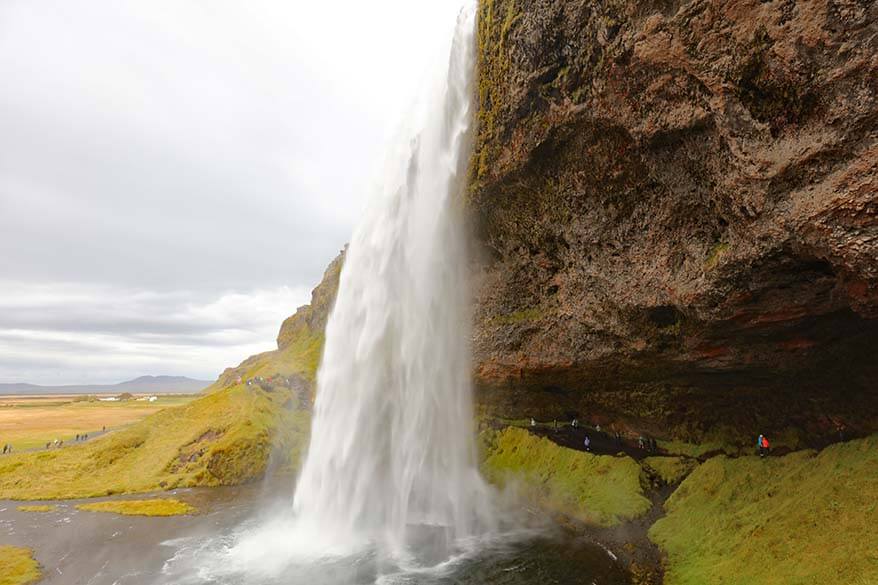
Early September vs Late September
September can feel quite different depending on when exactly you visit.
Early September usually has slightly milder temperatures, longer daylight hours, and a higher chance that the highland roads remain open. It’s also one of the best times for hiking and road trips around the entire country. On the other hand, nights are still relatively short, so Northern Lights sightings can be a bit less predictable, especially at the beginning of the month.
Late September brings darker nights and much better chances to see the Northern Lights. You’ll also likely see more fall colors across the country. However, temperatures are usually lower, storms become more frequent, and there’s a higher chance of early snow in the highlands or northern parts of Iceland.
Overall, the entire month is great for visiting Iceland. If you want to do lots of hiking or explore the highlands, early September is usually better. If you are mainly hoping to see the Northern Lights and don’t mind cooler weather, the second half of September can be an excellent choice too.
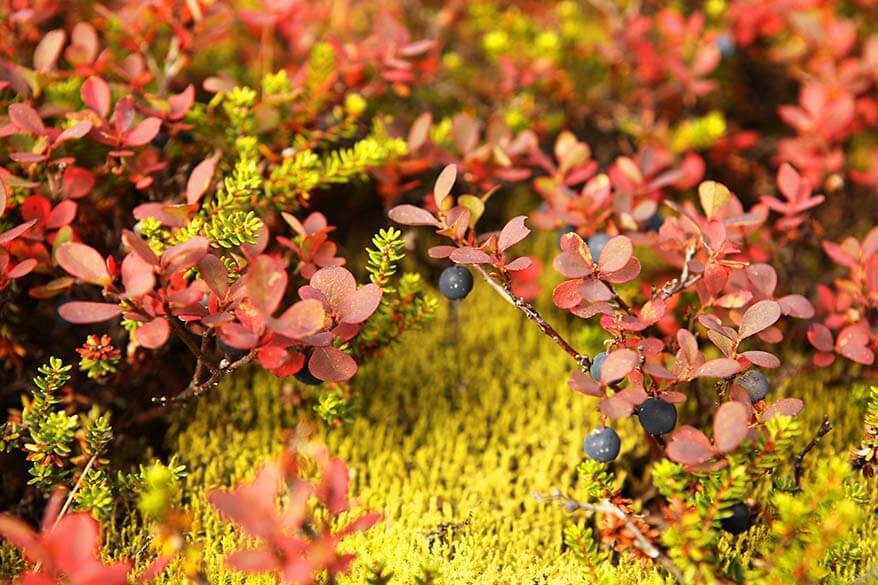
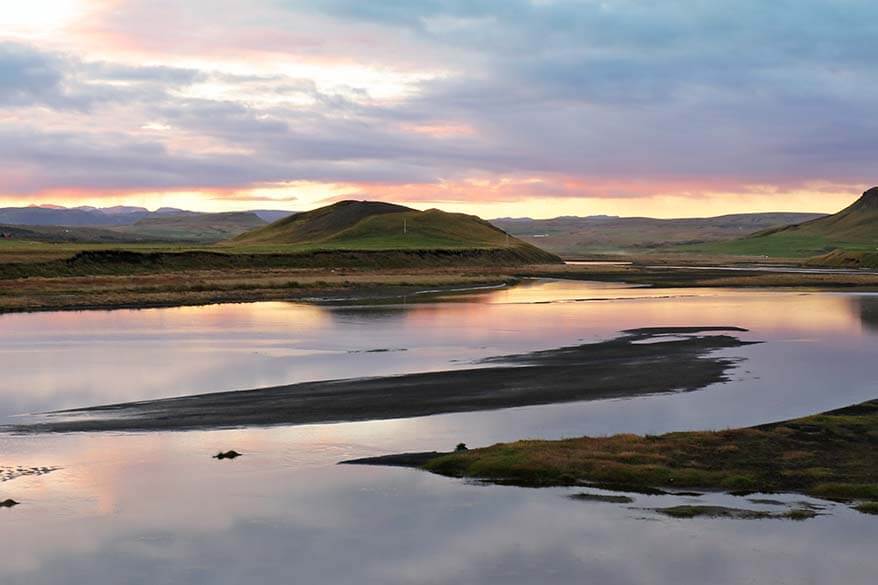
Daylight Hours
One of the biggest advantages of visiting Iceland in September is that you still get plenty of daylight for sightseeing and road trips. In mid-September, there are about 13 hours of daylight, giving you more than enough time to explore without constantly rushing from one place to another.
At the same time, nights are already properly dark again, and many travelers (myself included) find September much more comfortable than early summer because it’s easier to sleep and keep a normal schedule.
Another advantage is that sunrise and sunset happen at more convenient times, so you don’t have to wake up extremely early or stay up late to enjoy beautiful light for photography and sightseeing.
And of course, the darker nights also mean that you have a chance to see the Northern Lights in Iceland in September.
READ ALSO: Iceland in Summer vs. Winter
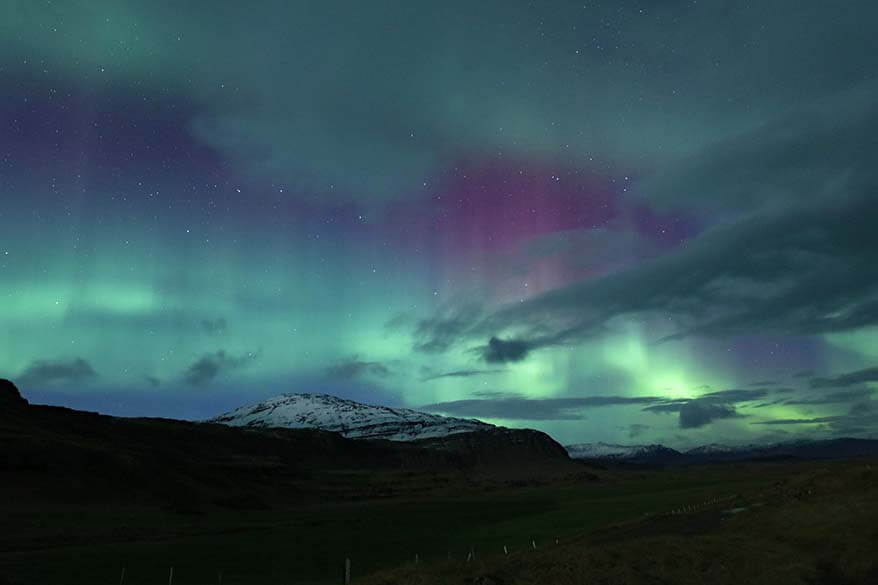
Northern Lights
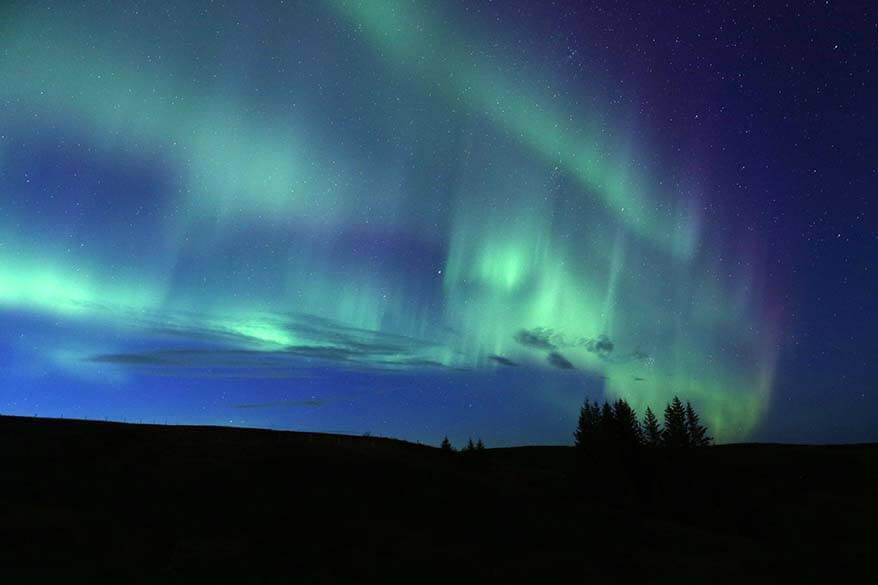
September is the first month of the aurora season when you have a realistic chance to see the Northern Lights in Iceland. Theoretically, you might get lucky and spot auroras at the end of August, but the earliest I’ve personally seen them in Iceland was in the first week of September.
To see the Northern Lights, you need three things: dark skies, clear weather, and at least some solar activity. Since nights are already properly dark and temperatures are milder than later in autumn or winter, September is a great time for Northern Lights hunting. You can usually stay outside for a couple of hours without dealing with extreme cold. Still, be smart and dress warm!
Your chances are generally better in the second half of September because nights become longer and darker. Still, auroras are never guaranteed, no matter when you visit. In Iceland, cloud cover often matters more than solar activity itself.
On one of our September trips, we saw the Northern Lights on most nights we were in Iceland. Some displays were quite subtle, while others filled the entire sky. It really depends on the conditions and a bit of luck.
TIP: If seeing the Northern Lights is high on your bucket list, try to stay outside Reykjavik for at least part of your trip. Darker areas away from city lights usually offer much better viewing conditions. In this guide, you can find more tips on how to see and photograph auroras.
READ ALSO: Northern Lights in Iceland
Driving in Iceland
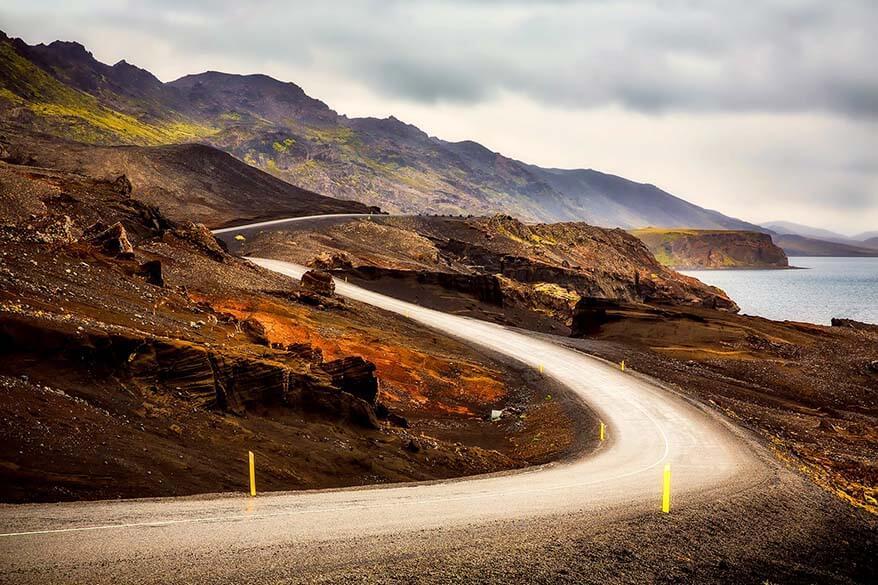
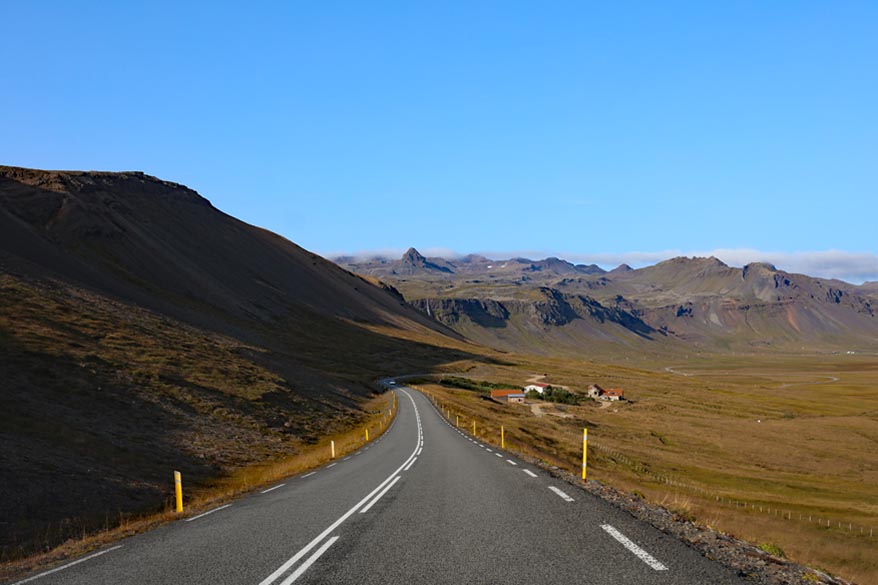
September is one of the best months for a road trip in Iceland. In most parts of the country, roads are still snow- and ice-free, and driving conditions are generally very similar to summer.
This means that you can usually explore Iceland by car without having to worry too much about winter driving. The entire Ring Road is normally fully accessible in September, making it a great time for a self-drive trip around the country.
That said, Icelandic roads always require some caution. Strong winds are common year-round and can make driving more challenging, especially in open areas. Gravel roads, soft road edges, flying stones, and sheep are also something to keep in mind, even in good weather.
If you are planning to visit the highlands, you’ll need a proper 4×4 vehicle for the F-roads. You can read more about this further below.
TIP: We usually rent our car in Iceland via Booking. It allows you to compare multiple rental companies, often offers better cancellation conditions, and makes it easy to add full insurance coverage, which we highly recommend for Iceland.
READ ALSO: Iceland Ring Road Itinerary
Are the Icelandic Highlands Accessible in September?
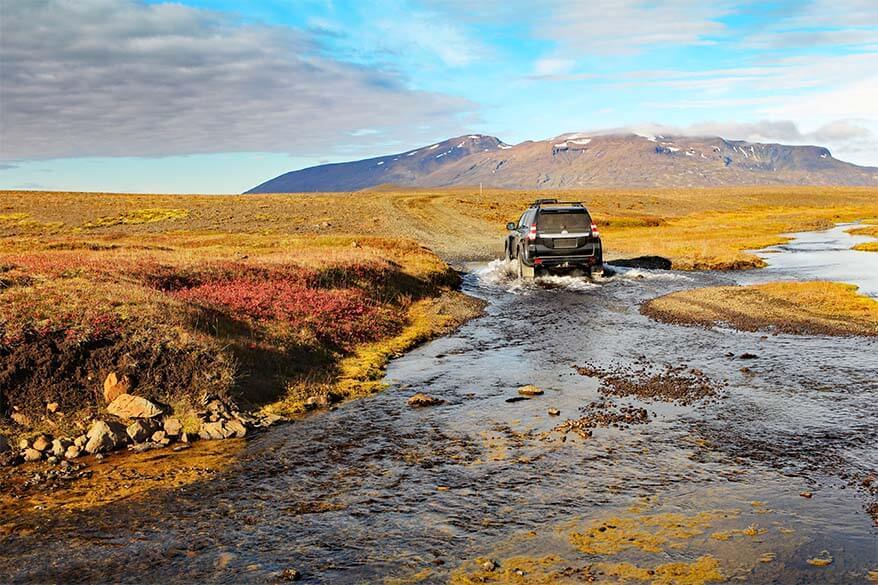
September, especially the first half of the month, is one of the best times to visit the Icelandic highlands. Most highland roads are only accessible during the summer season, usually from mid-June until sometime in September, depending on weather conditions.
Earlier in summer, F-roads in the highlands are often still very wet and muddy, and river crossings can be more difficult because of melting snow and higher water levels. By September, roads are usually as dry and stable as they get, which often makes driving conditions easier than earlier in the season.
That said, the Icelandic highlands still require proper preparation. You should never attempt driving on F-roads with a regular car, and even smaller SUVs may not be suitable for some routes. For most highland roads, you’ll need a proper 4×4 vehicle.
TIP: If you only want to visit one or two popular highland areas, such as Landmannalaugar or Thorsmork, it can actually be easier to join an organized day tour instead of renting a larger vehicle for your entire trip.
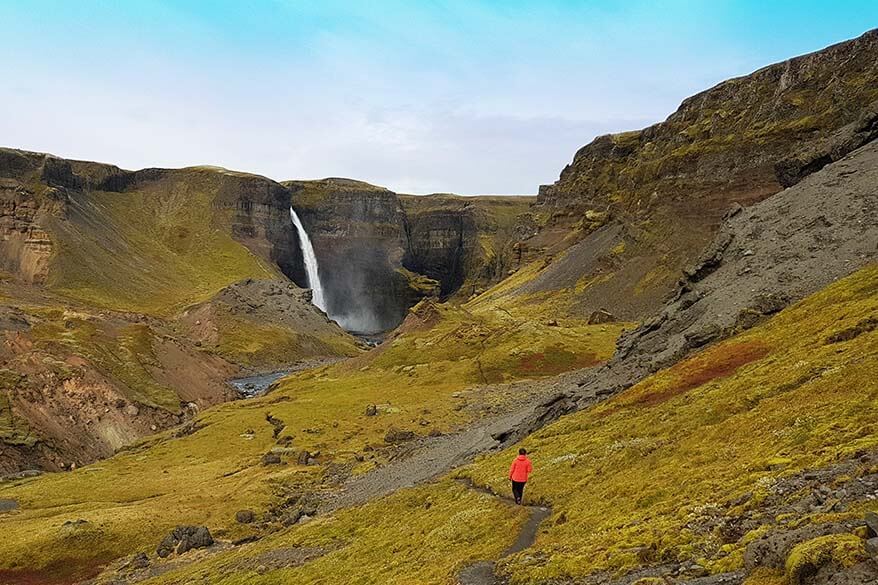
Good to know: Some places at the edge of the highlands are relatively easy to reach on your own with a vehicle that’s allowed on F-roads. One good example is Haifoss Waterfall, located just a short detour from the Golden Circle. Thorsmork, on the other hand, involves river crossings, and even though it can be visited most of the year, it’s much easier and safer to go with a tour.
PRO TIP: If you want to get off the beaten path and explore the remote areas of the highlands, consider a multi-day tour with a local guide. I once did a 4-day highlands tour with a private driver in September and it remains one of the most unique travel experiences I’ve ever had.
READ ALSO: How to Visit Haifoss Waterfall
What to Pack for Iceland in September
Even if September still feels relatively mild, weather conditions in Iceland can change very quickly. It’s always better to pack slightly too warm than not warm enough.
The most important thing to know when packing for Iceland in any season is that you should be prepared for all kinds of weather. Sunshine, rain, strong wind, and sudden temperature changes can all happen on the same day.
Layers are essential. Even if the forecast looks good, temperatures can feel much colder because of the wind, especially in the highlands or along the coast.
A waterproof jacket is a must, and I also highly recommend waterproof pants. Rain pants are especially useful because you can quickly pull them on when needed. In early September, a simple wind- and waterproof rain jacket is often sufficient, but later in the month, I recommend a jacket with some insulation.
Waterproof shoes or hiking boots are essential as well. Many popular sightseeing areas have wet or muddy trails, so even if you are not planning to hike, sturdy footwear is really important. In the warm season (including September-October), we usually pack our Lowa Gtx hiking boots for Iceland.
Other useful things to pack for Iceland in September include:
- warm merino layers
- a hat and gloves
- a rain cover for your backpack
- a quick-dry travel towel and a swimsuit for hot springs
For more details on what to pack, see our summer packing list below. It generally works well for September as well, although you may want to bring a slightly warmer jacket and an extra sweater, especially if traveling later in the month.
LEARN MORE: Iceland Summer Packing List
Best Things to Do in Iceland in September
September is a fantastic time for outdoor activities and road trips in Iceland. You still have good access to hiking trails, the highlands, and many more remote areas, while cooler temperatures and fewer crowds make sightseeing much more comfortable than in peak summer.
Here are some of the best things to do in Iceland in September:
Road Trips
September is one of the best months for a road trip in Iceland. Roads are generally very easy to drive, the days remain fairly long, and it’s less busy than peak summer. Even the most popular places feel calmer, and accommodations are usually easier to find. At the same time, most attractions, tours, campsites, and restaurants are still operating normally.
This is a great time to drive the entire Ring Road. You can comfortably visit places all over Iceland, including the Westfjords, Troll Peninsula, Heimaey Island, and the highlands that may become harder to access later in autumn.
If you have enough time, I highly recommend planning a longer self-drive trip rather than staying only around Reykjavik and the Golden Circle. Iceland’s landscapes change constantly, and some of the most impressive scenery is found outside the busiest tourist areas.
READ ALSO: Iceland Itinerary Ideas for Up to 14 Days
Hiking & Glacier Hiking
September is one of the best months for hiking in Iceland. By this time of the year, most trails are usually snow-free and relatively dry, while temperatures are often much more comfortable for hiking than in the middle of summer.
One of the best places for hiking in September is the Skaftafell area in Vatnajokull National Park. There are several scenic trails here, ranging from short easy walks to longer hikes with glacier views. If you have a few hours to spare, the Svartifoss-Sjonarnipa hike is one of our favorites.
September is also a great time for glacier hiking in Iceland. It’s one of those bucket list activities that’s absolutely worth trying at least once. You don’t need any previous experience since glacier hikes are done with a guide and all the necessary equipment is included.
LEARN MORE: Glacier Hiking in Iceland: Complete Guide
Hot Springs
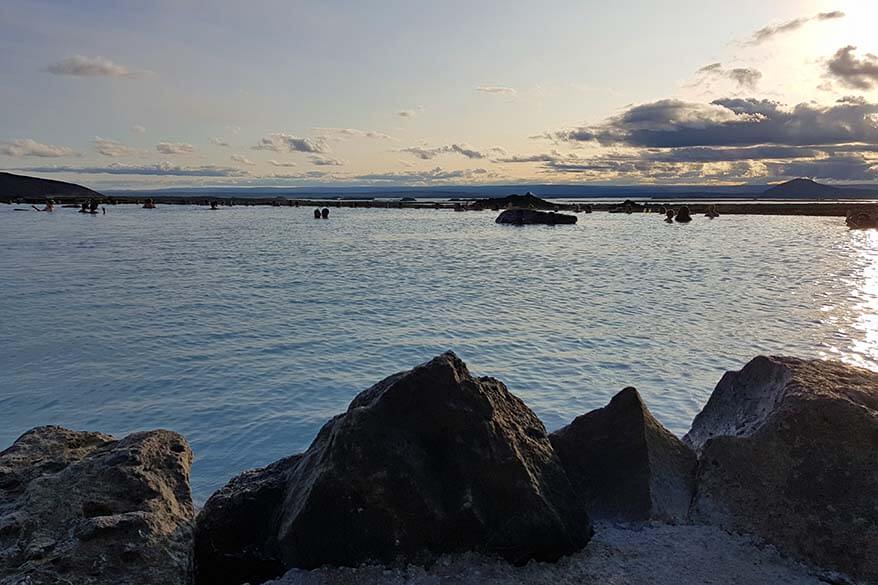
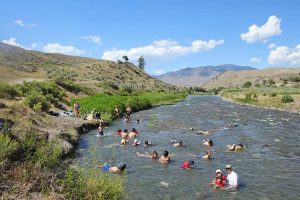
Soaking in hot springs is one of the best things to do in Iceland at any time of the year. After a day of sightseeing or hiking in cooler weather, there’s nothing better than relaxing in warm geothermal water with beautiful Icelandic landscapes all around you.
September is also a great time to visit Iceland’s geothermal pools because they are usually less crowded than in peak summer, yet temperatures are still comfortable enough to enjoy outdoor swimming without instantly feeling cold when you get out.
The Blue Lagoon is the most famous geothermal spa in Iceland, but there are many other excellent options all around the country. Some of our favorites include Sky Lagoon in Reykjavik, Myvatn Nature Baths and GeoSea in North Iceland, Vok Baths in East Iceland, and Forest Lagoon in Akureyri. For many of these, advance reservations are recommended, even in the shoulder season.
Iceland also has countless local swimming pools and smaller hot pots that are much cheaper and often less touristy. Visiting at least one geothermal pool is a must during any trip to Iceland. But if you plan well, you can easily include a pool stop on almost every day of your itinerary.
TIP: Always bring a swimsuit and quick-dry towel with you. Chances are high that you’ll end up stopping at more geothermal pools than you originally expected.
Fall Colors
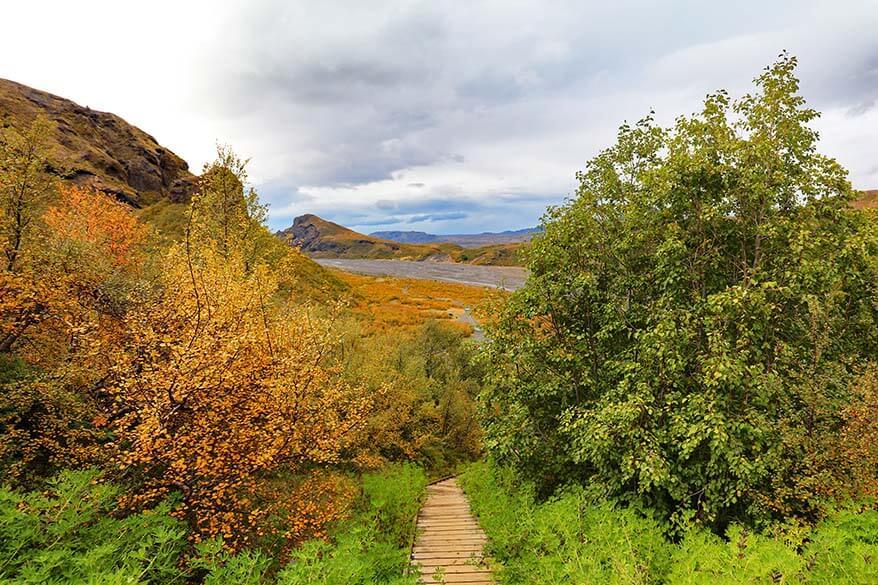
Most people don’t immediately think of Iceland as a fall colors destination, mainly because there are so few trees. But September can actually be a very beautiful time to see autumn landscapes in Iceland.
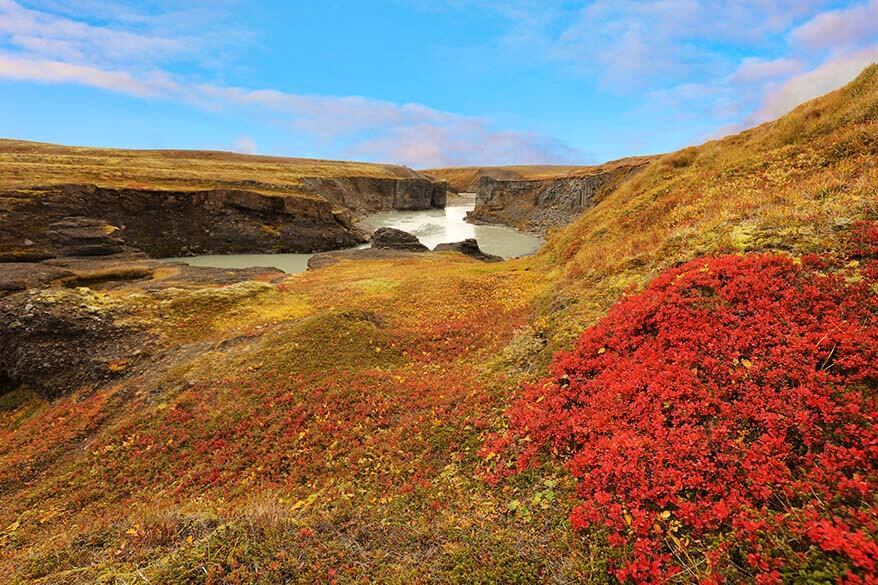
Mosses, grasses, and low bushes turn shades of yellow, orange, red, and brown in early fall. These colors are especially visible in the highlands, where entire valleys and mountainsides can look completely different than in summer.
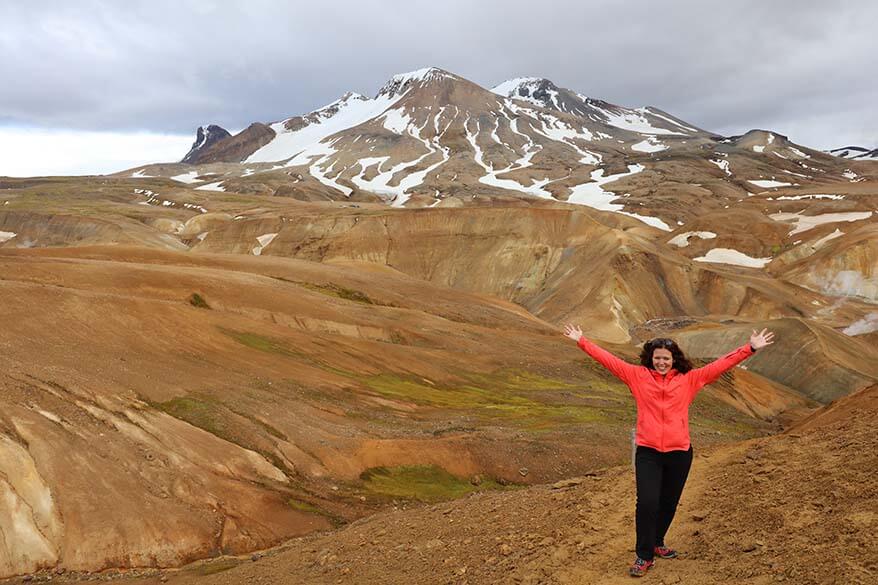
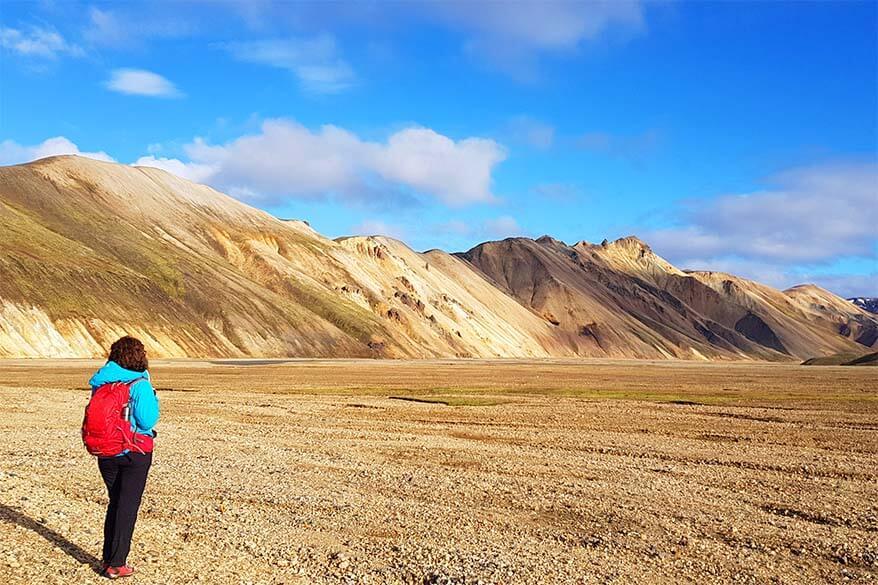
One of the best places to see fall colors in Iceland is Thorsmork. Landmannalaugar is beautiful at this time of the year as well, especially on sunny days when the colorful rhyolite mountains contrast with the autumn scenery.
If you don’t have time to visit the highlands, you can still see beautiful autumn landscapes in other parts of Iceland. Thingvellir National Park along the Golden Circle is one of the easier places to see fall colors without making a major detour.
TIP: If seeing autumn scenery is important to you, mid to late September is usually better than the beginning of the month.
Sheep Roundup (Rettir)
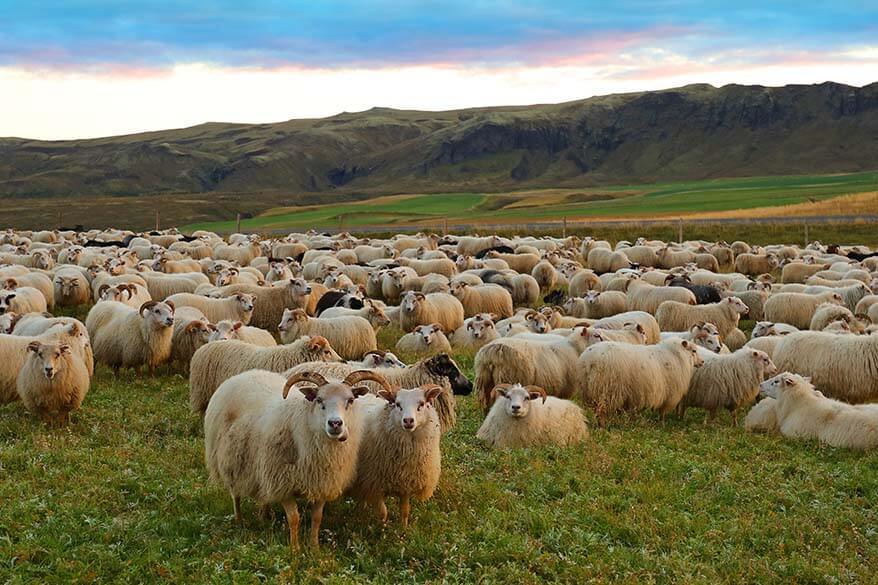
If you visit Iceland in September, there’s a good chance you’ll come across Rettir, the annual sheep roundup. This traditional event takes place all over the country in early fall when farmers bring their sheep back from the mountains before winter.
Throughout the summer, sheep roam freely in the Icelandic countryside and highlands. In September, farmers, families, and volunteers work together to gather them and bring them back to the farms.
It’s a really unique thing to witness during a road trip around Iceland. You may see groups of riders on horses, sheep crossing the roads, barking dogs, and entire valleys suddenly filled with hundreds of sheep. In some places, Rettir turns into a real community event with local celebrations afterward.
One thing I found especially interesting is how farmers know which sheep belong to whom. All sheep are marked, and even if they end up far from their home area, they eventually get returned to their rightful owner.
Good to know: Rettir usually takes place in the first half of September, but exact dates vary by region. Even if you don’t specifically plan around it, you’ll likely see sheep being moved in many parts of Iceland during this time of the year.
Is Iceland Crowded in September?
September is noticeably less crowded than July and August, especially once schools reopen and the main summer vacation season ends.
You’ll still see plenty of tourists at the most popular places along the South Coast and the Golden Circle, but overall, Iceland feels much calmer than in peak summer. Parking is easier, hiking trails are quieter, and it’s generally simpler to book accommodations and activities.
Another big advantage is that you can often enjoy some of Iceland’s most famous places without the large crowds that are common in the middle of summer.
That said, September is still considered part of the main travel season in Iceland, especially in the first half of the month. So while it’s less busy than summer, you should still plan and book most things well in advance.
READ ALSO: Best Things to Do in Reykjavik
Is Iceland Expensive in September?
Iceland is never a cheap destination, but September is usually more affordable than the peak summer months.
Once school holidays end, travel demand starts to decrease, which often means lower flight prices and slightly better deals on accommodations and rental cars compared to July and August.
September is also a bit easier for planning a road trip around Iceland because accommodations are generally less booked out than in peak summer. You still need to reserve hotels and rental cars well in advance, especially if traveling around the Ring Road, but you usually have more choice and slightly better prices.
Another advantage is that most tours, campsites, restaurants, and attractions are still operating normally in September, unlike later in autumn when some seasonal businesses start reducing schedules or closing for the winter.
READ ALSO: How Expensive is Iceland
Iceland Itinerary Ideas
These Iceland itineraries can help you decide how much time you need and which areas to include when planning your trip:
- 1 Day in Reykjavik: the best things to do in Iceland’s capital city.
- 4 Days in Iceland: Reykjavik, the Golden Circle, and the highlights of the South Coast.
- 7 Days in Iceland: a classic first-time itinerary covering the main sights of South and West Iceland.
- 10 Days in Iceland: West and North Iceland, plus the Icelandic highlands.
- Iceland Ring Road: complete Ring Road itinerary in 10 days, plus suggestions for extending your trip.
- Iceland Itinerary Ideas for 1 to 14 Days: route suggestions for trips of different lengths all around Iceland.
Conclusion
So, is September a good time to visit Iceland? Absolutely.
With relatively mild weather, accessible roads, long daylight hours, and the chance to see the Northern Lights, September offers one of the best overall travel experiences in Iceland.
Lesser-known places in Iceland that are well worth visiting in September:
- Reykjanes Peninsula – volcanic landscapes near Reykjavik.
- Snaefellsnes Peninsula – one of the most scenic regions in West Iceland.
- Heimaey Island – puffins, volcanoes, and dramatic coastal scenery.
- Myvatn – geothermal landscapes and hot springs in North Iceland.
- Siglufjordur – colorful fishing town surrounded by mountains.
- Grafarkirkja, Road 76, and Hofsos Pool – one of the most scenic drives in North Iceland.
- Hvitserkur – famous sea stack in Northwest Iceland.
- Westfjords – remote fjords and some of Iceland’s quietest roads.
- Dynjandi Waterfall – the most impressive waterfall in the Westfjords.
- Raudisandur Beach – a unique red-sand beach in the Westfjords.
More tips for your trip to Iceland:
- Airport transfers: How to Get to Reykjavik from Keflavik Airport.
- Practical tips: Tips for Visiting Iceland.
- Where to stay: Best Places to Stay in Iceland & Reykjavik Hotels Guide.
- Packing: What to Wear in Winter & What to Wear in Summer.
- Tours: Best Tours and Day Trips in Iceland & Best Half Day Tours from Reykjavik.
- What to see: Must-See Places in Iceland & South Coast Guide.
- Winter travel: Tips for Visiting Iceland in Winter & Best Things to Do in Iceland in Winter.
- For even more inspiration and practical travel advice, check our Iceland Travel Guide.
TIP: Save this guide for later, share it with your friends, or pin it to Pinterest so you can easily come back to it when planning your trip.

Wonderful article thank you
Thank you for your kind feedback, Caroline! I’m glad you found this helpful. We have lots of travel guides for Iceland, so feel free to check those out if you’re planning a trip.
Great article. Thanks!
I just booked Iceland. Is there a way to copy and paste this info into my notes? I tried and cannot. Neither could I copy the other suggestions. Thank you.
Hi Sue, you can always print the info that you need (Cltr+P or Cmd+P), or – instead of sending it all to the printer, save it to a pdf first and then only print the info that you absolutely need. It’s also easy enough to bookmark the pages you find useful and consult them when you need the info again.
Have a great trip!
I have a question about the Northern lights planetarium show. My sister thinks its looking at live Northern lights but I am trying to convince her it’s a video we watch. Can you answer this for me? We are going in September and want to book our tours.
Hi June, if you refer to the Arora show at the Perlan museum, yes, of course, it’s a video. Northern lights is a natural phenomenon, you could never schedule a show and just watch it. You can read more about it in our guide to watching the Northern lights in Iceland.
Have a great trip!
Your photography is beautiful and lots of great tips. We are going on a 7 day Viking cruise around the island and really looking forward to it. I will refer to your blog again and again.
Glad you found some useful info for your trip on our blog, Christine. Enjoy your trip!
@Christine, We’ll be on the Viking cruise in September. Have you checked out Cruise Critic? There’s a general board called “Iceland’s Natural Beauty 2022” (it’s really supposed to be 2021) and then there are the individual roll calls. You should check it out!
Thank you for this. My adult daugher and I are going for 10 days September 7th. This confirms all the info I have been searching about Iceland in September!!
Glad to help, Jeff. Have a great trip!
Hi Jurga ,
`1) WHICH ARE THE BEST TOUR CAMPANIES IN ICELAND FOR VALUE/ QUALITY ?. WE ARE THINKING ABOUT COMING FOR ABOUT 14 DAYS IN 1ST HALF OF SEPTEMBER 2021 ?, BUT ARE FLEXIBLE FOR 2ND HALF SEPT , IF COMPELLING REASONS .
2)WHICH IS BEST HISTORICAL WEBSITE IN ENGLISH ,TO COMPARE 1ST VS 2ND HALF SEPT RAINFALL ?
3) BEST HISTORICAL WEBSITE IN ENGLISH , FOR COMPARING 1ST VS 2ND HALF SEPT FOR CHANCES OF SEEING NORTHERN LIGHTS ? ROUGHLY WHAT TIME DOES IT GO DARK IN 1ST HALF VS 2ND HALF SEPT?
4) DIFFERENCE IN ACCOMMODATION PRICES AVAILABILITY 1ST HALF VS 2ND HALF SEPT ?
5) IF WE COULD NOT GET A LONGER TOUR , IS IT A LOT EASIER TO BOOK OUR ACCOMMODATION FOR SEPT 2021 THAN JUNE / JULY /AUG ?
6) REFERRING TO Q5 ) , WHAT PRICE SHOULD WE EXPECT TO PAY FOR SOME SUITABLE HIRE CAR ?(4 WHEEL DRIVE ) PER WEEK OR 14 DAYS .
7) WE DON’T HAVE A PARTICULAR BUDGET , BUT SEEK VALUE , WHEREVER APPROPRIATE .
MY WIFE PREFERS WARM /COMFORTABLE ACCOMMODATION IN PRIVATE ROOM WITH TOILET (BUT IT DOES NOT HAVE TO BE LUXURIOUS ) , TO CAMPING ,BUT SHE CAN BE FLEXIBLE
.
THANKS FOR YOUR HELP , JURGA.
Hi Peter, that’s a lot of questions and I really don’t know if I can help you with all of them…
1. There are many good companies, depends on what you are looking for.
2-3. No idea, really. 🙂 It would never occur to me to look for something like that. There’s really nothing more unpredictable than Icelandic weather and no historic data will help you to guarantee that you have amazing weather. If you are going for two weeks, you’ll just have to be prepared for everything anyway. You should always expect lots of wind and also rain. If you are lucky, you’ll get a few days of sunshine too. You just never know. If I recall well, it gets dark at around 8-9 PM in September, depends on when exactly and where you are. For auroras, please see this guide – Northern Lights in Iceland.
4. That depends on accommodation and on demand. The best way to compare is just simply to check booking.com for your travel dates. I don’t expect there will be a significant difference in price for the same place. What you’re likely to have is more availability at the end of September, and thus more choice of accommodations in all budgets. But this year is so different than ‘normal’, that it’s really hard to say.
5. The same answer as above – just check what’s available. This year is very different and there’s still a lot of availability because travel is just starting and many people are booking last-minute.
6. Please see here for car rental prices – simply insert your travel dates, and you’ll see all the best cars and deals. There’s so much difference depending on the time when you travel and the car you rent.
7. There are so many amazing accommodations in Iceland – you really won’t have a problem finding something nice with private facilities. If you are not sure where to stay, take a look at this guide: Where to stay in Iceland.
Hope this helps. Good luck with the planning!
Hi Jurga- Going to book a vacation in mid-September, NY-Reykjavik. Seven full days. I know we can get to a lot of the South from Reykjavik, but if we follow your recommendations for a 7 day visit, do we need to rent a car, or book a hotel in a second or third city/town? If so, which ones. Thanks so much! All my friends who have been have waxed enthusiastic over Iceland’s people and the beauty of the land.
Hi David, I get this question a lot these days, so I’m working on a detailed 7-day itinerary, but it will probably not be published before the end of April…
Anyway, in the meantime, I recommend that you check this 4-day itinerary with all the details of the ‘musts’ along the South Coast. It has all the accommodation suggestions as well.
In addition, with 7 days in Iceland in September, you could add the following places: Snaefellsnes Peninsula, Heimaey Island or Icelandic Highlands day tour, and/or Reykjanes Peninsula.
So your itinerary could look something like this:
DAY 1: Golden Circle (stay in/near Hella for 2 nights)
DAY 2: Day trip to the highlands (the tour I linked to above can pick you up/drop off in Hella) or maybe a boat trip to Heimaey Island
DAY 3: South Coast to Jokulsarlon (follow accommodation suggestions in our 4-day itinerary – day 2)
DAY 4: Jokulsarlon to Vik (follow accommodation suggestions in our 4-day itinerary – day 3)
DAY 5: Back to Reykjavik and visit the city (stay in Reykjavik for the rest of the trip (or 2 nights if you prefer to stay close to the airport on the last night) – see Reykjavik accommodation guide for where to stay)
DAY 6: Day trip to Snaefellsnes Peninsula (by car or with a tour)
DAY 7: Reykjanes Peninsula and Blue Lagoon (you can stay in Reykjavik or close to the airport which is close to the Blue Lagoon – see accommodation suggestions in our Reykjanes Peninsula guide)
You could also move things around a bit and start with Reykjavik, followed by Snaefellsnes Peninsula, and then Golden Circle and all the rest. Or start with Snaefellsnes Peninsula, then the Golden Circle, with Reykjavik at the very end of the trip. There are many ways to do this – this is just one of the suggestions. See also a bit how your flight hours fit with the itinerary. Some people like to start with the Blue Lagoon upon arrival. It’s really your choice and also depends on how often you want to switch hotels.
And yes, it’s best to rent a car – in September the roads are usually very good and you can see so much more at a more relaxed pace by making a road trip. For this itinerary, you don’t need a 4×4 and in September, any regular car should be fine. Or you can opt for a small 4WD car – always a good idea in Iceland.
If you decide to go to the highlands for a day, I think it’s better to just take a tour. It’s cheaper than renting a 4×4 car for the entire duration of your trip and it will be less stressful. In general, mid September, the highlands should still be accessible, so it would be a nice addition to your trip (especially if you hike).
Hope this helps.
Have a great trip!
Great article. We are flexible with are dates, but are trying to choose between last week Aug/first week Sept, or first 2 weeks Sept. We plan to rent a camper and drive the whole ring road; should we be concerned about closed campsites in less touristed areas if we choose the later dates? Does the weather change much between the first and second weeks of Sept? Are any tourist spots closed by mid Sept? We hope to hike, kayak, and maybe whale watch.
Hi Margie, in terms of the weather, it’s really hard to say – Iceland is always a bit of a gamble. I’ve had amazing weather mid-September and I’ve also had terrible weather mid-August and vice versa. So that’s one thing you really can’t control. In general, August should be warmer and if you wait too long, towards the end of September, you might experience snow already…
For the rest – the biggest advantage of going in September and not in late August is that your chances of seeing auroras are significantly higher. Yes, one week can make a huge difference here. We visited Iceland at the end of August this year and it just didn’t get dark enough yet. A week later, everyone was seeing auroras already.
A disadvantage of going in September is that indeed some places will start to close for the season already. Many whale watching tours in the north of Iceland usually stop running at the beginning of September, some campings will close, etc. So you should do a bit more research, figure out where exactly you’re planning to go, and then decide based on that. For more information regarding camping, please check our camping in Iceland article.
One more thing – if you are planning to visit the highlands, then you should definitely try to go mid-September by the latest.
Hope this helps.
Thank you for this GREAT article! Very helpful! I’m interested in renting a camper car (Through the company you recommend) and driving the Ring Road next month (September) – ideally staying in a place a few days to hike & sightsee and then move on. Is this logical? Are there towns along this road – ideally that would have a coffee shop with WiFi to work out of?
Hi Kirsten, yes, this is logical, but I think it’s best to move around, so not more than 2 nights at most places, especially because you have your own house on wheels – no reason to drive up and down.
But keep in mind that you have to stay at the campsites (sleeping in the car just anywhere isn’t allowed in Iceland anymore). And not all the campsites will be open in September anymore, so you’ll have to do some research. More information here: camping in Iceland).
And yes, there are quite some towns along the Ring Road in Iceland with restaurants and coffee shops and many have free wi-fi. Use Google maps to find restaurants etc. along the way.
Hope this helps. Enjoy your trip!
Thank you for the quick reply and information! With more research I realized the car rental place you recommend offers an internet router that I’m going to opt in just to be safe. I didn’t realize I’d be restricted to the campsites – that would have been quite a surprise – thank you for the link as well!
Oh yes, we just came back from Iceland and had also rented wifi with our car from Lagoon Car Rental – it worked amazingly well and we could use it pretty much everywhere. Also – don’t rent a GPS – it’s completely unnecessary as you can just use Google Maps all the time.
And yes, do some research for the campsites that are open on your travel dates to avoid any unpleasant surprises. And stay warm!
Hi jurga
Thank you for the great info, in very pleasant way. I m going to attend a conf in Reykjavik, for five days beginning 2nd of Sep. I ll have free time after six or four pm. Kindly, what is your suggestion for this time to enjoy within the town.
Hi Nagwa, there are actually quite a few things you can do in the evenings:
– Visit Perlan (open till 10pm) – make sure to do the Aurora show
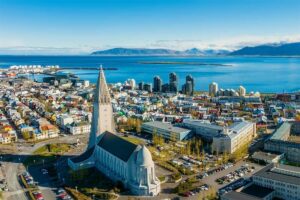
– Climb the Hallgrimskirkja tower (open till 9pm)
– Take a Northern Lights tour
– Take a bus to the Blue Lagoon (you have to book in advance!)
– If you can make it for 5pm, you can take a whale watching tour. Alternatively, there are later tours that combine whale watching and Northern Lights hunting, but I’m not sure if it’s really a good idea – it will either be too dark for whales or too light for auroras….
Here you can find more suggestions for short excursions in and near Reykjavik.
Hope this helps.
Hello! Great Information! We are going August 28 to September 6, any chance of Rettir or Northern Lights? Also how do we prepare for this trip? I have to read how Iceland is in August AND September and this is a transitional period but not too different, but based on the days we are going would it be safe to assume just go with what Iceland is like in September?
Hi, yes, it will be about the same at the end of August as at the beginning of September. There is a high chance to see the Northern Lights (please check our tips for Northern Lights), but I’m not sure about the sheep 🙂 In principle, you can always see sheep in Iceland, just maybe not in such big numbers as during Rettir.
As for how to prepare, please check this article for what to wear and what to pack for Iceland and for the rest – check our Iceland page for more information.
Have a great trip!
Great information. Thank you. Visiting the week of September 6, 2019.
Possibility of seeing Puffins????
Very small chance, I’m afraid. From what I hear, they already left some areas, but are still around in the East and in the South. But by September, they’ll probably be back to sea…
You can always ask in our Facebook group a day or two before your trip if anyone still saw them around at that time…
Have a great trip!
Thank you so much for the quick response!
Hi Jurga, much appreciate for your information!!
Do you have any recommended camper van rental to rent for 4 person trip around Iceland?
Hi Ned, I’m sorry but I can’t help you with this. Just google Iceland camper rental and you’ll find plenty of choices. Hope this helps.
Wow! This is by far the most informative post I have seen about planning a trip to Iceland. Thanks. You are awesome 🙂
You made me smile, Parinitha. We have much more detailed posts about Iceland than this one. 🙂 Please check our Iceland page for more articles and information, or – if looking for ideas on how to best plan your trip – our 4-day Iceland itinerary or general Iceland itinerary suggestions for up to 2 weeks. Enjoy your trip!
Wow! Loved this post❤ we are thinking of visiting for a week during the third week of September. Can you please suggest us a rough itinerary? Would very much appreciated it! Also, we won’t be driving, so dependent on tours and private cars with drivers.
Hi Neha, if you don’t drive, you can just stay in Reykjavik and take day trips. Here you can find my hand-picked selection of the best day trips from Reykjavik. Since September is a bit of a shoulder month, please also check Reykjavik winter day trips – those will include the Northern Light tours as well.
I would suggest to definitely visit the South Coast and Jokulsarlon, Golden Circle, at least one of the thermal lagoons, and in September I also recommend you visit the highlands and take a Northern Lights tour.
Here is how your trip could look like (day order doesn’t matter much):
Day 1 Reykjavik and maybe take a bus to the Blue Lagoon (you’ll need to reserve Blue Lagoon separately and in well in advance)
Day 2 Golden Circle and Fontana Wellness Tour
Days 3 and 4 – I really suggest doing this as a 2-day trip like this: 2 Day South Coast Tour with Glacier Hike & Boat Tour Otherwise, if you rather stay in the same hotel in Reykjavik, you can do this as a day trip to Jokulsaron, but it will be a very long day and you won’t see as much. Alternatively, just do the South Coast.
Day 5 Take it easier. Visit Perlan in Reykjavik, go whale watching, or book a Northern Lights tour.
Day 6 Snaefellsnes Peninsula
Day 7 If you can hike 3-4 hours, I recommend to visit Landmannalaugar in the highlands. Otherwise you can find plenty of other suggestions in my posts mentioned above.
If you prefer private tours, there are quite some options for private tours from Reykjavik.
I also know a very good private guide who can arrange the whole trip for you and make any itinerary that you want to. But in that case, I suggest you don’t stay in Reykjavik and let him book hotels for you along the way. It’s much more sightseeing with less driving. You can find an example of a trip I did with him here (Iceland highlands trip with a private driver) – it’s just an example and he does lots of regular ‘best of Iceland’- type of private trips as well. His website is linked in that article; tell him Jurga sent you and he’ll take care of you.
What you can also do is, for example, a 2-4 day private trip along the South Coast and then visit a few other places as a day trip from Reykjavik. As you can imagine, private trips will always be much more expensive than organized day trips, so it’s a way to make it more affordable.
P.S. If you are staying in Reykjavik and are looking for hotel recommendations, please check this article on where to stay in Iceland (also Reykjavik hotels).
I hope this helps you and hopefully some other readers. I always think I’ll just quickly answer, and before you know it, it becomes a whole trip planning 🙂 Enjoy your trip!
And that is when I will go then.
Perfect choice for the first trip!
Hi Jurga. We are going in September for 7 days. What do you think is the best self driving tour for that time?
Hi Carlos, there are SO many possibilities. If you haven’t been to Iceland before, I’d suggest this 4 day itinerary plus maybe a day trip to the highlands. This specific day trip can pick you up in Hella, so is easy to combine with the itinerary I suggested (after day 1 you’d stay in Hella area, so can easily stay one night extra there and make that day trip).
If you still have a day or two left (depends on your flight schedule and whether those 7 days are actually 7 full days), you could potentially consider driving up to Snaefellsnes Peninsula. I have no info about the latter on the blog yet – we ourselves are going in August and will be visiting that part as well.
Hope this helps. PS in September you can visit all these places in a regular car (if you don’t drive to the highlands on your own – in that case, you’d need a big 4WD).
Hi Jurga, i will be travelling to iceland on Sept 12, do you think i should rent a SUV car or just a normal car? We only have 2 person, appreciate you advise …
If you stay on the main roads (so no highlands or F-roads), you should be ok with any regular car in September. Of course, you never know how the weather will be, but generally speaking, it should be fine. However, often a small SUV or 4WD isn’t that much more expensive than a regular car, especially outside the peak summer season.
Hi Jurga may I know u travel to Iceland is on early, mid or end of Sep I am planning to take wedding photo & try my luck to see northern light
Hi Sally, I was there mid-September (11-16/9). The weather and the Northern Lights is always a gamble in Iceland, but generally beginning of September should be much warmer than the end of the month. For auroras it doesn’t matter – there is always a chance from mid-August till mid-April.
Much appreciate for your information.
It was very valuable for us to plan our trip.
Did you see northern lights in your trip?
Where was the best places to see northern lights in September?
Many thanks
Hi Linda, yes we saw the Northern Lights several times. We went outside every night and saw them three out of 5 nights if I recall well. When there are no clouds, you have a good chance to see them. It doesn’t matter where you are – all you need is darkness, no clouds, and at least some aurora activity. Use this website to check aurora forecast when you are in Iceland and if you see white on the map (= no clouds) in your area and activity of at least 2, there is always a chance. KP index of 3-4 is enough to see auroras with the naked eye, but of course, you’ll see them better if the activity is stronger.
If you are staying in the city, then it’s better to drive outside the city or join a tour (you can find some suggestions here – best Iceland tours in winter), but if you are traveling around the country, you’ll be staying at the places that don’t have much light pollution, so you can just see auroras anywhere by your accommodation.
Enjoy your trip!
Hi Jurga
Much appreciate for your prompt reply.
Kind regards
Linda
In the Iceland,What months are summer and what months are winter ? It is not clear to me.
In the Finland and Norway ,whether northern lights become visible.
It depends on what you mean by the summer 🙂 Icelandic summer (June-August) has about the same weather as Spanish winter, but with more wind and rain. 🙂 So if you are expecting beach weather, Iceland isn’t the place to be.
As for the Northern Lights, the season starts from around mid-August and lasts till mid-April – you need darkness to see them and in the Northern countries it stays light pretty much the entire time between May and July.
Hi,
Very helpful post! On what dates were you there in Sept?
Hi Kevin, I was in Iceland from the 11 till 16th of September and we really lucked out with the weather. Here you can read more about the trip that I made this time: Icelandic highlands.
Your website has excellent information, Jurga. Makes trip planning to Iceland so much easier.