
What to Wear in Iceland in Winter: My Packing Tips & Exactly What I Wore
This site contains affiliate links, which means that we may earn a small commission, at no cost to you, for qualifying purchases. It supports the work that goes into keeping this content free. Thanks for reading! More info: Privacy Policy.
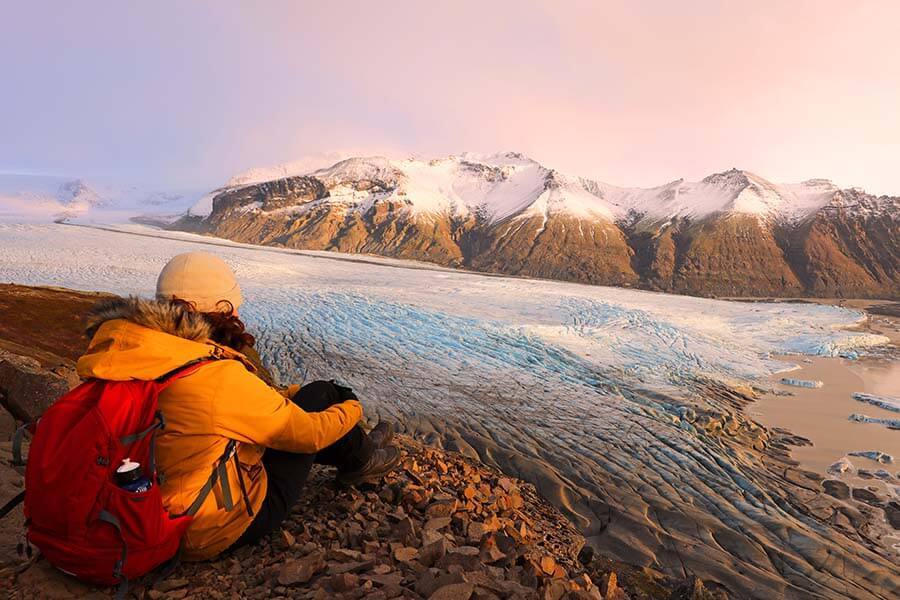
Looking for practical advice on what to wear in Iceland in winter? Whether you’re visiting in October or November, during the coldest months of December, January, and February, or in March or early April, packing the right clothing is essential. Strong winds, rain, snow, and rapidly changing weather can make it feel much colder than the temperature suggests.
I’ve traveled to Iceland many times, in every season. The specific clothing examples in this guide are based on a November trip when temperatures dropped to -10°C (14°F) and winds reached 100 km/h (62 mph). Below, I share exactly what I wore, what kept me warm and dry, and the one item I wish I had packed on my first winter trip.
You’ll also find a complete Iceland winter packing list for October through early April, including jackets, pants, boots, thermal layers, gloves, and other practical essentials. In addition, I include tips for Reykjavik and a printable checklist you can download.
Good to know: Traveling to Iceland between May and September? See our Iceland summer packing list instead.
READ ALSO: Iceland Winter Itinerary
What Is the Weather Like in Iceland in Winter?
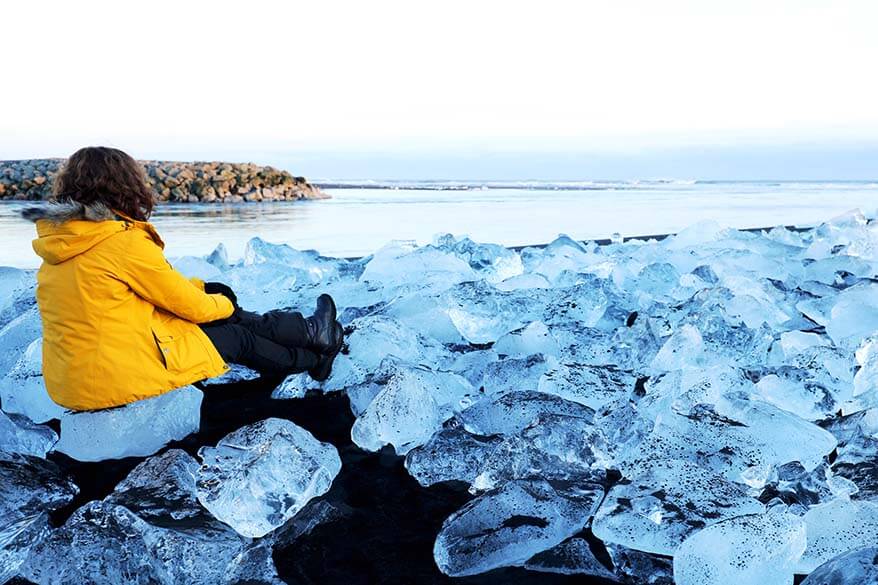
Iceland’s winter temperatures are often milder than people expect. In Reykjavik, average temperatures in January are around 0°C (31°F). However, strong winds can make it feel significantly colder than the temperature suggests.
Winter weather in Iceland is also very unpredictable. Conditions can change quickly, and you may encounter rain, snow, sleet, and strong northerly winds, sometimes all on the same day. In many areas, you are likely to experience more rain than heavy snow.
This is why proper winter clothing is so important. Warm layers combined with a waterproof and windproof outer layer will help you stay comfortable and make the most of your trip, whatever the weather.
Below, you’ll find my complete Iceland winter packing list and practical tips on what to wear.
READ ALSO: Essential Tips for Iceland in Winter
What to Wear in Iceland in Winter
Icelanders often say that there is no bad weather, only bad clothing. But what does that mean in practice when deciding what to wear in Iceland in winter?
Although conditions vary from month to month and even from day to day, the essential winter clothing is largely the same from October through April. Whether you visit in November, December, January, February, or March, you should prepare for cold temperatures, strong winds, rain, snow, and ice.
Packing for Iceland can be challenging because the weather changes so quickly. However, the basic approach is quite simple: dress in warm layers, ideally wool, and always wear a waterproof and windproof outer layer.
Layers allow you to adjust your clothing throughout the day while staying warm and dry in changing conditions. Below is a complete overview of what to wear and pack for your Iceland winter trip.
Waterproof winter jacket
A warm, waterproof, and windproof winter jacket is one of the most important things to pack for Iceland. The strong wind and frequent rain can make it feel much colder than the temperature suggests, so a regular warm coat without weather protection will not be sufficient.
An insulated waterproof parka is ideal. However, a waterproof ski jacket can also be suitable if it has enough room for several warm layers underneath.
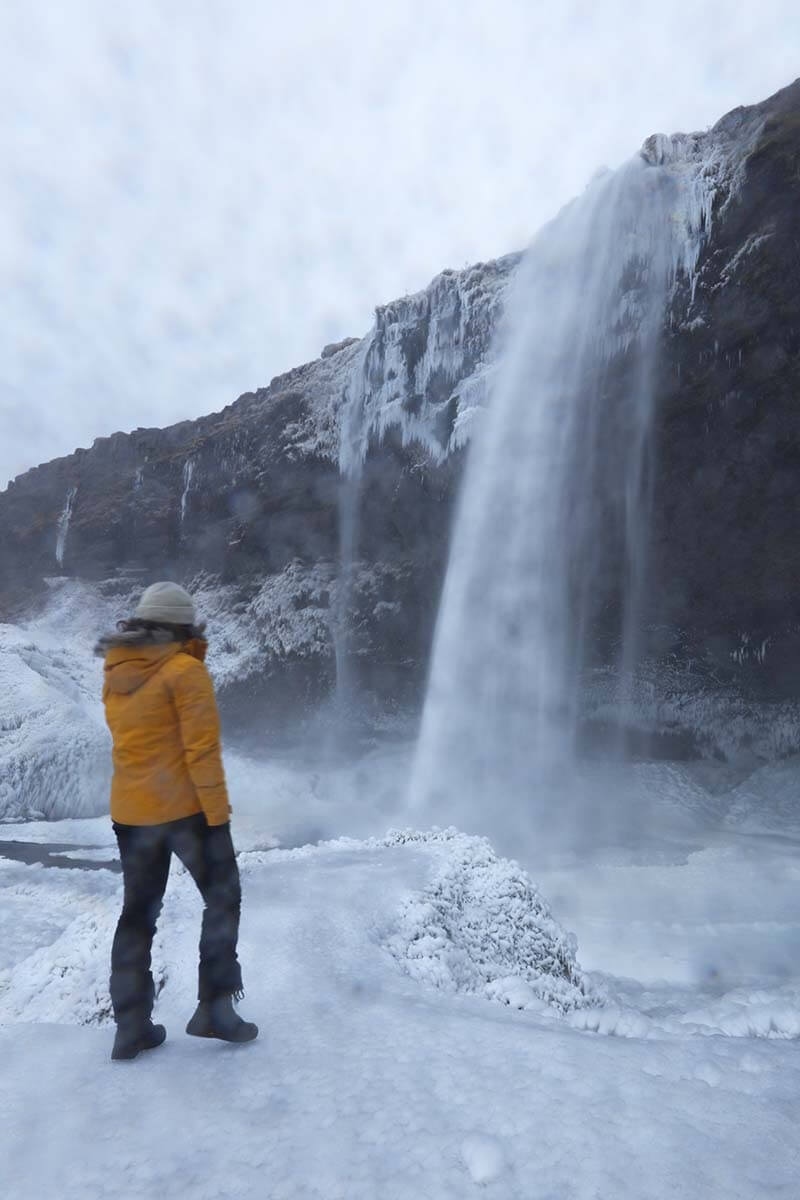
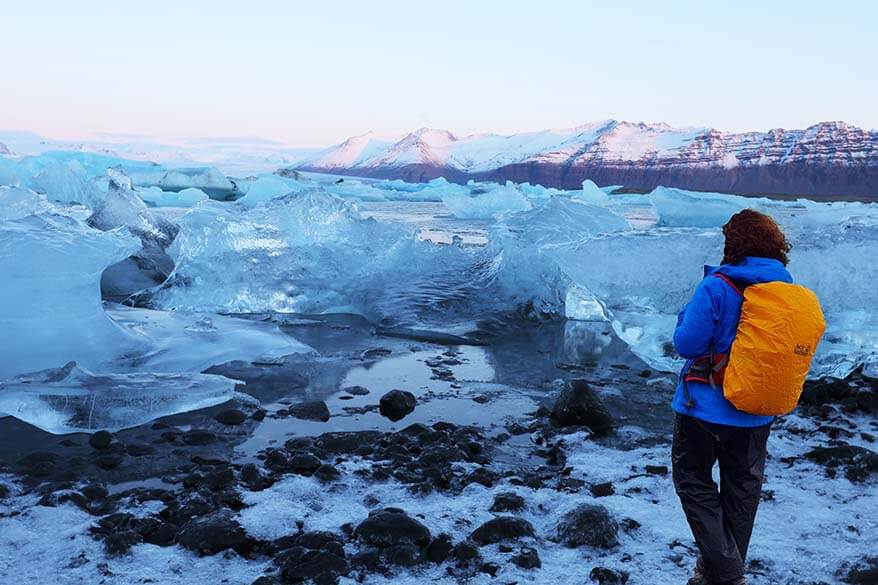
On my November trip, I wore an insulated waterproof and windproof jacket similar to this one. Combined with thermal underwear and wool or fleece layers, it kept me warm even when temperatures dropped to -10°C (14°F) and the wind was extremely strong.
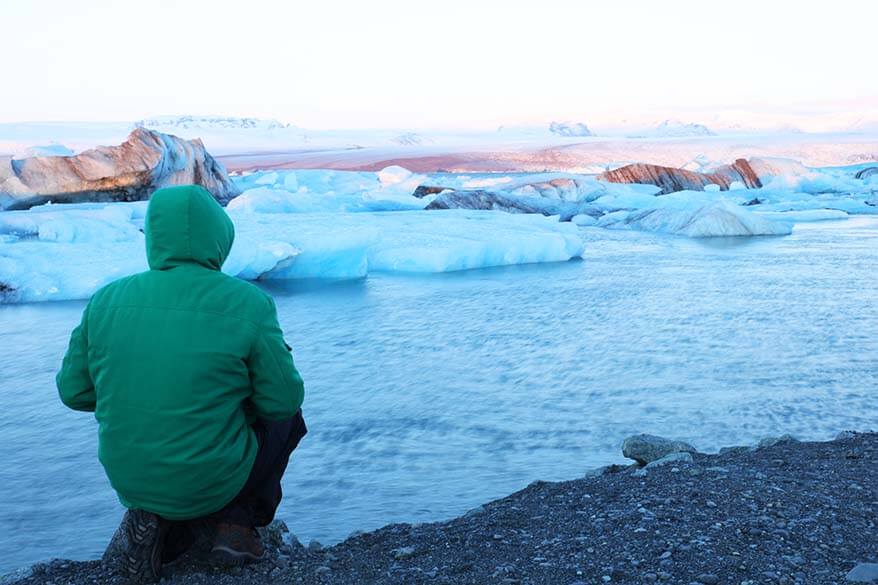
Whether you visit Iceland in October, January, or April, make sure your outer jacket is both waterproof and windproof! A waterproof winter parka like this is a great option for women.
Thermal underwear
Thermal underwear is the base of your winter outfit and makes a huge difference when spending long periods outdoors. Pack both long-sleeved thermal tops and thermal leggings.
Merino wool is the best option because it is warm, lightweight, and comfortable to wear throughout the day. I wore Icebreaker 260 Merino base layers every day during my November trip and would not have managed without them.
Ideally, pack two or three sets. While you might manage with just one pair of leggings, you really need a few thermal shirts. Hotels and restaurants in Iceland are usually very warm, so your base layers may need freshening up more often than expected. The good thing is that merino base layers are easy to wash by hand and normally dry quickly in heated hotel rooms.
If merino wool underwear from a premium brand is outside your budget, this merino set is one of the best-value options I’ve found. Quite frankly, with Icebreaker prices as high as they are nowadays, I find it difficult to justify the cost if you only need thermal underwear for one or two trips. Alternatively, you can opt for thermal underwear like this. It’s very affordable and much better than having no thermal base layer at all.
Wool or fleece sweaters
You will also need one or two warm midlayers between your thermal underwear and winter jacket. Wool sweaters provide excellent insulation, while fleece is lightweight, quick-drying, and easy to layer.
I recommend packing at least one warm wool sweater and one or two thinner wool or fleece tops. This gives you enough flexibility to add or remove a layer as the weather changes.
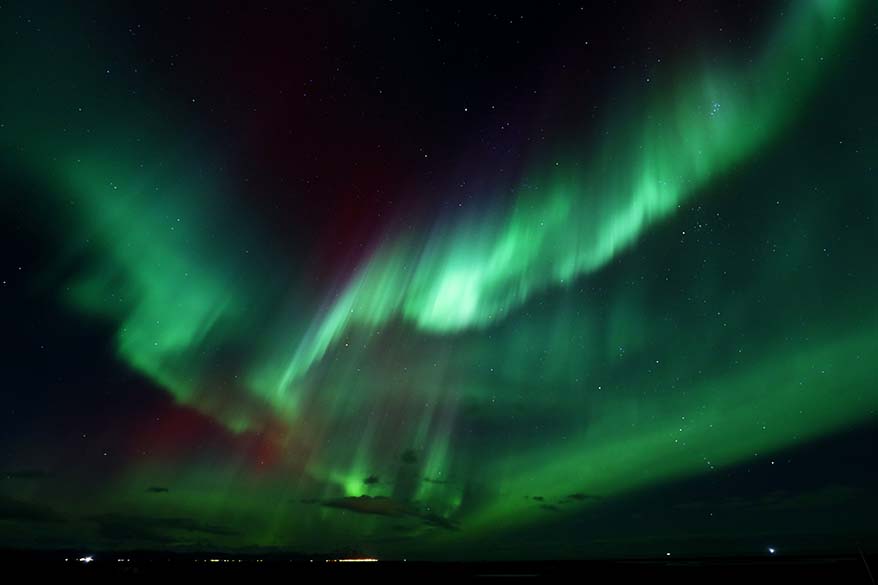
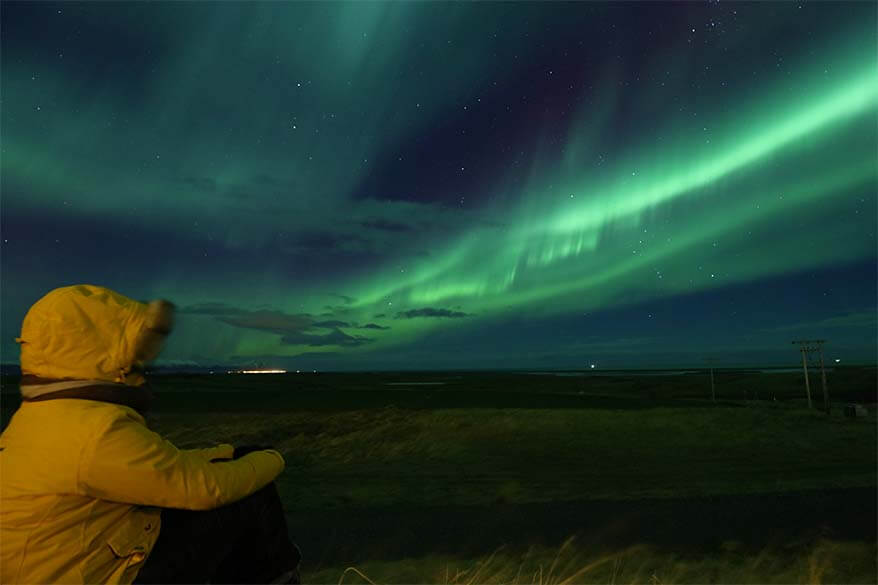
For this trip, I packed a 100% wool sweater like this and wore it every day. I also brought two fleece sweaters, one half-zip and one full-zip (similar to this). At times, I wore all three layers (plus a merino base layer and a parka), especially when spending long periods outside waiting for the Northern Lights.
READ ALSO: All You Need to Know About Northern Lights in Iceland
Waterproof winter pants
Waterproof or water-resistant winter pants are just as important in Iceland as a proper jacket. Jeans are fine for Reykjavik, restaurants, and evenings at your hotel, but they are not suitable for outdoor sightseeing. Once denim gets wet, it becomes heavy, cold, and slow to dry.
During my November trip, I wore thermal leggings underneath insulated waterproof ski pants like these. This combination kept me warm and dry while visiting waterfalls, sightseeing outdoors, and waiting for the Northern Lights at night.
Alternatively, wear thermal leggings under warm hiking or winter pants (like these) and carry lightweight waterproof rain pants in your backpack. You can quickly pull the rain pants over your other layers when the weather changes.
This combination may be sufficient during the milder months of October and March. However, for trips between November and February, I highly recommend packing warm, insulated ski pants.
Wool socks
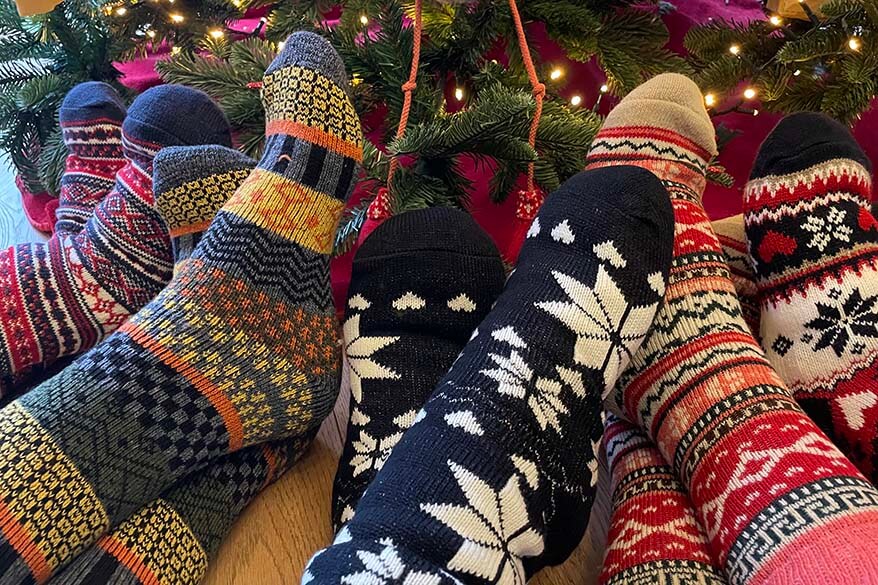
Pack several pairs of warm wool or wool-blend socks. They are much warmer than cotton socks and continue to provide insulation even when slightly damp. Also, keep in mind that socks that make your footwear too tight can restrict circulation and leave your feet feeling colder.
On particularly cold days, I wore two pairs: a pair of these wool ski socks underneath and thicker wool blend socks like these on top. Just make sure your boots still fit comfortably.
Waterproof winter boots
Comfortable, waterproof winter boots with good traction are a must for Iceland in winter. Look for insulated boots with sturdy soles that can handle rain, snow, mud, and slippery paths. Many locals wear Sorel Caribou boots in the Nordics in winter.
In November, I wore UGG Adirondack insulated waterproof winter boots. They kept my feet warm and dry throughout the trip and were comfortable enough for full days of sightseeing.
In early October or April, waterproof hiking boots may be sufficient when combined with warm wool socks, depending on the weather. In warmer months, I usually wear these LOWA Renegade hiking boots.
TIP: If you plan to go glacier hiking, make sure your boots are sturdy enough to accommodate the crampons supplied by the tour company. Sneakers and lightweight everyday shoes are really unsuitable, especially in the winter.
READ ALSO: Glacier Hiking in Iceland
Ice cleats or stabilicers
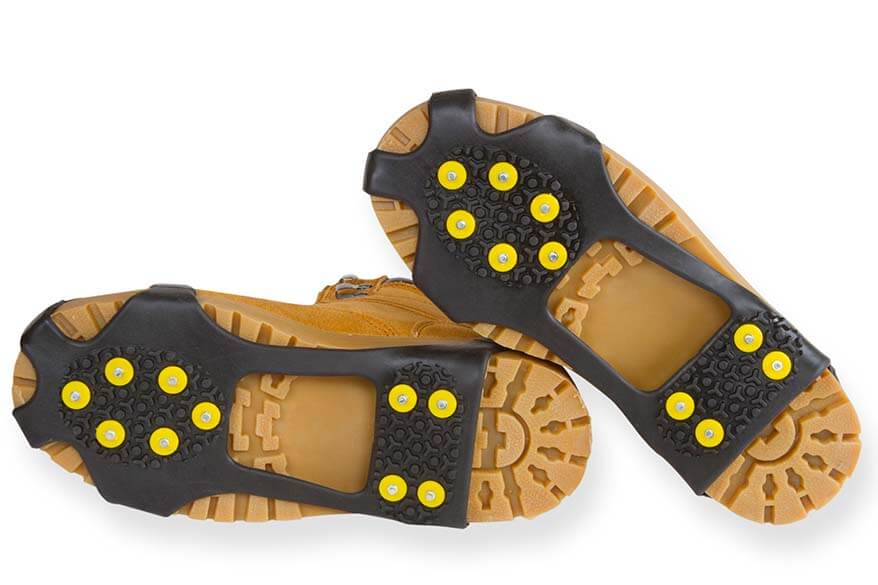
Ice cleats were the one item I wish I had packed for my Iceland winter trip. Even sturdy winter boots may not provide enough grip on icy paths, especially around waterfalls and other popular natural attractions.
Compact shoe spikes or ice cleats like these fit over your boots and make walking on slippery surfaces much safer. They are inexpensive, take up very little space, and are particularly useful from November through March.
If you are unsure whether you will need them, pack them anyway. You may not use them every day, but you will be glad to have them when conditions become icy. Since that trip, I always pack a pair of ice cleats when traveling to the Nordics in winter.
Waterproof gloves, winter hat, and scarf
Warm gloves, a winter hat, and a scarf or thermal buff are musts for Iceland in winter. Choose accessories that protect you not only from the cold but also from strong wind and rain.
On my November trip, I wore thin inner gloves underneath warm, windproof, and waterproof mittens. Mittens are generally warmer than gloves, while the thin inner gloves allowed me to use my camera without exposing my bare hands to the cold.
I also packed two hats: a fleece hat and a trapper hat similar to this one. I wore the fleece hat on dry days and used the warmer hat during strong winds, rain, and long waits outside for the Northern Lights.
Finally, pack a warm scarf and/or thermal buff to protect your neck and lower face. I brought both and sometimes wore them together in the coldest and windiest conditions.
On more recent trips, I pack two neck gaiters: a Polar Buff and a wool/fleece neck gaiter like this. In very cold or windy weather, I always layer them for extra protection.
Casual clothes and extra shoes
Pack jeans or lightweight pants for the flight, evenings at your hotel, and restaurants. People dress very casually at most hotels in Iceland, so jeans and a sweater are usually sufficient. You only need smarter clothing if you plan to visit an upscale restaurant in Reykjavik.
I also recommend packing lightweight indoor shoes or sneakers. They are useful at hotels and are a good backup if your winter boots get wet. Just don’t rely on sneakers for outdoor sightseeing in winter.
READ ALSO: Where to Stay in Iceland & Where to Stay in Reykjavik
Swimsuit and a quick-drying towel
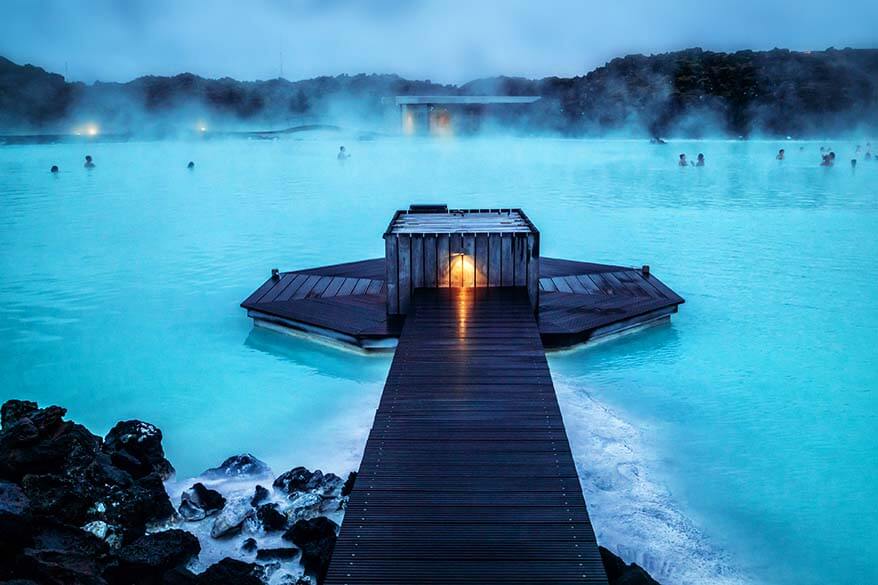
Don’t forget a swimsuit. With geothermal pools, hot springs, and outdoor hot tubs all over Iceland, we try to fit in a warm soak every day, even in winter.
Some larger spas include towels or offer rentals, but local pools may not, and rentals can be expensive. We always pack lightweight, quick-drying towels instead. They take up little space and dry much faster than regular towels.
I really like these travel towels with a small zippered pocket. It’s handy for keeping your smartphone, room key, or other small valuables out of sight.
Flip-flops can be useful but aren’t essential.
What Else to Pack for Iceland in Winter
In addition to warm clothing, a few other items can make winter travel in Iceland much easier. Here’s what else I recommend packing.
Reusable water bottle
Icelandic tap water is safe to drink, tastes great, and is free. Bring any reusable bottle you already have and refill it with cold tap water throughout the day. Any bottle is better than none, but if you need a new one, we really like these Owala insulated water bottles.
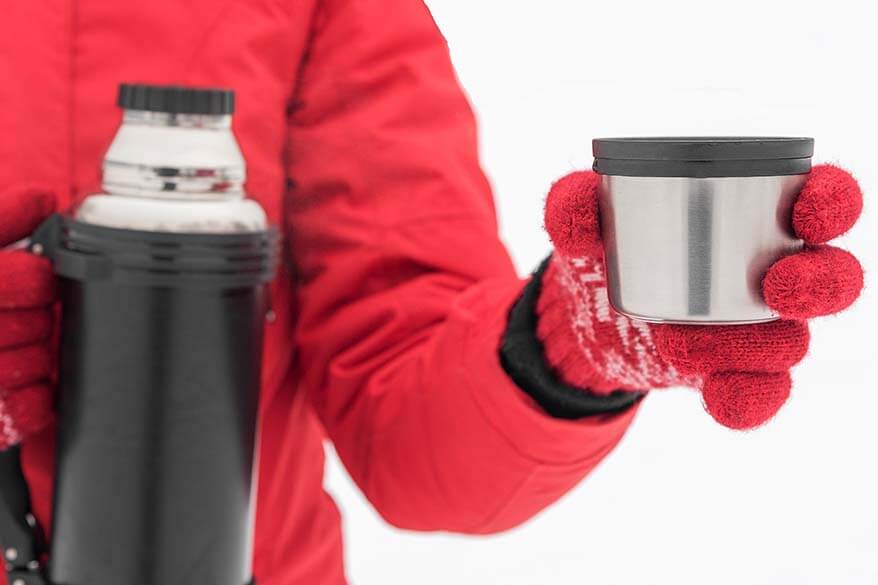
Thermos
A thermos flask is nice to have if you are road-tripping around Iceland in winter. A hot drink makes a huge difference after spending time outside in the cold!
Although Iceland has many more cafes and restaurants than when we first visited, you can still drive a long way without finding anywhere open, especially in winter.
We always fill our thermos with coffee or tea before leaving and pack sandwiches and snacks for the day. This is especially useful in the darkest winter months, when daylight hours are limited. Instead of losing time looking for a restaurant or stopping for a long lunch, we can eat whenever it suits our itinerary and make the most of the daylight.
We always pack this compact thermos flask like this. If everyone prefers to have their own drink, insulated travel tumblers like these are more practical. Each person can keep one in the car and drink directly from it.
Moisturizer
Iceland’s cold winds and very warm hotels can quickly lead to cracked lips, dry hands, and itchy skin. I always keep lip balm and a small tube of hand cream in my pocket and pack a good moisturizer to use in the morning and evening.
Any moisturizer is better than none, but most hotels do not provide body lotion, so pack your own. These days, we use urea cream for very dry skin, and it works very well for us.
PRO TIP: A small tub of Vaseline is inexpensive and useful for dry lips and particularly dry patches. It also works wonders on red, sore skin under your nose after repeatedly blowing it in cold weather.
Washcloths
If you normally use washcloths, bring one or two from home. Many American readers have told me they were surprised that their hotels in Iceland didn’t provide them.
As a European, I don’t expect hotels to provide washcloths, so they weren’t included in my original packing list. I added them after receiving the same feedback from so many readers.
Sunglasses
Don’t leave your sunglasses at home just because you’re visiting in winter. The sun stays very low in Iceland, and the glare can be uncomfortable when driving, especially when there is snow or ice. I never leave on a trip without my sunglasses, and have used them in Iceland in winter as well.
Backpack with rain cover
A day backpack is useful for carrying extra layers, gloves, snacks, water, and camera gear. But a good rain cover for your backpack is an absolute must in Iceland in any season.
The weather can change in minutes, and one heavy shower is enough to soak everything inside your bag. Even if your backpack is water-resistant, I wouldn’t rely on that alone.
Unless you’re spending most of your time in Reykjavik, you can leave your umbrella at home. Iceland’s strong winds make it practically useless, especially in rural areas.
Travel adapter
Iceland uses European Type C and F plugs. If you’re traveling from outside Europe, pack a European travel adapter for charging your phone, camera, and other devices.
Keep in mind that a plug adapter doesn’t convert voltage. Most phone, camera, and laptop chargers work with Iceland’s 230V electricity, but they are not suitable for heavy appliances such as hair dryers.
TIP: Pack a multi-plug adapter with several USB ports so you can charge multiple devices at once. And don’t forget all your cables!
Power bank
Cold weather drains batteries much faster, especially when you’re using your phone for navigation and photos throughout the day. I always carry a fully charged power bank and pack at least two spare batteries for my camera.
PRO TIP: Keep spare batteries in an inner jacket pocket, close to your body. This helps them stay warm and prevents them from losing charge as quickly. Keep your power bank somewhere protected from the cold as well and recharge it every evening.
Flashlight
Pack a small but powerful flashlight. It gets dark very early in Iceland in winter, and many rural parking areas and viewpoints have little or no lighting. Don’t rely entirely on your phone’s flashlight, since using it will drain the battery even faster in the cold.
We used a flashlight all the time when looking for a good place to photograph auroras, setting up the tripod, and adjusting camera settings in the dark. A headlamp is even more practical for photography because it keeps your hands free.
Camera gear and tripod for aurora photography
If you’re hoping to photograph the Northern Lights, pack a sturdy tripod. Whether you use a camera or a smartphone, keeping it completely still will give you much better results in low light.
Iceland can be extremely windy, so a flimsy tripod may be practically useless. I use this Manfrotto travel tripod, which is sturdy but still compact enough for travel.
For a smartphone or lightweight camera, a smaller tripod like this may be sufficient. In strong winds, keep it low and avoid extending the center column. If you’re using a smartphone, make sure the tripod includes a phone holder or pack a compatible tripod mount.
Weather-resistant camera gear is useful in Iceland, but it isn’t absolutely necessary. More importantly, protect your camera and lenses from rain and waterfall spray, and pack a few quality lens cleaning cloths for wiping them dry.
TIP: Carry your smartphone in a waterproof phone pouch. Even if your phone is water-resistant, a proper cover provides extra protection in heavy rain and around waterfalls.
For camera settings and more practical advice, see our complete guide to photographing the Northern Lights via the link below.
READ ALSO: How to Photograph the Northern Lights
Medication
Much of Iceland is rural, and pharmacies can be far away or have limited opening hours. Pack enough prescription medication for your entire trip, plus a little extra in case your plans are disrupted. Always keep it in your carry-on luggage.
I also recommend bringing a small first-aid kit and any medication you regularly use, such as your usual pain reliever or cold medicine. Don’t assume you’ll be able to buy what you need along the way.
Ice scraper and snow brush
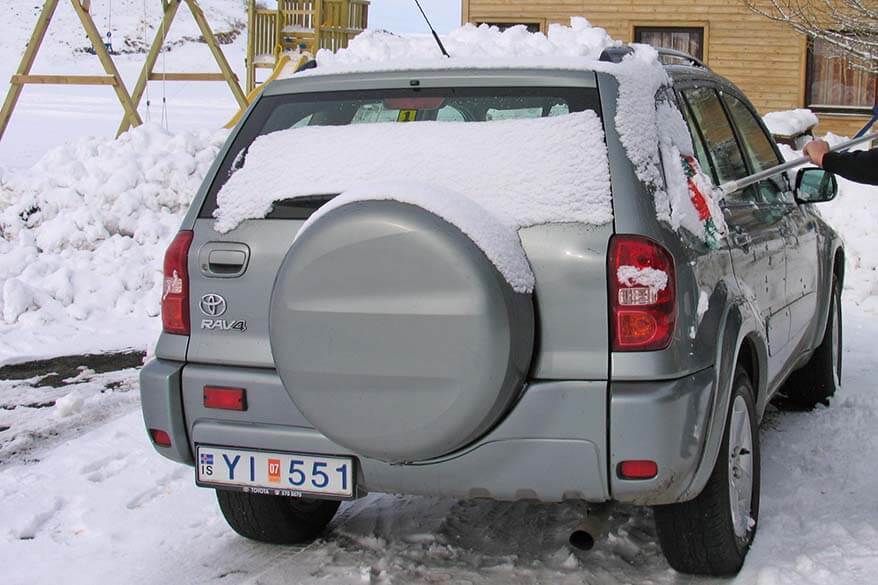
If you’re renting a car in Iceland in winter, make sure it has an ice scraper and a brush for removing snow. Some rental companies provide them, but don’t assume yours will. Check when collecting the car and buy them locally if necessary.
We usually pack at least a small ice scraper like this. It takes up very little space, and I’d rather have one than discover we need it first thing in the morning.
We learned this the hard way during a trip to North Iceland in late May (yes, May!). It snowed so much that our car was completely covered, but there was no snow brush inside. Luckily, we could borrow a large one from our accommodation.
Some travelers also pack a foldable snow shovel, but we never have. For a regular sightseeing trip on maintained roads, an ice scraper and snow brush should be sufficient. More importantly, don’t drive when road or weather conditions are unsafe.
Exactly What I Wore in Iceland in November
If you’re looking for specific advice on what to wear in Iceland in winter, here are some examples of the clothes I wore on my trip to Iceland in November.
It was a particularly cold trip, when temperatures dropped to -10°C (14°F), and winds reached 100 km/h (62 mph) on several occasions. We asked some Icelanders what the wind-chill factor would be. They told us there was no number to describe it. According to them, Icelandic winter weather falls into just two categories: cold and bloody cold. We had the latter.
On the coldest days, I wore most of the following at the same time. It may sound like a lot, but these clothes allowed me to stay outside and actually enjoy our Iceland winter trip.
- Merino base layers, including a long-sleeved shirt and thermal leggings (like these).
- A 100% wool sweater and two fleece sweaters for layering. There were times when I wore all three.
- An insulated waterproof and windproof winter jacket (similar to this).
- Insulated waterproof ski pants worn over thermal leggings (like these).
- UGG Adirondack insulated waterproof winter boots.
- FALKE wool ski socks, plus wool blend socks like these.
- Two pairs of gloves: thin inner gloves underneath waterproof ski mittens.
- A thermal Polar Buff and a thick warm scarf, usually worn together.
- Two hats: a fleece beanie for dry days and a warmer winter trapper hat for strong winds, rain, and long waits outside for the Northern Lights.
Where possible, I’ve linked to the same products I used. When those are no longer available, the links show similar alternatives. Brands and models change, but this should give you a good idea of what to look for when choosing winter clothing for Iceland.
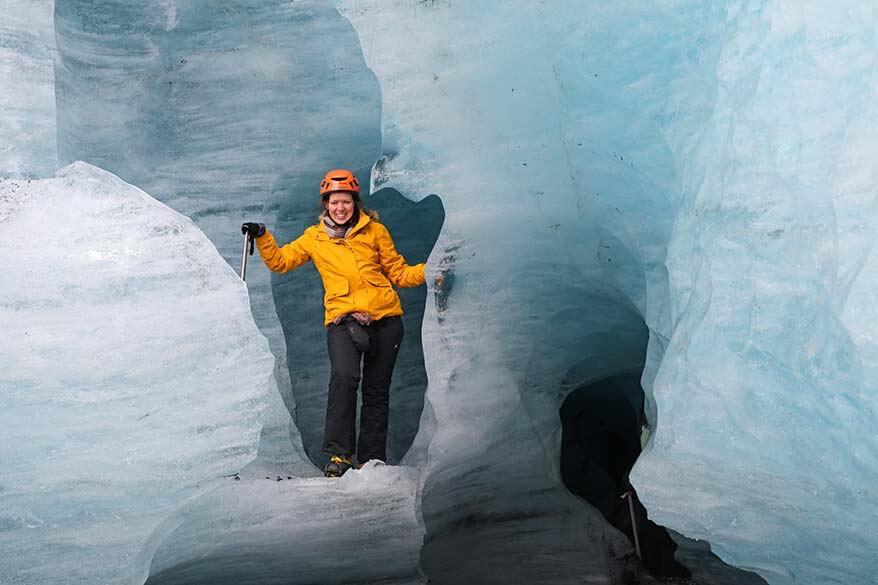
What to Wear in Reykjavik in Winter
What to wear in Reykjavik depends on how much time you plan to spend outside. If you’re mainly visiting the city’s attractions, museums, shops, and restaurants, you don’t need insulated ski pants or several thick sweaters. Indoor spaces are usually very warm, so wear layers you can easily remove.
You will still need a waterproof and windproof winter jacket, warm waterproof boots with good grip, gloves, a hat, and a scarf or buff. Jeans or regular warm pants are generally fine for city sightseeing, although water-resistant pants are useful on wet or snowy days.
If you’re taking winter day trips from Reykjavik, follow the complete packing advice in this guide. You’ll spend much more time outside and need proper thermal layers and waterproof winter clothing.
READ ALSO: Best Area & Hotels to Stay in Reykjavik
Printable Iceland Winter Packing List
Want a printable Iceland winter packing list? Fill in the form below to receive a free PDF with all the essentials from this guide. Use it while packing so you don’t arrive in Iceland without thermal underwear, waterproof gloves, or another must-have item.
Good to know: If you forget something, you can buy most basic items in Reykjavik and larger towns. However, shops are limited in rural areas, and specialized winter gear may be difficult to find. Prices are often higher than at home, so buy the most important items before your trip.
Planning a winter trip to Iceland? Take a look at these guides as well:
- Useful tips: Travel Tips for Iceland in Winter
- Winter itinerary: Best Iceland Winter Trip Itinerary
- Winter bucket list: Things to Do in Iceland in Winter
- Driving: Driving and Roads in Iceland in Winter
More tips for Iceland:
- Airport transfers: How to Get to Reykjavik from Keflavik Airport
- Budget: How Expensive is Iceland (& How to Save Money)
- Hotels: Where to Stay in Iceland
- South Coast: 4 Days in Iceland – Itinerary & Best Iceland South Coast Attractions
- Southwest: 7 Days Iceland Itinerary
- Ring Road: Complete Iceland Ring Road Itinerary
- Reykjavik: Best Half Day Tours from Reykjavik & 1 Day Reykjavik Itinerary
- Must-see: Perlan Museum in Reykjavik
- More: Check out our Iceland travel page for more destination guides and itineraries.
TIP: Save this guide for later, share it with your friends, or pin it to Pinterest so you can easily come back to it when planning your trip.




Thank you for this. I thought I was prepared but I’m looking at the temperatures now and I feel unprepared. I will be traveling there this Sept and am very excited. I stay cold so this will be an interesting trip for me. My home is at 70-71 degrees and I still am cold and shivering. I stay bundled up.
Wish me luck!!
Hi Emm, September is generally not that cold in Iceland, so you don’t need to pack as if it’s winter. There is no need for winter boots or winter coats. Take a look at our summer packing list and pack a bit warmer jacket (waterproof outer layer!) and maybe some merino underwear in case you want a warmer layer for your entire body. It’s better to pack a few extra layers than one that’s super thick and warm.
Enjoy your trip!
Thank you for the packing advice, leaving in a month for 2 weeks. 6 days in Reykjavik, 8 days ring road tour. I have all the layers for the tours. Should I bring different clothes/sneakers just for Reykjavik to not look weird?
Hi Dan, you really don’t have to worry about how you look. Nobody cares. Icelanders are very casual and it’s winter, so most people wear really warm outdoor clothes in the city too. I would only pack something ‘dressier’ if you are staying at a very luxurious hotel or plan to dine at high-end restaurants. If anything, you will look quite weird in sneakers in the snow. 😉 Stay warm and enjoy your trip!
Born and raised Minnesotan here, heading to Iceland in late March. We will be using Reykjavik as our hub for the whole trip. I’m not worried about cold, but I’m wondering how rainy/wet it can be in March. We will be doing museums a couple days and just wandering the city about half of our time there. Just trying to gauge how to dress going in/out of shops and museums.
Hi Sara, it can always be very rainy and wet in Iceland, no matter the season. It’s impossible to say in advance, but assume that it will be.
That said, if you are staying in the city, it’s often much easier to hide from the rain – there are plenty of museums and other indoor attractions to keep you entertained in any weather (see also our guide to the best Reykjavik attractions). So when exploring the city, don’t overdo it in terms of layers. A waterproof winter jacket is really a must though. But when you are taking excursions outside the city, I would also wear waterproof pants (either warm winter pants (like ski pants) or rain trousers which you can pull over if necessary.
Hope this helps. Enjoy your trip!
I am planning on going to Iceland in the first week of March- wondering how the weather is like since I am assuming winter is kind of ending, any recommendations or what the weather is like that I should really bring. Between thank you for your blogs, extremely helpful!
Hi Katterin, March is still very much winter in Iceland, so this list is what you’ll need to pack. The main difference with the other winter months is that the days are much longer already, so you have more daylight allowing you to see more/at a more relaxed pace.
Don’t underestimate how cold it can feel and be sure to dress very warm so that you can enjoy your trip to the fullest!
Have a great trip!
Thank you for this comprehensive list – It was very helpful for me as I am planning my trip to iceland
Glad to help, Nikki. Have a great trip!
Hi Jurga,
My husband and I are planning to visit Iceland next year during these date (24th Sept – 7th Oct). As these dates fall between the end of summer and beginning of winter, which season should we be packing for? We both do not really fancy the cold but the main aim for our holidays will be to hunt down the elusive Aurora (if we are so lucky!) 🙂 Your expert advice is truly appreciated, thank you in advance.
Hi Adel, the end of September – beginning of October is a bit in between packing-wise, indeed. You will not need winter boots or ski pants, but I would pack a warmer jacket than in the summer (maybe a 3-in-1 type of jacket) and I’d also take thermal underwear and a really warm sweater too. Rain pants are helpful if you don’t want to be cold and wet all the time, or insulated outdoor pants.
For the rest, waterproof hiking boots, warm socks, gloves (not necessarily the warmest ones like for skiing though), scarfs, a warm (fleece) hat – that’s something that you will definitely want to have with you.
Hope this helps.
Hi Jurga,
My wife and I are going to Iceland in the end of this November. We will be touring Reykajavik and other spots on the island to look for the Northern Light. In your experience, are feet tend to be sweaty inside wool socks and waterproof winter boots? It sounds silly but will actually help us decide how many pairs of wool socks to bring. LOL
Hi Henry, in my personal experience, my feet are always too cold and never sweaty in Iceland, and definitely not if you wear natural wool socks. But that could be different for other people..
Also, the hotel rooms are very warm, so you can easily wash your socks and normally it shouldn’t be a problem to get them dry by the next morning.
Hope this helps. Have a great trip!
I live in the tropics & really scared of the cold. Will be in Iceland in end Oct this year.
I have invested in 2 down jackets – Canada Goose & Moncler for my previous winter holidays and I really like them for keeping me warm. You can probably guess I am not too adventurous from my choice of wardrobe but I will do what I need to cover Iceland in my bucket list. I read October is a wet season & I am wondering if it is a good idea I buy a rain coat to wear it over 2 down jackets even though I know rain & down are bad combination. What do you think? Appreciate your advice in advance.
Hi Kat, lol, every season is a wet season in Iceland. So you really need a waterproof outer layer – always. And not just for the jacket – pants, shoes, and gloves as well.
At the end of October, it can be quite wintery and the wind is very cold, so you need something very warm too. The best thing is to layer including at least one layer of real wool and a waterproof layer on top of all the rest. I guess you could do with a down jacket as one of the middle layers, just make sure that everything is big enough so that you can actually wear everything together, be able to close the zippers, and still move around. 😉
Have a great trip!
Hello – we are going to Iceland in September. I’m looking for help with packing. Would you suggest that for a mid-September trip to the east coast, golden circle and highlands tour we follow your WINTER, or your SUMMER, packing list?
Hi Lani, for September, use the summer list but pack a warmer jacket and a few warmer layers. You’ll definitely want to have a hat, a scarf, and gloves. Winter boots are too warm, but good waterproof hiking boots are a must.
Have a great trip!
Thank You!! Very helpful, I purchase many of the items you recommended for our trip and at one point or another was grateful to have those things with us. The only item that I liked more than your recommendation was a last minute purchase of Pecube Ice Cleats, they appear to be a knock off of the Hillsound FlexSteps. I was worried about something breaking and wanted a backup. They have slightly longer spikes that are spread out wider than the Stabilicers. I found they were better on uneven ice than the Stabilicers.
I cannot tell you how many times the small flashlight I took was necessary with only 6 hours of daylight or so. Dark early mornings to get to things at sunrise and arriving to our accommodations well after the sunset was so handy to have a ready light source.
While I took many glove options, after flying my drone at one snowy site, did not have fingerless gloves with me, poor planning on my part. I had one lady that overheard my issue and directed me to her store’s offerings of gloves, which had a hand knitted icelandic wool, fleece lined fingerless glove with mitten pull overs and a thumb pull over too! I didn’t touch another glove the whole time I was there, even in the cold rain or on the windy whale watching tour.
I reluctantly took a bathing suit and quick dry towel thinking, I didn’t really care about the spa lagoons and stuff. Um, we booked additional days at the lagoons after the first visit. Absolutely amazing. And, I think everyone owes it to themselves to try the polar plunge pool at least once as I, the guy that didn’t want to do any spa days, was amazed by the feeling of the opposite temperature extremes.
Thank you for everything you provided in this article, it was very appreciated.
Glad to help and thanks for sharing your experiences and tips, Ron. Happy to hear that you had a great trip. And yes, those Icelandic pools are really not to be missed. I think I even enjoy them more in the winter than in the summer.
Happy travels!
Hi! Thanks so much for your winter itinerary and clothing suggestions! We are planning a family trip in Nov. This year! We are bringing our 10 year old son, so will wait til closer to time to buy clothing. However my husband found some rechargeable warming gloves (says they are good for 4 hous). They don’t cost a lot and was wondering if this is something you would recommend. My hands and my son’s both get cold easily. And do we need ski masks? We are doing glacier hiking, ice caves and all the other great recommendations. As an American from the south, we aren’t that use to cold! I think we may also do some horseback riding since our flight gets in so early at the first hotel. Hopefully we will see the northern lights over the 8 days we are there! Thanks again for all this great information! Oh…. do the hotels provide shampoo and conditioners? Couldn’t find anything about it and wondering if we should pack our own.
Thanks again!
Hi Beth, I have no experience with rechargeable warming gloves, but coincidentally, I heard someone mention them in our FB group the other day and they said that it worked great in Iceland.
I’m not sure what you mean by ski masks. If it’s ski goggles, no, you don’t really need them for regular activities (and if you go snowmobiling or such, they will be provided). If you mean balaclava, then yes, it can be helpful, but it’s not a must.
If you are not used to cold weather, it’s always better to play it safe and dress warmer than you think you’ll need. In Iceland, the wind can be really hard and it makes it much colder than you would think based on the temperatures alone.
As for hotels, most provide shampoo and soap, but it’s quite rare to find hair conditioners. I usually pack my own.
Hope this helps.
@Jurga, thanks! Yes, I meant balaclava. I will probably end up trying thr warming gloves and also bring hand warmers. I’ll let you know how they work!
Where do I find a printable/pdf version of all this? It’s a necessity!
Hi Michelle, you probably missed the ‘Printable Iceland Winter Packing List’ section in the article (toward the end). You can download the list there.
@Jurga, I see the bullet point list, but all the information in this article is useful, not just the list itself
That’s exactly the point of this article – to provide useful information to our readers. 😉 Surely, there is no need to print all that info. But if you absolutely want to, you can always print it using Ctrl+p.
Have a great trip!
Going to Iceland in November 2022 from Missouri USA and agree with Crislaura, this is the best I’ve found too!! THANK YOU!
Thank you for your kind feedback, Joanne. Enjoy your trip!
I’m going to Iceland in November and this was the best blog I found ! Thank you for putting this together !
Glad to help, Crislaura. Have a great time in Iceland!
This was so helpful! I’m traveling to Iceland in December for my anniversary! We have a golden circle tour and northern lights tour so I’m definitely going to use these tips! Thank you!
Glad to help. Have a great trip!
@Jurga, hi when you did the Golden Circle tour did you wear ski pants, I’m just concerned that we’re sat on a bus and might get too hot
Hi Natalie, when I visited Iceland in winter, indeed, I wore my insulated winter pants (like this) most of the time. I only wore my ski pants on the days when we did longer excursions/hikes. I never took the pants off on the bus or in the car, only the jacket.
It really depends on the weather you get, but if it’s cold and wet, you’ll be glad to have them, especially if you spend a long time outside. It’s a bit difficult to dress/undress every time, but if you are taking a tour with a big bus, it might be possible.
On the other hand, if your tour only foresees very short time outside, you might also be ok with simple rain pants over your regular pants. That way, you can just pull them on if it rains or if you are planning to go very close to the waterfalls. And if it’s dry, you may not even need them at all. If Golden Circle is the only excursion you are planning outside of Reykjavik, check the itinerary carefully. If you are only stopping at the main sights for a few minutes, you might not need ski pants at all.
Have a great trip!
Thank you so much for a wonderful packing list. I am going October 15-22, 2022. Do I really need stablilicers during this week? Should I follow the winter packing list to the fullest? Wasn’t sure if need to pack as heavily since it’s the middle of October. Since I do not check a bag and always carry on when traveling abroad. I will have to get creative 🙂
Hi, the second half of October is a bit tricky indeed. Most of the time, there shouldn’t be much snow or ice yet. So I think you can skip stabilicers.
For the rest, yes, dress for winter (always layer, so that you can adjust). The wind is usually very hard and it feels much colder than you might think just by looking at the weather forecast.
That being said, waterproof hiking boots and wool socks might be sufficient at this time of the year. You probably don’t need ski pants either, but something warm and waterproof sure helps. You can be creative and not overpack.
If you travel with a carry-on, wear the heaviest/ bulkiest things on the plane.
Have a great trip!
Hi im going to iceland in February this year really really stuck do I need snow boots ski trousers etc only going to northern lights and blue lagoon rest of time in city
Hi Elizabeth, you don’t need any special clothing for the Blue Lagoon (apart from swimwear, of course ;)). For the Northern Lights tour, it really depends on the tour and how much time you plan to spend outside. If that’s really the only tour you do, you could probably manage with somewhat thinner clothes (so no ski pants but still thermal underwear under your pants + a warm winter jacket), but if you have to stand outside for hours, your experience will be totally ruined if you aren’t dressed warm enough.
As for the shoes, it’s good to have decent winter boots for the city too – it can be very cold, likely slippery and/or wet too. Good footwear is really a must if you want to enjoy a destination like Iceland in winter.
Have a nice trip!
Thank you for this article, I found it very helpful for figuring out what to pack for myself. My partner, on the other hand, is stumped on what to pack. We live in an area that is known for it’s cold winters and we get lots of snow (we regularly get temperatures below freezing and average 94 inches/240 cm of snow a year). My partner is a person who is naturally very warm. He regularly shovels the driveway in shorts, a tee shirt and sandals. He rarely wears a jacket in winter and doesn’t own a heavy coat. He doesn’t want to get into a situation where he is underdressed for the elements, but he also doesn’t want to bring unnecessary items that he won’t need. What do you recommend for my hot blooded partner?
Thanks!
Hi Kara, I really don’t know what to say. I guess everyone should feel for themselves what they’re comfortable with. My best advice remains the same – layers (at least one in wool), and a waterproof outer layer. The wind in Iceland can make it all feel so much colder than you’d think based on the weather forecast. And if you wear layers, you can always adapt to how it feels. So – just to be safe – I’d say pack more and then in the best case, you won’t need it, but if you are too cold, it’s difficult to enjoy the trip.
I still have to meet one person who was ‘overdressed’ for Iceland in winter.
We get tens of emails from readers every month about this packing list, and all of them say that it saved their trip.
Have a wonderful time in Iceland! And – if you think of it – feel free to leave a comment here afterward and tell us how it went. Maybe it will helo other warm-blooded people like your husband. 😉
Hi Jurga! Thank’s for such an informative post. I’m going to Reykjavík from 5th to 9th January and just really worried about freezing my *ss off! Hahah. Your tips are just so great! Do you think a ski set (with thermal underwear), thermal socks and gloves are going to do the job? We’re going on these three tours: Golden Circle & Blue Lagoon; South Coast Waterfalls, Glacier & Black Sand Beach and Fagradalsfjall Volkano hike & Reykjanes. And also extra Nothern Lights Tours every evening. Do you have any specific tips for these activities? Thanks a lot in advance!
Hi Thaina, yes, ski clothes + all the warm layers underneath should be about right for Iceland in January. You won’t need the ski pants in the city, but they’ll come in handy for the tours you are planning. Waterproof clothes are really a must!
And – just as important – good winter boots (= warm, waterproof, and with a good grip). See also our article with the best winter boots for travel if you are looking for recommendations.
Just one more thing – I don’t know about you, but my ski clothes are quite ‘tight’, with not much room for a warm sweater (or even two) underneath. So you may want to try it all on with all your layers and see if you can still move. 🙂 I always wear a special extra warm waterproof jacket when I travel to the Nordics in winter + my ski pants. But all my ski jackets are too small for what I wear underneath, so I only use those for the actual skiing.
As for the activities you are planning, you’ll be spending lots of time outside and if it’s windy and rainy, you’ll really need warm waterproof layers. At the same time, it will be warm on the bus, so be sure to dress in such a way that you can quickly take some layers off when driving.
For the Northern Lights, keep an eye on the forecast and try to plan your tour on the most promising days. If you book tours we recommend on our website, pretty much all of them have free cancelation up to 24 hrs before the actual tour, so you can book them now and then cancel the ones on the days that don’t look too good. Or book a tour that guarantees a free second retry and be sure to do it in the beginning of the trip, so that you can still find the time for a second try if it doesn’t work out the first time. See this article for suggestions – Iceland Northern Lights.
Have a wonderful trip!
Hi Jurga,
thank you so much for sharing all the useful tips about the weather in Iceland. It is very reassuring to have such an insightful guidance about all the things needed to enjoy many magical adventures in the Land of Fire and Ice. I’m really looking forward to exploring the island in a few weeks time now that the packing list you’ve provided is fully ticked. Best wishes and warmest regards.
Glad to help, Ana. Have a wonderful time in Iceland!
Hi, I found your information really useful but have a couple of questions. Should I take hiking poles and – this is a SERIOUS question – is the coffee served in cafes and restaurants ok? I usually take my Aero press and some coffee with me but would prefer not to. Thankyou Evelyn
Hi Evelyn, whether you need hiking poles depends on which hikes you are planning to do. For the most popular places along the Ring Road, you don’t need hiking poles at all. So I’d only pack them if you are planning any steeper hikes – in winter it can be useful on the easier hikes as well. If you are looking for easy-to-pack hiking poles, here are the ones that we have – the best we’ve ever had and so light and compact that it’s easy to pack them anywhere.
As for the coffee, it’s generally very good in the Nordic countries and I never heard anyone mention that it would be a problem to find really good coffee in Iceland. I guess it will also highly depend on the places where you eat, so I really don’t know what to say. If it’s that important to you, only you can decide if it’s worth packing your own coffee… For us, traveling is also about trying the food and the drinks of the place we visit – it’s part of the experience.
That being said, if you are traveling in the coldest months, I recommend packing a small thermos and taking some coffee/ tea with you from your hotel in the morning. It’s really nice to have a warm drink when you are in the middle of nowhere and want to warm up a bit.
Have a great trip!
Hi I’m going to Iceland in August the 2nd to be exact what clothe should I bring and what camera is better, I will go to Reykjavik which places you would recommend thanks.
Hi Shirley, for August I recommend you check this summer packing list for Iceland. It won’t be very warm, but you don’t need winter boots or an overly warm jacket. Just lots of layers and a waterproof outer layer.
For the camera, it’s really hard to say as everyone’s needs and abilities are different. If you just want good pictures and a very versatile affordable camera, I recommend something like this Panasonic Lumix FZ80 or – a bit more expensive – PANASONIC LUMIX FZ1000 (it has a somewhat better lens).
As for what to do, I recommend just 1 day in Reykjavik and for the rest either rent a car and make a self-drive trip (here we have a very thorough itinerary for your first trip to Iceland) or book day trips (here you can find our hand-picked selection of the best day trips from Reykjavik).
As for what to see in Reykjavik, you can find some suggestions here: What to know when visiting Reykjavik.
Hope this helps. Enjoy your trip!
Will I need ski pants (May 2019)? Will a thermal baselayer under fleece leggings work or will this be a bad idea like jeans? I have a short 3 in 1 jacket.
You don’t need ski pants in May. I suggest light hiking pants with thermal leggings underneath. Ideally you also pack some rain pants to pull over whatever pants you are wearing in case it rains.
Jurga,
Thank you so much for sharing your knowledge so freely! My husband and I are going to be in Hornstrandir from March 2nd to the 10th, and then hope to drive the ring road form Isafjorder back to Keflavik by the 16th (going North!)… Any tips you can offer would be MUCH appreciated. Also, my husband is allergic to wool – any suggestions?
Hi Rachel, sounds like an amazing trip, just be aware that it’s still very much winter in Iceland in March and so you have to be comfortable with driving in extreme winter conditions, especially because you are going North. Make sure to rent a 4WD and not the smallest one either. You may want to take an ice scraper/snow brush with you – they usually don’t come with a rental car. Or get one in Iceland at a local petrol station.
Any other tips – in general, you have to book your accommodations well in advance. I guess it won’t be a problem up North this time of the year, but the south coast between Reykjavik and Jokulsarlon glacier lagoon is extremely popular, so at least there you’d better book asap. Here you can find our suggestions on where to stay along the Ring Road in Iceland.
If you are looking for ideas where to go and what to see, you can find some general itinerary suggestions here and here I have a bit more detailed itinerary for the south coast in winter.
As for the clothing, if your husband is allergic to wool, then I recommend synthetic thermal underwear (something like this). Instead of a wool sweater, he should best look into wearing a couple of warm fleece sweaters over each other and a warm waterproof jacket.
If he can’t wear a woolen hat, there are also warm fleece hats available or – even better – a waterproof trapper hat like this – believe me, it’s not exaggerated for Iceland in winter.
Hope this helps. Enjoy your trip!
Thanks again, Jurga! I have another question that I just can’t seem to get an answer to – can you fly on Air Iceland (Reykjavík to Isafjorder) with chemical handwarmers either in luggage or as carry on? And if not, can they be bought in Isafjorder?
Hi Rachel, I really don’t know. I think – in general – if you have just a few of them for personal use it should be fine. But if you want to be sure, why not try contacting the airline.
In any case, anything you’ll have to buy in Iceland will be multiple times more expensive…
Hi there, we are traveling to Iceland beginning of September and want to know if we wear the same items as you have listed in your blog. Also can you recommend at good backpack for day tour trips to the Golden Circle or out to find the Northern lights. Thank you!
Hi Karin, for beginning of September, you can pretty much our Iceland summer packing list. Just keep an eye on the forecast and maybe pack a somewhat warmer jacket or a thicker sweater and I also advise thermal underwear (also leggings).
As for a backpack, there are so many. I use a 30 liter day backpack from Jack Wolfskin for years already, but once again, there are many others… Make sure it has a rain cover or get one separately. It’s really a must.
Enjoy your trip!
My friend and I are leaving for Iceland next week and your tips have helped tremendously. We knew we needed warm clothing, but some of your tips have been especially helpful . Like
Good to hear that. Dress warm and enjoy your trip!
Jurga, your tips were absolutely spot on and incredibly helpful to us. We were warm, dry and as happy as we could be in blizzards, hail storms, rain and wind (who knew the weather in Iceland could change THAT quickly!). I fell in love with Iceland, particularly it’s stark beauty in winter, and can’t wait to go back when the weather is warmer, the land is greener and the hours of daylight lengthen!
Thank you again!
Thank you so much for coming back to the blog to share your experience, Hallie. Glad to hear that our packing tips helped you enjoy Iceland in winter! If you can, try to visit again in summer, you’ll be amazed – it’s a completely different country!
Hi Jurga,
Thank you so much for all this info. Everything has been very helpful. In regards on where to stay, I will be staying at the Tower Suites with my wife. Do you have any comments on this hotel?
Thank You
Hi James, glad to hear you found this useful.
As for the hotel, I’m not familiar with it, but I looked it up and if you mean this Tower Suites hotel in Reykjavik, then it looks great. Reviews are fantastic, the views look amazing, and the location is ok. A bit of a walk from some places, but in general Reykjavik city centre is so small that it’s not a problem.
Enjoy your trip!
Hi Jurga
We leave for Iceland on Tuesday morning, we have thermals and layers, as well as most of the suggested items. My concern is that I get really hot easily so worried about the transition from outdoors to indoors. If for instance you are going out in Reykjavik for the evening what do you wear as going to be outside walking from the hotel etc and then inside where it is warm. Is there places to store coats/waterproofs etc at places when you go indoors? Thank you
Hi Claire, yes, it can be a bit challenging sometimes, especially at the restaurants in town. Some places will take your coat, some others – you just hang it on the chair…
In general, you need less layers in the city compared to when you spend the whole day outdoors, since you can always go to warm somewhere if need be. So maybe dress a bit lighter when in Reykjavik, so you have less to take off… 🙂
Also, all hotels in Iceland are really war inside, so keep that in mind when packing and take some lighter clothing for when you go for dinner at the hotel restaurant.
Hope this helps. You’re probably overthinking it too much. Just go with the flow and don’t worry about what people think and do what makes sense for you. Enjoy your trip!
Hi Jurga, I am traveling to Iceland this Feb. My first ever trip there. My question is – I have snow pants. Can I use them instead of buying new waterproof skiing pants? Thank you in advance
Hi Prasanna, I also wore my ski pants in Iceland, no reason to buy anything new if your pants are warm and waterproof. If they aren’t waterproof, then I’d consider either getting new warm waterproof winter pants or rain pants that you can wear over your pants in case of heavy rain/snow.
Hi Jurga, I am going to Iceland next week (Christmas). Do I really need crampons? I will be staying in Reykjavik and booked two day trips – golden circle and south coast. Thank you
Hi James, you don’t really need crampons, but stabilicers (see some examples in the post above) can be useful, especially around the waterfalls where it’s often like an ice skating rink in winter.
If you visit Golden Circle, you’ll be visiting Gullfoss waterfall and along the South Coast you will probably go to Selfoss and Seljalandsfoss. You can still see all these waterfalls from further away if it’s too slippery to get closer, but sometimes even the car parkings are covered with ice… You could potentially get stabilicers online, keep them in the original packaging, and send them back afterwards if you end up not needing them. 😉
Hi Jurga, I just printed your packing list – it’s so helpful! Thanks for all the suggestions, we would have never thought to bring several pairs of gloves or crampons. Thanks again.
Glad to hear you found it useful, Mar. I made that printable list to help people to quickly check that they didn’t forget something when actually packing the suitcase. It’s so easy to forget something essential, and Iceland isn’t the best place to come unprepared in winter.
Enjoy your trip!
Jurga;
What is the difference between crampons and stabilicers?
Thanks as always!
Hi Gwen, crampons are in general much heavier and with longer metal ‘claws’. They are more meant for activities like glacier hiking or ice climbing and normally if you do a tour, crampons will be provided.
 .
.
Whereas stabilicers are lighter, with just short metal spikes, more meant to walk around on icy pavements in town or for some lighter winter walking. They don’t cost that much, don’t take lots of space in your luggage, and are easy to quickly slip on over your shoes. So for sightseeing in Iceland in winter, I recommend stabilicers
Hi, I’m on my way to the airport now and of to Iceland. Glad I found your packing tips yesterday night as the first thing I did in the morning was to completely repack my rucksack! I guess it saved me lots of tears and money! Thanks for the great tips on what needed in November. I really didn’t think to expect full blown winter at this time. It’s my first time in Iceland. It seems what I’m taking with me in terms of clothes is really most of my winter / skiing gear I had in Norway last year. I hope it will be relatively good weather. I’m going there on my own and plan to spend 4 days. Found 2 day trips that sound interesting.
Thanks again for good tips. Really helpful.
Hi Kate, your comment made my day. Glad you decided to check for advice last minute as it’s indeed winter in Iceland already. I even saw people posting pictures of snow the other day, so I think you’ll be glad with all the winter and ski clothing.
If you are still looking for some ideas for day tours, you can find our hand-picked selection here. Don’t miss the South Coast, and hopefully the skies clear up a bit and you get to see auroras.
Have a great trip!
Hi there. I am going to Iceland 2 weeks time. I found your tips. Very helpful. Didn’t know what to wear. Off to buy some Thermals!!!!
Ha ha, you’ll definitely need thermal underwear, Liz. And lots of wool. Glad you found this post useful and I hope it will help you to enjoy your Iceland winter trip even more!
I am visiting Iceland in 2019, May 1-8, should I be thinking winter packing or summer? I suspect that I need to be prepared for both cold and less cold weather…Thanks, Liz
Hi Liz, beginning of May I’d go with the winter packing list and several layers. Just in case you get extremely lucky with the weather, you can always take one layer off, but be prepared for the cold.
Depending on where you go, if it’s just South of Iceland, you might be ok with just regular waterproof hiking boots (so not necessarily winter boots), but make sure you pack some wool socks.
I’m leaving for Iceland in just a few weeks, which will be early/mid March. With all the wind in winter, combined with rain and snow, are sunglasses sufficient during glacier hikes? I would not like to get wind and rain in my eyes, plus my glasses often fog up from my breath. Would you recommend using ski goggles instead?
Also, I’ll be renting a car, I assume that the rental SUV will already be equipped for the winter for driving on the ring road, notably winter/snow tires. Is that a safe assumption or do I need to request it from the rental agency?
Hi Isabelle, I really don’t know about the glasses. For me, sunglasses were more than enough and I haven’t seen anyone with ski googles. But if your eyes are very sensitive, then you probably know best what you need. Maybe consider sports sunglasses?
As for the car, I also think that they will be equipped with winter tires in this period, not sure about stud tires though. You could always give them a call and ask, it never hurts.
We are planning a trip to Iceland I. November this year and I have been reading all your comments and advise, they are very helpful and giving us a great idea of what to expect, thank you so much
We are renting a car and already have a place to stay, all we need us plan our itinerary for one week, there are so many things to do, choosing the best is the trick here!! Again Thsnks..
Thanks for the feedback, Nora. Enjoy your trip!
When is the best time to see the Northern Lights?
September through March.
Is it the temperature or the wind that makes it so cold?
It’s more the wind, David. The temperatures are also not warm in Iceland in winter, but nothing compared to Canada or Alaska. But the windchill factor can be so bad as nowhere else I ever been to.
Hi! I wondered which brand the yellow jacket you’re wearing in the photos above? I love it!
Hi Belle, it’s Jack Wolfskin Nova Scotia jacket, but I really don’t know if you still find the same color. 🙂 You know how these brands are – changing collections multiple times every year. 🙂 But yes, it was a great choice for Iceland in winter as it brightened up all the pictures :). I found something similar for you here, not sure how warm it is, and the yellow is maybe too yellow :).
Hello, there will be four of us traveling right after Christmas to Iceland. After reading the blogs, I see what needs to be packed for this trip. Regarding weather and activity, are all the tours still open at this time or are they cancelled due to weather? How is transportation there? I heard buses are best to get from to to fro . I also heard about expensive food and drink. We are from north jersey so we are used to more expensive meals but how much would a meal for two with several drinks cost approximately? As far as currency it looks like ten krona to one US dollar. Is that correct? I was told tipping is not necessary as gratuities are included. Is this correct? Any goo tips for us at this particular time of travel we should know? ThAnkyou
Hi Mike, I will have to refer you to some of my other blog posts for winter travel. Check our winter itinerary for ideas of what you can do. Check this if you rather stay in Reykjavik and do day tours. Normally, all the tours that I mention in my posts run in winter. Some may not go daily, but you can see it in the calendar when you book. Yes, it sometimes happens that they get cancelled due to the weather, but not often. If you want to do any tours, book ASAP – Iceland is very popular and definitely around Christmas/ New Year. Lots of things (tours, hotels, car rental) get fully booked, so if you still need any of that, book now.
As for transportation, do not count on public transport as it will really not get you anywhere in terms of sightseeing outside the city. You have to either rent a car or do tours. If you don’t have a car and have to get to the city from the airport, make sure to book an airport transfer in advance. It only costs around 25USD. I just saw someone complain on Facebook that they took a taxi to Reykjavik and paid almost 200 USD.
As for the meals, it depends on where you are. In Reykjavik and some other towns you will have more choice in terms of restaurants, but even then it’s difficult to find any good meal under 20-30 USD. often, you will pay 35-50USD for a main course at dinner, especially in remote areas. Alcohol is very expensive too (10-12 USD for a beer in the restaurant isn’t uncommon). 3-5 USD for a soft drink. Don’t worry about tipping – it’s not needed. They won’t say no of course, but it’s not a must at all.
1000 ISK is (roughly) about 10 USD at the moment, so divide all the prices by a hundred and it will give you a good idea how much everything costs.
Hope this helps.
Hi Jurga,
I’m glad that I found your blog, its such in details and helpful, My trip to Iceland shall be Next year Feb 16th
May I know is Reykjavik Windy Winter or Dry Winter? I’ve been to Rovaniemi , the winter there is Dry and not as cold as we predicted, Is Iceland winter colder than other part of Europe in Feb?
Hi, temperatures in Iceland in winter are not as cold as you would expect. I think it hardly ever gets below -10°C, usually around 0°C. However, it is indeed very windy and therefore feels much colder than the temperatures would make you think.
Also, it doesn’t snow that much, but you can get lots of winterly rain and ice. Add the wind to that and it’s as cold as it gets.
That’s why you need waterproof clothing and waterproof shoes. Layering is the best way to make sure that you are prepared for the ever-changing weather.
I plan to travel to Iceland from October 29th to the 5th of November.
1. Curious of the road conditions from Reykjavik to Hofn ?? If we would have time to travel to Egilisstadir or not and still drive back to Reykjavik by Saturday?
2. Any advice on domestic flights in order to cut down on car time? We thought of trying to visit Lake Myvan and fly back from Akureyri ?
3. How much time to allow for the Golden Circle?
4. Travel from Airport (Kef) to Reykjavik cost if bus/shuttle?
5. As another couple will be renting a car coming in a day after me.
Hi Laurie, I really have no time to look into your itinerary, but here are some answers:
1. Road conditions – you won’t know till you get there. I would think that in that period it should generally be ok. For driving times it’s best to use Google maps – they are usually pretty accurate.
2. The best way to get to/from Akureyri in winter is indeed by flying from Reykjavik.
3. Golden Circle – you’ll need half a day + the time to get there and back.
4. You can find more info about airport transfers here.
Thanks Jurga that’s really useful. Can’t wait ???
Great post thanks so much for the tips, I was having a bit of a stress packing… as always!! A couple of questions, I have walking boots or walking trainers – do you think I boots are a better option? Also any tips on what food to take I heard it was pretty expensive so was thinking of taking my own. Thanks
Hi Becky, whether you need hiking boots will depend on your itinerary. If you plan on doing some serious hiking, then yes. Otherwise you will be ok in walking shoes, just make sure they are waterproof and somewhat anti-slip, even if you only do short walks to the main highlights.
I have no experience with taking food into Iceland. I think I took a package of cookies and never ate it :). There are quite some shops/ petrol stations/ small cafes along the Ring Road now, especially in the South, and the prices are generally ok. Dinner in remote areas is quite expensive though, as there is not much choice or alternatives.
Enjoy your trip!
Hi Jurga, I’m reading your tips and wondering what to pack when you’re sharing one suitcase with four people. We’re flying WOW Airline and WOW suits this carrier in so many different ways. The airfare was amazing even after paying for seat selection and one carry on for our family trip with two tall adult children. But that is what’s stressing me out. How do we get enough clothes for the four of us into one checked bag. They even charge for a second personal carry on now…. WOW! So what do you think is most important to bring? We get about 10lbs each in the checked bag.
Wow! 🙂 I think you can always still book an extra bag after you already booked the tickets. Most low-cost companies allow it. So check that first.
But anyway. Back to packing. I actually think it’s possible (we travelled to Australia for 5 weeks with 2 suitcases for the 5 of us, with temperatures ranging from 50°F to way over 100°F in different regions we covered). Take just one pair of shoes – wear them. Pack a waterproof jacket – wear it as well. One sweater (fleece = light and warm) per person – wear it. Pack one extra fleece sweater, maybe an extra pair of pants. For the rest it’s just some underwear and t-shirts really (which can be washed in the hotel in the evening if need be), swimsuit (but leave the towels and even flip-flops at home). A buff, gloves, toiletries (as little as possible – you can use hotel amenities or buy what you need upon arrival)… It’s not easy, but feasible even with 10lbs. Don’t take anything that is not 100% necessary. Make sure that all your clothes match (so no pants that only fit with that sweater and situations like that ;)) and that you can layer the sweaters/jacket if necessary. You’ll be surprised how little you actually need. Hope this helps! Curious to see how you manage it! 😉
I am returning from Iceland today. Winter had just arrived about the middle of my trip. Jurga’s packing tips really saved my life.
Jillian, I flew with Icelandair from Chicago O’hare to Keflavik. They allow you 2 free checked bags, one carry-on and a personal item. The carry on bag I chose was an Osprey Transporter 40 duffle/backpack. It fit perfectly in the overhead compartment, and I had it packed full. I would say the type of luggage you would need may also depend on what type of vehicle you will be travelling in and if your travelling companions will need space for their luggage also. These were the big deciding factors for me. The large roller suitcases can take up a lot of room in the back of your car and could make it difficult to situate other luggage.
Be sure to take Jurga’s advice about what to pack. The most useful things I had on the trip were my waterproof pants and my rain/wind shell jacket. You don’t want to have to buy the expensive stuff in Iceland’s gift stores. My husband did not take my advice and found out the hard way that he needed waterproof instead of water resistant clothes.
Thanks a lot for your feedback, DeAnna. Glad to hear that my tips made your trip more enjoyable. How was the trip itself?
Sorry to hear about your husband though. I saw so many people in wet jeans during our trip, I don’t know how they handled it. It’s so much easier and cheaper to buy the right clothing (and shoes!) before you leave – prices are really high in Iceland and even more so in tourist areas.
It really was everything I hoped it would be! The weather was about as nice as you can expect it to be in November. Some sunshine, some rain, snow and cold strong wind. The northern lights were not very strong while I was visiting though. We saw them very faintly one night while staying in Kirkjubæjarklaustur. My favorite memory of the trip was climbing the cliff behind the town in the dark to get a better view of the lights. We were completely alone up there, the moon was full, and we could see everything for miles in all directions bathed in moonlight. Simply the most incredible view even without the northern lights.
Wow, this sounds amazing. Thanks for sharing, DeAnna.
Does anyone have recommendations about the type of luggage that is best? I am torn between my standard large roller suitcase or a large camping type backpack.
Hi Jillian, I think that DeAnna is right – you should consider what means of transport you will be using in Iceland before deciding what type of luggage to take with you. I took a large duffel bag with wheels to Iceland, but it’s the same luggage we use for most of our trips. We’ve abandoned hard shell suitcases years ago, because duffel bags are just easier to stack in the trunk of the car when doing road trips, and especially now that we travel with 5 people. But if trunk space is not an issue, then it really doesn’t matter.
Helpful tips! Can’t wait to go shopping for this trip soon. Thanks a bunch.
Any excuse is good to to update your wardrobe, isn’t it? 😉 Same here – I buy most clothes when preparing for trips. Advice for Iceland – buy bright colours. Landscape can be really b&w in winter if the weather is less good and your bright jacket will improve all your pictures! Or at least that’s what everyone keeps telling me about my yellow jacket in Iceland…
Thanks for the advice, Jurga. I found your article very useful. Myself and a group of friends are travelling south Iceland for a week this coming November, and I’m already so anxious about the trip. My entire suitcase will just be coats I’m afraid. I’ve already got the thermals and rain gear checked off the list, but I’ve got to get something heavier to help fight the wind and keep me from blowing away.
Glad you found my tips useful, DeAnna. You made me laugh ‘entire suitcase will be just coats’. 🙂 Pick right and one is enough. And don’t forget at least 2-3 layers underneath. You can click on the yellow jacket picture to see what I wore in Iceland in November – to give you an idea. What you are looking for is a lightweight wind- and waterproof jacket with winter insulation. Have fun in Iceland (and don’t blow away)!
We visited last February and wore jeans in Reykjavik, but the wind was very strong and cold. I should have packed the thermic undies.
I’m with you on this one, Tatjana. I also wore jeans in Reykjavik, in combination with thermic underpants and three layers of shirts/sweaters + windproof winter jacket (we visited in November). It was still cold, but in town you can always find a place to warm up. Outside of town I wore my winter pants (kind of skiing pants actually) with thermic underwear and it was bearable. People with jeans were really suffering, especially at the waterfalls where they got wet. And we didn’t even have rain – can’t imagine how cold it would be if the jeans would get wet in the rain in such temperatures.
We are going in 3 weeks time for 2 weeks, I have found this absolutely invaluable advise.
Thanks
Thanks, Mark. Glad you found it useful. Have fun in Iceland!
My friend and I are leaving for Iceland next week and your tips have helped tremendously. I feel that I am well prepared now and ready for Icelandic winter. We knew we needed warm clothing, but some of your tips have been especially helpful.
Have a good trip. You will love Iceland! And thanks for reading and for your feedback – highly appreciated!