13 Tips for Flying with Kids (From Hundreds of Flights with Our Three)
This site contains affiliate links, which means that we may earn a small commission, at no cost to you, for qualifying purchases. It supports the work that goes into keeping this content free. Thanks for reading! More info: Privacy Policy.
Are you planning a family trip and looking for tips for flying with toddlers and young kids? From choosing your flights to packing things that actually keep your children busy, a little preparation can make the journey a lot easier for the whole family.
In this guide, we share our most useful tips and advice for flying with children. All these tips are based on our personal experience traveling the world with our three boys since they were babies, including dozens of long-haul flights and countless journeys with multiple connections.
In this guide, we mostly focus on flying with toddlers (the age we found most challenging), but many of these tips apply to kids of any age. Find out!
Flying with Kids – Our Experience
As parents of three boys—twins and their two-years-older brother—we have quite some experience flying with infants, toddlers, and older kids.
We’ve taken the kids on so many flights that it’s inevitable that sometimes things went differently than expected. We’ve dealt with delays, canceled flights, endless taxiing at the airport, and children who needed something at exactly the wrong moment…
Just like you, we were also anxious about flying with young kids. Especially the first time we flew to South Africa with all three children together, when they were just 2, 2, and 4 years old. Or when we traveled to Australia and had three connecting flights with over 28 hours of total travel time…
We learned a lot!
In our experience, flying with toddlers was more challenging than flying with a baby or a school-age child. They want to move, they get bored quickly, and explaining why they have to stay in their seat doesn’t always help. But there are plenty of things you can do to make the journey easier – see our top tips and tricks below!
READ ALSO: Tips for Traveling with Kids
Is Flying with Toddlers That Bad?
To tell you the truth, we never actually had a very bad experience when flying with toddlers. Yes, there were moments when they cried, and yes, there were moments when they wanted to go for a walk when the seatbelt sign was on. We just had to find a way to deal with each situation as it came.
In fact, we often found flying with kids easier than long car journeys with toddlers. You don’t have to drive or keep your eyes on the road, so you can give your children your attention and help keep them entertained.
That said, don’t board the plane expecting to watch two movies, read a book, and get a full night’s sleep. If you are lucky, you might find time for some of those things, but it will be much less frustrating if you keep your expectations realistic.
If there is one thing I learned over the years, it’s that you have to go with the flow and adapt to the situation. Good preparation helps, but tiredness, discomfort, and tears can happen even when you’ve thought of everything.
Here are our top tips for flying with kids:
1. Book Nonstop Flights & Minimize Stopovers
Preparation for a smoother flight with kids starts before you book. The most important tip I can give you when flying with toddlers is to book nonstop flights whenever possible.
Some people advise booking a stopover on long-haul journeys so that the kids can move around at the airport. Personally, we prefer to get to our destination with as few flights as possible.
One longer flight means fewer boarding procedures, takeoffs, and landings, and fewer opportunities for missed connections or luggage delays. Once everyone is settled, you don’t have to pack everything up and start again a few hours later.
Of course, a nonstop flight isn’t always available or affordable. If you need to connect, allow enough time to get between gates, use the bathroom, and deal with a delay. A very tight connection is stressful enough without three children in tow!
2. Fly at Night or in the Middle of the Day
For long-haul flights, we usually prefer to fly at night. That way, at least part of the journey overlaps with the kids’ normal sleeping hours.
Our children often slept for a good part of an overnight flight, which made a long journey much easier. But every child is different, so don’t count on everyone sleeping or arriving completely rested. Keep a few activities within reach just in case.
For shorter flights, we prefer to fly in the middle of the day. That way, we don’t have to wake everyone up too early and can usually arrive before the kids’ bedtime.
We always try to avoid flights that leave very early in the morning or arrive late at night. Not only will the children be tired, but you will be exhausted as well.
The disadvantage of flying in the middle of the day is that you lose part of a vacation day. But in our experience, it’s easier to fly with kids when the whole family isn’t already tired before leaving home.
3. Reserve Your Seats in Advance
When flying with young children, check your airline’s family seating policy and reserve seats together in advance where possible. This also gives you more choice about where you sit.
Don’t rely on an empty seat next to you or assume that other passengers will be able or willing to swap. It’s much easier to sort out your seating before arriving at the airport.
If you are traveling with a baby or toddler, their own seat with an approved child restraint suitable for their size is the safest option. Check your airline’s requirements before booking, including which restraints are accepted and where they can be installed.
TIP: If you’re flying long-haul with a baby, check whether your airline offers bassinets and request one early. Availability is limited, and age, weight, and size restrictions vary by airline.
4. Reserve Kids’ Meals in Advance
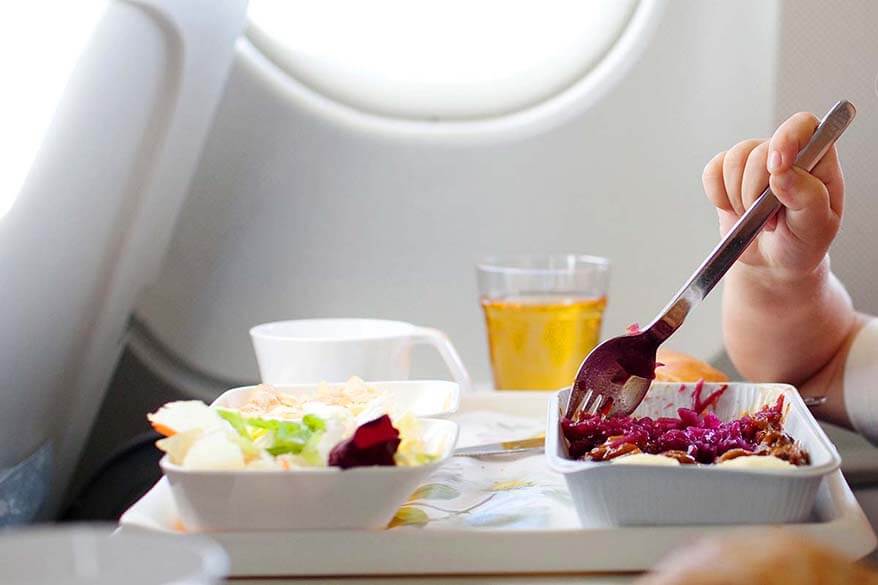
Kids’ meals on the plane weren’t always a big success with our children, yet we always ordered them for long-haul flights in advance. That’s because special meals usually arrive well before the regular meals.
When your kids are served first, you can help them eat and then enjoy your own meal afterward. It’s much easier than trying to manage several trays and feed everyone at once.
TIP: You can usually request children’s meals through the booking section of your airline’s website, but check what’s available and how far ahead you need to order. But even if you have ordered a meal, make sure to pack some familiar snacks as well (more about it further).
5. Explain What to Expect at the Airport and During the Flight
You can’t explain much to a baby, but toddlers can understand a few simple things about flying. So talk to them! Prepare them for the journey by explaining what will happen.
Tell them that you’ll check in your bags, go through security, find your gate, and board the plane. Explain that they will need to stay buckled in during takeoff and landing, and whenever the seatbelt sign is on.
It can also help to mention that the plane will be noisy during takeoff and that their ears might feel funny.
They may not remember everything, but it’s easier to remind them of something you’ve already discussed than to explain it for the first time when everyone is tired or rushed.
Keep it simple and positive. For young children, looking at a book about airplanes or playing airport at home can make the real experience feel more familiar.
6. Let the Kids Move Around Before Boarding
This tip is especially useful when flying with toddlers. They just have so much energy, don’t they?!
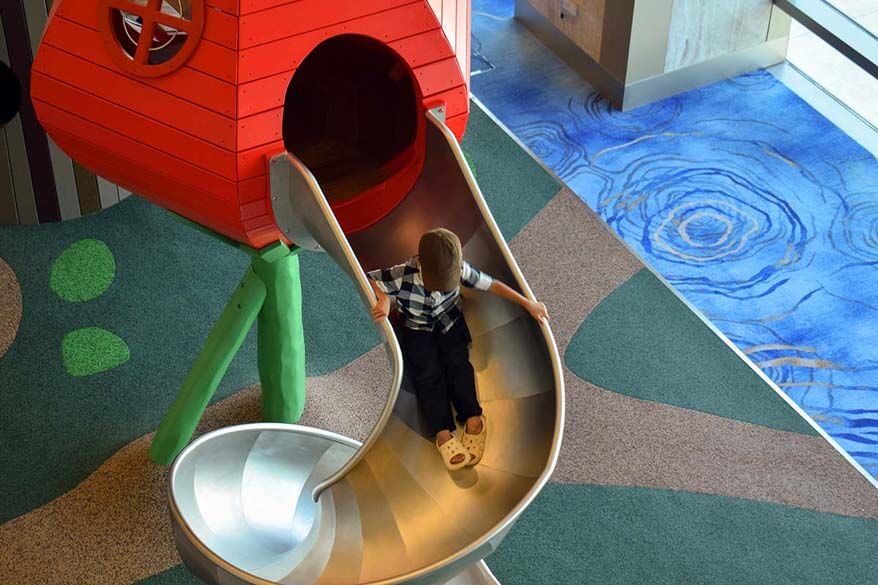
Give your children a chance to move around before you board. Airport play areas are perfect for this, so look for one if you have time.
Don’t despair if the airport is less child-friendly. A walk around the terminal can also help. We found that letting the kids move around before boarding worked much better than expecting them to sit quietly at the gate and then sit still on the plane as well.
Just stay close enough to hear boarding announcements and leave time for a final bathroom stop.
Should you take advantage of priority boarding for families? It really depends on your family. If you need to fold the stroller, install a child’s car seat, or find space for all the stuff you’ve brought along, family boarding can be useful. Otherwise, a little extra time moving around before joining the boarding line may work better.
7. Don’t Forget the Bathroom Stops
Kids always seem to need the bathroom at the most inconvenient moments. When flying, it’s often simply not possible to go immediately. Just think of long security lines, takeoff, or landing…
So be proactive. Plan bathroom stops before security and before boarding. During the flight, offer another visit before descent, while the crew still allows passengers to move around.
It won’t prevent every last-minute request, but it can save you from hearing “I really need to go NOW” just as the plane starts taking off.
If your toddler is still potty training, a pull-up can be useful in case the bathroom is unavailable. For babies, change their diaper shortly before boarding.
TIP: Keep a few diapers, wipes, and a change of clothes together in a small bag that’s easy to grab. Airplane bathrooms are cramped, and you don’t want to search through your entire carry-on while holding a child.
8. Pack the Essentials
When flying with babies or toddlers, make sure the things you really need are in your carry-on and easy to reach.
These are the essentials I wouldn’t want to forget:
- Diapers or pull-ups, if needed, and baby wipes.
- Formula, baby food, or any special food your child requires.
- A pacifier, if they use one. Pack a spare one too!
- A favorite comfort toy.
- A change of clothes for each young child.
- A spare top for yourself.
- A bag for wet or dirty clothes.
- Any essential medication.
TIP: Pack extra diapers, formula, and other supplies to allow for delays. Think about the whole journey from leaving home to reaching your accommodation, rather than just the scheduled flight time.
Keep passports and any other required travel documents together somewhere accessible. Check document requirements for every child well before departure, including any consent documents needed when traveling with one parent.
If you are bringing milk, formula, baby food, or liquid medication, check the security rules for the airports you’ll use. These items may be treated differently from ordinary liquids, but screening procedures vary.
TIP: Swallowing can help ease ear discomfort as the pressure changes, especially during descent. For toddlers, small sips of water may help. In our experience, breastfeeding or bottle-feeding during takeoff and landing can do wonders.
LEARN MORE: What to Bring When Flying with Kids
9. Travel Light
One of the biggest mistakes I see parents make when flying with toddlers and young children is packing too much.
Bring the essentials, but try to limit the number of bags you have to manage. You’ll need your hands to hold your children’s hands, push a stroller, or help someone with a jacket. A backpack is probably the most practical carry-on when flying with toddlers.
TIP: Pack a travel stroller – it can be a real lifesaver at the airport. Most airlines allow you to take strollers to the gate, and you can collect them at the door upon arrival, but check your airline’s rules before traveling.
We hardly ever took toys on the plane. Usually, we brought one teddy per child (the one they slept with) and a few simple activities (see below). In our experience, packing a whole bag of toys wasn’t worth it. Small pieces disappear under seats, favorite toys get dropped, and you may need your best athletic skills to retrieve them.
A small selection of quiet, age-appropriate activities is much easier to manage. Some airlines also offer children’s activity packs, so it’s worth asking, but don’t count on them.
Whatever you bring, leave musical and other noisy toys at home. Your fellow passengers will thank you!
10. Pack the Right Things to Keep Kids Comfortable and Busy
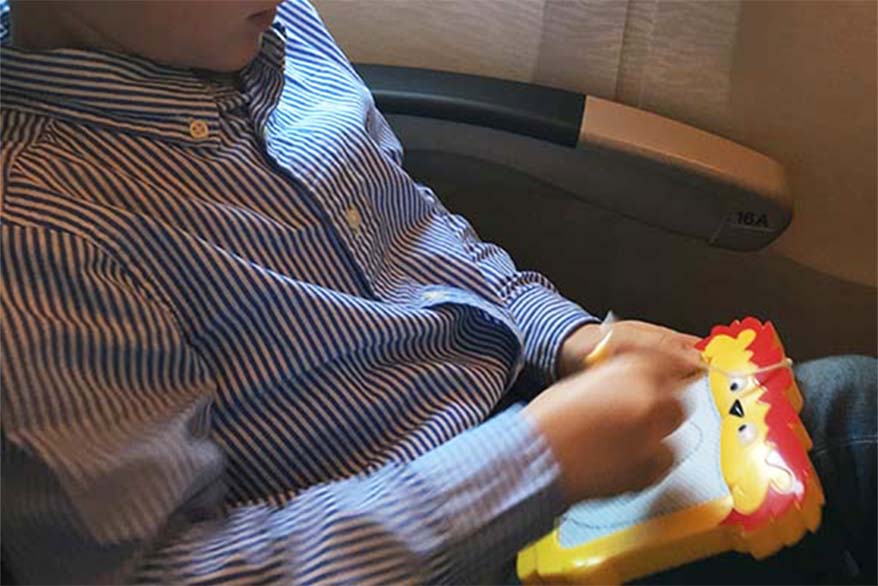
There are a few things that we found especially useful when flying with young kids: paper and activity books, twistable crayons, thick socks, erasable drawing pads, and a tablet with headphones.
Drawing was one of the best ways to keep our children busy, not only at the airport or on a plane, but also at restaurants and in hotel rooms. Twistable crayons were a favorite, and age-appropriate activity books gave them something new to do.
You don’t need a huge selection. Bring a few activities and take them out one at a time.
We also always packed thick socks for the kids and ourselves. Taking off our shoes and putting on warm socks made a long flight much more comfortable. Just keep shoes handy for walking around and visiting the bathroom.
An extra layer is useful too, since you never know how warm or cold the cabin will be.
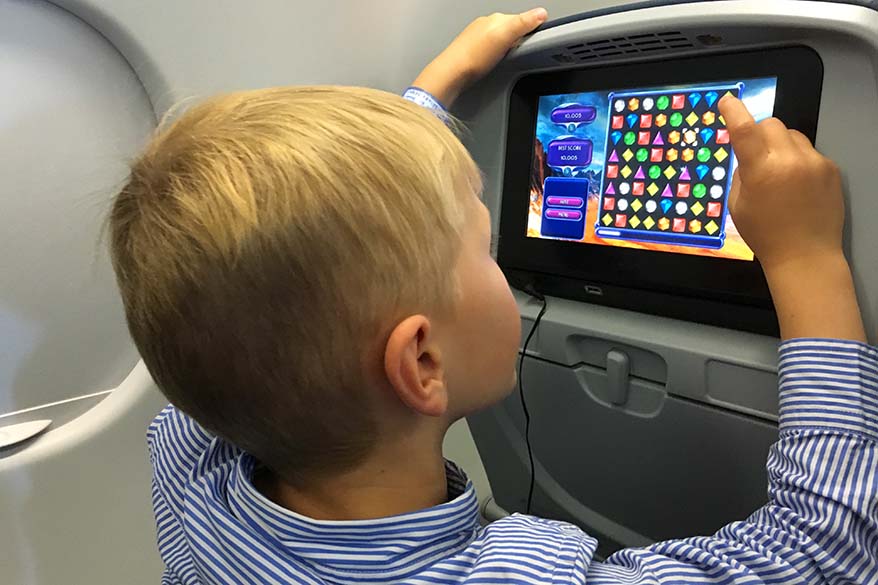
And yes, a tablet can be a lifesaver on a long journey. We liked to keep it for later in the flight, when drawing and other activities had lost their appeal. Download shows, games, or audiobooks before leaving home, and make sure they work offline. Don’t assume that your flight will have seatback entertainment or reliable Wi-Fi.
TIP: Don’t forget comfortable, child-friendly headphones, ideally with a volume limit. Let your child try them at home first, and check that they work with your tablet. If you plan to use them with the plane’s entertainment system, check whether you need a cable or adapter.
For more packing tips, see our complete guide on what we pack for kids on the plane.
11. Pack Snacks and a Treat to Look Forward To
Snacks can make a big difference when flying with kids. Your child may be hungry before the meal arrives, dislike the food, or need something familiar during a long wait.
Bring a few age-appropriate favorites that are easy to eat without making too much mess. Keep some within reach, and pack enough to allow for delays.
We also found that having a small treat to look forward to helped our kids through the more difficult parts of the journey. For our boys, once they were old enough to safely manage hard candy, lollipops were a lifesaver. We often saved them for landing, when the sucking and swallowing could help ease pressure in their ears. They were easy to pack, didn’t get crushed in our bags, and gave the kids something to look forward to when everyone was getting tired.
When it comes to food on a travel day, we try to stay flexible. A flight isn’t the time to worry about everything being exactly as it is at home. Having something your child will actually eat makes life easier for everyone.
12. Keep Essential Medication in Your Carry-On
No matter how long or short the flight is, keep any medication your child needs in your carry-on. We also like to have a suitable children’s pain or fever medicine with us, just in case.
Keep medication in its original packaging, together with the instructions and any measuring syringe. Bring enough of any regular medication to allow for delays.
If your child has a health condition or you are concerned about ear pain or flying while unwell, ask their doctor for advice before departure.
We have used melatonin on a long-haul trip in the past, but it isn’t something I would recommend routinely for children. If you are considering it (or any medicine to help your child sleep during travel) discuss it with their doctor first.
13. Relax & Enjoy The Flight
When flying with kids, be considerate of other passengers, but remember that your children need your help navigating an unfamiliar situation.
Instead of spending the whole flight worrying about what everyone else thinks, focus on what your kids need. Play with them when they want your attention, let them enjoy an activity independently when they’re happy, and try to rest when they sleep.
If two adults are traveling (or more – lucky you!), take turns and give each other a break.
Not everything will go according to plan, and that’s OK. A few tears or a difficult hour don’t mean the whole journey is a disaster.
You can never prepare for every situation, but you can bring the essentials, keep your expectations realistic, and deal with one thing at a time. Before you know it, the flight will be over, and you’ll be able to enjoy the trip you’ve been looking forward to.
I hope that our tips help put you at ease and prepare for your flight. We’ve traveled a lot with our three boys, and while it wasn’t always easy, it was always worth it. As kids grow, there are different challenges to deal with, so don’t put off a trip just because you’re worried about the flight. Looking back, those flying worries seem small compared to all the experiences we’ve shared and memories we’ve built while traveling with our kids.
READ ALSO: Our Favorite Family Vacation Destinations
More tips for traveling with kids:
- Why travel with kids: Benefits of Family Travel
- Affordable family travel: How to Travel Cheaper
- Top tips: Family Travel Tips
- Travel gear: Best Travel Gear for Kids
- Car seats: Best Travel Booster Seats
- Luggage: Best Travel Bags for Kids
- Shoes: Best Travel Shoes for Kids
- Books: Best Travel Books for Kids
- Gifts: Travel Gifts for Kids (that they will actually use)
- Some travel inspiration: USA Spring Break Destinations
TIP: Save this guide for later, share it with your friends, or pin it to Pinterest so you can easily come back to it when planning your trip.