
What to Wear & What to Pack for Iceland in Summer (+FREE Printable Packing List)
This site contains affiliate links, which means that we may earn a small commission, at no cost to you, for qualifying purchases. It supports the work that goes into keeping this content free. Thanks for reading! More info: Privacy Policy.
Planning a trip to Iceland and wondering what to pack and what to wear in Iceland in summer? In this guide, we share a complete Iceland summer packing list for May to September, so you know exactly what to pack and what to leave at home.
From shoes and clothing to seasonal essentials, our experience-based tips will help you prepare for your trip so you can enjoy Iceland to the fullest.
We’ve been to Iceland multiple times, including trips in late May – early June, July, and several times in August and September. So all the tips in this article are based on first-hand experience.
Before you start packing, keep in mind that ‘summer’ is a relative term in Iceland. Even in July, the warmest month, average highs are just 10-13°C (50-55°F), and rain is common. You might get lucky with an occasional 20°C (68°F) sunny day, but more often, you’ll experience all four seasons in a single day.
This guide covers Iceland summer packing essentials, focusing on the warmest months (June, July, and August). Most tips are largely the same for the shoulder season as well (May and September), but you may want to pack a slightly warmer jacket, thermal underwear, and wool socks for extra warmth. You’ll find additional month-by-month packing tips toward the end of the article.
TIP: Traveling in winter (October–April)? Check out our guide with tips on what to pack and what to wear in Iceland in winter.
📌 Save this image to your Pinterest travel board for later reference.
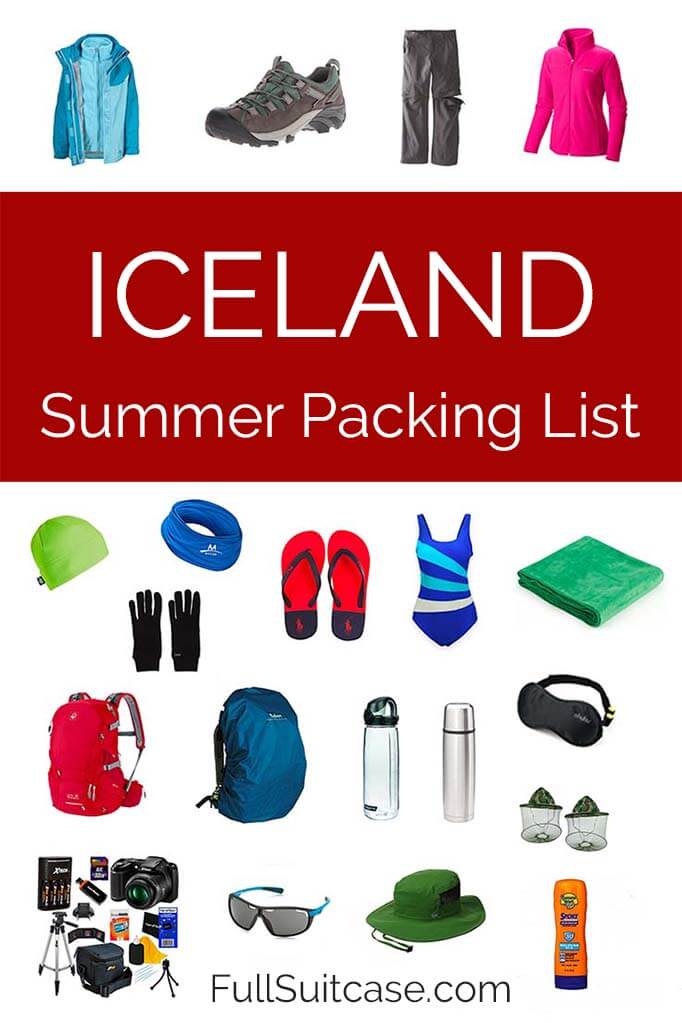
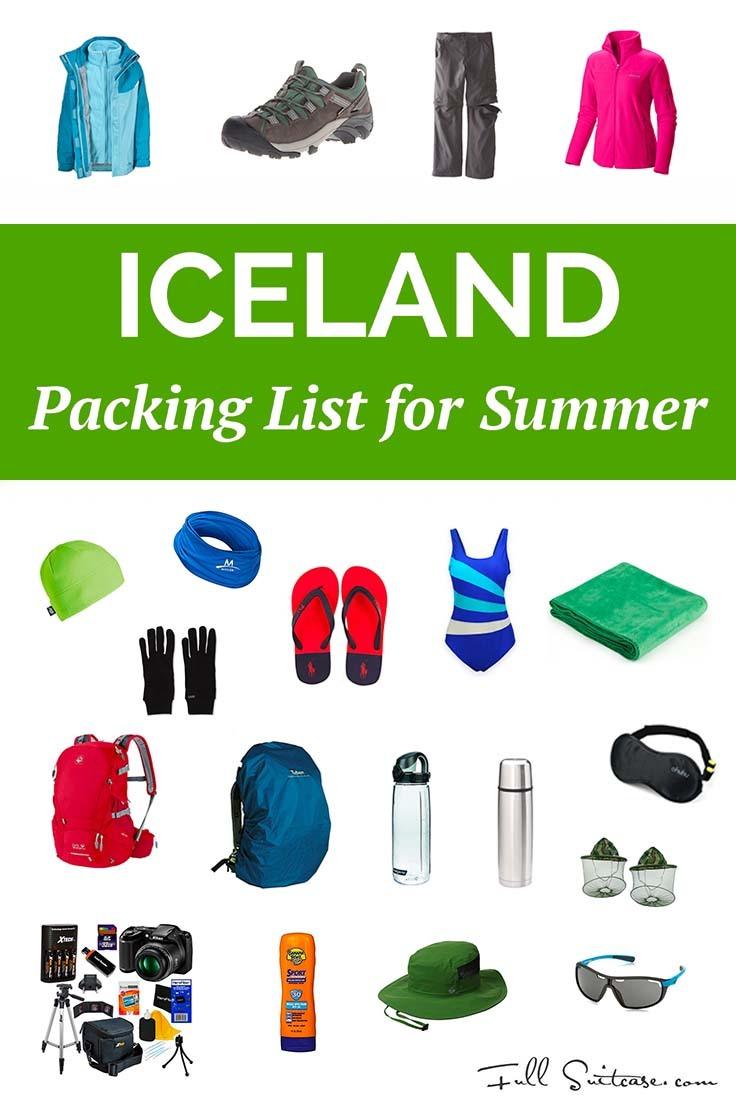
Iceland Summer Packing List – OVERVIEW
- Waterproof hiking shoes.
- Waterproof rain jacket.
- Layers of short- and long-sleeved shirts and sweaters.
- Hiking pants and rain pants.
- Gloves, buff, winter hat.
- Sleep mask.
- Swimsuit, travel towel, and flip-flops.
- Reusable water bottle and a thermos.
- Day backpack and rain cover.
- Trekking poles.
- Sun protection.
- Mosquito head net.
- Moisturizers.
- Washcloths.
- European electrical adapter + cables.
- Power bank.
- Camera gear.
Further below, you’ll find more details about each item, plus month-by-month packing tips. You can also download our free printable packing list.
PRO TIP: Some of the most commonly overlooked items for Iceland in summer are a good sleep mask, a backpack rain cover, a travel towel (we love this model with a zipper pocket!), and European plug adapters.
If you plan to do any hiking, don’t forget trekking poles. We always pack lightweight foldable trekking poles that collapse small enough to fit in a backpack.
What to Wear in Iceland in Summer
Below is a list of Iceland summer clothing essentials you shouldn’t forget to pack. It focuses on clothing and gear for Iceland’s unique weather conditions rather than everyday clothing. Think of this as a practical packing guide to help you prepare for Iceland’s unpredictable weather, beyond the basics like pajamas, underwear, socks, etc.
Waterproof hiking shoes
If you pack just one pair of shoes for Iceland, make sure it’s sturdy, waterproof, and slip-resistant. Waterproof hiking boots are ideal, even if you are not planning to do much hiking. You’ll be walking on wet, rocky, and slippery terrain every day, so proper footwear is essential for exploring Iceland’s natural wonders. Plus, it rains a lot in Iceland, even in summer. Believe me, you’ll enjoy your trip a lot more if your feet are warm and dry!
If you’re not ready to invest in waterproof boots, waterproof shoe covers are an option as well. But I would only recommend these for Iceland if your trip is really short, with limited time outdoors. So, for example, if you have a stopover in Iceland on the way to European cities and don’t want to pack bulky waterproof boots.
Some people swear by waterproof socks and say that it’s one of the most useful items they packed for Iceland. I’ve used waterproof socks on several trips to Iceland and on a recent trip to Alaska (which can be just as wet and muddy), and I’m a fan. Just keep in mind that waterproof socks are quite thick, so you may need to get a bit bigger shoes.
What do we wear? My husband and I love our Lowa Renegade GTX hiking boots. They are not cheap, but they are worth every cent. We’ve used them on multiple trips to Iceland, but also in Norway, Greenland, Alaska, and all our hiking trips in Europe, and after years of use and misuse, these boots still do a great job keeping our feet dry.
Our kids have gone through various hiking shoes over the years. Some of the best we’ve packed for Iceland were these Salewa waterproof hiking boots. But models change every year, and many brands have good value options. We also have great experience with Merrell hiking shoes for kids.
Waterproof jacket
A waterproof jacket is a must in Iceland, no matter the season! You can leave your cute, fashionable jackets at home — the outer layer needs to be fully windproof and waterproof. Umbrellas and rain ponchos are usually completely useless in Iceland because of the wind.
Even in summer, a thin rain shell (like a K-way) is not enough for Iceland. A waterproof rain jacket with mesh lining (like this) is a better option and is usually sufficient in July and August.
If you’re visiting in May, June, or September, you may want to opt for a slightly more insulated jacket like this or a 3-in-1 jacket.
If in doubt, I always opt for a thicker (and waterproof!) jacket when traveling to Iceland. I still have very vivid memories of a snowstorm in northern Iceland in June and horizontal rain and freezing temperatures in the Icelandic Highlands in August. That said, a winter jacket is definitely not necessary for a summer trip. It’s better to pack several extra layers so you can stay warm and adjust to the ever-changing conditions!
What do we wear? Our go-to for Iceland summers is a light rain jacket with mesh lining and some room for layering. We all have quality rain jackets from outdoor brands like Columbia, The North Face, Helly Hansen, Vaude, or Marmot (something like this) — they are excellent for travel. In addition, when it’s colder, we sometimes layer a light puffer jacket or an Icelandic wool sweater underneath.
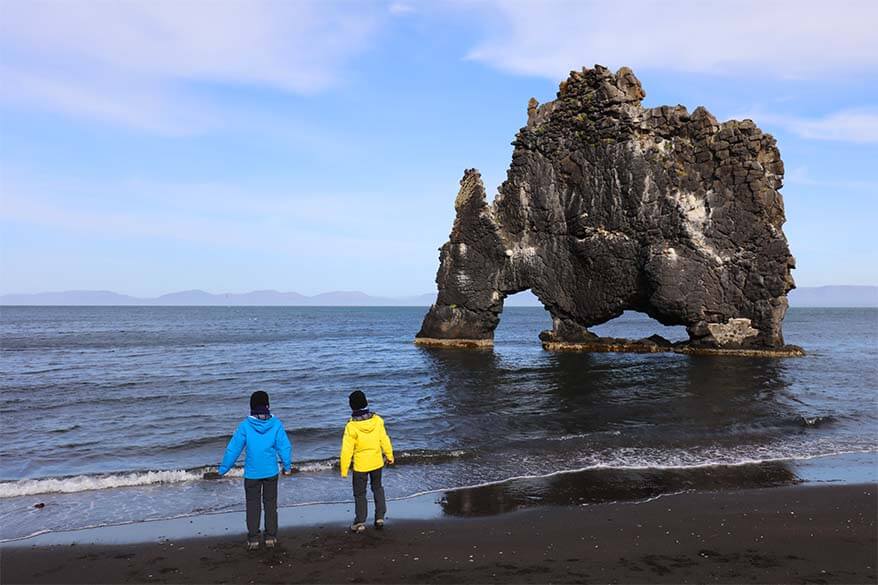
Layers of short- and long-sleeved shirts and sweaters
The weather changes quickly and often, so always think layers when packing for Iceland! Ask any local, and they’ll tell you that layering is the best way to handle Iceland’s unpredictable weather.
Ideally, you should have 3–4 layers to add or remove as needed. In summer, that means:
- Base layer – T-shirt or long-sleeved thermal shirt. Merino wool T-shirts are ideal, but any breathable, moisture-wicking sportswear works better than cotton.
- Mid-layers – A light wool sweater, a light fleece sweater, and a zip-up fleece sweater. Avoid cotton because it takes a long time to dry.
- Outer layer – Waterproof rain jacket (a quality rain jacket like this is perfect for Icelandic summer) and a warm vest. A puffer vest like this is especially useful for hiking and other outdoor activities, and it’s easy to layer under a rain jacket if you need some extra warmth. If you are traveling in the early or late summer, you may also want to pack a light puffer jacket.
What do we wear? For Iceland in summer, we usually pack sports t-shirts and merino shirts, plus a few light fleeces for layering. A full-zip fleece like this is especially useful. We also always pack one warm wool sweater per person and usually wear it every day. I love my Icelandic wool sweater, and my husband and kids just take the warmest wool sweater they have at that moment. Rain jackets are always in our backpacks, and we love lightweight puffer vests as well.
Hiking pants and rain pants
I like wearing jeans for travel, also for colder-weather destinations in the summer. But jeans were the only pants I packed for our first trip to Iceland in June years ago, and I’ve learned my lesson. Iceland is not an ideal destination for jeans!
Jeans have one huge disadvantage – they take forever to dry. I still recommend packing a pair to wear when going out for dinner or when sightseeing in Reykjavik, but for road tripping and outdoor activities, hiking pants are a much better choice.
I also highly recommend packing waterproof rain pants, especially if you’ll be spending a lot of time outdoors. When it rains in Iceland, it pours, so light rain pants in your backpack can be a lifesaver when the weather turns unexpectedly.
What do we wear? We wear hiking pants (something like this) for about 90% of our time in Iceland, always keeping waterproof rain pants on hand. In the evenings, in the city, or at restaurants, we simply wear jeans or comfortable pants (summer pants or dresses aren’t really needed).
READ ALSO: Best Tours in Iceland
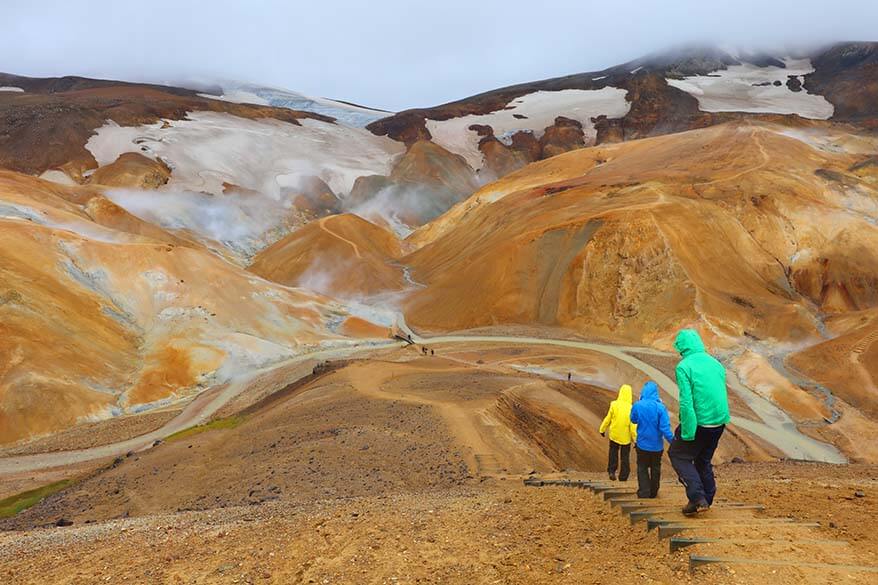
Gloves, buff, winter hat
When packing for Iceland in summer, don’t forget to take gloves, a buff, and a warm hat.
Yes, even in the summer!
You will need gloves and a warm hat for hiking, horseback riding, whale watching excursions (and any other boat trips), and definitely if you are camping in Iceland.
READ ALSO: Glacier Hiking in Iceland
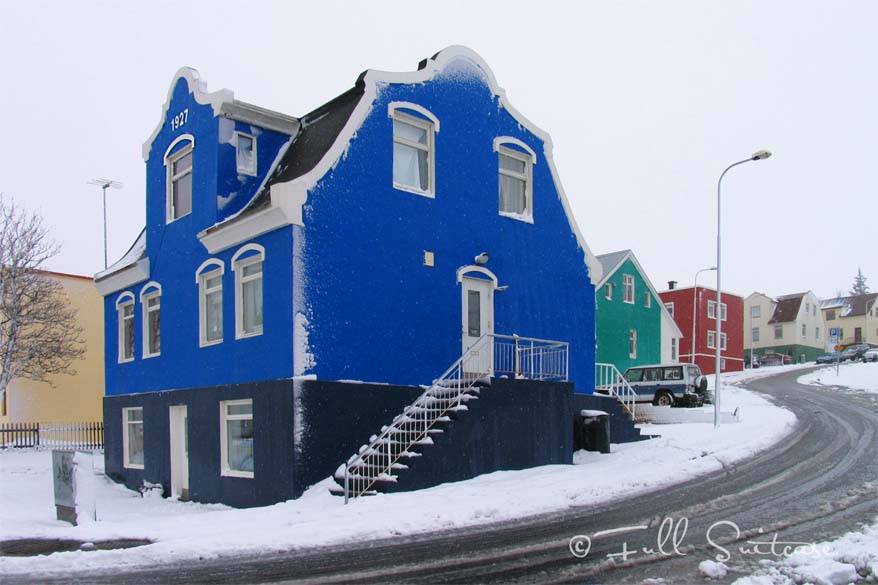
What to Pack for Iceland in Summer
In addition to clothing, there are quite a few other essentials that you should pack for a summer trip to Iceland. Here are some of the musts:
Sleep mask
If there’s one thing you don’t want to forget when traveling to Iceland in summer, it’s a good sleeping mask, one that fully blocks out light and helps you fall asleep. If you think you’ll be using it beyond this trip, you may want to invest in this super-comfortable, adjustable sleeping mask.
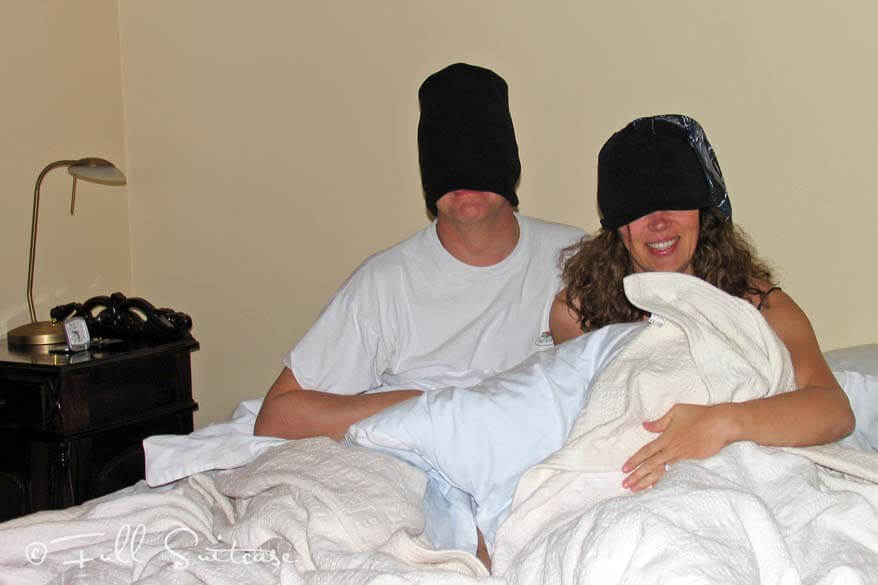
In the Nordics, daylight lasts 24 hours a day in summer. From May to July, Iceland never really gets dark. Experiencing the midnight sun is amazing—until you’re trying to sleep. And don’t count on hotels outside Reykjavik having blackout curtains!
We learned this the hard way on our first trip to Iceland in June. With no eye masks, we resorted to using buffs to cover our eyes. It was not the most comfortable solution, but it did make for a funny memory (and lots of sleepless nights!).
READ ALSO: Where to Stay in Reykjavik
Swimsuit, towel, and flip-flops
Iceland is famous for its hot springs and geothermal pools, and there’s nothing better than unwinding in a hot tub after a long day of exploring. When packing for Iceland, don’t forget your swimsuit, towel, and flip-flops.
A quick-drying microfiber towel is especially handy while traveling around the country. Many pools offer towel rentals, but they can be pricey, and if you plan to visit natural hot springs, it’s a good idea to bring your own. We always pack one towel per person, and we use them pretty much every day when road tripping around Iceland. We especially like these BAGAIL towels because they dry quickly, pack small, and have a handy little pocket for your phone or small valuables.
PRO TIP: Local pools are easy to visit without much preparation, but if you’re planning a trip to the famous Blue Lagoon or Sky Lagoon in Reykjavik, make sure to book in advance — these popular geothermal pools always sell out.
Reusable water bottle and a thermos
Iceland’s tap water is absolutely pristine and delicious, so bring a reusable water bottle. We really like these insulated water bottles from SENDESTAR.
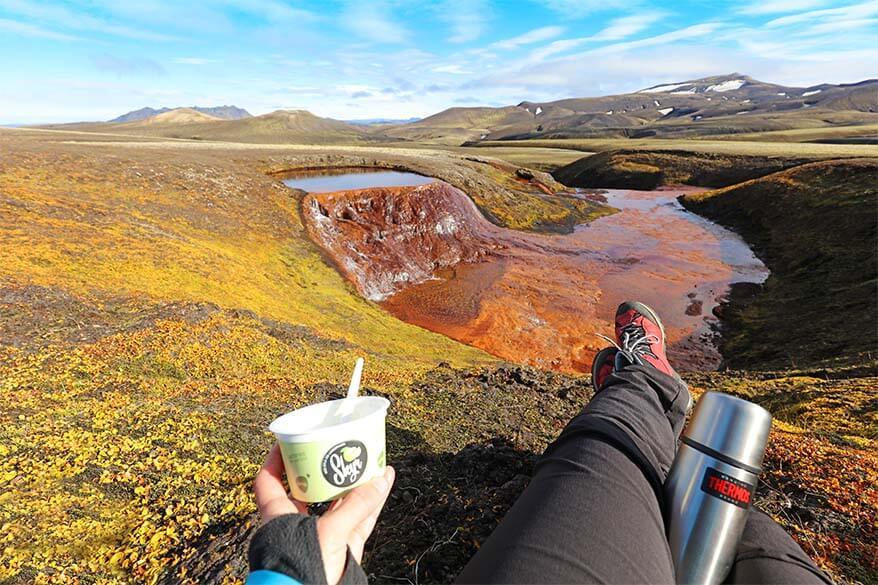
I also recommend packing a travel thermos. I always take this travel-sized thermos with me to Iceland (both in summer and in winter) and fill it with warm tea each morning at the hotel. It’s so nice to be able to enjoy a warm drink after a walk in the cold and the rain.
Day backpack and rain cover
Even if you’re not planning any long hikes, you’ll be spending a lot of time outdoors in Iceland, so a small day backpack is essential for carrying your layers and travel gear.
A waterproof backpack is ideal, but the good ones are usually so expensive that I find it hard to justify the cost. Instead, we pack our regular travel backpacks (usually 20-30 liter size) and a backpack rain cover. It’s the best cheap travel item that you’ll be glad you packed for Iceland. It’s an absolute must! We use ours all the time.
TIP: If you are looking for a new backpack for travel anyway, these highly-rated Earth Pak waterproof backpacks are quite affordable.
Trekking poles
If you plan to do any hiking in Iceland, consider packing trekking poles. Many trails can be muddy, rocky, and uneven, and poles provide extra stability on slippery sections, river crossings, and steep descents. We don’t use them for short walks to viewpoints, but for longer or steeper hikes, they can make a big difference.
We prefer lightweight foldable poles (like this) that pack down small enough to fit inside a day pack when not in use.
Sun protection
Even in Iceland’s summer, sun protection is a must. Always pack sunglasses and sunscreen. You may want to consider a sun hat as well, but it’s not essential. We’ve never used a sun hat in Iceland, but we always pack a sunscreen spray or lotion.
Moisturizers
Face lotion or face cream and a good lip balm are must-haves when packing for Iceland. The sun and wind can be harsh on your skin, so these simple essentials will keep you comfortable.
We love Eucerin skincare products. I also always pack Vaseline when traveling to the Nordics.
Washcloths
If you like using washcloths at home, you may want to pack a few of them for Iceland. You won’t find them in most hotels here.
Mosquito head net
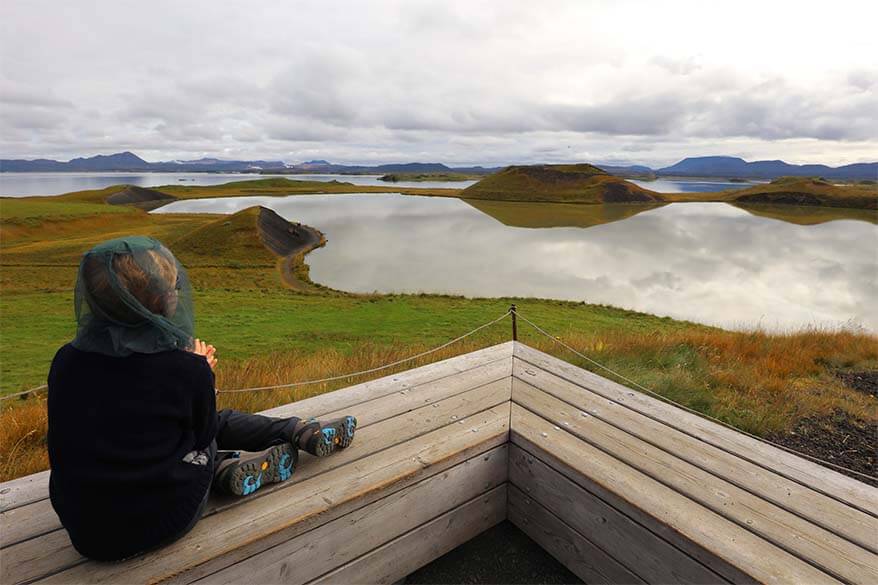
Some areas of Iceland, especially around Myvatn Lake, can have huge swarms of tiny black flies (midges) during certain periods in summer.
The timing varies from year to year, so it’s impossible to know in advance whether you’ll encounter them. But if you happen to visit when the swarms are active, a mosquito head net can make a huge difference and is one of the most useful things you can pack. Without it, you may not be able to enjoy some areas at all.
The good news is that mosquitoes are extremely rare in Iceland, so insect repellent is usually not necessary.
READ ALSO: Best Things to Do in Myvatn
European electrical plug adapter
Electrical sockets in Iceland are standard European electrical socket types C and E. If you have European appliances, you can just use them in Iceland as you would at home. If you are traveling from the USA or the UK, make sure to bring a European travel adapter.
TIP: We recommend getting a plug with multiple outlets. That way, you only need to buy one or two adapters and can charge all your devices, even if the number of sockets in your hotel room is limited. Depending on your needs, we recommend a power strip like this or smaller multi-port plugs like this.
Don’t forget cables for all your devices!
Portable charger
I also highly recommend considering a good power bank when packing for Iceland. The days are endlessly long in the summer, and the chances are high that your phone will be empty long before you have finished sightseeing for the day.
Camera gear
If you are taking your camera gear to Iceland, be sure to bring extra batteries and plenty of memory cards. Rural areas don’t have any stores for replacements.
A tripod is a must for capturing those smooth waterfall shots, and if you’re visiting in September, you’ll need it for the Northern Lights photography. I always travel with my Manfrotto tripod, but if you’re looking for a more affordable alternative, this travel tripod is a great option for most cameras and smartphones.
If you plan to go whale-watching or see puffins, consider packing a tele zoom lens or a versatile travel camera with a good reach for great wildlife photos. For gear tips, check out our guide via the link below.
LEARN MORE: Camera Gear for Wildlife Photography
What (Not) to Pack for Iceland — FAQ
Packing for Iceland as a tourist, you should mostly focus on waterproof outdoor clothing, and summer is no exception. If you really want to enjoy your trip, you need to dress comfortably and stay dry. Below, you’ll find clear answers on what you should pack and what you can leave at home:
What kind of clothes should you bring to Iceland in summer?
No matter when you visit Iceland, it’s essential to pack a waterproof outer layer, waterproof shoes, a few sweaters, gloves, a warm hat, and a buff or scarf. In summer, rain pants and a rain jacket should be sufficient, so you can leave the insulated winter jacket and winter pants behind.
Make sure all your clothes are made of breathable, quick-drying materials. Opt for hiking, sports, or outdoor gear — cotton isn’t ideal for Iceland’s unpredictable weather. Merino wool base layers are perfect.
I also don’t recommend cotton socks. Hiking socks are best for Iceland in summer. In addition, you can also opt for waterproof socks, as mentioned earlier.
Do you need a waterproof jacket for Iceland?
A reliable waterproof jacket is essential when packing for Iceland in any season. Water-resistant or softshell jackets won’t cut it in Icelandic weather — when it rains (and it will rain), you’ll be soaked through in minutes.
What kind of shoes should you wear in Iceland in summer?
If you’re visiting Iceland in summer and aren’t planning on any adventurous outdoor activities, sporty sneakers or trainers will work just fine. However, if you plan to explore outdoor destinations, waterproof hiking shoes/boots are a must (even if you are not planning any longer hikes).
Leave white sneakers, sandals, and high heels at home.
Do you need waterproof pants for Iceland?
Wind- and waterproof pants are a must in Iceland. Even in summer, light rain pants are important for outdoor activities. Iceland’s strong winds and horizontal rain can quickly leave you cold and uncomfortable, so it’s best to keep a pair of rain pants in your backpack at all times.
Do you need shorts and T-shirts in Iceland in summer?
While you might get lucky with a warm day or two in July or early August, don’t count on warm summer weather in Iceland. T-shirts make a great base layer, but most travelers won’t need shorts. Even on one of the warmest summer days we’ve ever had in Iceland, we were wearing jeans and light sweaters.
If you’re set on packing shorts, zip-off travel pants are a much more practical option for Iceland’s unpredictable weather.
Do you need smart clothing or summer dresses in Iceland?
If you’re planning to explore Reykjavik’s vibrant nightlife, consider packing a set of smart clothes and shoes. Otherwise, skip them. Cute summer dresses and light summer blouses, etc. are of no use at all.
READ ALSO: Top Sights Not to Miss in Reykjavik
What to Wear & What to Pack for Iceland by Month
Iceland packing essentials remain largely the same from May through September. No matter when you visit, you’ll need waterproof footwear, a waterproof jacket, and several warm layers.
The biggest differences between the months are temperatures, daylight hours, and the possibility of seeing Northern Lights later in the season. Here’s what to expect and a few extra items you may want to pack.
What to Pack for Iceland in May
May is one of the shoulder-season months in Iceland. While the days are already very long and temperatures are gradually increasing, the weather can still feel quite wintry, especially in the north and at higher elevations.
You’ll need warm layers, waterproof hiking shoes, and a good waterproof jacket. A light insulated jacket can be very useful in May. Pack thicker gloves, a warm scarf, a winter hat, and wool socks. Snow is still possible in some areas, and you’ll generally need warmer clothing than in June, July, or August.
Daylight increases rapidly throughout May, and by the end of the month, nights are already very short. Don’t forget a sleep mask.
What to Pack for Iceland in June
June is one of the cooler summer months in Iceland. While you may get some pleasant days, temperatures can still feel quite cold, especially in the north or in the Highlands. Snow is still possible in the Highlands and at higher elevations.
Pack waterproof hiking shoes, a waterproof jacket, warm layers, gloves, a scarf, and a hat. A light puffer jacket can also be useful, especially in early June. Even if the forecast looks good, it’s best to be prepared for rain, strong winds, and sudden temperature changes.
June also has the longest days of the year, with nearly 24 hours of daylight around the summer solstice. Don’t forget a good sleep mask!
What to Pack for Iceland in July
July is generally the warmest month in Iceland, but that doesn’t mean you need summer clothes. Temperatures are usually comfortable, but rain and wind can make it feel much colder than the thermometer suggests.
You’ll still need waterproof hiking shoes, a waterproof jacket, and several layers including a sweater and rain pants. T-shirts are useful as a base layer, but shorts or sandals are rarely necessary.
While July is generally the warmest month, don’t forget to pack a buff, thin gloves, and a warm hat. They don’t take much space but can make a big difference, especially on whale-watching tours, glacier hikes, boat trips, and at windy viewpoints around the country.
What to Pack for Iceland in August
The weather in August is similar to July, especially in the first half of the month. Later in August, temperatures gradually begin to cool, evenings get darker, and weather conditions can become more variable.
Pack the same essentials as for June and July: waterproof footwear, a good rain jacket, hiking pants, rain pants, and warm layers. If you’re visiting in late August, it’s a good idea to bring a slightly warmer mid-layer or a light puffer jacket, especially for evenings and early mornings.
If you’re traveling in North Iceland, especially around Lake Myvatn, a mosquito head net can be very useful since swarms of tiny midges are common at this time of year. Late August is also the start of the Northern Lights season, and on clear nights, you may get lucky and see auroras toward the end of the month. Pack warm socks, gloves, and a hat since temperatures can drop noticeably in the evenings.
What to Pack for Iceland in September
September marks the start of autumn in Iceland. Temperatures are cooler than in summer, especially in the evenings and toward the end of the month. Northern Lights are often visible at this time of year, so you may find yourself spending more time outdoors after dark.
Pack warm layers, merino base layers, waterproof clothing, gloves, and a warm hat. A light insulated jacket is also a good idea, especially if you’re visiting later in the month. I also highly recommend wool socks. These are the ones I use myself, both at home and when traveling to colder destinations, and I love them.
Since temperatures are cooler and the days are shorter, a thermos for warm drinks and good moisturizers can be especially useful in September. Unlike in summer, a sleep mask is usually no longer necessary.
READ ALSO: Iceland in September
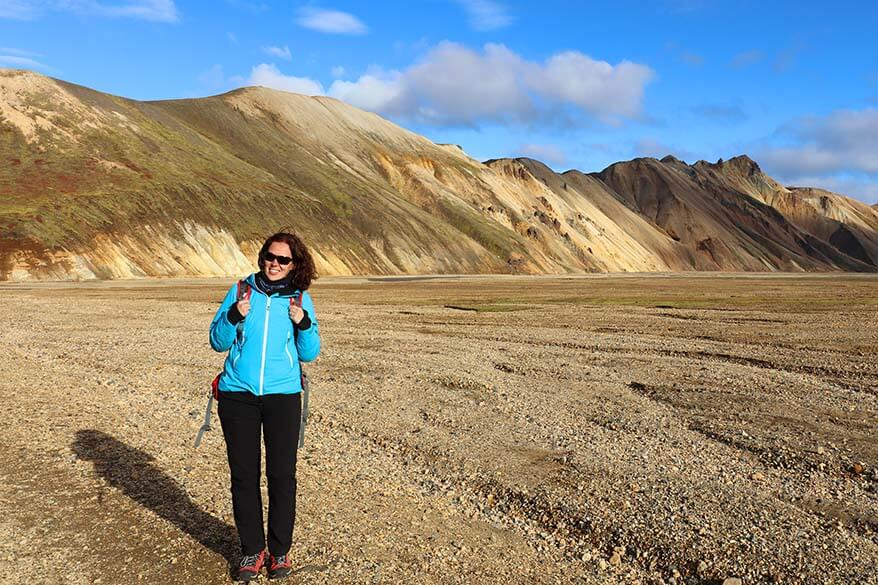
FREE Printable Iceland Summer Packing List
If you would like to have a one-page summary of Iceland summer essentials, you can download our FREE printable Iceland packing list using the form below.
It’s a great checklist to make sure you don’t forget anything important when packing for your summer trip to Iceland.
So, this is our Iceland summer packing list. If you have any additional questions about specific clothing or packing for Iceland for the summer months, don’t hesitate to leave a reply below.
More Tips for Your Iceland Trip
Planning a trip to Iceland? These guides will help you prepare your itinerary, choose where to stay, and find the best places to visit.
- Practical info:
- How to plan your trip:
- Top places to visit:
- When to go:
- For more destinations and tips, see our Iceland Travel Guide.
TIP: Save this guide for later, share it with your friends, or pin it to Pinterest so you can easily come back to it when planning your trip.


This is such a great list! I just came back from a trip and found most of the lists I looked at, even the summer ones, were not great. They emphasized way more layers than you.
Thank you for your feedback. Glad to hear that you found our tips useful for your trip. Hope you had a wonderful time in Iceland!
Jurga:
I have enjoyed reading all your articles and tips. We are going to Iceland in September. We plan to hike and spend our time in Golden Circle, South Coast and around Reykjavik. We plan to see the glaciers, lagoons and visit multiple thermal pools. Is it wise to bring walking/trek poles and swimming shoes-or are flip flops ok for all swimming areas?
Hi Jamin, I would only pack trekking poles if you are planning some longer hikes and/or have weak knees. Otherwise, for the places you mention, it’s not really needed. Swimming shoes aren’t absolutely needed either, flip flops are nice to have.
Have a great trip!
@Jurga,
Thank you for you answer. We are exploring guided tours. The Solheimajokull Glacier Hike Tour and the Katla Ice Cave tour look similar. How do they compare. Is one better than the other? Are they different enough to do both? Would love your recommendation.
Thank you,
Jamin
Hi Jamin, glacier hiking tours take you for a longer walk on the ice (an hour or more) on the glacier whereas ice cave tours usually take you to the glacier in a superjeep and then you walk to the ice caves (usually not more than 5-15 minutes). But it’s not always the case. There are some tours that actually hike on the glacier and to an ice cave – depends on the location and the duration of the tour too. So you really need to read tour descriptions to know what to expect. But in general, walking on the ice or inside an ice cave are totally different experiences.
Glacier hiking tours are usually cheaper than ice cave tours since they just hike on the glacier close to where you arrive and don’t need to use expensive vehicles to take you deeper into the glacier.
As for Katla Ice Cave, it’s hard to say since it’s been melting and changing all the time and from the original ice cave there was just a hole left. That said, I think they have found another ice cave there that they now include as part of those tours. Recent reviews are good. It’s hard to say since it’s nature and changes all the time.
I have a tip for you if you are visiting Iceland this summer. They have recently discovered yet another ice cave at Vatnajokull Glacier that – at least for now – can be visited in the summer months as well (this is the first time you can visit a natural ice cave at that location, which is normally considered the best place to see them in Iceland). The tour starts from Jokulsarlon and you can book it here.
If you are looking for more information about glacier hiking and what to expect, please see this article.
Hope this helps.
This is the best site that I have found so far on what to see in Iceland. We are planning a 24 day holiday in Iceland in July/Sept 2024, hiring a camper, and using the camping pass to keep costs down. Until now, I have been confused as to what to see (in detail) and what is close to other attractions. Thanks so much!!
Hi Graeme, thank you for the kind feedback and glad to help.
For the summer trip, book your camper well in advance and enjoy Iceland!
We’ve been in contact before and now I have a few questions if you can help answer. We want to do the Golden Circle . Viking is our cruise line and they want $229. Per person. Could you recommend a company that would take us on this trip for less?
Is the Sky Lagoon worth seeing and is there legit companies to take us here?
How about Whale watching in Akureyri? Any better place and thoughts on local guides.
Thank you Karen
Hi Karen, we always use the GetYourGuide website for all tours and excursions. It should be much cheaper than what your cruise company is charging, but you have to be more careful with the timing to be sure you get back in time.
For example, there are tours that do Golden Circle and Sky Lagoon in one day (see here), but I’m not sure if it works for you – depends on how much time you have in Reykjavik. Otherwise, you can do a shore excursion to Golden Circle.
As for Sky Lagoon, yes, it’s totally worth it. You could take a taxi there (book tickets for the lagoon in advance!!!), or book a transfer with tickets included.
As for Akureyri, take a look at the tours here. I would recommend a trip to Myvatn/Godafoss Waterfall instead of whale watching, but it really depends on your interests if course.
Have a great trip!
Hi Jurga-
My adult aged daughter and I are planning a trip to Iceland during May. We are renting a car and I was wondering if there are cigarette lighters in European vehicles, and if so, are they different from the United States’ version? I was hoping we could charge our cellphones using the car’s cigarette lighter.
Thank you for sharing all of this great information, I have found your articles to be extremely helpful!
Debbie
Hi Debbie, yes, European cars have the same system as the US. That being said, more and more newer models now simply have a USB connection so you can usually connect directly to your phone to the car via your charging cable. We usually pack a USB car charger and always a good powerbank (plus all the cables we need) just in case because you never know what you’ll find.
Hope this helps.
@Jurga,
Thank you for the response! We plan to take full advantage of extended daylight hours. Can’t wait to see the beautiful country of Iceland!
Hello we are planning on camping and hiking in Iceland the first week in September. I was going to purchase the dry robe to wear as a coat. Would this be an ok coat to wear.
Hi Noreen, I have no idea what a ‘dry robe’ is so I can’t advise you. A quick search online shows me something that looks more like a big coat under which you can change clothes when swimming/surfing – much too long and too bulky to wear when hiking. It also looks like something where the lower part of it isn’t well closed and would blow up and down in the wind. But maybe you mean something totally different…
Anyway, what you need is a waterproof jacket (in September – you could use a somewhat warmer jacket with some insulation), with enough space for several layers under it. I would also be hesitant to pack anything that’s longer than your knees as it limits your ability to hike, do stairs, etc.
Hope this helps.
@Jurga, thank you much appreciated
I was going through this post and I found it to be quite helpful in terms of things to pack. I am going to Iceland towards the end of this month from September 21st to 28th. Given that this is sort of in the sweet spot between summer and winter, I have a question as it pertains to the need for a winter jacket. I have a rain jacket from Columbia which I’m definitely bringing as that is waterproof, but I also have this 3-1 Interchange winter jacket from Columbia that is used in winter. The inside “Shell” is the puffy Columbia Omni Heat insulated jacket (basically looks like a down jacket) that I planned on bringing since I can see that being good for hiking when it’s colder out.
My question is this. Is it really necessary to bring that winter jacket shell? I was inclined to leave the bulkier winter shell jacket home and just bring the black down jacket shell which is part of the interchange jacket and the rain jacket can be worn over it if it gets cold. I would of course wear layers under the down jacket or other jackets I plan on bringing when it’s colder out. I plan on seeing many of the different sites (Golden Circle, waterfalls, possibly Reykjanes peninsula to see the volcano, Westman Islands, solheimajokull glacier, Vatnajokull, etc.)
I was leaning towards the summer list, but just wanted to get your thoughts. I just was leaning towards not bringing the winter jacket given how bulky it is and it not being November/December when things get really cold
Hi Brian, it’s difficult for me to comment on the specific jacket you have, but in general, yes, a 3-in-1 jacket should be just perfect for Iceland at the end of September. If you are very lucky and the weather is dry, you may not always need the outer layer, but you’ll be very glad to have it when you encounter very cold wind and/or rain.
You can always check the weather forecast just before your trip and decide based on that, but remember that the wind makes it feel so much colder than you’d expect based on the temperatures.
I was once in Iceland in mid-September and we had exceptionally dry and warm (+-14°C (57F) during the day) weather. Even then, I wore my winter jacket in the highlands one day. For the rest of the trip, I just used a softshell windproof jacket and a sweater and it was enough. But a week after I left, it was snowing in some of the places we visited… So you really never know.
Have a great trip!
@Jurga, Thank you very much for the response. I was able to find the name of the 3-in-1 jacket I got some years ago and it’s the Columbia Men’s Rural Mountain II Interchange Jacket if you are curious. After thinking about it and fitting the jacket with both components in my suitcase after rolling it up, I will probably bring it. Since I am bringing a checked bag, carry on bag and personal bag, I should have enough room in luggage for all my clothing. I can also just wear the 3-in-1 jacket on my flight to save room in luggage. Worst case, I don’t end up needing both components of the 3-in-1 jacket. I will look up the weather forecast as well and I am looking forward to my first trip in Iceland.
I’m reading about wind and waterproof rain jackets and gloves. I bought a Columbia Switchback lined long jacket – will this and fleece under be good for august? Also do it need heavy gloves or can they be light computer gloves? Lastly do I really need waterproof pants? I have hiking pants. Thanks!
Hi Ariel, a waterproof rain jacket is fine, if it’s big enough to wear a sweater or even two if needed under it. You don’t necessarily need a long jacket/coat.
Any thin gloves should be sufficient for August.
As for waterproof pants, it depends on the activities you plan to do and on the weather. Rain pants are cheap and don’t take much space so we normally pack them for Iceland. But it’s not something we use daily.
Have a great trip!
@Jurga, Thank you so much for your reply. I bought water repellent hiking pants but will get the rain ones too as we’ll be at many of the waterfalls. I was also debating about base layers but I’m always hot and it seems not needed for august with appropriate rain jacket and layering.
Hi Ariel, once again – it all depends on the weather and the activities. If you are camping, then yes, base layers will be very helpful. For the rest, I’d say a merino t-shirt is always a good idea, whereas leggings are probably not necessary in August. On our last trip at the end of August we never used leggings, but we did wear thermal shirts almost every day.
I am debating whether I need my water proof parka or just my packable down coat. I bought the parka for the trip and it’s very cozy. Will I need to bring it.
Thanks
Hi Cathy, you don’t need a winter jacket in Iceland in summer. So no need for a parka. A packable puffer jacket (something like this) is more than enough, but you’ll want to take a waterproof rain jacket to wear over it if it rains (these aren’t waterproof, usually).
We usually just take a regular think rain jacket (wind- and waterproof), plus a few sweaters to layer up is sufficient. It’s all in the article.
It all depends on when you travel, but for June – August, this should be more than enough.
Hello again,
Thank you again for all the useful information.
I am still uncertain regarding the type of gloves we need in Iceland in the summer.
We are Going next week,
Plan to do some of the fun activities you’ve described including glacier walk with ice climbing.
What kind of gloves to do we need?
Thick waterproof ski gloves or something thin?
Please advise
Thank you in advance
Hi Igor, normally any thin gloves will be sufficient in Iceland in summer (something like this).
However, if you are going ice climbing, I guess warmer waterproof/water resistant gloves would also be useful. Ideally, not too bulky since you’ll need to use your hands a lot, so something that sits very comfortably. I think something like this would be ideal. If you take just one pair, then this is probably best.
I think that ski gloves will be a bit too much, but if that’s what you have already and you don’t feel like getting new ones, you can always pack them for the glacier activities. I mean, it’s not like it takes that much space.
Have a great trip.
@Jurga,
Thank you
Hello! Thank you for sharing your Iceland travel tips. They have been very helpful! Do you have any recommendations for traveling with kids? Best waterproof hiking boots/clothing for kids?
Hi Emily, we pack very similar clothing for our kids as for us – light hiking pants, a light rain jacket, and a few light fleece sweaters. We also bought rain pants for them for Iceland and we always buy good waterproof hiking boots that we use for all our trips (we hike a lot).
We are in Europe and I don’t find the exact same products for all these clothing items in the US, but here are the ones that look pretty much as what our kids have:
– Hiking pants for kids.
– Rain pants.
– Hiking boots.
– Rain jacket.
– We also pack one fleece sweater with a zipper per child and 2 fleece sweaters like this, plus t-shirts.
– Our kids each have the same polar buff as we do. We packed them for Iceland as well, plus thin gloves.
– We also all own hiking socks from Falke (3-4 pairs per person and we wash them during the trip). They have them for kids too. Not cheap, but we find it worth it and buy new ones for kids as soon as they grow them out. There are somewhat cheaper brands too, like Danish Endurance, which is still very good quality. We find that shoes and socks are some of the most important clothing items – when your feet are comfortable and warm, it’s so much easier to enjoy the trip in any weather and any conditions.
Hope this helps.
hi jurga this is very helpful information thanks a lot , me and my wife are traveling this july and we have few questions , can you please tell us travel company / one place where we can book travel packages including hotels , car rental, sightseeing tours ? thank you so much and looking forward to hearing from you
Hi Manish, take a look on Viator – they have some pre-designed tours for any duration. It’s quite easy and there are lots of customer reviews for the most popular itineraries.
For shorter day tours, we also have many hand-picked recommendations on our blog. See here: best tours in Iceland.
Hope this helps.
Kind regards, Jurga
Thank you for this excellent and thorough description.
I am traveling to Iceland at the End of June/early July this year and would like to know if ski pants are ok at that time of the year since my entire family has them. Thank you in advance.
Hi Igor, you really don’t need winter/ski pants in Iceland in June/July – it’s not that cold! 🙂 We usually pack light hiking pants, plus rain pants to pull over them if it gets very cold or rains hard. If you are going to camp or are spending more time in the highlands, you may want to have some leggings/ warm underpants for the night, but not if you are just traveling around the Ring Road and staying in hotels or accommodations. You’ll see many people wearing jeans, but they aren’t ideal if it rains (and it will rain). You can, however, pack them to wear in your hotel in the evening or when exploring Reykjavik or so.
You can expect temperatures of 10-18°C, in some cases maybe even close to 0°C, but that’s very unlikely. And if you are lucky, you may even have sunshine and temperatures of 18-22°C. You never know, so pack layers as described in our article. But winter pants and winter jackets are really not necessary at this time of the year and you won’t use them.
@Jurga,
Thank you very much
would like packing list
Hi Richard, if you mean that you want to download the printable version of the packing list, then you can get it by filling in the form in the article.
What’s the best restaurant in the city?
Hi Michael, I don’t even know which city you’re referring to. 🙂 Reykjavik, because your comment is on Iceland post? Anyway, why not try checking on Google Maps – there are so many amazing restaurants in every town and it would be really hard to pick just one…
Do I really need gloves in Iceland in July? Is my windbreaker jacket sufficient?
Thx
Hi Demi, yes, I advise taking gloves to Iceland in any season, also in summer. It’s possible that you won’t need them, but I know many people who ended up buying gloves and warm hats at the souvenir shops in Iceland in summer, because it can really get that cold. It’s especially handy if you are planning to go on a boat (whale watching, for example) or glacier hiking. But also for regular activities, I’d pack them with you.
As for the jacket, I really suggest packing a WATERPROOF and WINDPROOF rain jacket for Iceland. It doesn’t have to be thick in summer, but make sure you have several layers you can wear under it if it gets really cold.
Hope this helps.
JurgI am on a cruise starting in Reykjavik and going out and around West Coast to two northern towns, Isafjordur-hofn, and Akureyri in late june and then on to Norway.
I will NOT be taking any land tours but wanted to explore the towns on foot. I see the temps there are about 50-55 degrees but that doesn’t account for the wind iff the water.
Since my exposure time will be limited (I can duck in stores to warm up, how much layering should I do? Can I live with thermal shirt, flannel shirt, rain/wind breaker and wind pants with sneakers on?
This is a summer vacation and I really don’t want to layer too much and would stay onboard rather than fight a healthy wind. Since I am sleeping on the boat under a cozy comforter with heavy room draping I think the sleep mask is unnecessary what do ou think. Thanks for any advice.
Hi Bill, I would, in any case, make sure to pack a waterproof rain jacket. It doesn’t have to be thick, but waterproof and windproof is a must for Iceland, but also for Norway.
I would also pack a sweater if I were you. Even in Norway we sometimes wore two sweaters and a jacket in August, so you really never know. It doesn’t have to be heavy, a light fleece will do. But I really think you might need more layers than an under t-shirt and a flannel shirt. Also, take light gloves with you. What’s the point of going on a trip like that and stay onboard if the weather isn’t optimal (it hardly ever is in Iceland)… Just my opinion, of course.
As for the sleeping mask, if you have good curtains that keep the light out, then no, you don’t need it.
Enjoy your trip.
Hi, just wondering
If I do not use credit cards or any other kind of non-cash ways to pay, how much do I need to bring on a 14-day trip to ICELAND out of Reykjavík?
Hi Austin, this question is impossible for me to answer. It depends on so many factors – how you travel (car, public transport, tours), what you have already prepaid or not, are you planning to dine in restaurants 3 times a day, etc. etc.
Please read this article about how expensive is everything in Iceland – it should help you to better estimate how much money you’ll need in Iceland. But I really wouldn’t advise taking lots of cash – credit or even debit cards are so much easier.
I am going to Reykjavík in June for wedding what kind of outfit should I plan on we will also be spending 5 days to explore.
Hi Morag, I’m afraid I can’t help you with the wedding – I assume that the dress code should be indicated on the invitation.
As for exploring, everything you need is in this list – waterproof jacket, good walking shoes, gloves, sweaters, and also a sleeping mask – it’s really a must in June as many hotels don’t have good curtains and it stays light the whole night.
Hi, We are going July 3-7 and are going to do the Golden Circle on the 4th, a 2 day South Coast Tour on the 5th and 6th and then A whale watching Tour and the Blue Lagoon on the 7th. We are flying home on the 8th. For this what are your 100% recommend packing essentials in July. We are staying in Reykjavik for the 4 nights just split up because of the overnight South Coast tour. Any other recommendations we can do for short days, maybe the day we get in on the 3rd , we aren’t in until 9:50am so I was afraid to plan the whale watching at 12:15. So we did that on the 7th morning and Blue Lagoon afternoon/evening
Hi D, with the extra time you can visit Reykjavik town. There are also some shorter excursions nearby. People are raving about Perlan (it’s a kind of interactive museum/ ice cave experience in Reykjavik itself) horse riding on the lava fields (there is a tour that starts at 2pm in the summer) and ATV tours (also several departures a day, even one at 5.30PM).
For the rest, if you can still change your Golden Circle tour, you could potentially consider one that includes a hot pool visit as well, e.g. Golden Circle with Secret Lagoon or Golden Circle with Fontana Wellness.
As for what to pack, the list in this article is pretty much what you need. Good waterproof hiking boots, light hiking pants (+ rain pants), good rain jacket and at least two layers to wear under it if needed. Plus a hat and gloves (yes, also in July). Oh, and don’t forget your swimwear.
Have a great trip!
Thank you!!
Hi Jurga,
I love your article and your suggestion. Do you know how the weather is around mid-August time is like? Me and my friends are going hiking a lot but I already bought regular hiking shoes but I don’t want to buy waterproof ones since I’m under a budget, do you think waterproof hiking shoes is a must or do you think it is doable? Thank you!
Hi Gordon, you really never know how the weather will be in Iceland, but in any season, waterproof jackets and waterproof shoes are really a must, especially if you are going hiking. Most trails are quite wet and muddy any time of the year, not even talking about the rain… . I heard people say that they used them in Iceland, but I have no personal experience and don’t know how well they work. In any case, better than nothing I suppose.
As a minimum, you should get something like these waterproof shoe covers
Hi Jurga
I am trying not to buy too much clothing for Iceland in July when I am there. Would ski clothing be sufficient aside hiking boots?
Hi Jane, ski clothing will in principle be much too warm in July. Do you have a light waterproof rain jacket? That will do, just make sure to have several warm layers to wear under it when needed. I’d only take a ski jacket if it’s really light, but I’m sure it will be too warm for hiking.
As for the pants, you can wear any regular pants in summer, ideally light hiking pants that dry fast, or leggings will do just fine. I also suggest to pack rain pants with you – they don’t cost much (check on Amazon – you can even find some under 15$), are very light to take with you, and you can just slip them over your regular pants when it starts to rain.
It’s not that much about buying many new things, more about making sure to pack smart – layers, waterproof outer layer, and waterproof shoes are a must in Iceland in any season.
Enjoy your trip!
Hey Jurga love getting all these recent updates…. my hubbie and I will be arriving next Thurs 8/2 into Reykjavik …coming from Alaska… Blue Lagoon ressies made, we check into our B/B later day…friends meeting up with us 8/4 and then we head by bus to Porsmork 8/5 staying at Volcano huts until 8/9 ( day hikes for 4 days) and then hiking Fimm Pass (staying at mountain hut for night ,coming out to Skogar 8/10…. I would love to give you rest of my itinerary as Ive worked hard trying to go with friends suggestions and our likes…, … but fir now…we have a full day in Reykjavik on8/3 and I actually wanted to get us out of city for some adventure I found a Secrret Lagoon trip….any thoughts on that, or what would you suggest? And should we bring a water filter for our hiking out? Its pretty simple….I’d really love to pick your brain some more as we will be there for 2 weeks…. I have set up our stays as I didnt want to get caught with no place to stay so we have a road trip (car rental at this point) with designated stays each night…again…I can share more but lets start here…
Hi Rachel, indeed it’s a good idea to have your accommodations booked up front in Iceland. The choice is limited, so you have to do it in advance. You seem to be well prepared for your trip; sounds like a great adventure. Make sure you have everything waterproof if spending so much time outdoors.
I don’t really know about water filters, but in general water is very pure and very good in Iceland. Just in case you can pack a life straw or similar, but I think it may not be necessary. Just in case you better inquire at your accommodation for the specific locations where you’ll be hiking (why not call them up front just to be sure).
As for the Secret Lagoon, I haven’t been there personally, but I heard very good experiences from others who went there. There is also Fontana Lagoon as well and reviews are also very positive. You can find more information about these lagoons in this post.
Hope this helps. If you have more specific questions, feel free to join our Iceland travel group on Facebook. It has many members with a lot of experience, so they may be able to help you better.
Thankyou for your awesome quick reply I may hit you up for a few last minute questions as we are nearing our departure date….so EXCITED about the trip no matter the weather
Hi, Jurga,
I am heading to Iceland in mid-Sept for 3 days before we head on to London then Scotland. We don’t plan to do any strenuous hiking, just doing the golden circle and spending a day driving around/exploring the south coast. What would your opinion be of taking these booties with me? My thoughts are they are waterproof, sturdy, and can be worn throughout the rest of the trip. I am trying to pack light, so trying to avoid taking a pair of hiking boots/shoes that I won’t wear in the other cities. Any feedback you have would be appreciated. I’m sure I’m overthinking everything 🙂
Hi Mikelle, sorry for a late reply. We are traveling at the moment.
These boots look ok to me and actually more readers told me they were planning to use these in Iceland. If you can walk with them on a rough trail for 10-15min and they are waterproof, I think you should be fine. I definitely understand wanting to travel light. And it’s difficult to have one in all solution for different destinations, so just wear whatever makes most sense for the biggest part of your trip.
Have a great trip to Iceland!
This is great info! I am only going to be in Iceland for one day in July, on the way home from Europe. Don’t have a lot of room to pack boots, extra jackets, etc. So if we are just doing the Golden Circle with no hikes to waterfalls, do you think we will be OK with warm leggings, base layer, sweatshirt, regular running shoes, and a rain poncho? We don’t have waterproof jackets, and I don’t want to buy them for a family of four for just one day. Thanks!
Hi Dana, I totally understand you. What’s the worse that can happen? You’ll get a bit wet and maybe a bit cold. I guess it’s not such a big deal, certainly not in July, and you can always warm up in the car again. It’s indeed probably not worth it to buy and carry a whole bunch of clothes that you’ll only need for one day. PS There’s one waterfall at the Golden Circle – Gullfoss – and it can spray you wet from far, so maybe take that rain poncho just in case ;).
Thank you! I think we will roll the dice and hope for decent weather!! I can’t wait!!
Hi,
Thanks for this article and for answering so many questions. I’m going to Iceland in June 21 for a week. All this talk about waterproof shoes and the forecast is for rain while we’re there. I usually wear Hunter boots in the rain here, but they are big to pack and I’m not sure how they would be if we do excursions. Right now they only thing we have planned is Blue Lagoon and watching the World Cup games in the city. Do you think the Hunter boots would work it should I go buy waterproof hiking boots?
Hi Cara, if you don’t plan to go hiking, then you don’t need hiking boots. Maybe consider lighter waterproof shoes. Hunter rain boots will be ok outdoors if it rains heavily, but it’s not really the best footwear to wear in town. Many excursions in Iceland will require some walking and there will be moments you might be happy with your boots, but I can’t imagine wearing them the whole day… Let alone the whole week…
You don’t necessarily have to buy new shoes, especially because you don’t seem to plan to spend much time outdoors. Just take something that’s super comfortable and that you can wear the whole week. For short day trips and excursions in June you should be fine. Maybe pack another pair of shoes or extra socks just in case your feet get really wet.
And just a tip if I may – Reykjavik isn’t really a city where you should stay longer than a day. There are so many amazing places in Iceland, so if you have a week, get out of town and explore. It’s worth it so much more than anything you can see in town.
Thank you so much!
Jurga,
Where is a good and cheap place in Reykjavik to get traditional Icelandic food? I am thinking puffin and shark.
Sorry, Ashley, but I really don’t know. I’m not a fan of this kind of food personally. Once tried whale and it’s the worst tasting meat I had in my life :). Try looking on the TripAdvisor. You can also join our Facebook group for travel to the Nordics and ask other members, maybe someone will be able to help you out.
My husband and I are 68 and will be spending 6 days in Iceland staying in Reykajavik and doing day trips from August 15th. Then we are going to Stockholm for a 2 week Baltic cruise. We are going on the golden Circle Gourmet Food tour, the Snaefellsnes Day Tour and the historical tour of Westman Islands. In addition we will do do some walking tours in the city and a Blue Lagoon trip.
Questions:
– Do we really need hiking boots and a rain suit, hat, gloves or will a waterproof jacket, blundstones or New Balance walking shoes be ok? as the second part of our trip will require different lighter, dressier clothes I hate to bring too much.
– Is there a “best” time of day to visit the Blue Lagoon? A tour operator you recommend? Do they sell entrance tickets or do we have to buy then separately?
Thanks
Hi Sheryl, if you don’t want to pack heavy hiking boots, don’t worry too much. On the day tours like this you won’t be hiking that much anyway. I’d pack whatever footwear you think is best for walking on rough surfaces and can withstand getting wet (and keep your feet dry). I think NB sneakers will be just fine most of the time. Maybe just pack an extra pair of socks with you, so that you can change them on the bus if your feet get wet.
As for a rain jacket, yes, I think that a waterproof jacket is really a must in Iceland. As a minimum water-resistant.
Waterproof pants are not a must if you don’t spend too much time outdoors, but ideally wear pants that dry fast in case you get caught in the rain. Light hiking-style pants are ok. Jeans are not ideal as they stay wet for hours…
Hat, gloves – also yes, definitely gloves. They don’t have to be thick winter gloves, pack the thinnest gloves you have, but there will be moments when you’ll be glad you have them.
As for the Blue Lagoon, there isn’t the best time to go as it’s usually busy any time of the day. Some people like to go early in the morning when it just opens because it’s somewhat quieter than in the afternoon. Some like it at night when it’s dark, for the atmosphere… It doesn’t really matter I guess. I personally prefer late afternoon/evening because I think it’s a great way to relax after the busy day.
You can book Blue Lagoon tickets with transfers from Reykjavik included. Since you are already doing the Golden Circle Gourmet tour, I guess you better just book the Blue Lagoon separately.
Enjoy your trip!
Hello Sheryl,
I’m not sure the “best” time but I read generally you should avoid mornings because it will be crowded and you *HAVE* to pre-book their tickets on their website: https://www.bluelagoon.com/day-visit/the-blue-lagoon
I hope this helps!
That’s strange, Christine. I run Iceland/ Scandinavia group on Facebook and most people seem to say they found it quieter to go in the morning. I guess Blue Lagoon is just getting so overly busy that it’s never a quiet time to go anymore… That’s why the alternative thermal pools (more info here) start to gain more and more popularity I suppose…
Hy Jurga , i’m going to visit Iceland this year for 14 days, last week of august-first week of september. I have read your article about what to whear and i thought it was very useful. Do you have any other tips , places to visit, things to do, dishes , etc. Thanks and keep up the good work 🙂
Hi Valentin, in two weeks you could easily drive the whole Ring Road and see all the main highlights of Iceland. Check this post for Iceland itinerary suggestions. Make sure to book your accommodations ASAP if you haven’t done so yet – Iceland is extremely popular these days and especially in summer. Feel free to check our accommodation guide for some suggestions. Also, rent a car asap for the best prices.
If you like hiking, it could be really nice to do an excursion to Landmannalaugar – one of the most remote areas that you can’t really visit on your own.
Other nice things to do that time of the year is glacier hiking, puffin watching, also whale watching.
You can find more suggestions and practical tips on the blog – check our Iceland guide for more information.
I just finished 8 days on the ring road. If you have the money I would invest in wool t-shirts from icebreaker. I wore mine for the WHOLE trip. We did several hikes and I only took them off to sleep when we stayed in a hotel. We camped along the road. I wish I had brought my cigarette charger water heater for hot soup and instant coffee. Coffee is often 4.00 and its small.
Thanks for sharing these useful tips for packing for Iceland, Renee. Very useful to many of our readers!
I was considering bringing one of those too – but the ones online don’t look too promising. Where did you get yours??
Hi Valentina, I have no idea what you are referring to? 😉 . They’re really good quality. Hope this helps
Update: now I see that this was probably about the wool t-shirts… Our comments don’t work like forums, so people only get an answer from the admin (me :)) and they don’t actually see your comment unless they return to the blog. Anyway, I have a few wool t-shirts from Icebreaker myself, you can find them on
Amazon
I know you posted this a while back however I just wanted to say that when I visited Iceland in late October all I wore was fleece lined socks, jeans, a sweater, regular boots, a bomber jacket and hat, scarf and gloves and was perfectly fine without any thermals and minimal layers! We stayed for 4 nights and did the golden circle, blue lagoon and whale watching.
Hi, your clothing sounds about right for the colder months in Iceland if you’re lucky not to experience too much rain and wind. We went in November and definitely needed those thermals and waterproof clothing. And in May-June we needed Moon Boots, hats, gloves, and quite a few layers… :). This is Iceland, where the weather is as unpredictable as nowhere else I’ve been to and of course every trip and every experience will be different. A lot depends on the kind of trip you make, on how much time you spend outdoors, whether you go hiking or not, does it rain, does it snow, or maybe you’re lucky and you get a once-in-10-years heat wave in Iceland in July… I know just one thing – wrong clothing can totally ruin your trip to Iceland and so it’s always better to travel well prepared so that you can enjoy it no matter the weather.
Hi there, your blog is great thank you.
we are going to Iceland self drive for two weeks taking it easy (great) June 5-June 18.
we will be watching Iceland in the world cup, we extended out trip just for that.
we are 60 years young and fit.
BUT i always over pack, i was just thinking of the evening, going to a restaurant and or bar. in Reykjavik as we have 5 nights in all there do people get dressed up i am sure they don’t put there hiking boots on and wet gear in the evening. does one need to take sky jacket for the evenings, is it smart.
Hi Shula, if you are staying in Reykjavik then yes, definitely pack something a bit smarter than hiking clothes for the evenings. You’ll see people wearing casual and smarter outfits in the restaurants, I guess depends a bit on the type of restaurant as well. Just wear what you’d wear in any European city when you go for dinner, except that you definitely need a jacket and/or a sweater in Reykjavik as well.
As a seventy- five year old, I really appreciate your advice, especially regarding dressing in layers and discussing having outer items that are both wind and water proof! The sleep masks are such easy items to bring; now, all I have left to do is determine what “buff” is!
Hi Dawn, yes, layers and waterproof clothes are essential in Iceland in any season. As for the buff, it’s a kind of an easy-to-wear multifunctional shawl. You have them in all kinds of colors and models. Some are very thin and ideal for the summer, some people also use it as a headband to protect against the sun or the wind. Some are made of fleece and are ideal for all kinds of outdoor activities in winter where a regular shawl would just be too cumbersome. Take a look here and you see what I mean: a thin summer buff and a thicker one for colder weather.
You don’t really have to have it. But for us it’s become an essential travel item for all colder destinations and trips where the weather is unpredictable.
Never followed a blog before but found yours very helpful. We have all the suggested gear and will be in Iceland June 2-12. Biggest concern is taking my curling iron which is NOT dual voltage. Got an Iceland adapter but don’t think it will work. Hotels have hair dryers but not curling irons. Any suggestions?
Hi Roberta, I’d say just leave it at home. The weather in Iceland is such that with wind and rain your hair will be a bit ‘wild’ all the time anyway. Take a break, wear a hat if that makes you feel better, and just enjoy Iceland.
We are going for 8 days/9 nights doing the whole island. Where do you think we should invest the most time. We are sleeping each day in a different location along Route 1. Thinking of doing the golden circle on the first day. Skipping the west edge of the island all together because of luck of time. Leaving may 21st
Hi Jud, the locations you visit each day will depend somewhat based on where you stay I guess. Here are some of the best places not to be missed in Iceland (this includes South coast and Akureyri area mostly). This time of the year try to see puffins and/or whales as well – there are several locations where you can book tours. Also, if you have the time, try to do at least one hike in Skaftafell NP – ask at the visitor centre for suggestions.
We are going to Iceland at the end of May (25-29). We only have 3 full days and decided to do the full Golden circle tour, The blue Lagoon, and a full day to be dedicated just to the city. Do we really need waterproof shoes? We already have waterproof jackets in case it rains and regular walking shoes, just like the ones you would use in any city rain or shine.
Are we going to be ok? Sturdy waterproof hiking boots are not great when doing lots of walk in the city.
Hi Leonardo, in principle you should be fine since you’ll only need those shoes for the Golden Circle. If it rains, they might get wet, really wet, but if you are lucky it will be dry. So if you have to buy shoes specifically just for that one day I wouldn’t do it. Maybe pack some light sneakers as an extra pair just in case or at least an extra pair of socks. Or read my suggestions below and consider getting light hiking shoes that are still waterproof, something like this for men or this for women.
That being said, in three full days you could do quite a bit more in Iceland. Reykjavik is really small, you don’t need much time to see the highlights (2-5hrs). Also, you can combine the Blue Lagoon with the Golden Circle or Golden Circle with the Secret Lagoon, so you’d only need one day for the two together. With an extra day/s you could either visit the South Coast, Snaefellsnes Peninsula, or even take a tour to Jokulsarlon glacier lagoon (my favourite place in Iceland).
It already costs a lot of money to go to Iceland, so make the best of it – you won’t regret it, take my word for it! Reykjavik isn’t really the best place to spend all your time.
Dear Jurga,
I will join a guided tour in July. For a 3-hour glacier hike in Vatnajökull, do I really need a hiking boot or a hiking shoe will be sufficient?
I can lend hiking boot from the tour company but the problem is my wife’s foot size is too small (34 size) where the tour company told me their smallest hiking boot is 36 size. I’m very struggle whether I need to buy one for my wife but worry the crampons cannot fix in smaller shoes. I really don’t want the wonderful glacier hike turns into a nightmare when walking with an oversized boot. Thank you for your advice!
Regards,
Wil
Hi Wil, the hiking shoe as such shouldn’t be a problem. We had someone in our group who wore Nike sneakers and they could fit crampons on them. Not ideal as your feet may get wet, but hiking shoes are definitely better than sneakers. I am just not sure if they have crampons that small to put over the shoe size 34. Maybe worth asking the company if that is not an issue. I think the size of the crampons was one of the reasons why kids weren’t allowed to do the glacier hike under the certain age, but I might be wrong.
You can read more about glacier hiking in Iceland here.
Love all of this! Thank you for sharing. Is Viator a reputable tour agency in your opinion? We are going mid July 2018 and are thinking of booking 4 tours through them. Also do you have any advice fas far as meeting points for the tours go? That is the one thing I am most nervous about because I keep hearing of people who miss their tour bus!
Hi Chelsea, yes, Viator is a very reputable booking website for tours worldwide. We use them sometimes, although I have to admit that recently we use GetYourGuide a bit more. The tours are the same (these companies just organise bookings), but they often have better prices and 24hr free cancelation policy. After you book they send you a voucher with all the information in regards to meeting point, etc. If something isn’t clear, there is usually also telephone number provided of the company that runs the tour, so you can always call and ask where exactly the tour starts or if they pick you up from the hotel, etc. We usually try to arrive at least 30 minutes before any tour that we book, just to make sure we have plenty of time to find the meeting point. It’s less stressful that way.
If interested, check out this hand picked selection of Iceland tours that I made for our readers. Hope this helps.
Thank you for your list and suggestions. My brother and I are going to Iceland in June for a 10 day self driving tour. I’ve been buying water resistant pants, long sleeve shirts and breaking in some new hiking shoes. My brother wants the adventure, glacier walk, ATV, water rafting and kayaking. Can you suggest any other items we might need for the extra activities? I’m definitely bringing a thermos for my coffee!
I think if you have layers and waterproof jacket/pants/shoes then you’ll be fine. For kayaking or rafting you may want to wear water shoes (and keep your good hiking boots dry) and maybe a special dry bag to keep your phone dry. I think they normally give you a dry container to put your belongings, but in case you want to keep your phone or a camera close to you, it might be useful. For glacier hiking you need to wear hiking boots and they’ll give you crampons to fit over them. For the rest I can’t really think of anything special. Just don’t forget those sleeping masks or you won’t get much sleep in Iceland in June!
Hi- I will be in Iceland this June 2018 and I am debating which geothermal spa/pools to visit. I have to check out the Blue Lagoon just because I know I’ll regret it if I don’t. I’m sure it is a tourist trap but hey when in Rome right?! I am also going to visit Myvatn Nature Baths. I was wondering if you have a preference or any feedback between Secret Lagoon or Laugarvatn fontana ?? I am trying to decide on which one to visit.
Thanks!
Hi Sabrina, I have only visited the Blue Lagoon and the one in Myvatn. Myvatn was great and much less busy. Blue Lagoon, as you say, you have to do it when in Iceland :). As for the other two, I checked some Facebook groups on what people say, and it seems that they are both really nice, the opinions are 50/50. Here’s one comparison I found: ‘Secret lagoon somewhat more rustic. Laugarvatn Fontana somewhat more spa like.’
Hope this helps. I think you’ll enjoy any (or all) of them.
Came across your blog by accident when searching for what to pack for my son’s school trip. He’s off to Iceland for a week in May (lucky thing) and has a very exciting itinerary including glacier hiking! (And yes I am very jealous) Am I right in just thinking layers,layers and more layers, topped off with a 3 way waterproof? Grateful for any advice. Thanks.
Hi Pip, yes, indeed, lucky him! Layering is a must in Iceland with a waterproof outer layer (shoes, pants, jacket, gloves). May isn’t really summer in Iceland, so I’d still go for a warm winter jacket, thermal underwear, etc. You can check our winter packing list for Iceland, but honestly May is somewhere in between the seasons and you never know what kind of weather you get. That’s where those layers are important.
If you are looking for more information, you can also read our experience with glacier hiking, and here you can find all our Iceland posts in one place.
Hope this helps.
Hi we are going to Iceland in 5 weeks time, my biggest worry is how much cash to bring, for a week, we are staying about 45min north from town
Hi Stella, you don’t really need much (if any) cash in Iceland. Credit cards are accepted everywhere, so no need to worry about exchanging to local currency.
We are going to Reykjavik October 18th for 5 days. We will do tours during the day, Golden circle. The Northern Lights at night and of course explore the city. What do you recommend for clothing? Rain pants? Hiking boots? Thermal under ware? I appreciate the help.
Hi Kathleen, here you can find my packing advice for Iceland in winter. I guess a lot depends on what you do and where exactly you go. I assume that in 5 days you will get out of the city quite often, and so I advise waterproof jacket and waterproof shoes with good grip, and as a minimum water-resistant pants. Thermal underwear is definitely nice to have too, I used mine all the time. A winter hat, a scarf, and gloves are a must as well. Wear layers so that you can easily adapt to the ever-changing weather.
Hello, Jurga. I just wanted to say that I found this post very helpful, but I still have a question. We are leaving to Iceland on August 4 and I was just wondering if it gets dark during the night in August. I know I could ask Google, but I don’t want to get a bunch of irrelevant responses. Also, thanks for the tip about bringing an electrical adapter, If it weren’t for you and your blog, I never would have guessed. Thanks in advance if you reply!
Hi Sarah, thanks for your feedback. Good to know that you found this post useful. I have to be honest with you, I am not completely sure about how dark it gets in Iceland in August. I think it depends on the period and the place. From what I see, the sun sets around 10.30pm and rises around 4.30am in Reykjavik in this period. So I think it will never get completely dark, but there will be a few darker hours after midnight (more like dusk-dark). In the North of Iceland it will be even less dark. By the end of August-beginning of September there are a few hours of complete darkness already. Hope this helps. PS I would still pack those sleeping masks in August, it’s really hard to get any sleep if there are no blackout curtains available.
This pack list was perfect. Thank you.
Glad to hear you found it useful, Kendra!
We are going 25/07/17 all ladies for Hen party be there for 4 days I know it’s expensive to eat and drink any recommendations where to eat x
Hi Linda, prices are indeed very high in Iceland. In rural areas you often don’t have much choice as where to eat. But there are more and more restaurants opening everywhere, so in bigger towns you can always consider a couple of options. In Reykjavik there are many restaurants, some more affordable than others. Try MAR Restaurant, Reykjavik Fish Restaurant, or Icelandic Fish and Chips – all three very good, and close to each other. Otherwise just check the prices on the menu before you go in, and avoid having to pay 40EUR for a steak…
I used this post as a guide for my recent trip around Iceland (Ring Road and West Fjords). Thermals were essential. The one thing you mention that I didn’t bring and wish I had was a thermos. It would have been useful during several cold, rainy days and long stretches of Ring Road driving. That said, I did enjoy stopping at roadside cafes and markets for coffee and stretch breaks.
Thank you so much for sharing your experience, Annie. Hundreds of people read this post daily, all looking for information on what to wear in Iceland in summer, so it’s really helpful for them to read what other travellers have to say based on their experience. Appreciate you taking the time to do this!
Hi Jurga we will be going mid aug. do we need hiking shoes and also wud you know if we can get lucky with some Northern lights.
Hi Niru. Whether you need hiking shoes will depend on your itinerary I suppose. If you don’t plan to do any serious hiking, then just regular walking shoes will do. I recommend waterproof shoes in any season.
As for Northern Lights, I think mid August might be too early. You need it to be really dark in order to see them. But if it’s dark, the sky is clear, and aurora activity is high, who knows… Here you can find some more info about aurora hunting and photography tips. Hope this helps.
this is very helpful. we leave for iceland the first week in june. i think a couple of pairs of thermal leggings will be good additions to my 2 prs of very light weight quick drying hiking pants. can be used as pj bottoms, to layer under the pants when cold, or to pair with a long sweater to spiff up my appearance if i do decide to go out on the town. they barely take up any space – and should dry reasonably quickly. and with the wonders of online shopping, i was able to find some despite the season!
Thermal leggings sounds like a great idea, Gitelle. And you are right – that’s just another advantage of shopping online that you can buy winter clothes in summer 🙂
Great info! We are traveling in June with 4 teens. Quite a big shopping list for all of us. Do you think our kids will need all the waterproof shoes, etc? Going on a south coast & lagoon tour, seeing the ice cave & lava tube, and also the golden circle tour. I kind of thought their winter boots would work but sites have suggested hiking waterproof shoes. Thanks in advance for any help!!
Hi Dana, I really don’t know what to say. Winter boots might even be too warm, depending on the boots and on the weather of course. The most important thing if you go hiking is to wear shoes with a good grip. Waterproof definitely helps in Iceland, or as a minimum water resistant. But I know that having to buy 4 pairs of new shoes is a big expense. So try to use what you have, or buy shoes that your kids can still use for other purposes/trips.
As for your excursions, ice caves can only be visited in winter. I have no idea what lava tube is… And the Golden Circle itself doesn’t require much hiking. So maybe you don’t need very special hiking boots after all. Just sturdy walking shoes.
Hope this helps a bit!
Thanks Jurga, that was nice of you to respond so fast, and thanks for the information, have a awesome day
Good afternoon Jurga, My name is Anthony and i will be traveling to Reykjavik with my wife on the 30th of April and will be spending 4-days there, what do recommend i should wear and suggestion on places to visit. Thanks in advance.
Hi Anthony. For April I would play it safe and dress really warm, layer up, and – as always – a waterproof layer on top. You’ll need scarfs and gloves, etc. You get an idea. I also really really recommend taking a thermos and carry some warm drink for during the day. A water bottle is also very useful,- tap water is really good in Iceland. Check this post for cold season clothing and packing suggestions for Iceland as well.
As for itinerary suggestions, please check this post – Iceland itinerary suggestions for any trip. You can do quite a lot in 4 days. Don’t hesitate to ask if you still have questions after reading these recommendations.
Hi! This is great information! I’m wondering what people wear out on the town in Reykjavik (e.g. to dinner)? I will be traveling their in late July. Thanks.
Hi Carla, you’ll really see everything in Reykjavik. People dressed up for dinner, people in jeans and sweaters… It depends on the restaurant as well; the more upscale, the more dressed up people will be. Like anywhere else in the world, I suppose.
If you are only traveling to Reykjavik, then you don’t need hiking shoes or waterproof pants (waterproof jacket might still be useful). But if you are planning on visiting nature, then you’ll be glad with more sportive practical clothing that keeps you dry and warm.
My son told me he is going to Iceland in 2017. Your list is great for Christmas gifts. Thanks for the helpful article.
Great you found some inspiration for Holiday gifts in this post, Cheryl. If you buy clothing for Iceland, think waterproof!
I’m going to Iceland mid September and visiting the South of the country. Do you think I need hiking boots or are regular shoes fine (I was thinking sneakers maybe)?
I think it depends on what you are planning to do. If you only drive around and do short walks to the waterfalls and back to the car, then you’ll be ok with any shoes. But if you are planning to do some hiking in Skaftafell, go on a glacier hike, or if you get really bad weather, you’ll be glad if you have waterproof shoes with good grip. You don’t necessarily need hiking boots, no.
Hi, we’re leaving for Iceland in a week. Do you think we need thermal underwear?
Hi Jodie, I would check for the weather forecast in the places where you are going. Normally, you don’t need thermal underwear in Iceland in summer. But if you are camping, I’d definitely pack warm underwear – it can get really cold at night, even in summer. And don’t forget gloves, buff and a winter hat – these will come in handy! Have a good trip!