28 Best Things to Do in Barcelona: Our Tips & Map
This site contains affiliate links, which means that we may earn a small commission, at no cost to you, for qualifying purchases. It supports the work that goes into keeping this content free. Thanks for reading! More info: Privacy Policy.
Visiting Barcelona and wondering what to see and do? In this guide, we share the city’s main sights, places we especially enjoyed, and practical tips from our repeat visits.
From Gaudí’s buildings and the Gothic Quarter to markets, museums, and seaside walks, there’s more to see in Barcelona than you can fit into one trip. Below, you’ll find our recommendations to help you decide what to prioritize, which attractions to book ahead, and what to add if you have more time.
To help you plan your sightseeing, we’ve also included a map of the top places to see in Barcelona.
Wondering where to stay? For a first visit, we recommend staying around Plaça de Catalunya. It’s a super convenient base for sightseeing in Barcelona. We always stay in this area and walk almost everywhere. See our guide to the best area to stay in Barcelona for hotel suggestions and tips from our stays.
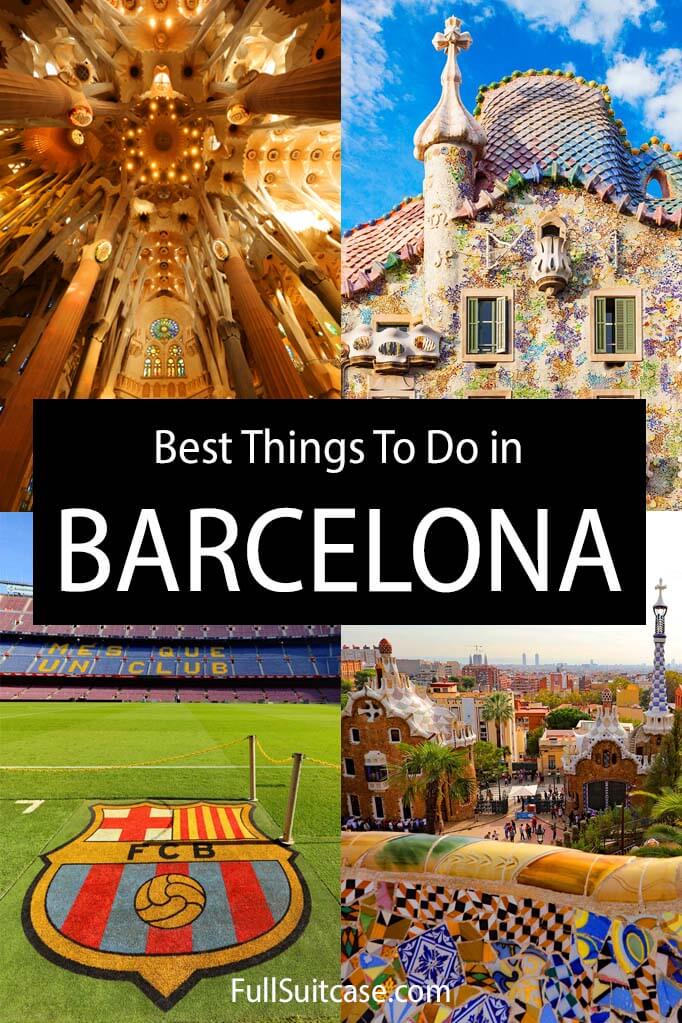
Important: Book Sagrada Familia, Park Güell, and Casa Batlló as soon as you know your travel dates. Tickets can sell out, and booking early gives you more choice of entry times, making it easier to plan your day. For Sagrada Familia, we recommend adding tower access. Check availability first if this is on your wish list and book asap.
PRO TIP: This highly-rated digital city pass lets you book all three in one go and gives you an additional 10% discount on other attractions in Barcelona. This pass is the best option if you want to visit the Sagrada Familia Towers.
Barcelona Top Sights – Overview
Map of Barcelona Attractions
This map shows the main places to visit in Barcelona mentioned in this guide. It will help you see where everything is and plan your sightseeing.
We’ve only included sights within the city, so places like Montserrat are not shown. The colors help you decide what to prioritize: purple for must-sees, red for other recommended sights, and yellow for places to visit if you have more time.
TIP: For detailed planning ideas, see our suggestions for one day in Barcelona and a 2-day Barcelona itinerary.
How to use this map: Zoom with your mouse or fingers. Select an icon for place details or the top-left menu for the full list. Click the star beside the title to save the map to your Google account. Find it in Google Maps under “You” → “Maps” on mobile or “Saved” → “Maps” on a computer using the same account.
Good to know: Our list starts with Barcelona’s must-sees, so if you’re short on time, focus on the first 10 places. With two to three days in the city, you can see many of the top 15–20 sights, depending on how many you visit inside. Four to five days will give you time to explore most of the places in this guide.
These are the main landmarks and top tourist attractions in Barcelona:
1. La Sagrada Familia
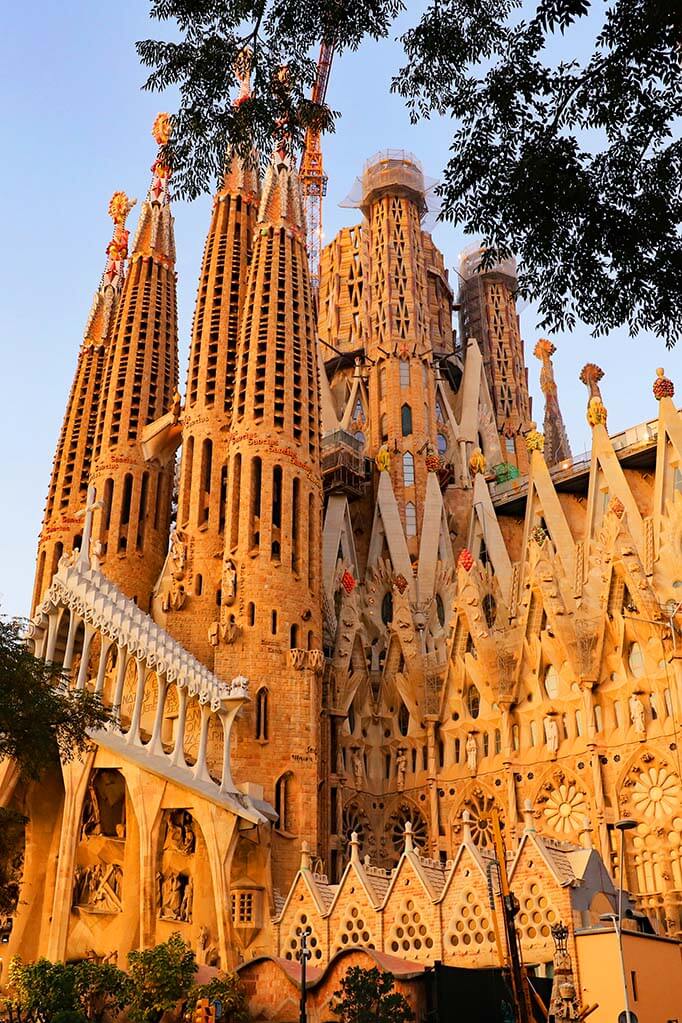
One of Barcelona’s most famous buildings, the Basilica of La Sagrada Familia (Basilica of the Holy Family) is an architectural masterpiece that should be at the top of any Spain bucket list. If there is one landmark that you absolutely cannot miss in Barcelona, it’s the Sagrada Familia.
Designed by the genius architect Antoni Gaudí, La Sagrada is truly breathtaking. No words or pictures do it justice – it’s a place you have to experience first-hand.
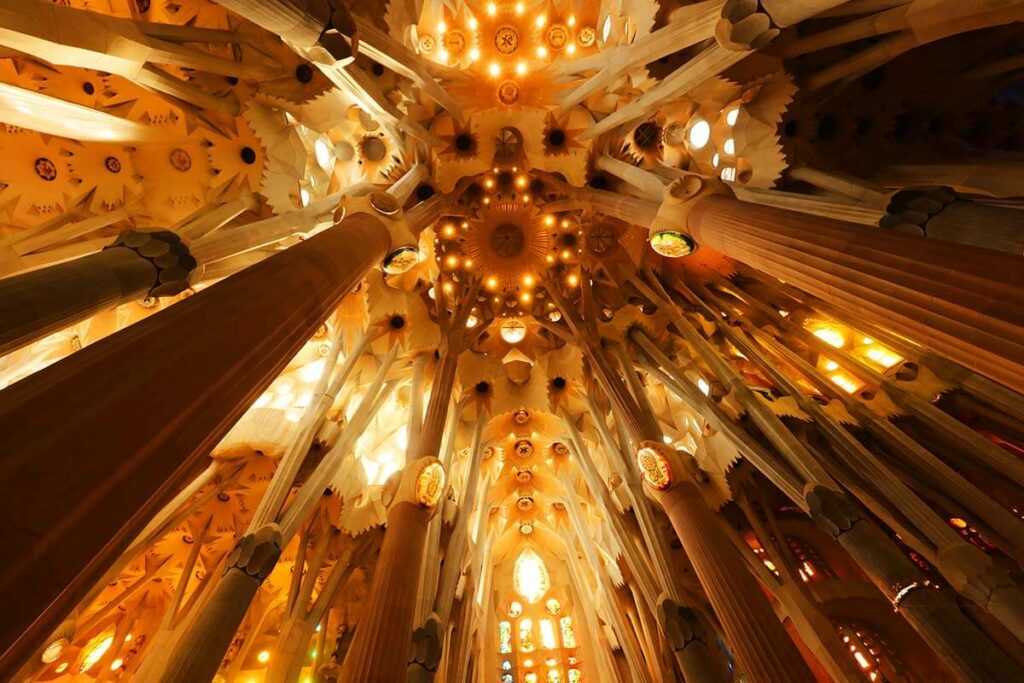
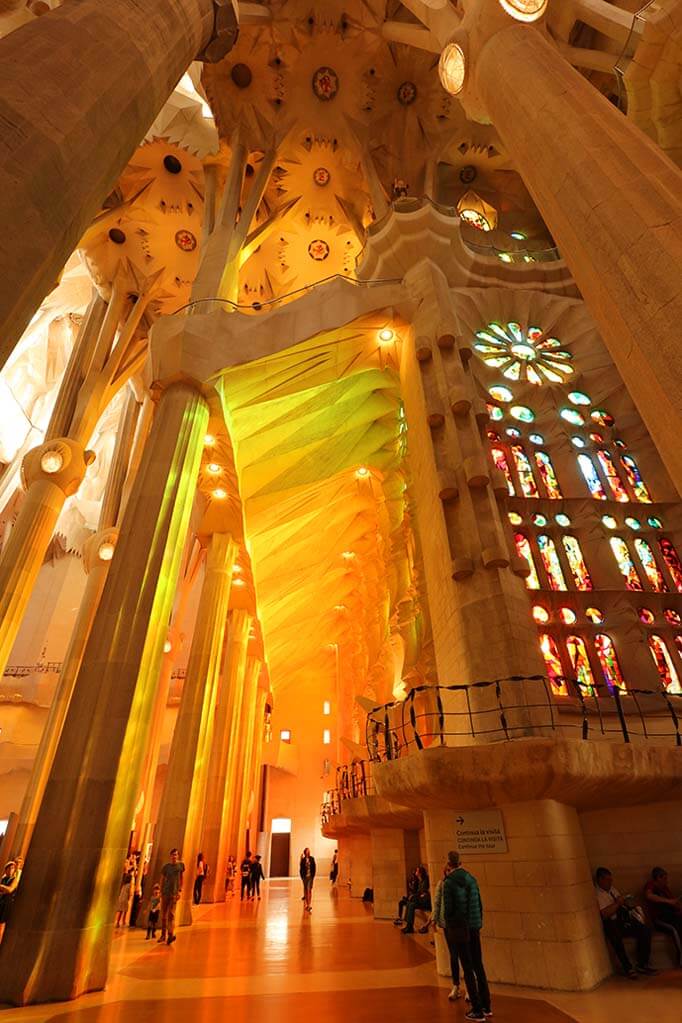
As impressive as it is from the outside, you really need to step inside the church to fully appreciate it. The interior is incredibly detailed, and the light coming through the stained-glass windows fills the space with shifting colors throughout the day. Looking up at the tall, tree-like columns and the vaulted ceiling gives you a good sense of just how unique the design is.
Good to know: Do not confuse La Sagrada Familia with the Cathedral of Barcelona. Whilst the most famous and most visited, Basilica La Sagrada Familia is not a Cathedral. The actual Barcelona Cathedral is also well worth a visit – you’ll find more information about it further below.
Interesting fact: While construction began in the late 19th century, the basilica is still being completed, and work on the exterior continues today. The building has been under construction for over 130 years! It’s fun to spot the differences in architectural styles and colors as you walk around.
Good to know: Be sure to get skip-the-line tickets in advance to avoid wasting time queuing. Plan 1.5-2 hours for your visit, and – in high season – allow some extra waiting time (even with priority tickets, you’ll have to locate the dedicated entrance, pass the security check, etc).
Best time to visit: If you want to avoid the crowds, visit La Sagrada Familia first thing in the morning. However, mid-morning or mid to late afternoon is the best time light-wise. That’s when the sunlight strikes the windows directly, enhancing the colorful illumination within the church. We visited at around 2 PM and the light was mesmerizing!
TIP: Instead of just getting tickets and going on your own, we highly recommend booking a guided tour, which will come with priority access tickets. There is so much symbolism, so many interesting details, and stories about La Sagrada that you would totally miss without a guide. Having a guide will enhance your visit to any of the Gaudi buildings, but especially at La Sagrada Familia!
PRO TIP: If available for your travel dates, upgrade your ticket to include tower access. Some guided tours (like this one) also give this option. It doesn’t matter which tower you choose – Passion Facade Tower or Nativity Facade Tower – the views are just as spectacular, and you get to see the incredible architectural details of the rooftops up close. It’s one of the most unique experiences in Barcelona!
On one of our trips, we visited La Sagrada Familia as part of this amazing small-group tour that includes all the main Gaudí landmarks in Barcelona. With all the logistics taken care of, it’s a great way to see a lot in just half a day. You can read about our experience via the link below.
READ ALSO: Best Gaudi Tour in Barcelona
2. Gothic Quarter – Old Town of Barcelona
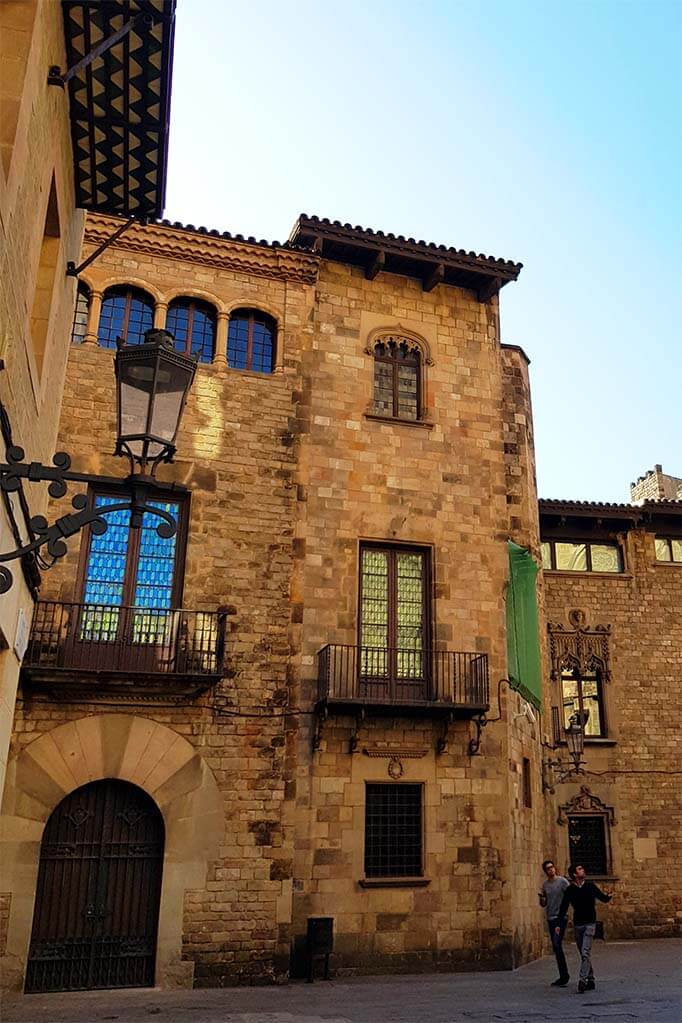
The Ciutat Vella – Barcelona’s Old Town – is made up of four main areas. The most popular and the most beautiful to see is the Barri Gòtic (Gothic Quarter). No matter how long your trip is, this area is not to be missed in Barcelona!
Barcelona’s Gothic Quarter is a rather compact area located southeast of Plaça de Catalunya and perched between the streets of La Rambla to the west and Via Laietana to the east. It’s a compact area with narrow medieval streets and well-preserved Gothic architecture.
It’s here that you’ll find many of the oldest churches of Barcelona, including the 13-15th-century Cathedral of Barcelona (more about it below). And be sure to explore the neighborhood’s many squares, including the most famous of them all, Plaça Reial (Royal Square).
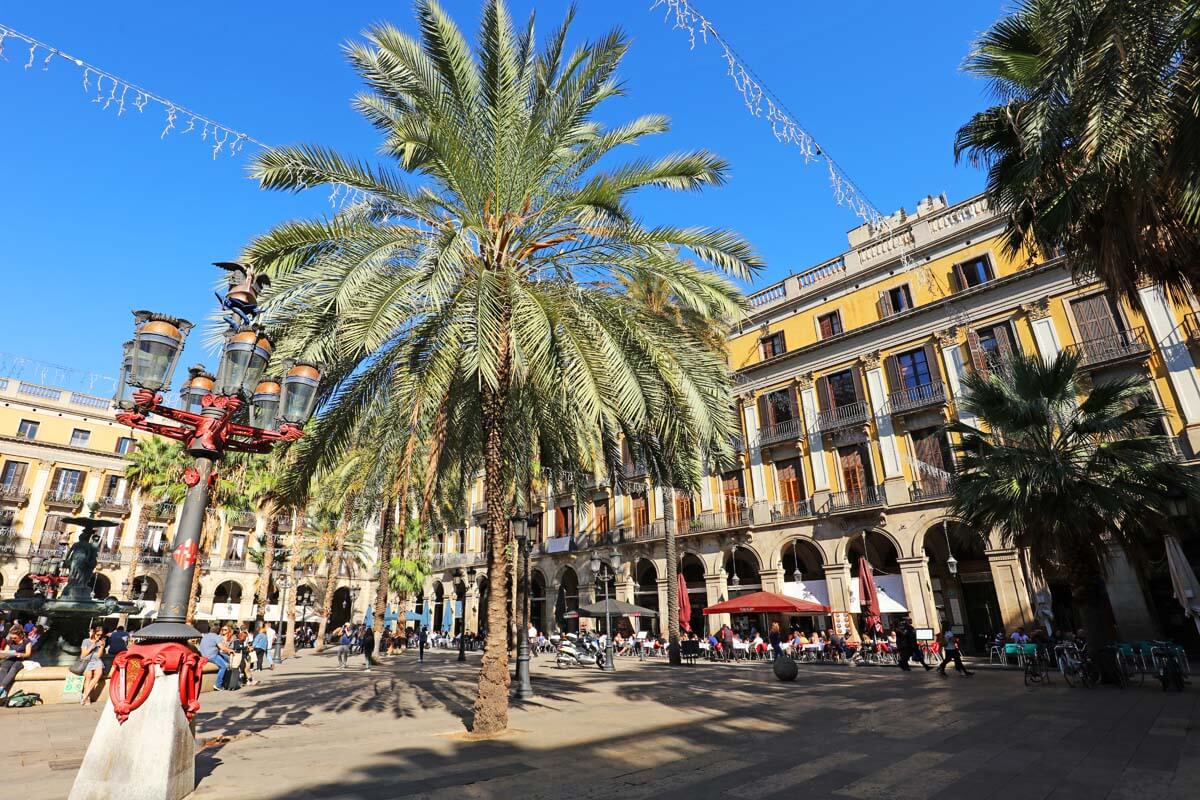
TIP: The 19th-century Plaça Reial is one of the must-sees in Barcelona! It’s a lively city square lined with tall palm trees, a fountain in the middle, and lamps designed by Gaudi. This is a popular meeting place with many restaurants and cafes – ideal to relax, have a drink, and do some people-watching. If you visit on a Sunday morning, you’ll find the coin- and stamp collectors’ market here as well.
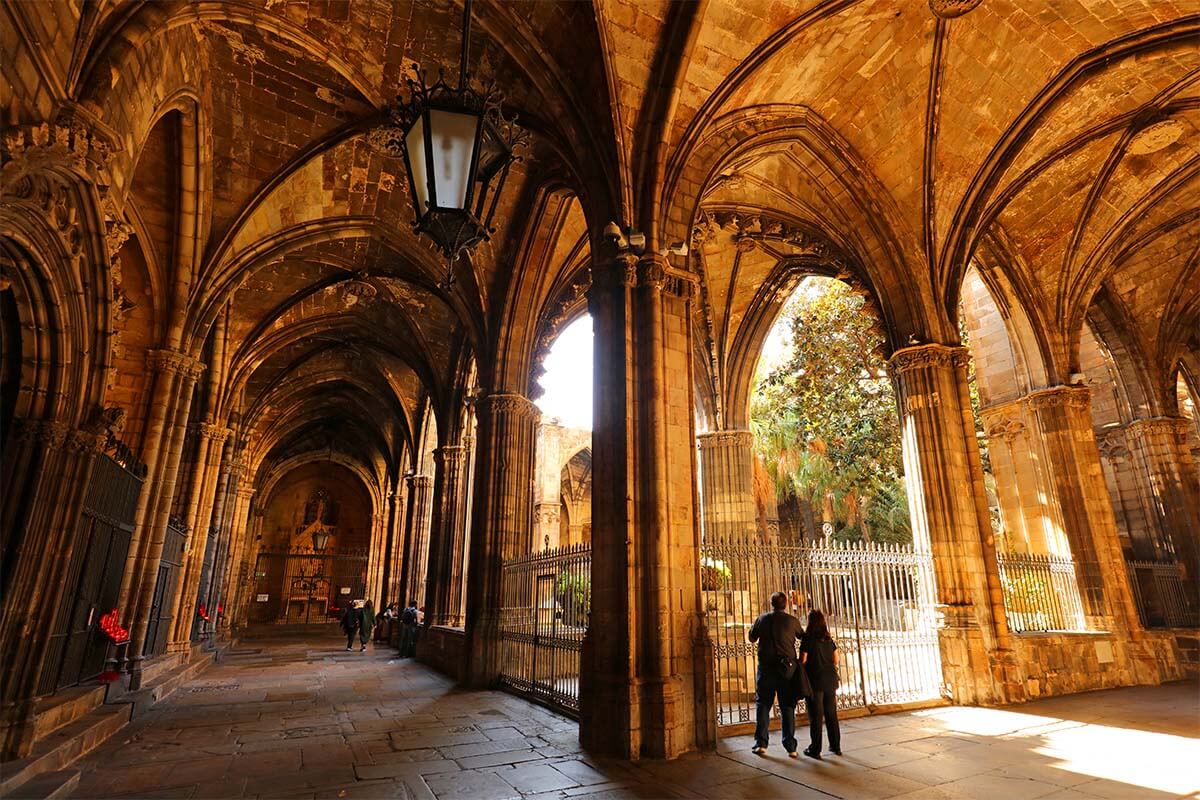
But the history of the Gothic Quarter goes back much further, with parts dating back to Roman times. Inside the area’s City History Museum (MUHBA – more info further below), you can even visit a subterranean Roman town. Here you’ll see ancient houses, streets, and workplaces.
Good to know: The Gothic Quarter is packed with bars and restaurants and has a very lively nightlife. It’s also great for shopping, with plenty of little boutiques to explore.
TIP: There are many really nice tours that visit this part of town (often in combination with other popular sights in Barcelona). You can choose from walking tours, bike tours, or food tours – it’s a fun way to get to know the city a bit better.
3. Barcelona Cathedral
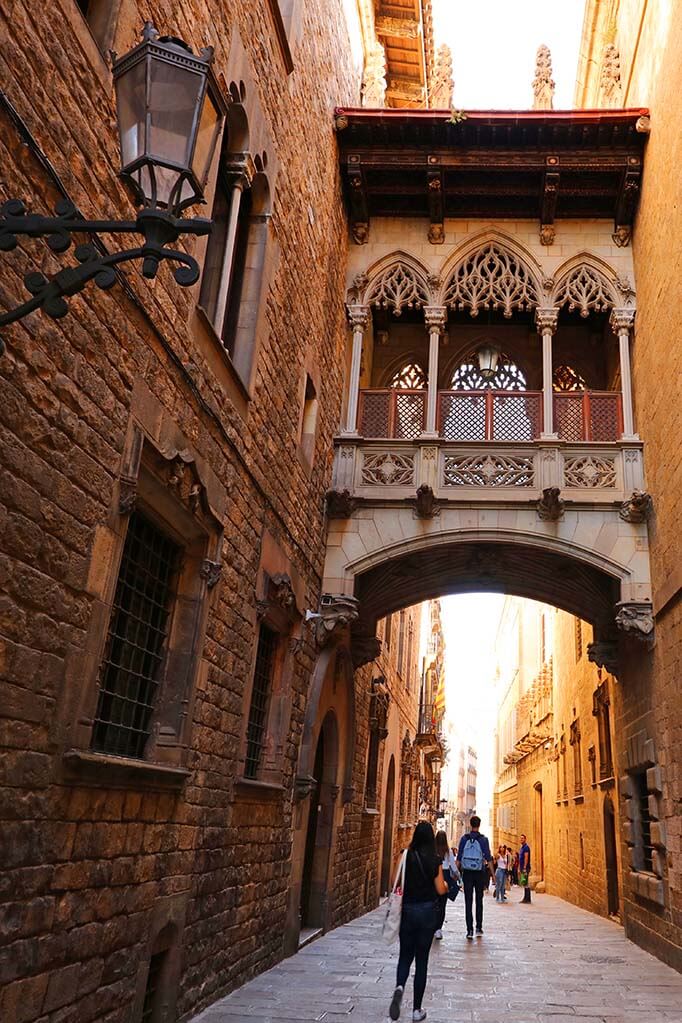
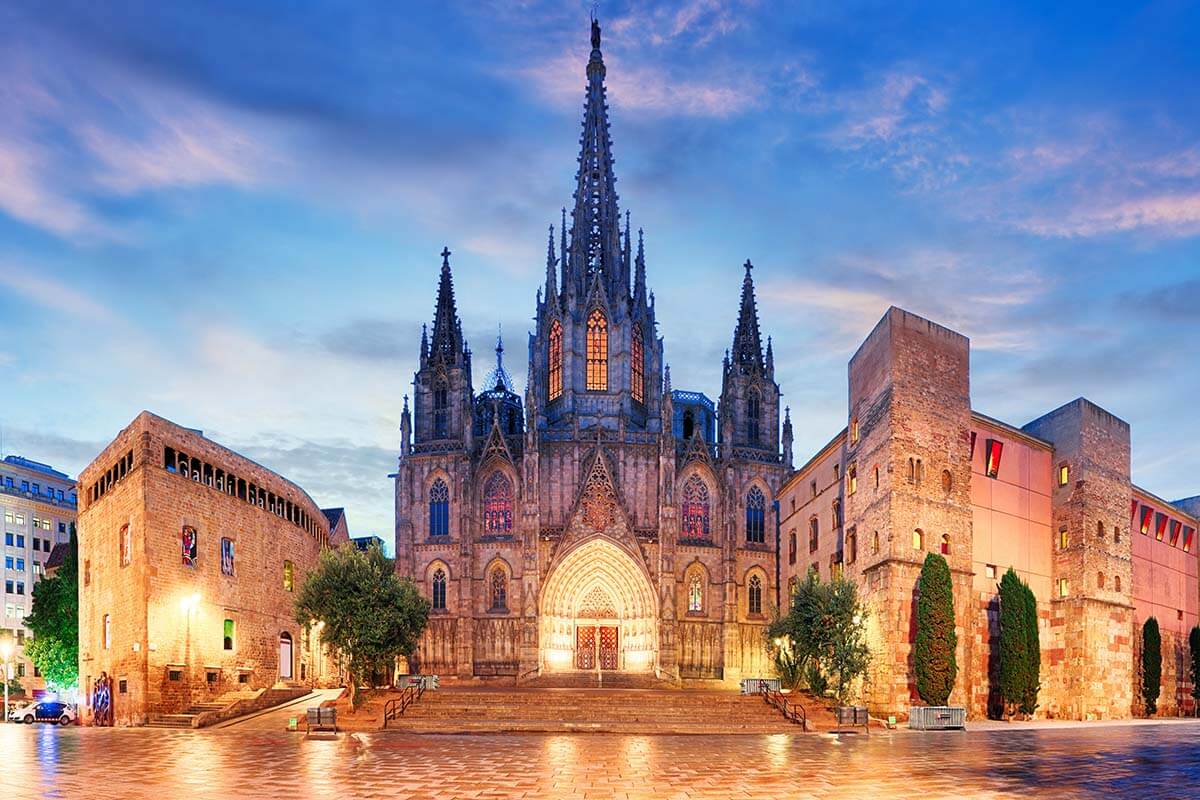
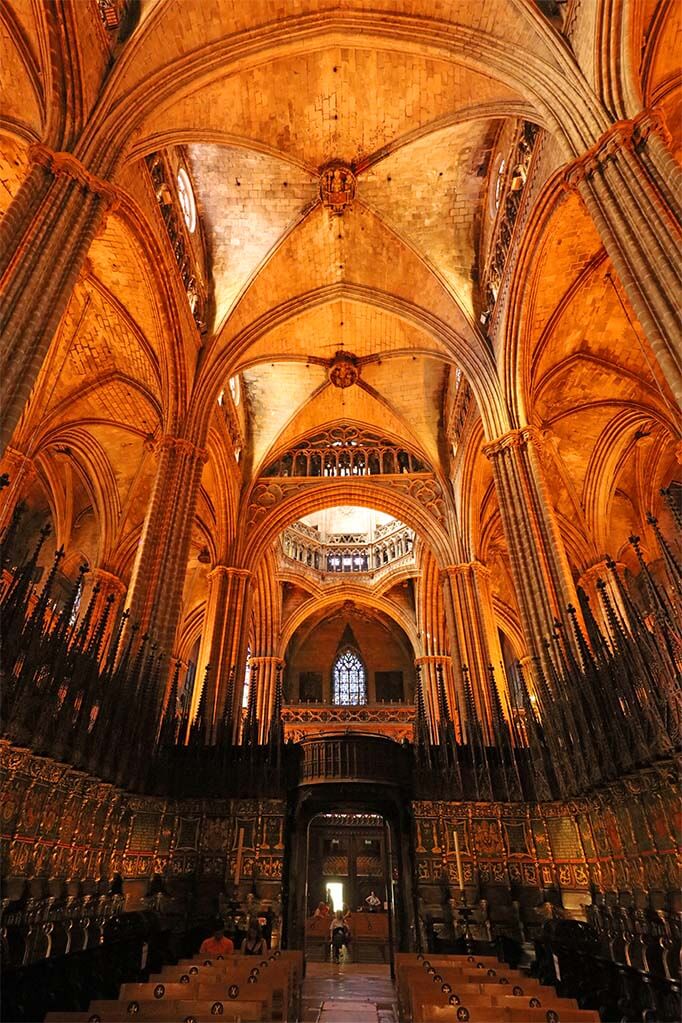
The Cathedral of the Holy Cross and Saint Eulalia – also known as Barcelona Cathedral – is the main attraction in the Old Town. It’s a traditional Gothic cathedral, totally different from La Sagrada Familia, but worth a visit just as much.
Dating back to the 13th to 15th centuries, Barcelona Cathedral is a beautiful building with a spectacular interior that simply must not be missed. Its facade is famous for its gargoyles, along with domestic and mythical animals.
But what many people don’t realize is that its elaborate exterior was actually a 19th-century addition! Its original features were much more simple and can still be seen along the Cathedral’s sides.
Be sure to take a walk in the picturesque garden, filled with tall palms and magnolias. Here you will find the Well of the Geese (Fuente de las Ocas). This is a large, raised pond filled with thirteen white geese. Some say they are there to safeguard the cathedral’s treasures – geese were traditionally kept by the Romans as security guards. Others say they are there to represent the age of Christian martyr Saint Eulàlia when she died.
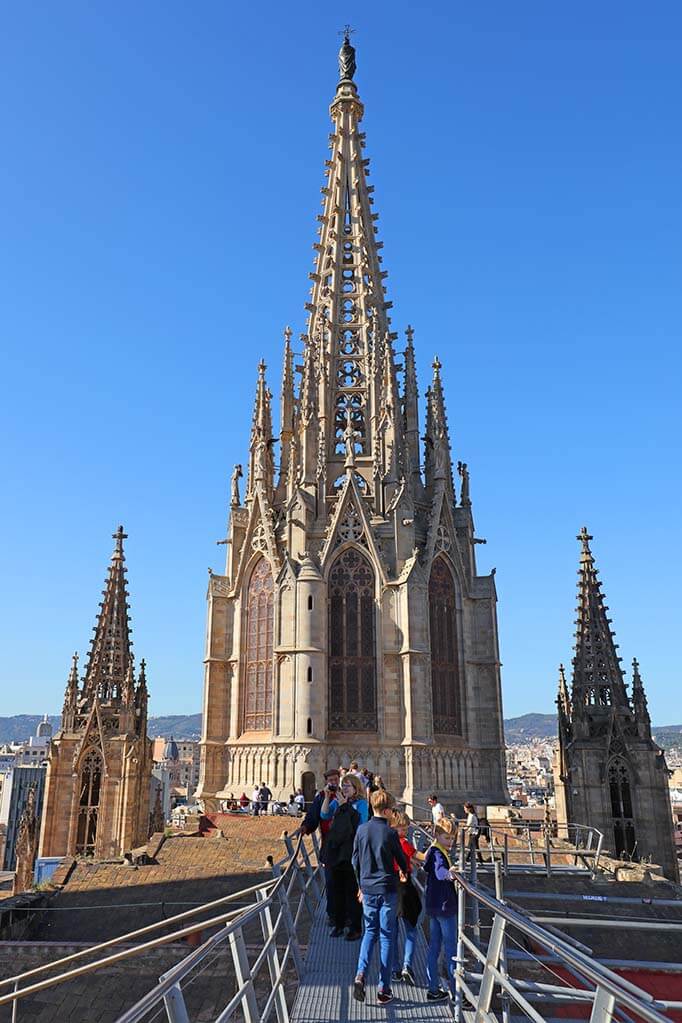
TIP: It’s also well worth taking the elevator to the Cathedral roof. Here you can get a good view of the Barcelona skyline.
Good to know: You’ll need a ticket to visit the Cathedral – make sure to book online in advance. The ticket includes fast-track entry to the Cathedral, access to the rooftops, the Chapter Room, and more. For more info about opening times and tickets, see the website of the cathedral.
Also, you should wear appropriate clothing (knees and shoulders covered) for your visit here – shorts and revealing clothes are considered disrespectful.
4. Park Güell
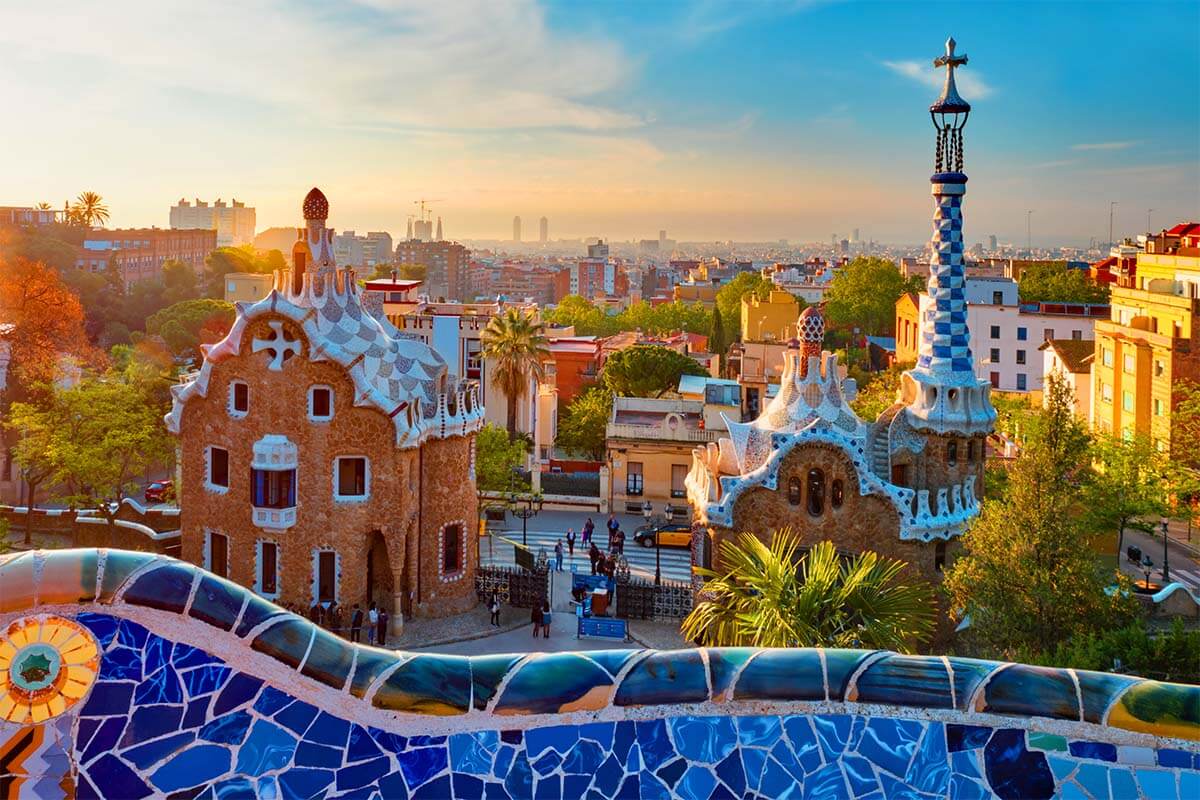
Park Güell is another of the most famous Gaudi attractions and one of the top fairytale places in Europe. It’s an absolute must-see in Barcelona!
Park Güell was commissioned by the entrepreneur Eusebi Güell and designed by Antoni Gaudí as a residential development for wealthy families. The housing project was unsuccessful, but its gardens and unusual architectural features eventually became a public park.
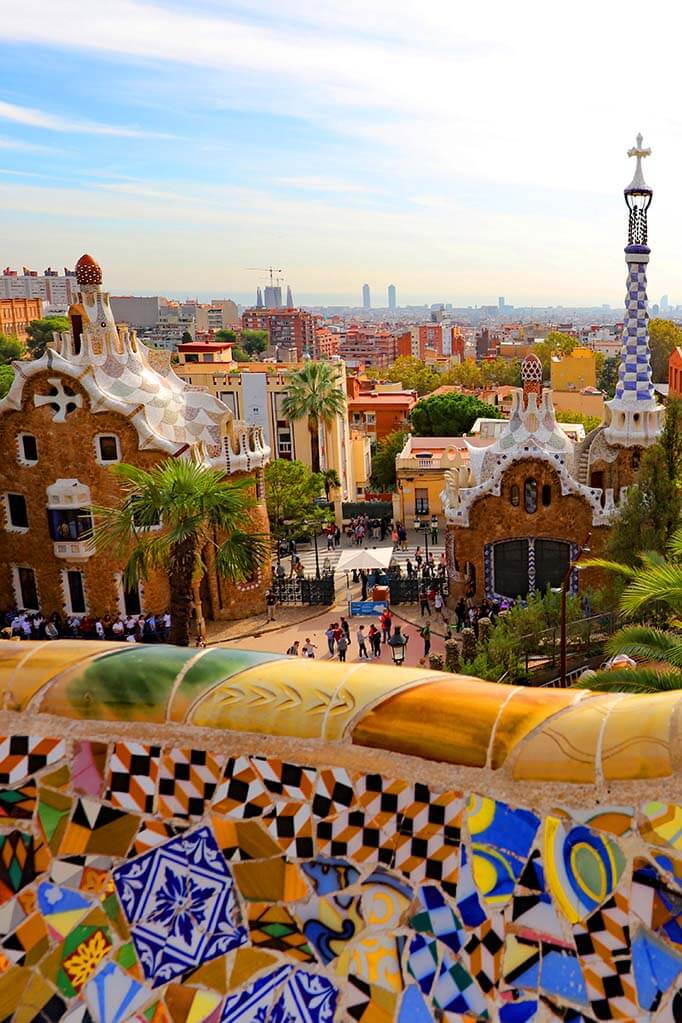
You can see beautiful tiling here, along with unique stone structures, detailed mosaics, and a wonderful dragon staircase with a fountain. There is even a small house in which Gaudi lived at one point. This is now a museum and contains interesting pieces of furniture that he designed.
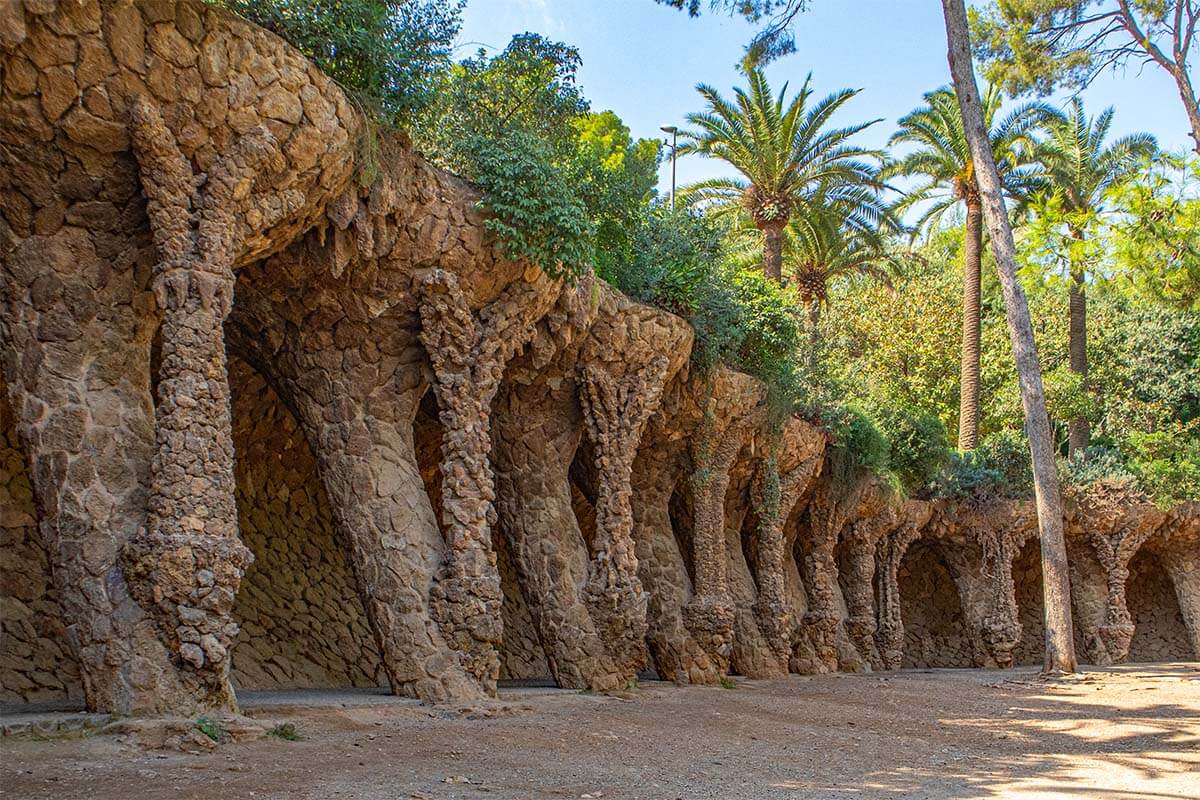
TIP: Be sure to book your tickets ahead of your visit, as they are usually sold out at least a few days in advance. Many of our readers told us that they weren’t able to visit the park because they didn’t think to book in advance, and our local guide confirmed that this is indeed often the case.
PRO TIP: If you didn’t get the tickets in time, try to see if you can still join one of the guided tours that visit the park. They usually prebook some extra tickets to accommodate last-minute bookings.
Good to know: Park Güell is located a bit outside of the city center. The closest metro station to the park is about 15 minutes away, so if you are very short on time you may prefer to take a taxi. Also, wear comfy footwear! Much of the walking is uphill and many of the paths are made from dirt. Sneakers are ideal.

5. Plaça de Catalunya
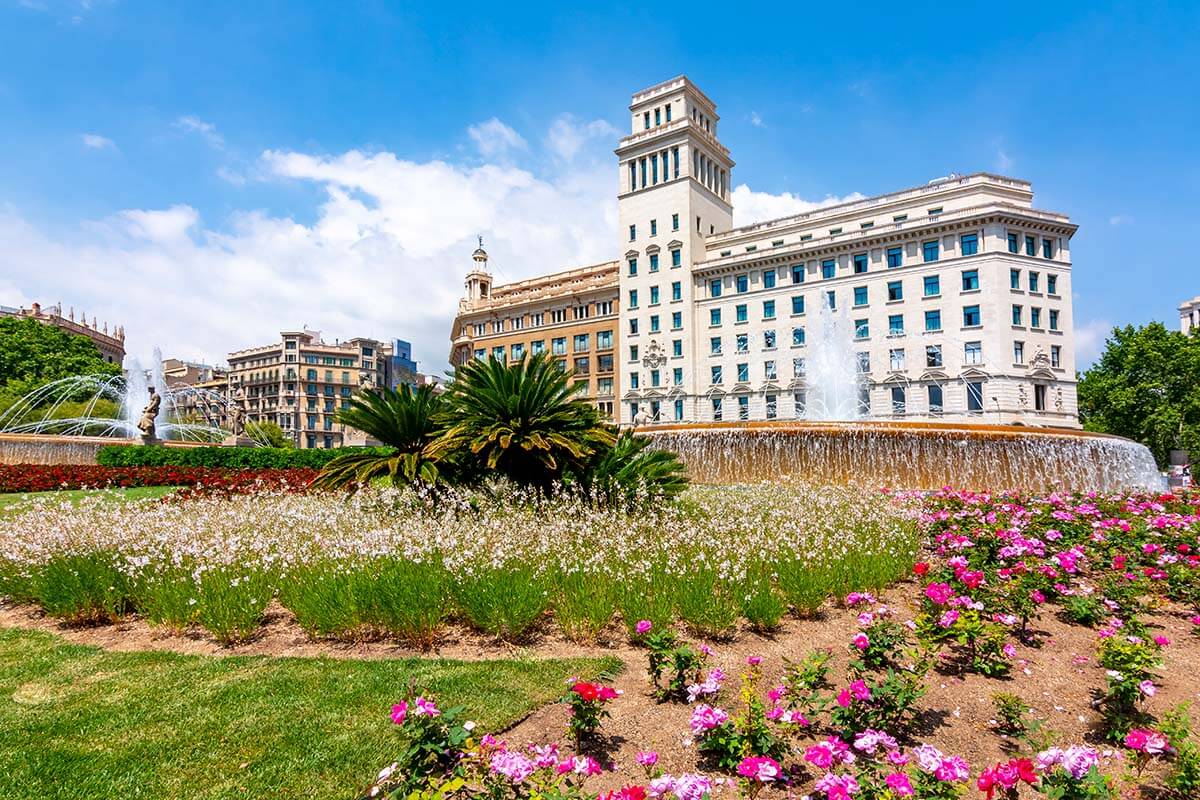
Located in the very heart of Barcelona, Plaça de Catalunya is a large plaza, the central square of the city. It’s here that the Gothic Quarter, the neighborhoods of El Raval and l’Eixample, and the most prominent streets such as La Rambla and Passeig de Gràcia come together. It doesn’t get any more central!
Plaça de Catalunya is a popular meeting place in Barcelona – for locals and tourists alike. Many city tours start here, and – because there’s enough space for big buses to park – quite a lot of tours that go outside the city also start here.
This large city square is a hub of activity, with frequent fiestas and live musical performances. Its perimeter is lined with statues and there are fountains and green verges, giving you somewhere to sit for a while and soak it all up.
Surrounding the square are many great eateries (including the Hard Rock Cafe, for the fans). Shopping is good here too, with, among others, a large branch of El Corte Inglés, Spain’s biggest department store chain.

Good to know: To appreciate the plaza without the crowds (and noise) visit on the weekend in the morning.
TIP: For an impressive, birds-eye view of the plaza and the city beyond, check out the self-service restaurant at the very top level of the El Corte Ingles shopping center. It’s one of the best – and free – viewpoints in Barcelona’s city center.
6. La Rambla
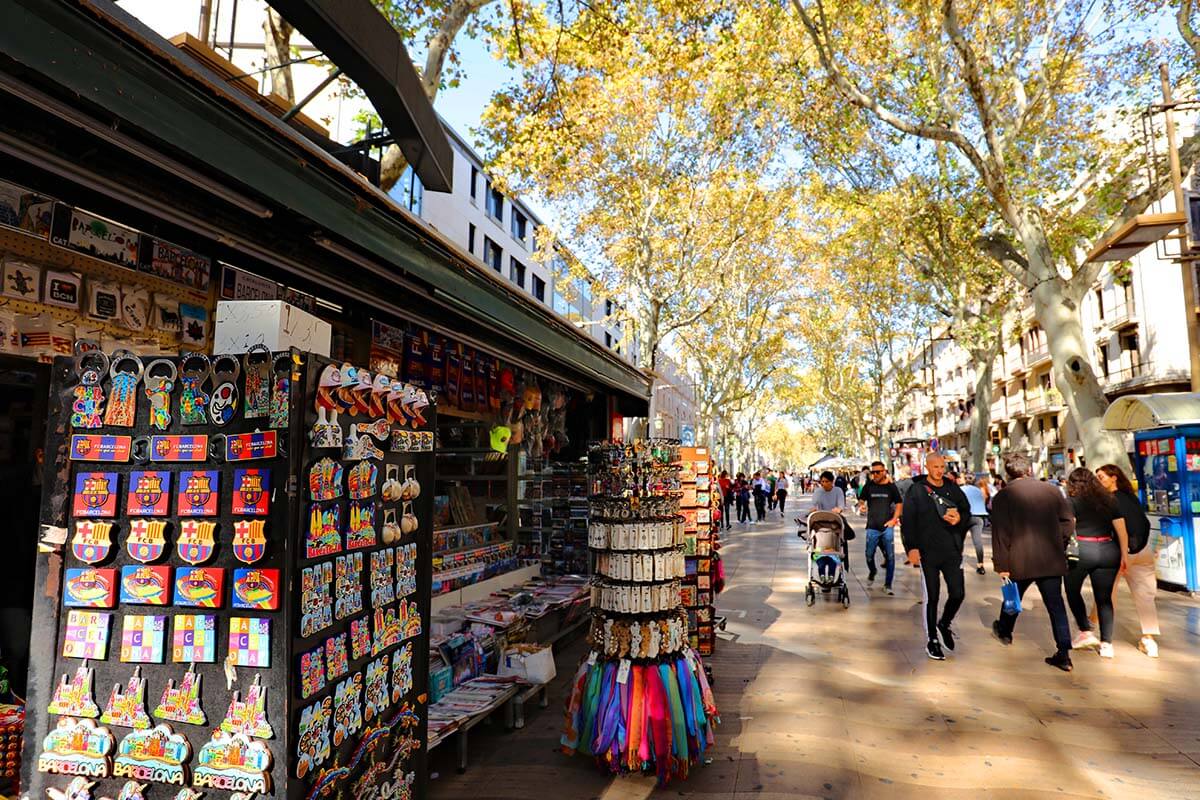
La Rambla (aka Las Ramblas) is probably Barcelona’s most famous street and no trip to the city would be complete without walking through it. Connecting Plaça de Catalunya to the waterfront area La Rambla crosses the heart of Barcelona’s old town, with many of Barcelona’s most famous sights just nearby.
This wide tree-lined avenue with a wide pedestrian area in the middle is packed with street musicians, souvenir vendors, and people enjoying drinks on the restaurants’ terraces.
It’s busy – crowded – at La Rambla every day. But visit early in the morning and you’ll find it much quieter. This will give you an opportunity to enjoy the beautiful architecture and other interesting sights here.
Check out the Font de Canaletes, a small drinking fountain where Barcelona football club fans come to celebrate the team’s victories. Drinking from this fountain is said to guarantee your return to the city (I haven’t tried though)…
Other spots worth visiting include Gran Teatre del Liceu and Palau Güell, an impressive mansion designed by Gaudi. Also the earlier mentioned Gothic Quarter with Plaça Reial – beautifully decorated with palm trees – and Plaça de Sant Josep Oriol square with Basilica de Santa Maria del Pi is just nearby.
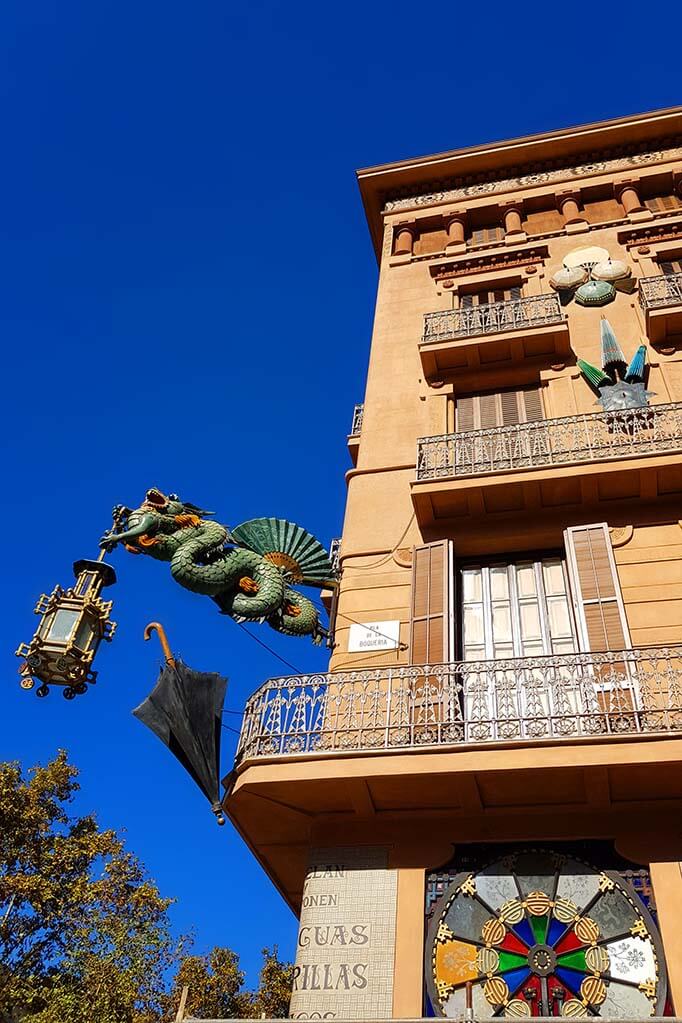
Casa Bruno Cuadros – a building at the corner of La Rambla and Plaça Boqueria – with Chinese mosaics, umbrellas, and a huge dragon on the facade is also noteworthy.
Good to know: Restaurants and cafes on La Rambla tend to be of quite poor quality. Your best dining option in the area is to head to the Boqueria market instead (see below) or check out the restaurants in the Gothic Quarter just nearby.
Also, La Rambla is so busy and so touristy that it’s one of the places where you really have to watch out for pickpockets!

7. Casa Batlló
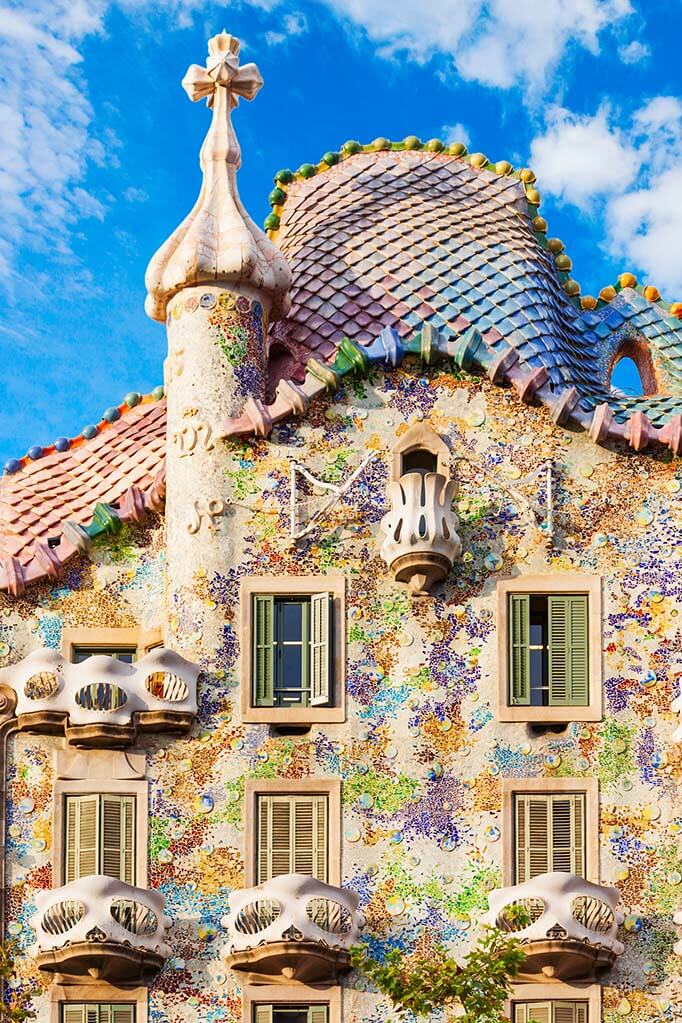
Redesigned by Antoni Gaudí, Casa Batlló is one of Barcelona’s most recognizable buildings and most popular attractions. Located on Passeig de Gràcia in the city center, it’s worth seeing both inside and out.
A UNESCO World Heritage Site, the building was originally constructed in 1877 and looked very different from the house you see today. After businessman Josep Batlló bought it in 1903, he commissioned Gaudí to transform it into something truly special.
From the colorful facade to the dragon-shaped roof, there are unusual details everywhere you look. The entrance hall has an underwater feel, while the Noble Floor features large oak doors with stained-glass panels. The dining room opens onto a rear courtyard decorated with colorful tiles and mosaics.
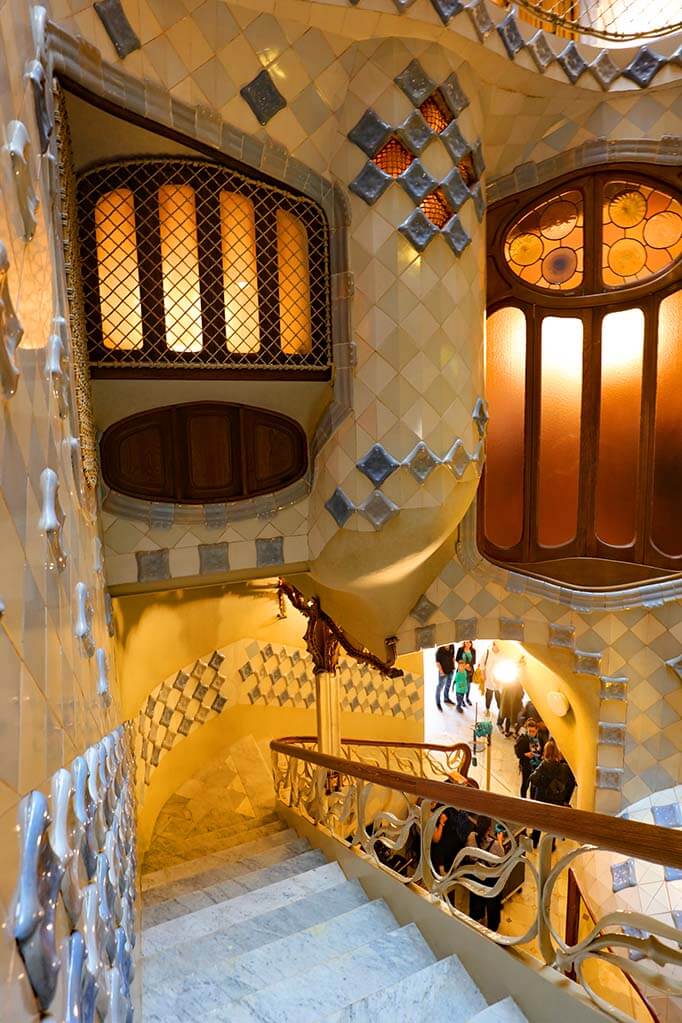
Be sure to look up as you pass through the central light well. Gaudí used different shades of blue tiles and windows of varying sizes to distribute daylight more evenly throughout the building.
The visit also includes the Gaudí Cube, an immersive room with digital art projected all around you. It’s a very different way to discover the shapes and colors inspired by Gaudí’s work.
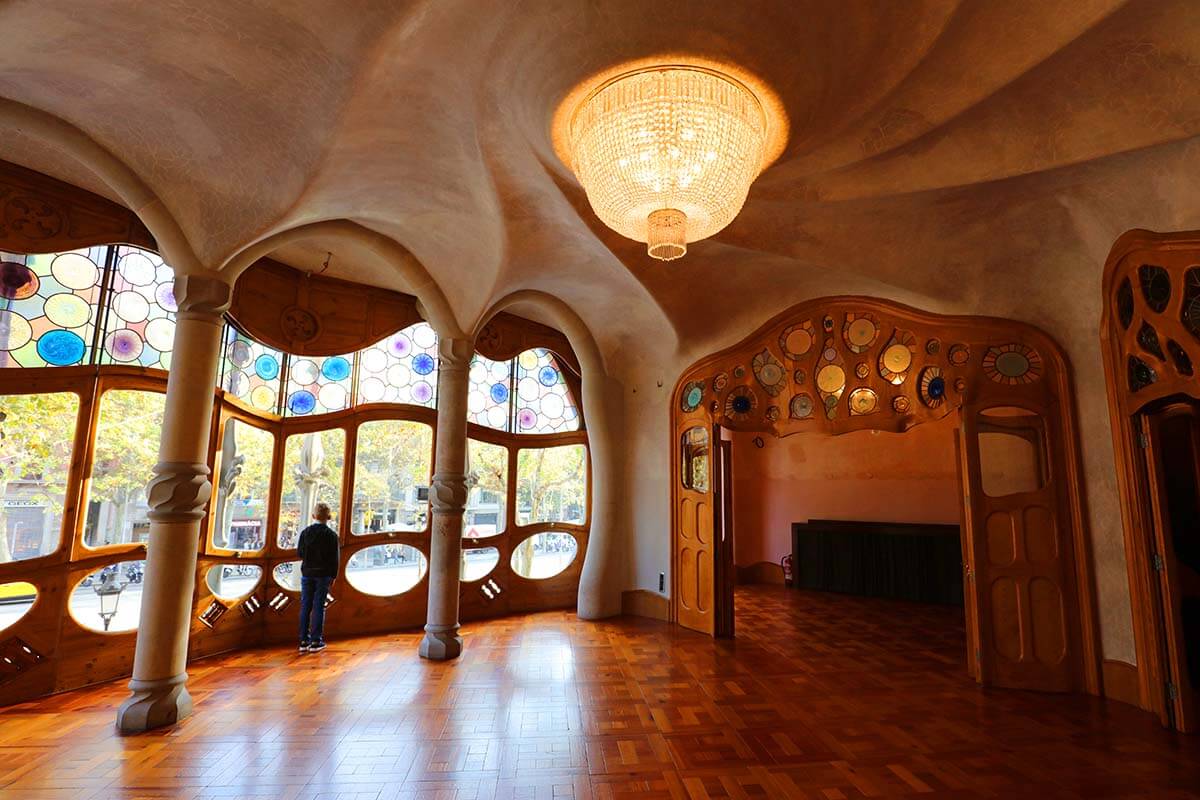
Good to know: Casa Batlló is open daily. Allow about 1–1.5 hours for your visit and book your tickets in advance. The Blue ticket includes the main house, an audio guide, and the Gaudí Cube. Silver adds rooftop access, while Gold and Platinum also include an augmented-reality tablet, the original concierge room, and the Batlló family’s private residence. For a visit that includes the famous dragon rooftop, choose at least Silver.
If you don’t mind an early start, consider the “Be the First” ticket. It lets you enter before regular opening time, so you can explore with fewer people and take photos without so many visitors in the way.
TIP: We visited Casa Batlló on this guided Gaudí tour, which also includes Sagrada Familia and Park Güell, plus a stop outside Casa Milà. It’s a convenient way to visit several of Gaudí’s main sights in about half a day, with tickets and transport between the more distant sights arranged for you. On our visit, the guide took us inside Casa Batlló before it opened to the general public, which made it even more special. That said, access is no longer advertised as part of this tour, so check the current arrangements if that’s important to you.
For a unique experience, Casa Batlló’s Magical Nights combine a house visit with a rooftop concert and a glass of cava.
8. Casa Milà
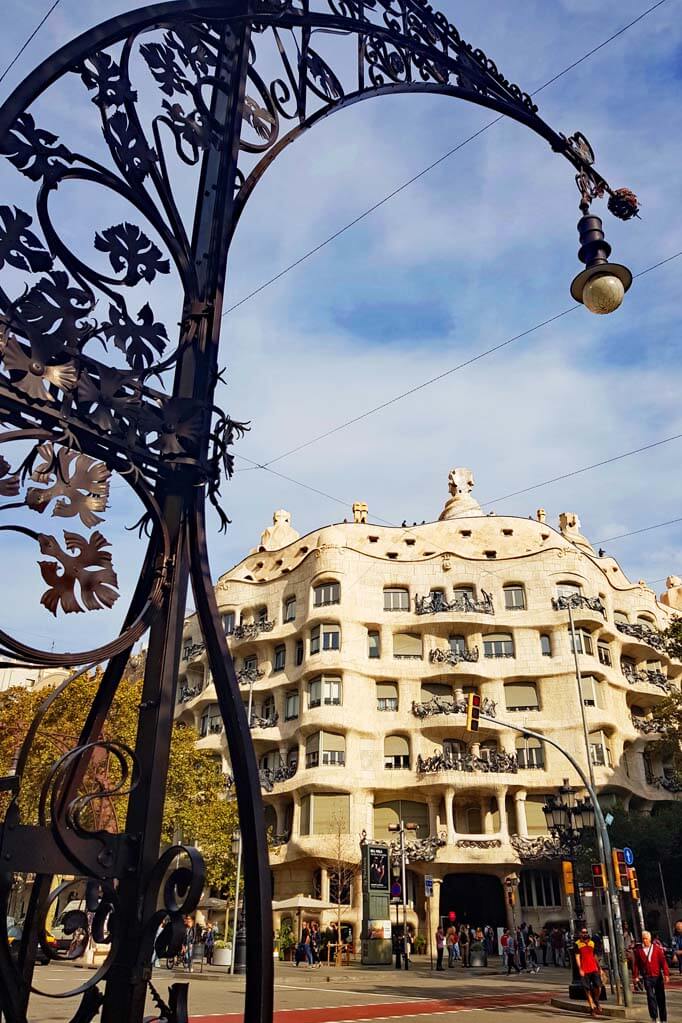
Casa Milà, also known as La Pedrera (the stone quarry), is another famous Gaudí building on Passeig de Gràcia. Like nearby Casa Batlló, it’s a UNESCO World Heritage Site and one of Barcelona’s most popular attractions.
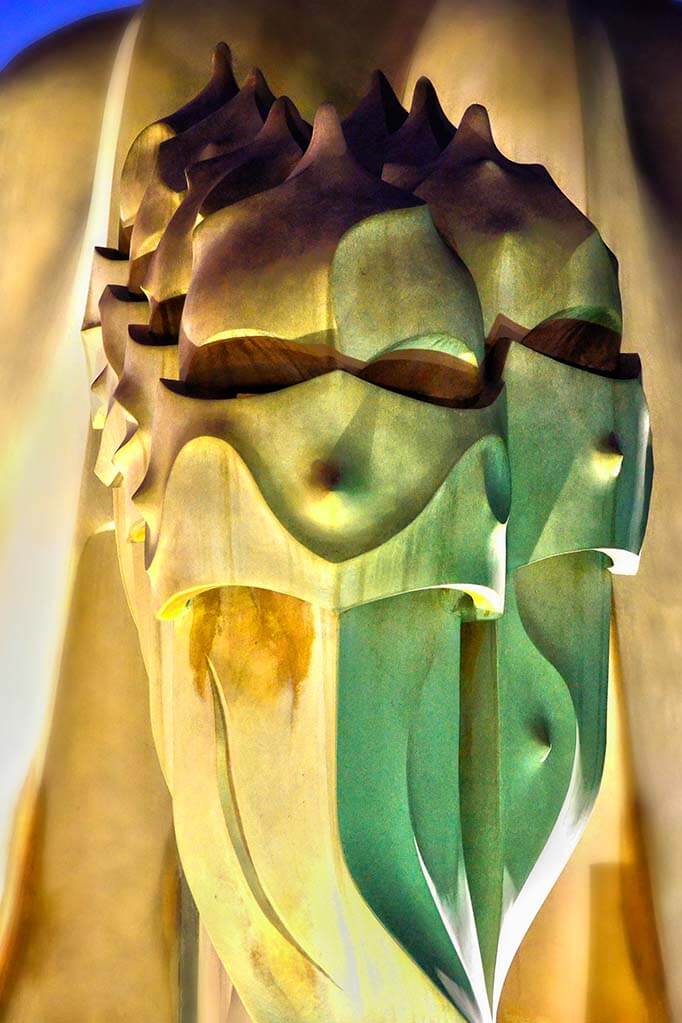
Its wavy stone facade and twisting iron balconies make it easy to recognize. But the highlight is the rooftop, where the sculptural chimneys look like helmeted warriors. Walking among them gives you a closer look at Gaudí’s unusual designs, with views across Barcelona along the way.
Inside, you can explore the courtyards, an apartment furnished in the style of the early 20th century, and the attic with its brick arches and exhibition about Gaudí’s work.
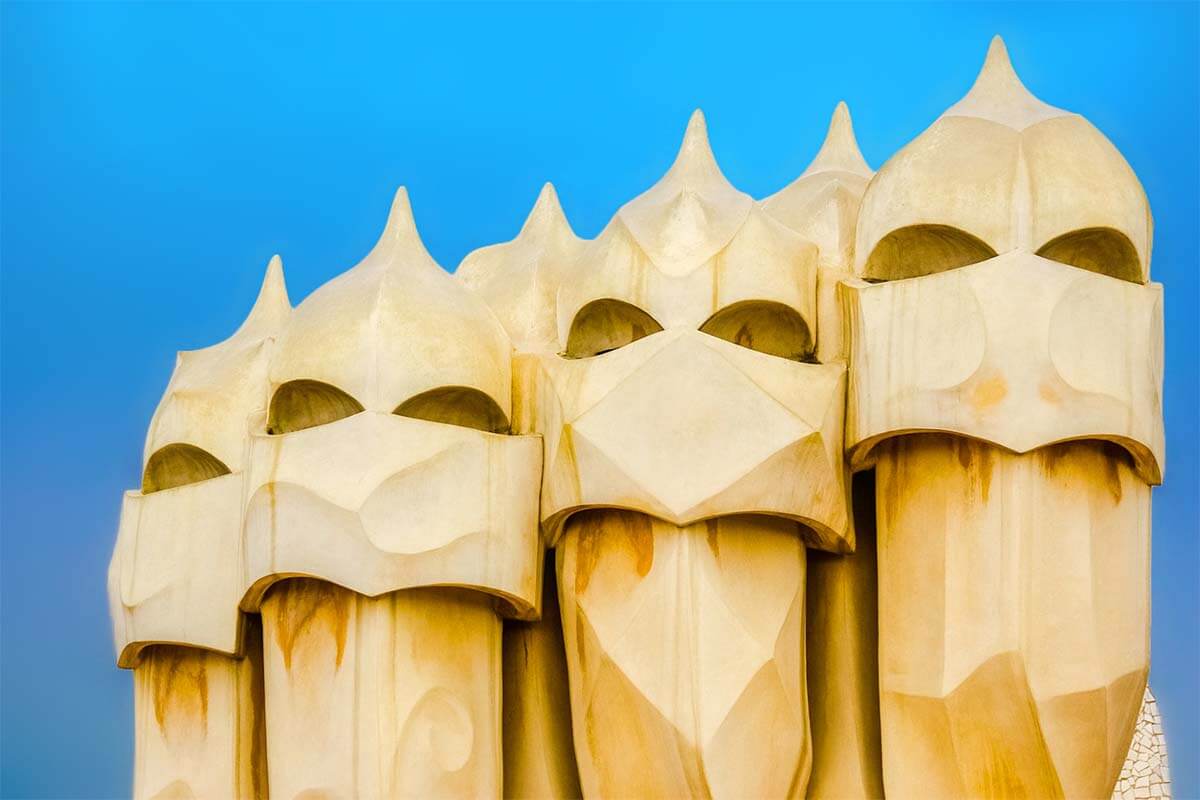
Good to know: Book your tickets in advance, especially if you have a particular time in mind. The standard daytime visit includes the courtyards, apartment, attic, and rooftop.
For a quieter visit, consider this early-morning guided tour. You’ll explore Casa Milà before it opens to the general public, with a guide explaining the building’s history and pointing out details you might otherwise miss.
TIP: For a special evening, book the La Pedrera Night Experience, with a guided tour and rooftop light show.
Which is best: Casa Milà or Casa Batlló? Casa Batlló stands out for its colorful decoration and unique interiors, while the biggest draw of Casa Milà is its rooftop sculptures. If you have time and budget, both are well worth it. But if you only visit one inside, I recommend Casa Batlló. You can still admire Casa Milà’s facade from the street, just a five-minute walk away.
9. Passeig de Gràcia
One of the city’s most important avenues, Passeig de Gràcia is another place you really have to see in Barcelona. Along this famous street, you’ll find some of Barcelona’s most remarkable architecture, high-end boutiques, plus cafés, bars, and restaurants.
Some of the most impressive buildings in Barcelona can be found on Passeig de Gràcia. The earlier-mentioned Casa Battlo and Casa Mila are located here.
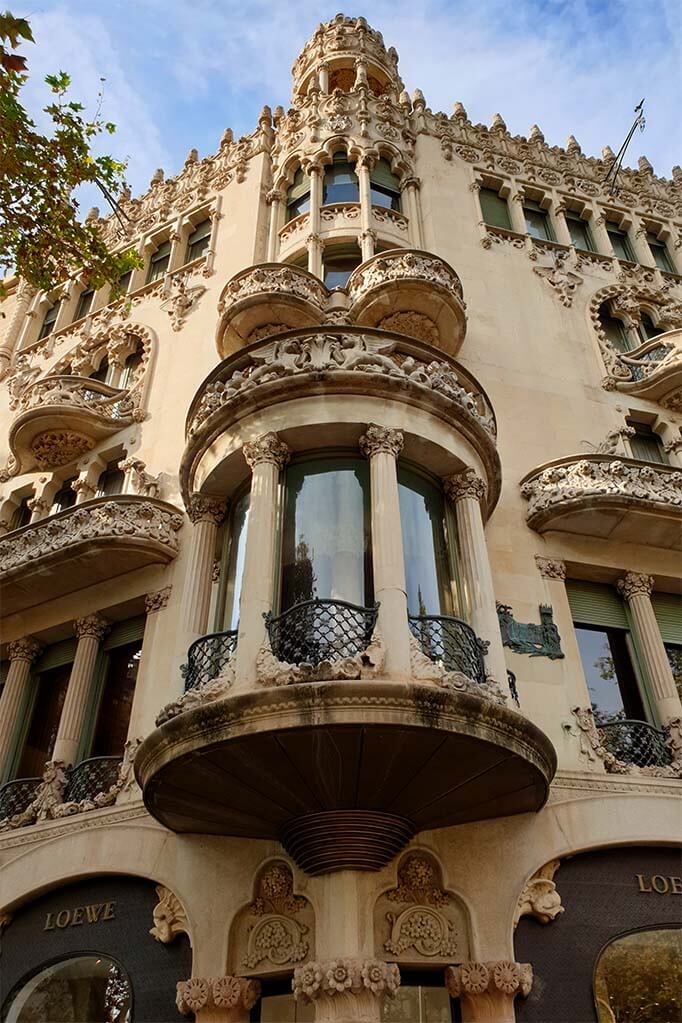
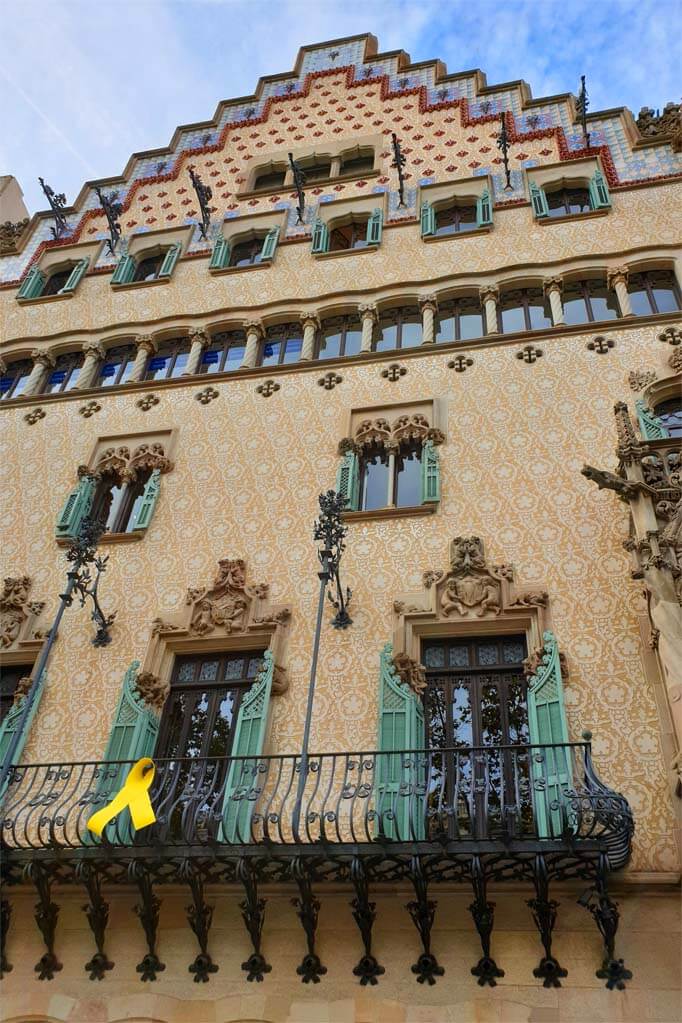
Plus, there are many other buildings by other prominent architects including the most famous mansions such as Casa Amatller (this one can also be visited inside), Casa Lleó Morera, Casa Mulleras, and Casa Josefina Bonet.
TIP: Note the hexagonal tiles on the pavements! Designed by Gaudi, they all follow the same pattern with natural elements such as starfish, ammonites, and algae. The design was originally meant for the floors of Casa Batllo but was later used for the service floors inside Casa Mila. Recently, the sidewalks of Passeig de Gracia have been paved with tiles produced using this Gaudi design.

Many people come to Passeig de Gràcia just to shop. Indeed, it’s one of the best places for luxury shopping in Barcelona.
There are plenty of renowned international designer stores to choose from, including Prada, Chanel, and Gucci. Or you can head all the way into Gracia Village, where Passeig de Gràcia ends. Here you’ll find an interesting collection of independent boutiques, organic health-food eateries, and stores selling up-cycled furniture.
And if you want to take a break from sightseeing and shopping, you’ll find plenty of cafes, restaurants, and bars at which to stop and enjoy lunch or dinner.
Good to know: Gracia village has lots of outdoor squares lined with laid-back cafes and bars. And its nightlife is excellent, attracting a young and local crowd.
10. Mercado de La Boqueria
Barcelona has 12 large covered 19th-century markets scattered all over the city.
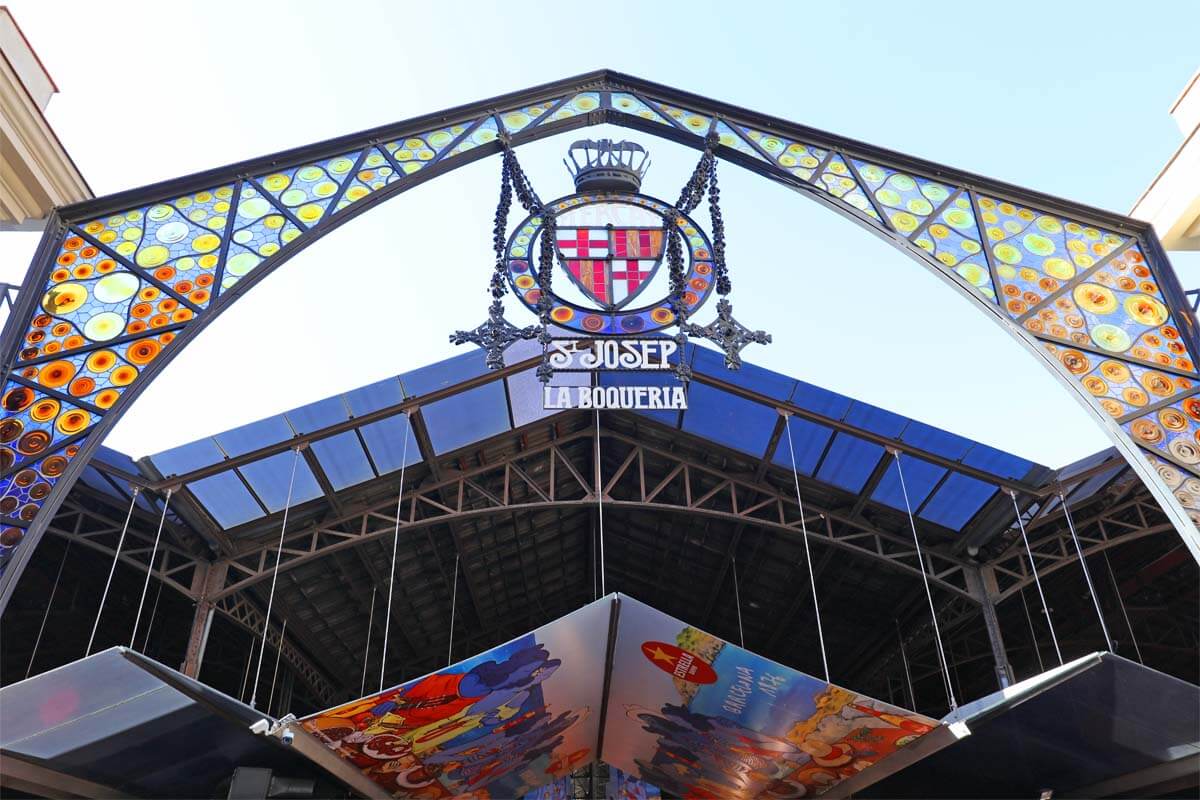
The best-known and most popular indoor market is the Mercado de La Boqueria, housed in a stunning glass and steel building in the heart of La Rambla.
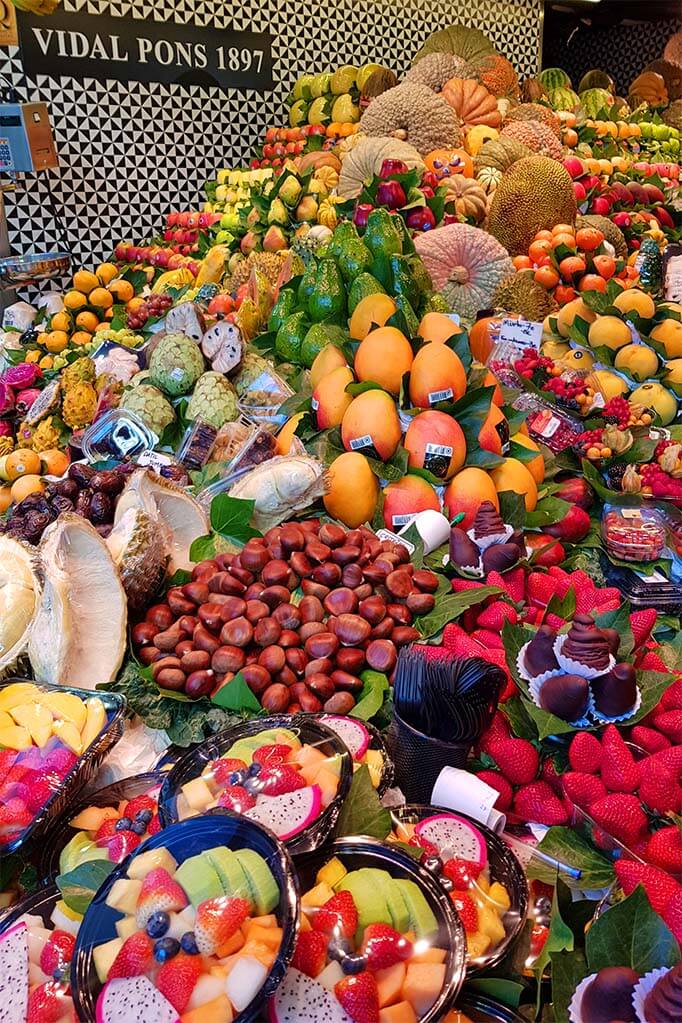
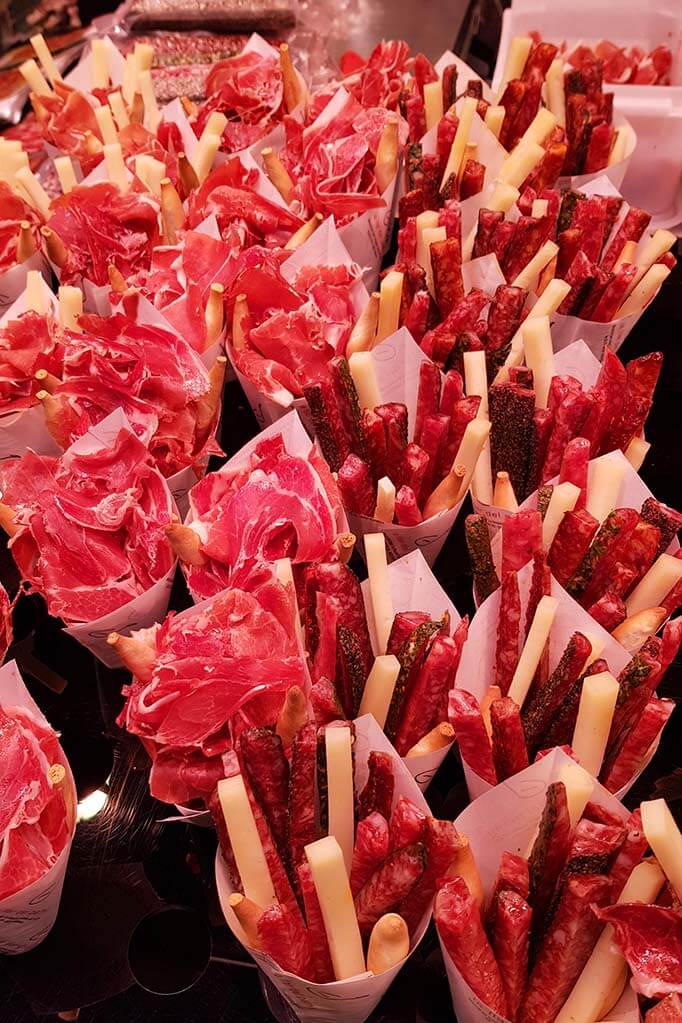
Boqueria Market is a real foodie’s paradise, with local meats, cheeses, and seafood along with a range of exotic and colorful fruits and vegetables. It’s a great place to go for lunch or a quick snack when sightseeing in Barcelona city center.
Good to know: The market is open every day from morning through to the evening, except on Sundays when it’s usually closed.
Market stalls and bars selling food and drinks are dotted throughout the market. You may not always be able to sit down as you eat, but you can certainly enjoy the lively atmosphere and bustle!
TIP: Head to the stalls at the back of the market for the best prices – those at the front pay more rent, so they charge more too! And be sure to try one of the many different kinds of freshly squeezed fruit juice while you’re here. They are yummy!
11. Picasso Museum
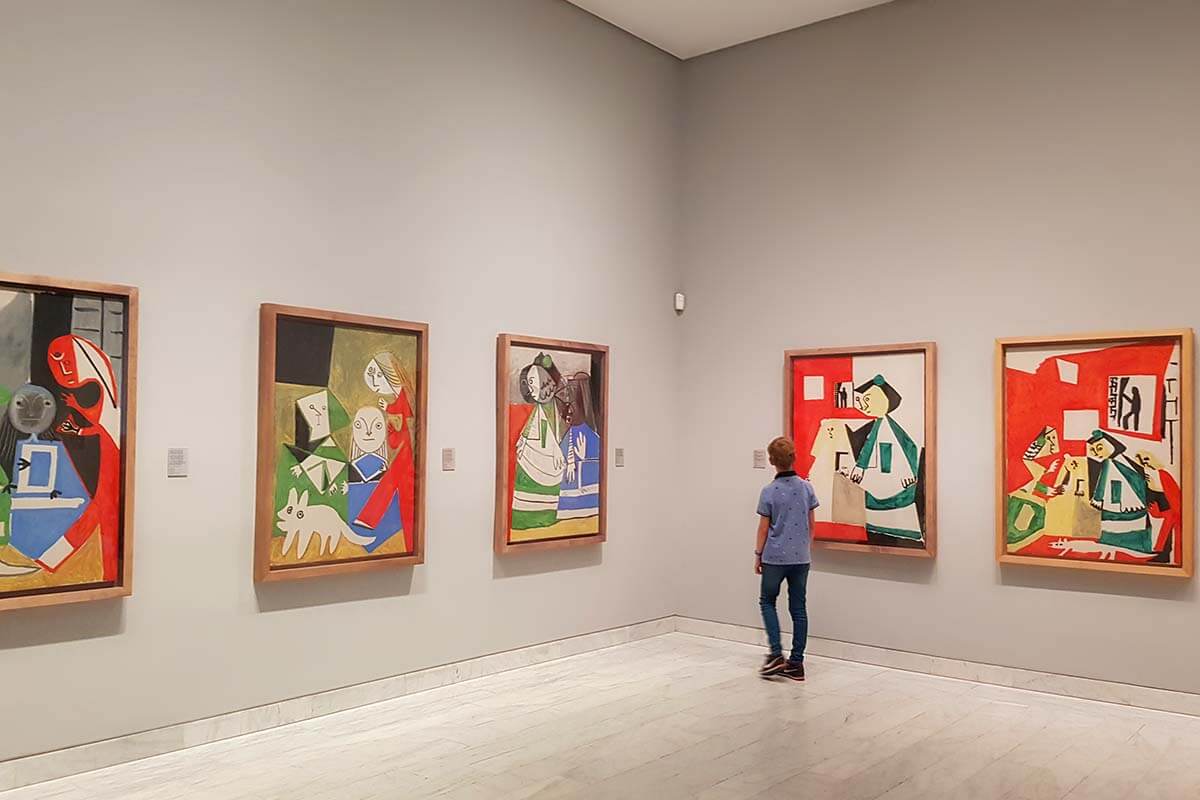
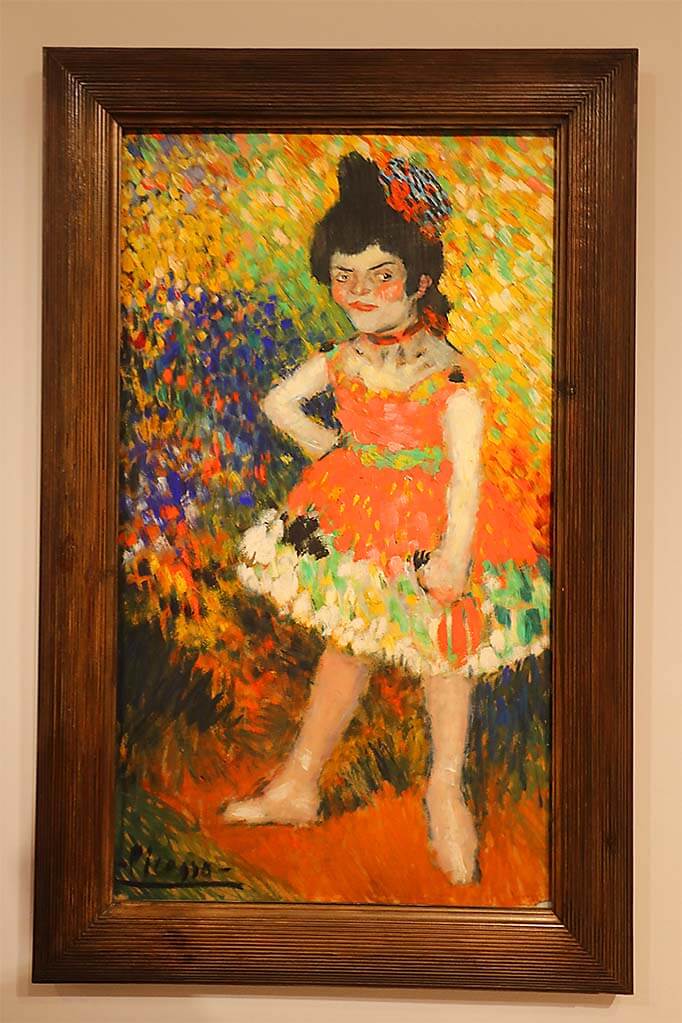
Picasso Museum is one of Barcelona’s most popular museums and is well worth visiting, even if you aren’t a big Picasso fan. Its main appeal is seeing the contrast between his early, traditional paintings and the unconventional style that made him famous.
Picasso spent part of his youth in Barcelona, and the collection reflects his close connection to the city. Alongside works from his formative years, you’ll find his Las Meninas series, which reinterprets Velázquez’s famous painting in his own distinctive way. It’s fascinating to see just how much his art changed over time.
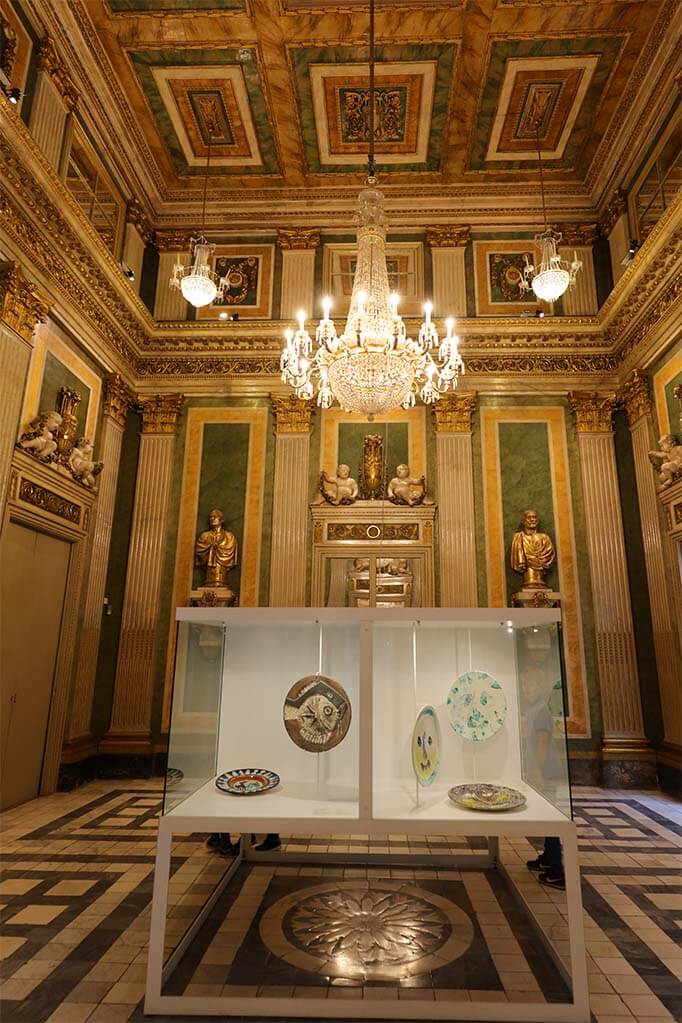
The setting is another reason to visit. The museum occupies five adjoining historic palaces in El Born, with stone courtyards and grand staircases. Some exhibition rooms are quite small, however, so it can feel crowded.
Good to know: Allow about 1–1.5 hours for your visit and book ahead to secure your preferred time. The museum is normally closed on Mondays.
You can explore independently, but a guided tour is worth considering if you want to understand the stories behind the paintings and why Picasso’s style changed. For a more flexible visit at your own pace, the museum also offers an audio guide.
TIP: Admission is included with the Barcelona Card and the Articket Museum Pass. Articket is worth considering if you plan to visit several art museums, such as the Joan Miró Foundation and MNAC. The Barcelona Card may be better value if you’ll also use public transport regularly and visit other included attractions. If Picasso Museum is your only museum stop, an individual ticket or guided tour makes more sense.
The museum also offers free admission at selected times, including the first Sunday of each month, but you still need to reserve a ticket in advance. Check the official website for free entry times.
12. Sant Pau Recinte Modernista
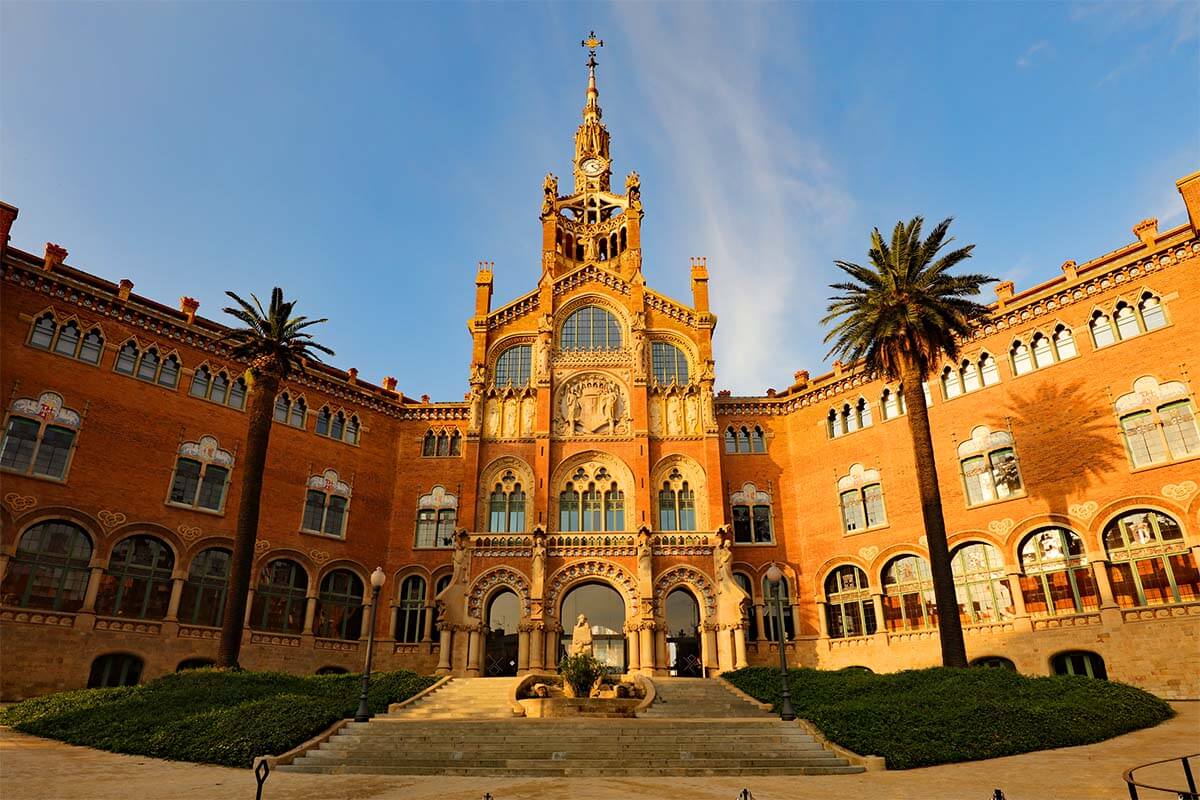
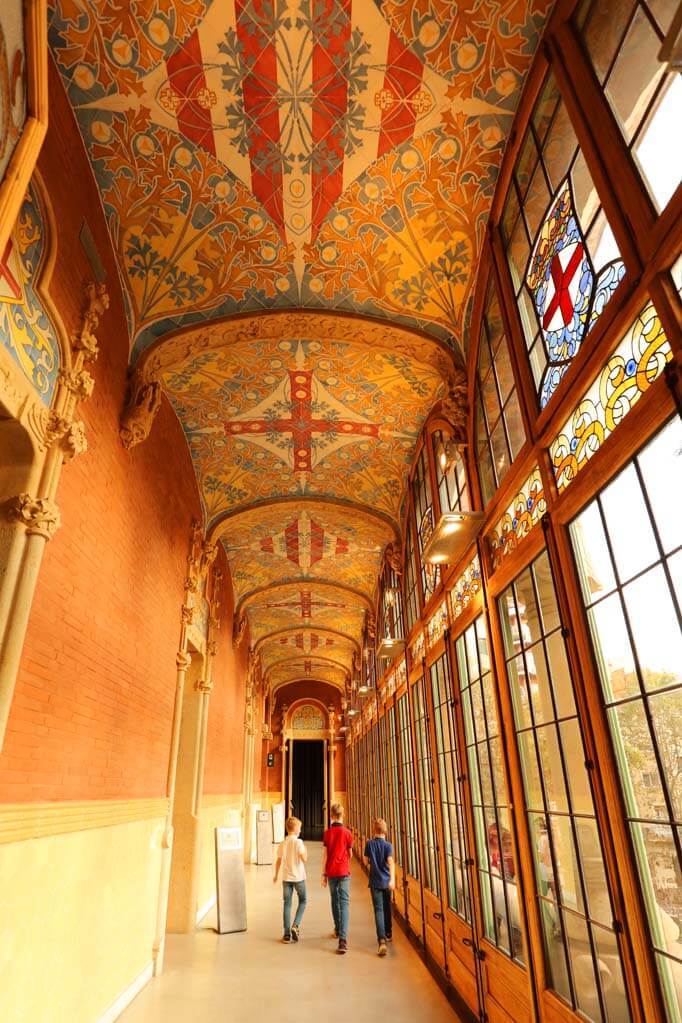
Sant Pau Art Nouveau Site (also known as Hospital de la Santa Creu i Sant Pau or Sant Pau Recinte Modernista) is one of Barcelona’s most interesting architectural sites. Located near La Sagrada Familia, it’s a true hidden gem often overlooked in Barcelona sightseeing itineraries that focus mainly on Gaudí’s most famous buildings
If you have an hour to spare, I highly recommend visiting the Sant Pau Art Nouveau Site! For us, it’s one of the top landmarks in Barcelona.
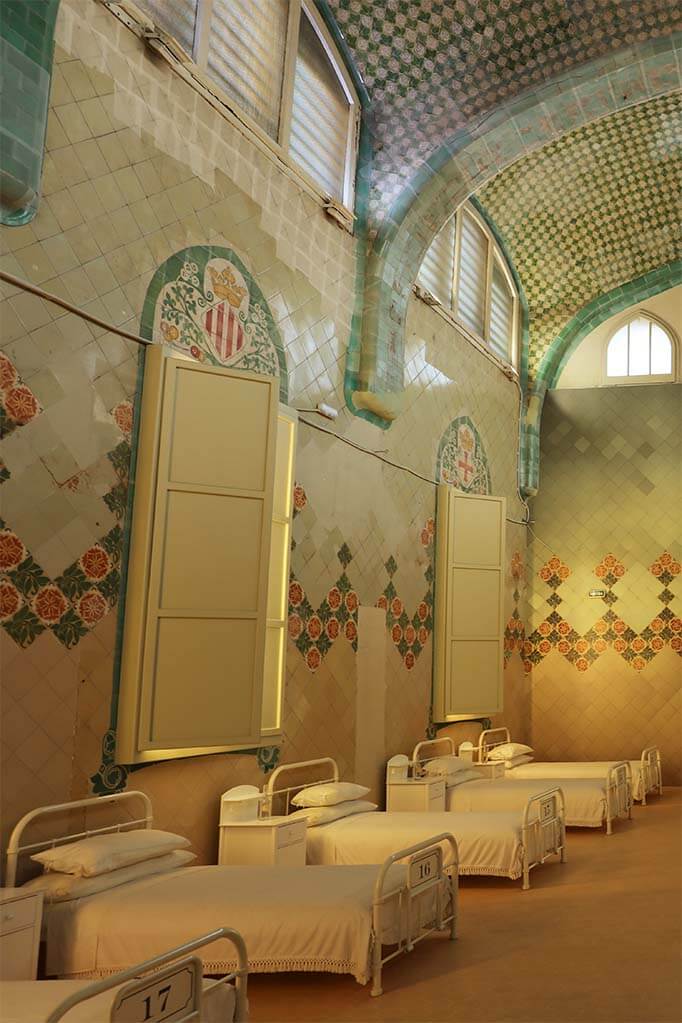
Designed by architect Lluís Domènech i Montaner, this large architectural complex functioned as a hospital for more than eighty years. After an extensive restoration, it reopened as a museum known as the Recinte Modernista de Sant Pau.
Listed as a UNESCO World Heritage site, the Sant Pau Art Nouveau Site is just a 10-minute walk from the bustling La Sagrada Familia. But it has an entirely different feel to it, with few tourists and no street vendors. So close and yet a world apart!
You can walk through the gardens and explore several of the former hospital buildings at your own pace. The atmosphere here is tranquil, with beautiful gardens surrounded by Art Nouveau architecture.
Make sure to visit the Sant Rafael Pavilion, which has been restored to show how the hospital looked in the 1920s, complete with period details such as radiators and hospital beds. The underground tunnels that once connected the different hospital buildings are also worth seeing.
Good to know: Sant Pau Recinte Modernista is open daily, except on some public holidays. You can find more information and book tickets online.
TIP: If you can, visit here in the late afternoon when the buildings turn bright orange, colored by the setting sun. It’s absolutely impressive! The exact effect depends on the season, as sunset times vary throughout the year. But no matter the time of day or season, don’t miss this stunning landmark in Barcelona. It’s definitely worth a short detour from La Sagrada Familia.
WINTER TIP: During the holiday season, the site hosts Els Llums de Sant Pau Christmas Garden, when the complex is illuminated with festive light displays.
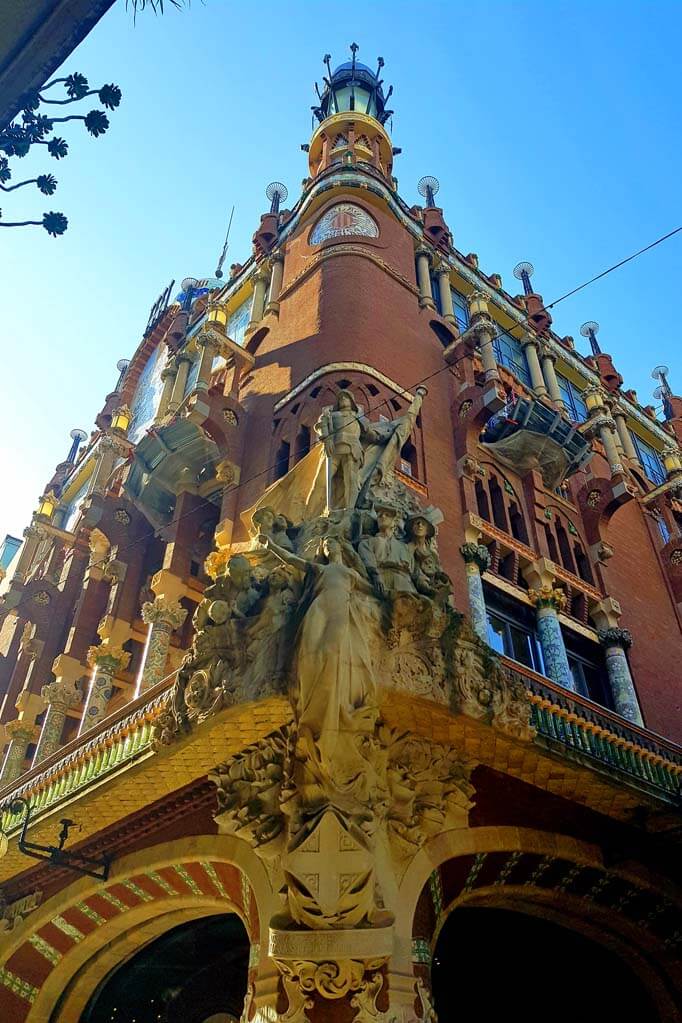
13. Palau de la Música Catalana
The Palau de la Música Catalana is one of the architectural gems of Barcelona! Just as the above-mentioned Sant Pau Art Nouveau Site, this beautiful concert hall was also designed by Lluís Domènech i Montaner.
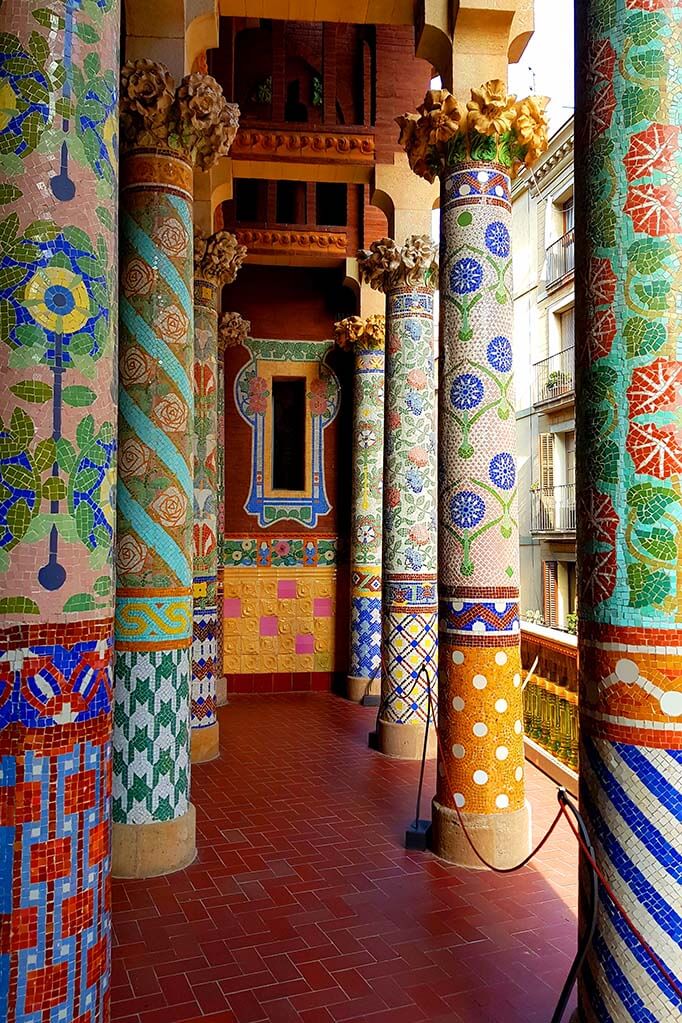
The exterior is very striking, with bright colors and detailed mosaics. Unfortunately, it is a little hard to appreciate because the streets surrounding it are so narrow. But step inside and you cannot help but be mesmerized by the lavish interior, with its ornate glass roof.
This music hall doesn’t appear in many Barcelona travel guides. And maybe that’s a good thing, as it allows you to enjoy the stunning beauty of this building in relative peace. But now that you know about it, be sure to visit!
We stumbled upon it by coincidence when researching something else and decided to check it out. It became one of our favorite places in Barcelona!
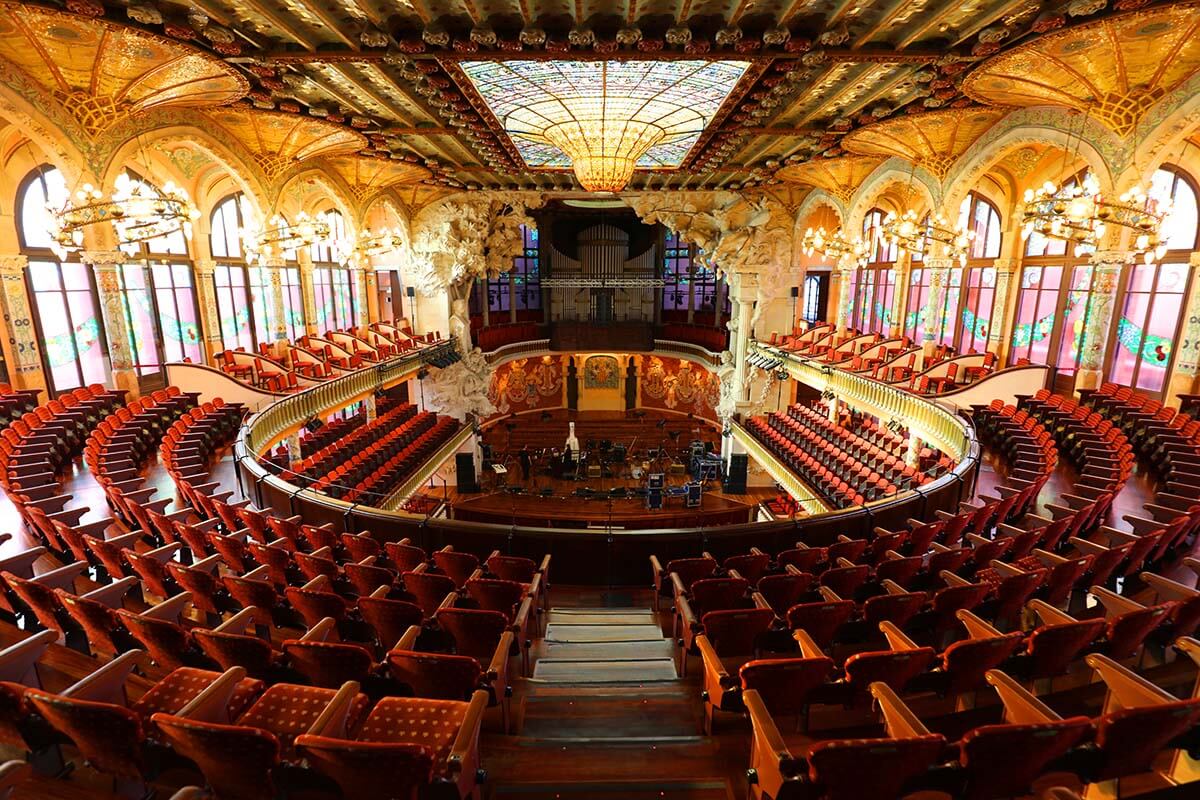
Good to know: You can freely visit the entrance hall and cafe, both of which are stunning. Normally, you have to join a guided tour to see the main concert hall, but they now offer tickets for a self-guided visit as well.
Tours take around 45 minutes, so if you visit on your own, count at least half an hour.
Palau de la Música Catalana is a working concert hall, so you can also attend a concert here. The sightseeing visits during the day are usually available every day, year-round. However, during certain events, the music hall might not be open for visits. So if you want to see it inside, be sure to check in advance!
TIP: No matter whether you want to visit on your own or with their guide, be sure to book the tickets in advance. That way, you’ll also immediately see if some dates aren’t available. Also, while not very widely known, the place is popular enough to fill the available ticket slots, especially during the high season.
14. Magic Fountain of Montjuïc
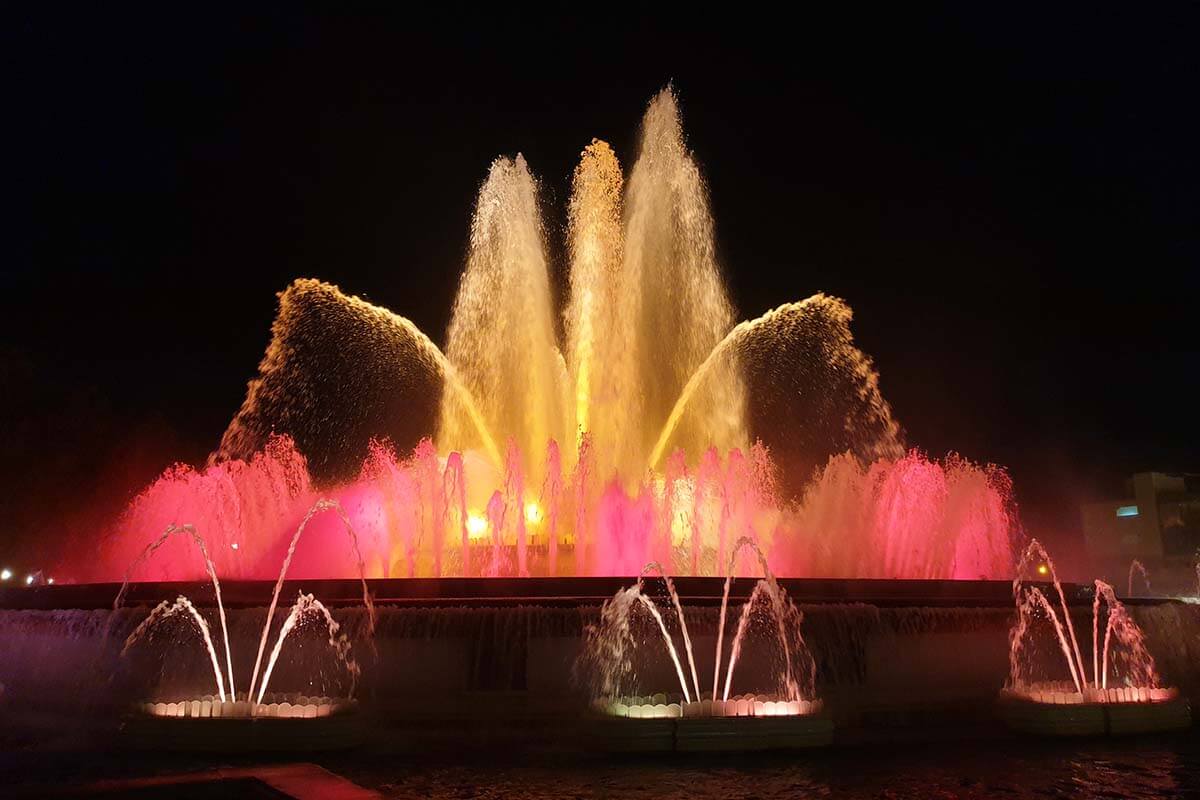
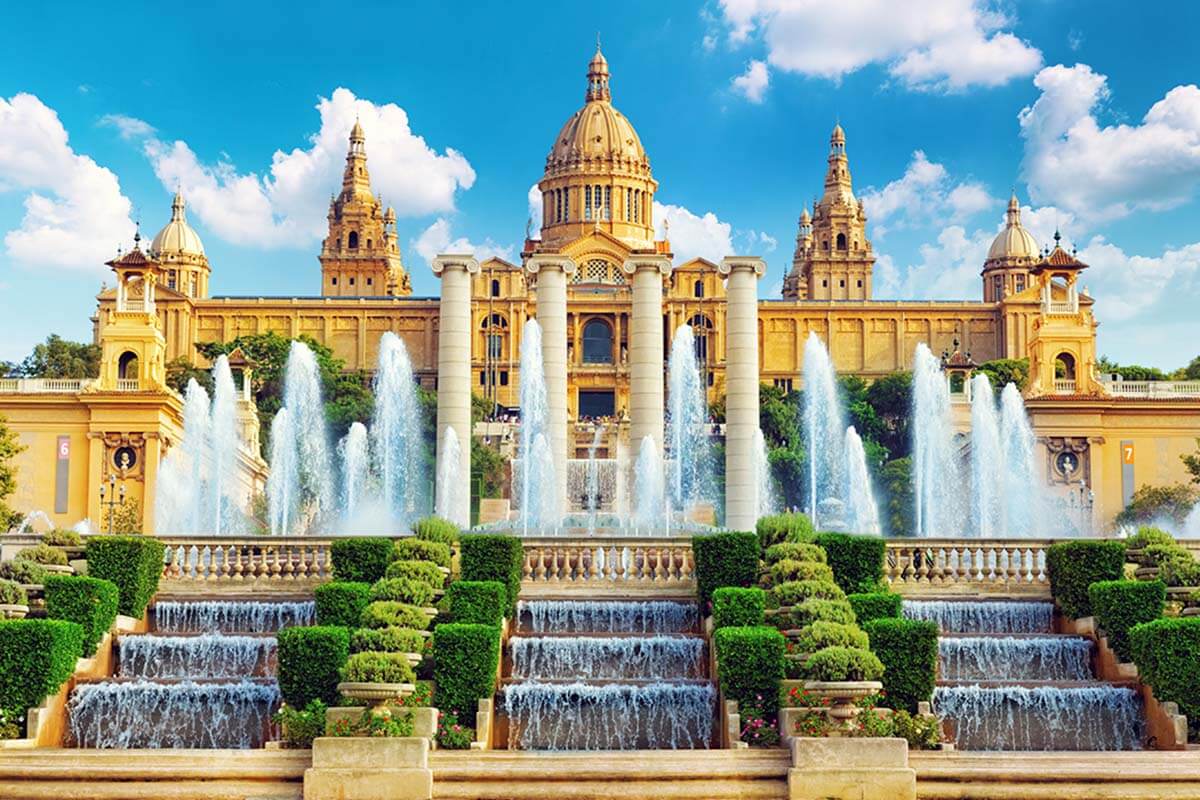
Located below the Palau Nacional Art Museum (MNAC) on Montjuïc mountain, The Magic Fountain of Montjuïc (Font Màgica de Montjuïc) is one of Barcelona’s most popular attractions. And it’s free!
On scheduled evenings, the fountain combines music, colored lights, and moving jets of water. These free shows attract big crowds, so try to arrive at least 15-30 minutes before the show to secure a good spot close to the fountains. In high season, people usually start to arrive an hour in advance.
Show times vary by season and may change due to events or water restrictions. Always check the official city website for the most up-to-date schedule before you go.
Good to know: The best way to get to Font Màgica de Montjuïc is by taking the metro to Plaça d’Espanya. If you have more time, plan half a day for a visit – take a cable car from the waterfront area, explore the Montjuïc mountain and the Miró Museum (see below), and then see the fountains in the evening.

If you are visiting Barcelona in September, you can see the ‘Piromusical’ here. This huge firework display with accompanying music and lasers is the closing event for La Mercè, Barcelona’s main festival.
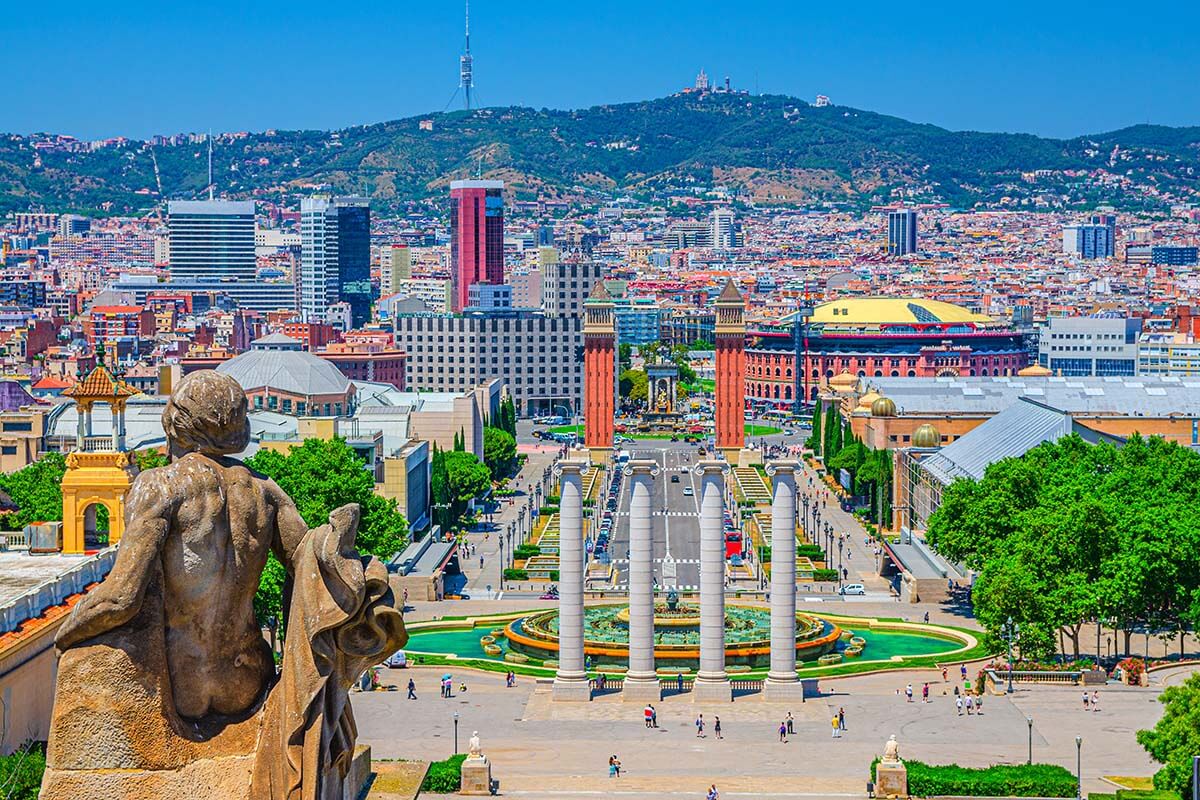
TIP: Be sure to climb the staircase to Palau Nacional on Montjuïc – the views from the top are really nice. However, this is actually something that you’ll appreciate better during the day when it’s light or at sunset – a good reason to arrive earlier and explore the area.
You can find more information about other attractions on Montjuïc further below.
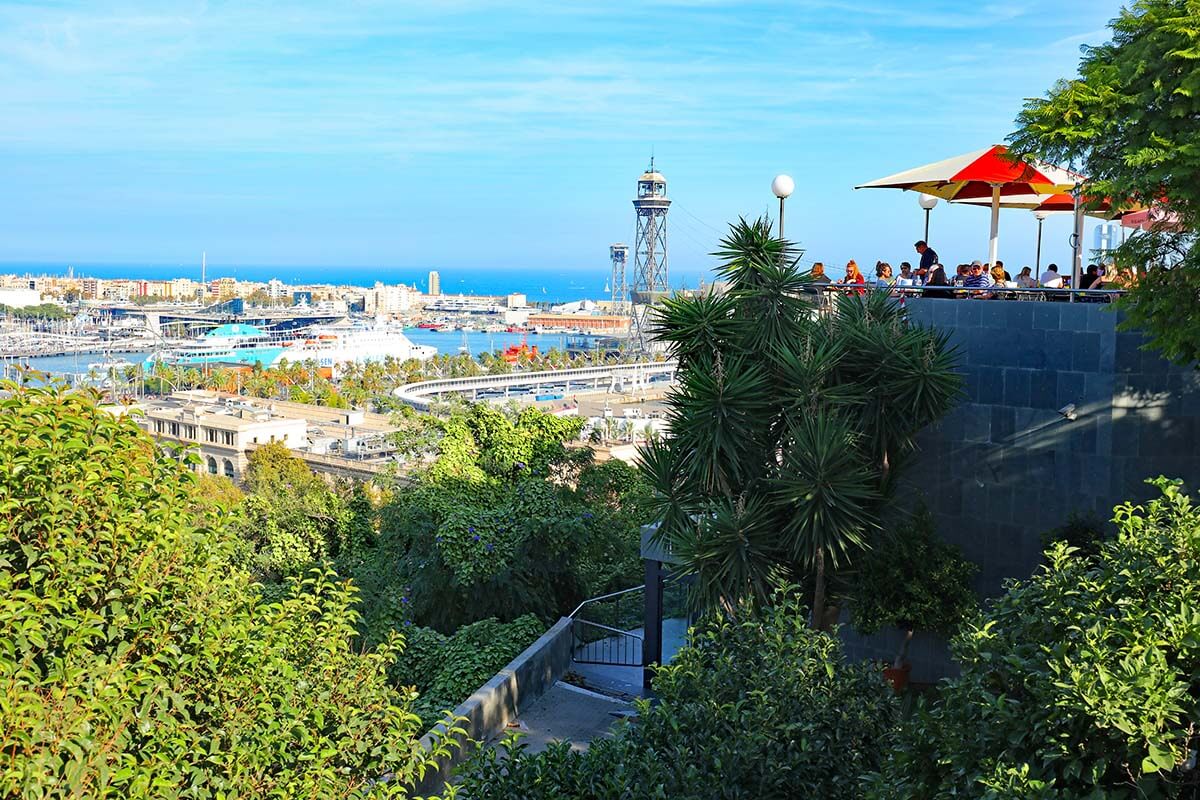
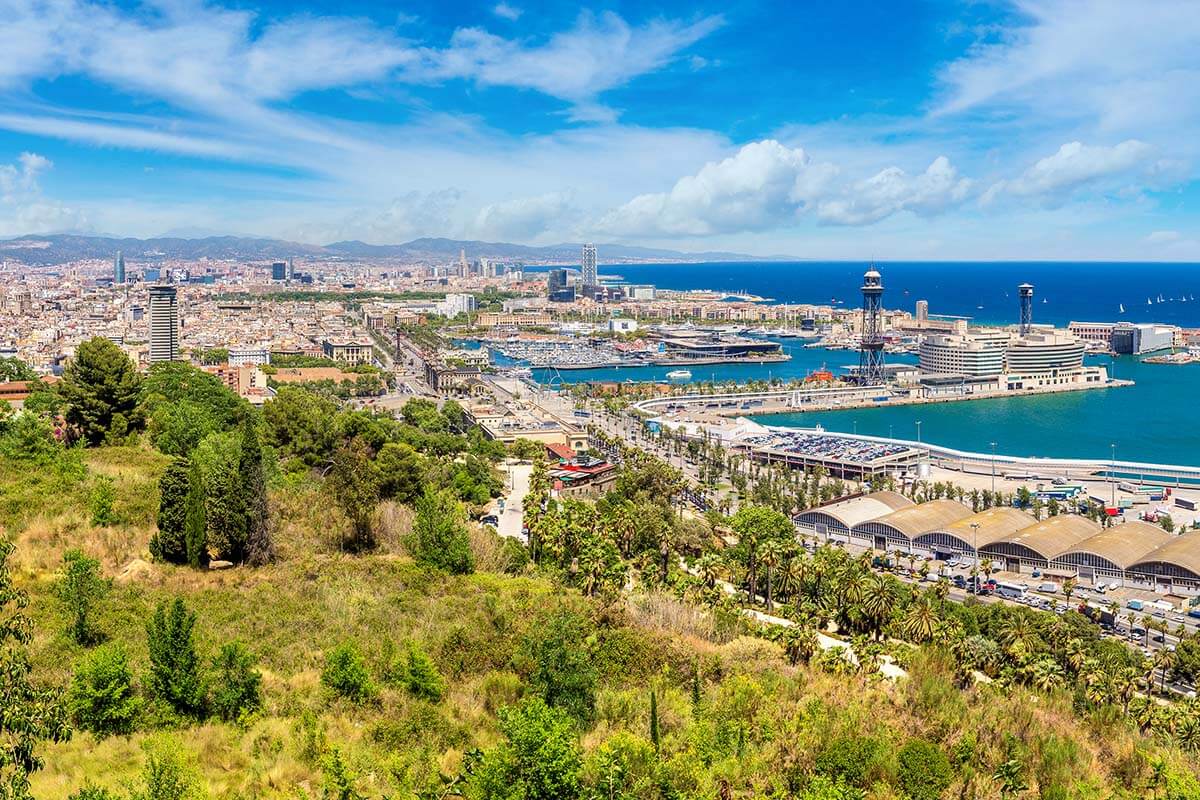
15. Montjuïc: Cable Car, Castle, Palau Nacional & City Views
Montjuïc (the Jewish Mountain) is the best-known hill in Barcelona. It houses several parks, botanical gardens, palaces, pavilions, and museums, many of which were built for the 1929 World Fair that was held in Barcelona.
Nowadays, it’s a popular place to visit in the city and some of the must-see sights mentioned in this guide are located in this area (such as the Magical Fountain, the Museum of National Art of Catalonia, Joan Miro Museum, or an open-air museum Poble Espanyol).
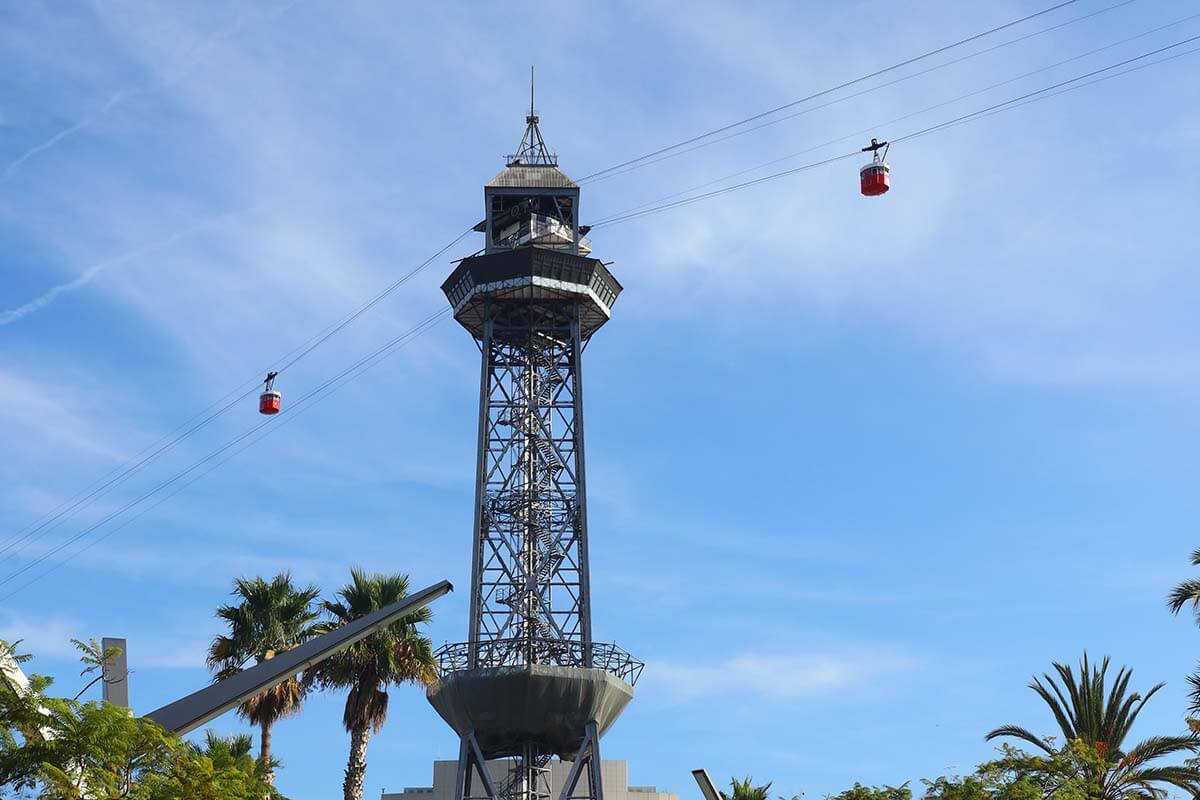
But the majority of tourists come here for aerial views of the city from the Montjuïc cable car, the Montjuïc Castle, and other viewpoints nearby. Also the earlier-mentioned views from the staircase at Palau Nacional on Montjuïc are not to be missed.
Good to know: While you can walk to the top of the mountain from the city center, the easiest way to get here is by taking a cable car from the waterfront or by hop-on-hop-off bus.
TIP: A nice way to visit Montjuïc is by joining an e-bike tour. Or you can visit with a walking tour that includes a cable car ride.
With a local guide, you don’t have to wonder where exactly to go or what to see and do at Montjuïc (which is a big advantage because the area is really big and it’s quite overwhelming).
16. Joan Miró Foundation
Located on Montjuïc Mountain, Joan Miró Foundation is one of the best contemporary art museums in Barcelona
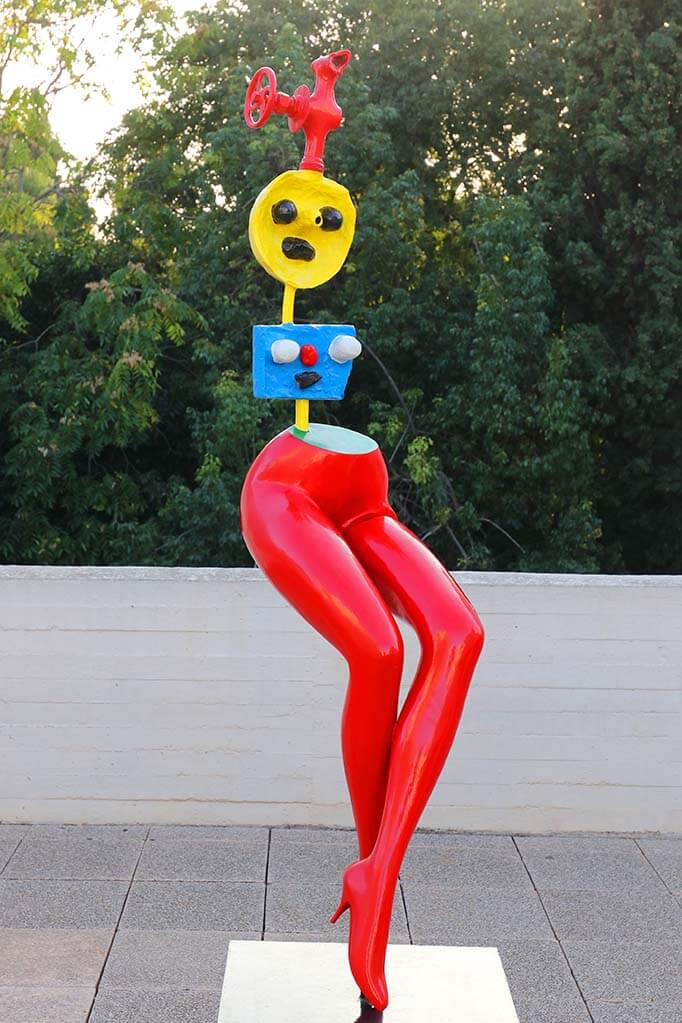
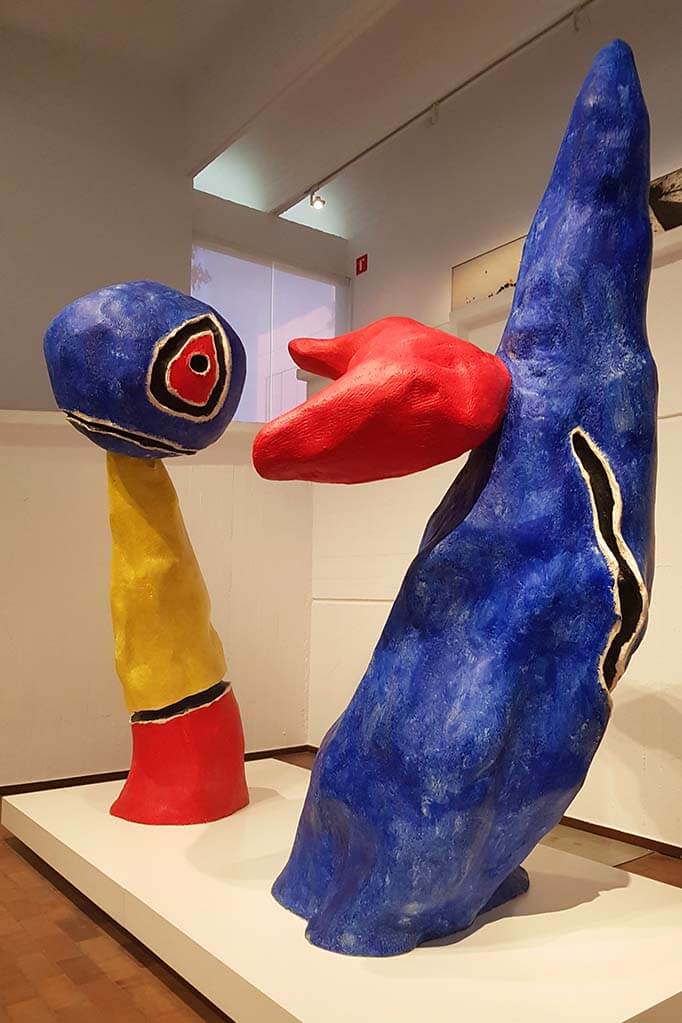
There are artworks by Joan Miró throughout Barcelona, but this museum is dedicated purely to his art. Well worth a visit and fun for all ages!
The museum houses paintings, drawings, sculptures, and other works by Miró in a building designed by his friend, architect Josep Lluís Sert. The courtyards and terraces are part of the appeal, and temporary exhibitions also feature other artists.
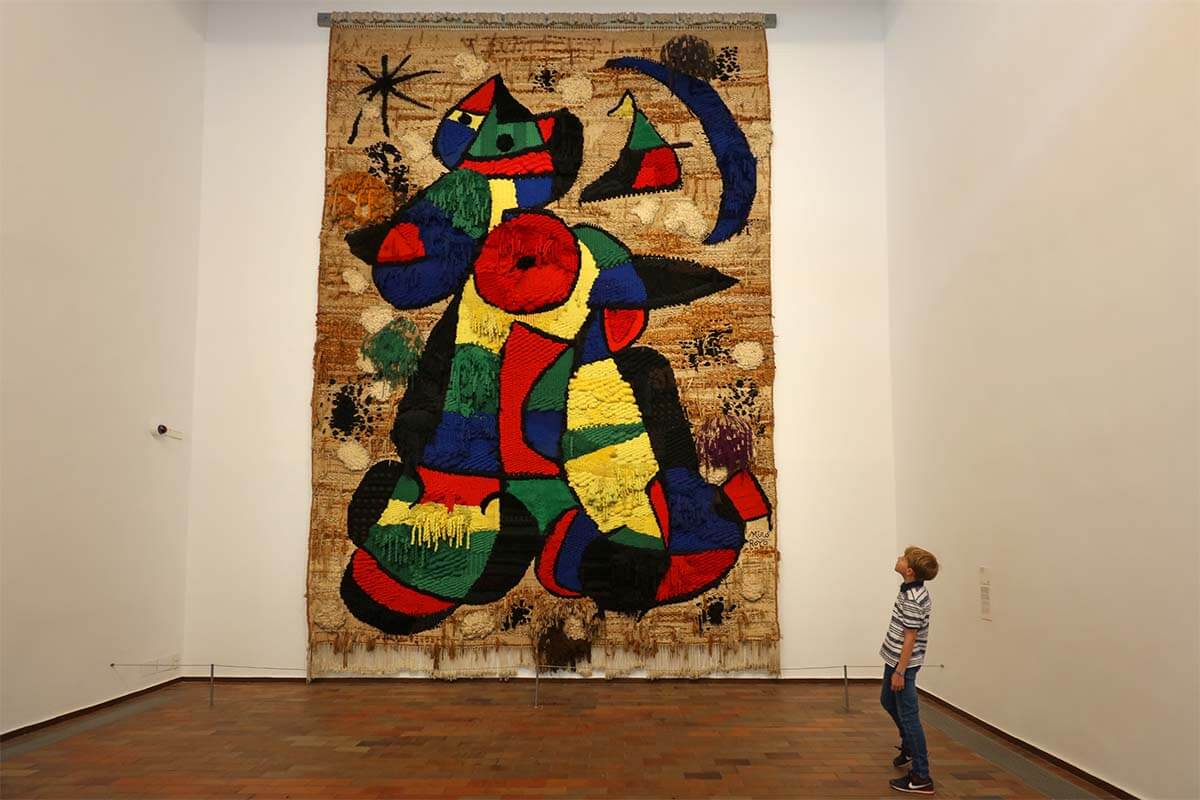
TIP: Be sure to visit the rooftop terrace of the museum. Along with a collection of Miró’s colorful sculptures, you can also enjoy some wonderful views across the city.
We simply got the tickets on the spot, and there was no wait. However, we visited this museum in a very quiet season, so if your time is limited, you may want to book ahead. See here for the opening dates and tickets.
17. Port Vell
No visit to Barcelona would be complete without a walk along its waterfront at Port Vell.
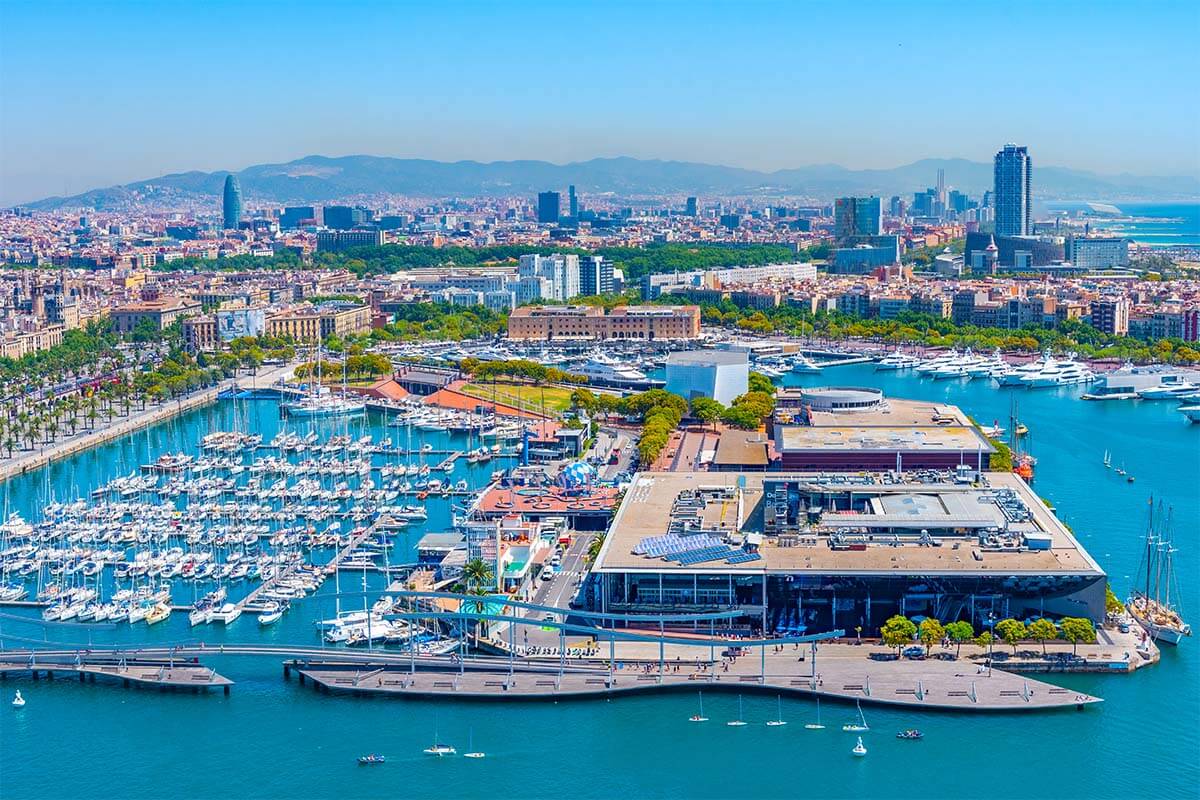
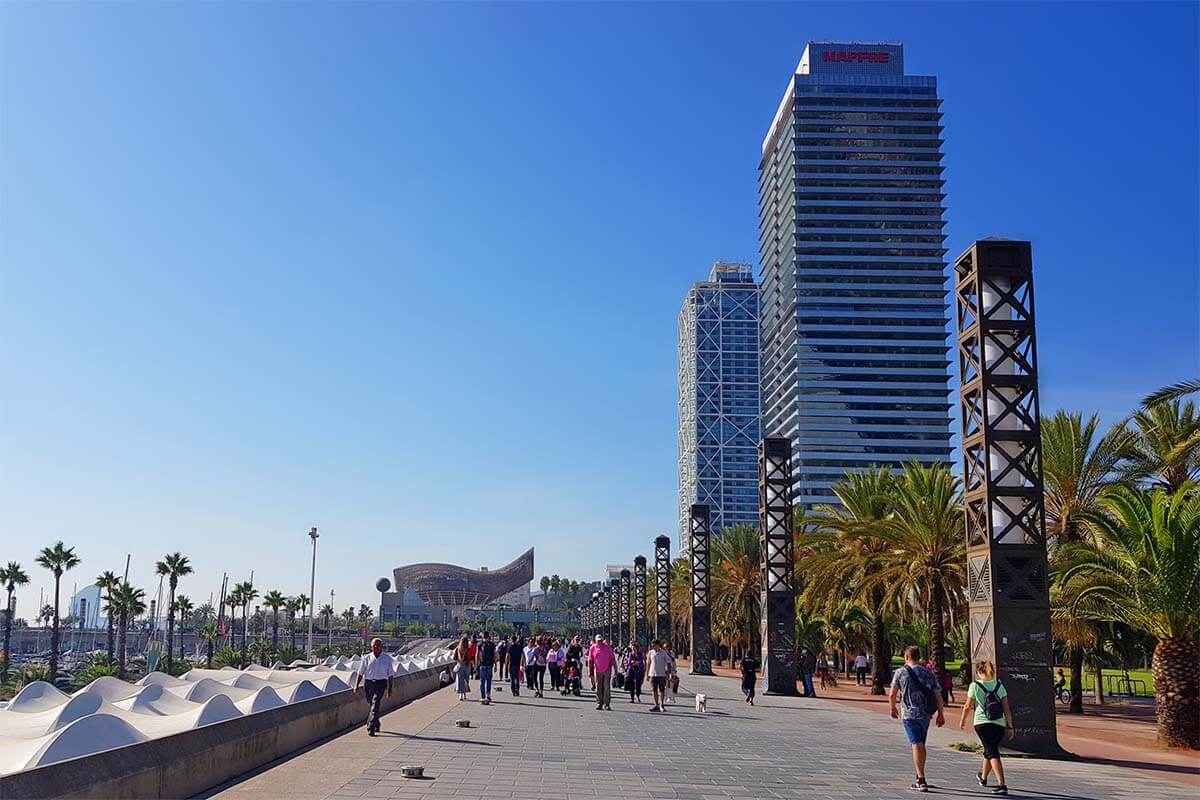
Port Vell is the Old Harbour of Barcelona, with a wide waterfront promenade leading down to the city’s famous beaches. It’s a bustling area with lots of cafes, restaurants, and also the History Museum of Catalonia.
Check out Rambla De Mar, a modern bridge/walkway that connects the city center to the modern bustling area with Barcelona Aquarium and Maremagnum shopping center.
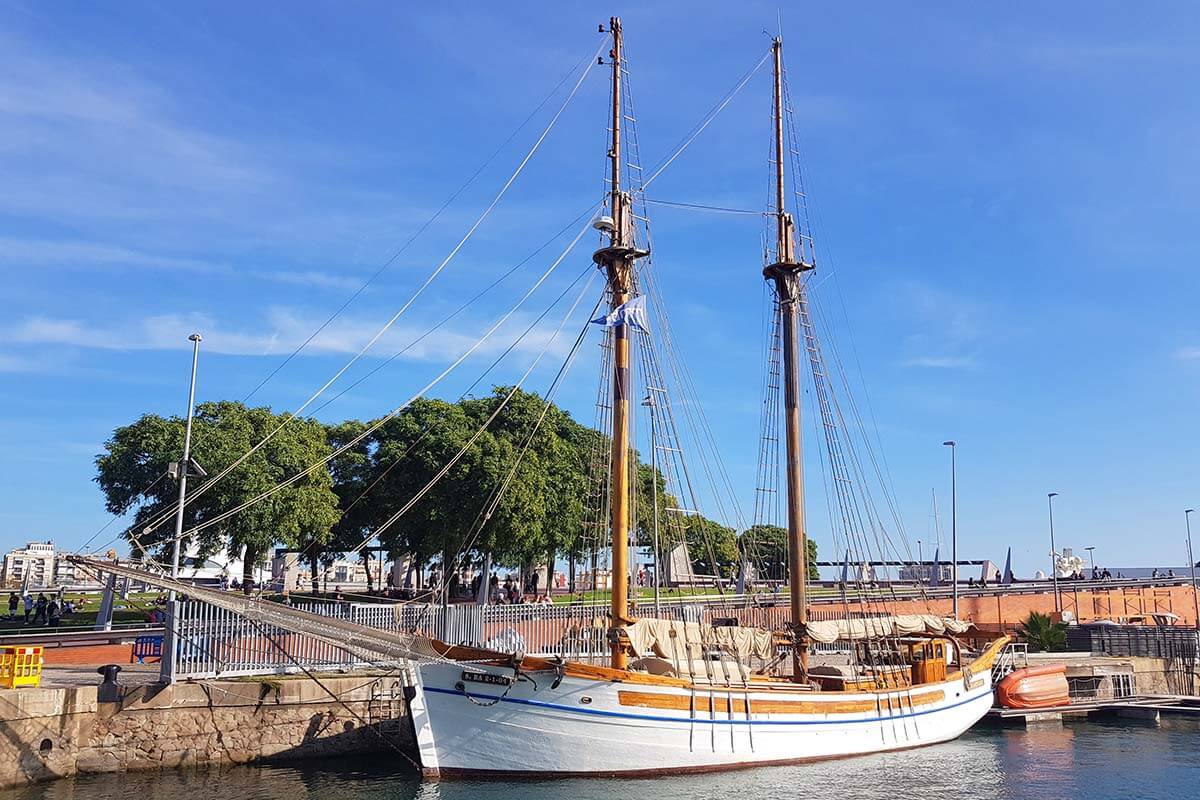
It’s also nice to just take a stroll around the harbor and admire the yachts and boats moored there.
18. La Barceloneta
Port Vell borders the historic neighborhood called La Barceloneta. This charming local area was an old fishing district.
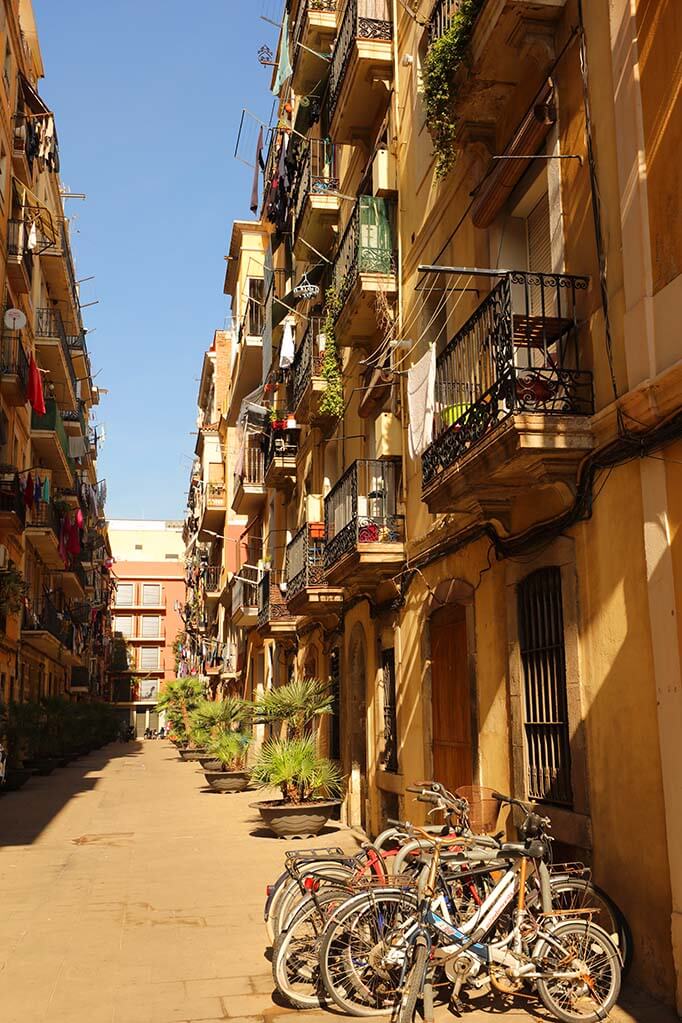
La Barceloneta is lined with narrow one-way streets towered by high apartment buildings, with laundry hanging out the windows everywhere you look.
Despite its relatively central location in Barcelona, this neighborhood has a very traditional feel, with elderly gentlemen sitting in the streets outside their houses and women calling across to each other over balconies.
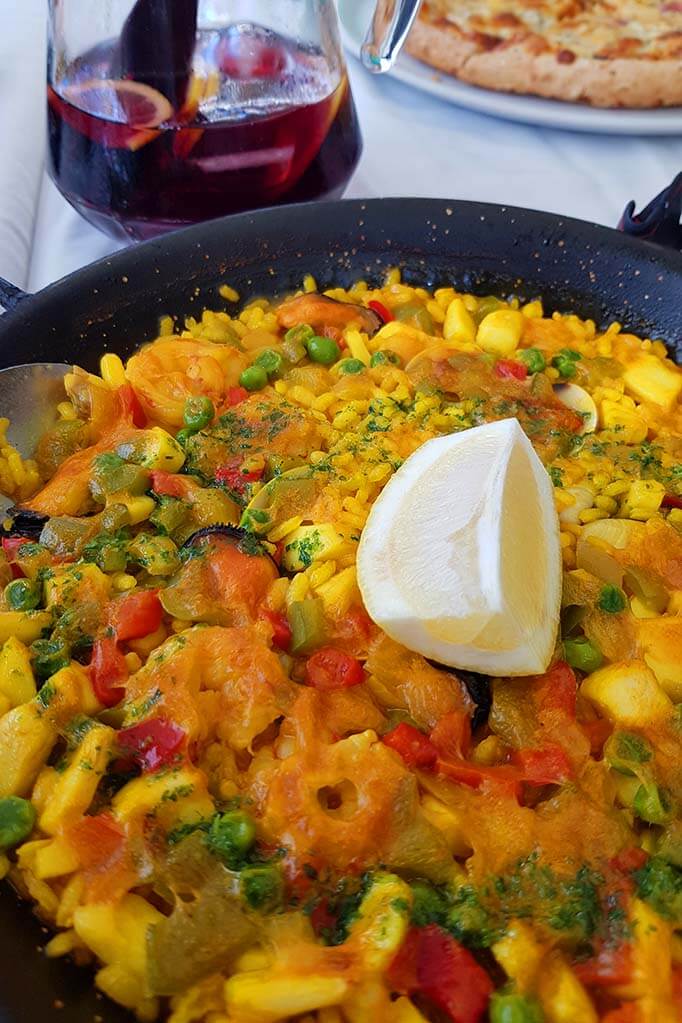
Good to know: There are many good restaurants in this area offering fresh seafood options. It is a nice place to come for lunch or dinner.
The restaurants at the waterfront tend to be more touristy, but – despite having pictures on the menu and overly friendly waiters trying to convince you to choose their place – the food is generally very good.
TIP: For a more local feel a bit off the beaten path, check out the restaurants in the narrow side streets of La Barceloneta. There are many great choices and all types of cuisine, not just seafood.
19. Barcelona Beaches & Waterfront
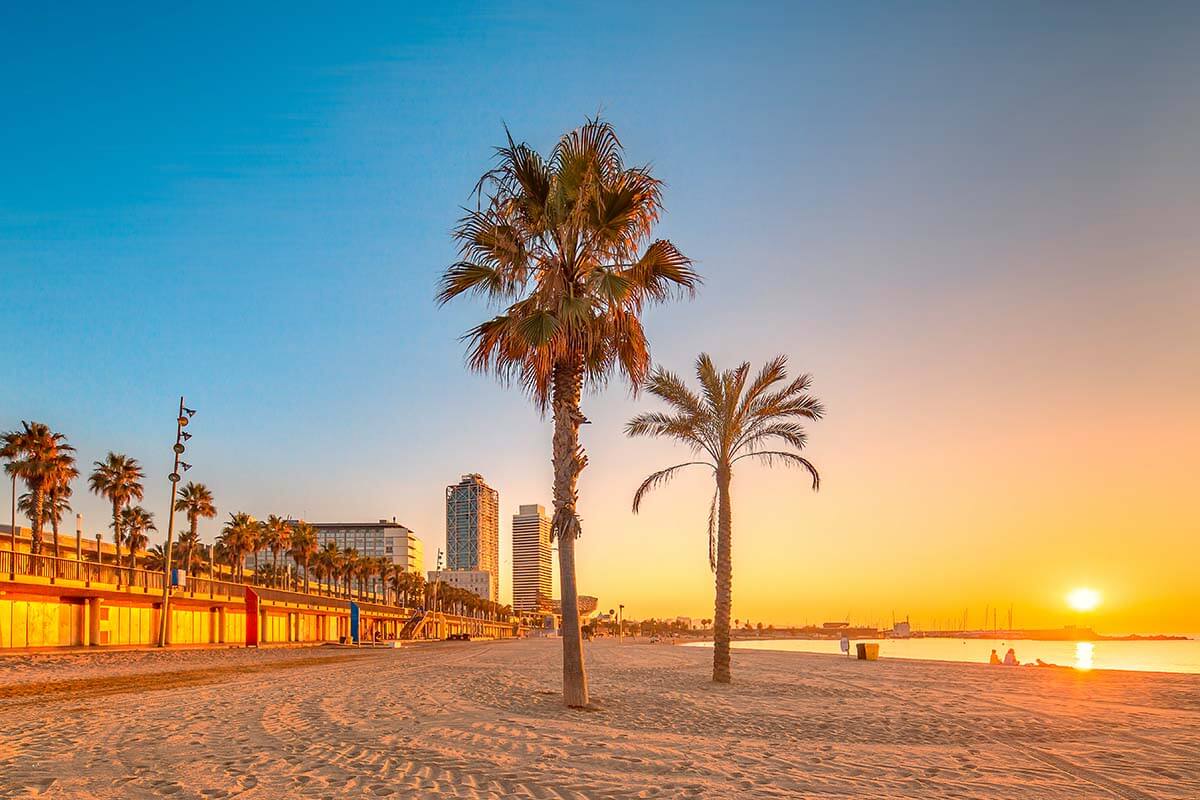
Barcelona Waterfront is a large coastal area stretching between Playa de Llevant Beach on the outskirts of the city center and the Cruise Ship Terminal in the city center. This commercial and recreational area was created in the early 1990s and has some of Barcelona’s best beaches and a beautiful wide pedestrian area where you can walk/bike/skate for miles.
Barcelona has miles of scenic coastline and some beaches are just a 15-minute walk from the city center. There is something very special about being able to spend half a day admiring Barcelona’s incredible architecture and visiting landmarks, and then relaxing in the sunshine on a beautiful beach in the afternoon!
Some beaches are bustling – crowded with tourists, hawkers, and street performers. Others are far more peaceful, perfect for unwinding with a good book and a cold drink.
Closer to the center, there is also a maritime station for ferries and you can watch cruise ships come in to dock. You’ll also find the Maritime Museum here, housed in a large medieval shipyard, plus L’Aquàrium, one of the largest aquariums in Europe.
TIP: Get a different perspective on the city by taking a trip in one of the Golondrinas (ferries) moored opposite the Columbus Monument and take in all the sights of the waterfront. Or book one of the amazing sailing cruises – it’s a great way to see the city from another perspective while at the same time relaxing from all the walking and sightseeing.
Good to know: If you’re looking for a party atmosphere and want to connect with like-minded visitors from all over the world, head to Barceloneta Beach. The nightlife in Barceloneta is very vibrant too! For the best family-friendly option, try Nova Icaria Beach. Whilst tranquil, it still has plenty of restaurants and bars, plus some excellent sports facilities.
You might want to avoid cocktails and drinks from vendors walking along the beaches. They are often unrefrigerated for long periods and tend to warm up!
20. Camp Nou – F.C. Barcelona Stadium
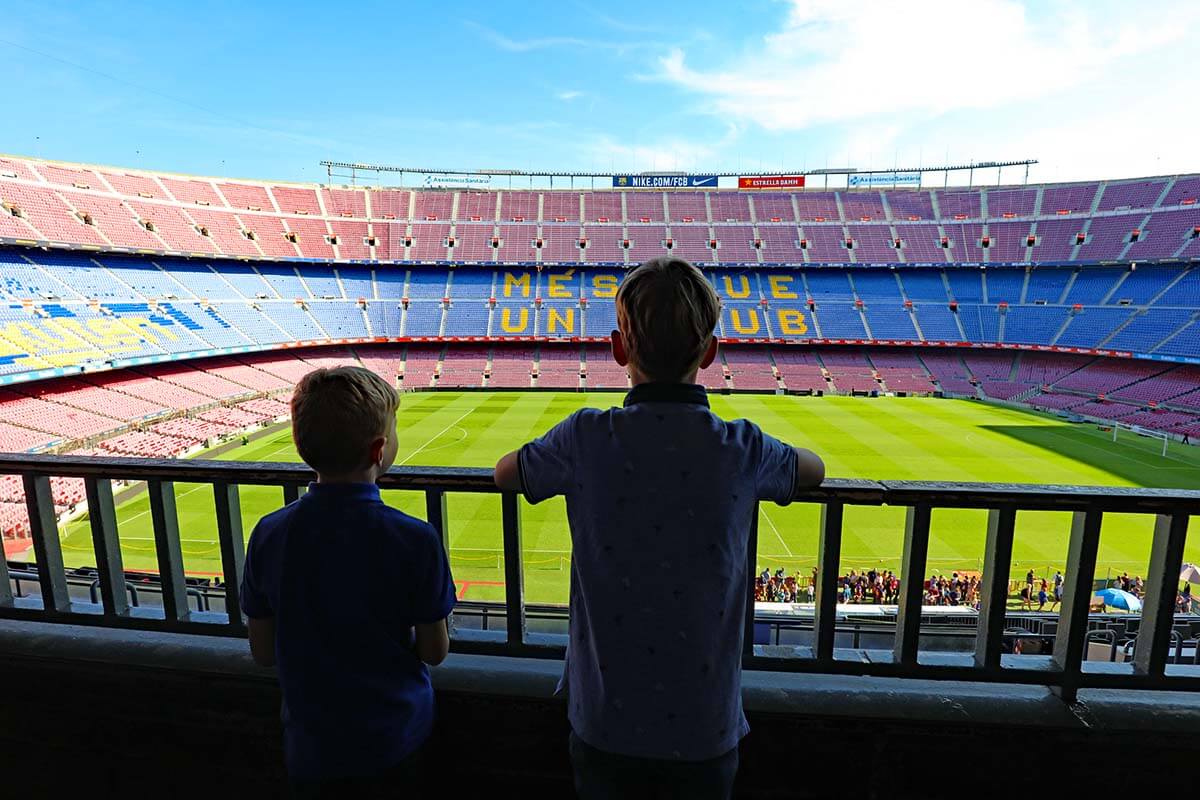
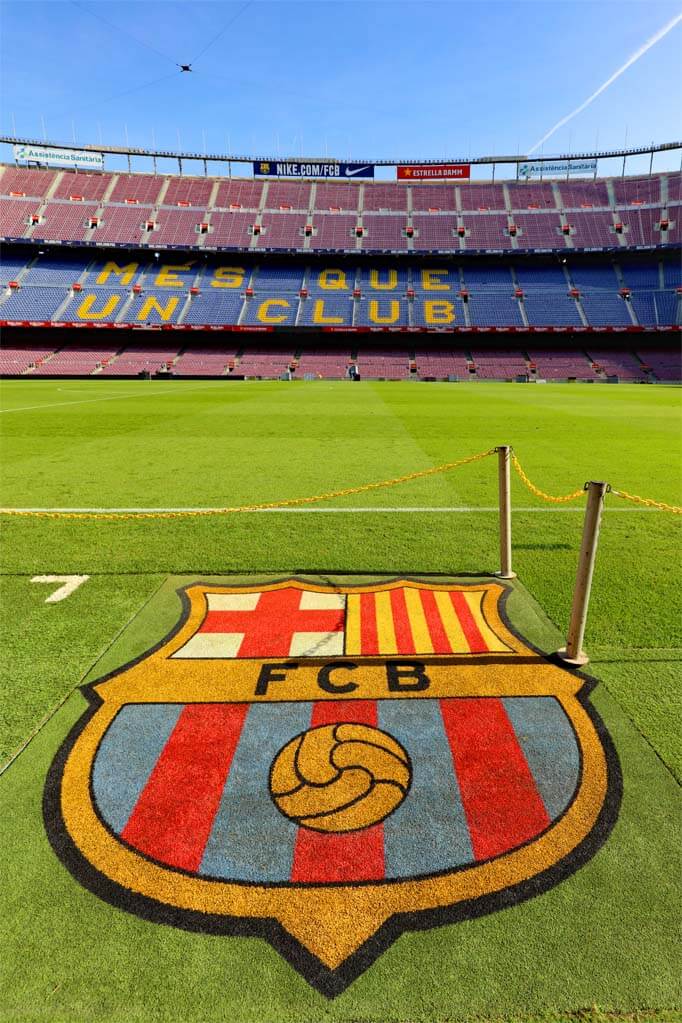
Camp Nou, the historic home of FC Barcelona and one of Europe’s most famous football stadiums, is a must for football fans. But it’s also worth considering even if you don’t usually follow the sport.
We originally went because of our kids, who live and breathe football, but I ended up enjoying it much more than expected. Learning about the club’s history and seeing behind the scenes made the visit worthwhile for the whole family.
Good to know: There are several ticket options for the museum and stadium. The regular museum ticket covers the club’s history, trophies, and immersive audiovisual displays, with a digital audio guide included. You can choose a timed entry or a flexible ticket that lets you arrive at any time during opening hours on your selected day.
TIP: You can upgrade to add the Barça Virtual Dream VR activity or choose the Total Experience, which includes VR, three attempts at the Robokeeper Challenge, and a digital souvenir of your visit. Select the number of people and your travel date to see the available ticket options here.
Our kids enjoyed the Robokeeper Challenge, but the biggest hit was the VR activity. If you’re visiting with football-crazy kids or teens, I highly recommend a ticket that includes these extras.
Want to see a match? Check whether FC Barcelona is playing at home during your stay. Watching a live game could be a highlight of your trip! You can check match dates and ticket options here.
Getting there: The stadium complex is outside the city center and can be reached by metro or hop-on hop-off bus.
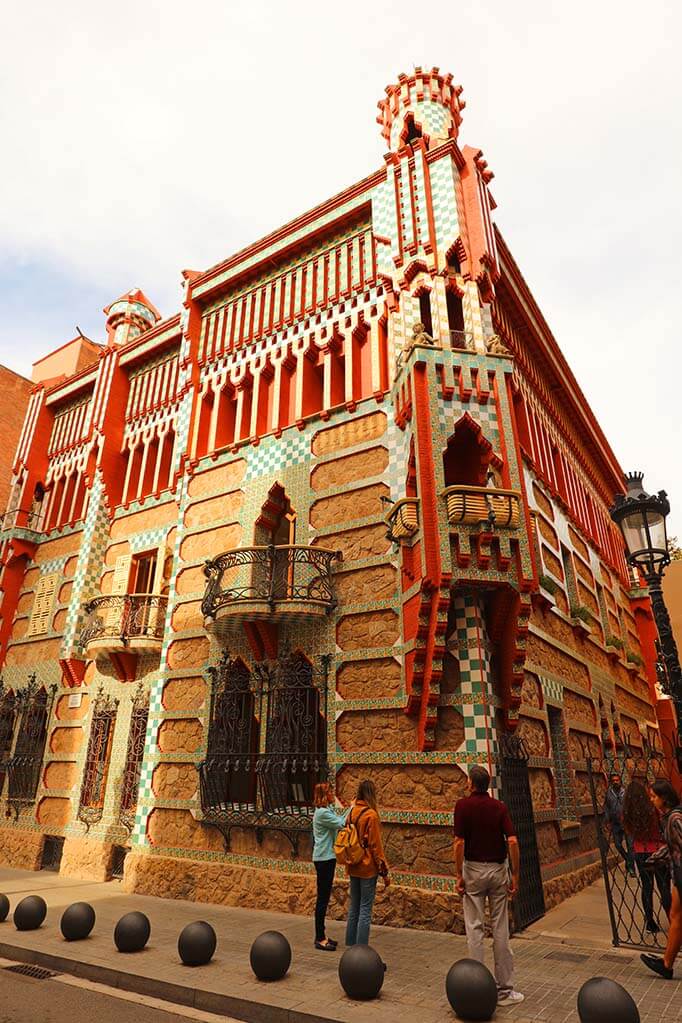
21. Casa Vicens
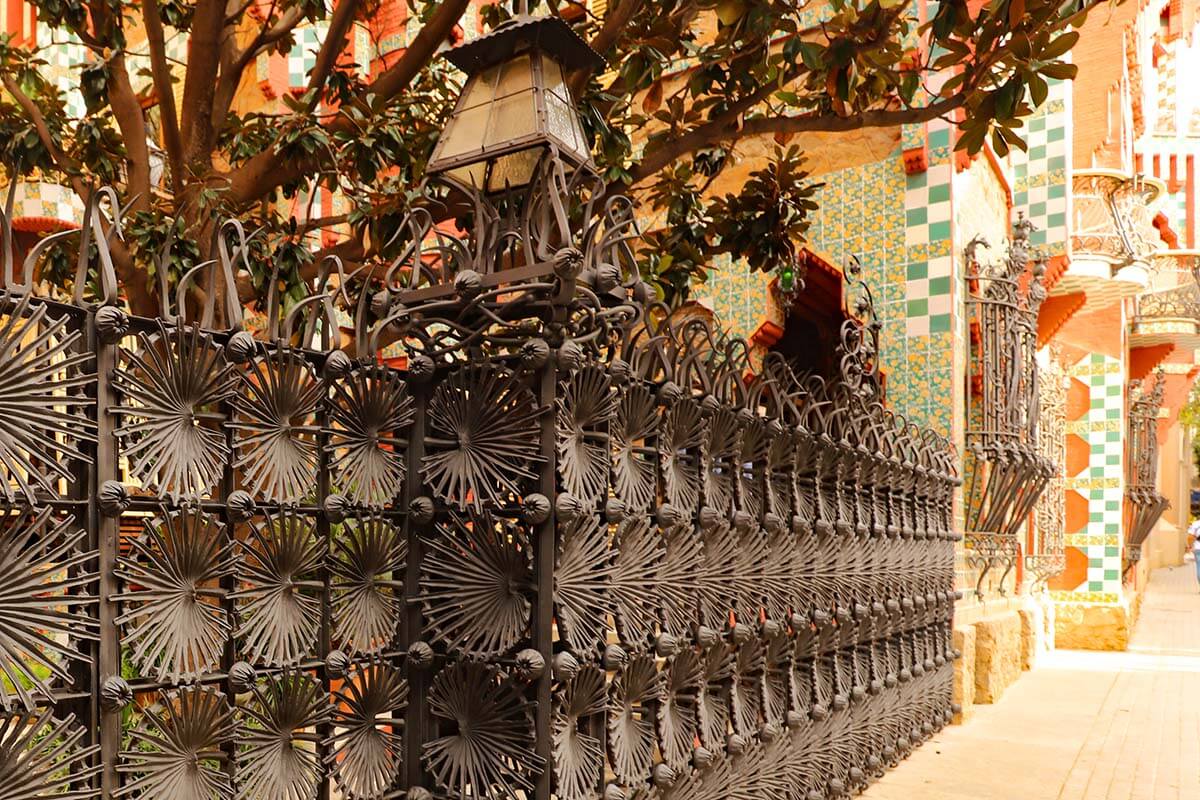
Casa Vicens is a modernist building dating from the end of the 19th century. It is considered to be Gaudi’s first major project
Unique in style, Casa Vicens looks nothing like the other Gaudi buildings in Barcelona! Its look is distinctly oriental, with dome-shaped finishes and Moorish arches. Its design was influenced by the art of India, Persia, and Japan along with Hispanic Islamic works.
Built in 1883-85 as a family summer house in the former village of Gràcia (now one of the city neighborhoods), the building was expanded by another architect in 1925. By that time, Gaudi was mainly focused on La Sagrada Familia, with little interest in other projects. But the original style was retained.
Casa Vicens has been declared a UNESCO World Heritage Site and recently restored to its former glory.
As with all of Gaudi’s buildings, the interior of Casa Vicens does not disappoint either. You can easily spend 1 to 2 hours here admiring the bizarre but beautiful decorative elements of its rooms.
TIP: Casa Vicens is hardly ever mentioned among the best places to see in Barcelona, and so many tourists don’t even know about it. This is mainly due to the fact that it was only opened to the public a few years ago and is far less known than Gaudi’s other buildings.
This means that it is much quieter, making it a great place to visit in Barcelona if you prefer to avoid crowds.
Good to know: Casa Vicens is open daily. You can find more information and get the tickets here.
22. Palau Güell
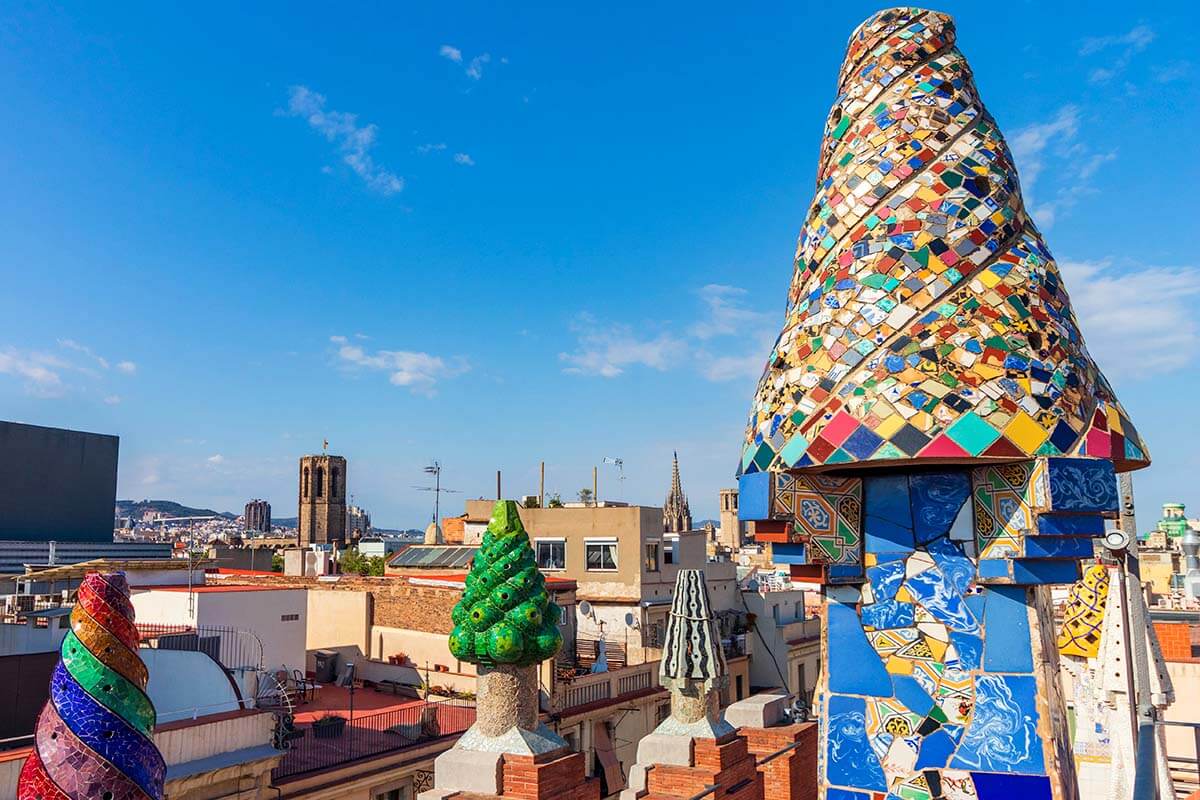
Güell Palace – not to be confused with Park Güell – is one of Gaudi’s early works and another popular landmark to see in Barcelona. This magnificent building is located in the Raval district – close to La Rambla shopping street in the heart of the city center. This is the only Gaudi building that is located in the old town.
This modernist mansion was commissioned by the industrial tycoon Eusebi Güell in the late 19th century. He wanted somewhere luxurious to live in an area that was very run-down at the time. He certainly got his wish – every part of this incredible palace is decorative and opulent. From the wrought-iron entrance gates to the rooftop with its twenty decorative chimneys, the palace is full of unusual details.
Good to know: Palau Güell is open daily except for Mondays. A free audio guide is included with your ticket. For more information and tickets, see here.
TIP: If you are visiting in the summer, check if there are any events planned here during your stay. Frequent concerts are held on the rooftop terrace of Palau Güell, and tickets include a tour around the palace.

23. Barcelona History Museum (MUHBA)
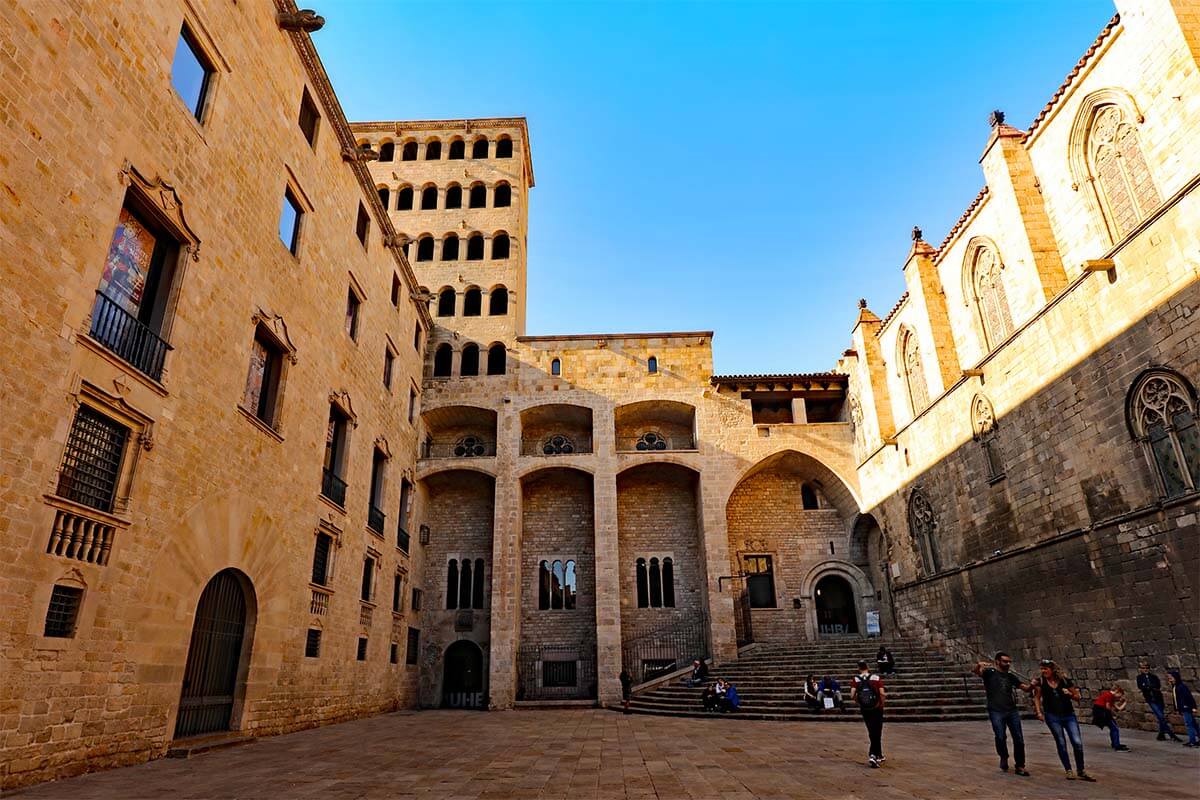
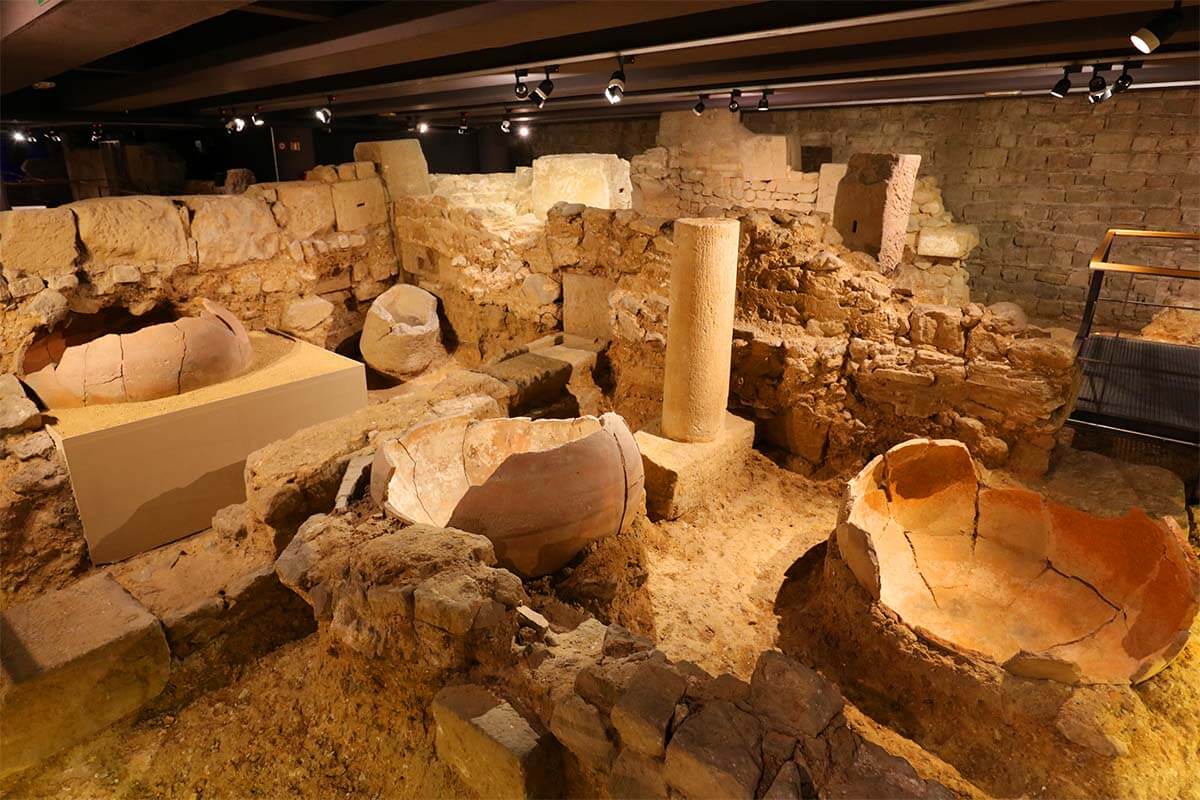
MUHBA – Museum of History of Barcelona – is one the most interesting museums in the city. Here, you can see the archeological site with the actual remains of streets and buildings of Barcelona as it looked like about 2000 years ago.
Located inside the Palau Clarina Padellàs (the Gothic Palace) on Plaça del Rei just behind the Barcelona Cathedral, this fascinating museum is dedicated to researching and preserving Barcelona’s history. It contains more than 35,000 historical and cultural objects.
There are also several other sites managed by the museum around the city. Some contain excavated portions of the Roman city of Barcino, whilst others date back to medieval times.
Good to know: The museum is open daily except for Mondays. Audio guides are included with your ticket, which includes admission to all MUHBA sites in the city. You can find more info on their (rather confusing) website. Or simply walk over there and likely, you’ll be able to just get a ticket on the spot. Despite its central location, many people seem to just pass by here, so it’s usually not too busy.
TIP: Even if you are not interested in visiting the museum, be sure to come and see the impressive medieval architecture of Plaça del Rei.
24. Arco de Triunfo & Ciutadella Park
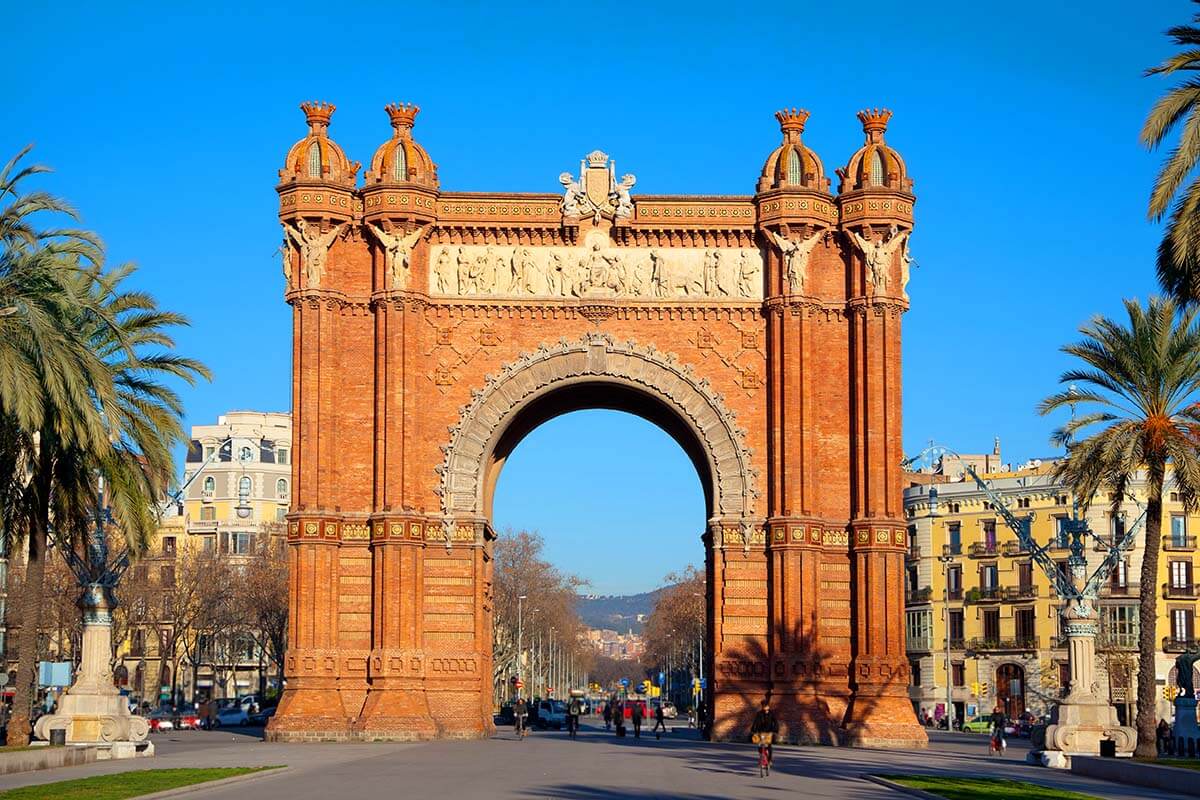
Built in 1888 as the gateway to the Universal Exhibition, the Arco de Triunfo is located at the Passeig Lluís Companys promenade.
It is one of Barcelona’s most iconic landmarks, with a classic shape and beautiful decorative finishes. At the top, you can see the coat of arms of the city, under which are the shields of the 49 Spanish provinces.
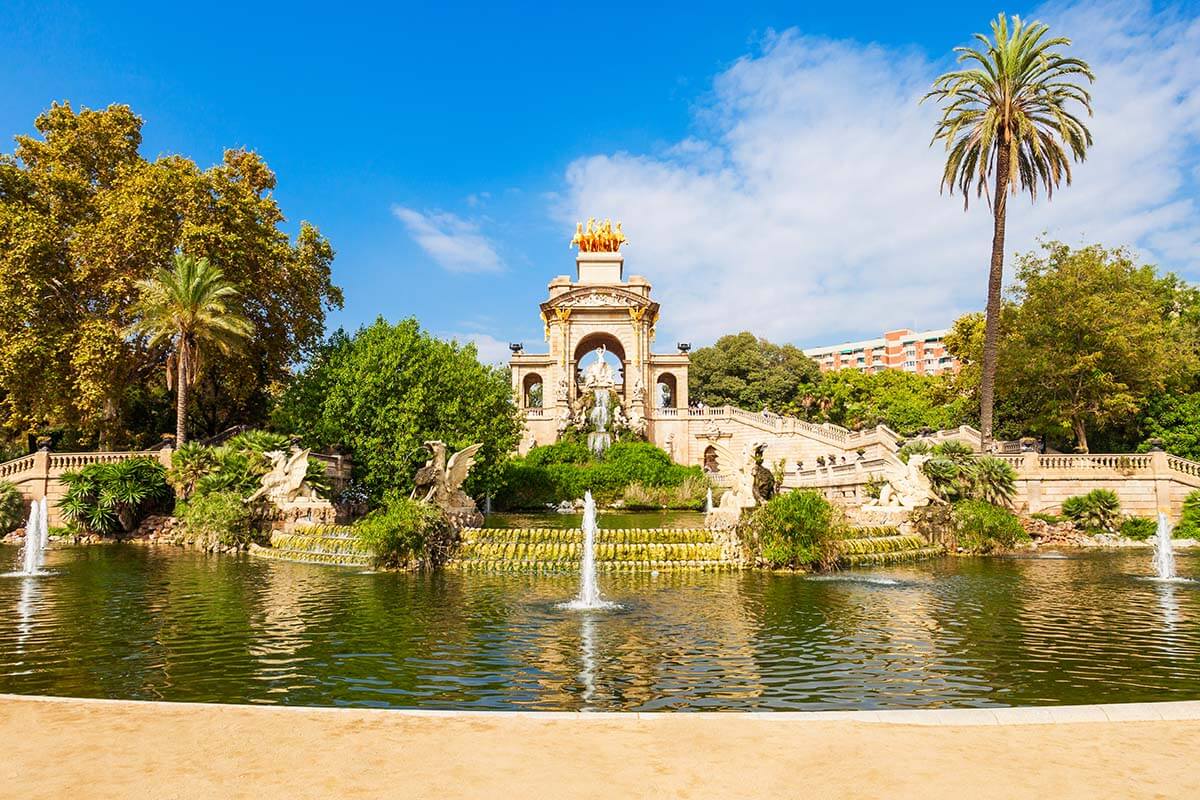
Passeig Lluís Companys leads to Ciutadella Park, a lovely place for a break from sightseeing. You’ll find palm trees, a boating lake, and a monumental fountain.
The park is also home to Barcelona Zoo, the Parliament of Catalonia, and the Centre Martorell d’Exposicions, which hosts science-related exhibitions in the former geology museum building.
TIP: Be sure to climb to the top of the Cascada del Parc de la Ciutadella fountain for nice views of the park. It’s especially nice late in the afternoon, around sunset.
25. Plaça d’Espanya & Views from Arenas de Barcelona
Plaça d’Espanya is a large square close to the Magic Fountain of Montjuïc. It’s somewhat of an eclectic mix of sculptures, monuments, and busy traffic with several major avenues coming together here. Just a few minutes walk to the south, you’ll find the earlier-mentioned Magic Fountain of Montjuïc.
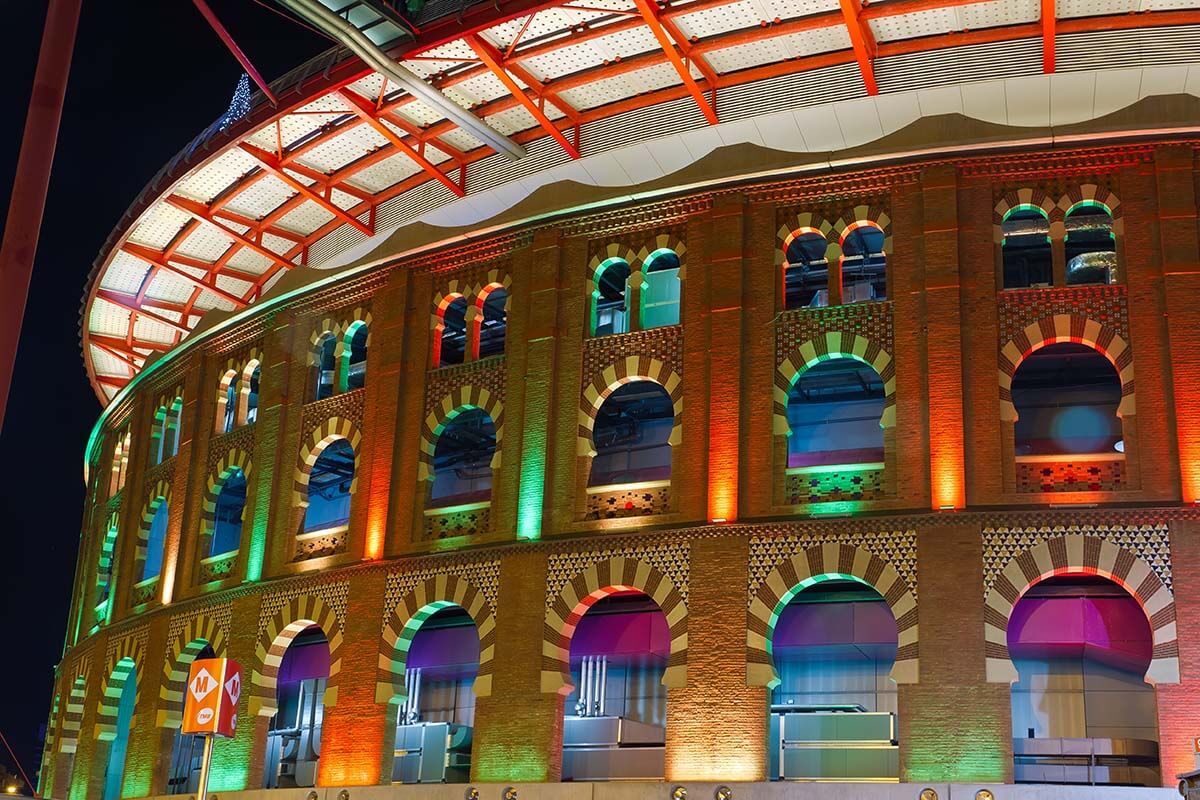
On the northern side of Placa d’Espanya, you’ll find Las Arenas de Barcelona. This oval-shaped commercial shopping center was originally a bullfighting arena but was reconstructed in 2011.
There are countless shops here and its top floor is filled with restaurants that go all the way around the perimeter, and there are also cinemas (with all the movies in Spanish, however).
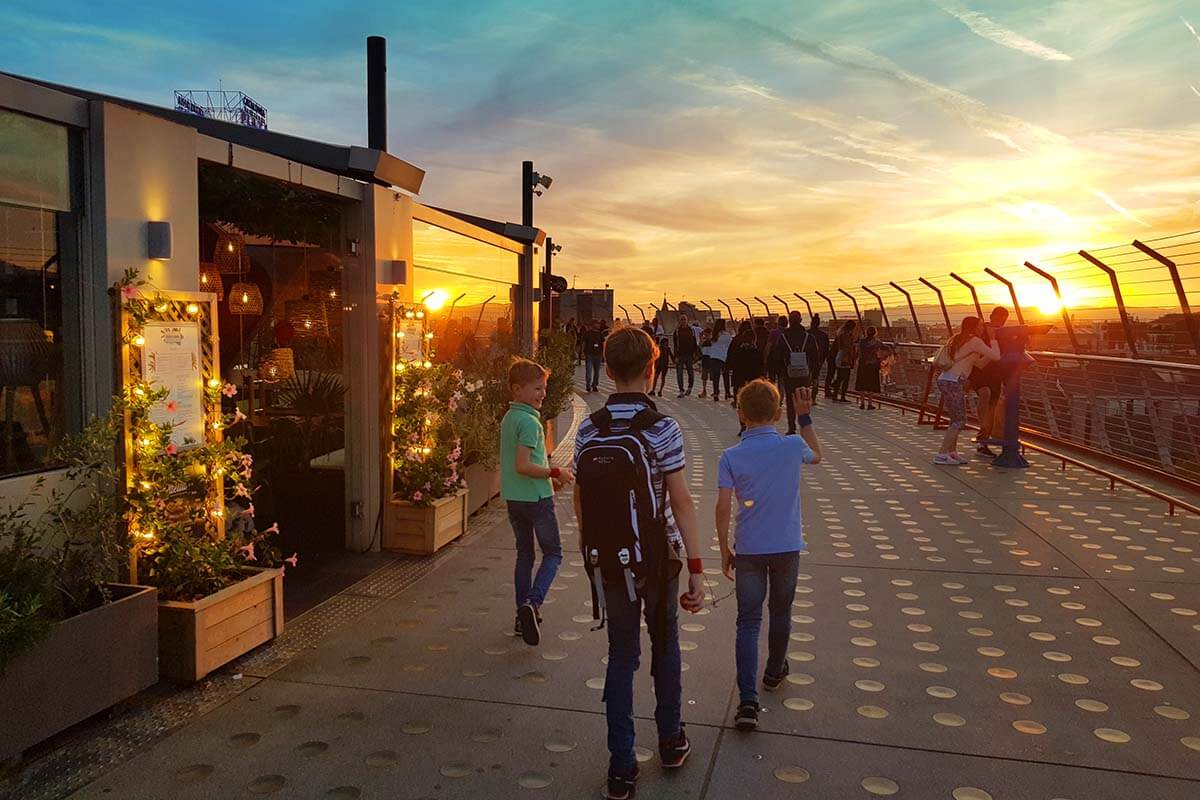
But the main reason to mention a shopping center in this Barcelona sightseeing guide is because of the awesome 360° city views from the large circular platform at the very top of Arenas de Barcelona. And also because it’s so close to the Magic Fountain of Montjuïc which you’ll likely want to visit anyway. And if you’re already in the area, it’s just a small effort to check out those views.
We visited here around sunset, before heading to the fountain for the evening show, and the views were really nice. Well worth a small detour.
TIP: There is a glass elevator to the rooftop, but there is a small charge to use it. Unless you specifically want to enjoy the views on your way up, you can also just take the stairs or the escalator, which are free.

26. Basilica of Santa Maria del Mar
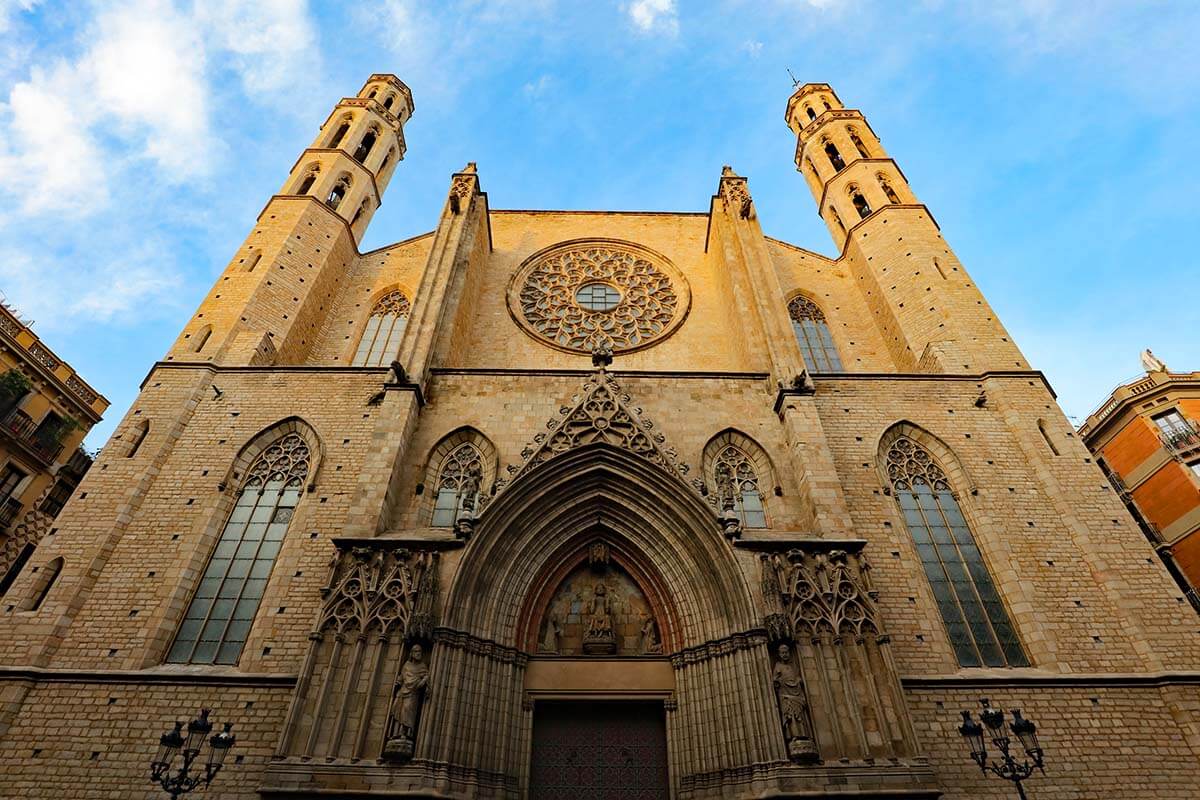
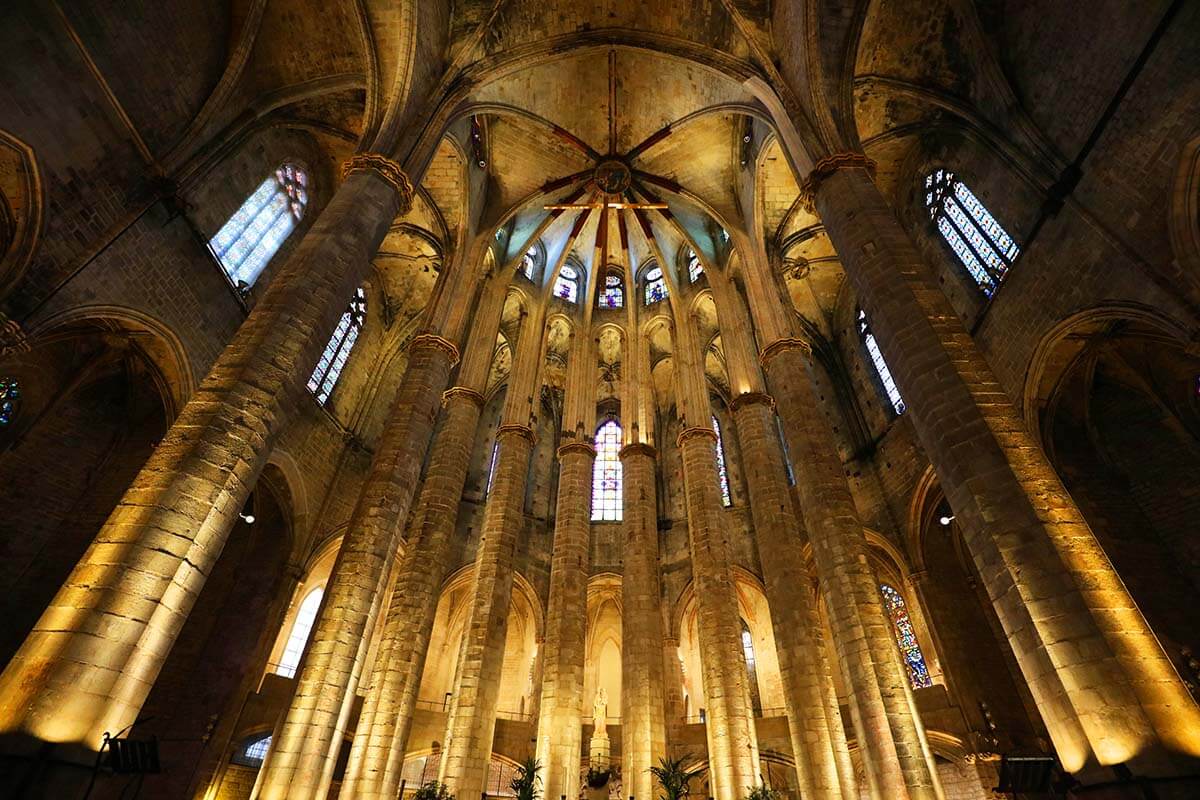
The beautiful Basilica of Santa Maria del Mar is a 14th-century Gothic Church. Together with La Sagrada Familia and Barcelona Cathedral, this is one of the nicest churches to see in the city.
It is located in the El Born neighborhood, a maze of medieval streets lined with trendy boutiques and cafes. Taking 55 years to build – partially paid for and constructed by the parishioners themselves – it is famous as being an example of pure Catalan Gothic architecture. This is rare, as most churches and cathedrals have a mixture of different styles.
TIP: You can see the best of the church in about 15-20 minutes. But if you have more time, I recommend taking the guided tour, which includes a visit to the rooftop. The views of the skyline of the Old City are quite beautiful.
Good to know: The basilica is open daily, with separate arrangements for cultural visits and worship. The paid cultural visit includes the interior, crypt, museum space, towers, and rooftops. Check the official website for current visiting hours and tickets.
27. Santa Caterina Market
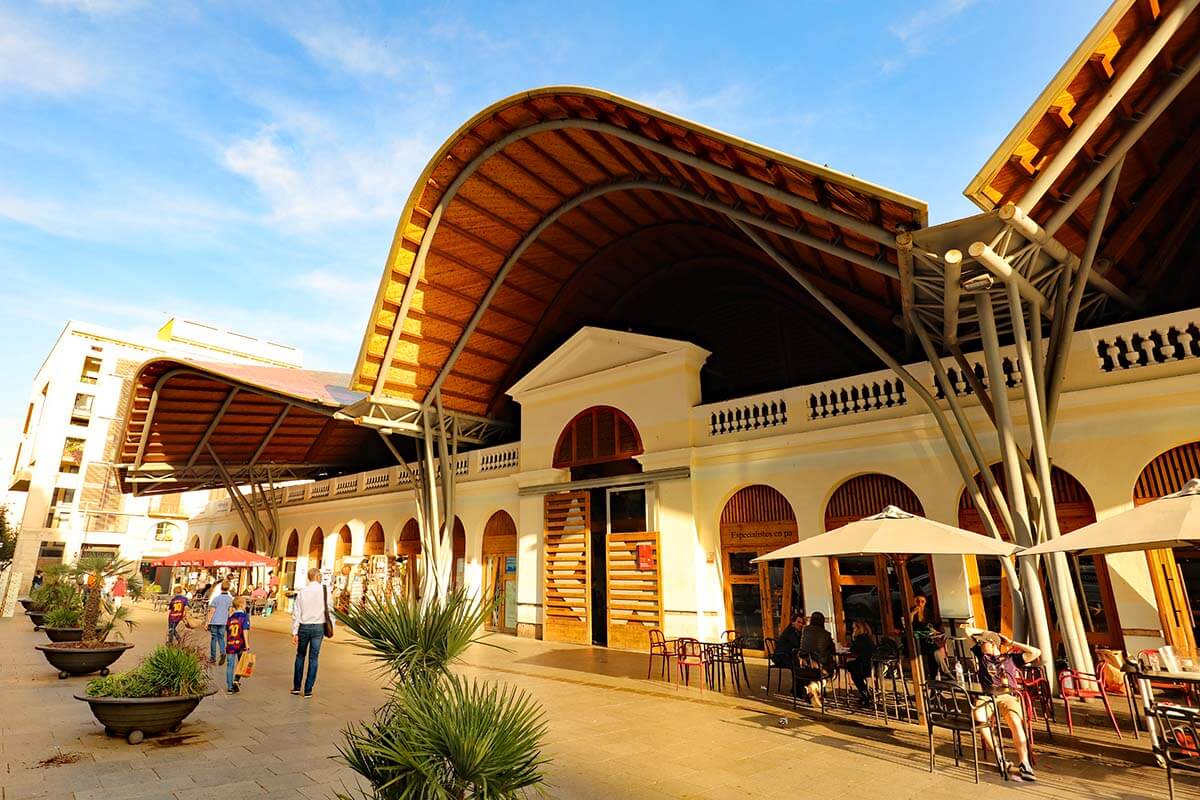
Mercat de Santa Caterina is a covered food market located close to the Picasso Museum. It is easily spotted because of its brightly colored roof. If you want to visit a few local markets in Barcelona, this is a good option.
Clean, well-organized, and modern, it tends to be far quieter than the famous Mercado de La Boqueria, so it’s easier to sample the wares at all the different stalls and try some local specialties. It also has better prices and it is easier to get a seat if you decide to stop for lunch at one of the restaurants or bars.
The site now occupied by the market was originally home to the convent of Santa Caterina, of the Dominican Order or Order of Preachers. Remains of the cloister are still visible in the basement and can be seen with a ticket to the Barcelona History Museum.
Good to know: Santa Caterina Market is generally open Monday through Saturday, from 7:30 AM until at least 3:30 PM. Closing times vary by day and season, so check the market’s official website if you want to go later in the day.

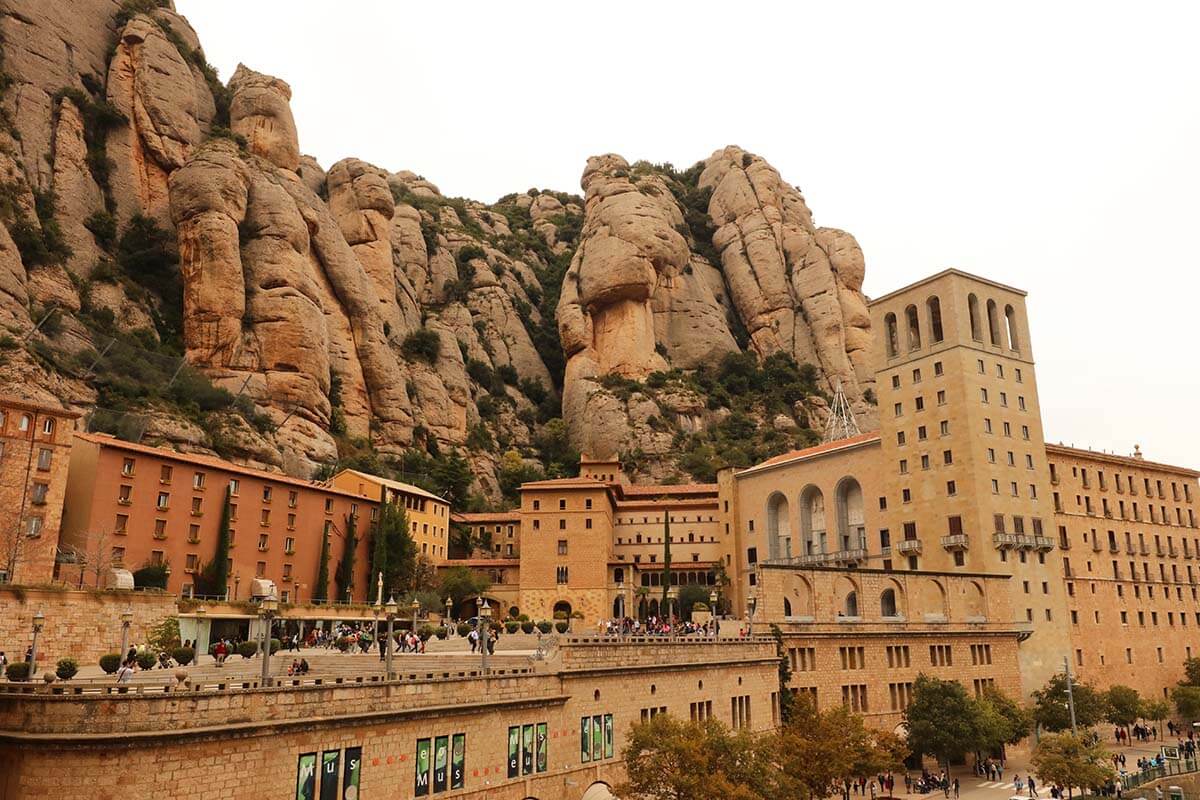
28. Day trip to Montserrat Monastery
No list of the best things to do in Barcelona would be complete without mentioning the most popular day trip near the city – a visit to the Abbey of Montserrat.
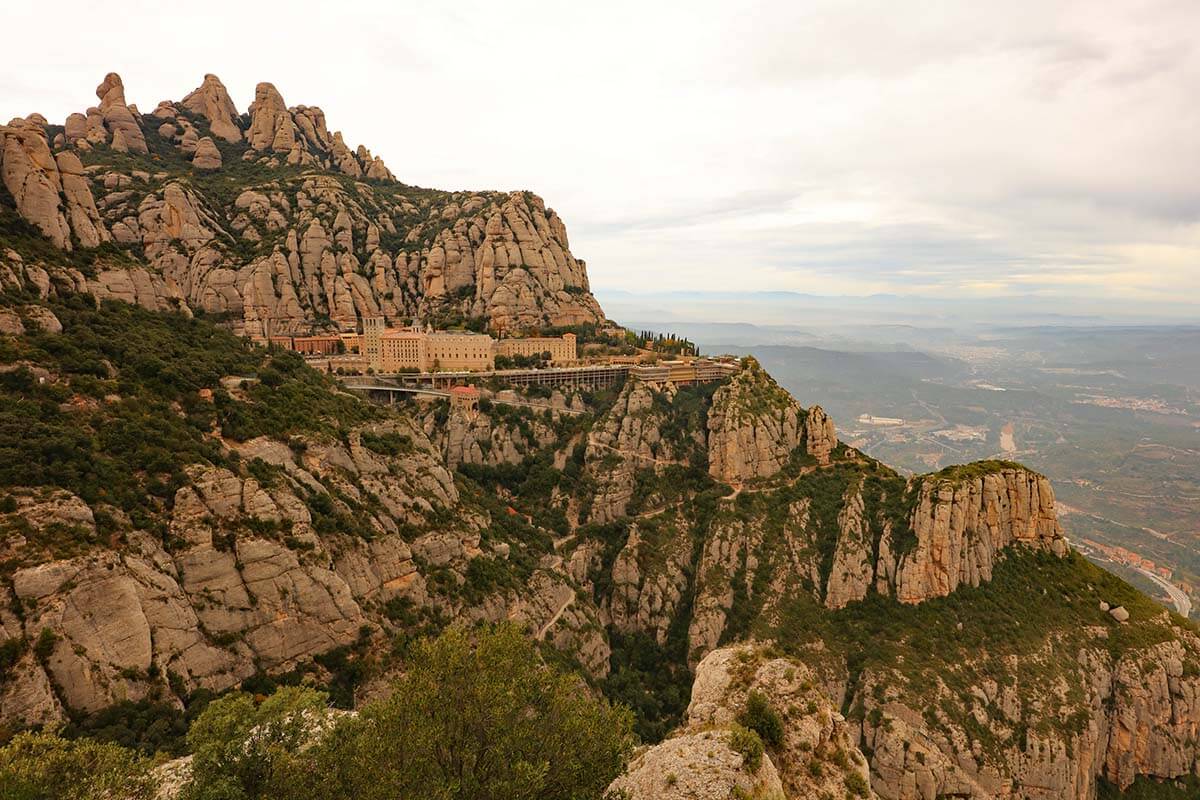
The mountain range of Montserrat is located around 50km northwest of Barcelona. Its main attraction is the Benedictine Monastery Santa Maria de Montserrat, one of Catalonia’s most important religious sites.
You can’t actually go inside the monastery, but you can visit the grounds, the church, and see the statue of the Black Madonna, Catalonia’s patron saint. You may also be able to hear the famous Escolania boys’ choir (check availability before choosing your visit date).
In addition, there are some hiking trails, and you can enjoy the incredible views of the surrounding landscape.
Good to know: You can visit Montserrat independently by train or car, or join one of the many tours from Barcelona. For an idea of what to expect on a guided trip, read our Montserrat tour review. For practical tips on getting there and planning your visit, see our detailed guide below.
LEARN MORE: How to Visit Montserrat from Barcelona
More Things to Do in Barcelona
Beyond the main sights, Barcelona has plenty of activities worth making time for. A food tour, boat trip, or evening show can add some variety to your itinerary and give you a break from sightseeing.
Here are a few options to consider, depending on your interests and who you’re traveling with.
Food, Sailing & Bike Tours
These are good options if you want to explore with a local guide or enjoy the city at a different pace.
- Food tours. One of our favorite ways to explore a city! You can try local specialties and discover places you might otherwise walk past.
- Cooking classes. A fun option if you’d rather make the food yourself. Choose a class based on the dishes you want to learn, and check whether a market visit is included.
- Sailing and catamaran cruises. See Barcelona from the water and rest your feet after all the walking. Smaller sailing boats and larger catamarans offer quite different trips, so choose the atmosphere you prefer.
- Bike and e-bike tours. A good way to cover more ground with a guide. Check the route, as some focus on the waterfront while others include neighborhoods farther from the main sights.
Things to Do in Barcelona with Kids
Many of the places above are interesting for families too. If your children need a change from churches and museums, consider one of these:
- Barcelona Aquarium. The underwater tunnel is the main attraction, with sharks and other marine life swimming overhead. It’s also a handy indoor option for a rainy day.
- Barcelona Zoo. A good option for families who enjoy animal parks. Combine it with some time in Ciutadella Park.
- Big Fun Museum & Museum of Illusions Experience. A combo ticket with access to two entertaining museums for all ages. Great for funny photos, especially if your kids enjoy posing and getting creative.
- PortAventura theme park. Worth considering for families who love rides and roller coasters. It’s outside Barcelona, so set aside a full day and consider a ticket with transport from the city.
Things to Do in Barcelona in the Evening
For an evening out, you could combine sightseeing with a show or concert. Book ahead if you have your heart set on a particular date.
- Flamenco shows. An enjoyable introduction to flamenco if you haven’t seen a live performance before. Some tickets include dinner, while others are for the show only.
- La Pedrera Night Experience. A guided evening visit to Casa Milà, ending with a light show on its sculptural rooftop.
- Casa Batlló’s Magical Nights. Combine a house visit with a rooftop concert and a glass of cava. Check which artists are performing during your stay.
- Ghost tours. An alternative to a standard walking tour, focusing on the old town’s legends and darker stories.
More Museums & Cultural Attractions
If you enjoy art or history, these are worth considering alongside the Picasso Museum and Joan Miró Foundation mentioned above.
- Museu Nacional d’Art de Catalunya (MNAC). The museum inside the imposing Palau Nacional on Montjuïc covers centuries of Catalan art. Its medieval murals are a particular highlight.
- Poble Espanyol. This open-air attraction on Montjuïc brings together architecture from different parts of Spain, with craft workshops and shops to explore.
- Barcelona Museum of Contemporary Art (MACBA). Best suited to contemporary art fans. Check the current exhibitions to see whether they interest you before booking.
- History Museum of Catalonia. A good choice if you want more context about Catalonia’s history and identity. Its location in Port Vell makes it easy to combine with a waterfront walk.
TIP: You don’t need to fill every spare hour. Pick one or two activities that appeal to you most and leave some time for exploring Barcelona without a schedule.
Where to Stay
If you are visiting for the first time and want to explore the main sights and tourist attractions, the very best area to stay for sightseeing in Barcelona is around Catalunya Square.
Here are some of the best-rated hotels in this area:
- €€€€€ Ohla Barcelona. A top-end boutique hotel close to Plaça de Catalunya and the Gothic Quarter. Known for its stylish rooms, rooftop pool, and excellent service, this is a great pick if you want a central base with a more upscale feel.
- €€€€ El Avenida Palace. A classic hotel with spacious rooms and a rooftop terrace overlooking the city. It’s slightly more traditional in style, but the location is hard to beat.
- €€€ Hotel Jazz. One of the best-value mid-range hotels in central Barcelona. Rooms are modern and comfortable, and the location is hard to beat for sightseeing, public transport, and airport connections. A great choice for first-time visitors.
For more advice on choosing your base, see our guide to where to stay in Barcelona, with our recommended area for a first visit and hotel options for different budgets.
TIP: For more practical information for your visit, be sure to check Barcelona travel tips via the link below. In this article, you’ll find more information about getting around, where to stay, tipping and haggling etiquette, bizarre dining hours, and more. Take a look!
READ ALSO: Top Tips for Visiting Barcelona for the First Time
So, this is our guide to the top sights and attractions in Barcelona. I hope that it helps you plan your trip and enjoy every moment of your visit to this world-class destination and its charming mix of avant-garde and traditional style!
More travel inspiration for Spain:
- Best Things to Do in Spain
- 1 Day in Barcelona
- 2-3 Days in Barcelona
- Best Gaudi Tour in Barcelona
- How to Visit Montserrat from Barcelona
- Montserrat Tour
- Toledo Day Trip (from Madrid)
- 1 Day in Seville
- 1 Day in Madrid
- 2 Days in Seville
- Best Flamenco Tour in Seville
- Read also our tips for planning a trip to Europe.
Have a great trip!
TIP: Did you find this guide helpful? Bookmark this post for later, share it with your friends, and save it to Pinterest to inspire your next trip.
More travel inspiration for European cities:
If you are visiting other European cities and are looking for in-depth information for your trip, take a look at some of our city guides:
- Amsterdam, Netherlands
- Antwerp, Belgium
- Barcelona, Spain
- Bern, Switzerland
- Bologna, Italy
- Brasov, Romania
- Brussels, Belgium
- Bruges, Belgium
- Bucharest, Romania
- Colmar, France
- Edinburgh, UK
- Florence, Italy
- Funchal, Madeira, Portugal
- Geneva, Switzerland
- Krakow, Poland
- Lisbon, Portugal
- Liverpool, UK
- London, UK
- Lucerne, Switzerland
- Madrid, Spain
- Manchester, UK
- Milan, Italy
- Naples, Italy
- Paris, France
- Ponta Delgada, Azores, Portugal
- Ravenna, Italy
- Reykjavik, Iceland
- Rome, Italy
- Salzburg, Austria
- Siena, Italy
- Sintra, Portugal
- Venice, Italy
- Verona, Italy
- For more… check our destinations page.