
19 Absolute Best Things to Do in Florence, Italy (+Map of Top Places)
This site contains affiliate links, which means that we may earn a small commission, at no cost to you, for qualifying purchases. It supports the work that goes into keeping this content free. Thanks for reading! More info: Privacy Policy.
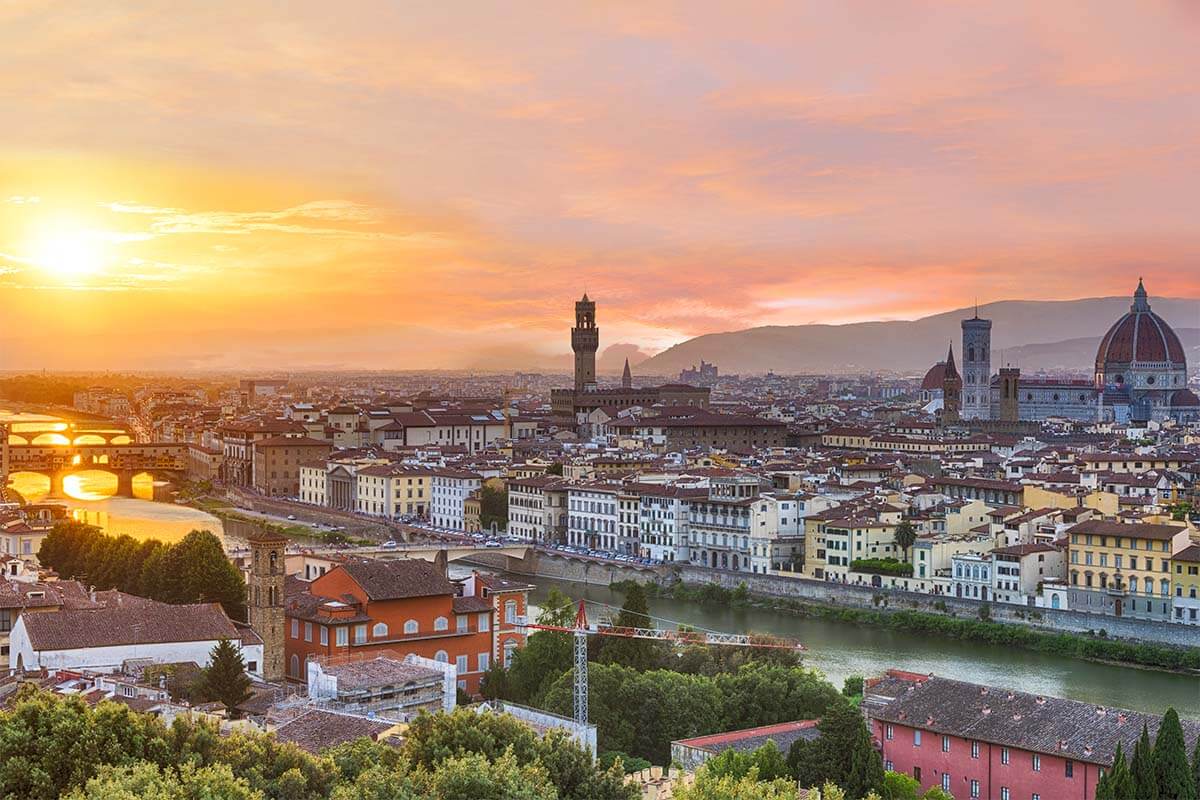
Looking for the best things to do in Florence, Italy? This guide covers the absolute best places to see, from famous landmarks and top tourist attractions to a few personal favorites. We’ve also included a sightseeing map, so you can group the main sights and plan your days in a logical, time-efficient way.
We’ve visited Florence several times and always find something new. But if this is your first trip and your time is limited, you’ll probably want to focus on the main highlights the city is famous for. To help you make the most of your stay, we share the must-sees – the top sights and best things to do in Florence for first-time visitors. For each place and experience, you’ll find our practical tips to help you decide what to prioritize.
TIP: Book your hotel early, especially if traveling in the warmer months. For sightseeing and easy transport connections, we recommend staying close to the Duomo or the main train station. B&B Le Stanze del Duomo is a great-value option in this area. We also recently stayed at Hotel Croce di Malta, and can highly recommend it, especially if you’d like a pool and a rooftop terrace.
Map of the Best Places to Visit in Florence
Florence is a very walkable city, and most major landmarks and attractions are located close to each other. To help you get oriented and plan your time, this map shows all the top sights mentioned in this guide, along with a few personal restaurant recommendations.
The main sights in Florence are concentrated around the historic center and include the Duomo, Uffizi Gallery, Accademia (David), Ponte Vecchio, and Piazzale Michelangelo. Below, you’ll find a complete list of the best places to see and things to do in Florence, including these highlights and several other attractions and personal favorites.
Here are the best things to see and do in Florence:
1. Duomo & Brunelleschi’s Dome
The most recognizable landmark of Florence, the Cathedral, aka the Duomo or Basilica di Santa Maria del Fiore, is absolutely not to be missed when visiting Florence for the first time. It’s one of the most beautiful churches in Italy, and there’s a lot more to see and do here than it looks at first sight. So much, in fact, that we listed the main attractions as separate points in this guide.
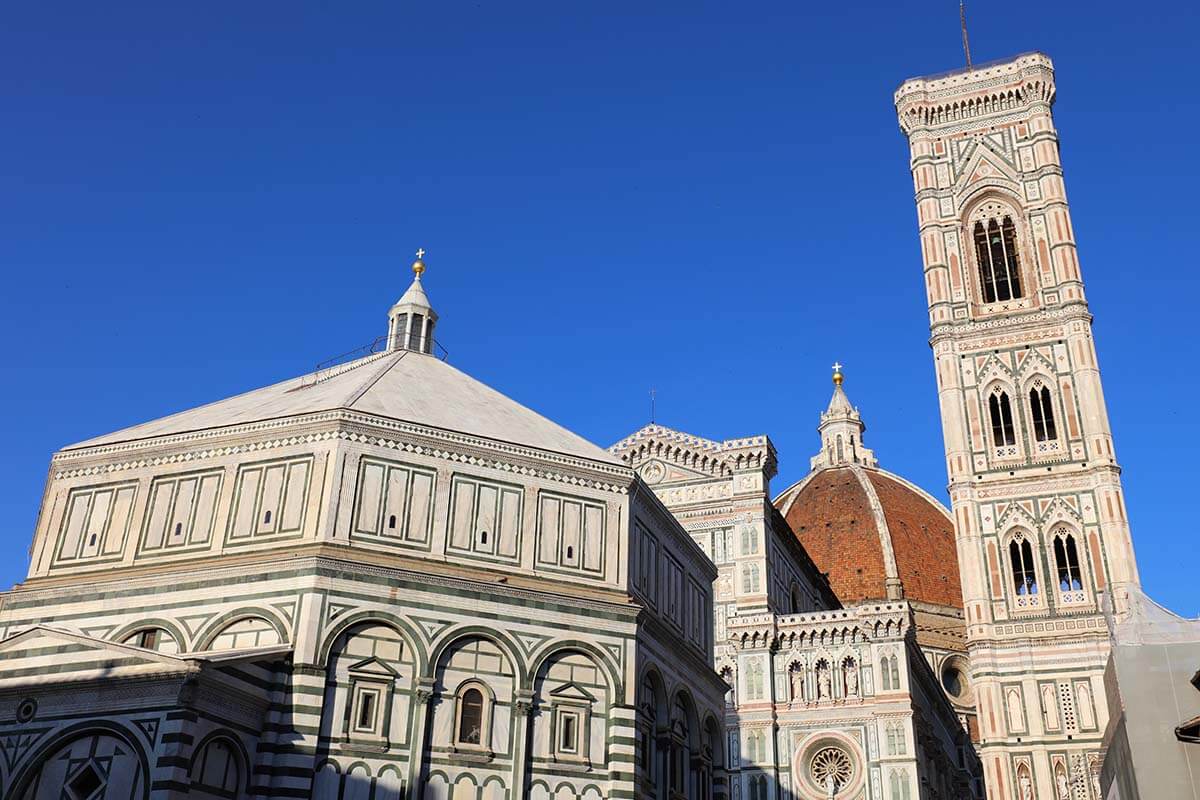
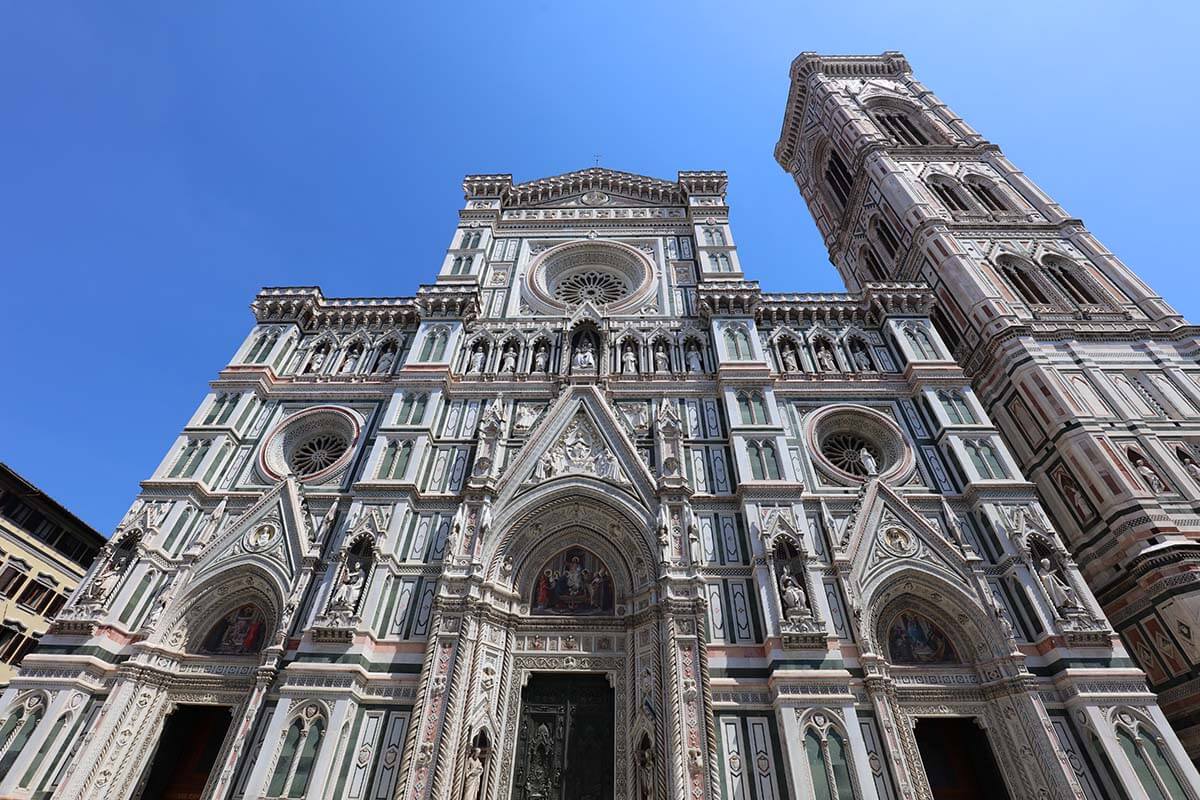
But let’s start with the main sight – the Duomo – first. The spectacular basilica is an enormous structure towering high above the skyline of Florence. The fourth-largest cathedral in the world, its beautiful exterior is covered in a combination of pink, green, and white marble.
Inside you’ll see many beautiful frescoes and mosaic pavements, along with a magnificent 15th-century clock that still works to this day. However, the interior of the Dome is not nearly as impressive as that of the other magnificent churches in Florence. The most decorative is the inside of Brunelleschi’s Dome above the altar.
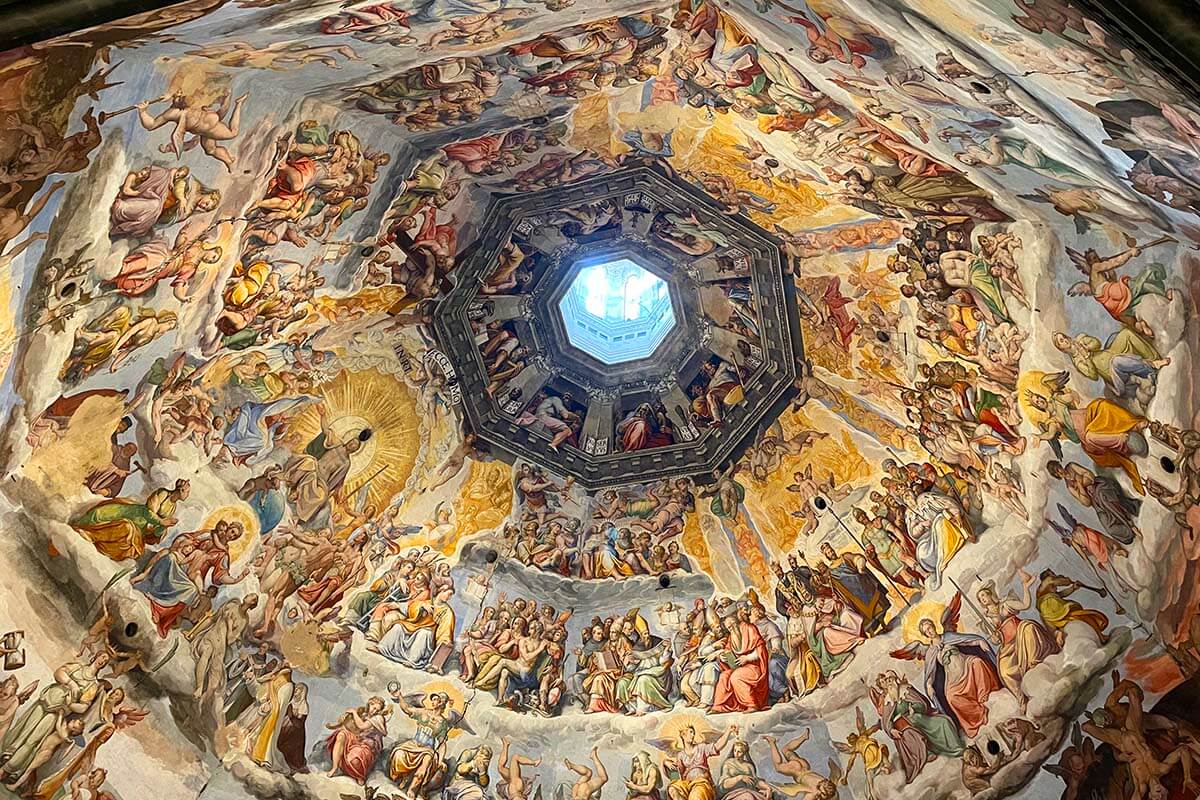
One of the best things to do at the Duomo is climb Brunelleschi’s Dome, which covers the cathedral. Climbing the 463 steps to the top is the only way to see its incredible paintwork from close by. In addition, the panoramic views of Florence from the top of the dome are simply stunning and well worth the effort.
Climbing the dome is one of the most popular things to do in Florence, so you need to get timed tickets in advance. These tickets/tours normally also include a visit to Giotto’s Bell Tower, the Baptistery, and the Cathedral Museum (you can find more information about these places further below).
Alternatively, there are many more tours that include the Dome climb, usually in combination with some other sights nearby.
Good to know: The Duomo itself is free to visit, but there’s usually a long queue to get in. If you climb the dome, you can enter the cathedral via a separate entrance and get to see it without extra queuing. Be sure to dress appropriately (knees and shoulders covered).
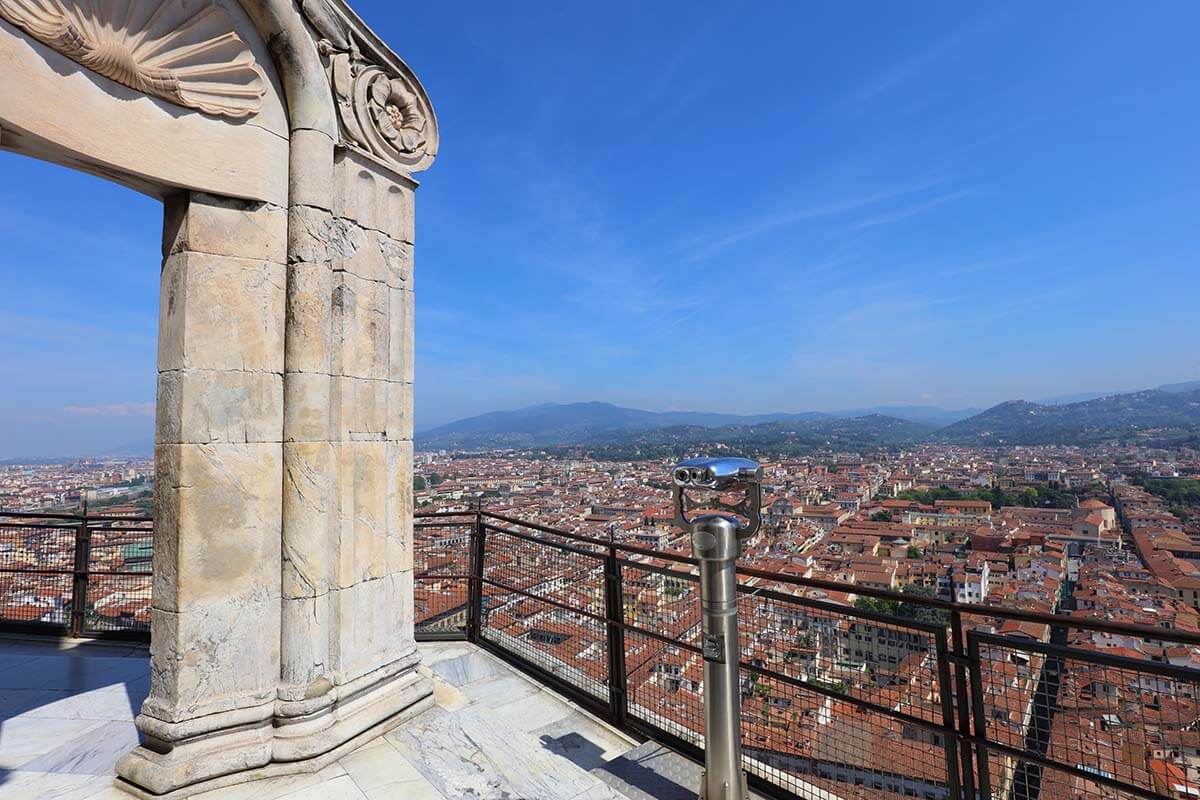
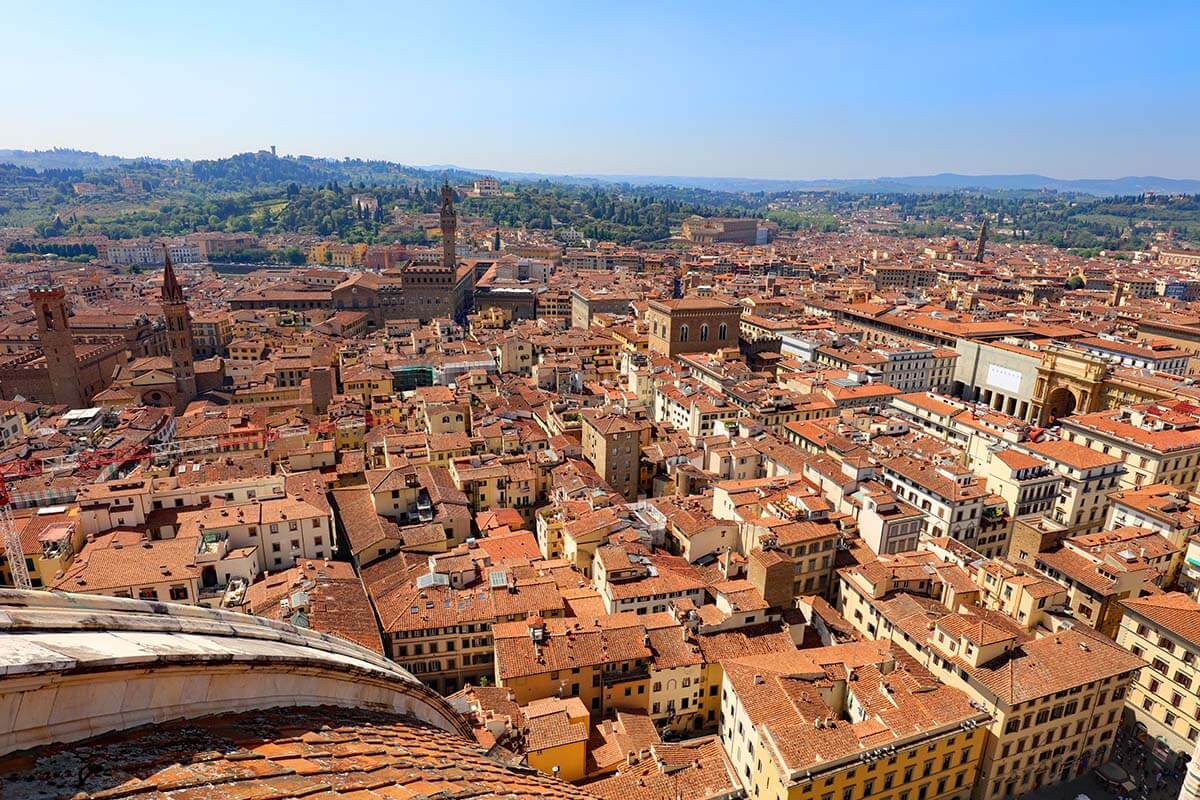
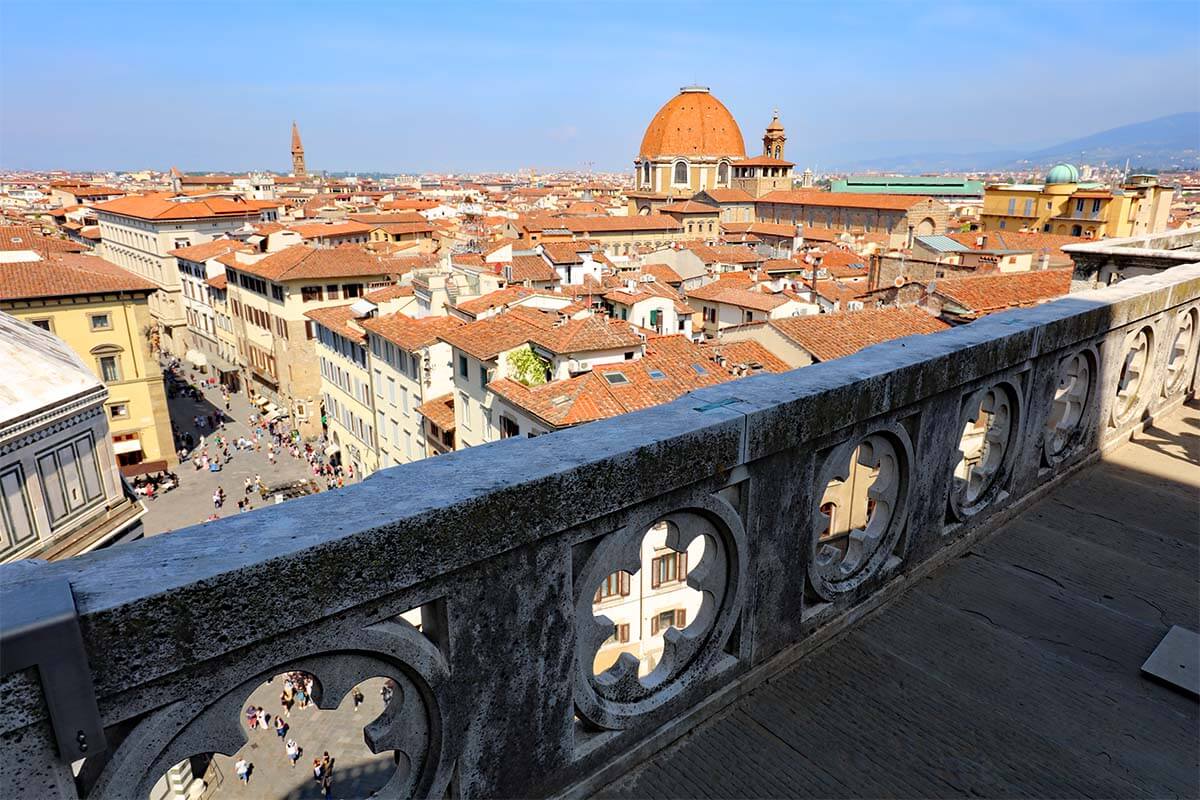
TIP: Not widely known is the fact that in addition to climbing Brunelleschi’s Dome, you can also visit the Duomo Terraces.
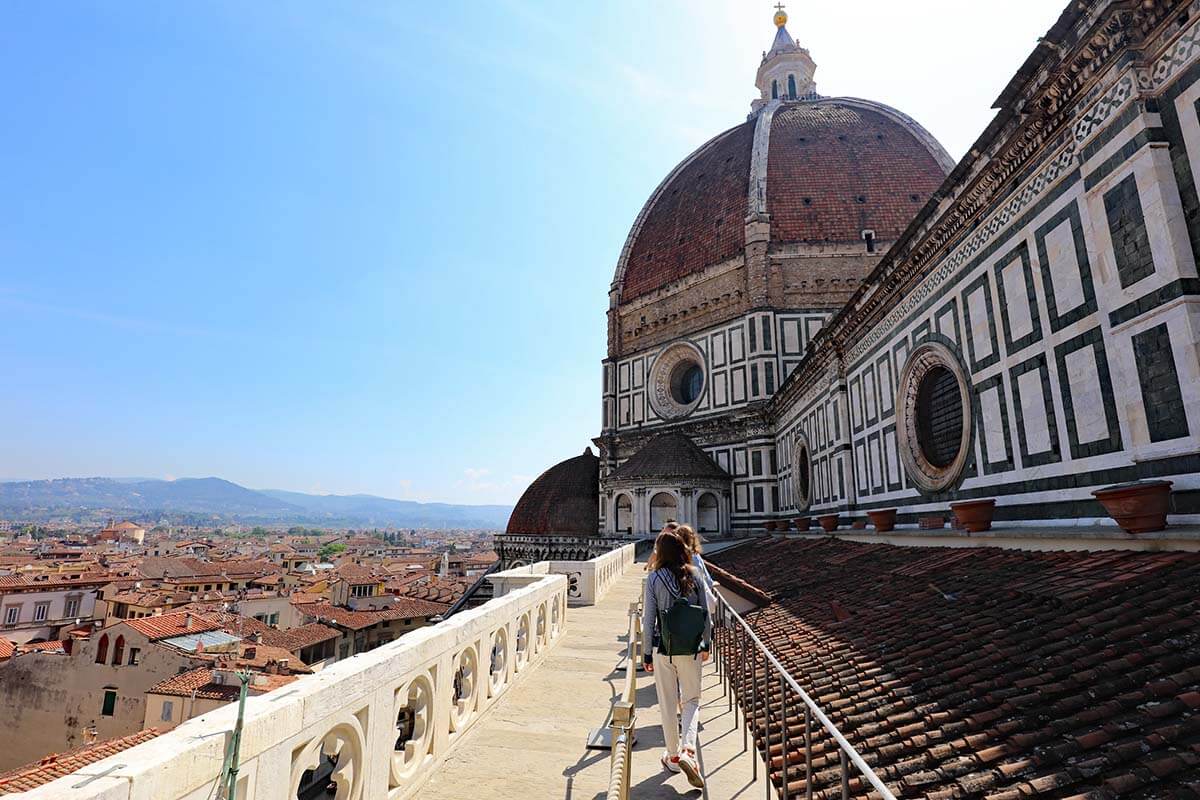
This level can only be visited with a guided tour (also includes the Dome climb). While the Duomo terraces aren’t an absolute must, we opted for this option and found it well worth it. It gives you a very different perspective on the Cathedral itself, plus you get to enjoy some nice city views from yet another angle. It’s also really special to be able to visit a place that not many people get to see.
Our experience: Because we wanted to see the Duomo terraces and also visit Galleria Accademia with a guide, we opted for this highly-rated tour. It includes the Duomo Dome climb, exclusive access to the Duomo terraces, and Michelangelo’s David at the Accademia Gallery. We really enjoyed it and would recommend it if you’d like a more in-depth experience and exclusive access to the terraces.
2. Giotto’s Bell Tower
Standing right next to the cathedral, you’ll find another landmark of Florence, Giotto’s Campanile. This is the cathedral’s bell tower.
The construction of this magnificent tower began in 1334. Thanks to its unique coloring and sculptural decorations it is considered to be one of Italy’s most beautiful spires.
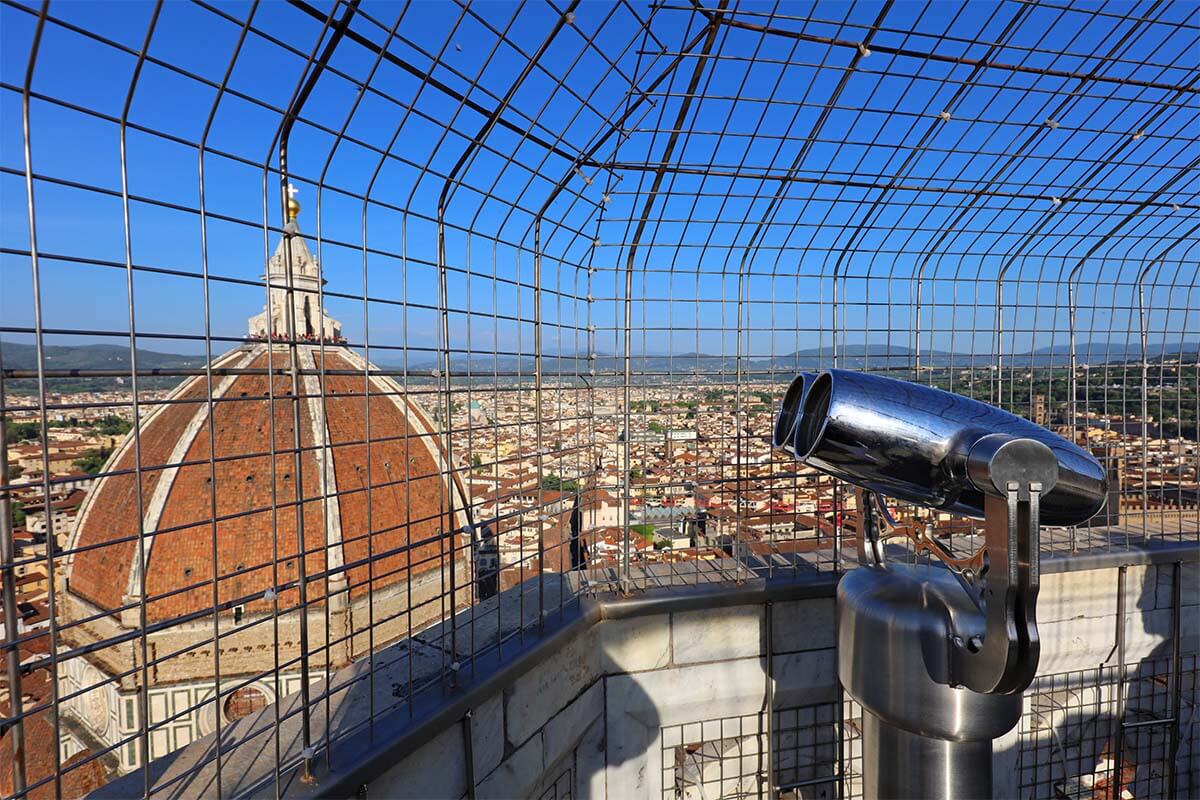
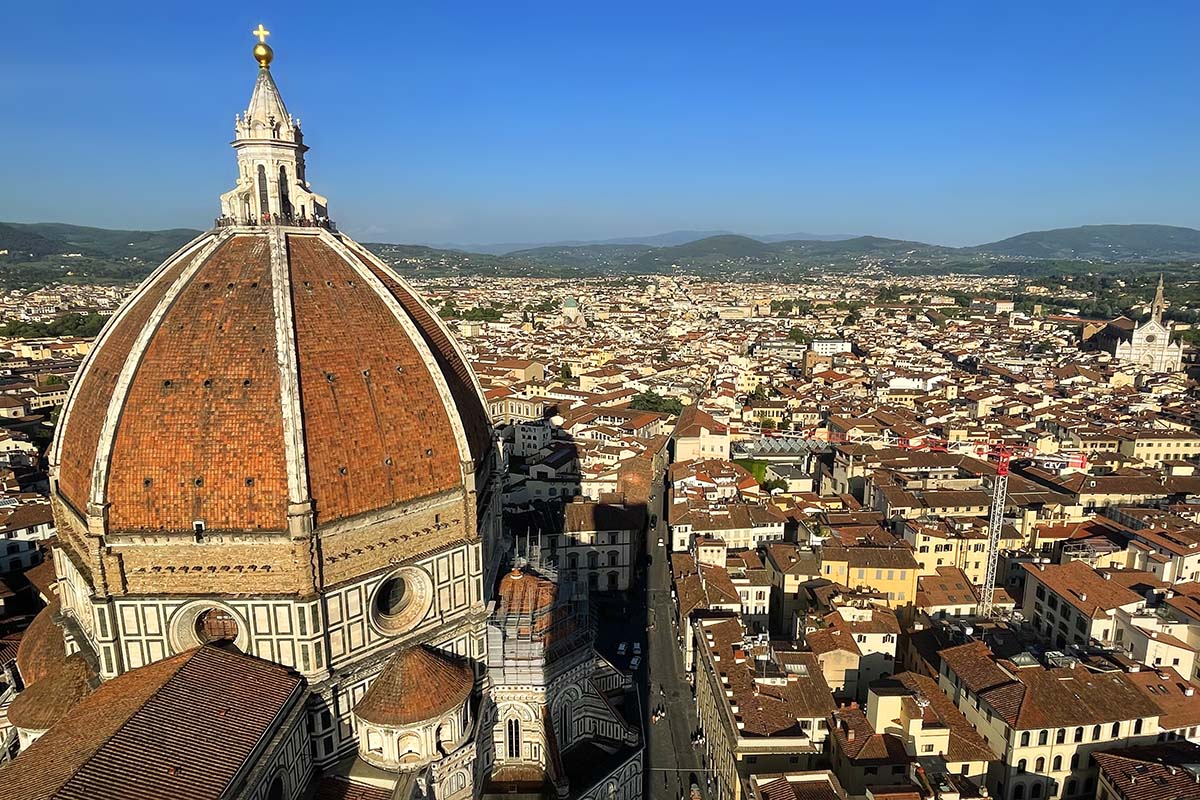
If you like to see the best high-angle view of the Duomo and its impressive dome, be sure to climb the 414 steps to the very top! The views from here are almost as impressive as from Brunelleschi’s Dome, except that you also get to see the dome itself.
TIP: If you have the time and are physically capable, I highly recommend both – the dome climb and Giotto’s bell tower. If you have to choose just one, most people go for the dome. Both towers give you great views of Florence, but the artwork of the Last Judgment in Brunelleschi’s Dome is just too special to miss.
We did both and found that each experience was unique and worth the effort. This ticket normally includes everything there is to see at the Duomo, including Giottos’ Bell Tower, the Dome climb, and more. While the dome climb is timed, you can come back to Giotto’s Tower at any time you like. It’s also open quite late and tends to be much less busy.
3. Piazza del Duomo & the Baptistery of St. John
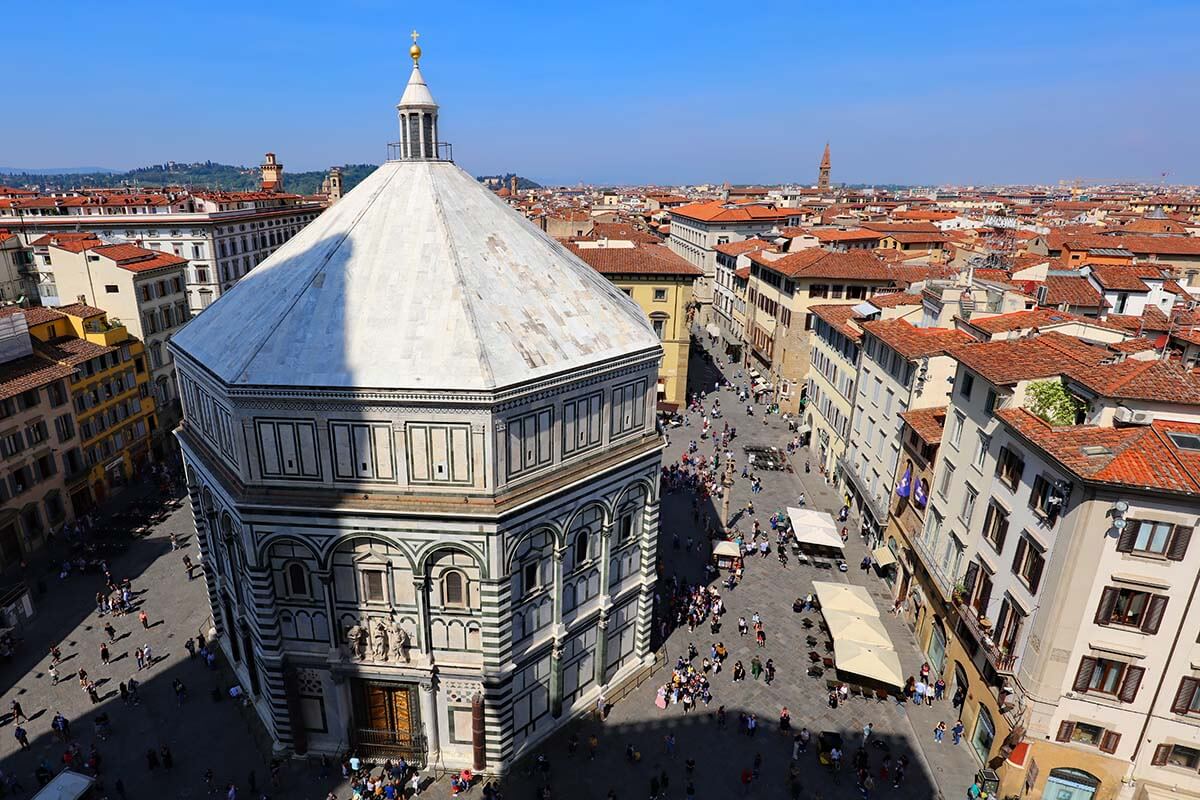
Piazza del Duomo is Florence’s main square, home to the cathedral and the splendid buildings of Giotto’s Campanile and the Baptistery of St. John.
There are other impressive buildings to see there, too. These include the Loggia del Bigallo (originally a place for lost or abandoned children awaiting adoption) and the Palazzo Nonfinito (Unfinished Palace), which now houses the Museum of Mankind.
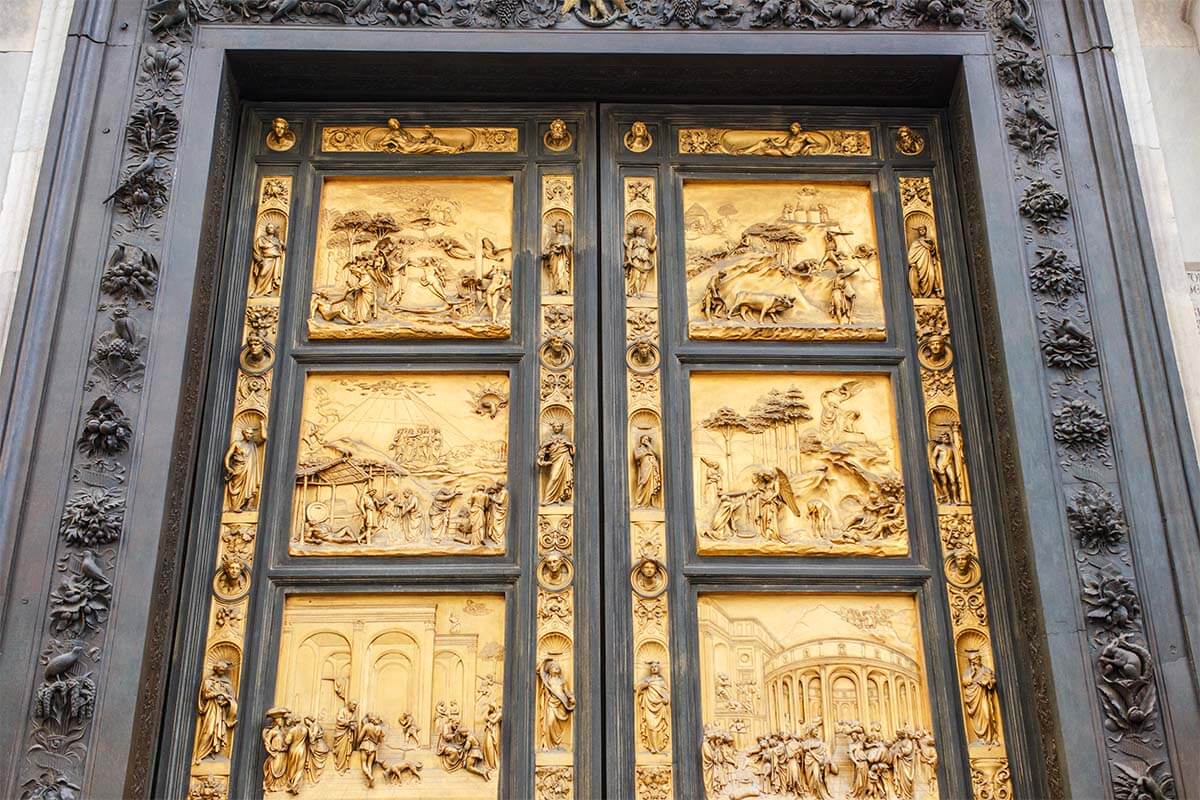
The Baptistery of St. John is the oldest religious site in Florence. It dates right back to the middle of the 12th century. It’s wrapped in marble just like the Duomo and the bell tower, but its most stunning features are its incredible bronze doors, which were added in the 15th century. You can see the impressive doors from the square – no need to enter inside.
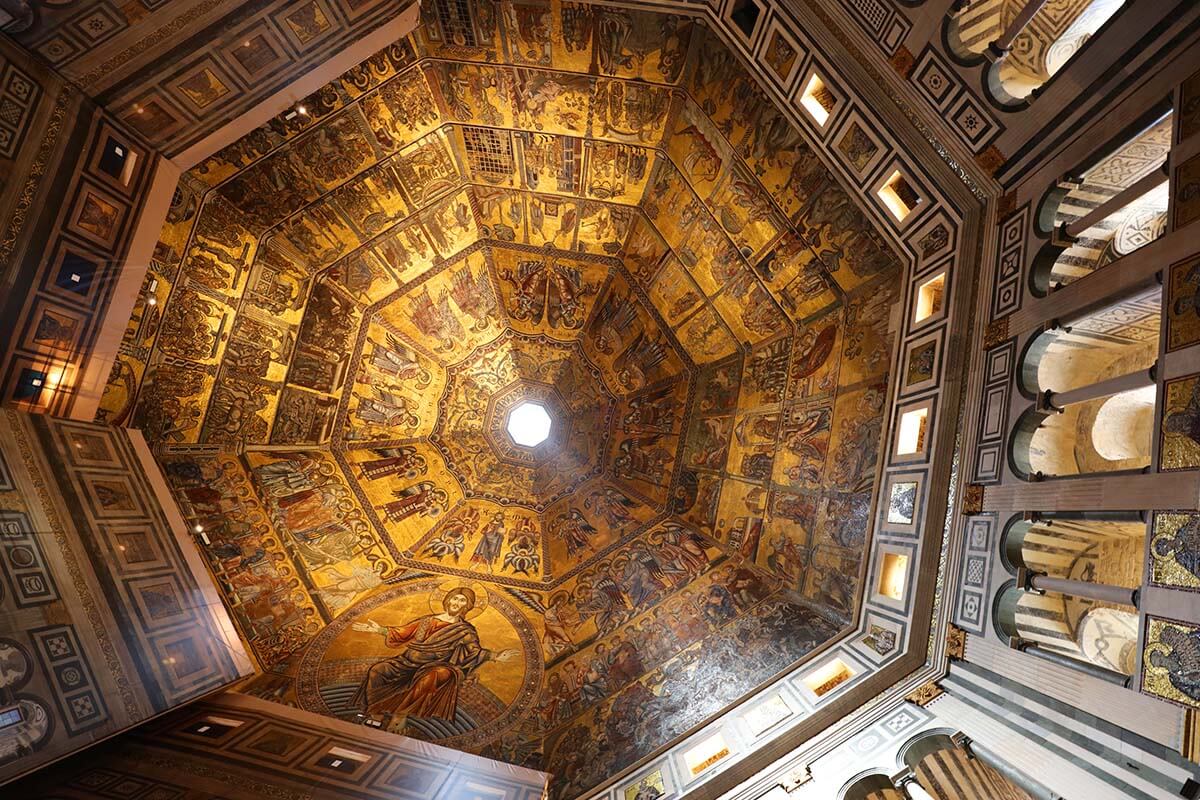
However, the interior of the Baptistery is equally spectacular, with some beautiful mosaics lining the ceiling of this octagonal building. So if it’s not too busy, be sure to check it out! The good thing is that most people only spend a few minutes inside, so even if there’s a queue, it moves very fast.
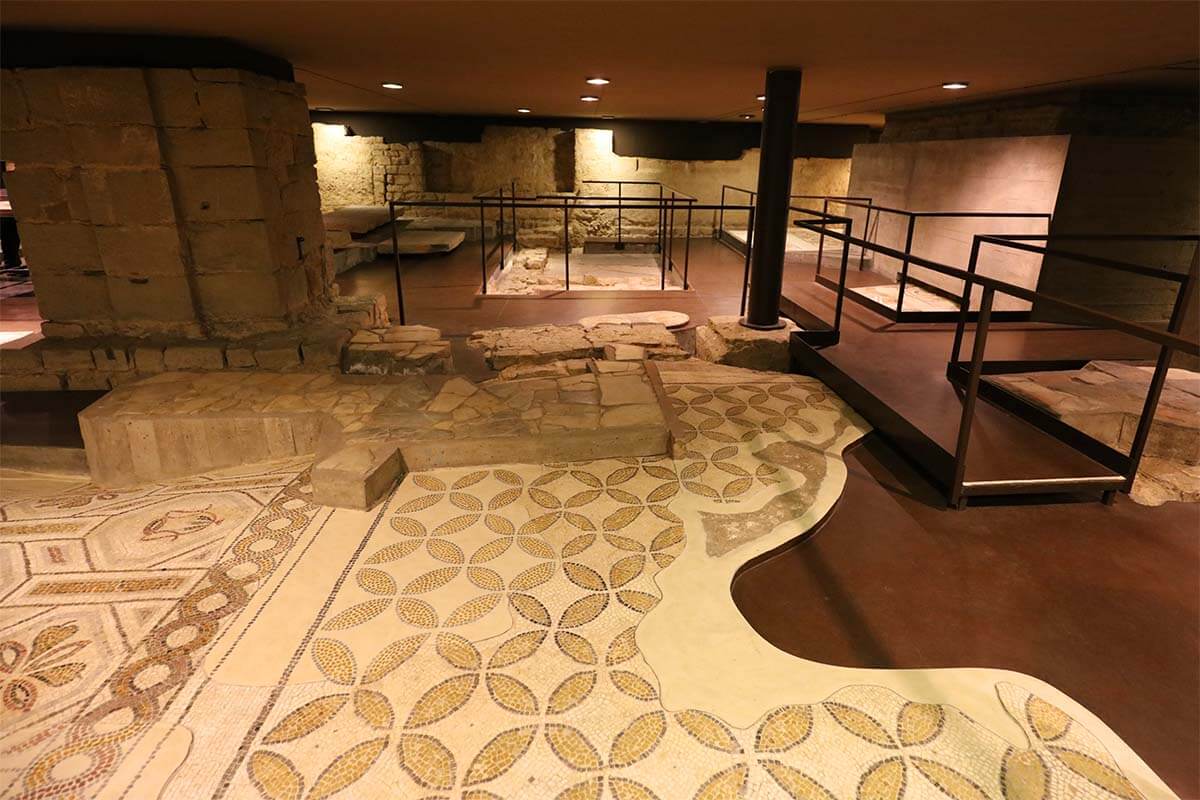
Good to know: The entry to the Baptistery of St. John is usually included with the tickets for the Dome climb and/ or Giotto’s Tower. Most tickets also include admission to Museo dell’Opera del Duomo, which contains many of the original works of art created for the Duomo, and also the Crypt of Santa Reparata, where you can see archeological remains under the cathedral.
You can easily spend half a day at the Duomo complex if you want to visit all these places. But if your time is limited, my personal top-3 would be the Dome climb, Giotto’s Tower, and the Baptistery. If it’s not busy, the Crypt of Santa Reparata can be visited in 10-15 minutes, so I’d consider that too.
4. Uffizi Gallery
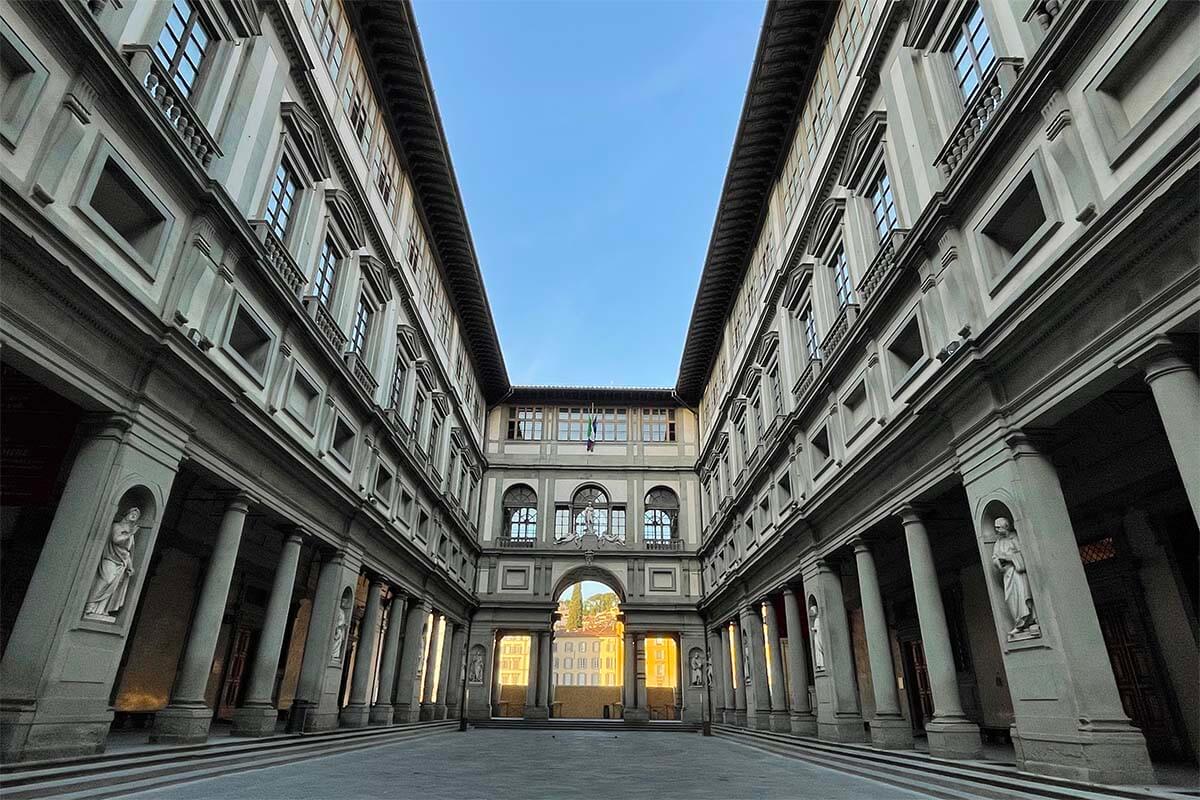
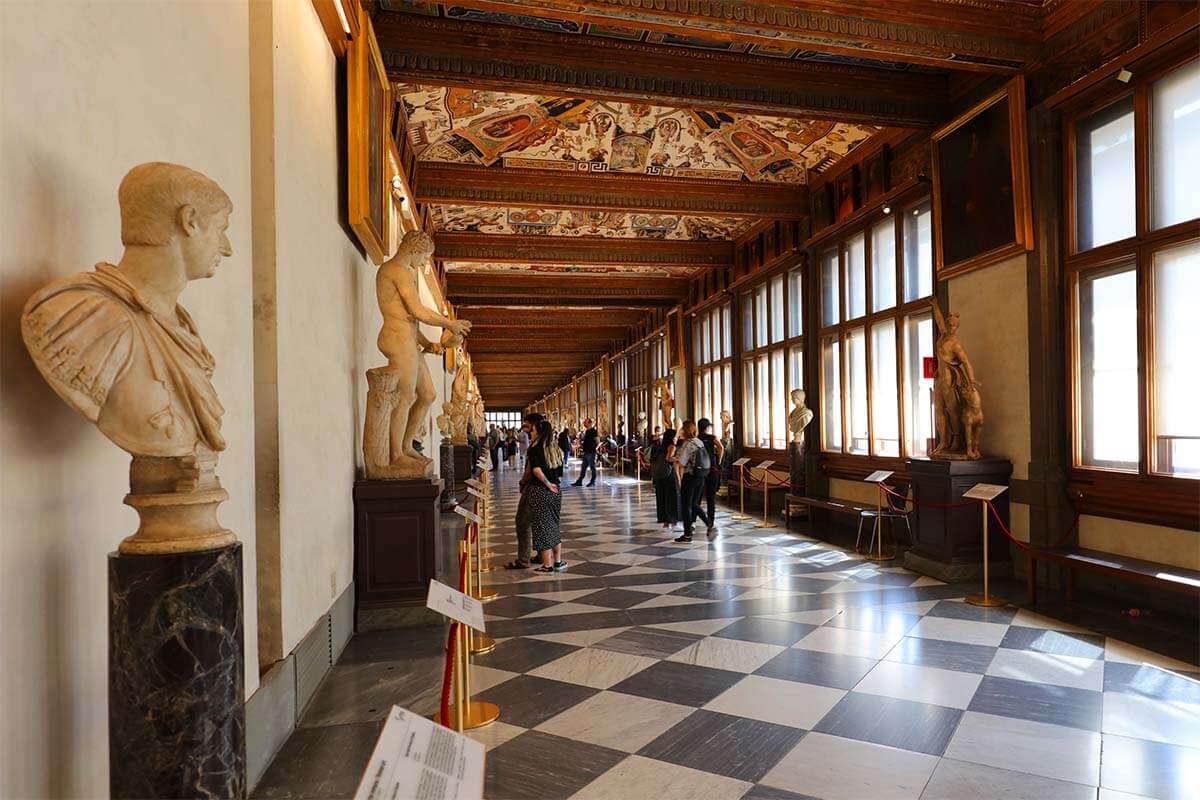
It would be unthinkable to go to Florence without paying a visit to the Uffizi Gallery. Established in the 16th century, this is one of the oldest museums in the world. This galleria actually gave name to all the art galleries in the world.
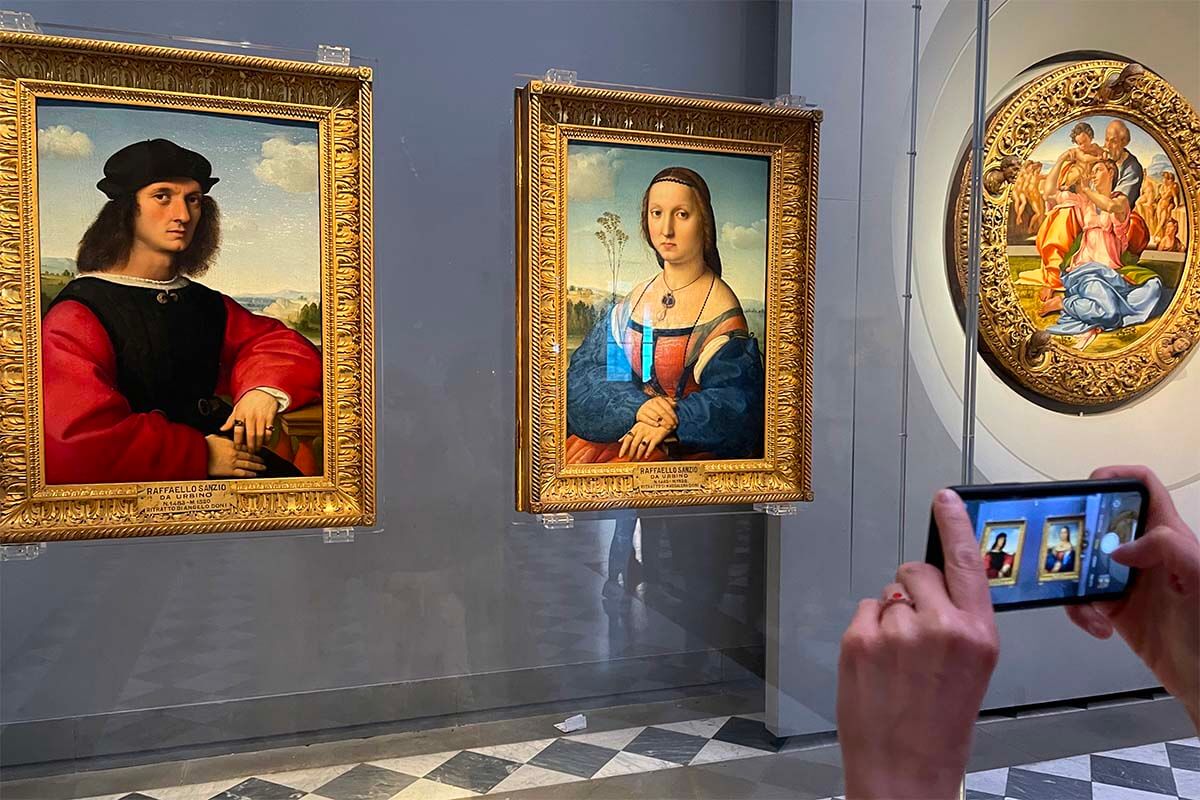
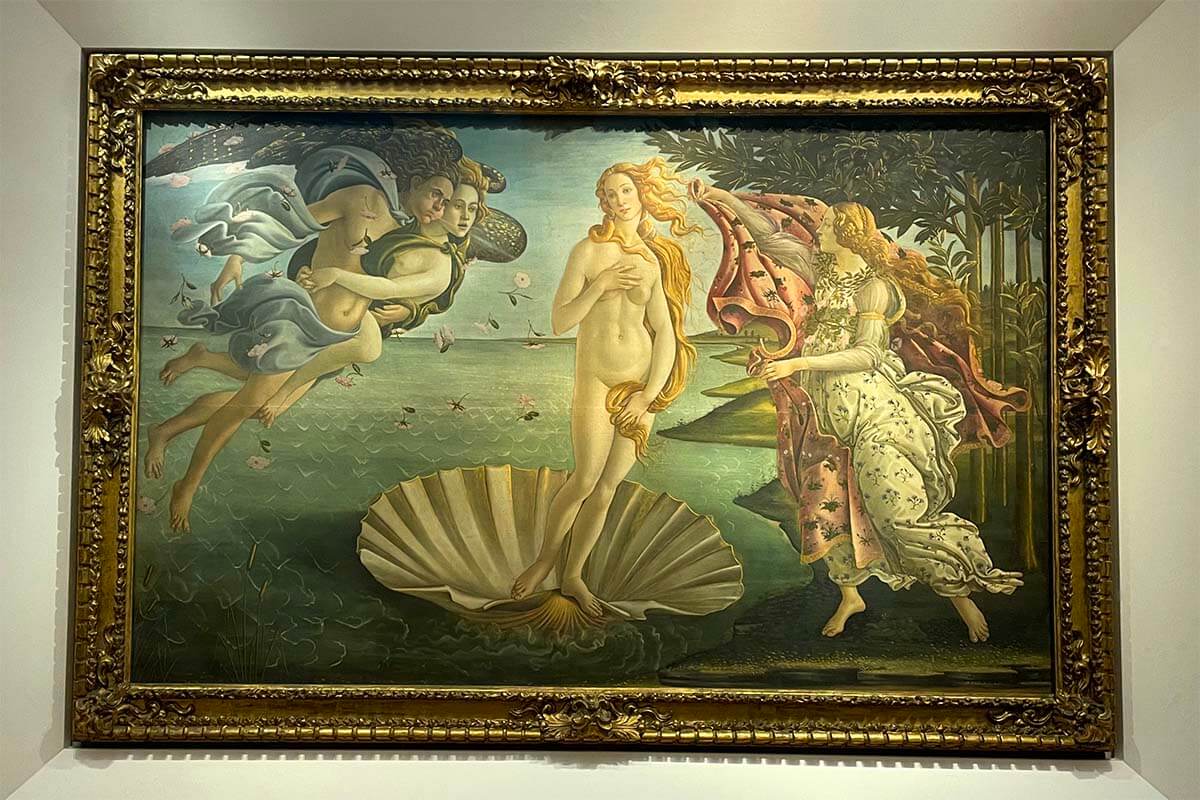
This awesome art museum is the most visited museum in Italy. It’s considered equally important as the Louvre in Paris or the New York Metropolitan Museum. You’ll find some of the most important Renaissance masterpieces in the world here. These include works by Botticelli, Michelangelo, Raffaello, and Leonardo da Vinci.
You could easily spend an entire day admiring the thousands of unique exhibits, but it’s so overwhelming too. As a minimum, allow yourself at least 2 hours to see the very best pieces. However, the challenge is to know where to go and what to see, so I highly recommend visiting the Uffizi Gallery with a guide.
TIP: There are so many guided tours that visit the Uffizi that the choice can get really overwhelming. After lots of research, we opted for this highly-rated small-group tour, and it was absolutely excellent.
Good to know: If you decide to go on your own, be sure to get timed entrance tickets well in advance! The Uffizi Gallery is one of the most popular attractions in Florence, and booking ahead is essential. If you want to visit the Vasari Corridor as well, check the combo ticket availability here.
PRO TIP: If you can, try to visit the museum very early in the morning or late in the afternoon. The busiest hours are between 10 am and 3 pm. Also, be sure to do some research about the main paintings in the gallery so that you don’t miss them. Also, please note that the Uffizi Gallery is closed on Mondays.
TIP: Check out the Uffizi Gallery Café on the top floor. It has a lovely outdoor terrace with a view of Palazzo Vecchio – it’s a nice place to rest a bit after all the sightseeing.
5. Vasari Corridor
The Vasari Corridor (Corridoio Vasariano) is a unique elevated passageway in Florence that links the Uffizi Gallery with the Palazzo Pitti on the other side of the Arno River. It was designed by architect Giorgio Vasari in 1565 for Duke Cosimo I de’ Medici, so the ruling family could move safely and privately between their residence and the seat of government.
For centuries, the corridor was hidden from the public and used only by elites, but after an extensive restoration, it recently reopened to visitors. The route runs for about 750 meters (roughly half a mile) above the city and the river, passing over the Ponte Vecchio and offering rare views of Florence from high above the rooftops.
Good to know: Reservations are required, and you must book ahead. Tickets include entry to the Uffizi Gallery first, then access to the Corridor from inside the museum. The walk ends near the Boboli Gardens and Palazzo Pitti, so plan your visit accordingly because once you exit the Corridor, you won’t be able to re-enter the Uffizi with the same ticket. Check Vasari Corridor ticket availability here.
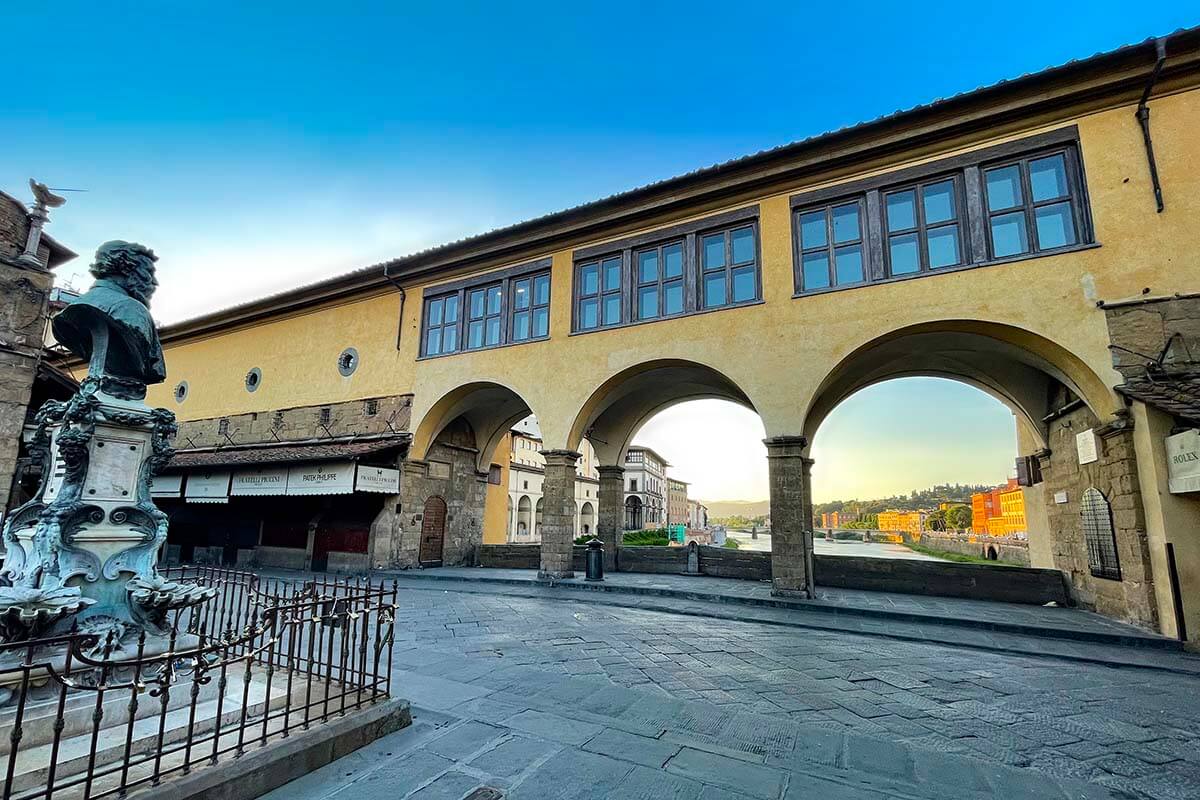
6. Ponte Vecchio
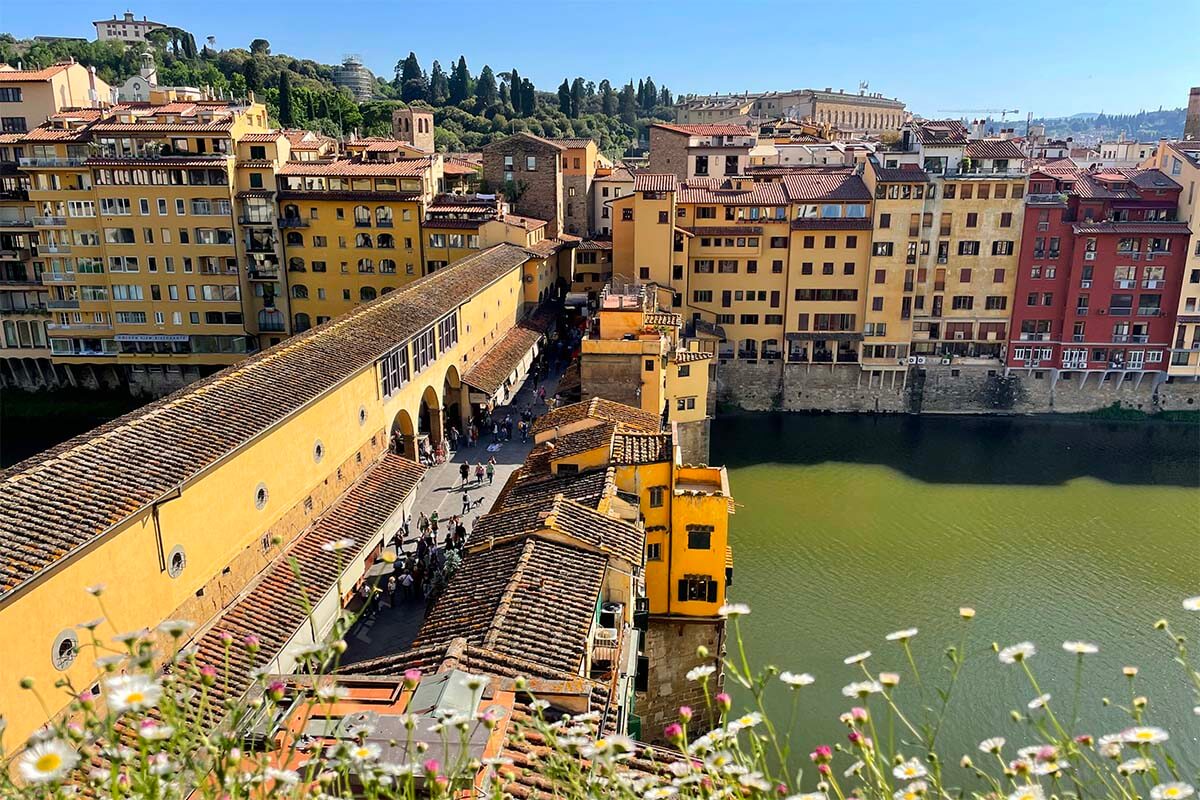
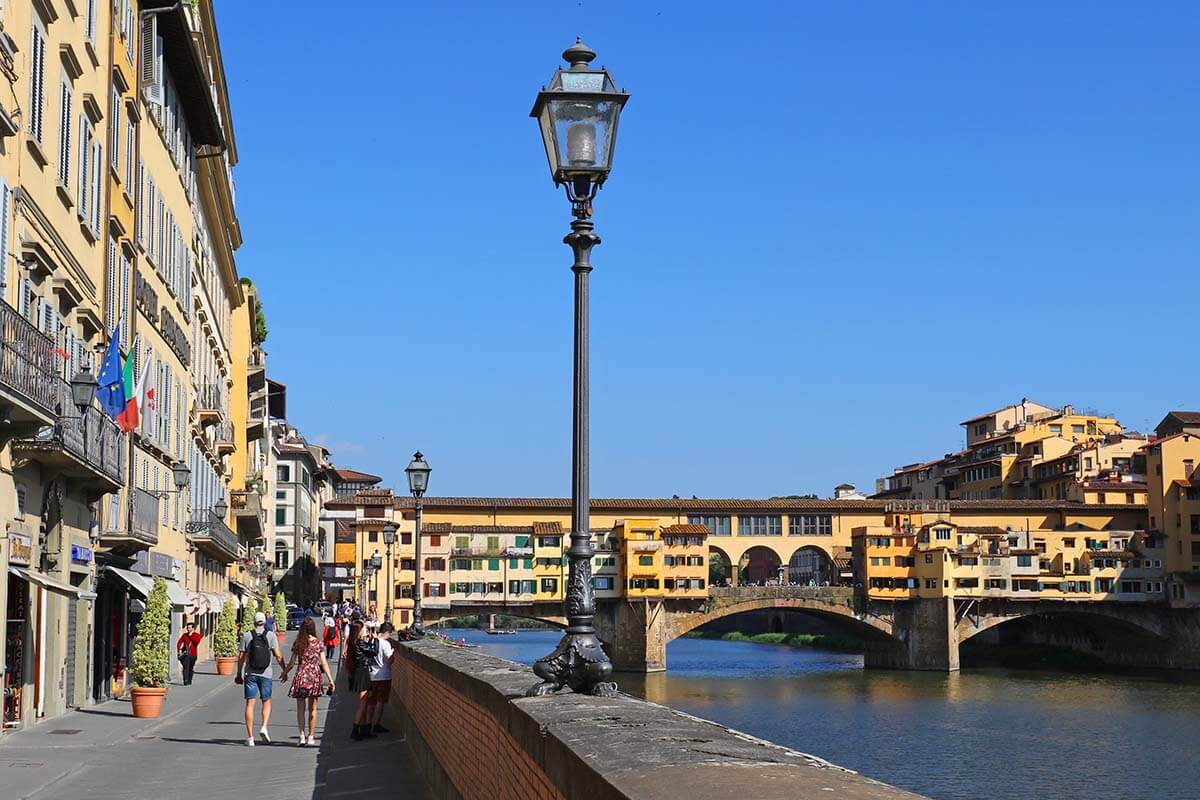
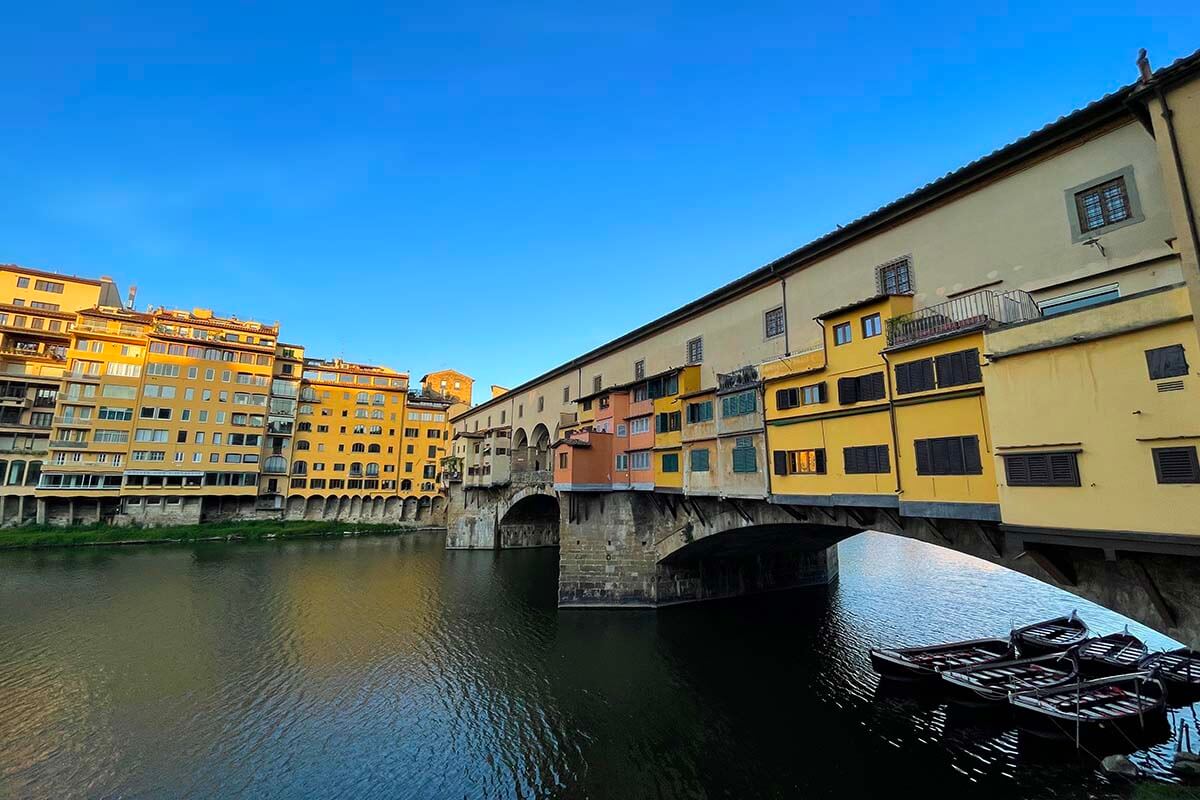
Ponte Vecchio (the Old Bridge) is the most iconic bridge and one of the must-sees in Florence. It’s located right next to the Uffizi Gallery and connects the city center to the other side of the river.
Until 1218, this was the only bridge crossing the River Arno, and later it remained the only bridge that the fleeing Germans did not destroy in World War II! What you see today is a slightly more recent version which was rebuilt in 1345 after a flood.
There have always been shops on the bridge, however, originally, they were occupied by butchers, tanners, and blacksmiths. This changed in the 16th century when the Medici family built the Vasari Corridor over the bridge and found the meat smell disturbing. Since then, the colorful bridge is lined with gold- and jewelry shops.
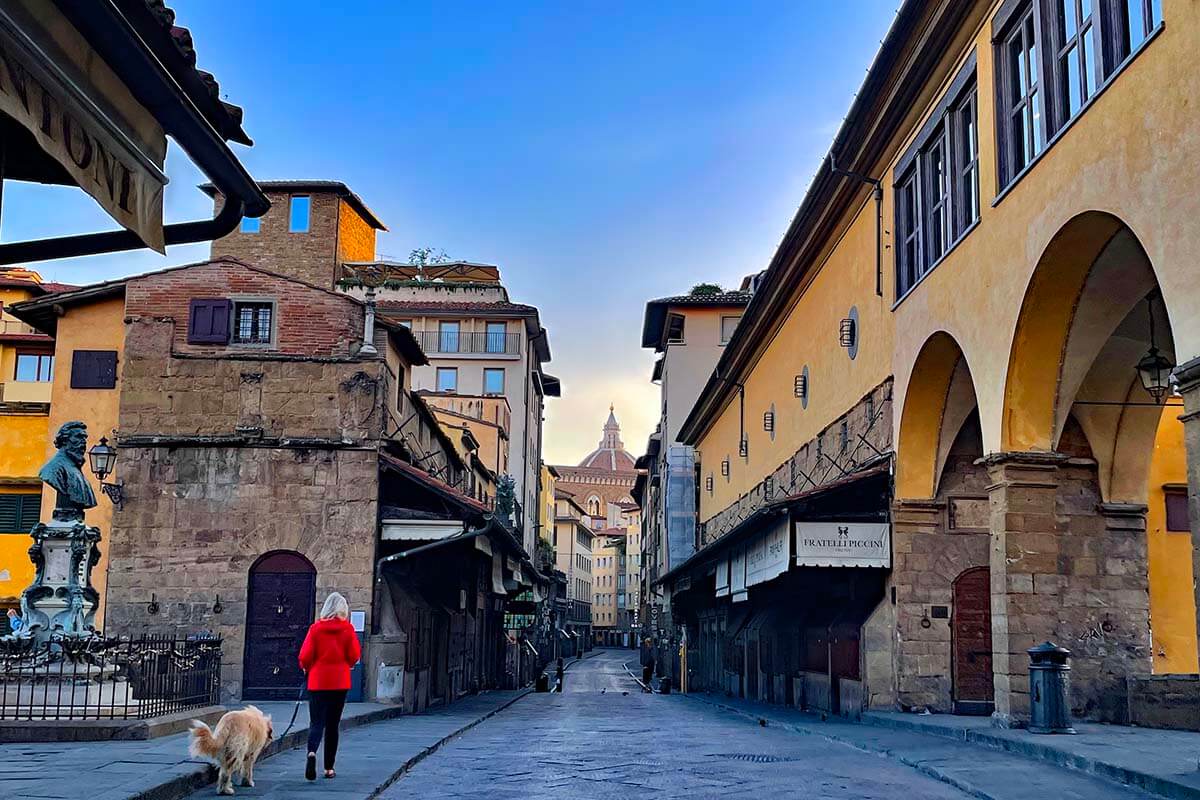
The bridge is a lovely spot for a romantic evening stroll. But my personal favorite time to come here is very early in the morning when there are hardly any people around. This is the only time when you can see the bridge empty.
TIP: In addition to walking over this bridge, it’s just as interesting to see it from the sides. That way, you can better appreciate its unique structure. The Ponte Vecchio is especially impressive from a distance. For the best views and photos, head to Ponte Santa Trinita, but don’t forget to see the bridge from the west side too – it’s from here that you get the best view of the Vasari Corridor.
7. Michelangelo’s David – Galleria dell’Accademia
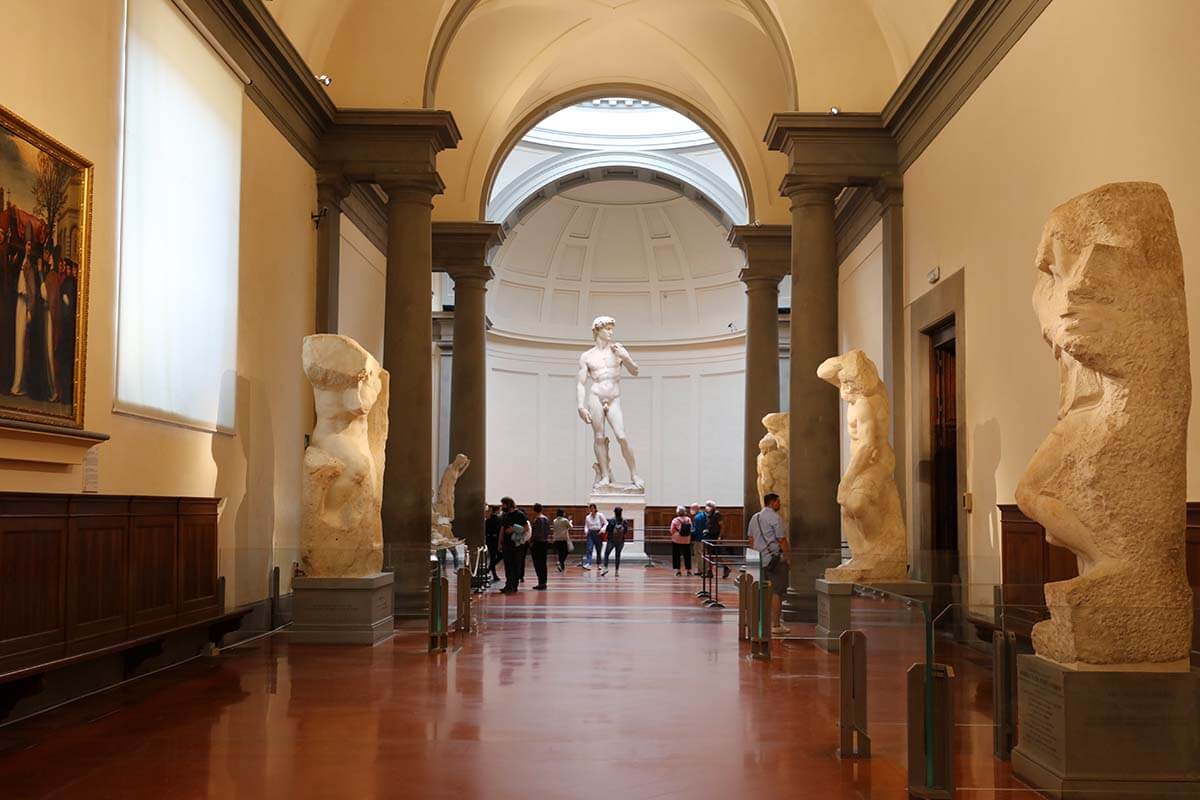
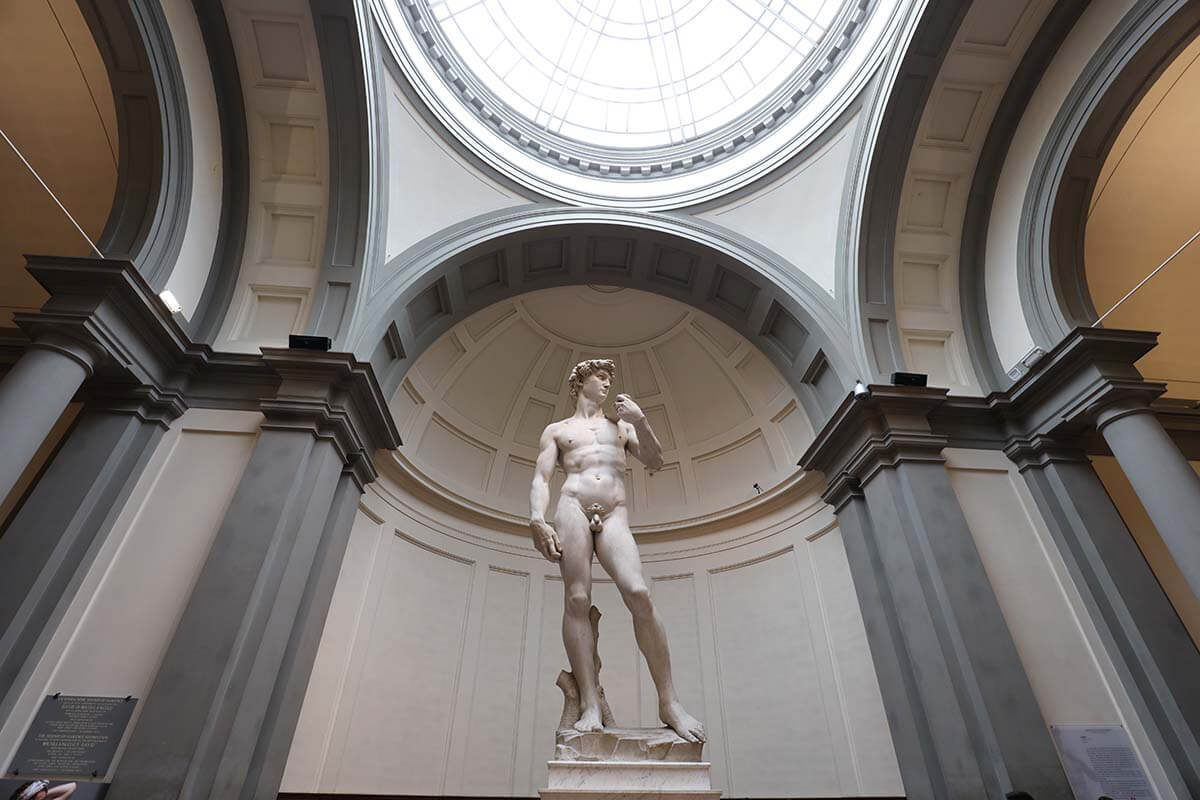
Galleria dell’Accademia (Accademia Gallery) is another must-see in Florence, attracting huge crowds. The Gallery of Fine Arts was founded here in 1563, making it Europe’s very first art academy.
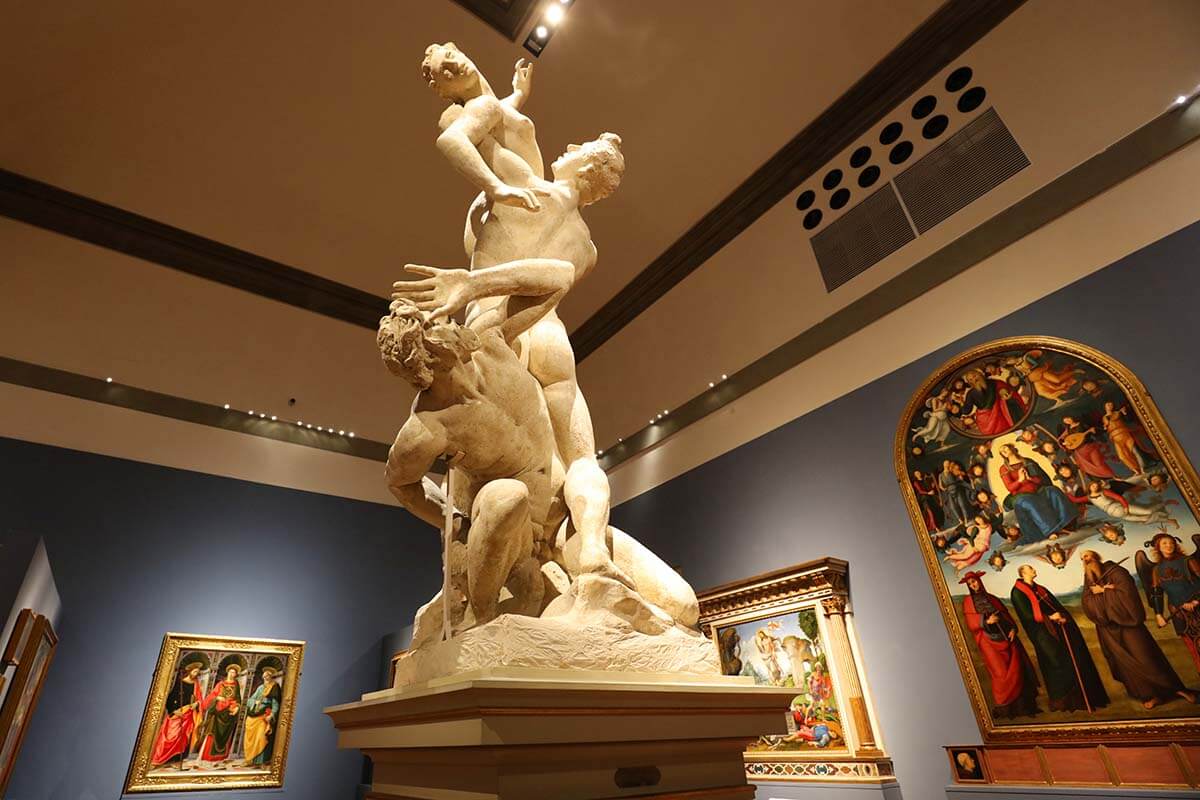
The main attraction in this museum is the most famous statue in the world – Michelangelo’s ‘David’. Also not to be missed are Giambologna’s ‘Rape of the Sabines’, plus Botticelli’s ‘Madonna and Child’ and ‘Madonna of the Sea’.
In addition to its famous statues, you’ll find collections of paintings from local artists, religious prints dating back to the Middle Ages, and even works created by Accademia’s students.
The building also houses a fascinating Museum of Musical Instruments. It contains more than 50 instruments, some of which were owned by the Medici family and made by famous violin maker Antonius Stradivarius.
Good to know: This is Florence’s second most visited museum, and it’s much smaller than the Uffizi Gallery. So the queues here are usually very long. Be sure to get the timed priority entrance tickets online, as they allow you to jump the queue. Please note that the Accademia Gallery is closed on Mondays.
TIP: If you want to visit both the Accademia Gallery and the Uffizi Museum with a guide, consider a combo tour that includes the two museums.
8. Piazza della Signoria
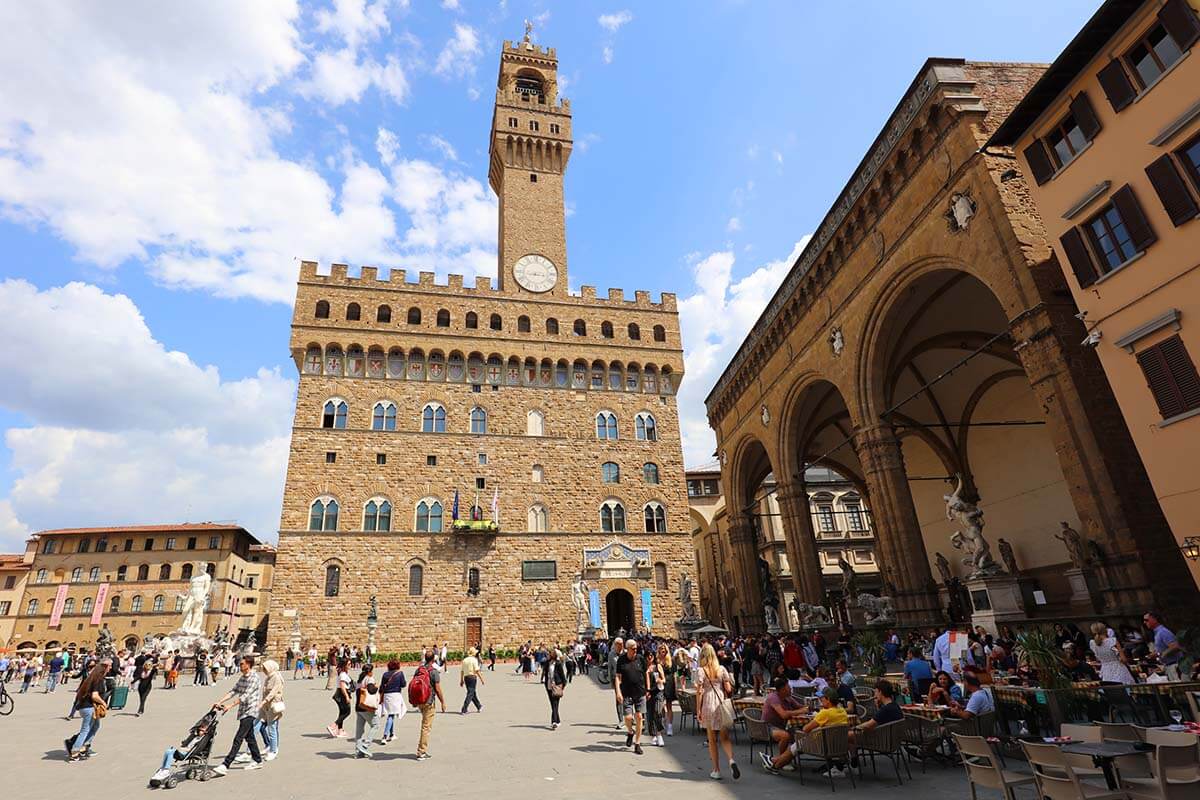
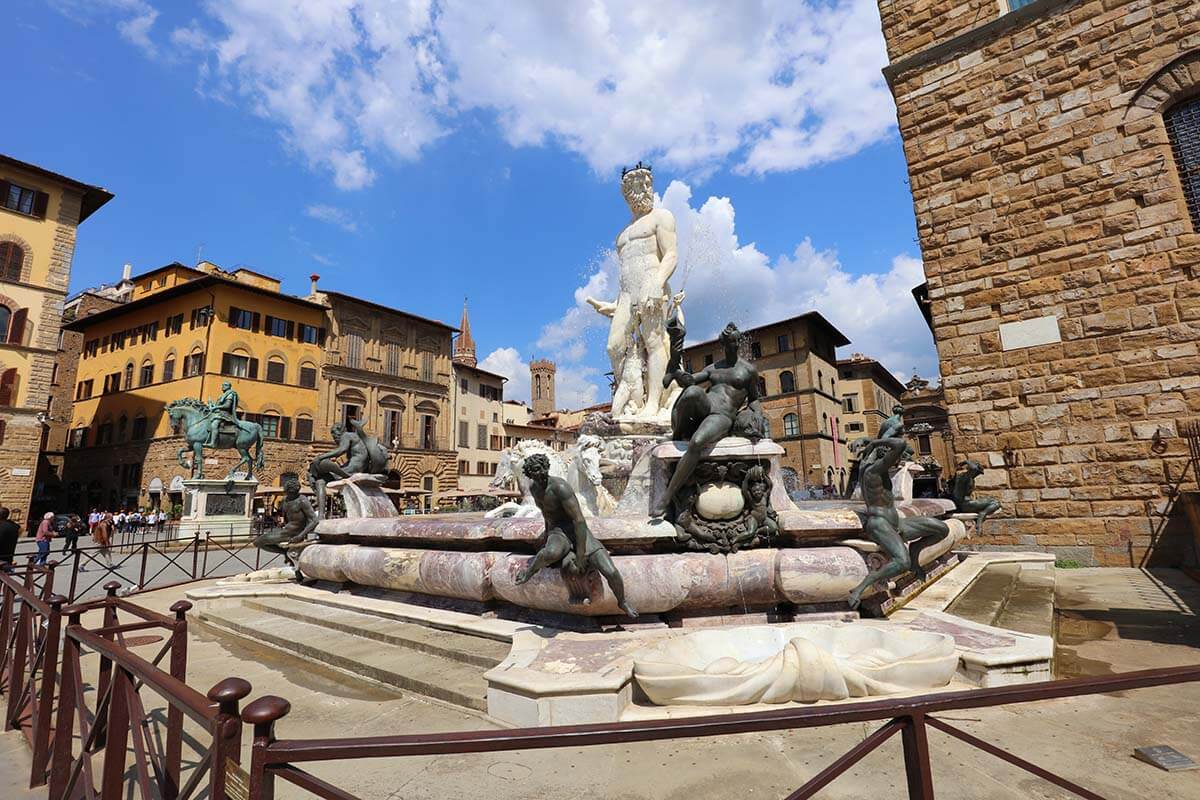
Located in the heart of the old town, the L-shaped Piazza della Signoria is one of Florence’s most beautiful town squares. Filled with incredible sculptures, statues, Neptune Fountain, and home to the impressive Palazzo Vecchio, this square feels somewhat like an open-air museum.
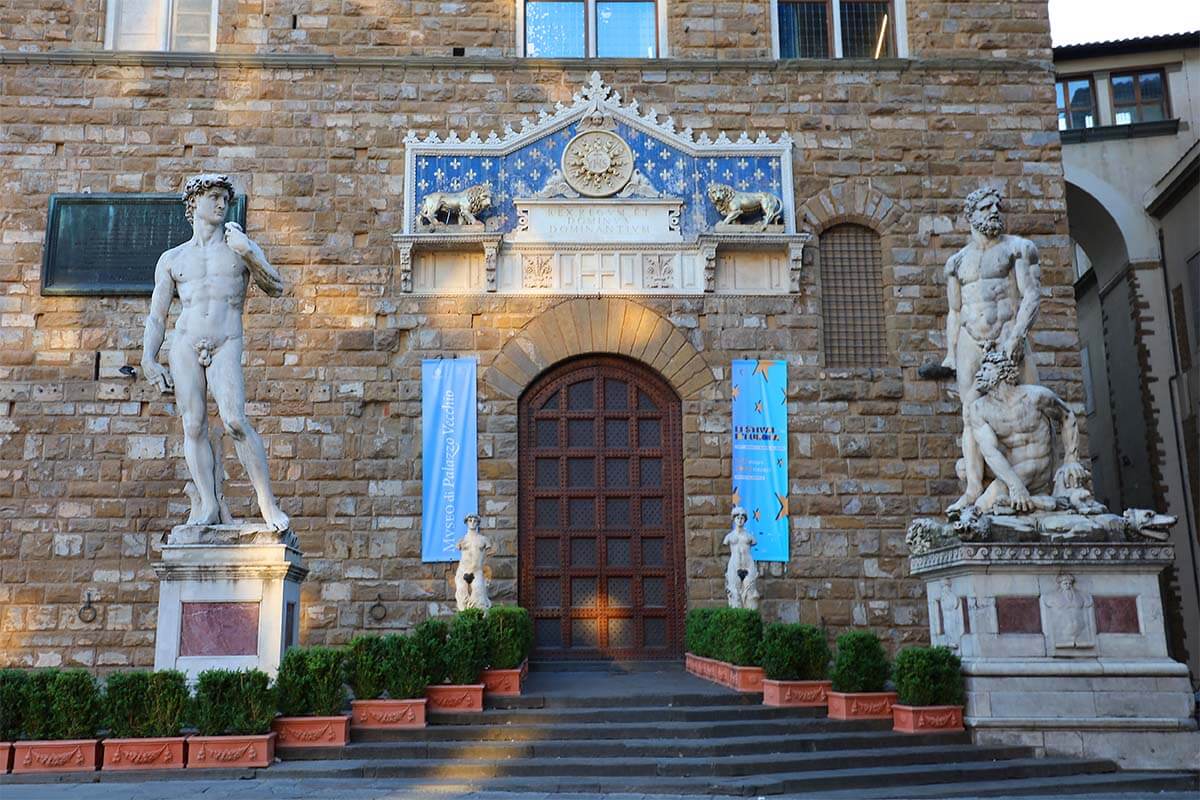
Don’t miss the extraordinary sculptures at Loggia dei Lanzi, right under the terrace of the Uffizi Gallery café. Also note a copy of Michelangelo’s ‘David’ at the entrance of Palazzo Vecchio. If you don’t have the time to see the original at Galleria dell’Accademia, this gives you a bit of an idea of how special it really is. And if you think this one is impressive, the details of the original will take your breath away.
Be sure to pop back and visit the square in the dark as well. The lit fountains, statues, and buildings give it a magical appearance.
Piazza della Signoria is a great place to learn more about the city’s history, or simply hang out and people-watch. There are many cafes nearby and lots of benches on which to take a break and enjoy a gelato.
TIP: Try to avoid the tourist-oriented gelaterias selling ‘mountains’ of colorful ice cream. Instead, ask locals for recommendations or go for the less colorful, artisanal gelato. One of the better gelaterias in this area is ‘Perché no!’, just 2 minutes walk from Piazza della Signoria. Be sure to try the traditional Florentine ice cream flavor ‘buontalenti’. It’s named after Bernardo Buontalenti, a 16th-century artist, who is often credited as an inventor of Italian gelato.
9. Palazzo Vecchio & Views from Torre di Arnolfo
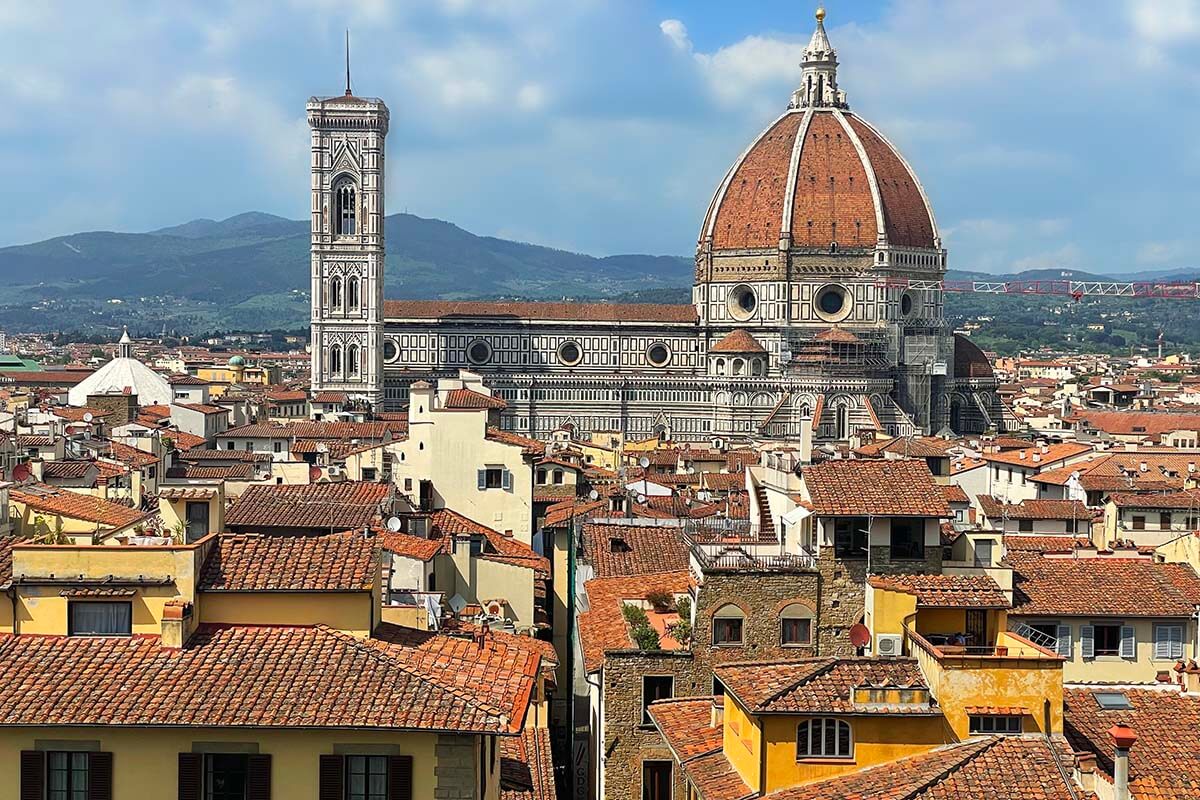
The city’s most important historic government building, the 13th-century Palazzo Vecchio now serves as Florence’s town hall and houses a museum. In addition, you can also climb Arnolfo Tower for some of the best views in Florence. The most famous postcard views of the city are photographed from this tower.
Some people prefer to do this to climbing the Duomo dome, as it gives you a great view of the Duomo itself. Having done them all, I think that each is worth it (I know, I’m not helping here). But Arnolfo Tower climb is not as high as the Duomo Dome or Giotto’s Tower, and it’s also less busy and cheaper.
Soaring to 95 meters high, the palace towers over the city, its foundations resting on the remains of an ancient Roman theatre. This means that a visit here gives you a glimpse of three different eras – Roman, Medieval, and Renaissance.
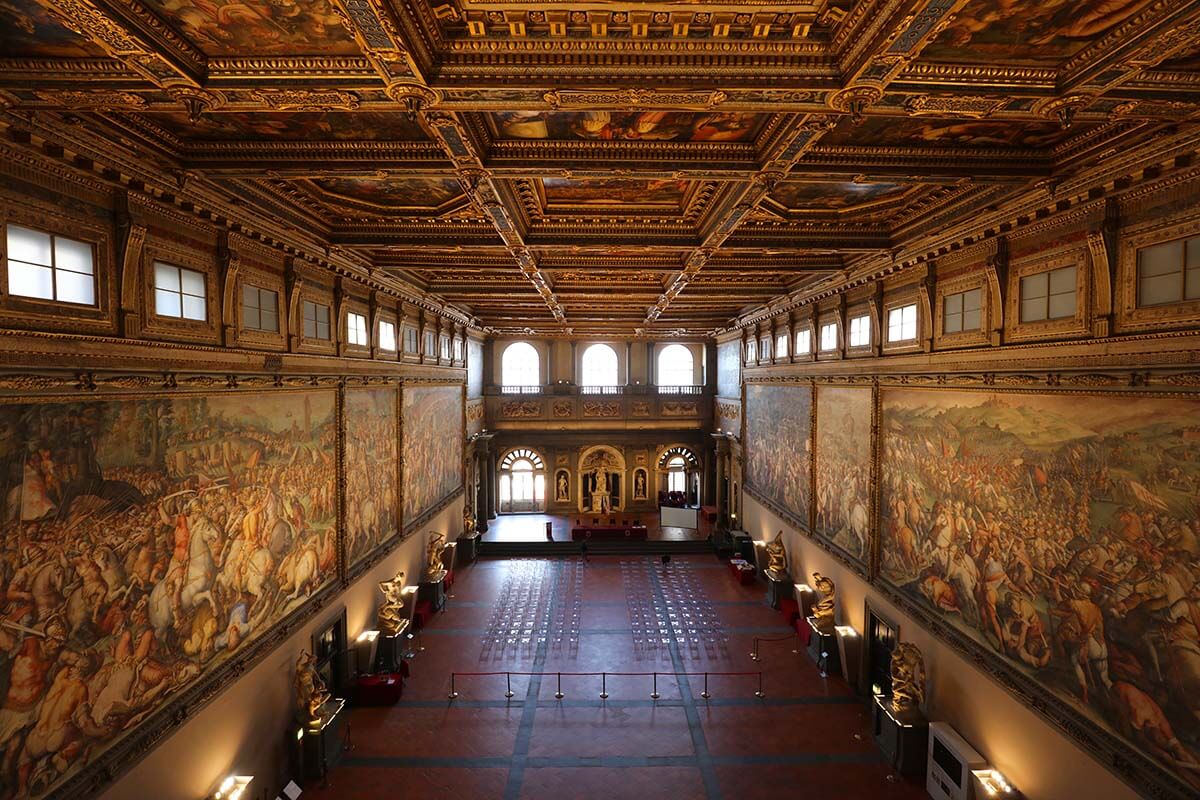
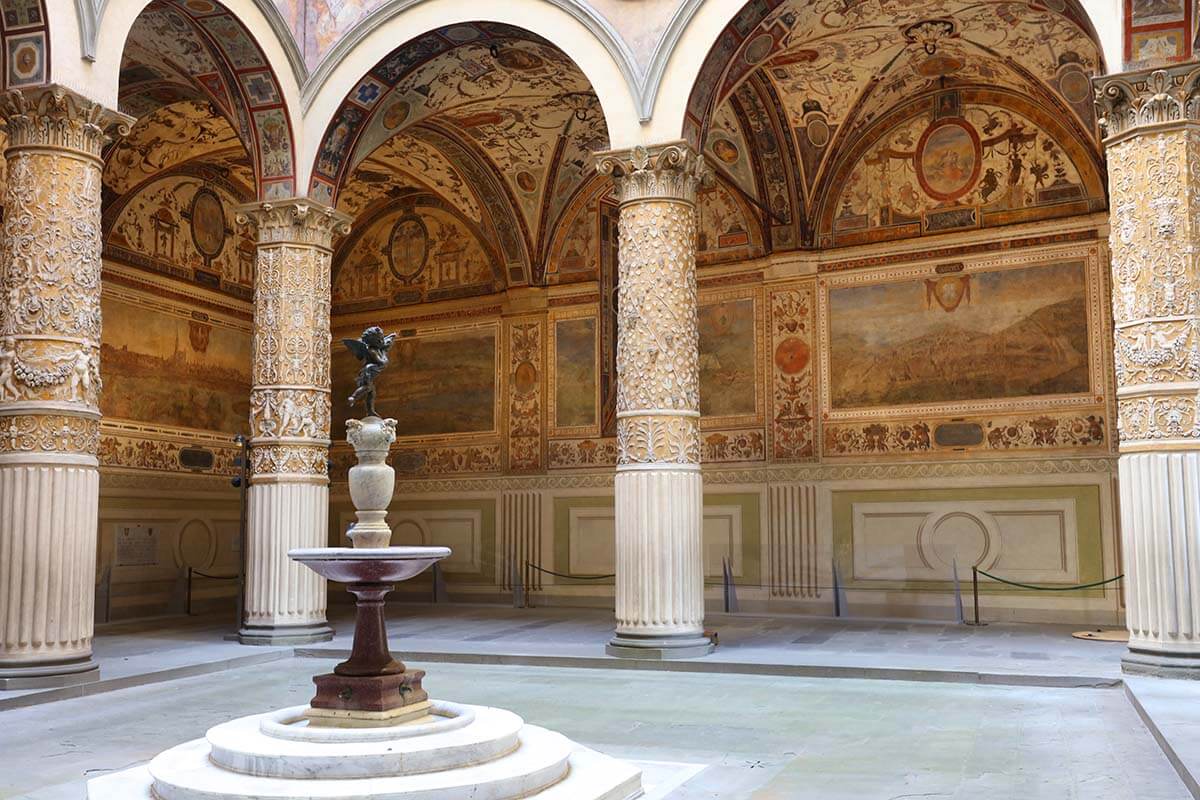
With its cubic shape and battlements, the building of Palazzo Vecchio looks quite impressive and unique from the outside. But its interior is even more stunning. You can see beautifully carved columns and a fountain in the courtyard, then climb the grand staircase to reach the main floor housing the incredible Salone dei Cinquecento.
Good to know: Just as for all the main sights in Florence, it’s best to book your Palazzo Vecchio tickets in advance. This allows you to skip the line and avoid the disappointment of not being able to visit (tower tickets are timed too).
The standard museum ticket doesn’t include the entrance to the tower, so be sure to select that option if you want to do it. Here you can get a ticket that includes both entry to the palace and the Arnolfo Tower.
PRO TIP: If you have an extra hour, consider the guided ‘secret passages’ tour. It takes you to parts of the building that are normally closed to the public and adds useful historical context you wouldn’t get on a standard visit.
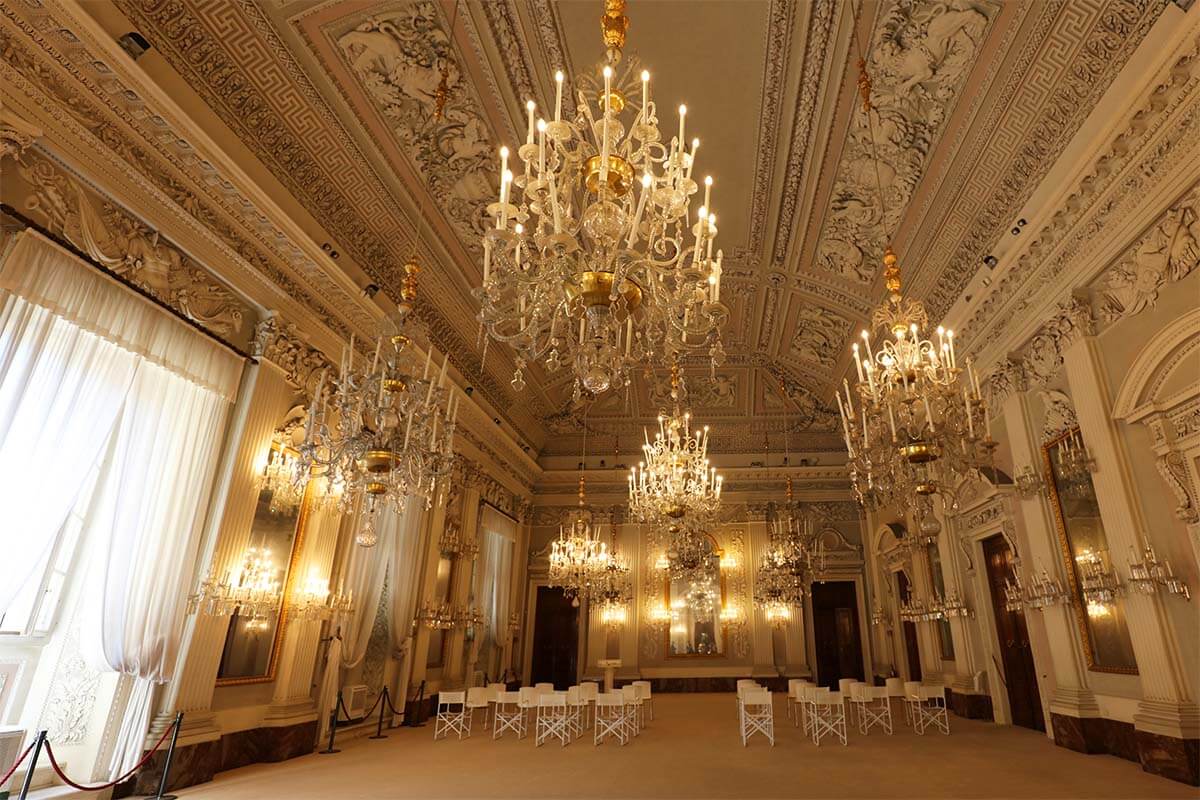
10. Palazzo Pitti
Palazzo Pitti is another incredibly beautiful place to see in Florence. Located on the other side of the river in the Oltrarno district, this magnificent palace has had many famous residents over the years, including the Savoy, Lorraine, and Medici families, along with the Grand Dukes of Tuscany.
Once the largest residence in Florence, it is still one of its most impressive! The Galleria Palatina – filled with Italian works of art – is its most famous room, but you can also see contemporary pieces in the Galleria d’Arte Moderna and silverware in the Museo degli Argenti.
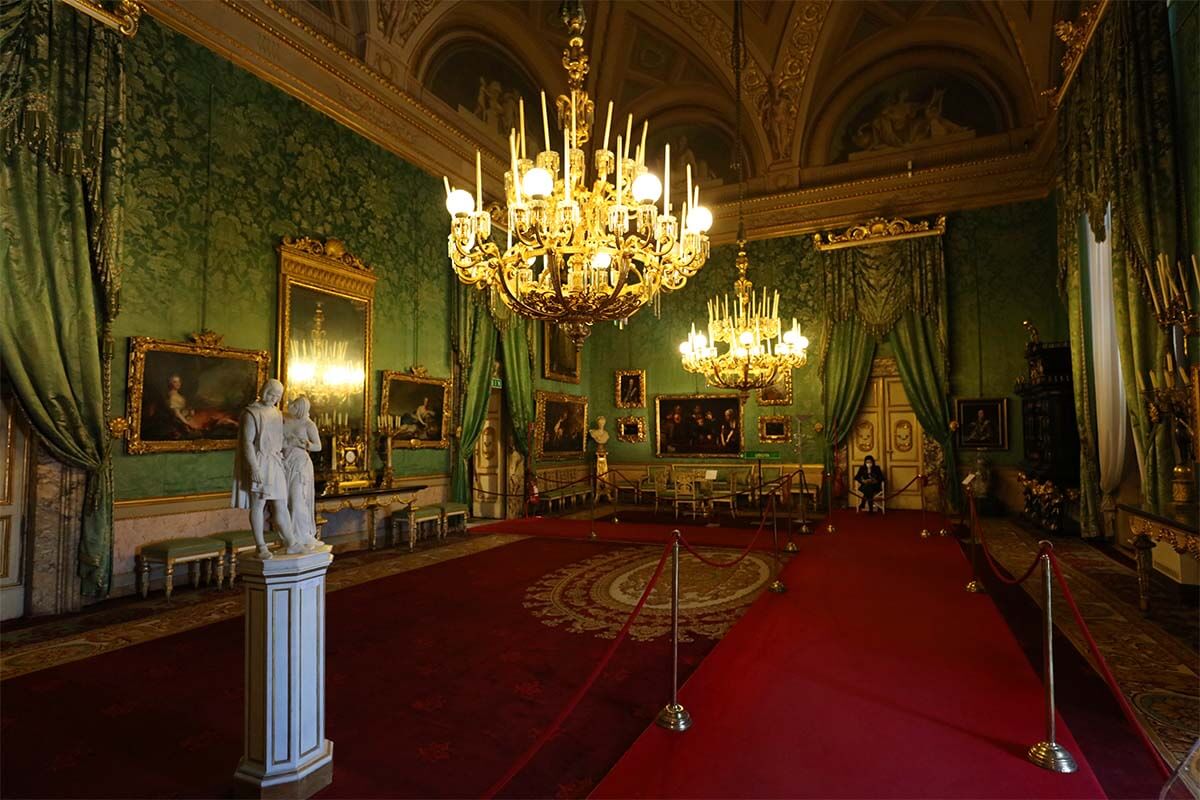
The Royal Apartments are also open to visitors, along with the Galleria del Costume. Here you can see how tastes in clothing worn at the palace changed over time. Once you have seen all the rooms and exhibits inside the palace, take time to stroll through the famous Boboli Gardens (more info below).
This palace has a reputation for closing some of the smaller museums quite regularly. If there is one you particularly want to see, then I recommend checking it is open before buying your ticket. On the other hand, there is so much to explore here that you won’t be able to see everything anyway. Some parts of the palace and the gardens were indeed closed during our visit, but we didn’t feel like we missed much. We ran out of time just trying to quickly see some of the musts.
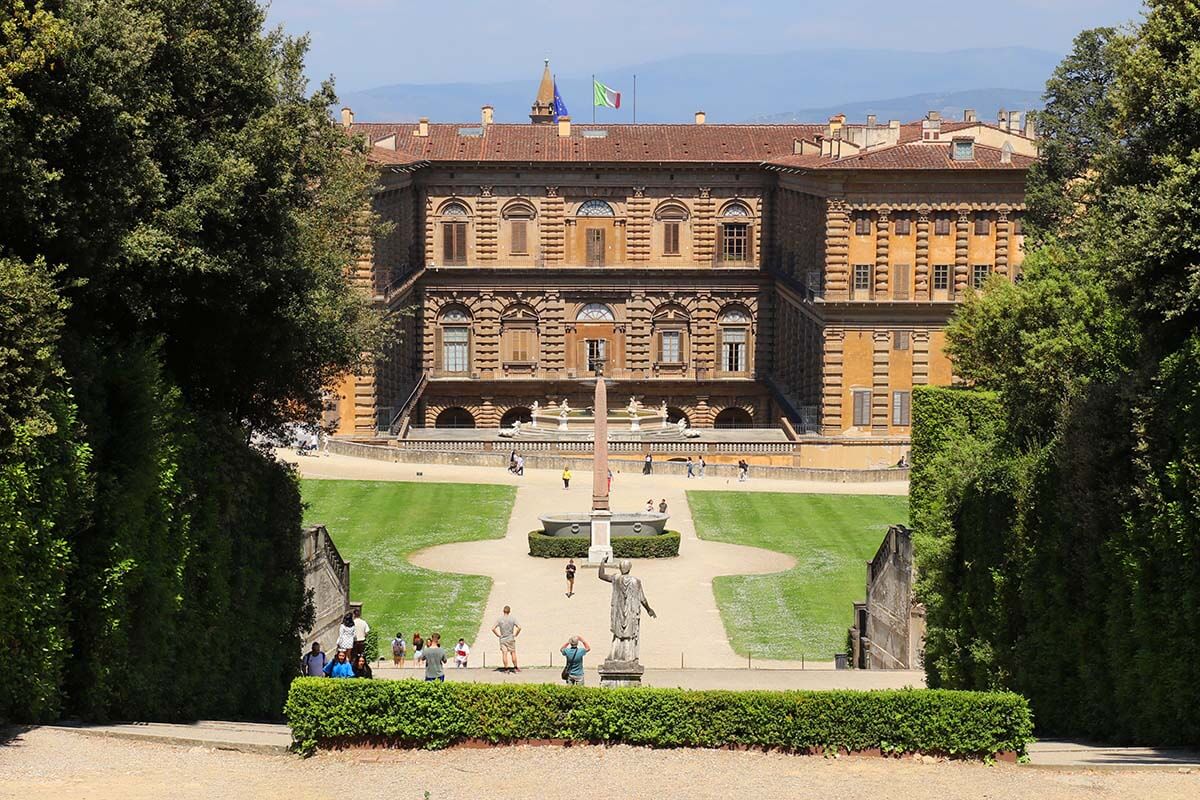
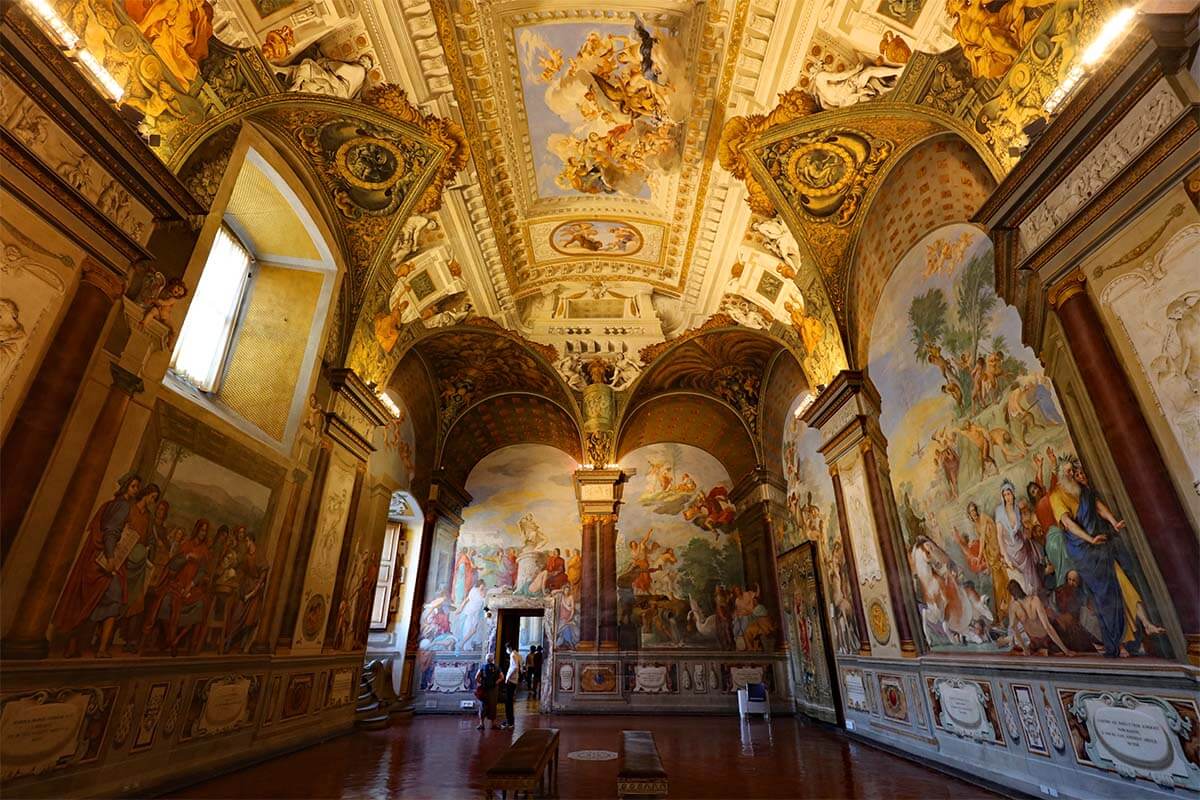
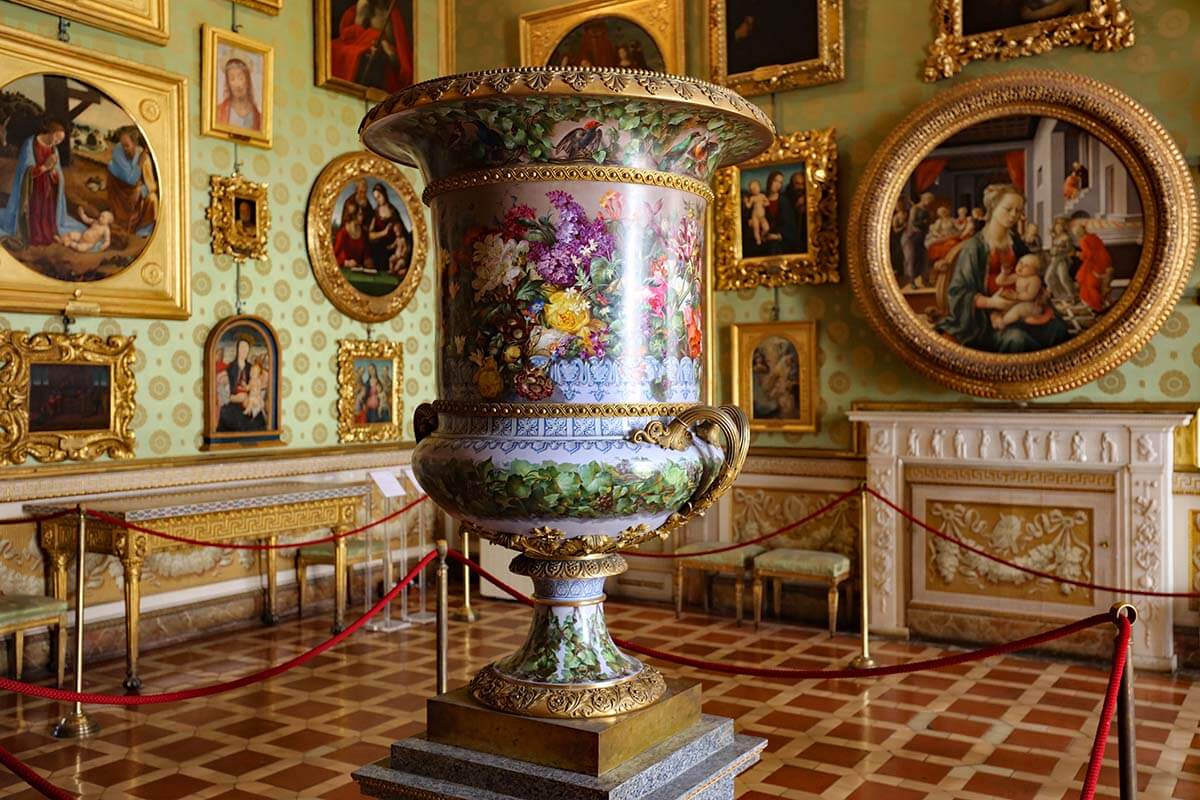
Good to know: The cost of admission to Palazzo Pitti includes all the museums housed within. You need to buy a separate ticket to visit the Boboli Gardens. You can get your tickets for the palace and Boboli Gardens in advance, but normally, you should also be able to get them on the spot. Online tickets will save you time since you won’t have to queue. Keep in mind that Pitti Palace is open daily except on Mondays, whereas the gardens are open daily.
These combination tickets include Piti Palace, Boboli Gardens, and Bardini Gardens. While not nearly as impressive as Boboli Gardens, Bardini Gardens are very pretty too, and they offer really nice views of Florence.
TIP: You can also opt for the Palazzo Pitti tickets that also include Uffizi Gallery (+ the gardens and two other museums as well). These are valid for 5 days, so you don’t have to visit all the places on the same day either. However, as already mentioned before, I’d really consider visiting the Uffizi Gallery with a guided tour, so in that case, your ticket to this museum will already be included.
11. Boboli Gardens
Boboli Gardens are located right behind the Palazzo Pitti. Dotted with beautiful fountains, sculptures, and ancient oak trees, these spectacular gardens have become one of my personal favorite places in Florence. Somehow we completely overlooked them on previous trips, but now that we visited here recently, I can’t recommend them highly enough!
These gardens were designed by the Medici family and their layout was used as a model for many other European courts, Versailles in particular.
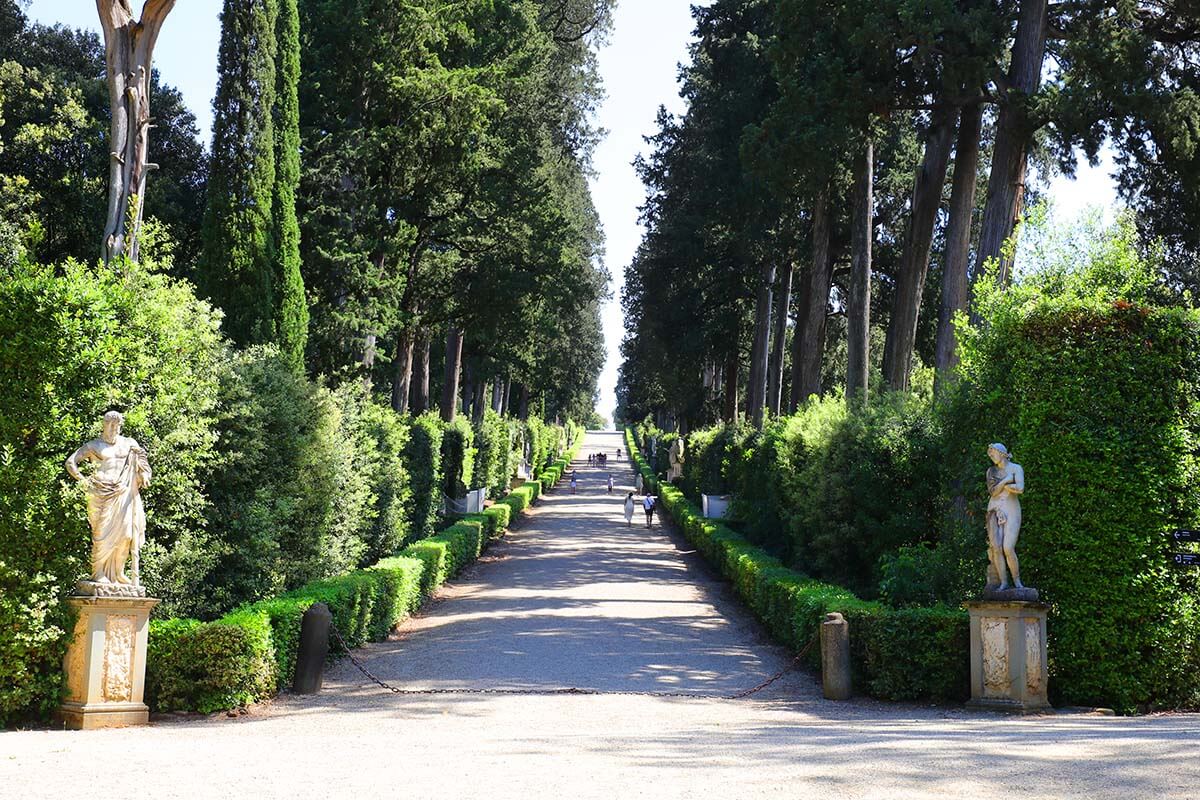
One of the prettiest parts is the lovely Viottolone (Cypress Lane), a sloping avenue fringed with trees and the perfect spot for a romantic stroll. It takes you all the way to Vasca dell’Isola (Island Pond), a pretty pond with a fountain and sculptures at its center.
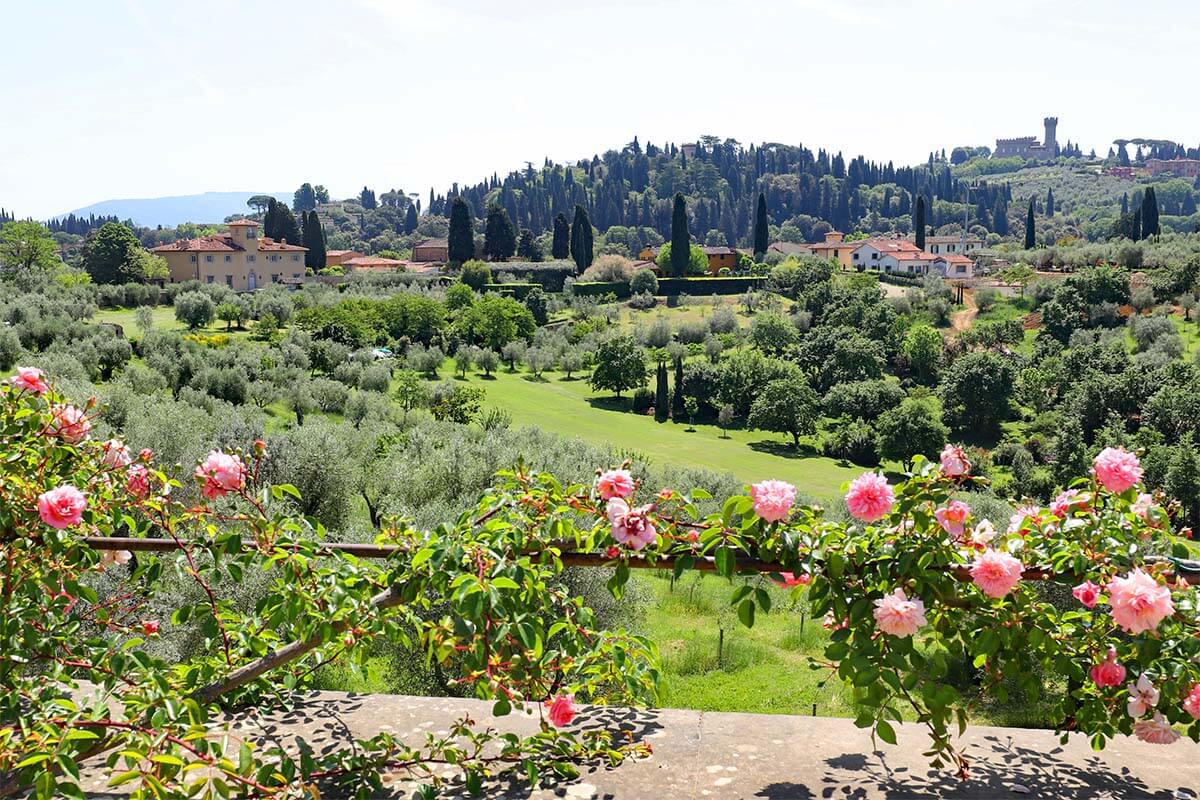
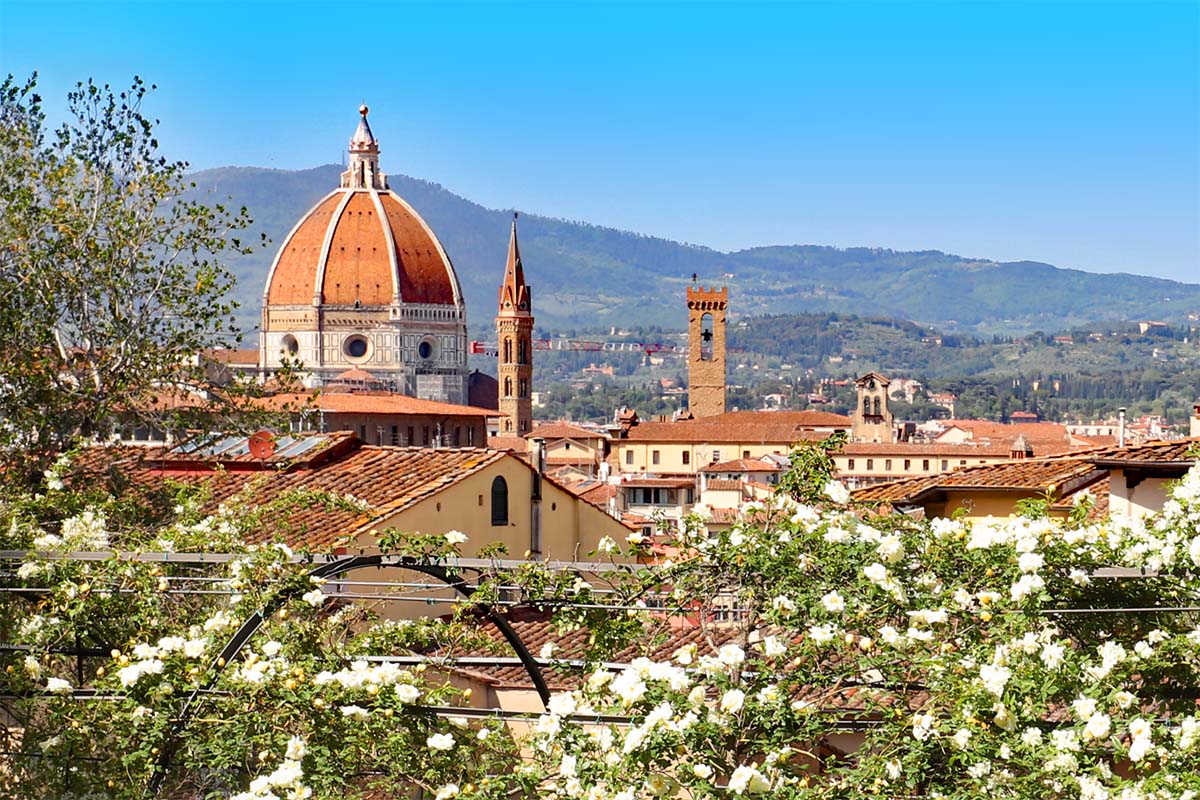
Don’t miss the beautiful rose garden Giardino dei Cavalieri (the Knights Garden). It’s a bit uphill at the very end of the garden and you may wonder if it’s worth the effort, but it sure is. The view of the Tuscan countryside from here is so beautiful.
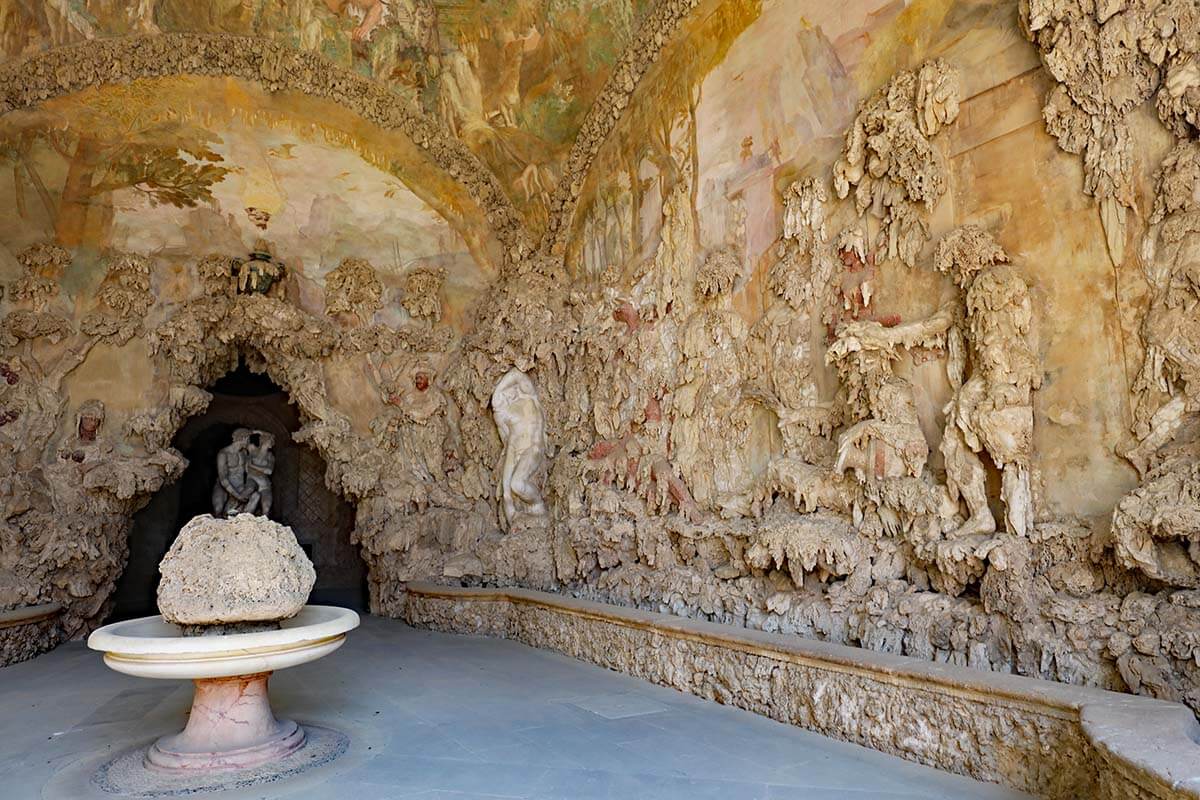
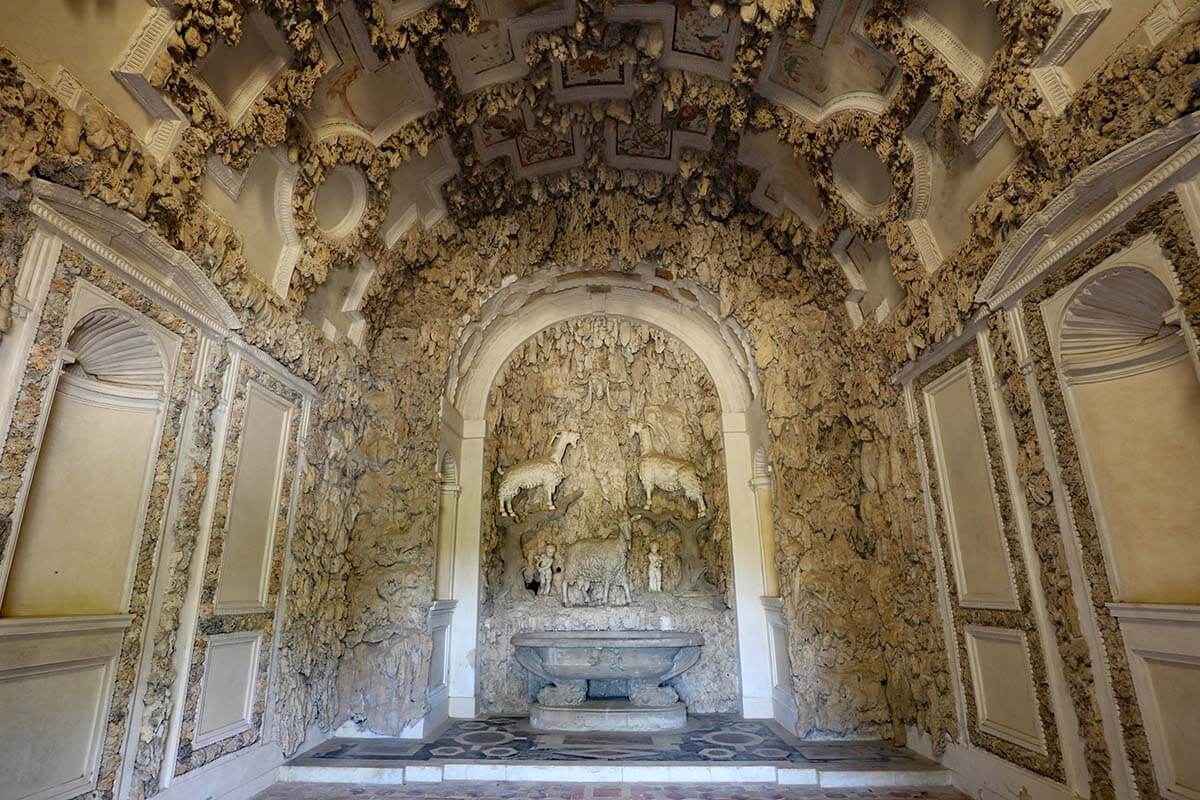
Other must-sees inside the gardens include Grotta del Buontalenti, an impressive grotto right at the end of the Vasari Corridor. Just nearby, there’s also a smaller Grotta di Madama, that’s really special too.
Good to know: Boboli Gardens are usually open daily and the main entrance is through the courtyard of the Pitti Palace. You can get a ticket in advance, but you should also be able to get it on the spot.
TIP: There is A LOT to see at both Palazzo Pitti and the Boboli Gardens. If you are short on time, I recommend taking a tour that includes both, so you don’t miss the highlights. Tours run all year round and take around 3 hours. This is one of the best tours that covers all the main sights here.
12. Basilica di Santa Croce
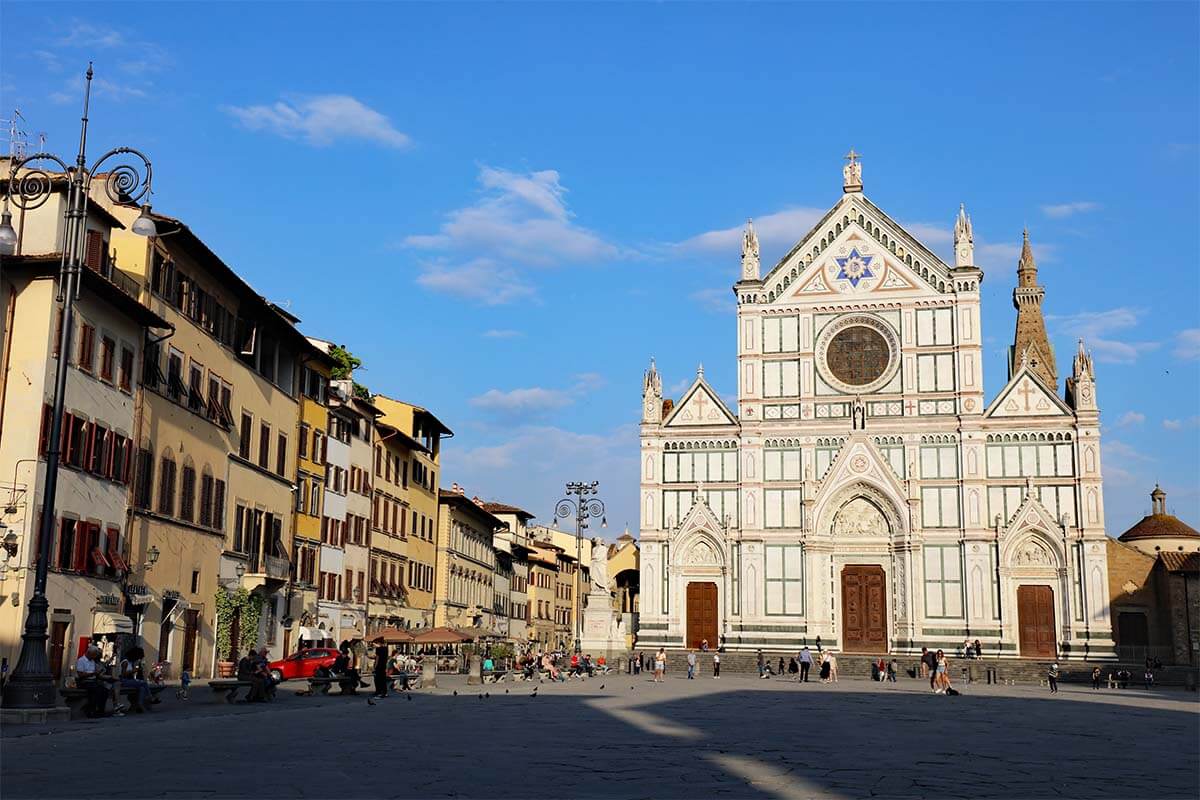
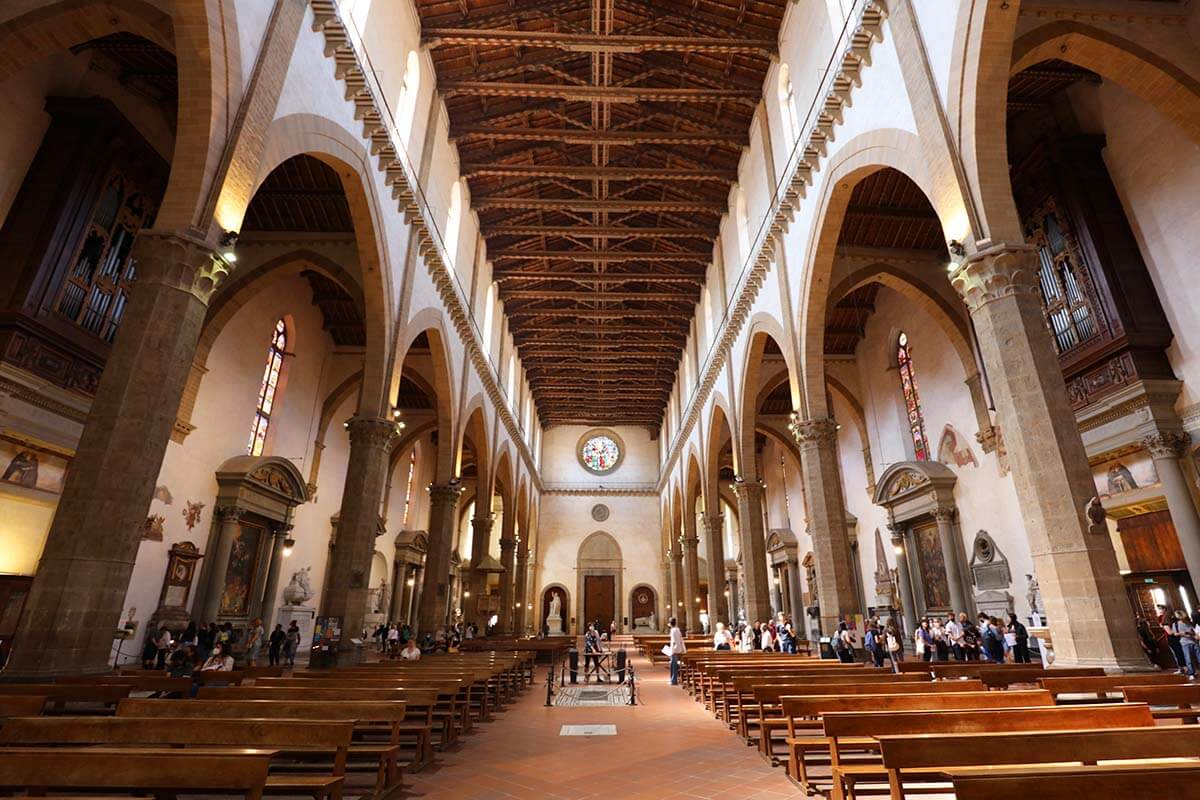
Florence has many wonderful churches, but this one may just be the best! If you visit just one church in Florence inside, make it the Basilica of Santa Croce, located on the Piazza di Santa Croce in the city center. It’s worth it even more than seeing the inside of the Duomo.
This impressive Basilica has a stunning neo-Gothic facade with colored marble and white stone. Just as most other Basilicas in Florence, it also has an impressive courtyard. However, in the case of Basilica di Santa Croce, it’s the inside of the church that is worth visiting the most.
Inside, light pours onto the wide nave through the gorgeous stained glass windows and highlights the imposing marble pulpit created by the Renaissance sculptor Benedetto da Maiano. The church is also filled with Donatello sculptures, beautiful frescoes, and the tombs of some very famous people.
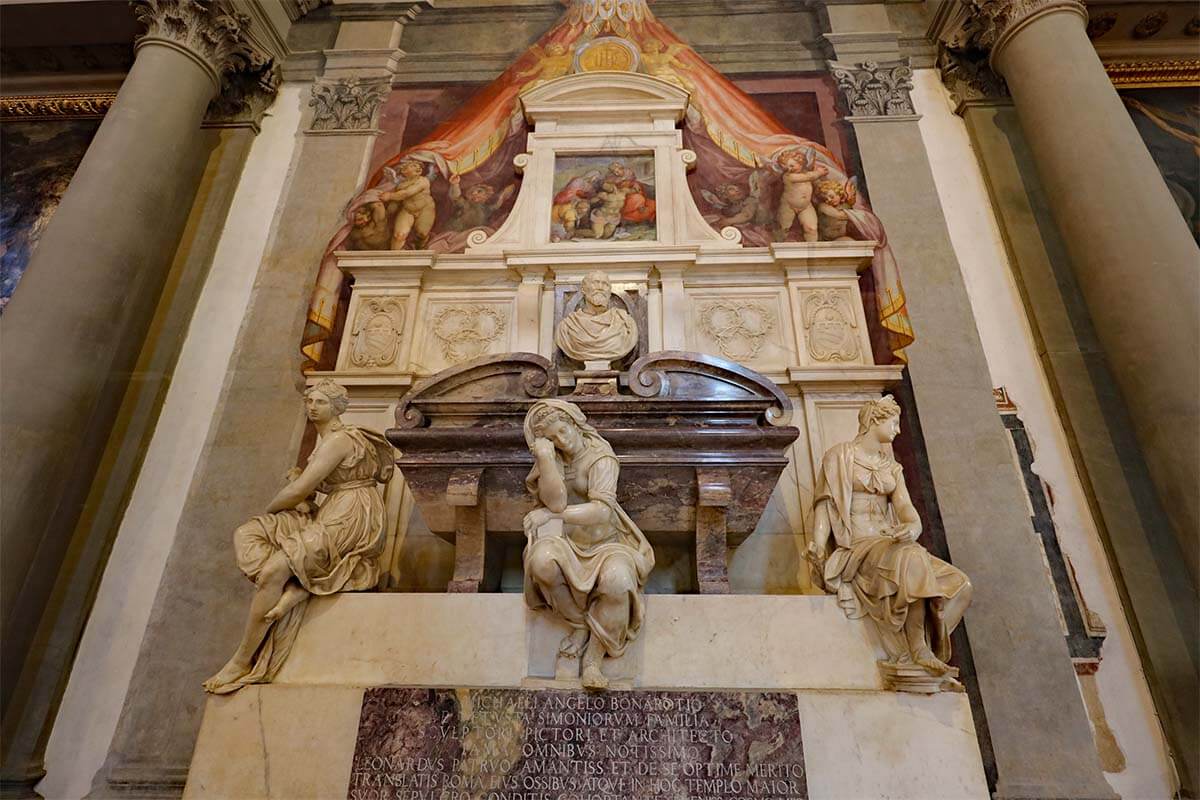
Don’t miss the tombs of Michelangelo, Galileo Galilei, Rossini, and Machiavelli, to mention just a few. You’ll also see the tomb of Dante, although he’s actually buried in Ravenna and not in Florence where he was born.
Good to know: The entry fee includes admission to the entire church complex, including the museum, cloisters, etc. You can get tickets online in advance, but they are a bit more expensive because they charge an extra reservation fee. We found that it was easy enough to visit without a reservation (and it’s more flexible too), but this might depend on when you visit, of course.
13. Basilica di San Lorenzo & Medici Chapels
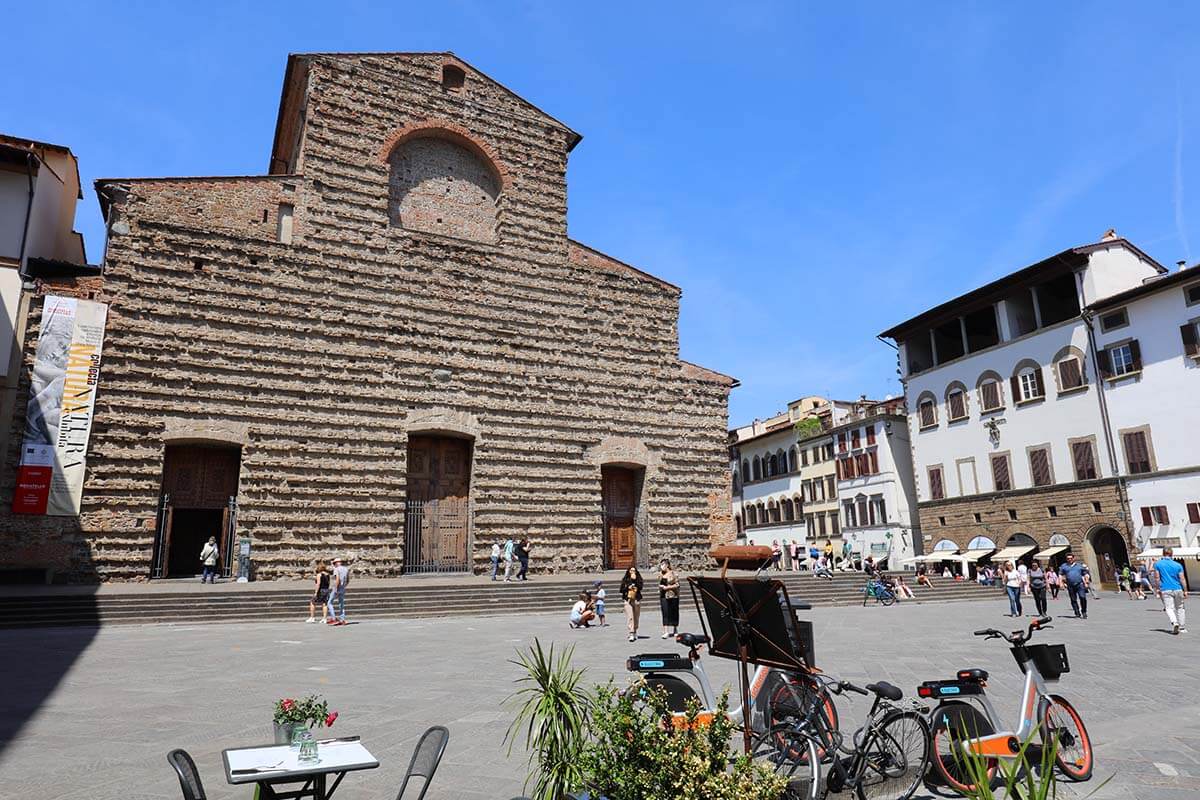
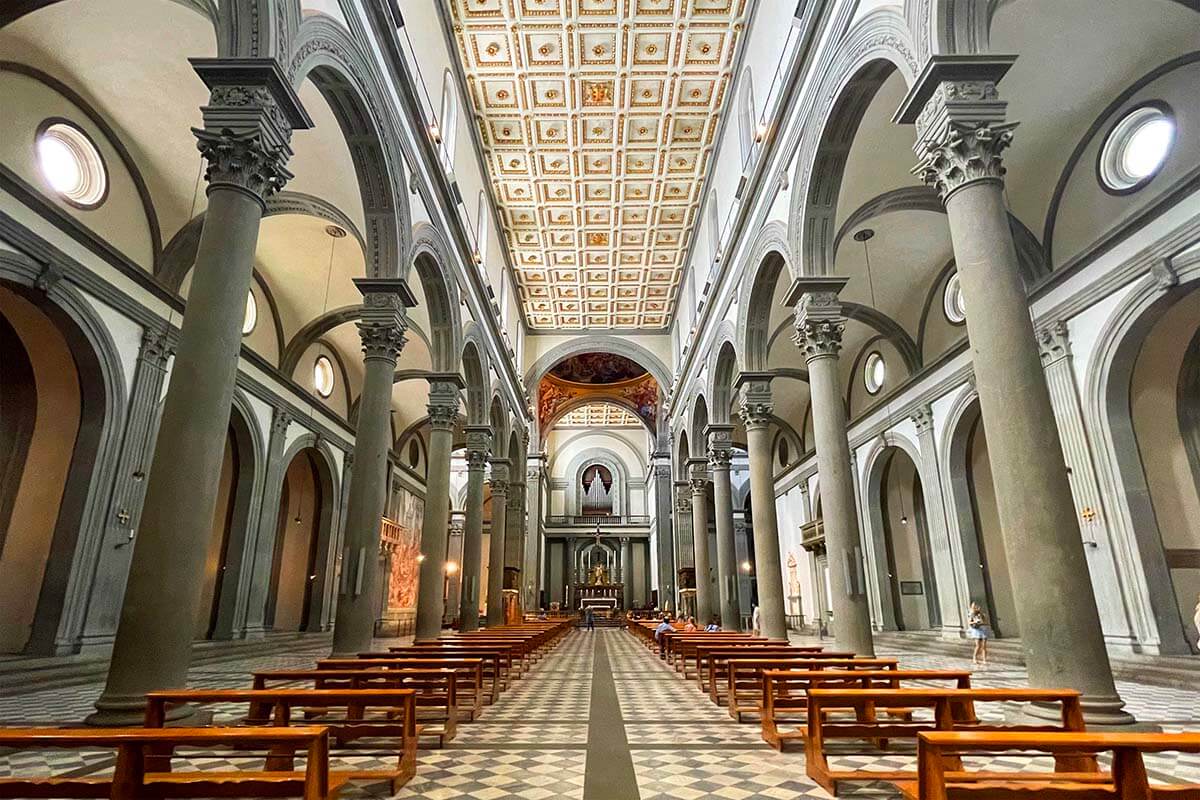
No list of the best things to do in Florence would be complete without mentioning Basilica di San Lorenzo. Consecrated in 393 by Saint Ambrose of Milan, Basilica di San Lorenzo claims to be Florence’s oldest church. For a period of around 300 years, it was actually the city’s cathedral. But one of its main claims to fame is that it was also the parish church of the Medici family, so it remained an incredibly important building.
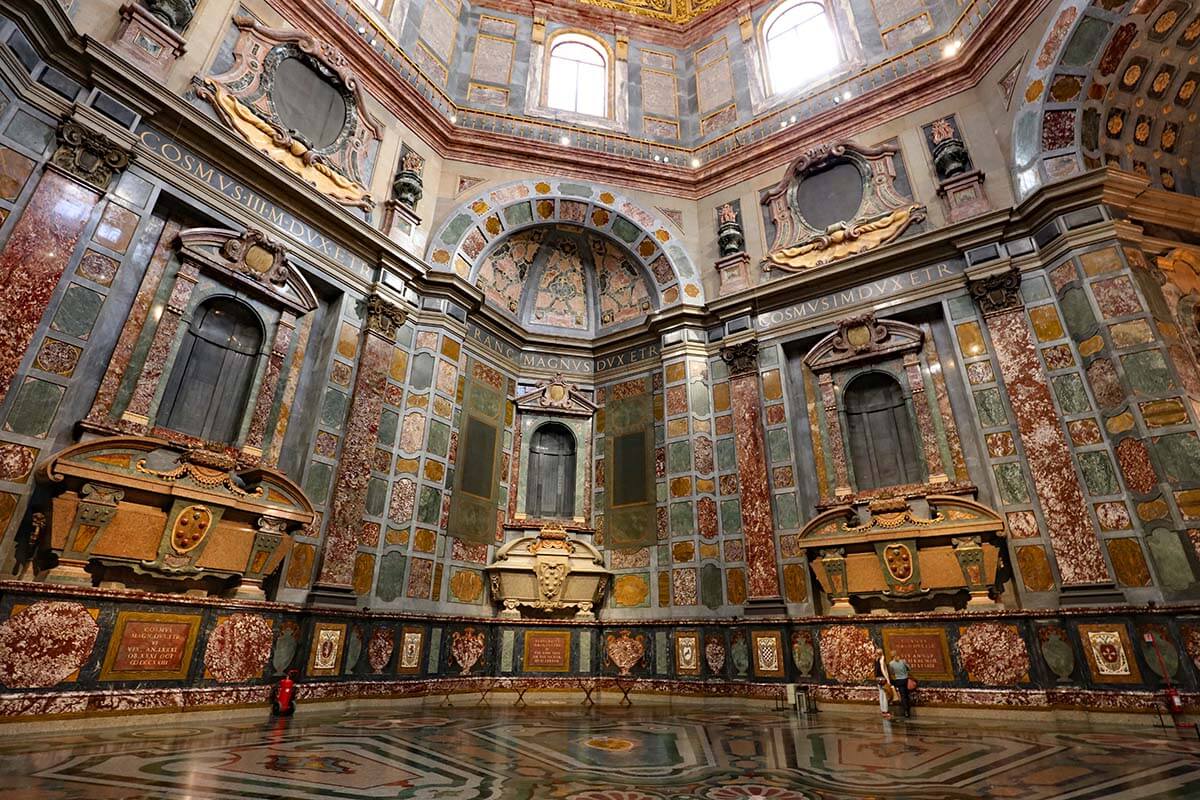
Located in the center of Florence’s main market district, the basilica complex has 5 different sections to explore. These include the pretty cloister, the library, the church itself, The Old Sacristy, and the Medici Chapels – the burial place of the Medici family.
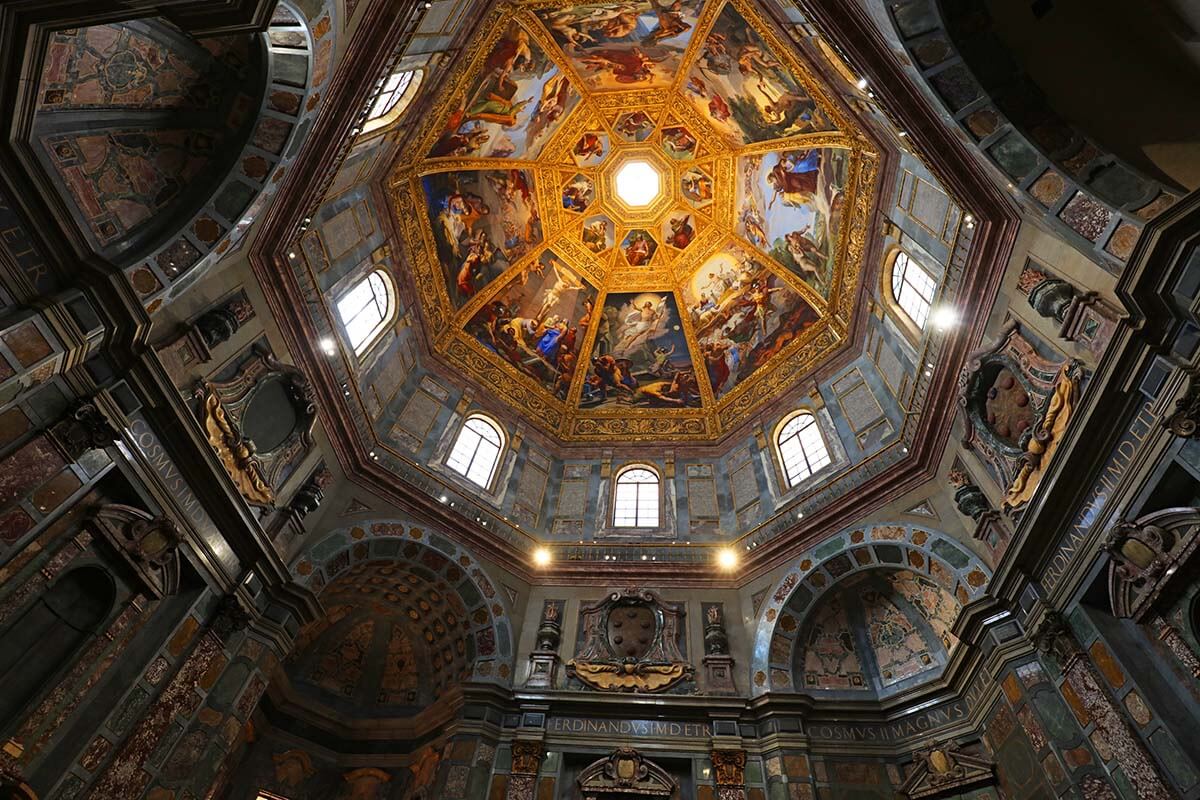
While the church and the cloisters are interesting to see, I find that the Medici Chapels (Capelle Medici) are worth a visit most of all. I’d even dare say that this is one of the most remarkable places to see in Florence. In addition to the Medici tombs, you can also see some sculptures by Michelangelo, such as the statues of Dawn and Dusk at the Tomb of Lorenzo Duke of Urbino.
Good to know: You need separate tickets for the basilica (which give you access to the main church, crypt, and cloisters), the library, and the Medici Chapels.
The church is easy to visit and you can just get the tickets on the spot without any advance planning. I’m not sure about the library – it wasn’t open when we visited, and frankly, it didn’t look like it was an absolute must-see in Florence. But the Medici Chapels are well worth it and this is one of the places where you might want to consider booking tickets in advance.
The Medici Chapels have somewhat unusual opening times, so it requires some planning. Also, because the chapel isn’t big, they only allow a certain number of people. You may get lucky that the queue is not too long and you can just get a ticket upon arrival. However, if you want to be sure to visit inside, it’s best to get a timed entrance ticket for the Medici Chapel in advance.
14. Basilica di Santa Maria Novella
There are so many churches in Florence that you could spend days and days trying to see all of them (and who has the time or interest, right?).
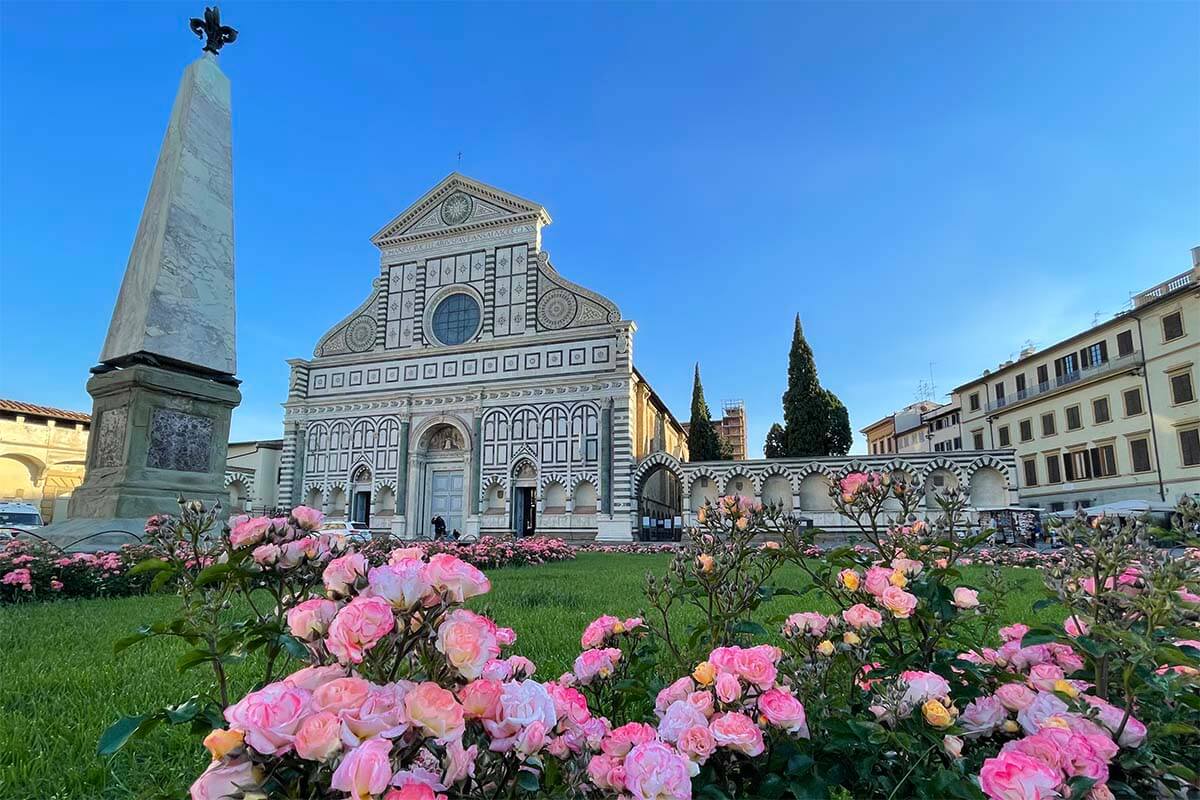
But as far as the very best ones go – and well worth a visit – there’s one more church that deserves a mention among the top places in Florence. That’s the Basilica of Santa Maria Novella.
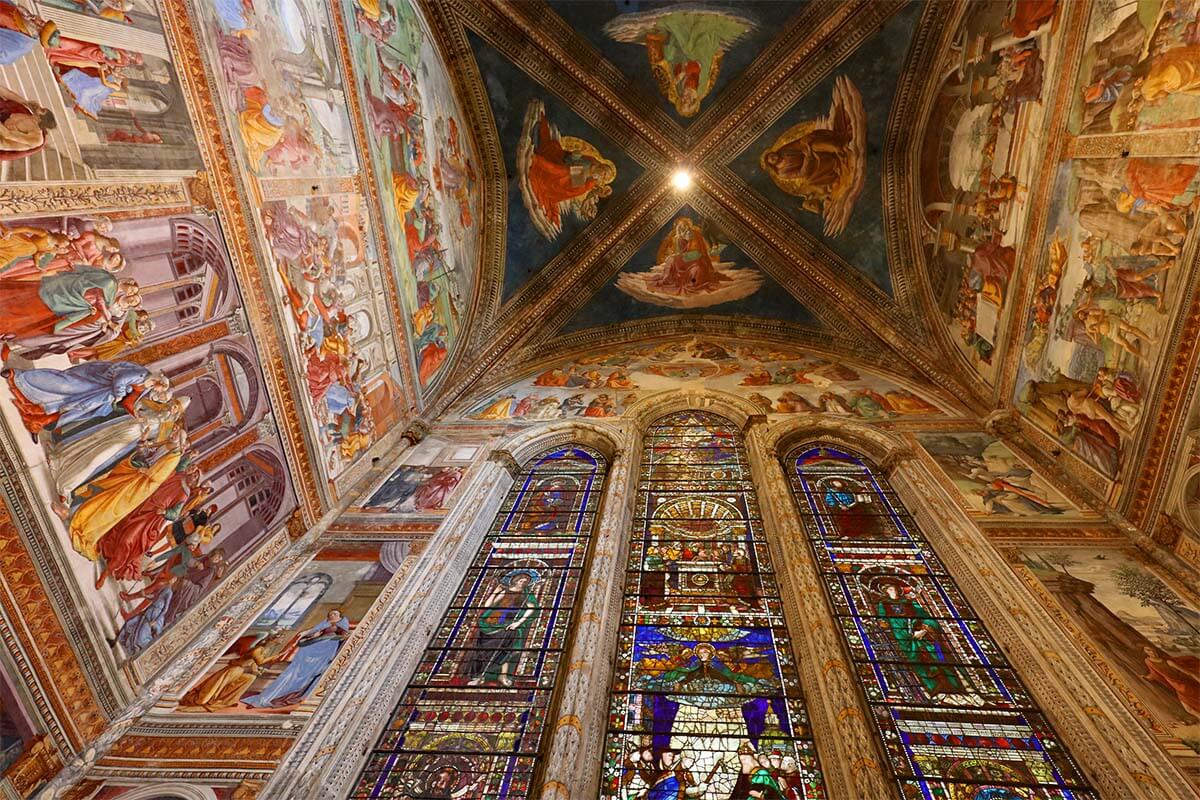
Basilica of Santa Maria Novella is located right next to the main railway station of Florence (which is actually named after this church). Founded between 1279 and 1357 by Dominican monks, the basilica has stunning stained glass windows and a Gothic interior filled with frescoes. You can see lots of works by famous artists here, including Brunelleschi, Botticelli, and Vasari’s ‘Madonna of the Rosary’.
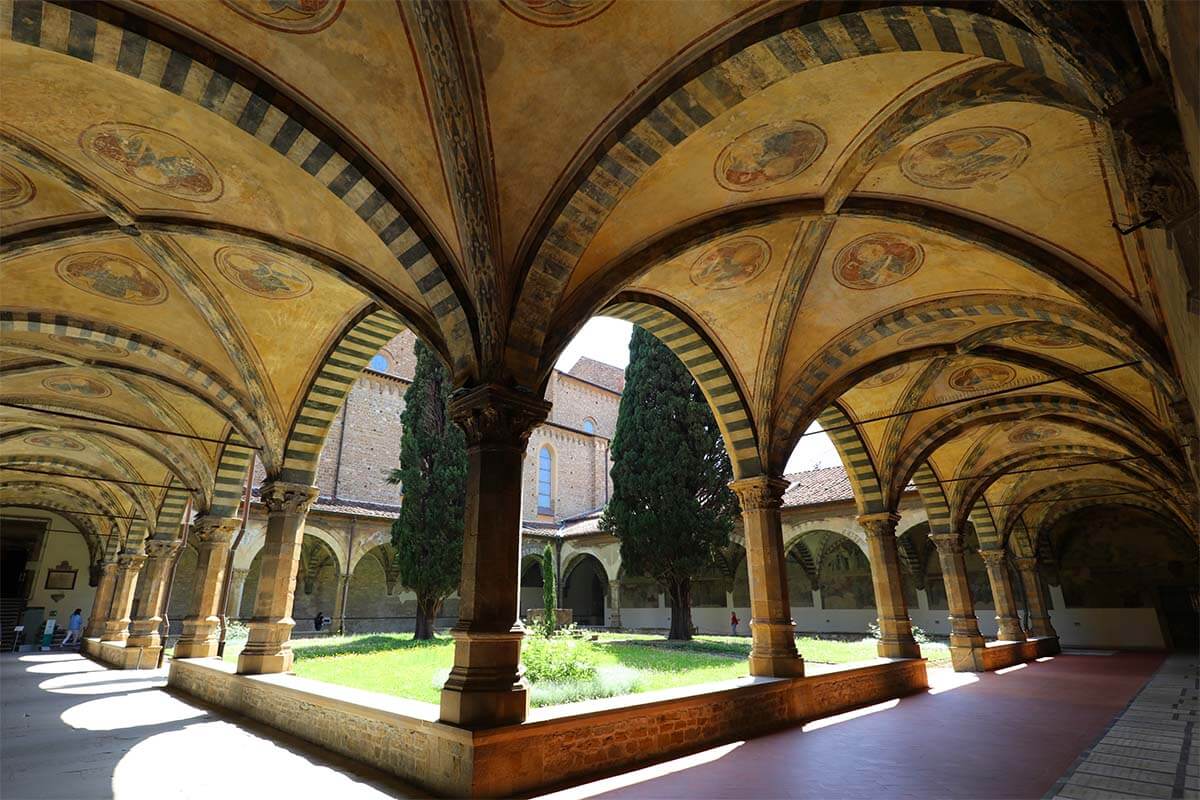
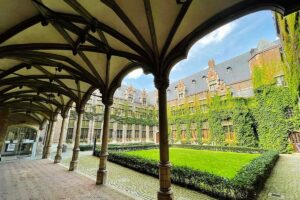
We found that the cloisters of this basilica are particularly impressive. As you leave the hustle and bustle of the busy city behind the thick walls, it feels like stepping inside a real oasis of calm.
Good to know: The Basilica is open daily, with hours depending on the season and day of the week. While they also offer online tickets, we just got ours on the spot, and it wasn’t busy at all. See their website for more practical info. Please also note that you are not allowed to take large bags into the church.
TIP: If you visit around noon, you may see how the sun shining through the stained glass window marks the time of the year on the calendar on the floor.
15. San Lorenzo Market
Mercato Centrale Firenze, aka San Lorenzo Market, is one of the most popular places to visit in Florence for tourists. If you are looking for a nice place for lunch or even dinner, it’s definitely a great choice.
This bustling market is actually made up of two markets. The Mercato Centrale is indoors and devoted to food, whilst the outdoor section lining the surrounding streets sells everything from clothing and leather to pottery and souvenirs. This is a great place to buy gifts to take home, but it’s so overwhelming that I wouldn’t even know where to start choosing… Also, nearly all the goods sold here are marked at prices higher than you should expect to pay, so be sure to haggle.
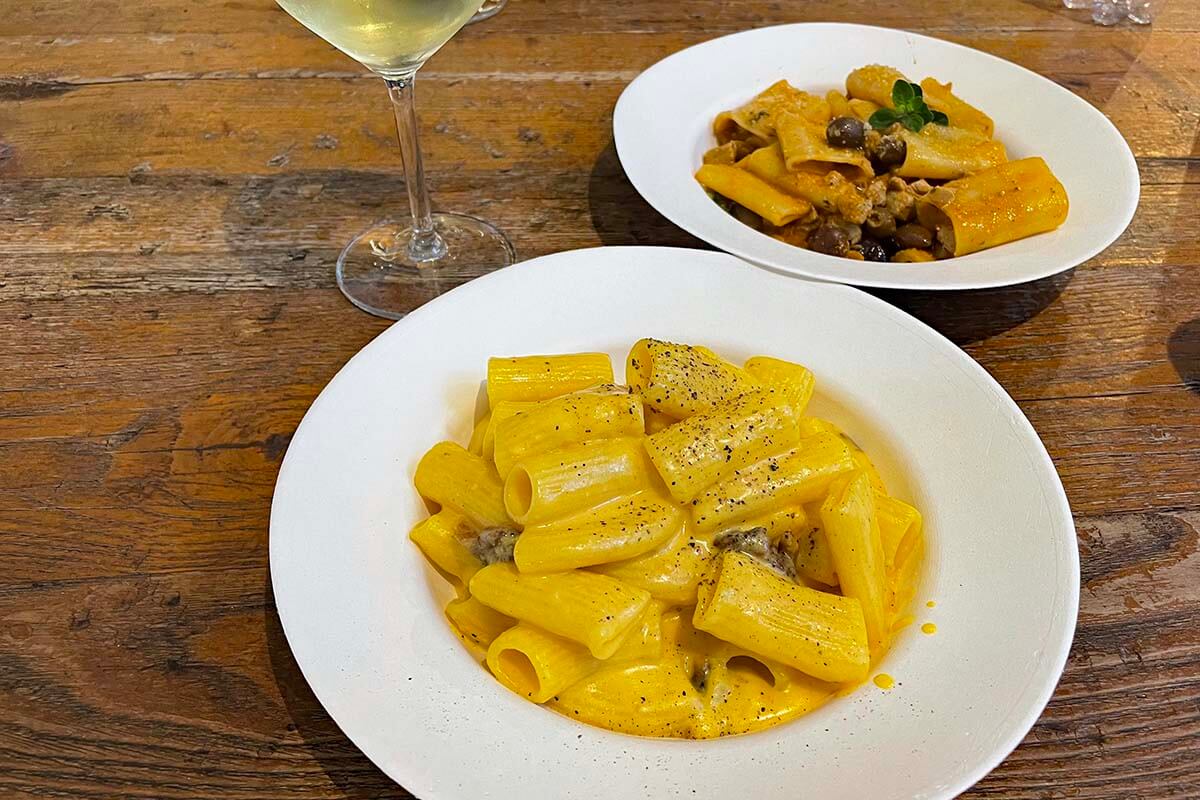
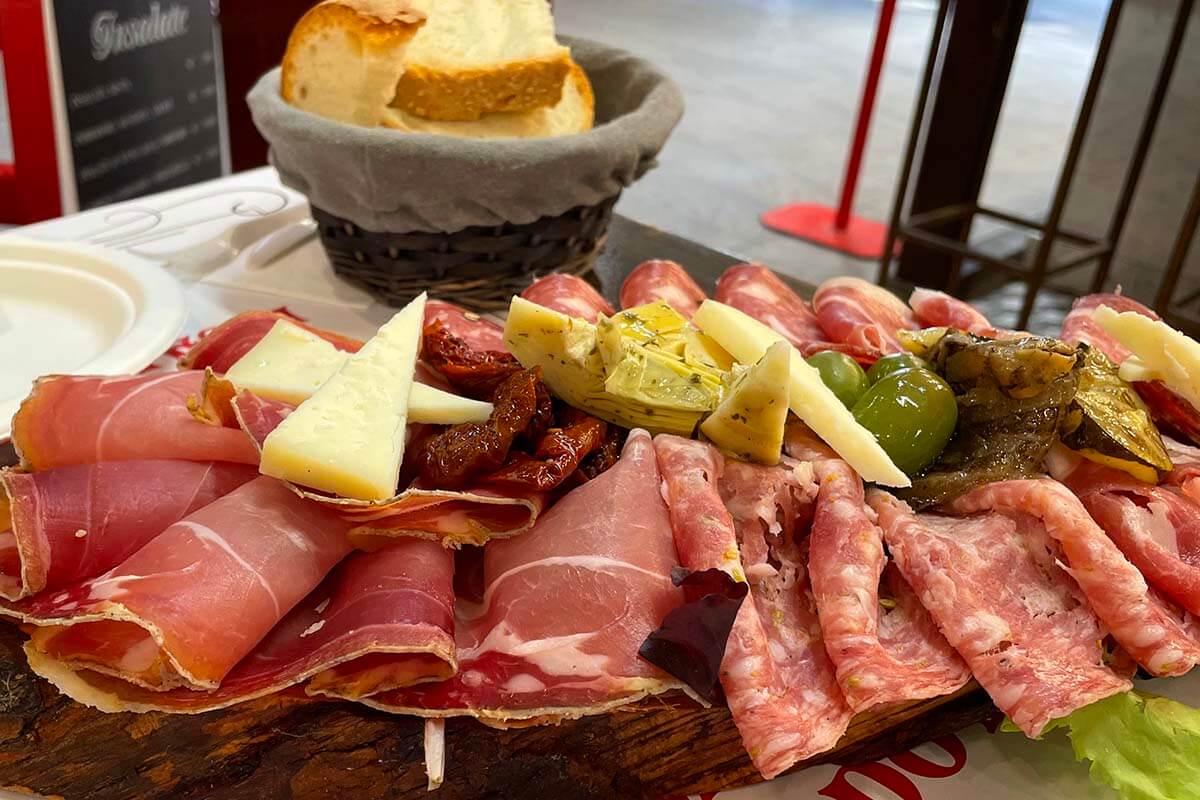
I recommend that you come to San Lorenzo Market for some local food from various regions in Italy. The indoor market has many cafes and various places selling food, including a big food court on the top floor. And since the market is located so close to most of the main tourist sights in Florence center, it’s really simple to plan a visit (or a few) here.
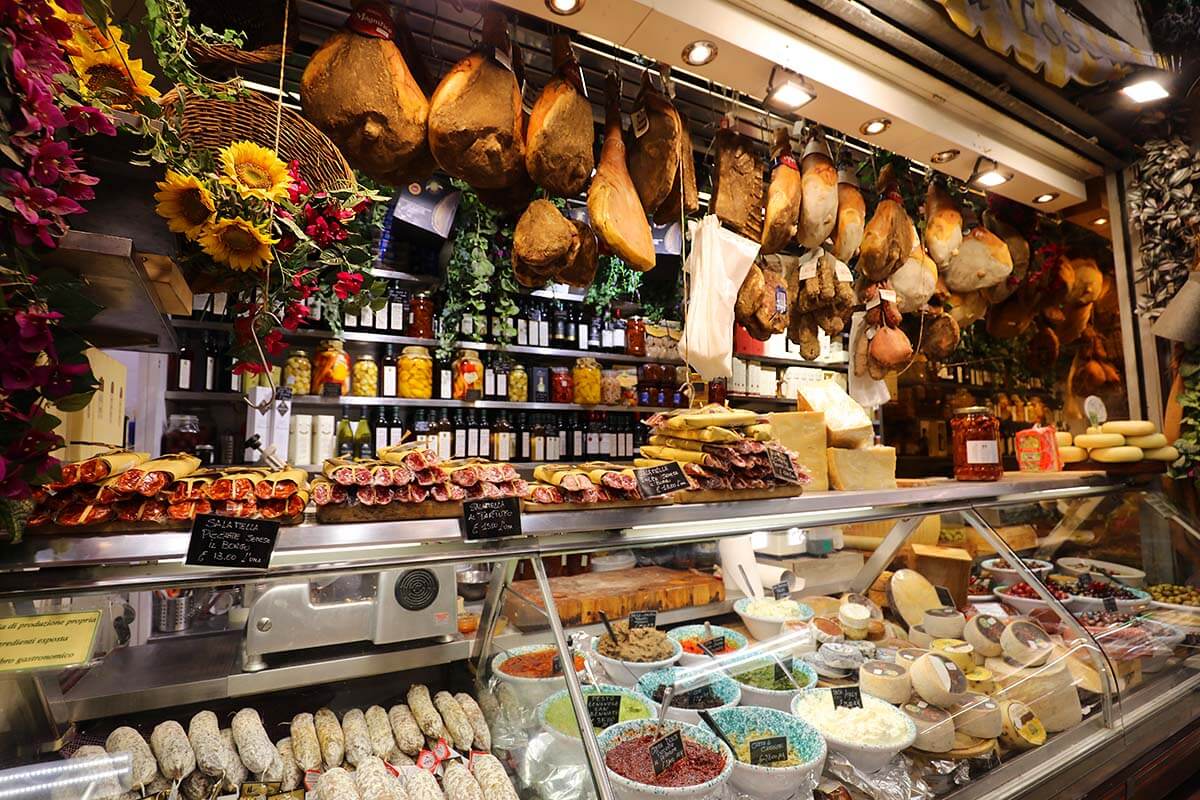
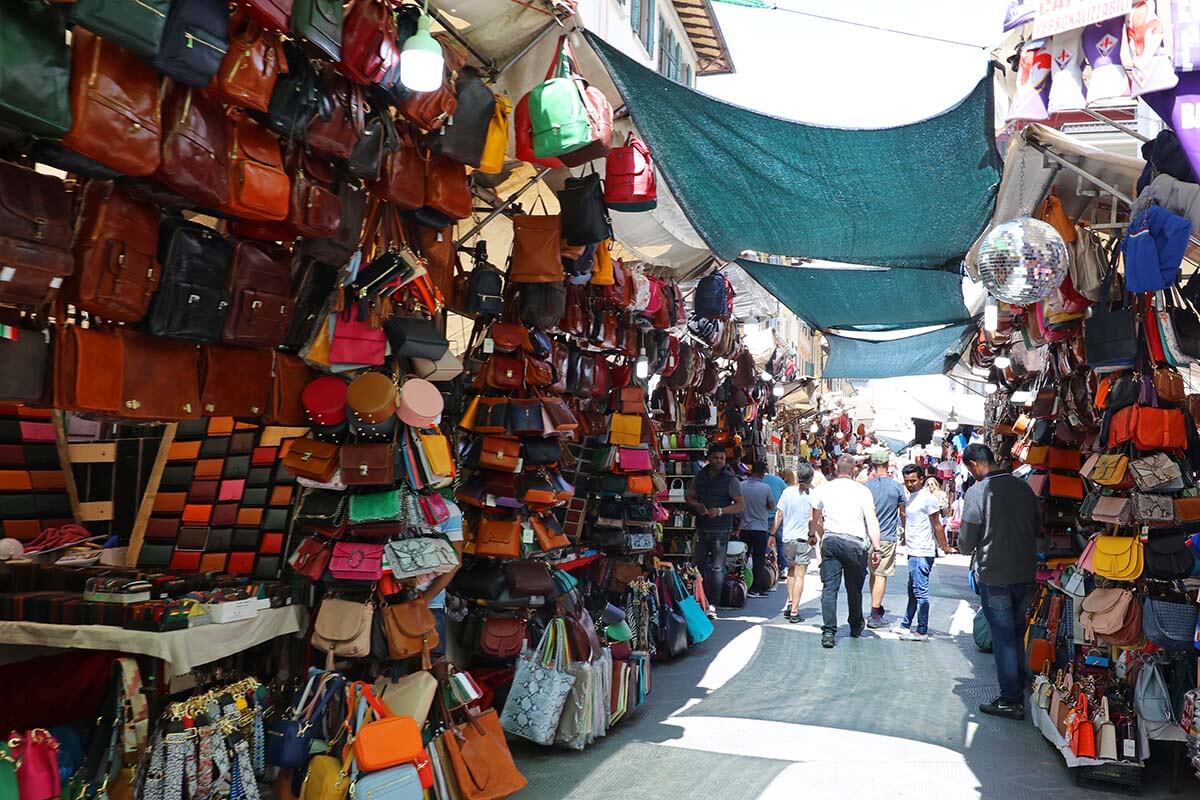
We had lunch at Mercato Centrale a few times. From Tuscan specialties at one of the wine shops (enoteca‘s) on the ground floor to fresh pasta in the food court upstairs, everything was delicious, well-priced, and served with a smile. If you are brave enough to try the traditional Florentine sandwich lampredotto (made with tripe/cow stomach), head to the ‘Da Nerbone’ restaurant upstairs.
TIP: If you want to avoid the crowds and find a good place to sit, it’s best to arrive at the market before the popular Italian dining times. So for lunch, it’s best to come a bit before noon. Most locals have lunch at around 1-2 pm and the market gets really busy at that time.
Good to know: If you want to take food from the market back home with you, chat to your vendor about which products are permitted across different borders. The vendors all speak very good English and are very knowledgeable on this subject. They will also vacuum pack items for you on request.
16. Views from Piazzale Michelangelo
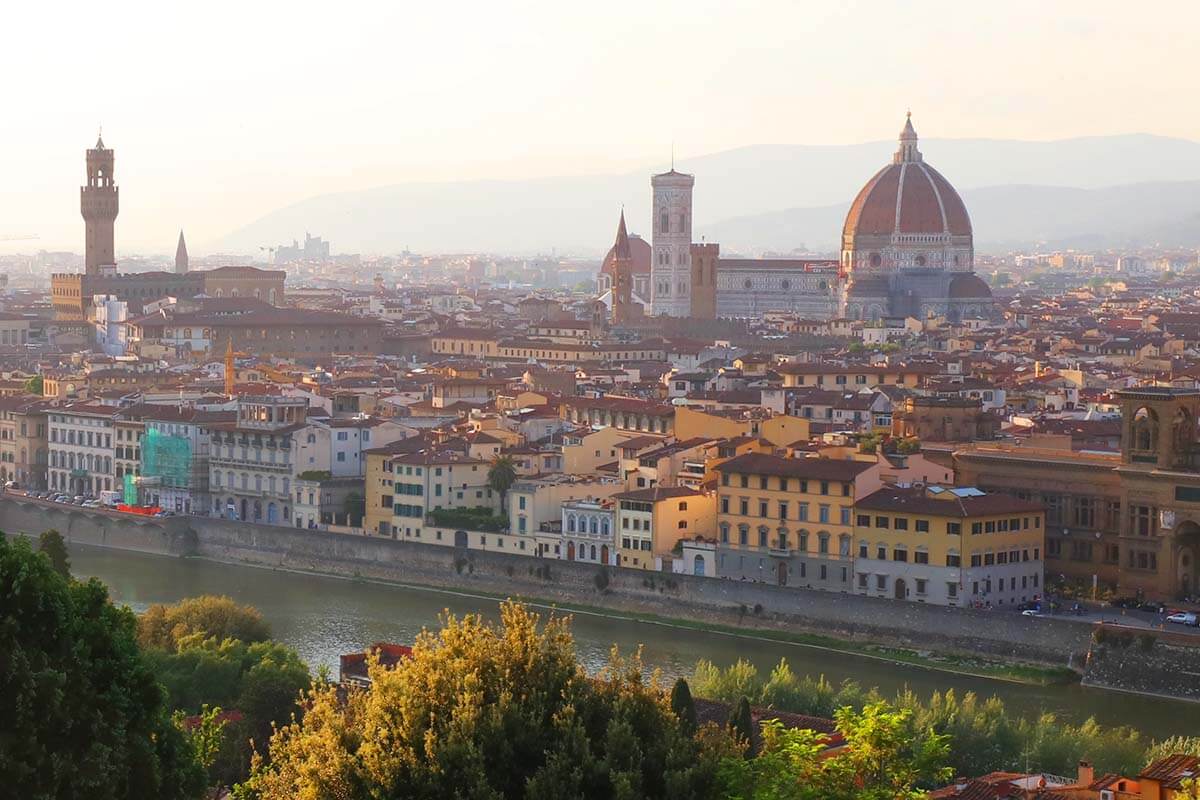
Located on a hill on the Arno’s south bank, Piazzale Michelangelo is Florence’s most famous sunset spot. It offers excellent panoramic views across the city. And whilst it is extremely popular (and crowded) in the evenings, the views across the city skyline and Tuscan hills are spectacular, whatever time of day you choose to visit.
There is plenty to see and do on the square itself, which contains lots of replicas of Michelangelo’s statues and a memorial to the artist. There is also a loggia containing a restaurant and coffee bar, lots of street vendors, live music from time to time, and a very vibrant atmosphere.
If you come here in the evening on a nice sunny summer’s day, it almost feels like you are attending some kind of festival…
Good to know: You can drive to the square (there is a car park) or take the bus or a taxi. But if you don’t mind a bit of uphill climbing, you can also easily walk here from the city center! On the way, you’ll see the Porta San Niccolò – a high watchtower that was once part of the city’s defenses – and the beautiful Giardino delle Rose (rose garden) which is free to visit.
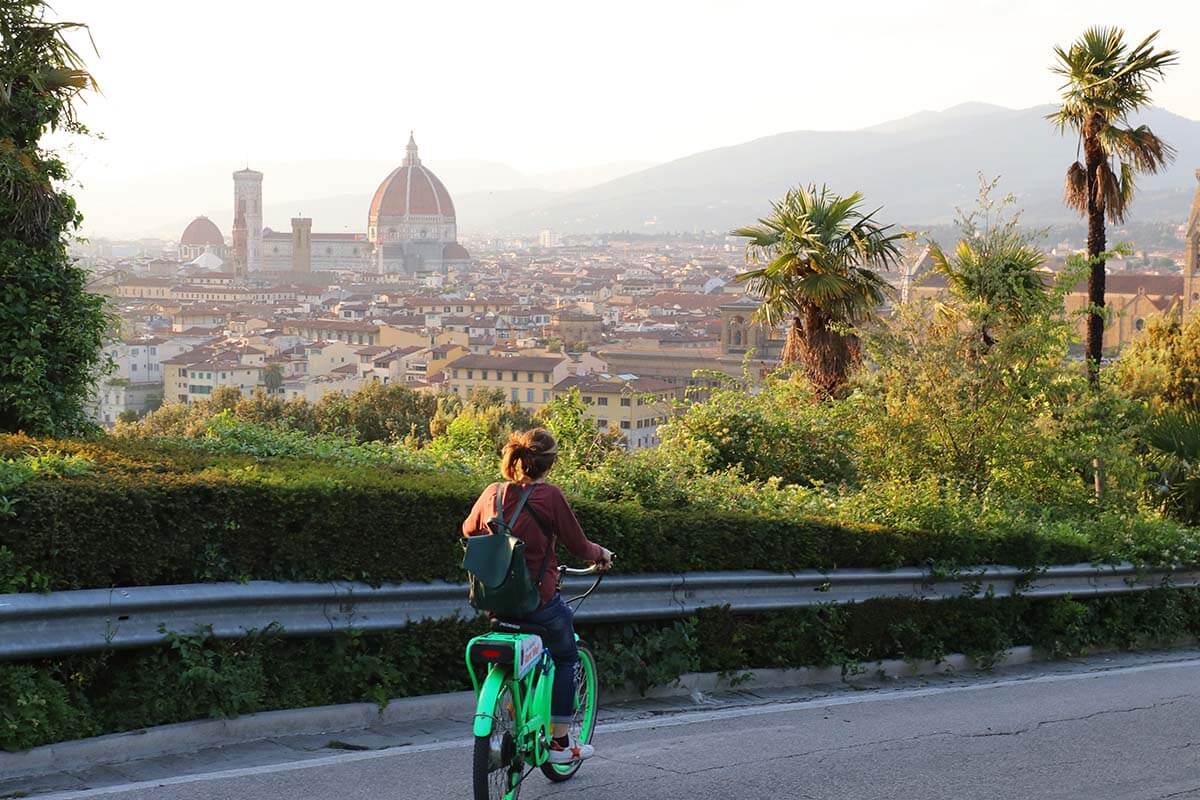
TIP: We visited Piazzale Michelangelo with this highly-rated e-bike city tour. We opted for the 6 pm tour in summer and were at the viewpoint about an hour before sunset. We got to enjoy some spectacular views in a beautiful light with little effort. However, please note that biking in the center of Florence is not something you should do if you haven’t biked for a while. But if you bike at home once in a while, you should be just fine.
17. Piazza Santo Spirito & Basilica di Santo Spirito
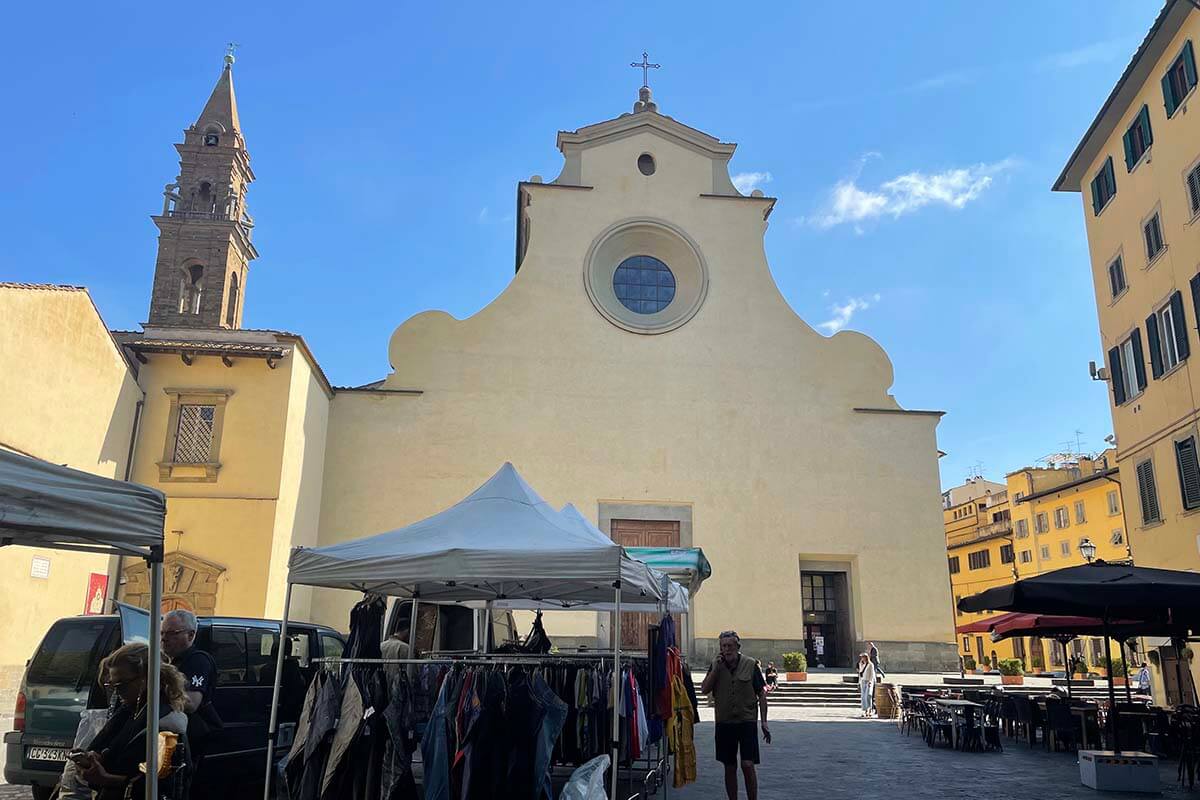
One of Florence’s liveliest neighborhoods, the area around Piazza Santo Spirito is one of the nicest places to soak up a more local atmosphere in Florence!
Constantly busy, this area attracts an ever-changing crowd of local artisans, intellectuals, and students. In the morning, you can visit a local market here. But the area really comes to life at night, when the surrounding galleries and boutiques close, and the restaurants and bars begin to open.
In addition to enjoying a refreshing drink at one of the square’s many open terraces, be sure to visit the Basilica di Santo Spirito. This little church was Brunelleschi’s last masterpiece. It looks quite plain from the outside, but inside it is filled with many noteworthy pieces of art. These include The Cenacolo – a depiction of the Last Supper.
Good to know: In keeping with its hip and happening atmosphere, Piazza Santo Spirito holds regular markets and fairs. Local artisans display their wares on weekdays, whilst the weekends are set aside for vintage goods and food.
TIP: If you are looking for a nice restaurant for dinner, you’ll find plenty of great choices in this area. However, it’s best to book in advance. Or hope for some luck and use the trick of arriving at the restaurant as soon as it opens, before the locals start to arrive at 8-8.30 pm.
I indicated some of our favorite restaurants (not just in this area) on our map below.
18. Fontana del Porcellino
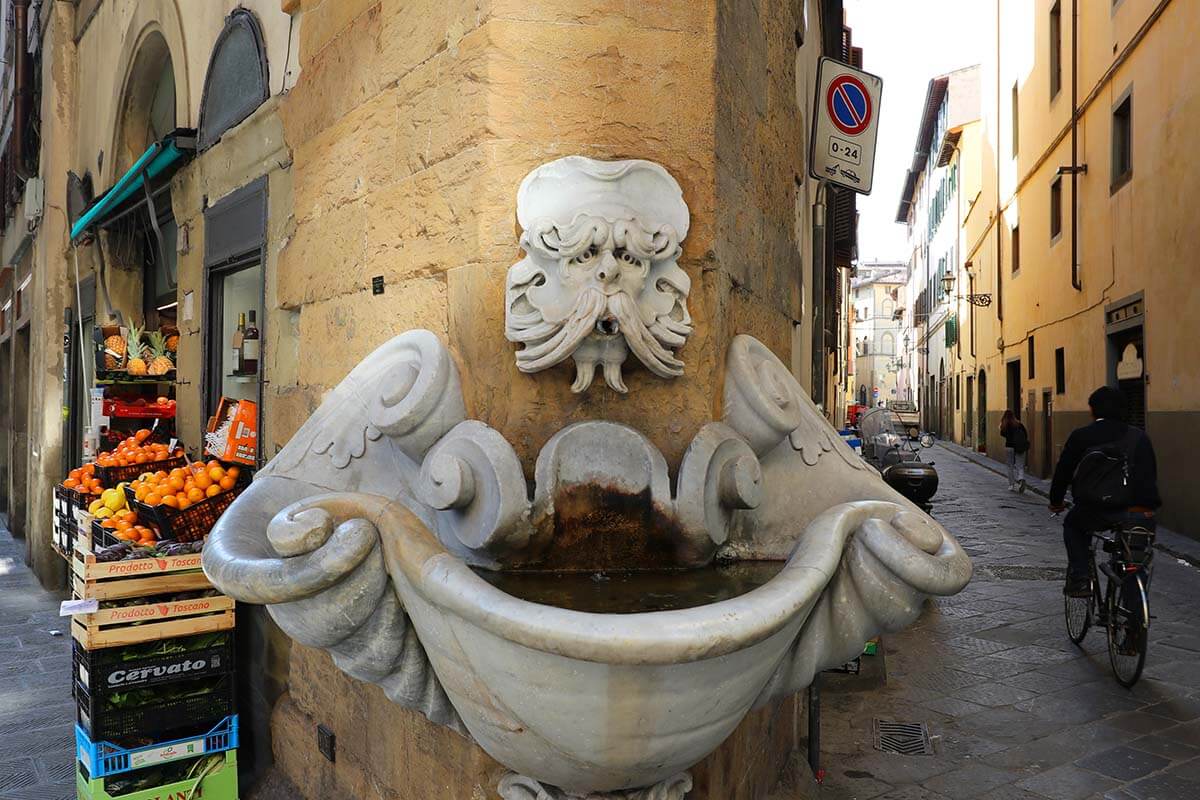
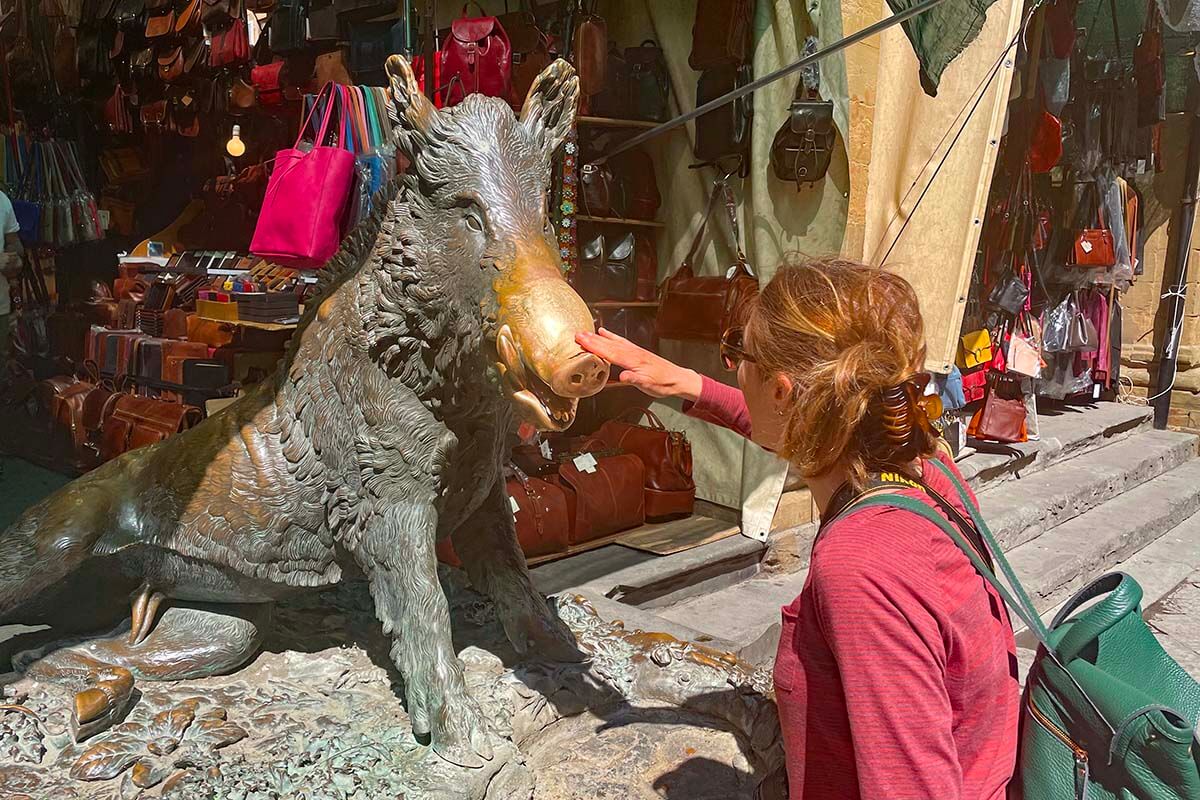
No list of the best things to do in Florence would be complete without mentioning the Fontana del Porcellino. And no, it can’t compare to the incredible architecture and Renaissance masterpieces you see in the city, but it’s one of those places that you really can’t miss when visiting Florence.
Fontana del Porcellino is the local nickname for the rather unique bronze boar fountain, located in the Loggia del Mercato Nuovo, also known as the Leather Market. It’s just a short walk from the main tourist attractions in Florence, just one block from Palazzo Vecchio and Piazza della Signoria. Well worth a quick stop.
This famous pig has appeared in the 2001 film Hannibal and two different Harry Potter films. Originally placed to provide water to merchants trading locally, it is now a popular spot for making wishes! Tradition also has it that if you rub the boar’s nose before you leave Florence (and put a coin in its mouth), you are sure to return one day in the future.
Good to know: The fountain stands at the small market where you can buy all kinds of leather goods – purses, wallets, etc. If you find the street vendors at Mercato San Lorenzo overwhelming, this market is much smaller.
19. Florence Rooftops
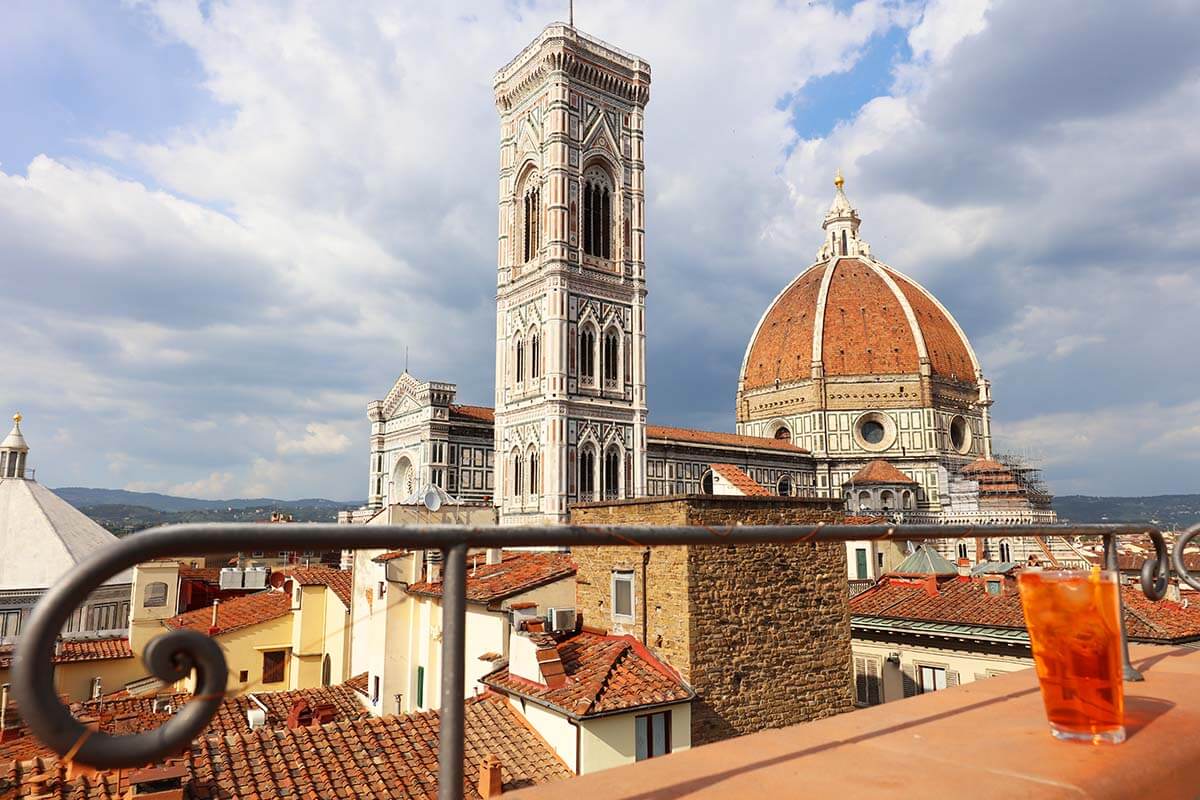
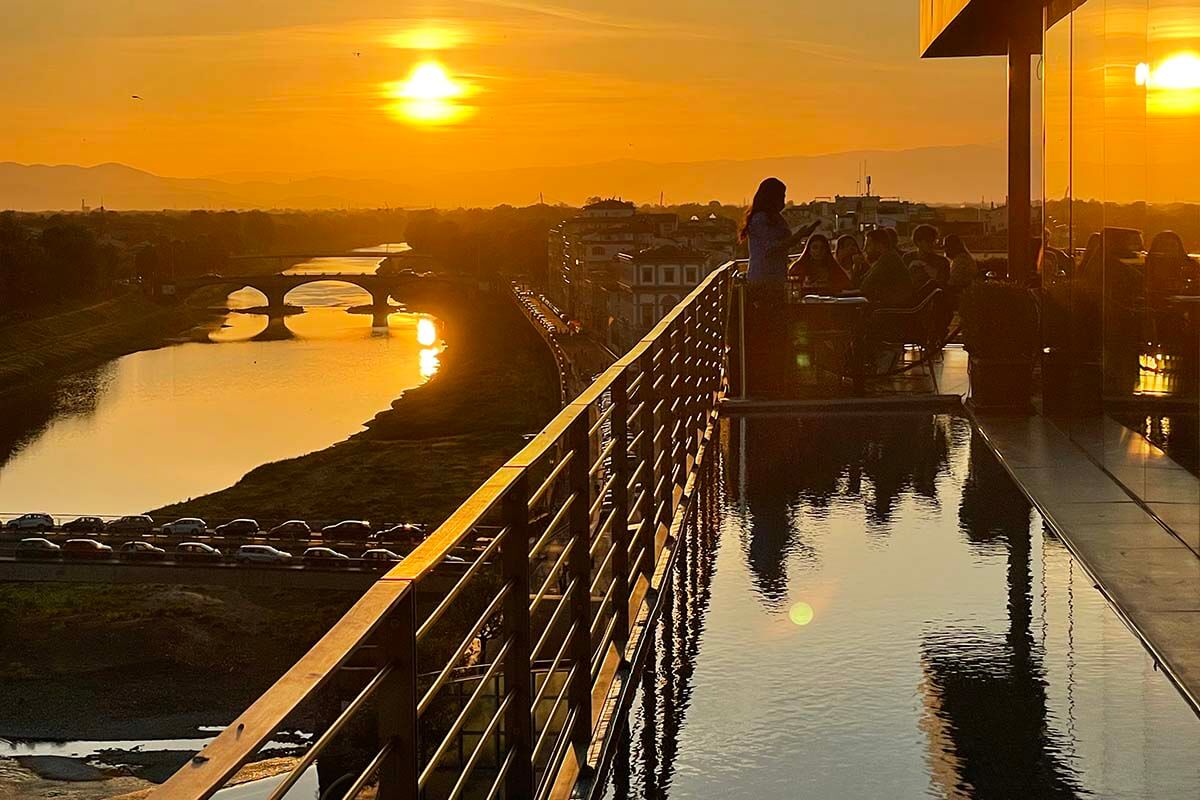
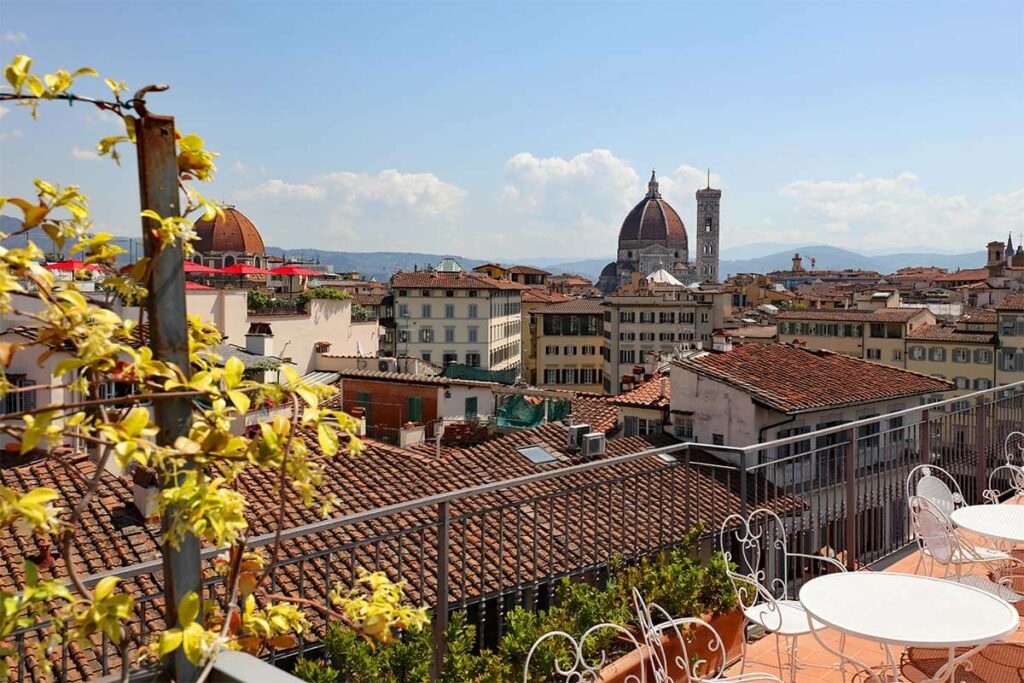
Now that we covered all the must-sees in Florence, there’s something else that I’d like to add. Something that is not a must in any way, but will make your visit to this beautiful city so much more memorable. The stunning views from the rooftop bars and restaurants in Florence.
With such incredible architecture and a stunning setting surrounded by the Tuscan hills, Florence has some of the most beautiful skylines of any European city. You’ll see some amazing views if you climb the dome of the Duomo or the towers mentioned in our guide, but this doesn’t compare to a more relaxing experience of enjoying the amazing views from the rooftop bars and restaurants.
TIP: If you want to enjoy the best views without having to plan much, visit rooftop terraces during the day. For the best light and sunset views, go about an hour before sunset, but try to reserve a table in advance if possible.
There are so many beautiful rooftop bars in Florence that I felt they deserve a separate guide with more info. So if you are looking for a nice place to enjoy some of the best views in the city without too much effort, definitely check it out via the link below. It also includes the best hotels with rooftops – something to consider for an even more memorable stay!
LEARN MORE: Florence Rooftop Guide
Additional Recommendations
As you can imagine, there is much more to see and do in Florence than covered in this guide.
While the places mentioned above will keep you busy for at least 2-3 days, here are some additional suggestions for what to see and do in Florence that are worth it if you have more time and/or want to escape the biggest crowds.
More things to do in Florence city:
- Riccardi Medici Palace. A beautifully preserved Renaissance palace near the Basilica of San Lorenzo, best known for its historic interiors and frescoes, including the famous Chapel of the Magi.
- Bargello National Museum. Housed in one of the oldest public buildings in Florence (dating from 1255), this museum is known for its outstanding collection of Renaissance sculpture, with works by Michelangelo, Donatello, and others.
- Leonardo Interactive Museum. A very popular, hands-on museum with life-size machines based on Leonardo da Vinci’s drawings. You can interact with many of the exhibits, which makes it especially interesting for families. Because it has become quite popular, it’s best to book timed tickets in advance.
- Cooking classes. If you’d like a more local, hands-on experience, consider a cooking class in Florence. There’s a wide range of options, from pasta- and pizza-making to full Tuscan meals with market visits included.
Of course, one of the best things to do in Florence is simply wandering around the city center, exploring its incredible architecture, cozy streets, and looking for little hidden gems that will make your trip even more special.
In addition to the main attractions in Florence city center, there’s so much to see nearby. You can visit Bologna from Florence or Cinque Terre (even if just for a day), or rent a car and explore the nicest places and towns in Tuscany on your own. Or you can also opt for one of the many organized tours.
Here are some of the best day tours from Florence:
- Cinque Terre: One of the most popular and best-rated day trips, ideal if you want to see Italy’s famous coastal villages and dramatic scenery in a single day. See the best tour options.
- Tuscan towns & countryside: A classic day trip that typically includes Pisa, San Gimignano, Siena, and a taste of the Tuscan countryside. It’s perfect if you want a good overview of the highlights of Tuscany in one day. See the best day tour options.
- Wine & Tuscan countryside: A popular full-day tour through southern Tuscany, visiting places like Montalcino, Pienza, and Montepulciano, with a focus on wine, small towns, and landscapes. We recommend this highly rated full-day tour.
READ ALSO: What to See & Do in Siena & Best Things to Do in Montepulciano
Where to Stay
Florence’s historic center is quite compact and very walkable, so you can stay pretty much anywhere within a 15–20 minute walk from the Duomo and be well located. That said, one of the most convenient areas -especially if you’re arriving by train – is near the main railway station (Firenze Santa Maria Novella), or between the station and the river. From here, you can easily walk to the main landmarks and won’t have to deal with long taxi rides or carrying luggage far.
Here are some hotel recommendations within a short walking distance of the railway station:
- €€€€€ Hotel Calimala – A stylish, upscale hotel in a very central location, with a popular rooftop bar and easy access to all the top sights in Florence.
- €€€€ Hotel Croce di Malta – We stayed here on our last trip and loved the central location, plus the rooftop terrace and garden pool, which are a real bonus in summer.
- €€€ B&B Le Stanze del Duomo – One of the best-rated affordable options in the historic center, just steps from the Duomo and within easy walking distance of all major sights.
- €€ Plus Florence – A super popular budget hotel with modern rooms and good transport connections.
So, this is our guide to the best things to do in Florence, based on our own visits and experiences. We hope that these first-hand recommendations help you plan your trip, focus on the must-see sights, and make the most of your time in the city.
You can read about the Renaissance in books or see it on screen, but visiting Florence in person gives you a much better sense of its history, art, and architecture than any description ever could. Have a great trip!
READ ALSO: How to See The Best of Florence in 1 Day
TIP: If Florence is part of a longer trip, see our Italy trip itinerary for how to combine it with Rome, Venice, Cinque Terre, and many other top destinations.
More travel inspiration for some of the nicest Italian cities:
- Best cities to see in Italy
- Best things to do in Rome
- Hidden gems of Rome
- Best things to do in Venice (+Doge’s Palace & Venice Gondola)
- Best things to do in Milan
- Best things to do in Bologna
- Best things to do in Siena (+Siena Cathedral)
- Best things to do in Montepulciano
- Best things to do in Naples
- Best things to do in Verona
- Best things to do in Ravenna
- Rome in 1 day
- Rome in 2 days
- Rome in 4 days
- Venice in 1 day
- Venice in 3 days
- Milan in 1 day
- Naples in 1 day
TIP: Did you find this guide helpful? Bookmark this post for later, share it with your friends, and save it to Pinterest to inspire your next trip.
Some of our favorite places in Italy:
- Best places to visit in Italy
- Best Places to See at Lake Como
- Capri Island
- Naples area
- Best places in the Dolomites
- Bellagio (Lake Como)
- Varenna (Lake Como)
- Best towns to visit in Lake Como
- Lake Garda
- Cinque Terre vs. Amalfi Coast
- Most Beautiful Coastal Towns of the Italian Riviera
- Tuscany Itinerary
- Hiking in the Dolomites
- For more inspiration, please see our Italy travel blog.


I’m putting together my FIRST trip/MBM to Italy (talk about overwhelming)…. so glad I found your site! I would like to take a day trip via train from Florence to Siena, is that an option and if so, what is the speed train system? Thank you ~
Hi Terri, yes, of course, you can easily visit Siena from Florence in a day. There are also tours available (but they usually visit several towns, spending little time in each – ideal if you want to see a lot in a day, but not ideal if you want to explore deeper). So if you just want to explore Siena, it’s better to go on your own.
Traveling in Italy by train is really simple and straightforward. You can use websites like Omio to compare all the best transportation options for any route you want to take and book your train/bus tickets.
Between Florence and Siena, you can opt for a train or a bus. In this specific case, the bus is faster, but the train can be more comfortable and trains run more frequently.
PS You may also want to take a look at our guide to the best places to see in Siena.
Hope this helps. Have a great trip!
You write the the best blogs! I enjoy reading them and they help a great deal in planning my trips. Thank you! 🙂
Thank you so much for your kind feedback, Rima. Happy travels!
I will save this article for use also. I believe I would have to live here for two weeks.😀
🙂 Yes, indeed, Michael, there’s so much to see in and around Florence. You could easily spend a few weeks in Tuscany and never get bored.
Happy travels!