
St. Beatus Caves Near Interlaken: How to Visit & Is It Worth It?
This site contains affiliate links, which means that we may earn a small commission, at no cost to you, for qualifying purchases. It supports the work that goes into keeping this content free. Thanks for reading! More info: Privacy Policy.
Thinking of visiting St. Beatus Caves near Interlaken and wondering if they’re worth your time? This guide covers what to expect, how to plan your visit, and whether it’s a good addition to your Switzerland itinerary.
We travel to Switzerland very often, in all seasons, and recently visited St. Beatus Caves. Even in winter, the waterfalls inside were still powerful, and the cave system itself turned out to be far more impressive than we expected.
In this guide, you’ll find everything you need to know before you go — from how difficult the walk is and how much time you need, to practical tips for visiting with kids, getting there without a car, and whether it’s worth it compared to other attractions in the Interlaken area.
St. Beatus Caves – Introduction
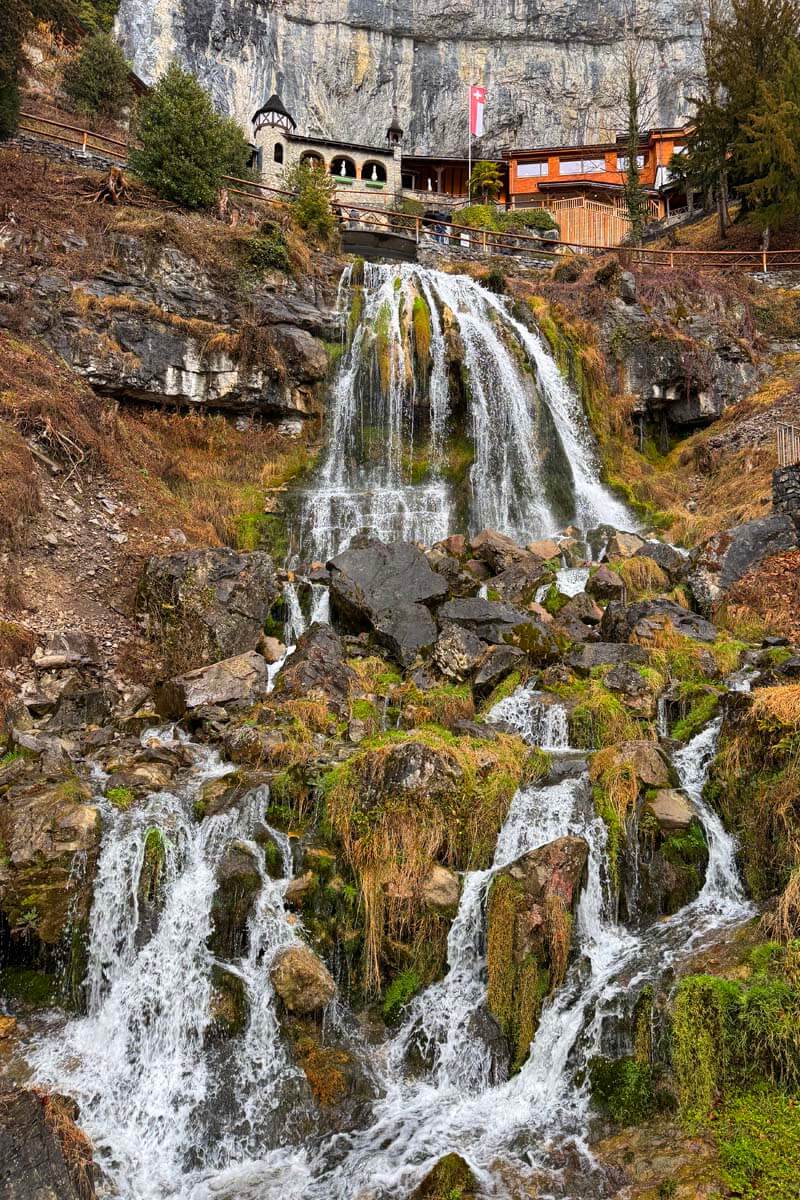
St. Beatus Caves (St. Beatus-Höhlen) are a well-known Swiss cave system located on the shores of Lake Thun, about 10 minutes by car from Interlaken. The entrance sits high above the lake, with a series of waterfalls cascading down the cliff and clearly visible from the road.
The cave network stretches for around 14 kilometers in total, but about 926 meters are accessible to visitors. That’s nearly a full kilometer inside the mountain. By the time you reach the end of the route, it genuinely feels like you’re deep underground.
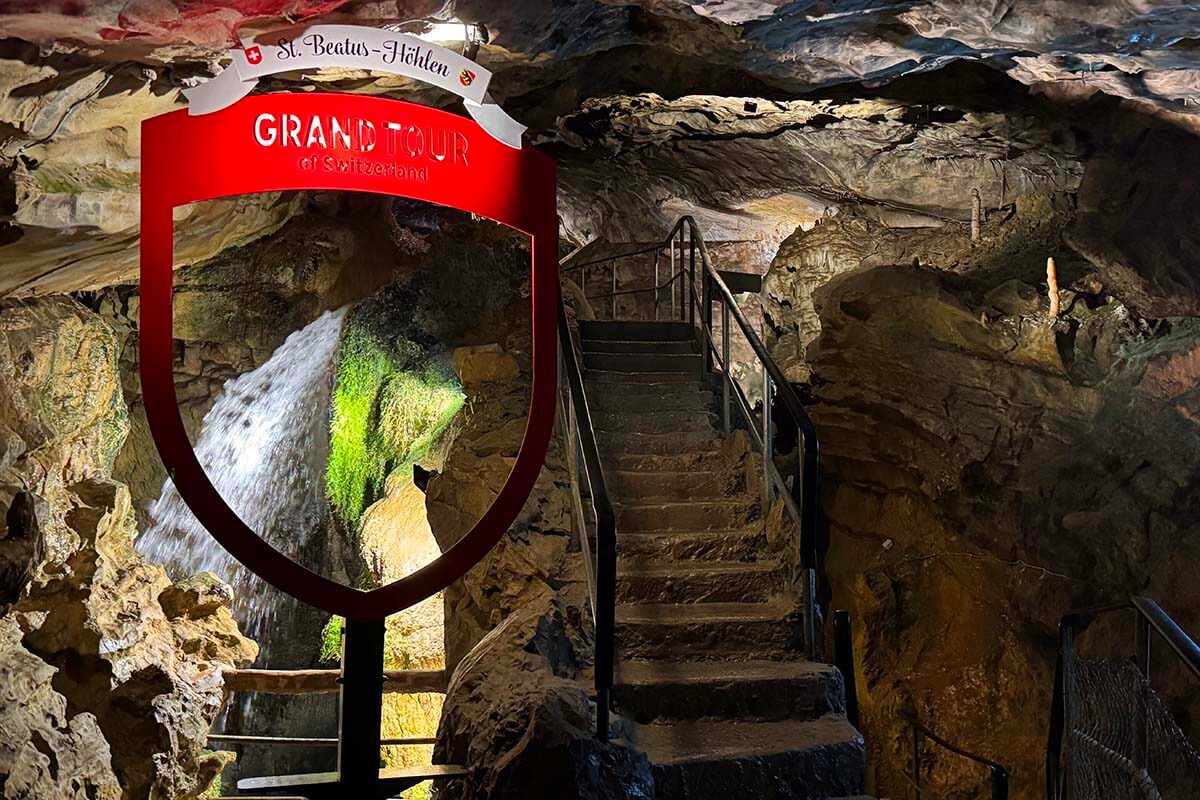
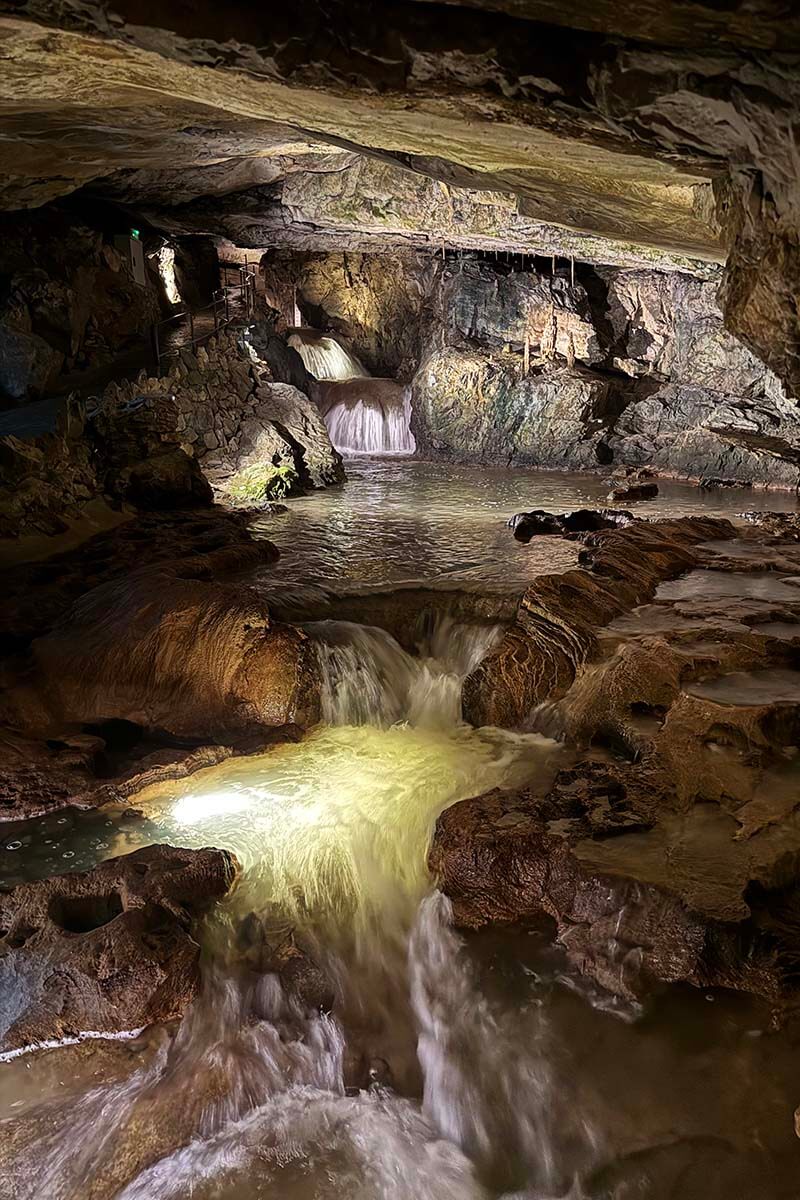
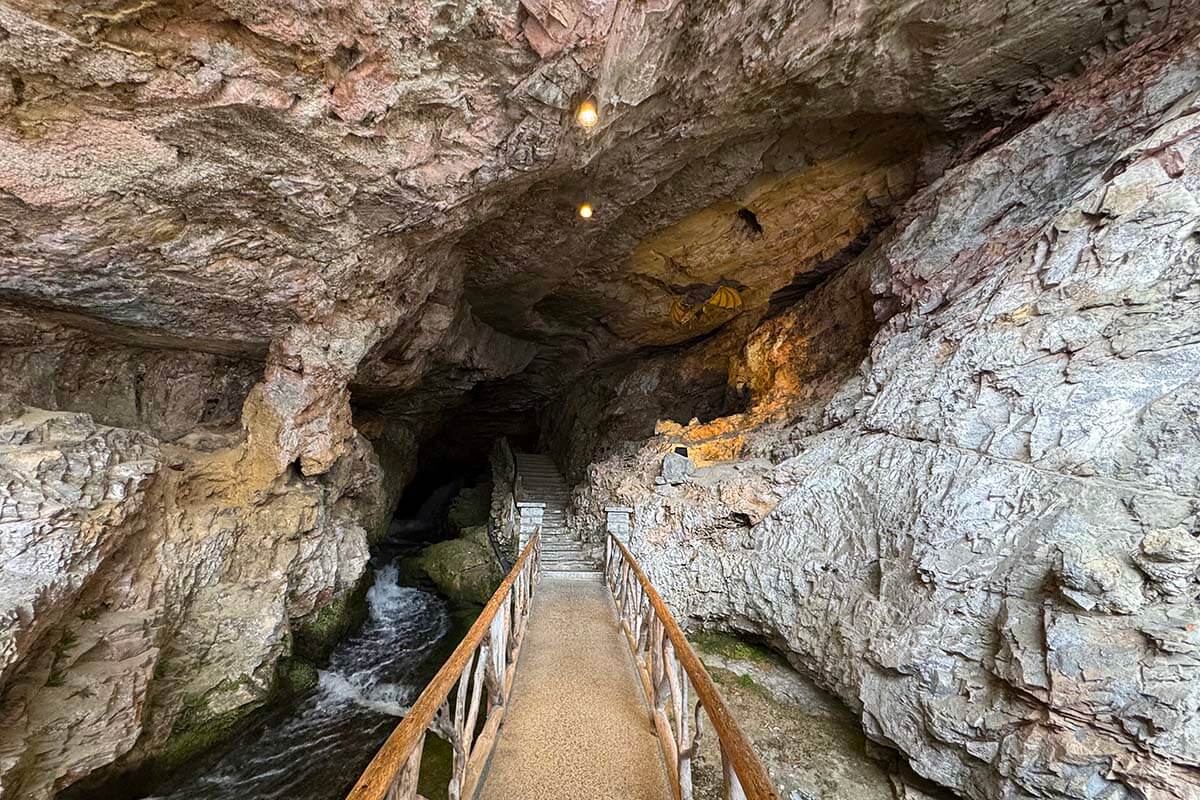
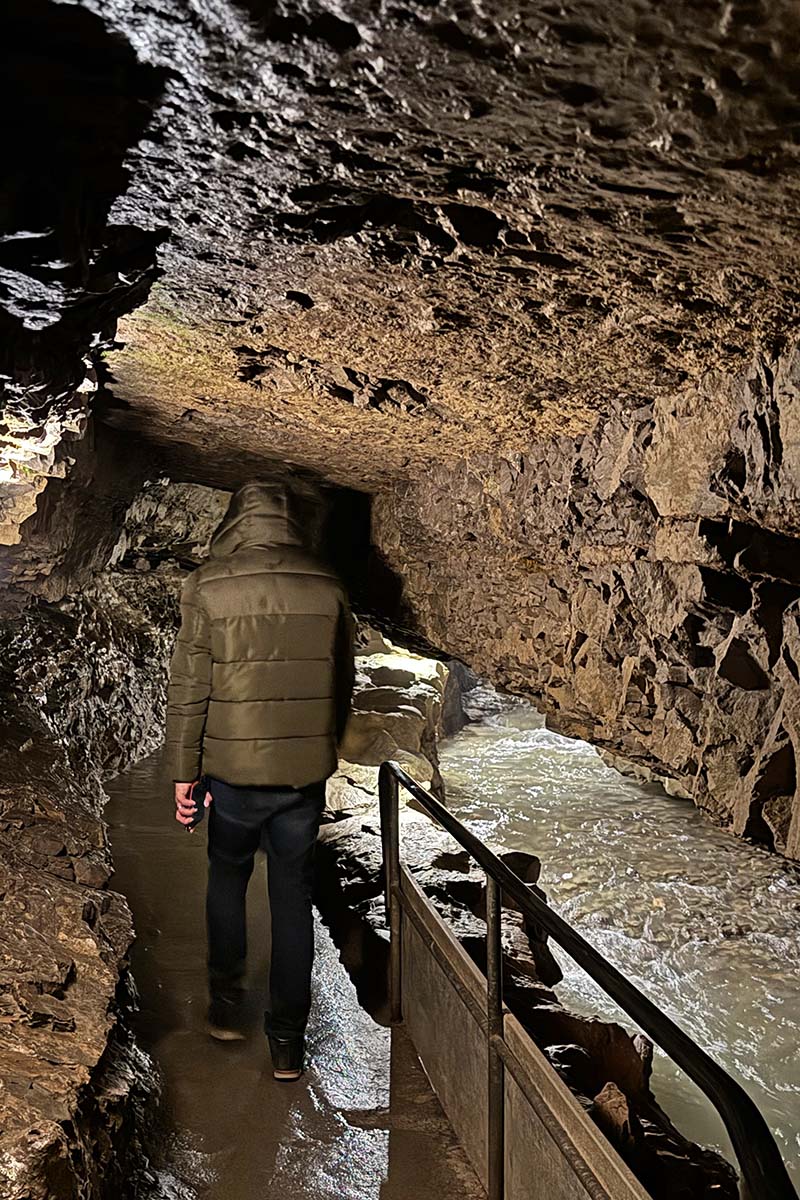
A well-maintained path leads you through a series of chambers at different heights. Along the way, you pass underground lakes, flowing streams, waterfalls, and rock formations that have developed over thousands of years.
Your ticket also includes entry to the small cave museum near the entrance. It explains how the caves were formed and how they were discovered and explored. It’s not large, but it’s worth a short stop before or after your walk inside.
What Makes St. Beatus Caves Special
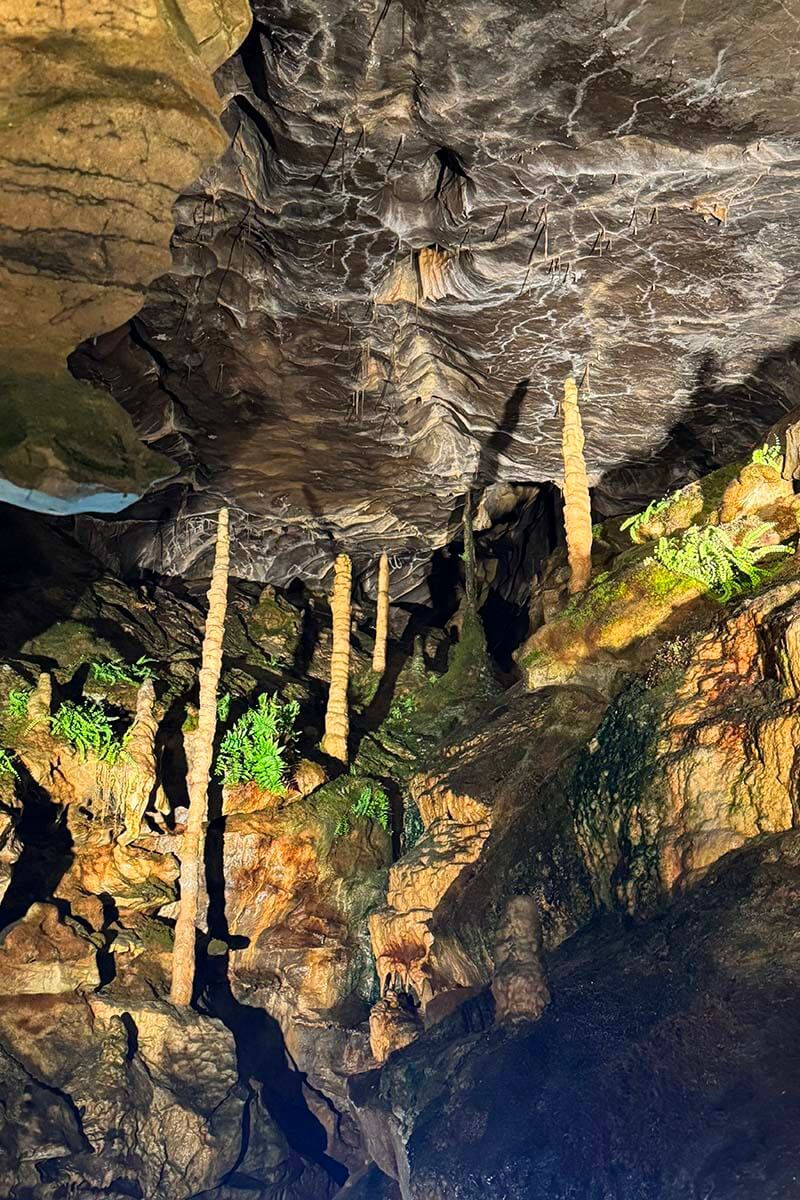
St. Beatus Caves are more varied and extensive than most underground caves we’ve visited (and we’ve seen quite a few over the years, in different parts of the world). It’s also one of those places that’s a lot more impressive in real life than in the photos.
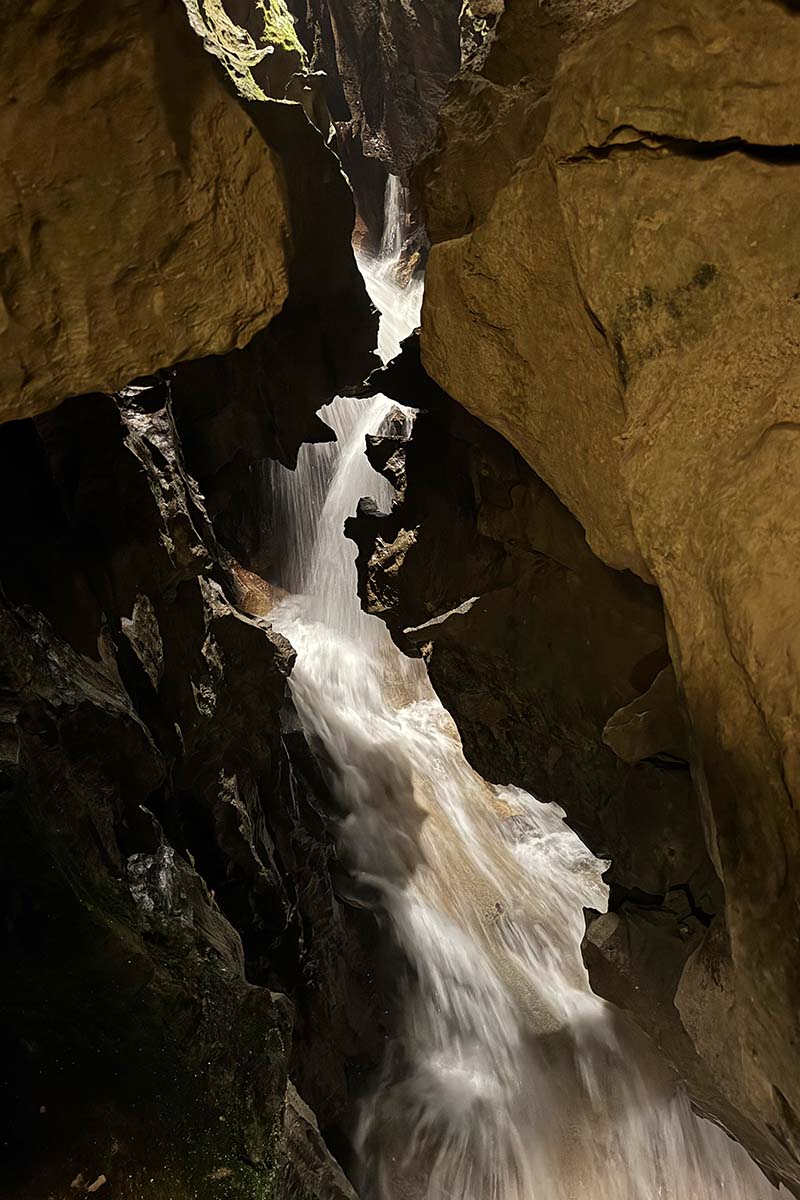
These caves are much more than just stalactites and stalagmites. You walk alongside underground streams, small rivers, and waterfalls. Even in late winter, when we visited and water levels were relatively low, the waterfalls inside were still surprisingly strong. In warmer months, with more meltwater, they’re likely even more powerful.
The location makes the visit even more interesting. The caves sit high above Lake Thun, with several cascading waterfalls visible from the road. While the exterior is worth a short stop on its own, the real highlight is exploring the caves inside.
Interesting to know: Local legend says Saint Beatus lived here as a hermit after driving away a dragon that was said to dwell in the cave. In the Middle Ages, the site even became a small pilgrimage destination. You can still see the so-called St. Beatus Cell just before entering the cave system.
What to Expect on Your Visit
You can visit St. Beatus Caves on your own or join a guided tour. The route is clearly marked, with informational panels along the way. It’s very easy to explore independently — and more relaxed since you can go at your own pace.
You gradually walk deeper into the mountain, passing through different chambers before turning back toward the entrance. Most of the route follows the same path in both directions, with a few short loop sections, mainly toward the end.
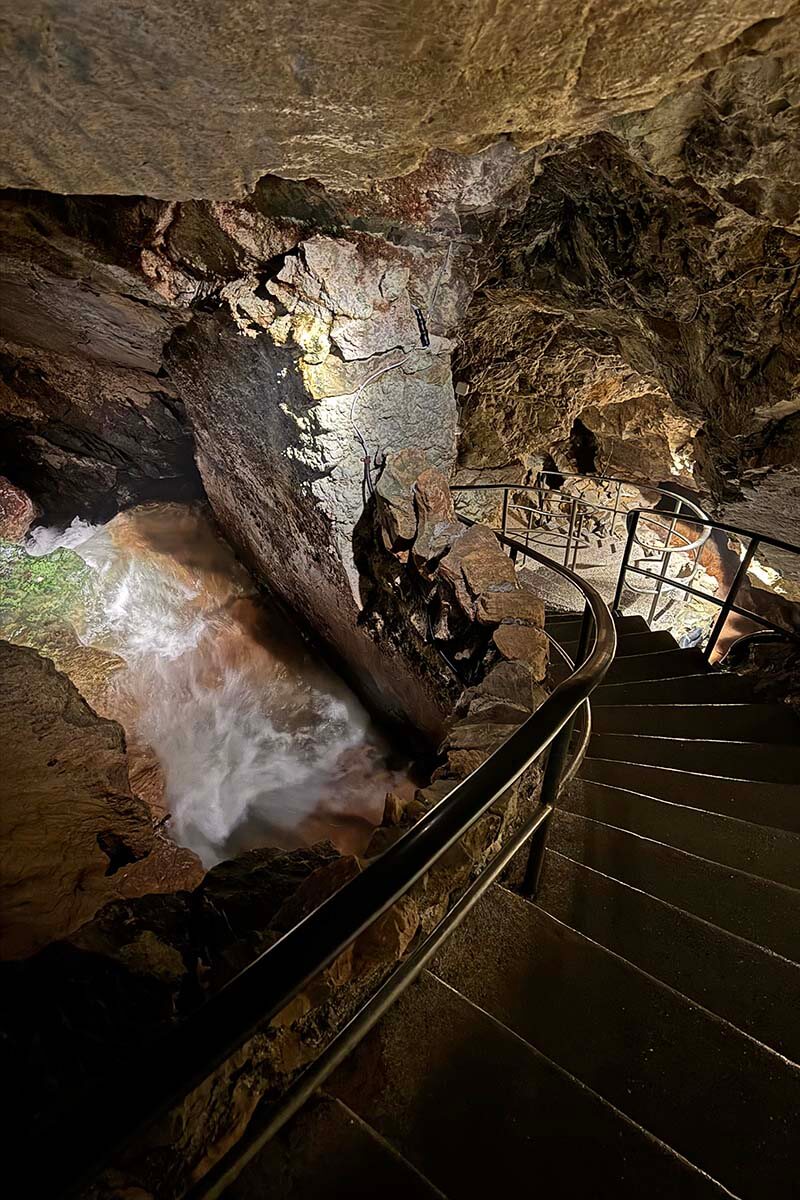
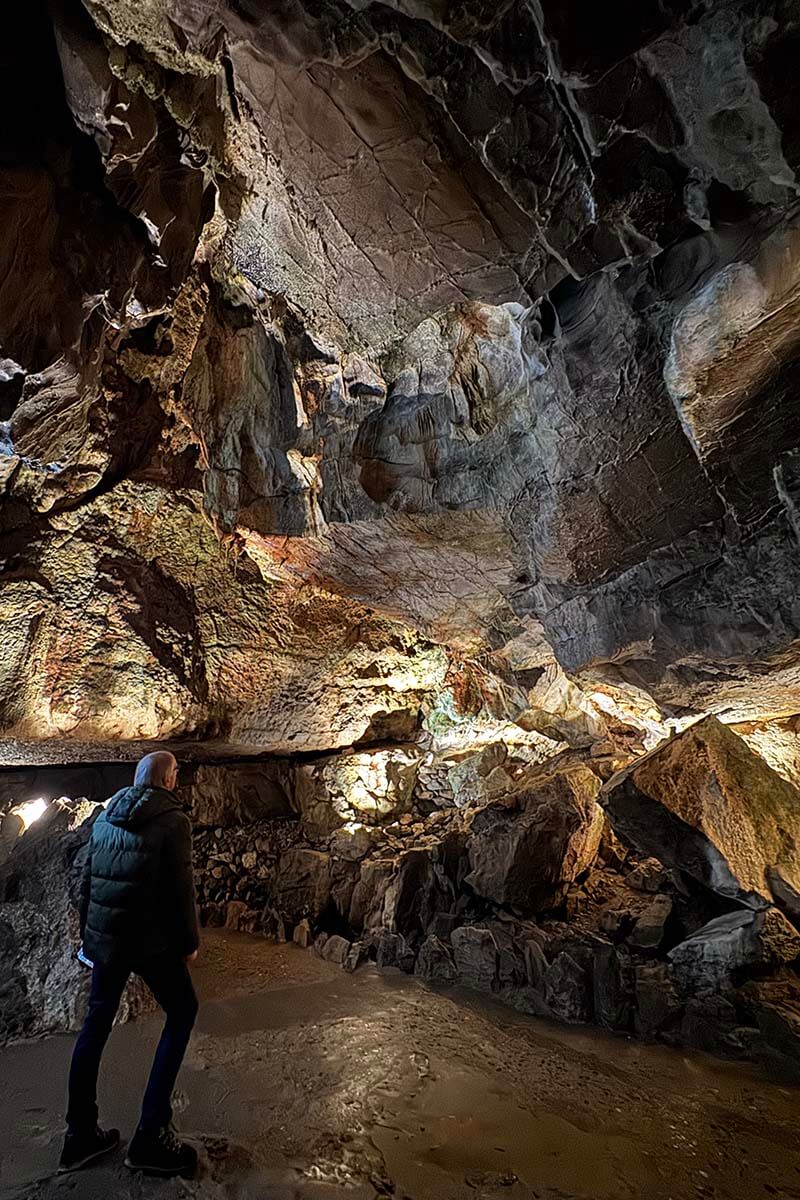
The paths are very well maintained, with solid walkways, railings, and well-designed lighting. It’s bright enough to walk safely, but still fairly dim, which can make photography challenging.
There are also quite a few stairs (297 in total), and you gain noticeable elevation as you move further inside. The climb is steady rather than steep, usually just a few steps at a time, but you’ll feel that you’re going uphill. In some sections, the ceilings are quite low, so if you’re tall, you’ll need to bend or duck occasionally.
Once you reach the far end and start heading back, the walk feels much easier since you’re going downhill. Anyone with average fitness should be able to complete the full route without difficulty.
TIP: Since visitors use the same path in both directions, it can get crowded at times. Try to visit early in the morning or later in the afternoon to avoid tour groups and larger families. The caves are usually open longer on Saturday evenings, which — according to the official website — is the quietest time to visit.
Good to know: Before you even enter the caves, there’s a fairly steep walk up from the main road to the entrance. It’s actually more tiring than any section inside, so if you can manage the climb to the entrance, you shouldn’t have any concerns about the cave walk itself.
How Much Time Do You Need
Plan about 1 to 1.5 hours for the cave walk itself. That’s enough time to move at a relaxed pace, stop at the main viewpoints, and take photos. If you also want to visit the small cave museum (included in your ticket), add another 20–30 minutes. Allow extra time if you plan to eat at the restaurant near the entrance.
Overall, this isn’t a half-day attraction, but it’s also not a quick 30-minute stop. For a comfortable visit, plan on around two hours on site. And of course, factor in travel time to and from the caves.
Our experience: We spent nearly two hours at St. Beatus Caves in total, from the moment we parked the car until we were back. This included the walk up to the entrance, the cave visit itself, the museum, a quick stop at the gift shop, and plenty of photo breaks along the way.
It took us about 50 minutes to walk from the cave entrance to the far end (with lots of photo stops) and around 20 minutes to walk back. The steepest part of the entire visit was actually the climb from the main road up to the cave entrance. That alone took almost 10 minutes, including short breaks to catch our breath and enjoy the views.
How to Get There
St. Beatus Caves are located on the shores of Lake Thun, about 10 minutes by car from Interlaken and around 25 minutes from Thun.
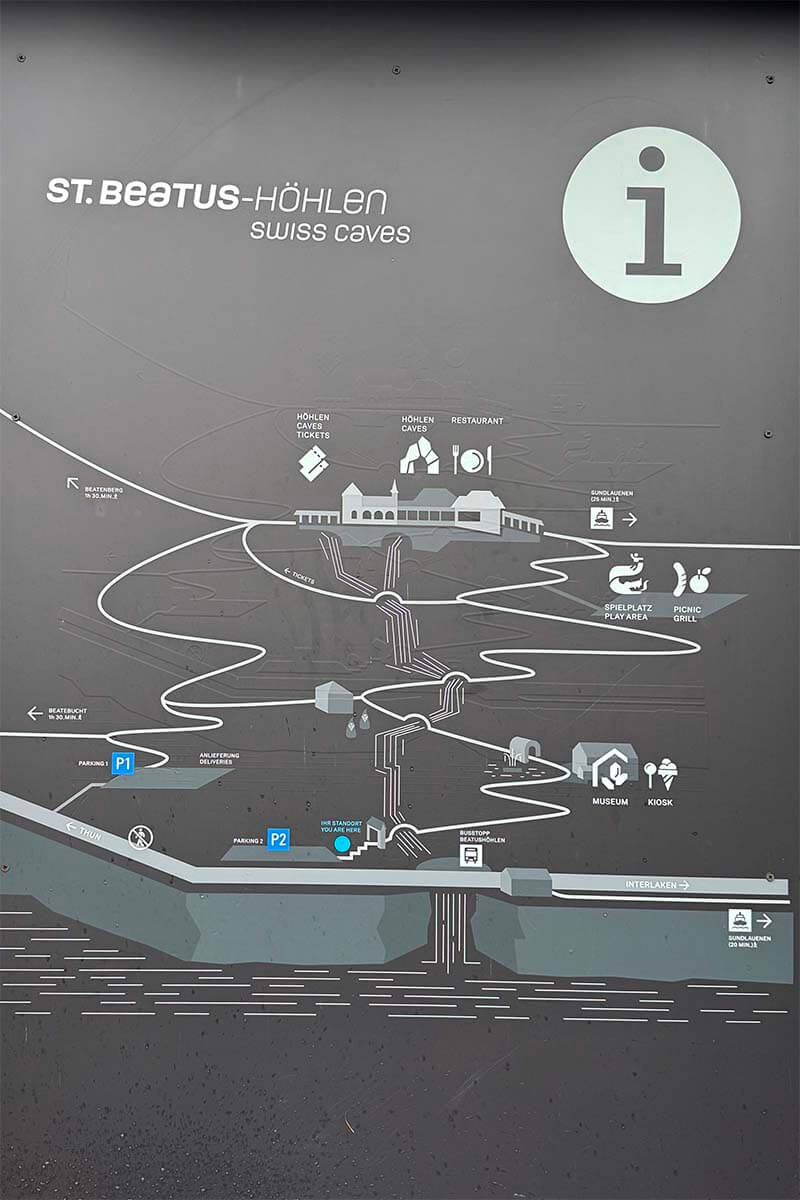
By car: If you’re driving, follow signs for “Beatushöhlen.” There are two paid parking lots — one near the main road below the caves and another about 350 meters further west. Parking spaces are quite limited, even outside peak season, and there’s very little space to wait for a spot.
By bus: Bus line 21 runs between Interlaken and Thun and stops right in front of the caves (Beatushöhlen stop). The journey takes about 15–20 minutes from Interlaken and around 40 minutes from Thun. This is the easiest and most reliable way to get there.
By boat: You can also arrive/depart by boat on Lake Thun. The Beatushöhlen–Sundlauenen dock is about a 30-minute walk from the caves. From Interlaken West, it’s just two stops and the journey takes about 30–35 minutes. However, boat schedules are limited in the low season, sometimes with only one or two departures per day, so be sure to check the timetable in advance. TIP: If you’d like to explore both Lake Thun and Lake Brienz by boat, you can also get a flexible day pass here.
On foot (hiking): The walk from Interlaken town center is about 6.5 km and takes roughly 2–2.5 hours one way. It’s a nice option if you enjoy hiking and have plenty of time.
Our recommendation: If you’re short on time and only plan to visit St. Beatus Caves, take the bus — it’s the simplest and most reliable option. If you have more time, turn it into a scenic day trip by combining your visit to the caves with a boat cruise on Lake Thun and stops in Interlaken, Spiez, and/or Thun. This works best in summer, when boat connections run more frequently. If you’re interested in mountain views and hiking, nearby Niederhorn also makes a great addition to your itinerary.
Good to know: Whether you arrive by car, bus, or boat, there’s an uphill walk to the cave entrance. It takes around 10–15 minutes and is a lot more strenuous than the walk inside the caves.
Best Time to Visit St. Beatus Caves
St. Beatus Caves are open year-round and are impressive in every season. Because they’re underground, the temperature stays fairly constant at around 8–10°C (46–50°F), no matter the weather outside.
Water levels vary throughout the year. In spring and early summer, when there’s more snowmelt in the mountains, the waterfalls inside tend to be stronger. That said, when we visited in late winter during an unusually warm and low-snow period, the waterfalls were still very impressive.
If you want to avoid crowds and tour groups, visit first thing in the morning or later in the afternoon. Weekends and summer holidays are the busiest. Saturday evenings are usually quieter, as the caves stay open longer.
Overall, there’s no bad time to visit. Just expect stronger water flow in late spring and more visitors in peak summer months.
Good to know: After heavy rain or exceptionally high water levels, parts of the caves (or occasionally the entire cave system) may close temporarily for safety reasons. This only happens rarely and isn’t something you can predict in advance.
TIP: Because the caves are underground and open year-round, they’re a great option on rainy or very hot days in the Interlaken area. It’s also a good place to visit when it’s cloudy or snowing in the mountains and you’re looking for something interesting to do nearby.
If you’re visiting Jungfrau Region in winter or are skiing in Wengen or Grindelwald, St. Beatus Caves can be a great backup option for a bad-weather day or a rest day between ski sessions. When we visited, the weather in the mountains was terrible, and we saw plenty of families in their ski clothes inside the caves.
Visiting St. Beatus Caves with Kids
St. Beatus Caves can be visited with kids, but you’ll need to supervise them closely at all times. The paths are well maintained, but there are railings, drops, stairs, and wet sections along the route.
The caves are not stroller-friendly due to the many stairs and uphill sections. A baby carrier is a much better option if you’re visiting with toddlers.
The walk is manageable for school-age kids who are used to walking, and most children will find the underground lakes and waterfalls fascinating. Keep in mind that it’s cool and humid inside year-round, so bring a light jacket or sweater.
Good to know: Children up to 5 years visit for free, and kids aged 6–16 receive a discounted ticket. Family tickets are available and include two adults and their kids under 16.
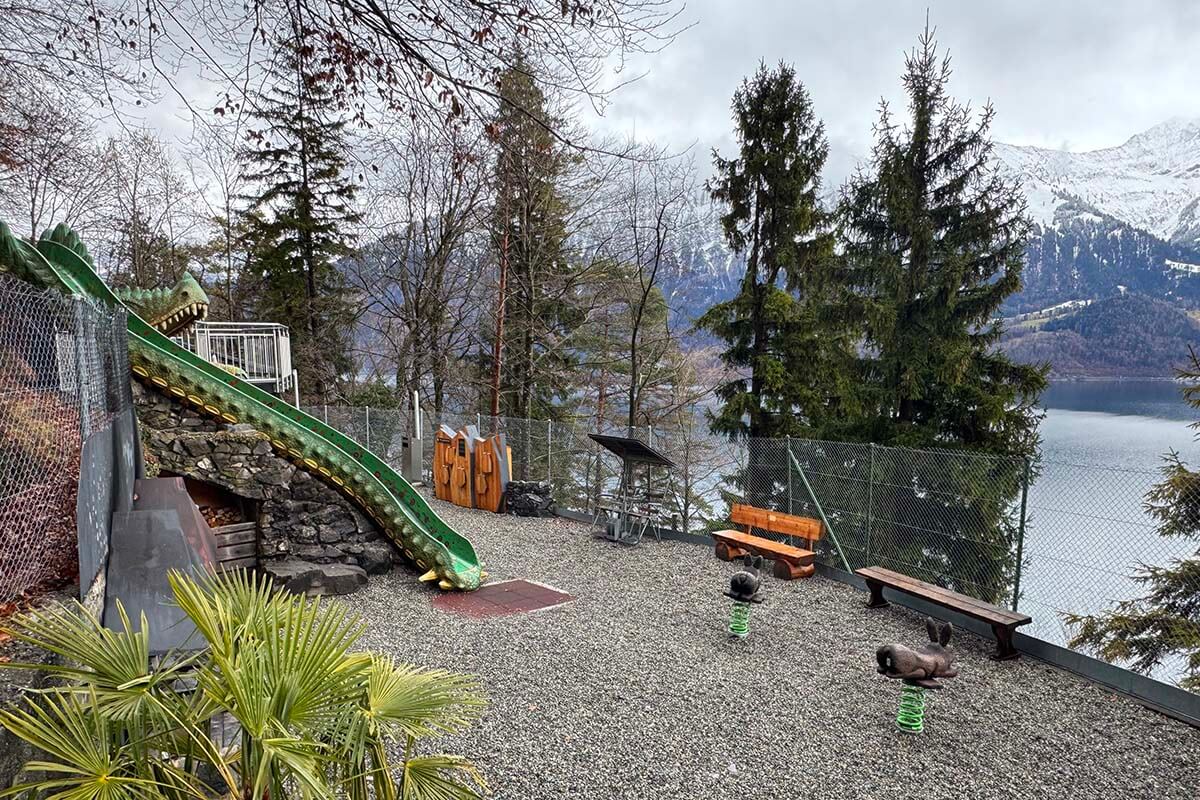
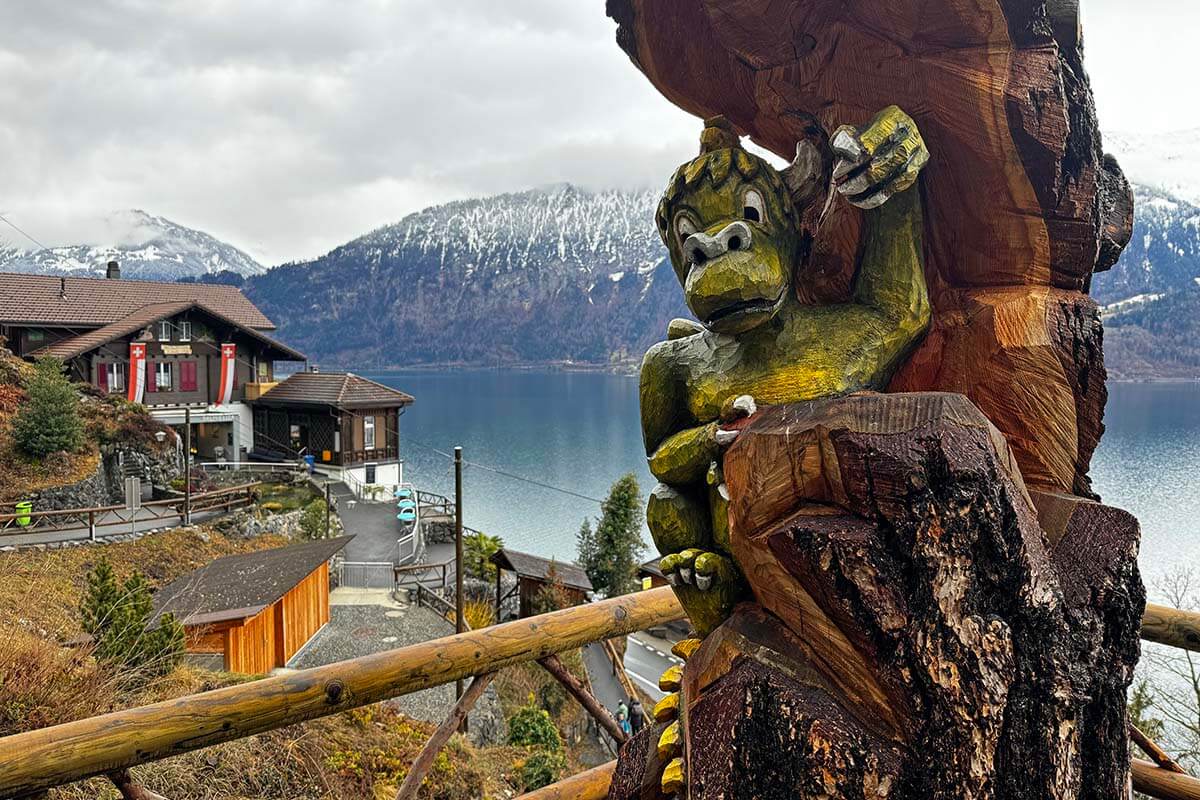
You may also want to know that there is a small playground for kids near St. Beatus Caves. It’s located on the hill, about halfway between the museum and the cave entrance.
Can You See Anything Without Entering?
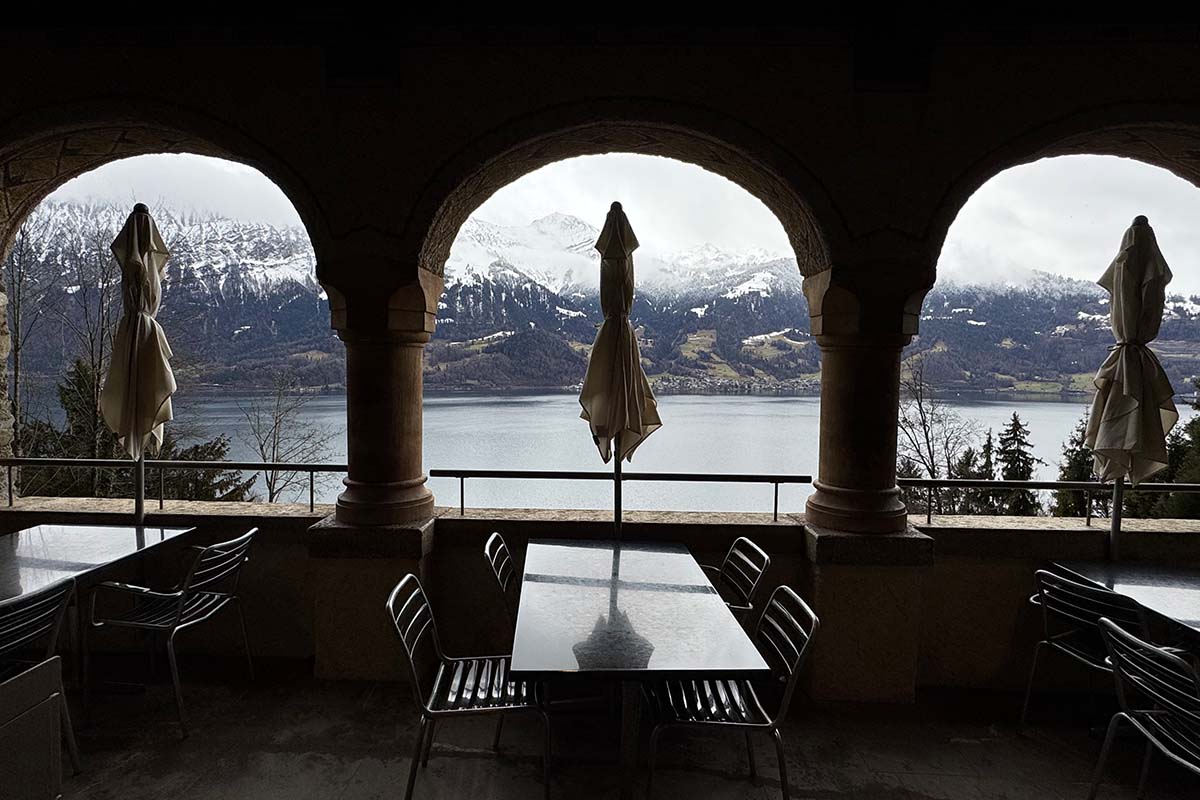
Yes, you can see a small part of St. Beatus Caves without buying a ticket. From the restaurant area, you can see the cave opening in the rock face (see the photo below).
In addition, just before the ticket gate, you’ll find the Beatus Cell. This is traditionally believed to be the place where Saint Beatus lived. It’s accessible without a ticket, so you can take a look even if you decide not to go inside the main cave system.
Several waterfalls also cascade down the cliff beneath the cave entrance, and they’re clearly visible from the main road. There’s a short, free uphill walk toward the entrance area, where you can get a closer look at the waterfalls and enjoy beautiful views over Lake Thun.
That said, what you see from outside is only a small glimpse of the full experience. To understand what truly makes St. Beatus Caves special, you have to step inside.
Is St. Beatus Caves Worth It?
Yes, if you’re already in the Interlaken or Lake Thun area and have a few hours to spare, St. Beatus Caves are well worth a visit.
From the outside, the waterfalls and cliffside setting are scenic, but they only hint at what makes this place special. The real experience is walking nearly a kilometer inside the mountain, seeing underground lakes and waterfalls up close, and exploring chambers that feel surprisingly spacious and varied.
If you’ve visited other cave systems before, you might expect mostly stalactites and stalagmites. Here, the combination of flowing water, elevation changes, and multiple chambers makes the visit feel more dynamic and engaging. It’s also manageable for most travelers with average fitness.
If you’re trying to choose between St. Beatus Caves and Trümmelbach Falls nearby, keep in mind that they offer very different experiences. Trümmelbach is more about the sheer power of glacier-fed waterfalls rushing through a narrow gorge, while St. Beatus feels calmer and more varied, with lakes, tunnels, and water features spread throughout the cave system.
That said, if your schedule is very tight and you’re focusing only on the absolute highlights of the Jungfrau Region (such as Jungfraujoch, Grindelwald-First, or Schynige Platte), this isn’t an essential stop. We’ve visited this part of Switzerland dozens of times over the years before discovering St. Beatus Caves.
But if you enjoy nature, unique landscapes, and places that feel a bit different from the typical mountain viewpoints, St. Beatus Caves make a nice addition to your itinerary. In our opinion, it’s worth your time more than Interlaken town itself.
READ ALSO: Interlaken Day Trip – How to Spend a Day near Interlaken
Practical Information
Opening hours & tickets: St. Beatus Caves are open year-round, but opening hours vary by season. You can buy tickets online or at the entrance (might have to wait longer). For current hours, you may also want to check the official website before your visit.
Regional discounts and combined tickets: Small discounts may apply with certain regional guest cards valid in the Bernese Oberland. There are also combined tickets available, such as a St. Beatus Caves + Lake Thun cruise option, which can offer better value if you plan to do both. Alternatively, you can book a Lake Thun and Lake Brienz boat day ticket online and quickly see both lakes.
Public transport passes: If you have a Swiss Travel Pass or the Berner Oberland Regional Pass, it covers buses and boats in this area, including Bus 21 between Interlaken and Thun and regular Lake Thun cruises. The Jungfrau Region Travel Pass includes the boat, but not bus 21. Guest cards provided by local hotels typically include free bus travel and a discount on Lake Thun boat cruises and cave admission.
Accessibility: Due to the many stairs and elevation gain, the caves are not suitable for strollers or wheelchairs.
Crowds: Summer and holiday periods are the busiest. For a quieter visit, come early in the morning or later in the afternoon. Saturday evenings are often calmer.
Facilities: At the entrance area, you’ll find restrooms, a small museum (included in your ticket), a gift shop, and a restaurant. If you plan to eat here, allow extra time.
What to wear: The cave temperature stays around 8–10°C (46–50°F) throughout the year, and humidity is high (around 95%). Bring a light jacket or sweater and wear sturdy, non-slip shoes.
Dogs: Dogs are allowed inside St. Beatus Caves, but they must be kept on a leash at all times. Keep in mind that the many stairs, wet surfaces, and constant cool temperature may not be comfortable for every dog. It can also get quite busy during peak times, so consider how your dog handles crowds and enclosed spaces before bringing them along.
Events & special evenings: Throughout the year, St. Beatus Caves occasionally host special events such as fondue or raclette dinners or Sunday brunches. If you are looking for something different, check their website to see if any events coincide with your trip.
Where to stay: Interlaken is the best base if you have a few days to explore both the lakes and the top mountain destinations in the Jungfrau Region. For a good-value stay in a very central location, take a look at Hotel Interlaken. It’s within walking distance of both train stations and the boat docks, which makes it very convenient for day trips.
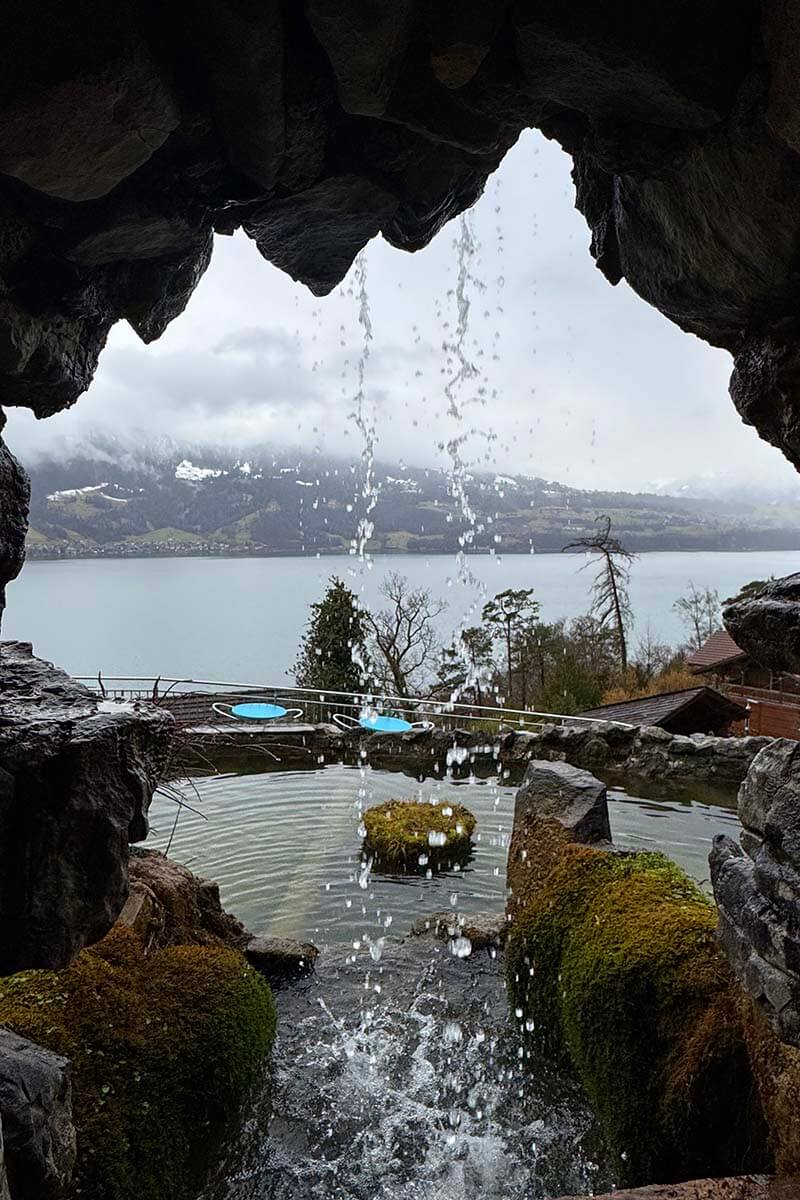
If you’re looking for something more upscale and closer to St. Beatus Caves, we stayed at BEATUS Wellness- & Spa-Hotel. This is more of a lakefront retreat than just a place to sleep between sightseeing stops. With spa facilities, pools, lake views, and excellent dining, it’s a great option if you want to slow down and add some real downtime to your Switzerland itinerary.
FAQ
Plan about 1.5–2 hours total, including the cave walk, short museum visit, and the uphill walk to the entrance.
Yes, the caves are open year-round. The interior temperature stays around 8–10°C (46–50°F) in all seasons.
Yes, but you’ll need to supervise children closely. There are many stairs and wet sections, and the caves are not stroller-friendly.
Yes. Bus 21 between Interlaken and Thun stops directly at Beatushöhlen. You can also arrive by boat on Lake Thun.
Yes, especially if you’re already in the Interlaken or Lake Thun area. The real highlight is walking nearly a kilometer inside the mountain, seeing underground lakes and waterfalls up close. If you enjoy nature and unique landscapes, it’s a rewarding stop.
You can see the exterior waterfalls and parts of the cave opening from the road and the restaurant area without a ticket. However, the main cave system with underground lakes and waterfalls requires paid admission.
TIP: If you’re planning your first trip, our 10-day Switzerland itinerary is a good place to start. You could visit St. Beatus Caves on days 7-8 in the itinerary.
Travel guides to some of our favorite places in Switzerland:
- Top cities:
- Lucerne area:
- Zermatt:
- Some of our favorite hikes:
- For more destinations, hikes, and travel inspiration, please see our Switzerland travel guides.
TIP: Did you find this guide helpful? Bookmark this post for later, share it with your friends, and save it to Pinterest to inspire your next trip.


Many thanks