
Interlaken in Winter: 12 Best Places to Visit & Things to Do (+Seasonal Tips)
This site contains affiliate links, which means that we may earn a small commission, at no cost to you, for qualifying purchases. It supports the work that goes into keeping this content free. Thanks for reading! More info: Privacy Policy.
Planning a winter trip to Interlaken, Switzerland, and wondering what you can see and do in this season? This guide covers the best places to visit in Interlaken in winter and the top things to do, from high mountain viewpoints and alpine villages to scenic lake trips and winter activities.
Interlaken in winter is very different from summer, but there is still plenty to experience. You can visit top mountain destinations like Jungfraujoch and Schilthorn, explore villages like Grindelwald, Wengen and Mürren, take a Lake Thun cruise, or see underground waterfalls at St. Beatus Caves. For more active winter experiences, you can go skiing, sledding, winter hiking, snowshoeing, or even paragliding.
We’ve visited the Interlaken area many times in different seasons, including ski vacations in Wengen and several winter trips to the Jungfrau region. This guide is based on first-hand experiences and a recent visit to Interlaken in February.
You’ll find realistic ideas for what you can see and do in the Interlaken area in winter, along with practical tips to help you plan your visit. With the right expectations and a bit of flexibility, you can truly make the most of your trip, no matter the weather.
Practical Tips for Visiting Interlaken in Winter
Before deciding which places to visit or finalizing your itinerary, here are a few important things to know when planning a trip to Interlaken in winter:
Mountain trips require some planning. Most excursions near Interlaken involve multiple train or gondola connections, often via towns like Grindelwald, Lauterbrunnen, Wengen, or Mürren. These villages are charming and worth a short stop, but they work best as part of a mountain day trip rather than standalone destinations. To help you plan realistic winter days, we’ve indicated which places are easiest to combine.
Visit one major mountain destination per day. Mountain trips take more time than you might expect. Trying to visit a few major destinations on the same day would mean rushing between trains and gondolas, and you wouldn’t have time to properly enjoy either place.
Consider a transport pass. If you’re planning a longer Switzerland itinerary and are using public transportation, the Swiss Travel Pass can be a good option. If you’re traveling by car, the Half Fare Card usually makes more sense. Both offer significant discounts on mountain railways, gondolas, and many attractions. If you’re spending several days skiing or exploring mountain destinations in the Jungfrau region, look into regional multi-day winter passes.
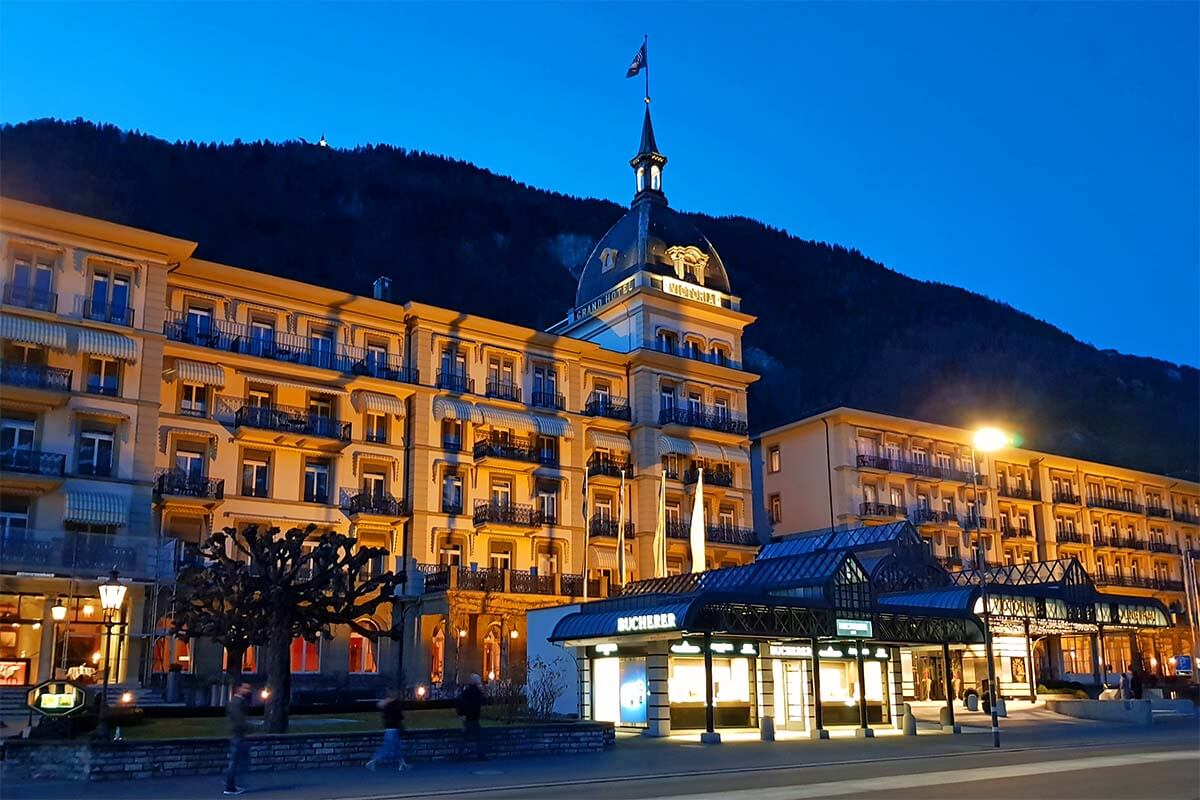
Choose your accommodation strategically. Winter weather in the mountains can change quickly. Staying in a hotel with a spa, indoor pool, or wellness area gives you a backup plan if conditions aren’t ideal. It’s also a great way to relax after a long day in the snow. Here are some of our favorite winter-friendly hotels in the region:
- Interlaken: Victoria-Jungfrau Grand Hotel & Spa or Grand Hotel Beau Rivage Interlaken
- Wengen: Braunbär Hotel & Spa
- Grindelwald: Sunstar Hotel & Spa
Usually, we stay in Wengen when visiting the region for a longer mountain vacation. On a recent winter trip, however, we stayed at BEATUS Wellness & Spa Hotel. This lakeside hotel, with excellent wellness facilities including a heated outdoor pool, is about a 15-minute drive from Interlaken (around 30 minutes by bus). It’s slightly less convenient for mountain excursions, but if you’re focusing on Lake Thun sights or want a relaxing winter stay, it’s a great choice.
Check for seasonal closures. Not everything operates in winter. Some attractions, smaller museums, and even restaurants close between late fall and spring. For example, Harder Kulm is usually closed during the winter months, and Lake Brienz boat cruises don’t run at all. In this guide, we only include places that are normally open in winter, but it’s still wise to check official websites before your visit, as short maintenance breaks or weather-related closures can happen.
Weather varies by altitude. Conditions in Interlaken can be completely different from those in the mountains. Always check the forecast and webcams before heading up, and keep some flexibility in your plans.
Dress properly for winter conditions. Warm, waterproof clothing is essential in Interlaken in winter, especially if you plan to visit the mountains. Wear insulated layers, a waterproof jacket, winter pants, gloves, a warm hat, and proper winter boots with good grip. Even if temperatures in Interlaken feel mild, it can be much colder and windier at higher elevations. See our guide to the best winter boots for travel if you’re unsure what to pack.
Here are the best places to visit and things to do in the Interlaken area in winter:
1. Jungfraujoch (Top of Europe)
High-alpine scenery, an ice palace, and guaranteed snow.
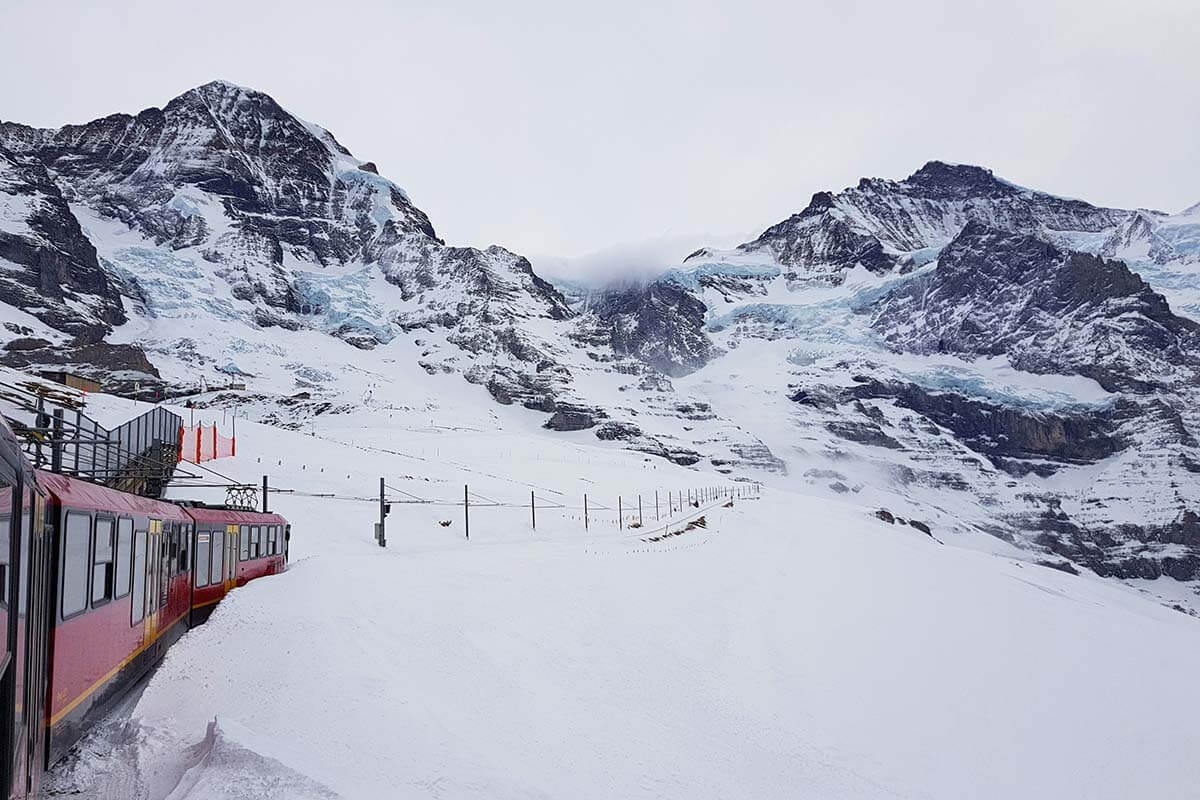
Jungfraujoch is one of the most impressive mountain destinations in Switzerland and one of the top places to visit near Interlaken in any season. Home to the highest railway station in Europe at 3,454 meters (11,332 ft), it’s known as the Top of Europe. Thanks to its high elevation, you can expect snow and a true winter atmosphere even when conditions in the valley look completely different.
At the top, you’re surrounded by glaciers, wide snowy landscapes, and some of the most striking mountain scenery in the country. On a clear day, views stretch across the Aletsch Glacier and the surrounding peaks, making this one of the most rewarding winter excursions near Interlaken.
The journey itself is part of the experience, with spectacular views along the way. Once at the top, you can step onto the Sphinx Observation Deck for panoramic views, walk through the Ice Palace carved inside the glacier, head out onto the snow plateau, and explore the exhibitions and shops inside the complex. Because much of the visit takes place indoors, Jungfraujoch is a good option even on very cold winter days.
The trip is best done on a clear day for the views, but in certain conditions, you may find yourself above the cloud layer. We visited on such a day once and it was magical.
Best for: First-time visitors and anyone who wants to reach a true alpine winter environment without skiing.
Getting there: By train from Interlaken Ost via Grindelwald or Lauterbrunnen. Trains run year-round and the attraction is open daily. It’s best to reserve the train to Jungfraujoch in advance, especially in the peak winter season (and definitely if you decide to come in summer). You can also visit with a guided tour from Interlaken.
How much time do you need: The journey takes about 2–2.5 hours one way. With time at the top and optional stops along the way, you need a full day.
TIP: Get train tickets via Lauterbrunnen, so you can also stop in the car-free village of Wengen (best on your way down). Take some time to enjoy the views at Kleine Scheidegg as well, where you’ll switch trains for the final stretch on the Jungfraujoch Railway.
Good to know: It can be very cold at the top, especially with wind. Wear waterproof winter boots, gloves, a warm hat, and bring sunglasses for the snow glare.
LEARN MORE: Complete Guide to Visiting Jungfraujoch
2. Grindelwald-First
Panoramic views and a wide range of winter activities in one easy day trip.
Grindelwald is one of the easiest and most accessible winter destinations near Interlaken. Just half an hour by train, this lively mountain town offers a true alpine setting. You can stroll through the village, enjoy close-up views of the Eiger, and continue up to Mount First for even bigger scenery and a wide range of winter activities.
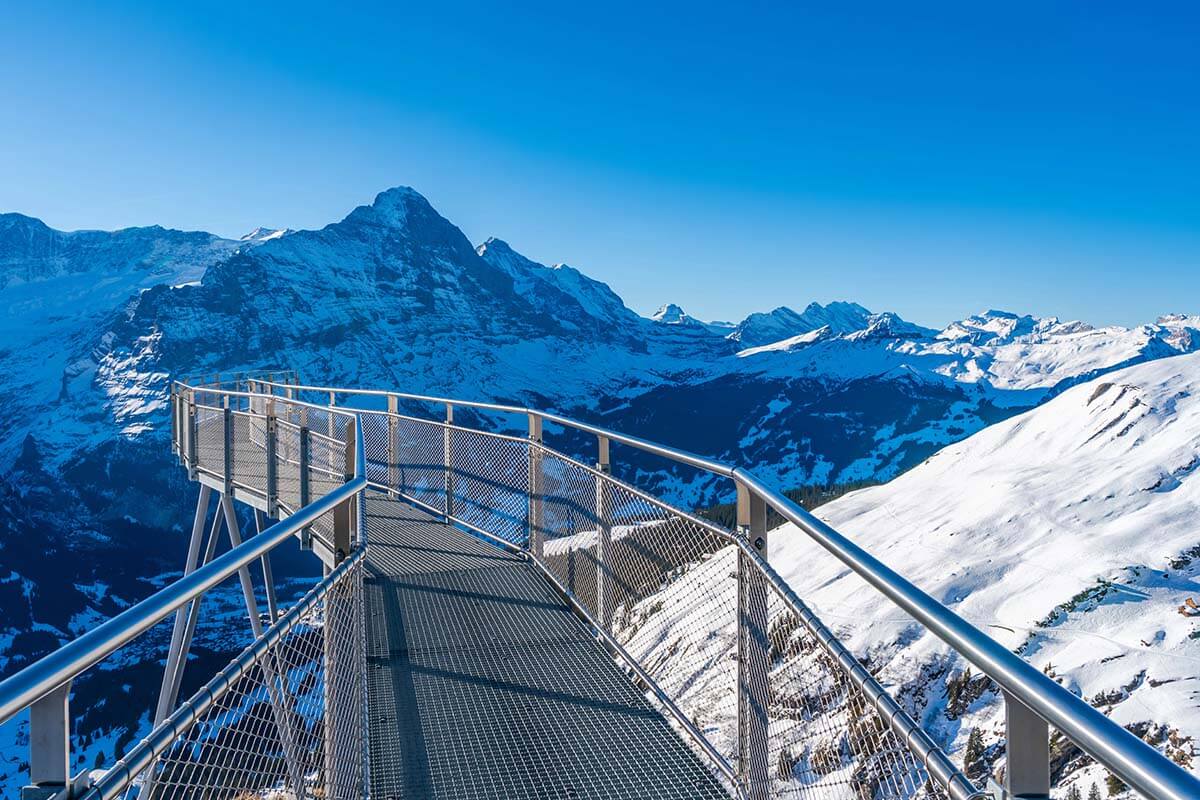
The town itself is mostly hotels, restaurants, and shops, but the real highlight is Grindelwald-First. Weather permitting, most attractions operate in winter as well. You can enjoy 360° views from the “First View” platform, walk the Cliff Walk, try the First Glider “eagle” flight, or ride the First Flyer zip line. In addition, there are winter hiking trails, sledding runs, and excellent skiing opportunities in the area.
What makes Grindelwald-First a great choice for a day trip is a mix of scenery, activities, and flexibility. You can keep it simple with just the gondola ride and the views, or add extra activities depending on the weather, your interests, and how much time you have.
Best for: Travelers who want some of the best mountain views in the region, combined with optional winter activities. It’s also a good choice for families looking for accessible snow experiences near Interlaken.
Getting there: Take a direct train from Interlaken Ost to Grindelwald. From the station, it’s a short walk to the Firstbahn gondola. You can get gondola tickets here.
How much time do you need: Plan at least half a day. If you include activities or a winter walk, it can easily take most of the day. You can also combine the scenic views at Grindelwald-First with sledding at the Bodmi ski area. Grindelwald town also has many nice restaurants for dinner.
Good to know: Activities such as First Glider and First Flyer are weather-dependent and best reserved in advance (more info here). Wear proper winter boots and dress warmly.
3. Schilthorn & Mürren
Big mountain views combined with a quiet car-free alpine village.
If you’re looking for a high mountain experience without going all the way to Jungfraujoch, Schilthorn is an excellent alternative near Interlaken. At 2,970 meters (9,744 ft), it offers panoramic views of the Eiger, Mönch, and Jungfrau, and has a quieter, less commercial atmosphere.
The revolving restaurant at the top — Piz Gloria — is famous from the James Bond movie On Her Majesty’s Secret Service. Even if you’re not into Bond, the 360° views from the summit are impressive, with snow-covered peaks all around.
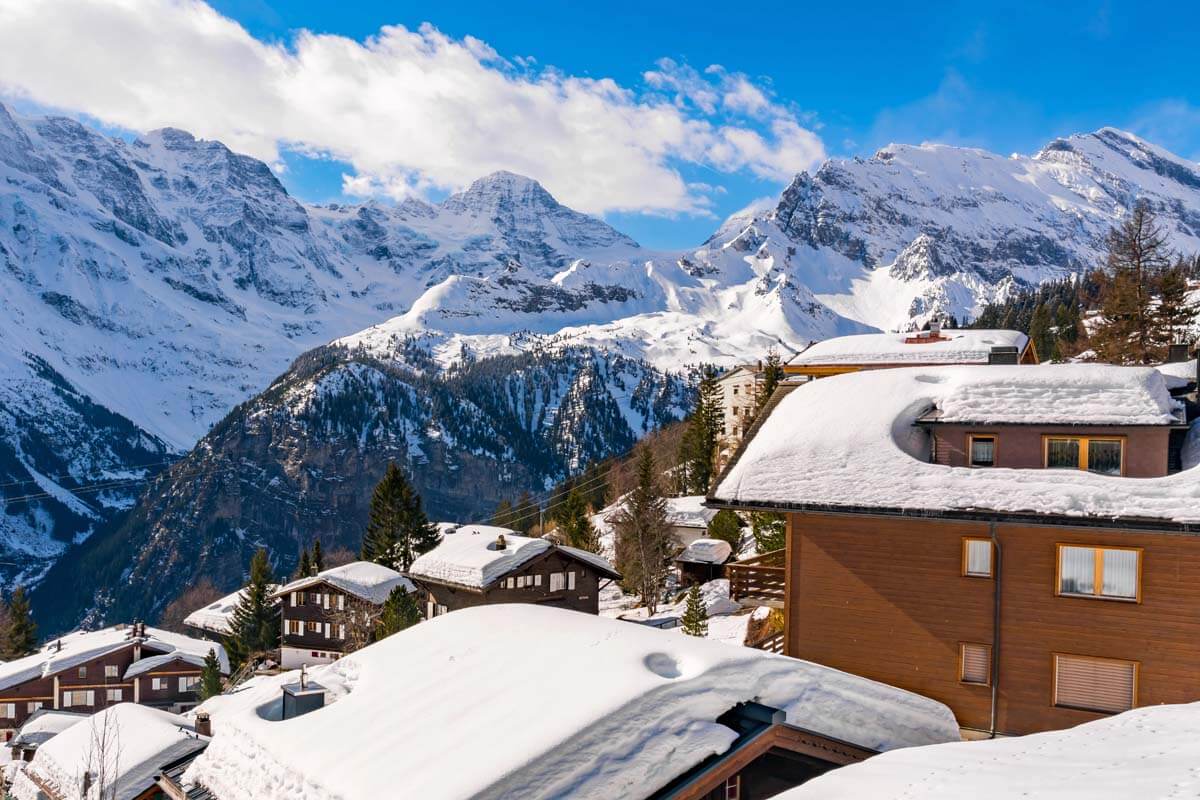
On the way up, you pass through Mürren, a charming car-free mountain village that’s well worth a stop. In winter, Mürren feels peaceful and authentic, with wooden chalets, snowy streets, and beautiful mountain views right from the village center. If you’re lucky to come after a snowfall, the village looks picture perfect. In addition, Mürren is also a great place for paragliding, also in winter.
Best for: Travelers who want big mountain views without the higher price tag of Jungfraujoch. It’s also a great option if you prefer a quieter setting and want to combine a summit visit with time in a traditional alpine village.
Getting there: From Interlaken, take the train to Lauterbrunnen, then continue by cable car and train via Grütschalp to Mürren, and onward by cable car to Schilthorn. Alternatively, you can visit with a guided tour from Interlaken.
How much time do you need: Plan a good part of the day, especially if you spend some time in Mürren for a walk or lunch. In addition, you could also visit Lauterbrunnen Valley on the same day (best after the mountain visit, before heading back to Interlaken).
Good to know: As with all high mountain excursions, this trip is best done on a clear day for the views. Check the weather forecast before heading up. Dress warmly and wear proper winter footwear.
4. Männlichen
One of the best ski areas in the Jungfrau region, with panoramic ridge views and winter paragliding.
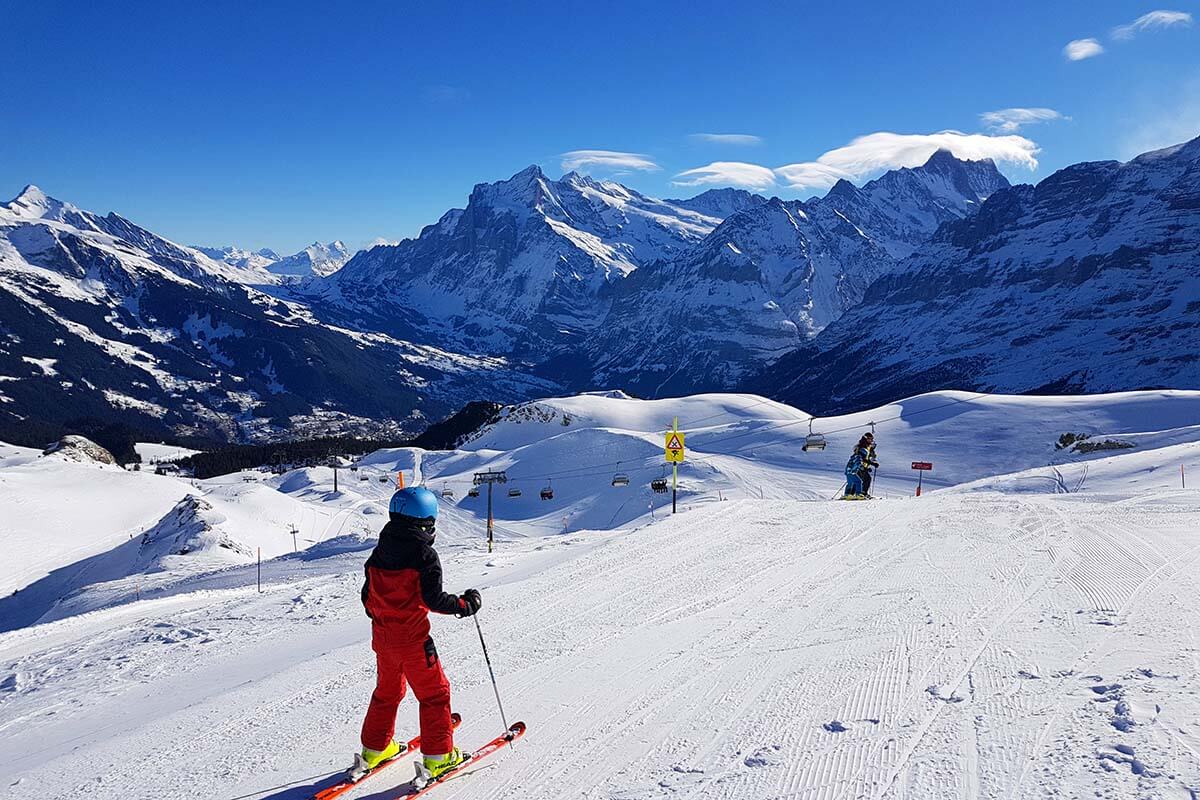
Männlichen is one of the top winter destinations near Interlaken for skiing. Located between Wengen and Grindelwald, this broad mountain ridge offers wide-open views of the Eiger, Mönch, and Jungfrau, along with direct access to one of the largest connected ski areas in the region.
If you’re planning a day on the slopes, this is our top choice near Interlaken. The ski runs are at a higher elevation, which usually means better snow conditions throughout the season. It’s also less focused on sightseeing than Grindelwald-First, so the atmosphere feels more geared toward winter sports.
In addition to skiing and snowboarding, you can book a paragliding flight, or take the short Royal Walk to a summit viewpoint for even better views. There are also winter hiking trails and sledding options, but most people come here for the long, scenic ski runs that suit a range of levels.
Best for: Skiers and snowboarders, as well as anyone interested in winter paragliding or panoramic mountain views in a less touristy setting.
Getting there: You can reach Männlichen by cable car from Wengen or by gondola from Grindelwald Terminal. The ski area is also connected to Kleine Scheidegg via the slopes.
How much time do you need: If you’re skiing, plan a full day (or more). If you’re visiting just for the views or a paragliding flight, half a day is usually enough.
Good to know: Ski equipment can be rented in Wengen or Grindelwald. It’s best to reserve in advance, especially during peak season. If you prefer an easier option (for beginners), book a ski day that includes equipment and transportation from Interlaken, so you don’t have to worry about the logistics.
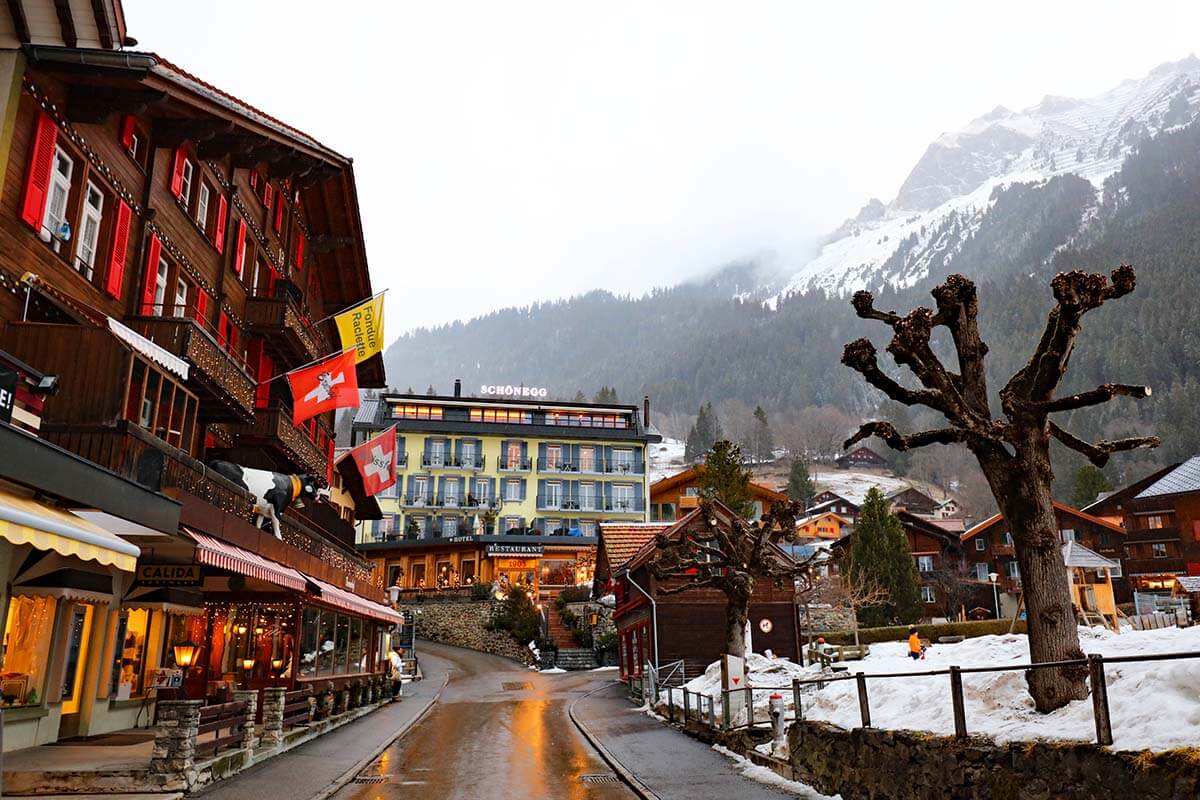
5. Wengen
Car-free mountain village and an excellent base for a longer stay in the Jungfrau region.
Wengen is one of the most charming places to stay near Interlaken in winter. This car-free village sits on a sunny terrace above Lauterbrunnen Valley and offers direct access to the Jungfrau ski area as well as all the major mountain excursions mentioned earlier. If you’re planning a longer winter trip focused on the mountains, Wengen is a much better base than Interlaken. You’re already at altitude, close to the slopes, and surrounded by alpine scenery.
If you are looking for places to visit near Interlaken for a short visit, Wengen is just as easy to include. You can stop here on your way to or from Jungfraujoch, and combine it with a walk in Lauterbrunnen Valley on the same day. If you’re skiing or sledding on Männlichen, Wengen is one of the best access points.
The village itself is compact and easy to explore on foot. You’ll find stunning mountain views, traditional chalets, and a relaxed winter atmosphere. In addition to skiing, you can try sledding or curling. There’s usually an outdoor ice rink for skating in the village as well. The local tourism office often organizes guided village walks and small winter events.
Best for: Travelers looking for a scenic mountain base in winter, as well as day trippers who want to see a traditional car-free village in combination with Jungfraujoch or paragliding at Männlichen.
Getting there: Take the train from Interlaken Ost to Lauterbrunnen and continue by mountain train to Wengen. The journey takes about 45 minutes and runs year-round.
How much time do you need: You can see the village in about half an hour. Plan a few hours if you want to go ice skating or have lunch. If you’re skiing or using Wengen as a base for multiple mountain excursions, you can easily spend several days here.
LEARN MORE: Skiing in Wengen (with practical winter tips)
6. Lauterbrunnen Valley
Dramatic valley scenery and an easy stop between mountain excursions.
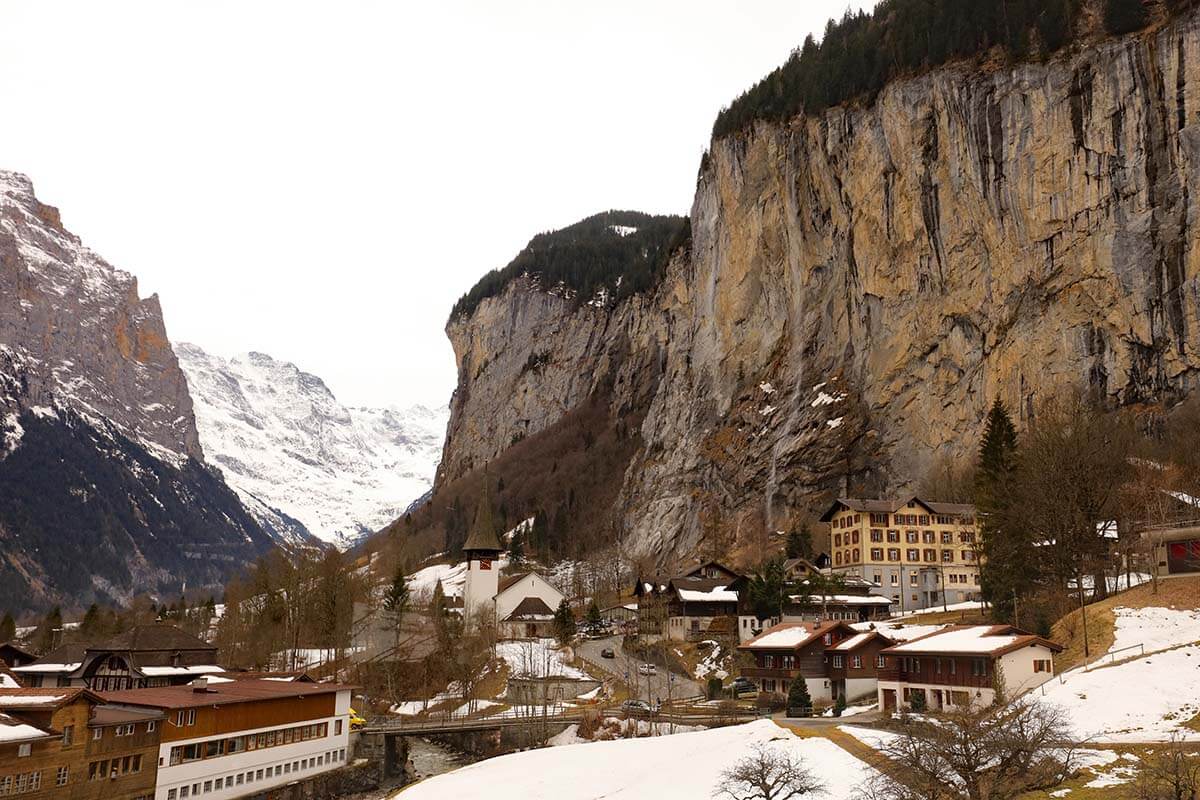
Lauterbrunnen Valley is one of the most scenic areas near Interlaken. Known as the “Valley of 72 Waterfalls,” it’s surrounded by steep rock cliffs with waterfalls cascading down on both sides.
In winter, however, neither snow nor powerful waterfalls are guaranteed. Some falls may be partially frozen after cold spells, while others can be reduced to a trickle or barely visible. The atmosphere is also much quieter than in summer.
One of the biggest advantages of visiting Lauterbrunnen is that it’s easy and relatively low effort. The valley floor is mostly flat, making it ideal for a relaxed walk without going to high altitude. It also combines very well with mountain excursions to Jungfraujoch, Wengen, Männlichen, Mürren, or Schilthorn, since you’ll likely pass through here anyway.
Best for: An easy stop with dramatic scenery; best in combination with the mountain trips.
Getting there: Direct train from Interlaken Ost in about 25 minutes.
How much time do you need: 30–60 minutes for a short stroll, or a couple of hours if you walk further along the valley.
Good to know: Conditions and scenery vary a lot depending on recent weather. Also, keep in mind that the famous Trümmelbach Falls in Lauterbrunnen are closed in winter. Instead, you can visit St. Beatus Caves – more info further below.
7. Lake Thun Cruise
Scenic winter boat ride between mountains and lakeside towns.
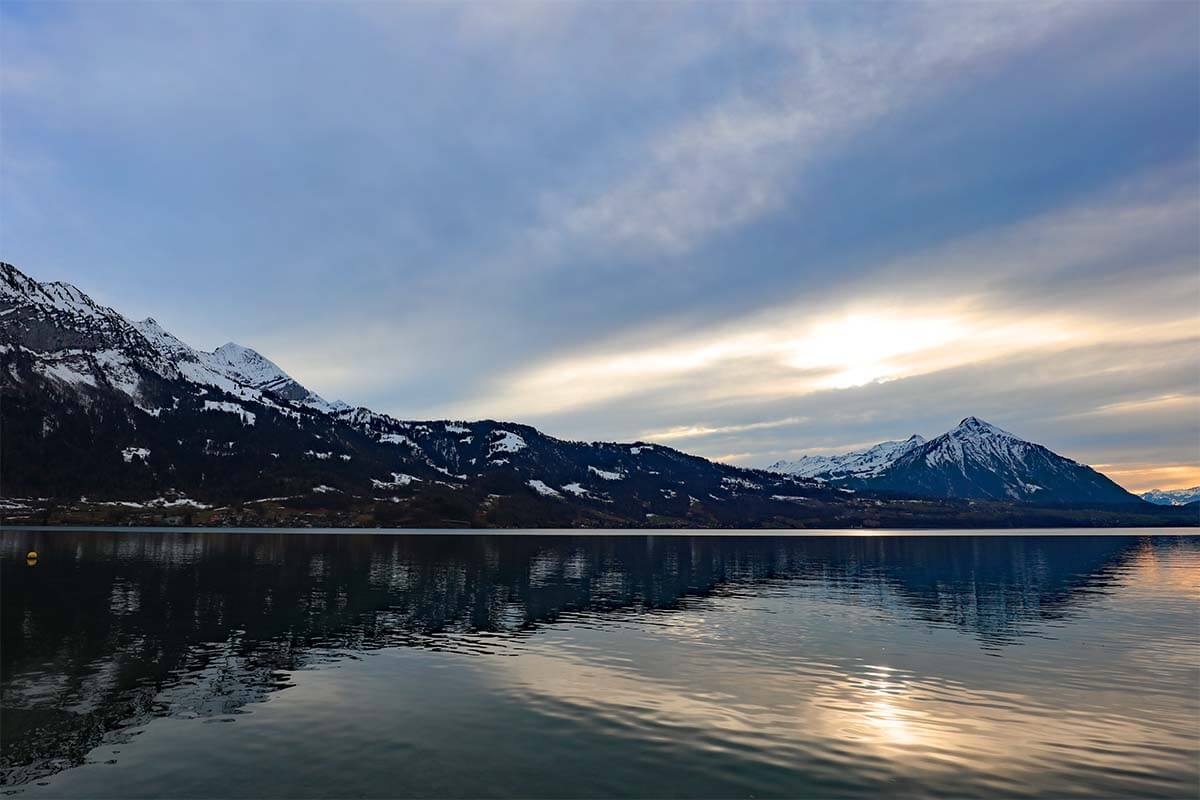
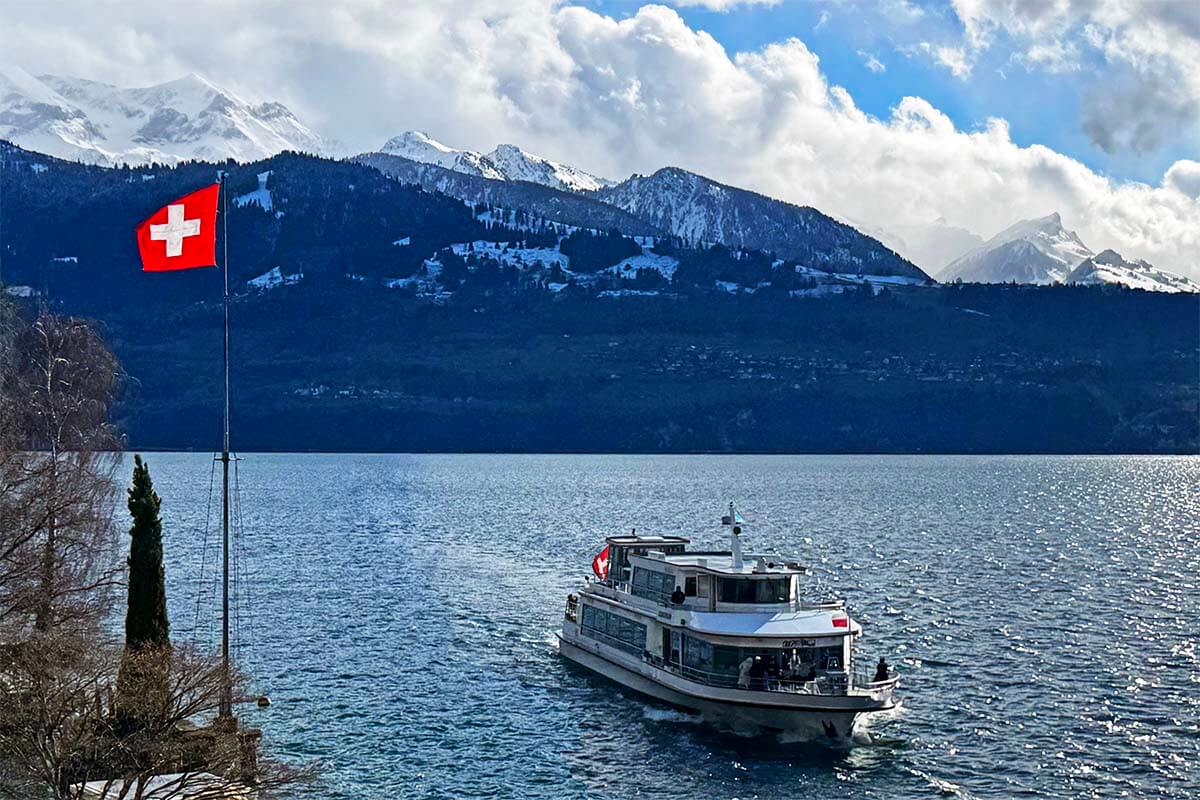
Located between two beautiful lakes, a boat trip is one of the classic things to do in Interlaken. In winter, cruises on Lake Brienz don’t operate, but Lake Thun cruises run year-round. A scenic boat trip is one of the easiest and most relaxing winter activities near Interlaken. The lake offers a completely different perspective from the mountain excursions, with small towns along the shore and snowy peaks in the distance.
Winter timetables are more limited than in summer, but there is usually at least one daily connection between Interlaken and Thun. Heated indoor cabins make the ride comfortable even on cold days, and you can step outside for fresh air and open views of the surrounding mountains.
You can cruise from Interlaken West to Thun, explore the town or another lakeside village, and return by bus or train. It’s a good option when mountain weather isn’t ideal or if you’re simply looking to add some variety beyond the peaks.
Best for: A relaxed winter experience, lake views, and an easy excursion suitable for all fitness levels.
Getting there: Boats depart from Interlaken West. Check the winter timetable in advance, as departures are less frequent than in summer.
How much time do you need: The boat trip from Interlaken to Thun takes about 2 hours and 10 minutes. Plan at least half a day if combining it with time in Thun or another lakeside town.
Good to know: The winter schedule is often designed around just one boat per day. It typically starts in Thun in the morning and returns from Interlaken in the afternoon. For a full-day excursion, you could visit St. Beatus Caves in the morning, board the boat nearby, continue to Thun, and return by bus or train.
8. Thun
Historic lakeside town with castle views and a relaxed winter atmosphere.
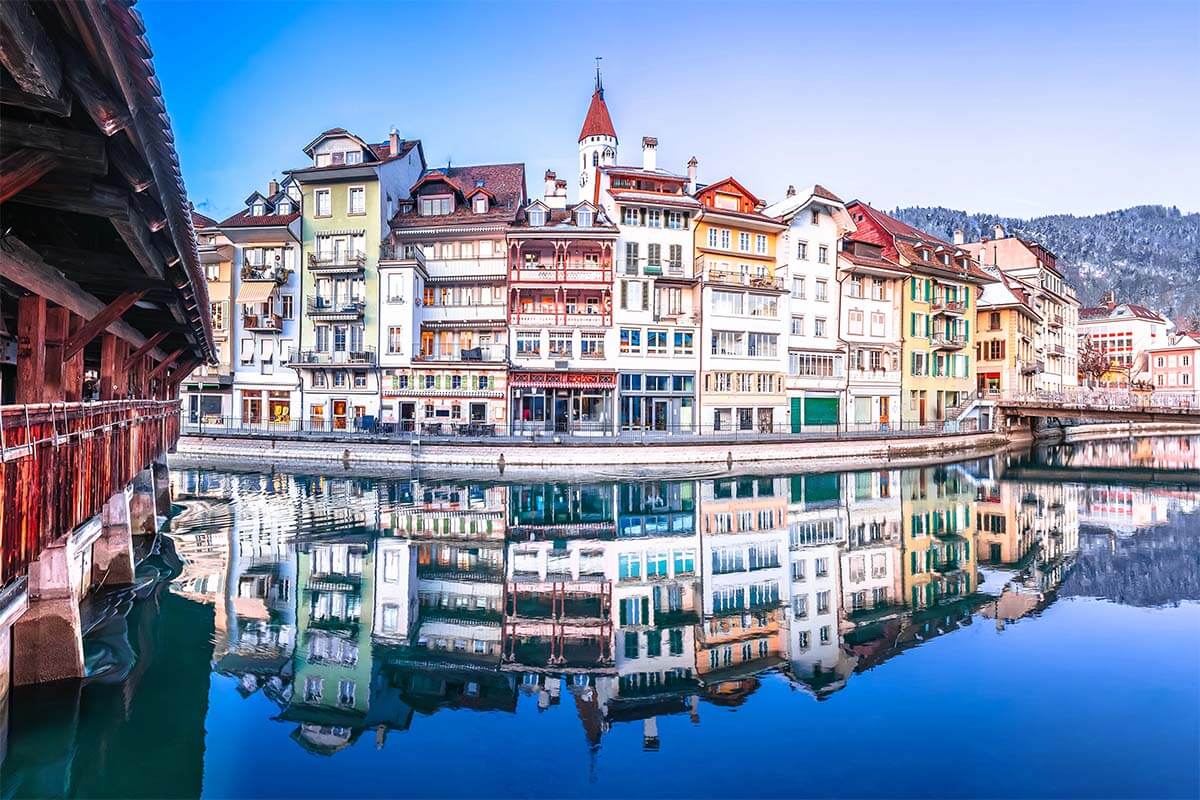
Thun is a pleasant town on the western end of Lake Thun, often visited as part of a lake cruise from Interlaken. While it’s not a major attraction in its own right, it makes a nice stop if you want a change from the mountains.
The highlight is Thun Castle, which sits above the Old Town and offers good views over the lake and surrounding peaks. The historic center itself is compact and easy to explore, with small shops, cafés, and restaurants. You can also walk along the River Aare, where the water flows bright blue even in winter.
Snow is not guaranteed, and the experience here is more about strolling and enjoying the setting rather than ticking off major sights. That said, on a clear day, the combination of lake, castle, and mountain views can be very rewarding.
Best for: A relaxed lakeside stop, best combined with a Lake Thun cruise.
Getting there: By boat from Interlaken West (2h10), by bus (50 minutes), or by train (30 minutes).
How much time do you need: 1–2 hours is enough to walk through the Old Town and visit the castle. Plan longer if you stop for lunch.
Good to know: Thun Castle is open year-round, but always check opening hours in advance. For example, between November and January, the castle is usually only open on Sunday afternoon.
9. St. Beatus Caves
Underground waterfalls and a weather-proof winter excursion.
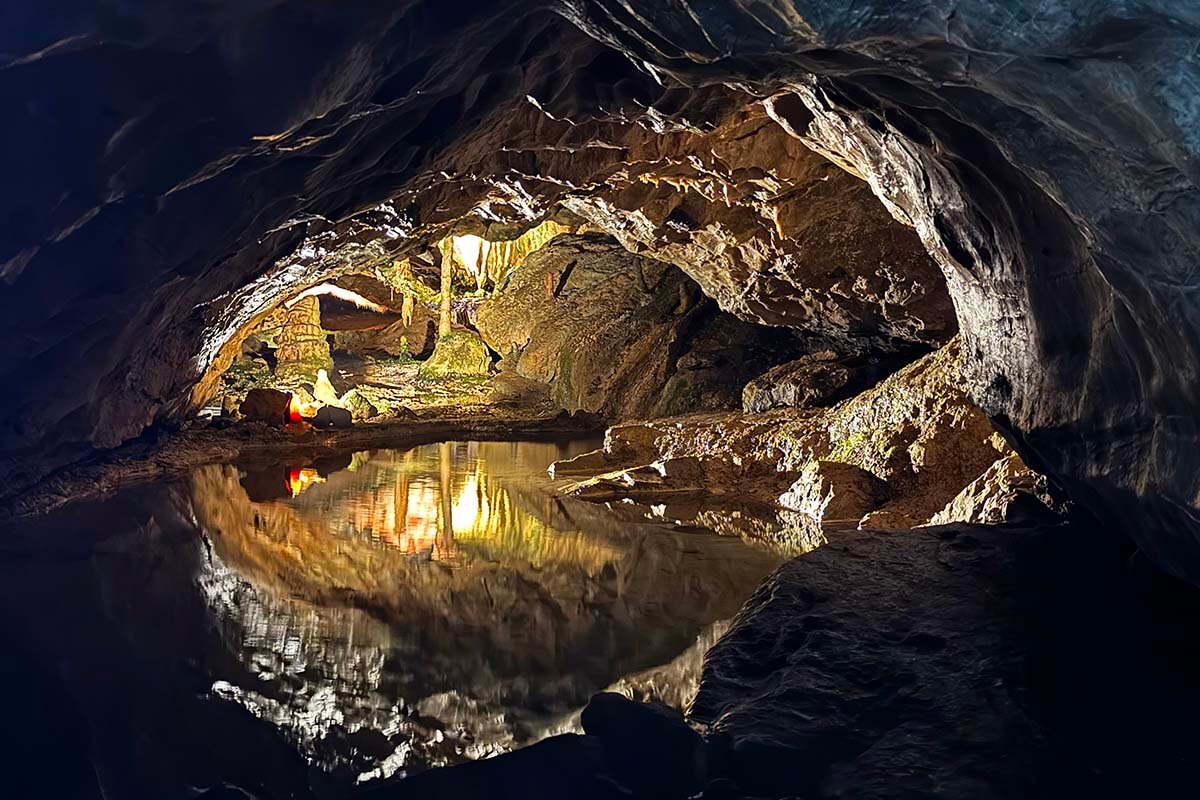
If you’re looking for something different from mountain peaks and alpine villages, St. Beatus Caves are one of the most unique places to visit near Interlaken in winter. Located above Lake Thun, the caves are open year-round and make a good option in any weather.
Inside, you follow a network of tunnels carved into the rock, walking alongside an underground river past small waterfalls, pools, and striking rock formations. Even in winter, there is usually plenty of flowing water. The path is well maintained, well lit, and easy to follow, with information panels along the way.
The setting outside adds to the visit, with waterfalls cascading down in several tiers near the entrance. From here, you also have wide views over Lake Thun and the surrounding mountains.
Best for: A weather-proof activity, families, and anyone looking for something different from the popular mountain excursions.
Getting there: By car (parking is very limited) or by bus 21 from Interlaken toward Thun (about 15 minutes). You can also combine your visit with a Lake Thun cruise, as boats stop nearby — just check the schedule in advance.
How much time do you need: Plan about 2 hours for the caves and viewpoints. For a full-day excursion, combine a morning visit to the caves with a Lake Thun cruise in the afternoon and a stroll through Thun. Alternatively, pair it with a trip to nearby Niederhorn.
Good to know: The temperature inside the caves stays around 8–10°C (46–50°F) year-round, which often makes it warmer than outside in winter. The paths can be wet, so wear shoes with good grip.
10. Niederhorn
Shorter mountain trip with wide views and fewer crowds.
If you’re looking for a quieter winter mountain excursion close to Interlaken, Niederhorn is a very good option. Located above Lake Thun, it offers wide views of the Bernese Alps and the lake below, without the long travel time or high-altitude exposure of the bigger peaks.
At 1,963 meters (6,440 ft), Niederhorn sits much lower than the region’s famous summits, but the scenery is still impressive. On a clear day, you can see the Eiger, Mönch, and Jungfrau lined up across the valley. The area is known for winter hiking and sledding and is also a family-friendly ski area. Because of the lower elevation, however, snow conditions are not guaranteed throughout the entire winter season.
With fewer sightseeing crowds, the atmosphere feels more local and relaxed. You won’t find large indoor attractions or revolving restaurants here; just open views and simple winter activities in a quieter setting.
Best for: A shorter mountain trip with panoramic views, winter walks, or sledding, especially if you prefer fewer crowds.
Getting there: By car or by bus (boat connections are usually not practical in winter). Take bus 21 from Interlaken to Beatenbucht (about 30 minutes), then the funicular up to Beatenberg, followed by the cable car to Niederhorn. Alternatively, take bus 101 directly to Beatenberg (around 40 minutes) and continue by cable car to Niederhorn. The entire journey takes about 1–1.5 hours, depending on connections.
How much time do you need: Half a day is enough for the entire visit, including a short walk at the summit and some time to enjoy the views. Plan a full day if you want to go hiking, sledding, or skiing. You could easily combine a visit to Niederhorn with St. Beatus Caves on the same day.
Good to know: As with all mountain trips, clear weather makes a big difference. Check the forecast before heading up and dress warmly, as it can be windy at the top. If you plan to do winter hiking, bring good boots and hiking poles.
11. Guided Winter Activities Near Interlaken
Snow experiences for non-skiers, beginners, and anyone looking for something more active.
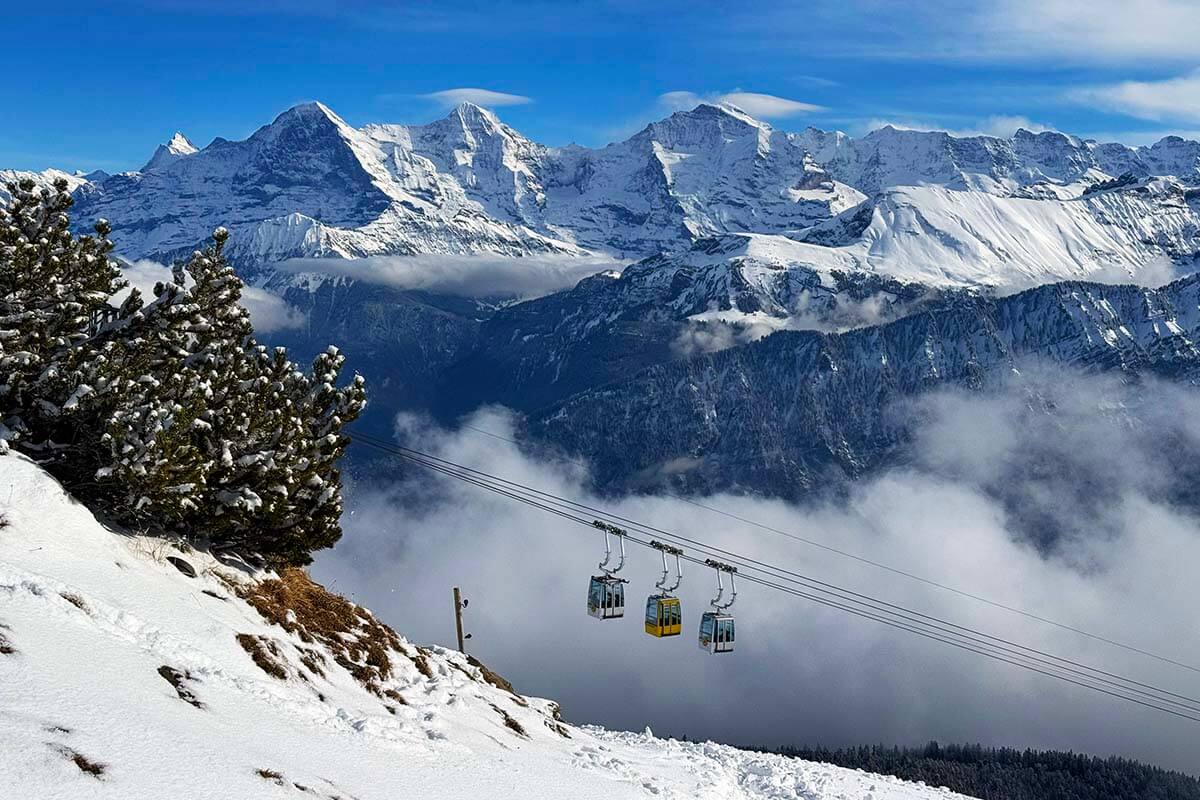
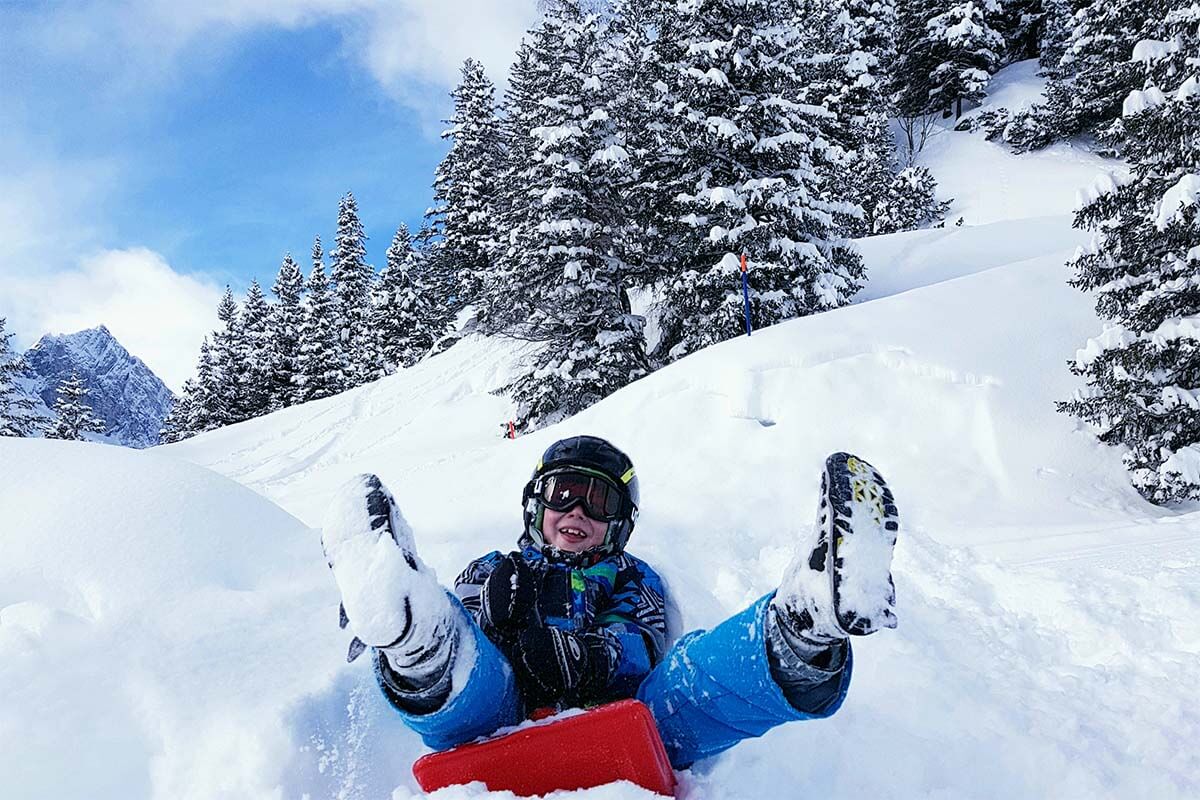
Beyond the top places to visit near Interlaken in winter, you’ll also find plenty of hands-on activities. You can try skiing for the first time, walk through snowy landscapes on a guided tour, or even combine night sledding with a traditional Swiss fondue dinner. Here are some of the best guided winter experiences to consider:
- Night sledding – One of the most fun winter experiences in the region. You can also opt for a sledding experience in combination with a traditional Swiss cheese fondue; it’s a great way to spend a winter evening in Interlaken.
- Snowshoeing tour – A relaxed way to explore snowy landscapes without skiing. Guided tours include equipment and are suitable for beginners.
- Skiing for beginners – An introduction to skiing (or snowboarding) with an instructor, equipment rental, and transportation from Interlaken included. Half-day options are available too. It’s ideal if you want to try skiing near Interlaken without worrying about the logistics.
- Tandem paragliding – See Interlaken from above on a tandem flight with a certified pilot. On clear winter days, the snowy mountain backdrop makes it especially impressive. These tours run year-round but are more weather-dependent than other activities.
Best for: Travelers who want an active winter experience beyond sightseeing, including non-skiers and beginners.
Good to know: Most activities depend on weather and snow conditions. Still, it’s best to book in advance because availability is often limited. The tours and experiences we recommend typically offer free cancellation up to 24 hours before departure, which means you can reserve without much risk. If an activity is canceled by the organizer due to bad weather, you’ll receive a full refund.
12. Winter Events in the Interlaken Area
Christmas markets, New Year’s celebrations, and local winter traditions.
While Interlaken is primarily a base for mountain excursions in winter, there are a few seasonal events that can add extra atmosphere to your winter trip. I wouldn’t plan your trip around any of these, but it’s worth knowing about them if your visit coincides with specific dates.
Christmas Markets. Interlaken usually hosts a small Christmas market along the main street in November – December. You’ll find festive stalls, local crafts, seasonal snacks, and mulled wine. Nearby towns such as Thun and Spiez often have slightly larger markets with a similar atmosphere. You can find an overview of current dates and locations here. While pleasant, these markets are relatively low-key compared to Christmas markets in larger Swiss cities, not to mention Germany or the Alsace region in France.
New Year’s Eve. Interlaken typically marks New Year’s Eve with fireworks and celebrations in the town center. Many hotels and restaurants offer special dinners or gala evenings. If you’re visiting during this period, book accommodation and make dinner reservations well in advance, as it’s one of the busier winter times.
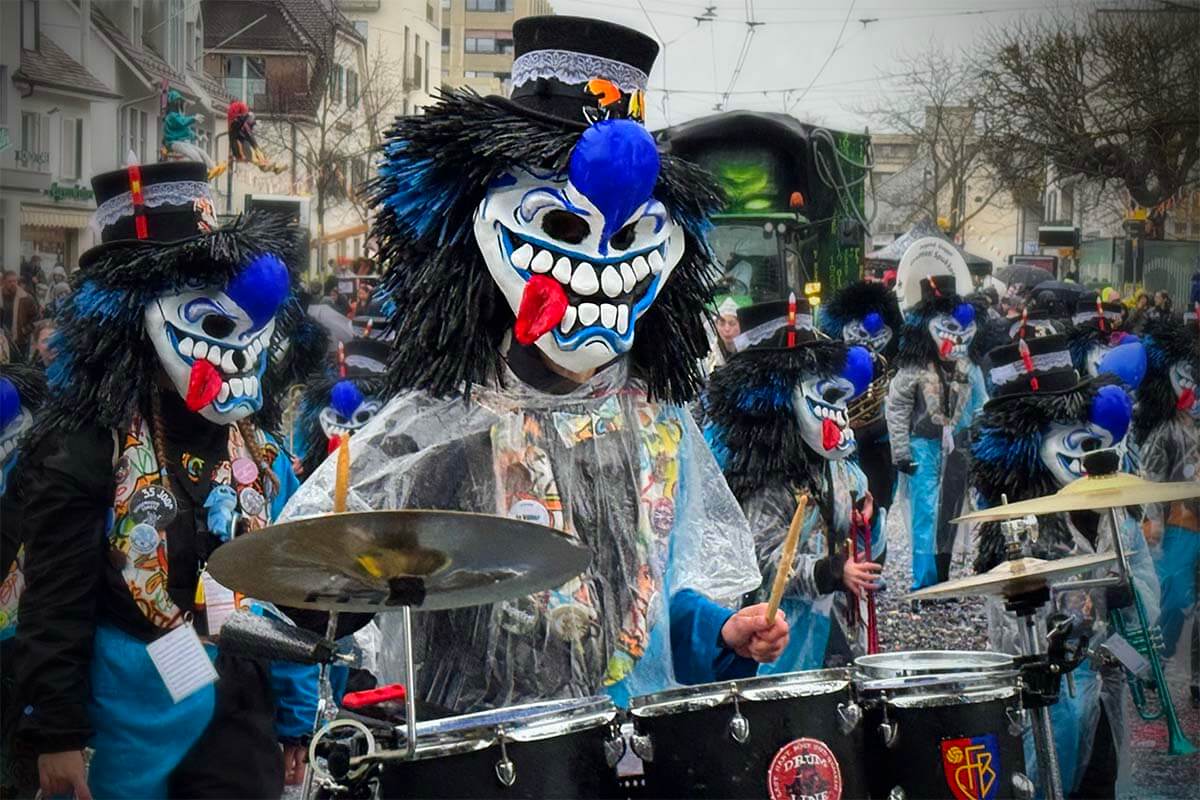
Hardermannli Procession. Every year on January 2, Interlaken hosts a traditional procession linked to the legend of the spirit of Harder Kulm. Hardermannli appears together with his wife, Wyb, and their masked followers, the Potschen, who run through the streets in costume, creating a lively and slightly eerie atmosphere. It’s a unique local winter tradition.
Lauberhorn Ski Races. One of the biggest winter sporting events in the region is the Lauberhorn World Cup downhill race in Wengen, usually held in mid-January. It attracts large crowds and creates a lively atmosphere in Wengen and surrounding villages. Accommodation fills up quickly.
Carnival (Fasnacht). Swiss Carnival usually takes place in the weeks before Ash Wednesday. Nearby towns such as Thun (and especially Bern and Basel) host great parades. If you’re interested in experiencing Swiss winter traditions, it can be worth checking local dates.
Good to know: Event dates vary each year, and some are weather-dependent. Check official tourism websites before your trip if you plan to time your visit around a specific event.
Conclusion: Is Interlaken Worth Visiting in Winter?
Interlaken may be quieter in winter than in summer, but it’s absolutely worth visiting. Between high mountain viewpoints, scenic villages, lake cruises, and hands-on snow activities, there’s plenty to fill several days. Plan realistically, check the weather, and prepare to adjust your plans if needed.
With a bit of flexibility and the right expectations, Interlaken in winter can be just as rewarding as a summer visit, just in a very different way.
For itinerary ideas, see our Interlaken day trip guide. While it focuses mainly on summer, the Lake Thun section can be useful for planning a winter day trip.
TIP: Interlaken is easy to combine with other destinations in central Switzerland. Cities like Lucerne and Bern are easy to reach by train and make great additions to a winter itinerary.
For mountain scenery beyond the Jungfrau region, consider Mt. Titlis; it’s a good winter day trip option near Lucerne. If you’re interested in skiing, we also share our experience of skiing in Engelberg.
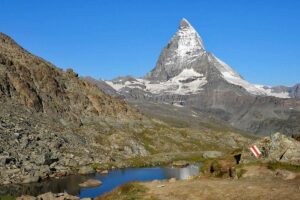
Further south, Zermatt is another popular winter destination, with iconic Matterhorn views and some of the best skiing in Switzerland.
For more destination guides, itineraries, and practical travel tips, browse our Switzerland travel page.
TIP: Did you find this guide helpful? Bookmark this post for later, share it with your friends, and save it to Pinterest to inspire your next trip.

What a great guide. Thank you thank you thank you! 🙂 We planned an impromptu trip to Interlaken and followed so many of your suggestions. My husband and I both loved the nighttime sledding with fondue! One of the best memories of the trip. We hope to return to explore more of the area in the summer.
Hi Jen, thank you so much for your kind message. I’m really glad to hear the guide helped with your trip. Night sledding with fondue is such a fun experience there; happy to hear you loved it too.
Hope you get the chance to return in summer — it’s just as beautiful but in a completely different way.
Happy travels!