
Namibia Packing List: What to Wear & What (Not) to Bring
This site contains affiliate links, which means that we may earn a small commission, at no cost to you, for qualifying purchases. It supports the work that goes into keeping this content free. Thanks for reading! More info: Privacy Policy.
Planning a trip to Namibia and wondering what to pack or what to wear in Namibia? This guide has all the answers you need!
Based on our own 4-week self-drive road trip around Namibia in July, this guide covers what we packed, what we actually used, and what we’d recommend for anyone visiting Namibia.
While in most countries you can easily buy something you forgot, it might be an impossible task in rural Namibia. Good preparation will save you lots of frustration and make your trip more comfortable.
Whether you are planning to drive across the whole country or just visiting for a couple of days, this Namibia packing list covers all the essential tips for your trip.
First, we share a detailed packing list for Namibia. Further below, you’ll find practical advice on what to wear in Namibia, what to pack for camping, what to wear on safari, how to prepare when traveling with kids, and also what not to pack for Namibia.
TIP: Renting a car? We now use Booking.com for all our road trips because it consistently offers some of the best prices and excellent full insurance options. If you’re visiting Namibia between June and October, book as early as possible since the best vehicles sell out quickly.
READ ALSO: Best Places to Visit in Namibia
What to Pack for Namibia
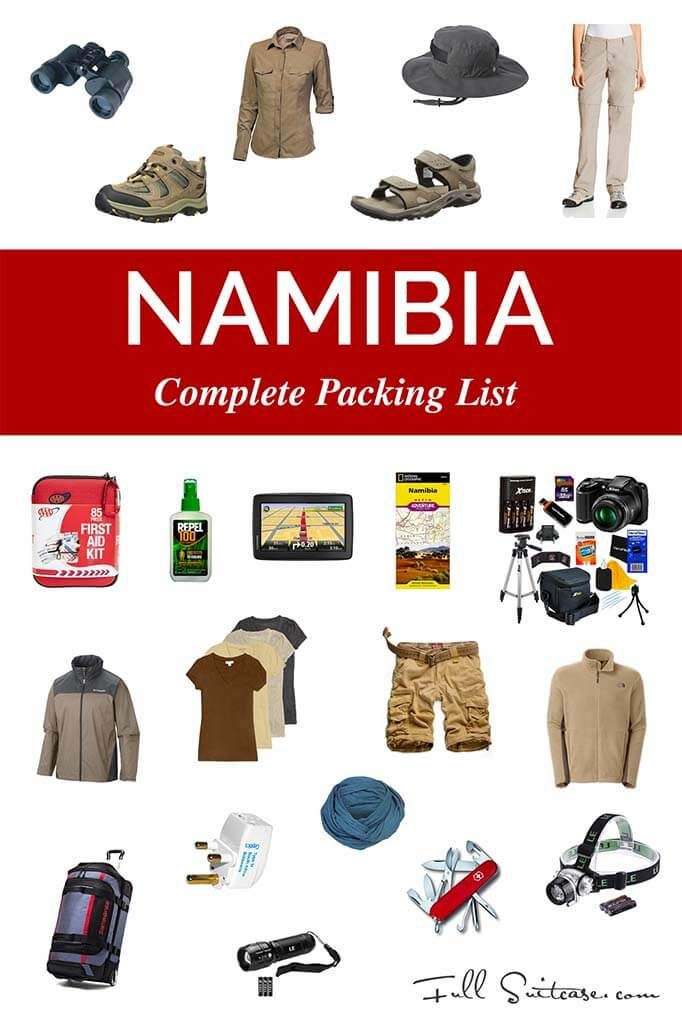
Before thinking about clothing, make sure you pack the essentials. Namibia is a vast, remote country, and replacing forgotten items isn’t always easy once you’re on the road. Here are the things we wouldn’t travel without.
Health, Safety & Other Essentials
Whether you accidentally cut yourself, experience stomach issues, or bruise your knees while climbing granite rocks in Spitzkoppe (speaking from experience), being prepared is essential. In rural areas, the nearest doctor could be hours away. A well-stocked first aid kit and any necessary prescription medicines are absolute must-haves. Here are the essentials:
- First Aid Kit. Include painkillers, probiotics, bandages and disinfectants, diarrhea medication, travel sickness remedies, and allergy treatments (for insect bites or reactions). On most trips, we just pack a few bandages, but for Namibia, we highly recommend taking a small first aid travel kit with you.
- Cold Packs. Pack a few instant cold packs or a cold pain-relieving spray — these often come in handy, especially if traveling with children. We used the pain relief spray a few times during this trip and were glad to have it at hand.
- Insect Repellent. A good mosquito repellent is a must in Africa. If you don’t want to use DEET, a 20% picaridin spray like this is a great option. If you’re planning bush walks, camping, or spending lots of time outdoors, consider treating your clothing with permethrin before the trip. It offers a nice extra layer of protection.
- Flashlight. Ask any traveler about one essential item to pack for Namibia, and most of them will advise packing a flashlight. It gets dark early, and you’ll need it for walking to dinner or unlocking your door. Plus, some hotels turn off the power at night. To save your phone’s battery, I advise bringing a compact, powerful LED flashlight like this.
- Pocket Knife. A pocket knife is one of the handiest things to have on a Namibia road trip. We own a few Swiss Army pocket knives (this 15-function Victorinox model) and have used them on more occasions than I can remember.
Navigation, Electronics & Adapters
Namibia’s remote areas make it essential to bring everything you need for navigation and charging your devices. Here are the musts:
- Map. A good old-fashioned paper map is essential if planning a road trip in Namibia. Get a recent, detailed map, ideally one that indicates petrol stations and the main lodges – it’s really helpful as many places don’t have an address.
- GPS. A GPS device or smartphone with offline Namibia maps is a must if you’re planning a self-drive trip.
- Smartphone + Charger + Power Bank. Don’t expect to have an internet connection all the time – Namibia is a country to disconnect. That said, you’ll still be using your phone for navigation, photos, and other essentials, so it’s important to keep it charged. We never travel without a good power bank. If you’re camping or staying at simpler lodges where electricity can be less reliable, a solar-powered power bank can be worth considering. And don’t forget all the right charging cables!
- Car Phone Holder. If you plan to use your phone for navigation, bring a good phone holder for the car. You want one that attaches securely in any vehicle and stays firmly in place, even on Namibia’s long, bumpy gravel roads, like this one.
- Electrical Adapters. Namibia uses type D/M plugs (the same as South Africa). Keep in mind that some lodges cut off electricity at night, so you may need to charge several devices simultaneously. Consider a multiple-outlet adapter like this and don’t forget charging cables!
- E-reader with Built-in Light: Great for long dark evenings, especially in low-light accommodations. We all have Kindle Paperwhite e-readers and take them on all our trips.
READ ALSO: Namibia Itinerary for 3 to 4 Weeks
Camera Gear & Binoculars
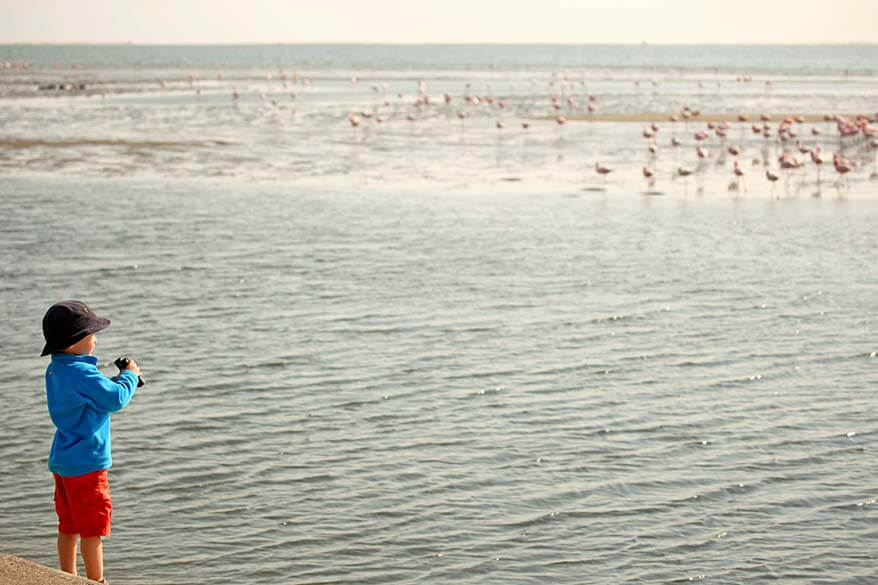
- Binoculars. Overall, a compact pair of binoculars is a great addition to any Namibia trip. If you are really into birdwatching or wildlife viewing, image-stabilized binoculars are worth considering, although they are considerably more expensive. We packed compact binoculars like these for each of our kids. They are affordable, offer surprisingly good quality, and kept the kids engaged and entertained during long game drives.
- Camera Gear. Bring the best camera and lenses you have, along with extra batteries, chargers, and plenty of memory cards. Dust is everywhere in Namibia, so try to avoid changing lenses outdoors whenever possible. For wildlife photography at waterholes, a tripod can be very useful, while a good sandbag is often the better choice on game drives. I took my Manfrotto aluminum tripod to Namibia and used it on many occasions.
LEARN MORE: Best Cameras and Lenses for Safari
Luggage
- Soft-Shell Travel Bags. Whether you’re joining a group tour, planning a self-drive road trip, or taking small planes in Africa, soft-sided travel bags are a much better choice than hard-shell suitcases. They’re more compact, flexible, and easier to fit into safari vehicles and small aircraft. In fact, many group tours and charter flights don’t allow hard-shell luggage. I recommend a weatherproof duffel bag since it’s easier to keep clean in Namibia’s dusty conditions.
- Small Backpack. A day backpack is a must for safaris, hikes, and day trips. We used our regular travel/hiking backpacks, but next time, I’d take a backpack with a roll-top closure because it keeps Namibia’s fine dust out much better than traditional zippered backpacks.
- Luggage locks (like this). Use them every time you have to leave your luggage in the room or in the car. I would also pack a long bicycle lock to attach all your luggage to each other when you leave it in a car.
- Cooler. A cooler is really useful for long drives through rural Namibia. We packed a soft-sided insulated cooler, and while it’s not an absolute must, we used it almost every day to keep water, drinks, fruit, and lunch packs cool. It was especially handy on full-day drives between destinations.
Don’t Forget These Essentials
Here’s a list of other highly useful items to bring on your Namibia road trip:
- Sun hat, sunglasses & sunscreen. The sun in Namibia is very strong, even in winter. Pack a wide-brim UV-protection hat, good sunglasses, and a high-SPF sunscreen. We prefer sunscreen spray because it’s quick and easy to apply, especially before game drives or hikes, and it’s much more convenient when traveling with kids.
- Moisturizer & Lip Balm. Namibia’s climate is extremely dry, so pack a good body lotion, hand cream, and an SPF lip balm. You’ll probably be using them every day to protect your skin and lips from the dry air and strong sun.
- Most hotels and lodges have all kinds of toiletries provided, but to be on the safe side, always take some soap and shampoo with you.
- Toilet paper (to have in the car), tissues, and sanitizing hand wipes.
- Big trash bags (like this) to cover your luggage while road-tripping (otherwise it will be covered with sand after each ride on gravel roads, even if stored in the trunk).
- Small trash bags are also very handy. You can use them as motion sickness bags, to separate dirty laundry, or as trash bags in your car.
- A nail brush (or a scrub brush) to clean your shoes and bags. There will be sand all over your stuff.
- Safety pins and a sewing kit.
- Clothesline and laundry detergent. Nice to have if you need to do some laundry or dry your swimwear. We usually pack a camping clothesline like this, a few laundry detergent pods (or laundry detergent sheets), and color catcher sheets. That said, many lodges also offer a laundry service for a very reasonable fee, so you can easily have your clothes washed during a longer trip.
What to Wear in Namibia
Wondering what to wear in Namibia? You won’t need much formal clothing in Namibia, as casual clothing is perfectly acceptable for most activities. If you’re staying at luxury lodges, you might want to pack one or two smart outfits for evenings, but even then, jeans and a nice shirt are usually fine. During the day, you will only need casual clothes.
Most visitors travel to Namibia during the dry season (May–October), when daytime temperatures are warm enough for shorts and t-shirts. However, keep in mind that this is also the cold season, and nights can get very chilly.
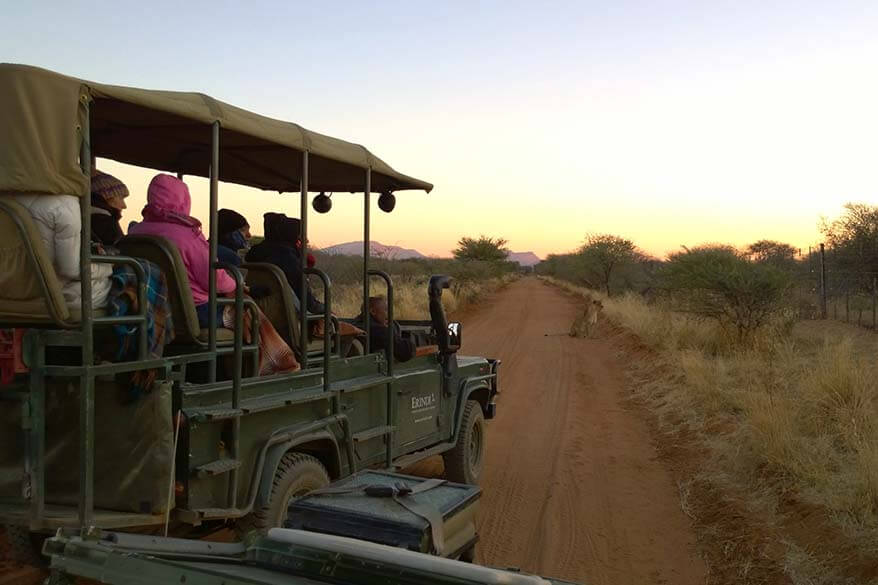
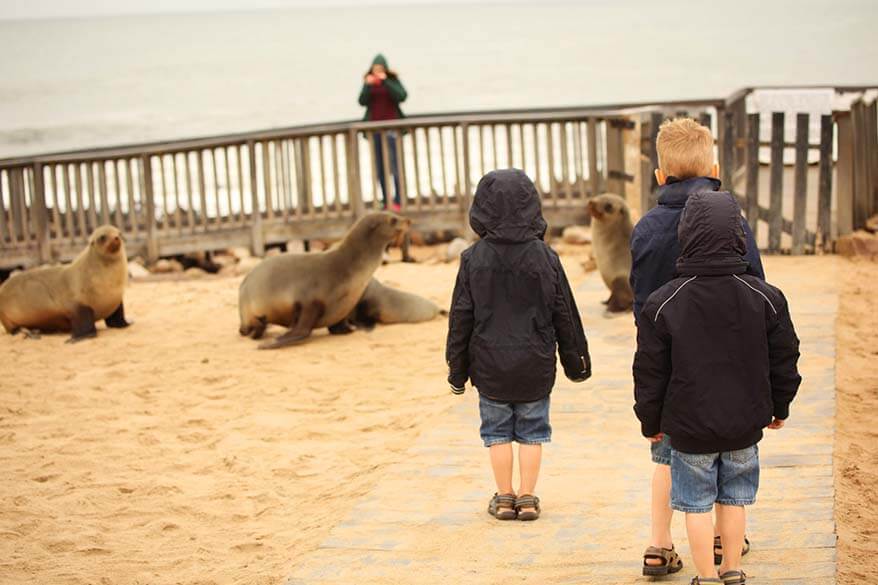
Warm clothing is essential for early mornings and evenings, especially on safari rides, whale-watching tours, sunrise trips to the dunes, and similar activities. Be sure to pack a sweater, jacket, and long pants to stay comfortable when temperatures drop.
Our Namibia Packing List for a 4-Week Road Trip in July
Here’s our 4-week Namibia road trip clothing packing list – the outfits and clothing combinations we packed for our trip in July.
- 1 windproof jacket. We took our lightweight rain jackets and used them several times. They worked perfectly as windproof outer layers on early morning game drives, at Sossusvlei before sunrise, and on cool evenings.
- 1-2 sweaters or a fleece pullover (fleece dries fast – convenient if you need to wash it).
- 2 pairs of long pants. Lightweight trekking pants with UV protection are ideal because they protect your legs from the sun, keep dust and insects off your skin, and are still comfortable in warm weather.
- 2 pairs of shorts.
- 10 t-shirts or lightweight shirts. We recommend packing a mix of short- and long-sleeved tops. Merino wool T-shirts are ideal because they’re comfortable, dry fast, don’t retain odors as easily, and can often be worn for several days without washing. UV performance T-shirts are great too.
- 10 sets of underwear and socks.
- Swimsuit. A swimsuit is worth packing, especially if you’re visiting Namibia in the warmer months. During our July trip, only the kids used theirs since most swimming pools are not heated and the water was simply too cold for us.
- A buff is surprisingly useful in Namibia. It keeps dust out of your face on gravel roads, provides extra warmth on chilly morning game drives, and can also protect your neck from the sun. We own several buff gaiters and pack them on almost every trip. For the children, we also took a winter hat and gloves, and they wore them on several occasions.
- A pair of old socks – you can use those when climbing sand dunes and then throw them away at the end of the trip.
- A pair of hiking sandals, flip-flops, and good walking shoes. Good walking shoes (like Merrell Moab models) are what you’ll wear most often in Namibia, but lightweight hiking sandals like these are nice to have for warmer days and easy walks. Flip-flops are useful around the hotel and by the pool.
What to Pack for Camping in Namibia
If you’re planning to camp in Namibia, the gear you need will depend on your camping style (solo or group), whether your tent and cooking equipment are provided, and the time of year.
For winter camping (June-August), pack a warm sleeping bag and an insulated self-inflating sleeping pad. Nighttime temperatures can drop below freezing, especially in the desert and at higher elevations, so don’t underestimate how cold it can get.
A quality headlamp is a must-have for camping since it keeps your hands free when setting up camp, cooking, or moving around after dark. Other useful items include a quick-drying travel towel, shower slippers, clothes that dry quickly, and a compact camping pillow if comfort is important to you. The rest of your gear will depend on your specific camping setup.
What to Pack When Traveling with Kids
When traveling with children, you are quickly tempted to overpack all kinds of stuff to keep them busy. This is completely unnecessary.
Here are the extras we packed for our kids (ages 3-6 at the time of our trip):
- 1 small cuddly toy to sleep with.
- Twistable crayons and paper. These don’t dry out like markers, don’t require sharpening, and are perfect for keeping younger kids entertained during long drives or at restaurants.
- Binoculars. Don’t waste money on toy binoculars, as they offer little value. Instead, opt for compact binoculars with decent magnification that aren’t much more expensive. We bought a pair of small binoculars for each of our kids, and they kept them engaged and entertained throughout the trip.
- Bring a digital tablet loaded with offline games, children’s audiobooks, and their favorite music to keep kids entertained during long drives. Depending on their age, you may want to pack headphones for a quieter ride. Our kids loved these colorful headphones when they were younger.
- Booster seats (or simply rent them with the car). See our guide to the Best Booster Seats for Travel for more info.
READ ALSO: Namibia with Kids
What NOT to Pack
- Don’t take your newest suitcase or travel bag with you as the bags will be covered with sand every day you drive on the gravel roads. Pack an old travel bag or a backpack instead and make sure it’s well closed.
- As already mentioned, smart clothes are really not necessary in Namibia.
- High heel shoes, women’s sandals, ballet flats – you can leave all of these at home. They are completely useless in the desert.
- Unless you are really attached to it, leave all your jewelry at home.
- Don’t take too many electrical appliances with you. Take only what you really need. Unless you really need a laptop, leave it at home. A smartphone is usually more than sufficient.
- Don’t take too many toys for your children. Let your kids explore – roll down the sand dunes, climb the rocks, look for animals, play with sand and stones… If you really want to bring some toys, take a small ball or a frisbee.
Below, you can find some frequently asked questions about clothing and footwear.
Packing FAQs
What Should I Wear in Namibia in Winter?
Winter (June to August) is the most popular time to visit Namibia. Days are usually sunny and pleasantly warm, so shorts and t-shirts are often all you need. However, mornings and evenings can be surprisingly cold, especially on safari drives, at higher elevations, and in the desert. Pack a warm fleece or sweater, a windproof jacket, long pants, and closed shoes. Dressing in layers is the best way to stay comfortable since temperatures can change significantly throughout the day.
Do You Need Neutral Color Clothing on Safari in Africa?
While it’s generally advised to avoid bright colors on safari, in my experience, it doesn’t matter that much if you’re viewing wildlife from a vehicle. If you have the choice, opt for neutral tones like light brown, gray, or other earth-colored clothing (see here for safari clothing inspiration). However, if the only windproof jacket you own is bright green, don’t stress about it.
What Kind of Shoes Do You Need in Namibia?
For footwear, we packed hiking sandals, flip-flops, and walking shoes. We wore walking shoes almost all the time, sandals only occasionally, and used flip-flops around the hotel and by the pool.
In general, closed shoes are ideal for Namibia. You don’t need heavy hiking boots unless you plan on doing longer or more challenging hikes, but light hiking shoes like these or comfortable sporty sneakers are perfect for most travelers.
If you want to pack light, one good pair of walking or hiking shoes is usually enough. That said, we’d also recommend packing a pair of flip-flops and, if you have space, hiking sandals for warmer days or relaxing at your accommodation.
What Do You Really Need for a Namibia Road Trip?
The essentials include a first aid kit, good sunscreen, a flashlight, a GPS or smartphone with offline maps, and a paper map. Since many parts of Namibia are very remote, it’s also wise to carry plenty of drinking water and snacks. Don’t forget a good insect repellent, any prescription medication you may need, and a power bank to keep your phone charged on long sightseeing days.
Can You Buy Clothes and Supplies in Namibia?
Yes, but mostly in larger towns such as Windhoek and Swakopmund. Once you’re driving through rural Namibia, shopping opportunities become very limited. That’s why we recommend packing everything you know you’ll need before you arrive.
More tips for your trip to Namibia:
- What I Wish I Had Known Before Traveling to Namibia
- Best Place to Stay in Etosha National Park
- Where to Meet Indigenous People of Namibia
- Safari Tips
- Safari with Kids
TIP: Save this guide for later, share it with your friends, or pin it to Pinterest so you can easily come back to it when planning your trip.


Incredibly useful. Thank you for your advice
Glad to help, Carol. Have a great trip!
My daughter is leaving soon for a study abroad semester in Namibia..THANK YOU for this post!!
,
–A worried mom
Hi Laurie, this list is more meant for travelers rather than someone like your daughter who will likely stay in the city. But yes, some things are a must in any case – like travel adapters or prescription medicine, etc. For the rest, she’ll just need ‘regular’ clothes – whatever she’d wear to go to school at home, just adjusted to the Namibian weather, of course.
Wish your daughter a great time in Namibia and try not to worry too much. It’s a beautiful country and I’m sure she’ll quickly make friends and feel at home there. And if you get a chance, go and visit her (and Namibia).
Hello Jurga,
This is a great multi informational blog. Especially coming from a Mom who travels with her family is almost a guarantee it is done meticulously. So thank you. Even though your trip was self-drive, I was wondering, I am more of the type who passes too much comfort for a bit of an organic connect when traveling to Africa. But since my driving partner bailed on me, I feel I have lost that opportunity; at least for now. So do you think by staying in Swakopmund and taking different excursions from there a good idea; time wise, convenience wise or even budget wise for that matter? Or is it even something that can be done? (I checked the link for different activities you included and they are pretty impressive. I already decided on 7 of them.)
Daniel z.
Thank you
Hi Daniel, if there is one place in Namibia where you could indeed visit without having to drive, it’s Swakopmund. The town is very nice and easily walkable. There are lots of hotels, restaurants, shops, etc. And there is indeed a big variety of organized tours that you can take. If your budget allows it, there are even fly-safaris to Sossusvlei if I recall well.
The only thing you’d need to do is get to Swakopmund from the airport in Windhoek. But I guess that shouldn’t be a problem.
Another option – and likely cheaper, depending on accommodation choices – is to visit Namibia with a small-group tour. See here for some great options.
Hope this helps.
Hi Jurga,
Thanks for responding so quickly!
I appreciate your suggestions; they have resolved quite a few doubts I had in mind.
I will further research this one more time and start preparing for 2021 summer trip.
Thank you again
Daniel
Thank you for the info. I am planning a trip for elderly retirees (70+) (even though we don’t feel elderly) Your lovely website has given me a great starting point
Good to hear that, Barbara. Enjoy your trip to Namibia!
Very useful. Thank you. I’m traveling to Namibia mid Feb to mid March. Any recommendations about weather conditions and camping at that time of year?
Hi Mervet, I’m really not sure. February-March is hot and rainy season in Namibia, but you never really know what you get as it can be so different from year to year.
This was really useful and pretty comprehensive.
Having spent three fabulous weeks in namibia, the three key things I would pack are:
A small screwdriver for fixing glasses/sunglasses.
A couple of small black dog poo bags – very useful to have in your pocket for collecting/carrying things.
Business cards to give to people to make swapping email addresses and photos easier.
Thanks for sharing your experience and tips, Peter. I am sure it will be very helpful to the other readers as well
Thank you for your kind and helpful information. I am travelling to Namibia with my god daughter. We will be spending two weeks with her brother (my god son) who is finishing up a tour with the Peace Corps.
Glad you found this useful, Kate! Enjoy the trip. Namibia is incredible!