Namibia Travel Tips: 17 Essential Things to Know Before Your Trip
This site contains affiliate links, which means that we may earn a small commission, at no cost to you, for qualifying purchases. It supports the work that goes into keeping this content free. Thanks for reading! More info: Privacy Policy.
Traveling to Namibia for the first time and wondering what to expect? This guide covers the practical things you’ll want to know before you go.
Before our first trip, I had so many questions. Is it safe to self-drive in Namibia? Do you need a 4×4? What are the roads like? How far in advance should you book accommodations? And what should you pack for the desert?
After spending four weeks road-tripping around Namibia with our three kids, we learned a lot that would have been useful to know beforehand.
This guide covers all those practical details, from driving and road conditions to safety, packing, money, internet access, and more. If you’re planning your first trip to Namibia, these tips should help you know what to expect and avoid some common mistakes.
Good to know: Before booking your trip, check the latest passport and visa requirements for your nationality. Entry rules can change, so always verify the current requirements with an official source.
Here are our essential Namibia travel tips and things to know before your trip:
1. Book Well in Advance
Many places in Namibia are very remote, and accommodation options can be limited. Family rooms are particularly hard to find, so it’s advisable to book well in advance, especially if you are traveling with children or if your dates aren’t flexible.
This is especially important for popular places like Etosha National Park, where the best-located accommodations inside the park have limited availability and can fill up far in advance, particularly during the peak season from July to October.
We booked our trip almost a year in advance and still had to look for alternative accommodations or adjust our dates in a few places.
TIP: If you’re traveling to Namibia in the high season, book your accommodations as soon as you have your itinerary. This is particularly important for Etosha, Sossusvlei, and any lodges where you need a specific room type, such as family accommodation.
Also book any tours and activities you really want to do in advance, especially during peak season. If you’re on a road trip, you may only have one day in each place, so you don’t want to find out that the tour you wanted is fully booked.
2. Plan Your Route: Sossusvlei, Swakopmund, Etosha & More
A few itinerary choices can make a big difference when planning a Namibia road trip. Based on our experience, these are some things I recommend:
Don’t spend too much time in Windhoek. Half a day is enough for the main sights. If your flight times allow, I would rather spend the first or last night at a nice lodge outside the city.
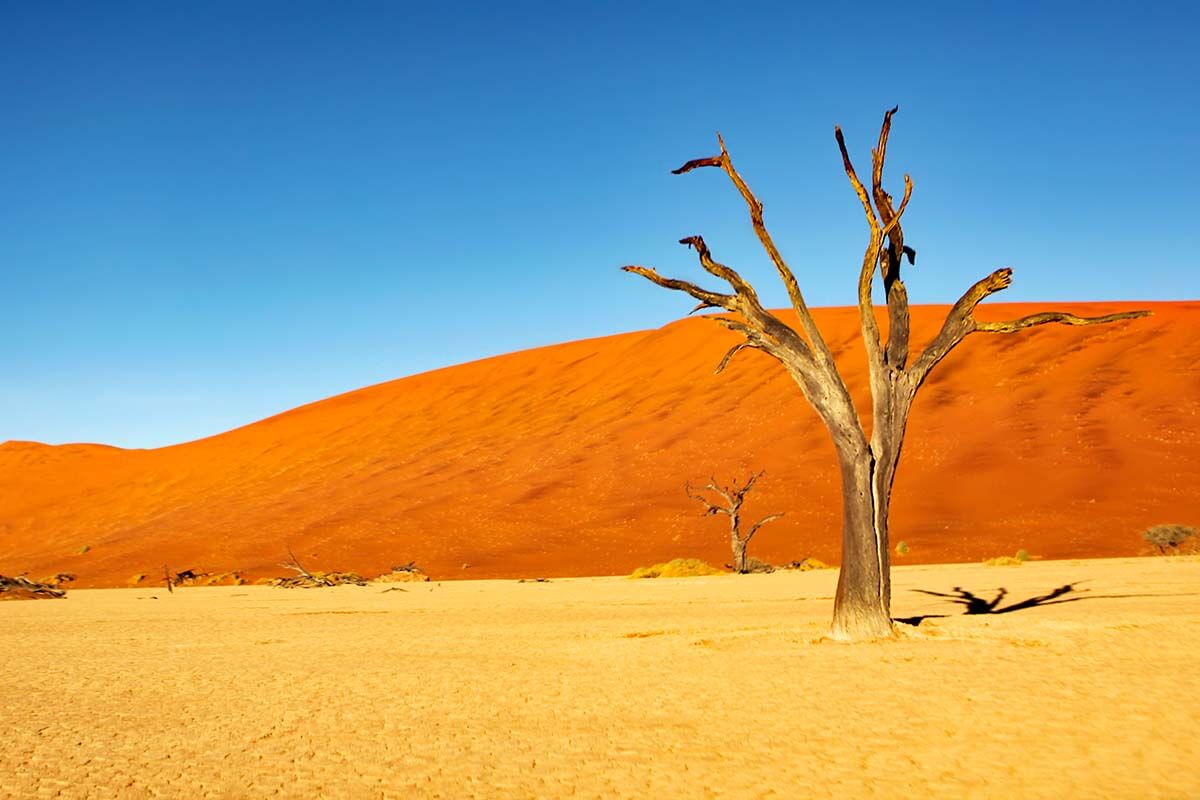
Plan at least 2 nights near Sossusvlei. This gives you a full day to visit Sossusvlei and Deadvlei without having to combine sightseeing with a long drive. Stay as close to the park entrance as your budget allows so you can get an early start.
Stay in Swakopmund rather than Walvis Bay. Walvis Bay is well worth visiting for its flamingos and boat trips, but we found Swakopmund much nicer as a base. It has lots of restaurants, hotels, shops, and plenty of day trips and excursions. We loved Swakopmund and found it a welcome break after days of driving through remote areas. I recommend at least 3 nights here if your itinerary allows.
If possible, visit Etosha toward the end of your trip. That’s what we did, and I liked having the safari as one of the big highlights to look forward to. But don’t rearrange an otherwise good itinerary just for this. Namibia is fantastic in either direction.
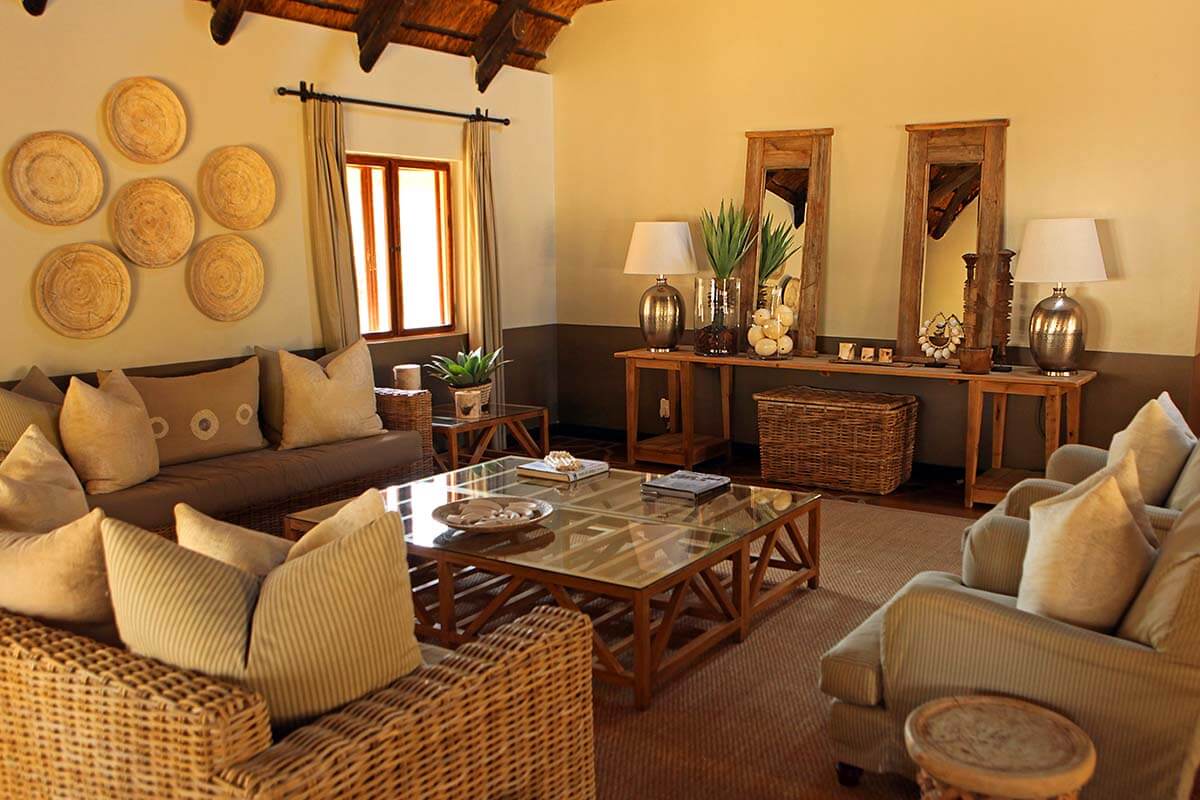
Finish with a really nice wildlife lodge. After weeks of driving, we loved ending our trip somewhere special where we could put down the car keys, relax, enjoy good food, and watch wildlife right at the lodge. If your budget allows, I think this is one of the best ways to spend the last night or two before flying home. Look for a lodge or private reserve between Etosha and Windhoek so that it fits naturally into your route.
READ ALSO: Namibia Itinerary
3. Plan Your Itinerary and Driving Times Carefully
Namibia is a big country, and distances between the main places are often much longer than they appear on the map. If you are planning a self-drive trip, a well-planned itinerary is essential.
Check driving distances and realistic travel times before booking your accommodations. Many roads are gravel, and road conditions vary, so covering 300–400 km can take considerably longer than you might expect.
We tried to limit our driving to about 4–5 hours a day whenever possible. Some longer driving days are difficult to avoid if you want to see several regions in one trip, but you don’t want to spend your entire vacation in the car.
Also, plan to arrive at your accommodation well before dark. Driving after sunset is best avoided because of wildlife on the roads, limited lighting, and the increased difficulty of spotting hazards on gravel roads.
Don’t assume that you’ll be able to drive at the posted speed limit either. Your actual speed will depend on road conditions, and your rental company may impose its own limits for gravel roads. Always allow more time than your navigation app suggests.
Another reason to arrive early is that many lodges offer activities such as game drives and sundowners in the late afternoon. If there is a particular activity you don’t want to miss, contact the lodge beforehand to check the schedule and plan your driving day accordingly.
4. Rent the Right Car and Be Prepared
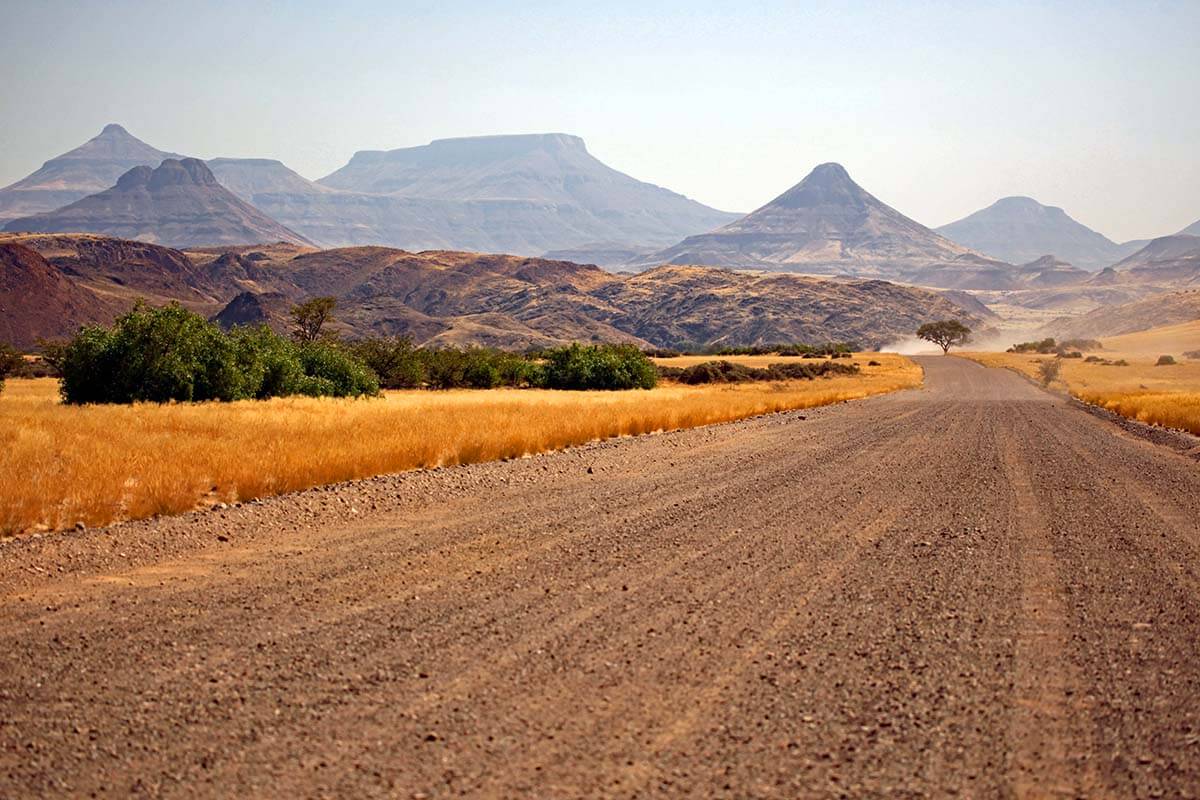
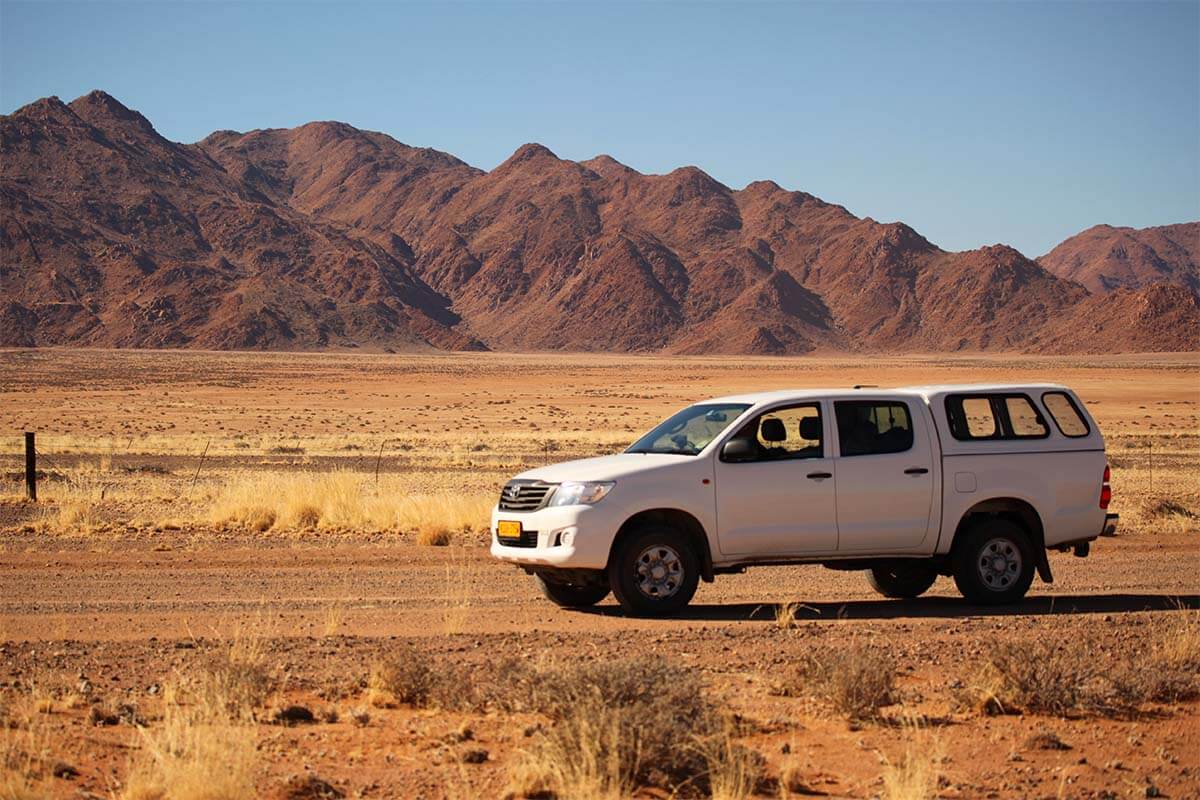
If you’re planning a proper Namibia road trip, I highly recommend renting a 4×4. You can visit some places with a regular car, but a 4×4 is much better suited to gravel roads and more remote areas. It’s also essential for some places, including the last section of the road to Sossusvlei.
If you plan to camp, consider renting a 4×4 with a rooftop tent rather than a regular camper.
Get full insurance. Gravel roads mean stone chips and windshield damage can happen even if you drive carefully. We got a crack in our windshield when a stone hit it, and because we had full insurance, we didn’t have to worry about the cost.
Take two spare tires. Punctures are common, and in remote areas you don’t want to be stranded after using your only spare. We didn’t have a single flat tire during our four-week trip, but we were glad to have that extra backup.
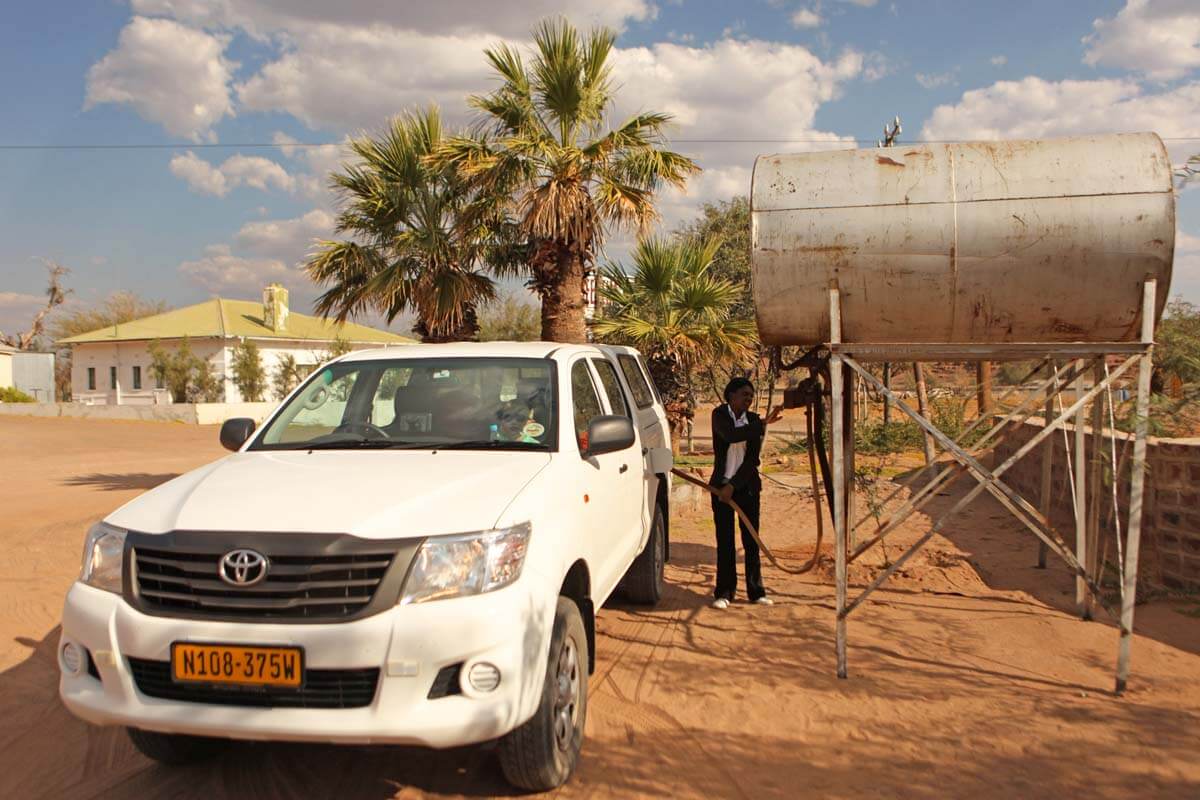
Fill up whenever you can. Distances between gas stations can be long, and you shouldn’t assume that every gas station shown on a map will be open or have fuel available. In remote areas, don’t wait until your tank is nearly empty.
Always carry plenty of drinking water in the car, especially on long drives through remote areas. We never set off on a long driving day without enough water for everyone.
Keep in mind that you won’t always have mobile coverage either. In remote areas, being prepared with enough fuel, water, two spare tires, and offline maps is much more important than you might expect.
TIP: We now rent our cars via Booking’s car hire website and always add full insurance. It’s usually much cheaper than buying additional coverage at the rental counter. We’ve had to make a claim once, and the entire process was handled online and the money reimbursed within a week.
5. Don’t Drive Fast and Don’t Drive in the Dark
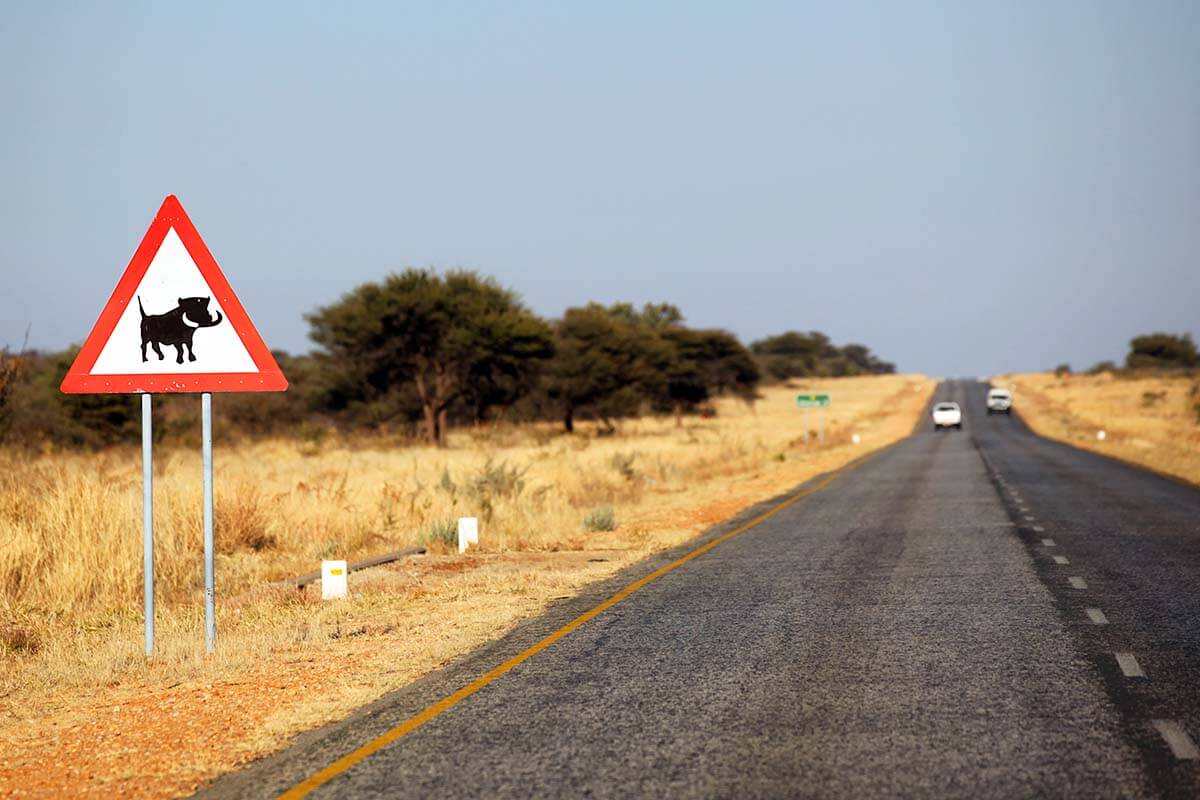
Driving in Namibia is on the left side of the road. Most roads are gravel, but there are quite a few paved roads as well. The main gravel roads are generally well maintained and in good condition, but conditions can vary.
You might have read that driving in Namibia can be dangerous. We found it quite easy to drive around the country, but there are two important things to keep in mind: don’t drive too fast and don’t drive after dark.
We found that 80 km/h (50 mph) was about the maximum speed we felt comfortable driving on gravel roads, and we often had to drive much slower. You never really know in advance how fast you’ll be able to go since so much depends on the condition of the road.
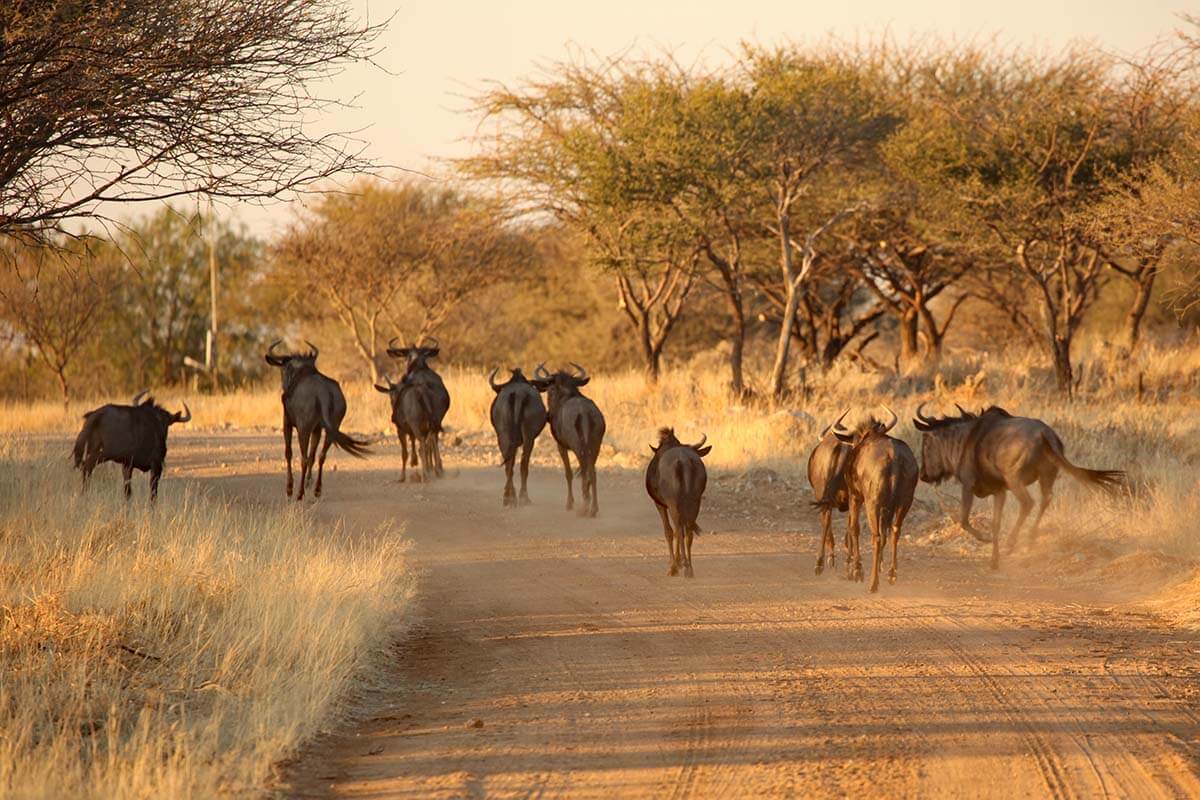
Driving in the dark is best avoided, mainly because of wild animals and livestock on the roads. It’s also much harder to see potholes and other hazards. Many rental companies don’t allow driving at night either.
TIP: Check the driver’s license requirements before your trip. If your license isn’t in English, you’ll normally need an International Driving Permit (IDP) together with your original license. Also check the requirements of your rental company.
6. Pick the Right Season to Visit Namibia
For a first trip to Namibia, I recommend the dry season from May to October. Wildlife viewing is generally best during this period, especially in Etosha, and you can expect mostly dry, sunny weather.
September and October are excellent for wildlife viewing, but they are also among the busiest months. July and August are popular as well, especially during the European school holidays. Keep in mind that this is winter in Namibia: days are usually pleasant, but mornings and nights can be surprisingly cold.
We traveled in July and August and found it too cold for swimming most of the time. Our kids still jumped into some of the unheated pools, but I wouldn’t count on much pool time in the Namibian winter.
May and June can be a great alternative if you want fewer tourists and slightly lower prices.
Rainy season, roughly from November to April, is hotter and less predictable. Wildlife is also more spread out when water is plentiful, so game viewing isn’t as easy. On the other hand, the landscapes are greener, there are fewer tourists, and it’s a particularly good time for birdwatching.
TIP: If you are mainly interested in wildlife viewing and a classic Namibia road trip, I would choose May through October.
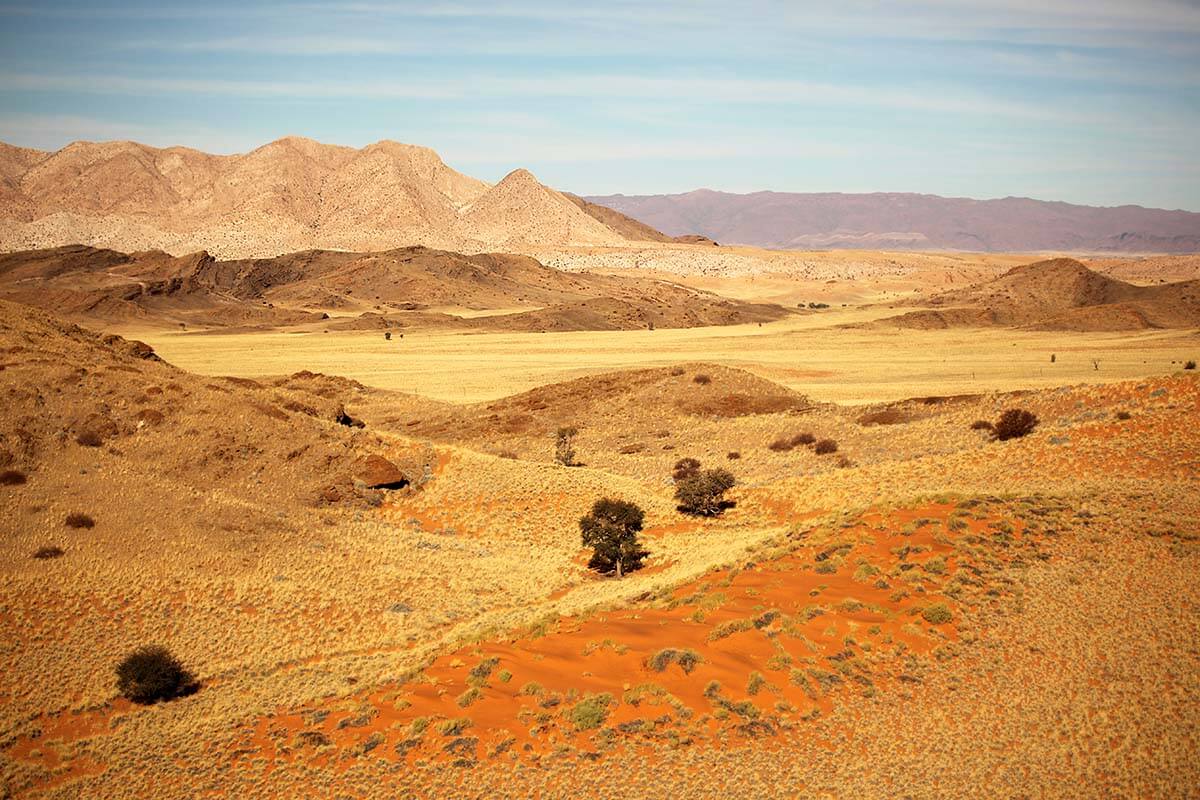
7. Check Health Advice & Get Good Travel Insurance
It’s important to check the latest health information before traveling to Namibia. Malaria risk varies by region and season, and recommendations can change, so check the current situation for the exact places you’re planning to visit.
We use and recommend the Wanda website of the Institute of Tropical Medicine in Belgium for up-to-date travel health advice, including information about malaria and vaccinations.
Also, keep in mind that you’ll often be several hours away from the nearest doctor or pharmacy. Bring any medication you might need and pack a basic first-aid kit.
Finally, make sure you have good travel insurance, including coverage for emergency medical treatment and evacuation or repatriation if necessary.
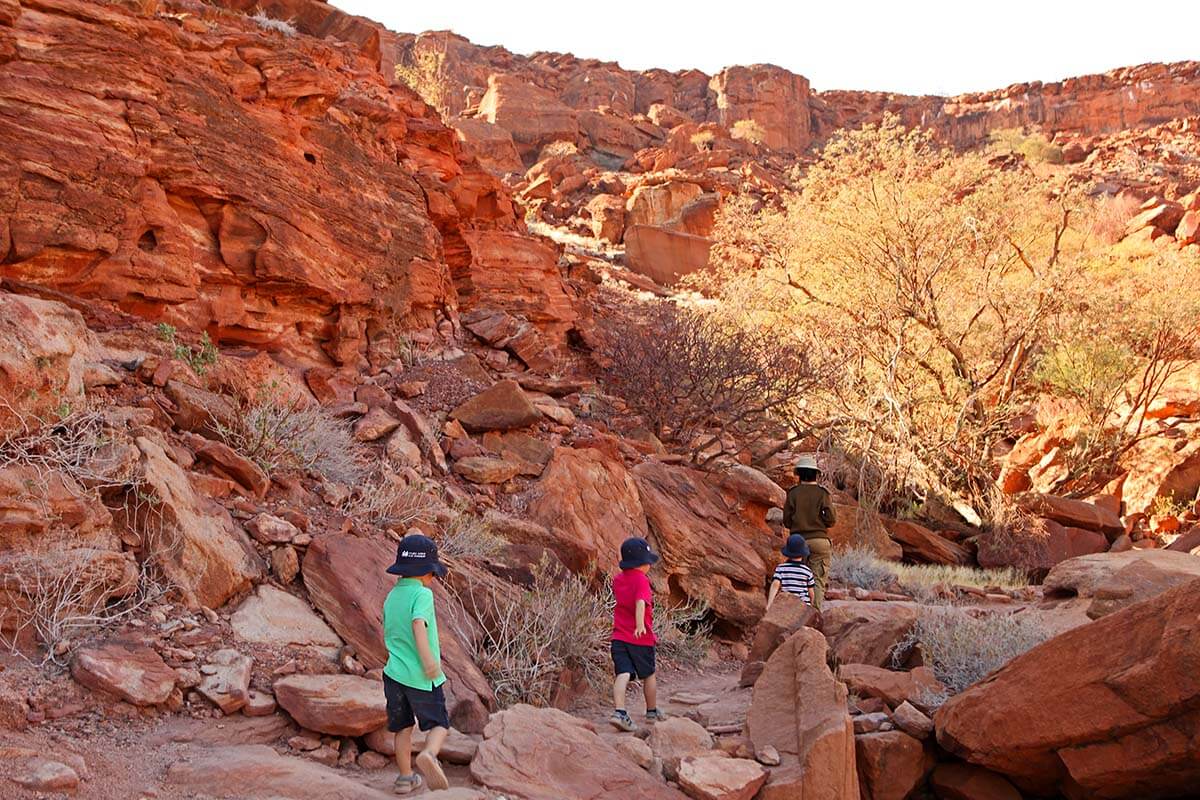
8. Namibia Is Generally Safe for Tourists
Is Namibia safe? This is one of the questions we often get from our readers. Overall, Namibia is a safe and easy country to travel around, and we never felt unsafe during our four-week road trip.
That said, use common sense, especially in towns. Don’t leave valuables visible in your car, keep your doors locked, and be cautious when withdrawing money from ATMs.
For us, driving safely and respecting wildlife were much bigger concerns than crime. If you’re planning a self-drive trip, road safety is something I would pay much more attention to.
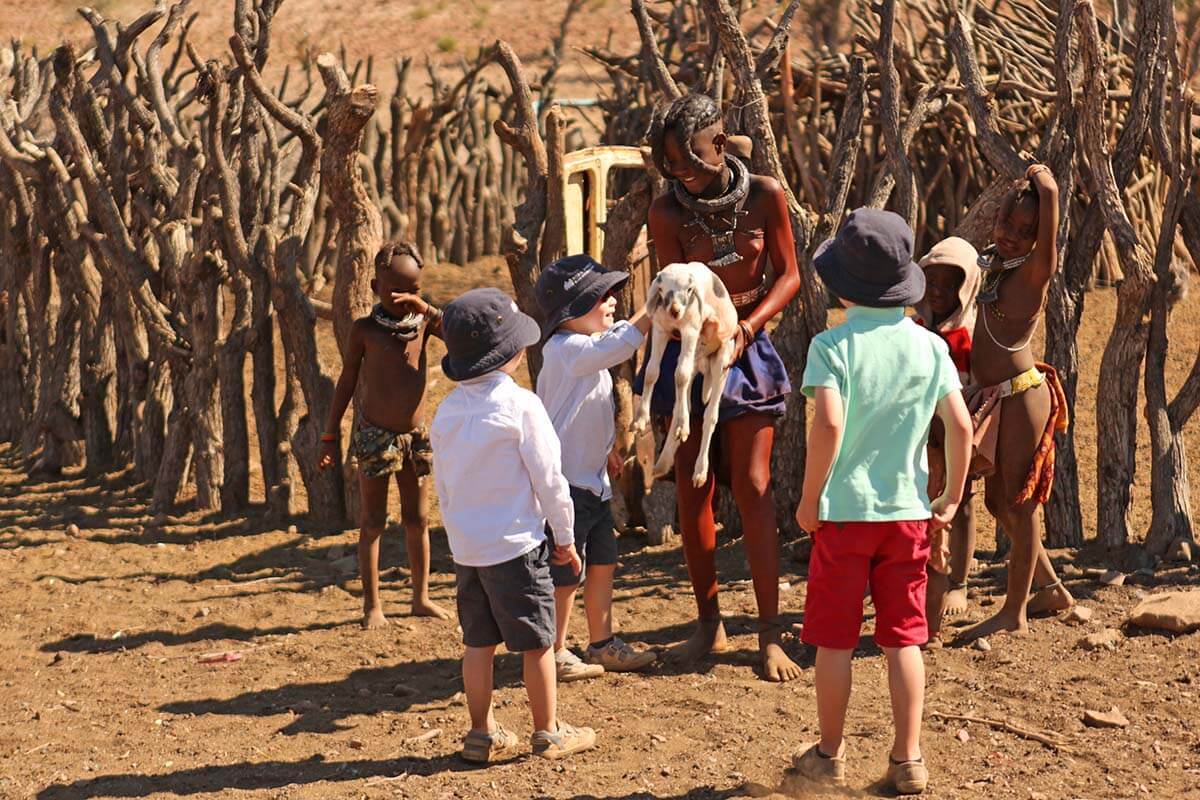
9. Traveling to Namibia with Kids? Come Prepared
If you’re wondering whether Namibia is a good destination with kids, our answer is absolutely yes. We spent a month road-tripping around Namibia with our three children, who were just 4, 4, and 6 at the time, and it remains one of our most memorable family trips.
That said, traveling in Namibia with kids requires a bit more preparation. Bring everything you know you’ll need, including any specific medicines, favorite snacks, entertainment for the car, and other essentials. Once you get into remote areas, you can’t count on being able to quickly buy something you forgot.
Also, prepare for some long driving days. We always had plenty of snacks and drinks in the car, plus books, games, and other things to keep the kids occupied. Download entertainment in advance as well since you won’t always have Wi-Fi or mobile coverage.
If your children need car seats or boosters, arrange them well in advance or bring your own. We brought travel booster seats for all three kids. Ours were quite high, which had an unexpected advantage on safari: the kids could see the animals much better from the back seat.
One more important thing is to check age restrictions for game drives and other activities before booking your accommodations. Rules vary a lot between lodges. Some don’t allow younger children on shared game drives or walking safaris, while others require families with young kids to book a private vehicle. If there is an activity your family really wants to do, research this before you book rather than finding out when you arrive.
Finally, don’t try to pack too much into each day. Namibia is a big country and you’ll already spend plenty of time in the car. Leave some downtime for the pool, relaxing at the lodge, and simply watching wildlife together.
LEARN MORE: Namibia with Kids & Safari with Kids
10. Pack for Both Hot and Cold Weather
If you’re traveling to Namibia in winter (June to August), pack for both warm days and very cold mornings and evenings. During our trip in July and August, we often wore shorts and T-shirts during the day, but needed long pants, sweaters, and warm jackets as soon as the sun went down. We even had freezing temperatures at night in Southern Namibia.
Layers are key. Pack a windproof jacket, sweater or fleece, long pants, and something warmer for early-morning safari drives. If you’re camping, you’ll need even warmer clothing, including a warm sleeping bag, hat, gloves, and scarf.
At the same time, don’t forget sun protection. Sunglasses, a sun hat, and sunscreen are essential year-round.
For footwear, comfortable closed walking shoes are the most practical choice. You don’t necessarily need hiking boots, but sturdy shoes are useful for walking on gravel, rocks, and sand. We wore sandals only occasionally.
TIP: If you’re planning to climb the dunes, you may find it easier to take your shoes off. Pack an old pair of socks as well in case the sand is too hot to walk on barefoot.
LEARN MORE: What to Pack for Namibia
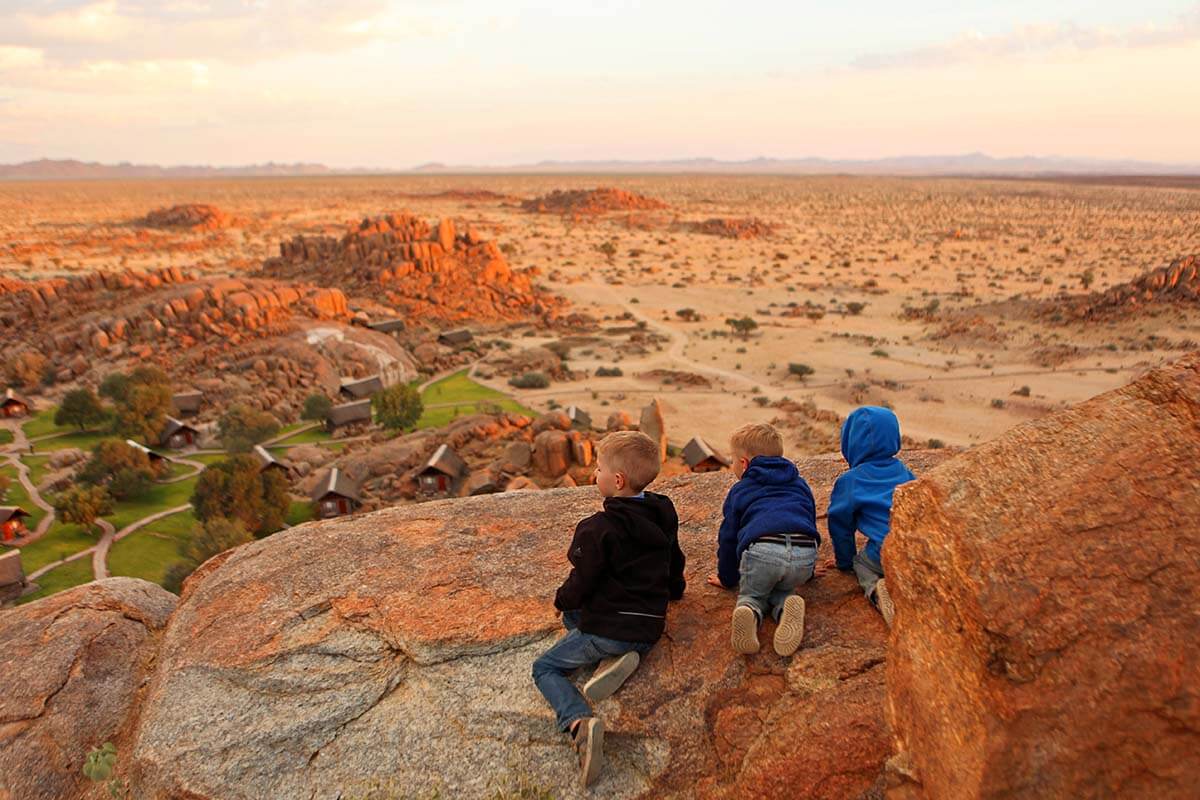
11. Prepare for Lots of Sand and Dust
Sand and dust are everywhere in Namibia, especially when driving on gravel roads. Your luggage, shoes, and car will get dusty very quickly, so don’t bring your newest suitcases or white sneakers.
Anything stored in the trunk can get covered in fine dust. If you want to keep your luggage cleaner, put it inside a protective bag or cover it up. A small brush is also handy for dusting off bags and shoes.
And don’t worry too much about keeping everything perfectly clean. In Namibia, it’s a losing battle.
12. Take Some Cash for Tips and Small Expenses
The official currency is the Namibian dollar (NAD), but South African rand (ZAR) is also accepted throughout Namibia at the same value. Credit cards are widely accepted at hotels, lodges, restaurants, shops, and gas stations, but it’s still a good idea to carry some cash.
We found small banknotes particularly useful for tips, parking attendants, small purchases, and places in more remote areas. Don’t rely on always being able to find an ATM once you leave the bigger towns, so withdraw some cash when you have the opportunity.
Tipping is common in Namibia. At restaurants, around 10% is customary for good service if a service charge hasn’t already been added. It’s also common to tip guides and lodge staff.
In towns, you may also see informal parking attendants who offer to watch your car while you’re away. This is common in Namibia and South Africa, and we normally gave them a small tip when we returned.
TIP: Keep a supply of small notes rather than relying on large bills. You’ll use them more often than you might expect.
13. Don’t Rely on Internet or Mobile Coverage
Internet and mobile coverage in Namibia have improved a lot, and most hotels and lodges now offer Wi-Fi. However, don’t expect to be connected everywhere, especially when traveling through remote areas.
Wi-Fi at remote lodges can be slow or unreliable, and there are still large areas with limited or no mobile coverage.
Download offline maps before your trip and don’t rely on having an internet connection for navigation or accessing important travel information.
TIP: If you want mobile data during your trip, consider getting a local SIM card or an eSIM. Just keep in mind that even with a data plan, you won’t have coverage everywhere.
14. Pack an Electrical Adapter & Power Bank
Namibia uses type D and M electrical plugs, so make sure you pack a suitable adapter. Ideally, bring a multi-plug adapter like this so you can charge several devices at once.
At some of the more remote lodges we stayed at, electricity was provided by generators and switched off at night. We quickly got into the habit of plugging in our phones, cameras, and batteries as soon as we arrived, rather than waiting until bedtime and discovering there was no power.
I also recommend packing a good power bank and a USB car charger. You’ll spend quite a few hours driving, so you can use that time to charge your devices.
Finally, pack a couple of spare charging cables. They take almost no space and can really save the day. I recently had a charging cable break during a trip and was so glad I had packed two. In remote parts of Namibia, you can’t just pop into a store and easily replace something like this, so it’s worth having a few basic backups with you.
15. Plan Ahead for Food and Dietary Requirements
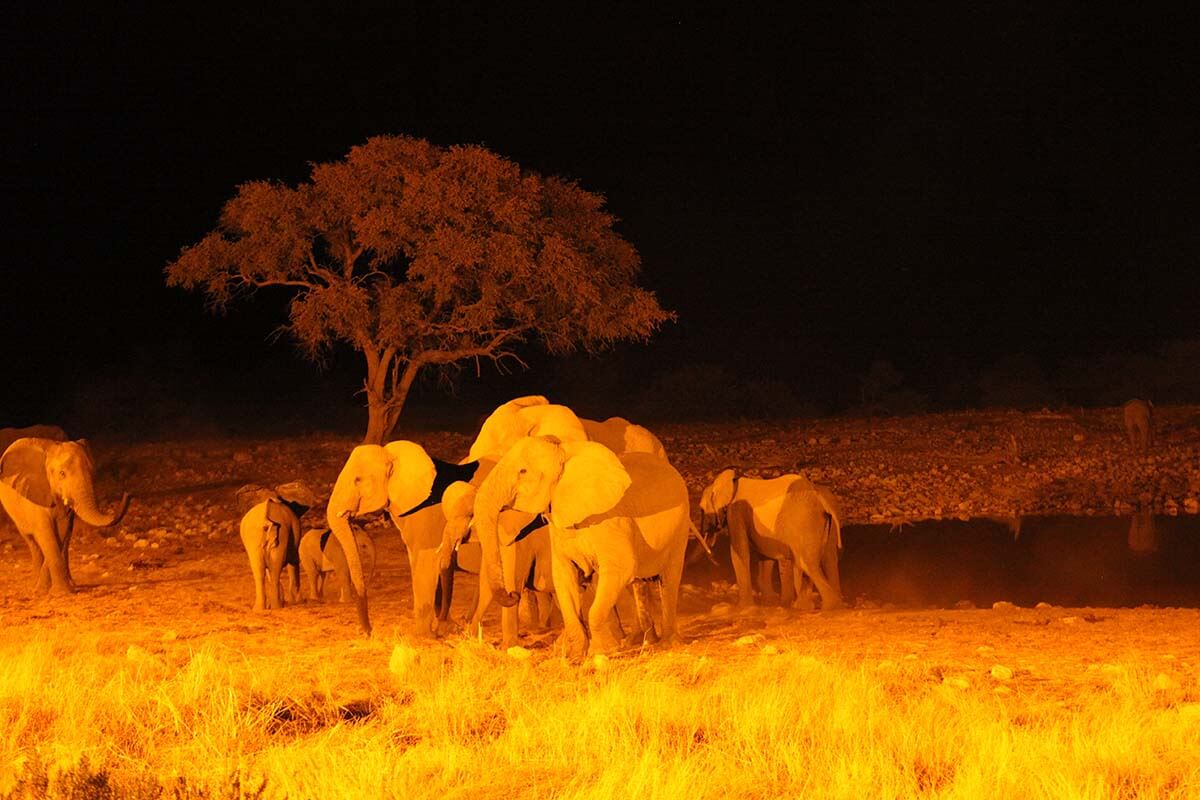
We were really impressed by the food in Namibia. Every single meal we had was really good, and even at very remote lodges, the food was often much better and more varied than we expected.
If you have allergies or special dietary requirements, let your accommodations know well in advance. Many remote lodges have to plan and order their supplies ahead, so they may not be able to accommodate specific requests at the last minute. Vegetarian and other special meals are widely available, but don’t assume that every lodge can cater to every dietary requirement.
The same applies when traveling with kids. All the lodges where we stayed made an effort to prepare child-friendly meals for our three young children, and there were usually many more options than just spaghetti or fries.
Depending on where you stay and the rate you book, breakfast and dinner may be included, but lunch often requires more planning. There may be nowhere to stop for food during a long driving day, so we always carried plenty of drinking water, snacks, and some basic food in the car.
Many lodges can also prepare a packed lunch for your next driving day. You normally need to order it in advance, sometimes the evening before, so remember to ask when you arrive.
TIP: Whenever you pass through a bigger town, use the opportunity to stock up on water and snacks. In remote Namibia, you can’t count on finding a shop or restaurant exactly when you need one.
16. Bring the Right Camera Equipment
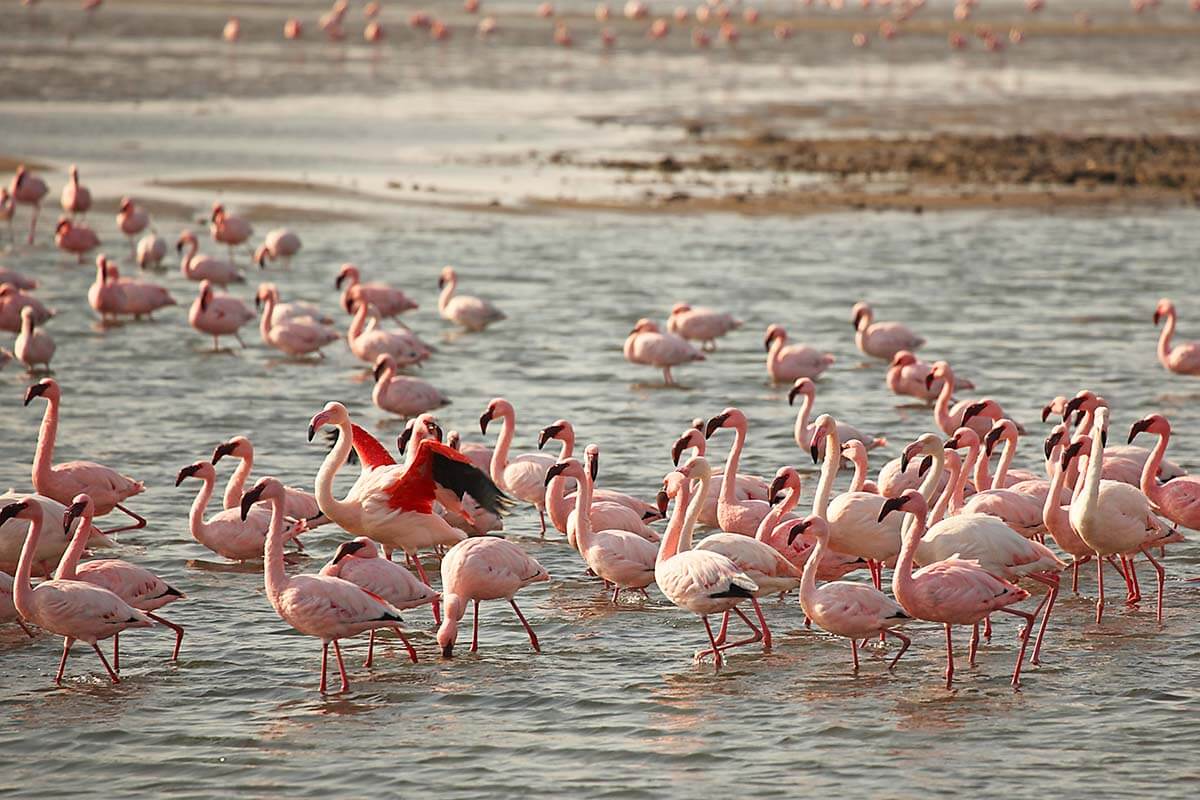
Namibia is incredibly photogenic, so if you enjoy photography, bring the best camera equipment you have. A smartphone is great for landscapes and everyday photos, but you’ll really appreciate having a camera with a good zoom for wildlife.
I took a 24–70mm lens for landscapes and general photography and a 70–300mm lens for wildlife, and found this combination sufficient for our trip. If wildlife photography is particularly important to you, you may want an even longer telephoto lens.
Don’t forget spare batteries, plenty of memory cards, and a charger. Just like with charging cables, don’t assume you’ll be able to easily buy camera accessories once you’re traveling through remote parts of Namibia. We always carried enough batteries and memory cards to get us through several days without having to worry about finding supplies.
READ ALSO:
Best Cameras and Lenses for Safari
Travel Photography Tips
17. Plan for Laundry on Longer Trips
If you’re traveling around Namibia for several weeks, plan to do laundry somewhere along the way rather than packing clothes for the entire trip. Many lodges offer laundry service, but it may not be practical if you’re only staying for one night. Prices also vary quite a bit.
On our four-week road trip, we packed enough clothes for about two weeks and planned our laundry for Swakopmund, which was roughly halfway through our trip. We stayed in a self-catering apartment with a washing machine, and it was incredibly convenient, especially with three kids.
TIP: If you’re planning a longer trip, book accommodation with laundry facilities for one of your multi-night stops. Swakopmund is especially convenient because you’ll find plenty of self-catering apartments with washing machines, whereas elsewhere in Namibia you’ll often be staying at remote lodges with fewer facilities.
So, these are our Namibia travel tips and some of the things we wish we had known before our first trip.
Namibia may require a bit more planning than many other destinations, especially if you’re traveling independently. But don’t let the long distances or remote locations put you off. We spent four weeks road-tripping around the country with three young kids and found it surprisingly easy to travel around.
Hopefully, our experience and tips help you prepare for your trip and avoid a few surprises along the way.
If you’re just starting to plan, take a look at our Namibia itinerary for a detailed road trip route and our Namibia packing list for everything you’ll need to bring.
More travel tips for visiting Namibia:
- Best Places to See in Namibia
- Visiting Indigenous Tribes in Namibia
- Best Place to Stay in Etosha National Park
- My Favorite Photos from Namibia
TIP: Found this guide helpful? Bookmark it for later or save it to Pinterest so you can easily find it again when planning your Namibia trip.
Your list is great! I found a place to rent an 12V cooler for the trip. 420 NAD for two weeks, so I don’t have to pack it in my luggage 🙂 Google knows where to find the camping gear rental in Windhoek 🙂
Thanks for your blog!
I’m sure there are many more tourist facilities in Namibia now than when we traveled, so yes, it’s definitely much easier to rent bigger items like a cooler if you can. I would assume that renting camping gear is also possible nowadays.
Have a great trip, Marlene.
I just want to say thank you, thank you, thank you for giving such specific details. I am leaving for Cape Town in 9 days and then staying in namibia for about 18 days. I’ll be volunteering for two weeks with Ehra, but the few days I’ll be in Namibia on my own is starting to feel a little overwhelming. Your blog eases me tremendously. I feel my trip will be amazing just from reading the info you shared. Great job, world traveler!!
Glad to help, Ginneen. Have a great time in Namibia!
Thank you so much for posting all this really helpful information. We’re traveling in Namibia, Botswana, and Zimbabwe for four weeks with my daughter (14) and my mother-in-law. I really appreciate being able to read your genuine insights and tips.
Glad to help, Meg. Have a great trip!
Thank you for these great tips! My kids (19, 17, 15) and I will be in Namibia for 3 weeks in July. The latter half of the time I’ll be working in Windhoek. Can you recommend a lodge to the north of Windhoek for our first night? We’ll leave the next day for 8 days of exploring.
Hi Julia, I don’t have much experience apart from the lodges where we ourselves stayed during our trip (see our Namibia itinerary for details). If you don’t want to stay in town and want to drive northwards, it really depends on when you arrive and how far you feel comfortable going on the first day already.
I found this beautiful lodge that’s not too far from Windhoek and it seems really nice, AND it’s relatively close to the main road which makes it a good choice if you just need something for one night.
Hope this helps.
Jurga,
Many, many thanks for your amazing collection of information for traveling to Namibia. We will be leaving the end of July for two weeks with our 18 year old grandson and although we have traveled to Africa twice, this will be our first trip to Namibia. Your insight, advice and personal experience has been priceless to us.
Happy and Safe Travels! Deb Barrett
Glad to help, Deb. Have a wonderful trip!
Hi Jurga
Your blogs are great,
My wife is scared of insects, snakes, scorpions etc. What are the chances of us encountering those in desert?
And was the local car insurance very expensive? I am thinking of buying excess policy from UK.
We are traveling in June.
Thanks a lot
Hi Raj, there is always a chance to run into all kinds of animals in the desert. That being said, we haven’t seen many. Maybe one snake during the whole trip, but I’m not even certain anymore – it might have been another trip. Definitely nothing seriously scary to be memorable. 🙂
I can’t remember about the insurance specifically – we rented the car with 100% insurance included at once, so didn’t pay over the counter. You definitely need full coverage in Namibia. We had a crack in the windshield from a passing car and they saw it immediately upon return, but since we had good insurance, we never had to pay a cent.
Have a great trip!
Hi Jurga, thanks for your posts.
We are planning our activities in Swakopmund and we guess about day trip to the Sandwich Harbour.
Most excursions are about to drive across the dunes, but we are interested in the landscapes with the dunes ending in the ocean’s water.
Did you visit it?
Thanks
Hi Sergi, no, we didn’t – it’s not the kind of an excursion one takes with three small kids :).
Did you see this Sandwich Harbour tour – it seems to have a great itinerary and the few reviews are all excellent.
Have a great trip!
What a treat to find your blogs. We will be in Namibia in July for serveral weeks and visiting many of the sites you mention. I have passed along links to your pages to those traveling with me. Thanks for all of the information!!
Mel
Good to hear that, Melissa. Enjoy your trip! Namibia is such a beautiful country.
Jurga
Thanks a lot for the information. It makes it much easier for our first trip which will be in August 2018. Starting in Kgalagadi
Riana
Glad it’s helpful, Riana! Enjoy your trip to Namibia.
Hi Jurga,
Thanks for the blog and the good info about Namibia.
I’m going for a road trip in Namibia this summer, to be more exact the whole of August, with a friend.
No camping.
At the moment we are doing our research, and it seems there are divided opinions about booking overnight stay. Someone tells that there is no problem to get a place to sleep and someone else write that you need to book at least “months” ahead. It confuses me a bit.
Anyhow, we’ve decided to book in advance 4 things: The car of course ( Toyota Fortuner 4×2 ), the first and
last night in Windhoek and the Etosha lodge/safari stay, which is on the last part of the journey.
Our travel model has always been to book one day before, but i can see if some lodges do not have wifi it can be a bit risky.
We have a route but, like most of the times, we deviate form our original plans, we like a bit of unforeseen adventure.
We want, like a´many others, flexibility in our journey but is this realistic?
Last question… Is the water potable or you advise always to buy bottled water?
Kid regards
Marco 🙂
Hi Marco, in my experience Namibia is not a place where it’s very easy to decide last minute where you want to sleep. It will probably be fine in Swakopmund where there are more hotels, but all the other areas are so remote with very limited accommodation options. As a minimum, you’d need to know where every single accommodation is located so that you know where to look, but it can sometimes mean that if one place isn’t available you have to drive a few hours to find something else (and you don’t want to drive in the dark). Of course, it’s just the two of you, so I guess it’s easier, but still… As you say, wi-fi is limited, mobile phone doesn’t work in many places (and costs a fortune too), so you’ll probably spend quite some time looking for where to sleep instead of sightseeing. If I were you, I’d do my research up front, try to make an itinerary and book accommodations. We booked ours a year in advance and had to adjust the planning because some places were already full (but we needed family rooms or two rooms and that’s of course different), but still.
As for the water, buy a lot of water when you arrive, throw it in a trunk of the car and restock as needed so that you never run out. Drinking tap water is not such a good idea.
One other thing, what’s a 4×2 car? You really need a 4WD in Namibia if you are there for a month (there are just very few tar roads and you won’t see the best of Namibia driving those). And ask for an extra spare tyre as well. We didn’t need ours, but some people have bad luck and sometimes have two flats in one day. It’s especially important in the South (Fish River Canyon area) and in Damaraland where gravel is really sharp.
All the best with the preparations and enjoy the trip!
Hi. We plan a self drive camping tour through Namibia for 3 weeks starting beginning of November. We would like to be flexible and not book camp sites month in advance (rather than a few days before). Any ideas how easy or difficult this will be in Nov?
Honestly, no idea Jutta. I don’t see much difference between booking a few days in advance vs. months in advance in terms of planning the trip – I guess you already have a very good idea where you want to go and how much time to spend? If you just want to book the same day, then it’s different – it gives you flexibility, but a few days in advance – you’re still not flexible. So you can just as well book the sites and be certain.
On the other hand, I really don’t think that Namibia is overrun by tourists any time of the year, and November isn’t such a high season either. The only issue might be that if the campsite you want isn’t available, you may not have much alternative.
I’d definitely book campsites at the most popular places like Sossusvlei (if you want to stay inside the gates) and Etosha NP in advance and maybe leave the rest for later?
Hi , Where is the best place to buy currency ?
You can buy it in your home country before you leave (which is what we did). In that case ask for South African Rand as Namibian currency is very difficult to get abroad and ZAR is accepted everywhere at the exact same value. Otherwise just get some at an ATM when you arrive. There are ATM’s in all bigger towns, but don’t count on finding them in rural areas, so better get more money when you are in Windhoek or Swakopmund.
Greetings from a Namibian. Your post was enjoyable to read. Just a minor correction, the currency is the Nambian Dollar (not Nambian Rand). However Nambian, South Africa and a couple countries are part of the Common Monetary Area (CMA), where the currencies are linked one-on-one. It is however advisable to change your Namibian dollars to Rands before leaving Namibia (at a bank, at no cost), esp if you continue your travels through Southern Africa. Failure to do so will cost you a fair bit of commission outside of Nambia. As a Nambian, we welcome all to the contrasting wonder that is Namibia.
Thank you, Indileni, for correction. I don’t think we used Namibian currency much as South African Rand was accepted everywhere, so I didn’t even pay attention to how it was called. 🙂 And yes, good advice to not take Namibian dollars abroad, I don’t think you could exchange it back easily here in Europe. We always make sure to spend the last local money just before we leave.
I just returned from 4 weeks in Namibia three days ago. Every single day was something new and the country is absolutely beautiful. Very true about the travelling through not paved roads making it harder to get around but that’s okay because it was more time to enjoy the beautiful landscapes changing quickly from sand to mountains and bushes. I would highly recommend staying in Swakopmund, the only thing is to be aware that Saturdays and especially Sundays many things in the town are closed so it may be wise to spend a day there during the week! Otherwise a beautiful country with so much to see. Also would recommend sandboarding, the best experience in Swakopmund!!
Thanks for sharing your insights, Emily. Swakopmund is indeed worth at least a few days, there is so much one can do around there.
Hi Jurga. Your blog is so valuable to me for planning our trip to Namibia. Thank you!
Question regarding vaccination, did you vaccinate your children against rabies? It’s recommended in most guide books.
Thanks
Aude
Hi Aude, no, we haven’t. Our kids had all the ‘regular’ vaccines, but nothing extra. I suppose it depends on how you travel, but based on what we read about this specific vaccine, and based on the official website we use for medical travel advice, it’s not something we even considered. However, your situation and travel circumstances might be different, so it’s always best to talk to your doctor.
Ok thank you for your answer it is useful to me. Our doctor hasn’t advised for it or against it. He said it’s up to us. As we are only travelling there for 3 weeks and will have the children close to us at all times he reckons the risk is low.
Fabulous helps hugely and enjoyed your posts on Namibia so much
Hi Jurga,
Did your book the whole trip ur self or have help from a travel company? If you did the former how did you know where you would be night to night? Did you camp at all or just do lodges?
Many thanks for your highly informative posts!
Katie
Hi Katie, we first figured out what we wanted to see and how many days we wanted to spend in each of the places. We then asked a travel agency specialised in Africa travel to help us with the bookings as we had very specific requirements for family rooms for 5 when possible, etc. In fact, we asked several agencies, but only one did the job we really wanted – i.e. really making sure that we got to see the places that we wanted without having to always sleep in two different rooms (sometimes it was unavoidable, but when possible, they made it work). It’s sometimes easier for a trip like this, as an agency can block the flights while waiting for all accommodations to confirm, without an extra cost. We only do this rarely though. In places where hotels are plentiful, we book our own accommodations and flights/cars – it usually saves a lot of money.
We didn’t camp at all, and had all accommodation booked well in advance (a year actually, as some lodges we wanted to stay at have very limited availability). I would definitely suggest booking in advance, because most places are so remote that the next hotel might be an hours’ drive away.
Alternative is to hire one of those 4×4 tented vehicles and camp in the more remote areas, while sleeping in the hotels in places like Swakopmund where there are many more choices. If you are with 2-4 people, this might be a good option. Just make sure you carry enough fuel and food/water.
Hope this helps.
Hi, Jurga!
Could you recommend a camping car hire company?
Hi Natalia, we rented a regular 4WD in Namibia, but I think most companies had 4WD with a tented roof if that is what you’re looking for. We saw many of these types of vehicles there. If I remember well, we rented a car from EuropCar, but we usually check several companies for the best price and rental conditions.