
What to Wear in Svalbard: Winter Packing Tips from My Trip (Oct-May)
This site contains affiliate links, which means that we may earn a small commission, at no cost to you, for qualifying purchases. It supports the work that goes into keeping this content free. Thanks for reading! More info: Privacy Policy.
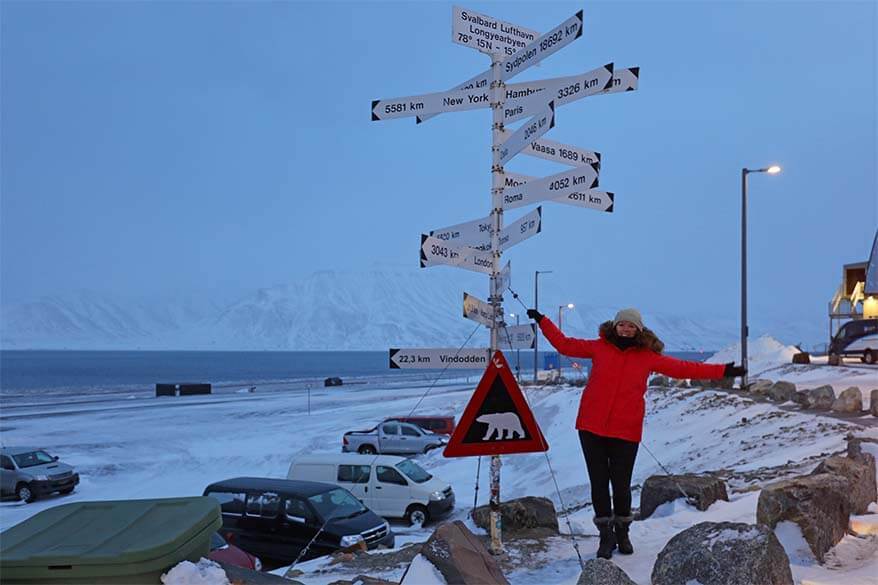
Wondering what to wear in Svalbard in winter and how warm your clothing really needs to be? I visited Svalbard in February and spent a lot of time outdoors, including dog sledding, snowmobiling, and Northern Lights tours. In this guide, I share exactly what I wore, what worked well, and what I recommend packing for a winter trip to Svalbard.
Svalbard’s winter season lasts roughly from October to May, but conditions vary considerably depending on when you visit. Whether you’re traveling during the Polar Night or later in spring, you’ll need proper winter clothing and good layers. The packing tips below cover everything from base layers and winter boots to gloves, outerwear, and a few useful extras you may not think of.
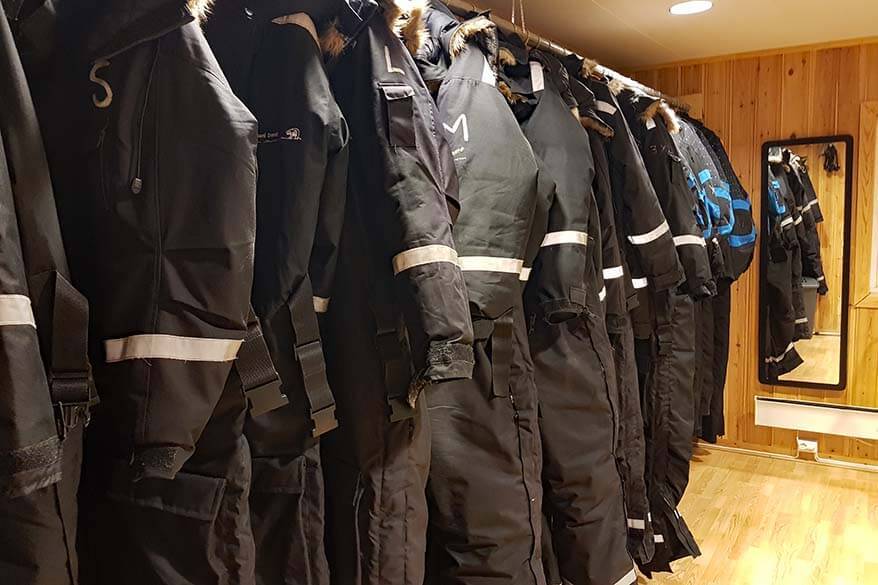
Good to know: Most organized outdoor tours provide thermal suits, boots, and other specialized winter gear. I explain what is normally provided and what you still need to wear underneath.
READ ALSO: Where to Stay in Svalbard
What Is the Weather Like in Svalbard in Winter
When you look at Svalbard’s location, so close to the North Pole, it’s no surprise that winters are very cold. However, thanks to the influence of the Gulf Stream, Svalbard has a milder climate than many other places at a similar latitude.
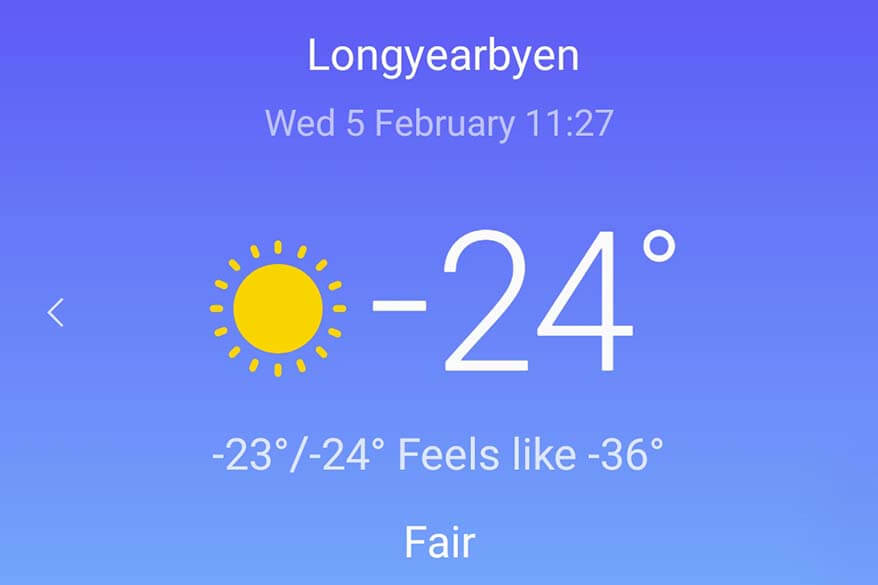
February is typically one of the coldest months, with average temperatures around -15°C (5°F). However, temperatures can sometimes drop to -25°C or even -35°C (-13 to -31°F). Add strong winds, and it can feel significantly colder.
That said, such extreme temperatures aren’t the norm. In winter, you’re more likely to encounter temperatures somewhere around -10 to -20°C (14 to -4°F). But Arctic weather is unpredictable, and wind chill makes a huge difference. It’s best to prepare for the coldest conditions and pack accordingly. You definitely don’t want to discover that your clothing isn’t warm enough once you’re there.
My experience: I visited Svalbard in February, during the second week of the month. Just two days before my trip, temperatures were between -25°C and -32°C (-13 to -26°F), with a “feels like” temperature of around -36°C (-33°F) or even lower. During my visit, however, it was much milder: around -6°C to -10°C (14 to 21°F), with wind chill making it feel as cold as -17°C (1°F).
READ ALSO: Best Things to Do in Svalbard in Winter
Svalbard Packing List for Winter
The biggest challenge when dressing for winter in Svalbard is that it’s very warm indoors. By the time you put on all your layers and are ready to leave, you may already be drenched in sweat. Once you’re outside and walking around, however, all those layers feel just right. But stand still for too long, and you’ll quickly start to feel the cold.
So whenever you get dressed, consider what you’ll actually be doing. If you’re simply walking to a restaurant or museum in Longyearbyen, you’ll probably be more comfortable with fewer layers. On the other hand, if you’re planning to spend several hours outside waiting for the Northern Lights, dress as warmly as you possibly can.
Below is a list of essential clothing and other items to pack for Svalbard in winter. Further down, you’ll find more details and practical tips for the most important items on the list.
Here’s an overview of what to pack for Svalbard in winter (you can find more information and examples below):
- Winter jacket (the warmest Arctic winter jacket you can find).
- Wool sweaters (ideally a lighter one and a very warm one, both 100% wool).
- Warm winter pants or ski pants.
- Thermal underwear (both tops and leggings).
- Wool socks.
- Warm winter boots.
- Shoes or slippers for indoors (not essential, as most hotels provide slippers).
- Jeans or other comfortable pants and a lighter sweater for the hotel and restaurants.
- Pajamas, underwear, and regular socks.
- Warm hat that covers your ears. Many people wear bomber-style hats.
- Two pairs of gloves: thin inner gloves and thick waterproof/windproof gloves. Many locals wear wool mittens.
- Reflective vest (especially useful during the Polar Night).
- Ice cleats/shoe spikes.
- Hand and foot warmers (optional, but useful in very cold weather).
- Warm buff or neck gaiter (I took two).
- Lip balm, moisturizing face cream, and hand cream.
- Day backpack, ideally with a rain/snow cover.
- Power bank and spare batteries.
- Camera, smartphone, and charging cables.
- Tripod (if you plan to take photos in low light or photograph the Northern Lights).
- Headlamp (useful, but not essential).
- European travel adapter.
- Paper tissues.
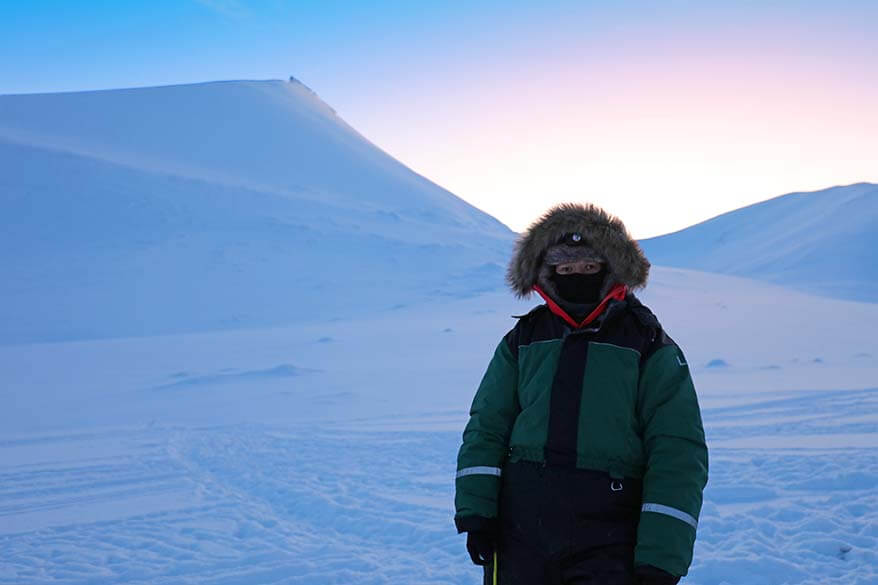
Good to know: Adventurous outdoor tours such as dog sledding & Svalbard ice caves or snowmobiling in Svalbard provide warm thermal overalls, heavy-duty gloves, and usually a balaclava, winter hat or helmet, and very warm boots. In most cases, you’ll still want to wear your ski pants and a warm sweater and jacket underneath the thermal suit.
Northern Lights tours by snowmobile also provide thermal overalls and other necessary gear. On the other hand, Northern Lights tours by bus are different. For example, the tour with dinner that we did took us to a warm cabin where we could stay inside while waiting for the aurora. No extra clothing was provided since we only had to go outside when the Northern Lights appeared and could warm up inside at any time.
Below, you can find more details and examples of what I packed for Svalbard in February, along with practical tips on what you really need and why.
What to Wear in Svalbard in Winter
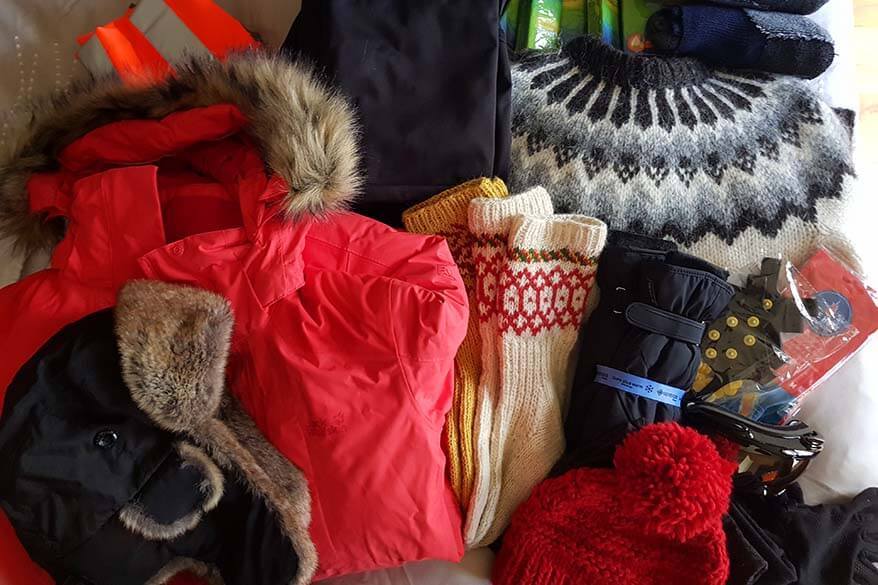
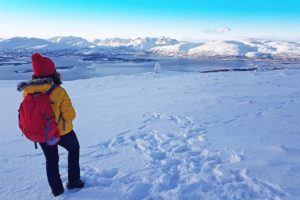
In Svalbard, I usually wore three layers on top: a merino wool base layer, a warm Icelandic wool sweater, and a winter parka. On particularly cold days, I added a thinner wool sweater underneath the thick one, so three or four layers in total.
For my legs, I wore thermal merino leggings under warm ski pants. Two layers were enough. I also wore ski socks with thick 100% wool socks over them, plus my warmest winter boots.
Below, you can find more details and examples of the clothing I wore in Svalbard in February.
Winter Parka
This is probably one of the most important things you have to pack – a really warm winter parka. I have a few warm jackets that served me well for a winter trip to Iceland and a winter trip to Northern Norway, but when I saw the weather forecast of under -20°C, I knew that I needed something even warmer for Svalbard.
After some research, I ended up ordering this Jack Wolfskin Newfoundland winter parka, and it was just perfect for the Arctic winter.
It’s not likely you’ll find the exact same jacket as models change so much every year. Here are some of the characteristics of the jacket that I bought: Main Fabric: TEXAPORE TASLAN 2L Filling 1: 80/20 WHITE DUCK DOWN, 700cuin 80% White Duck Down, 20% Feather; Filling 2: MICROGUARD 120g/m. Basically – a very well-insulated, waterproof winter jacket with a thick down filling.
This jacket looks very similar to the one I wore in Svalbard.
A good winter jacket isn’t cheap, but neither is a trip to Svalbard. This is definitely not the place to save on warm clothing and risk having your trip ruined because you’re constantly cold.
TIP: When looking for a warm winter jacket for Svalbard, check out Fjällräven and Helly Hansen winter parkas. Both brands are widely used in the Nordic countries and have jackets designed for very cold winter conditions.
If you’re traveling to Svalbard later in the winter season, such as April or May, a somewhat lighter winter jacket like this should be sufficient.
Reflective Vest
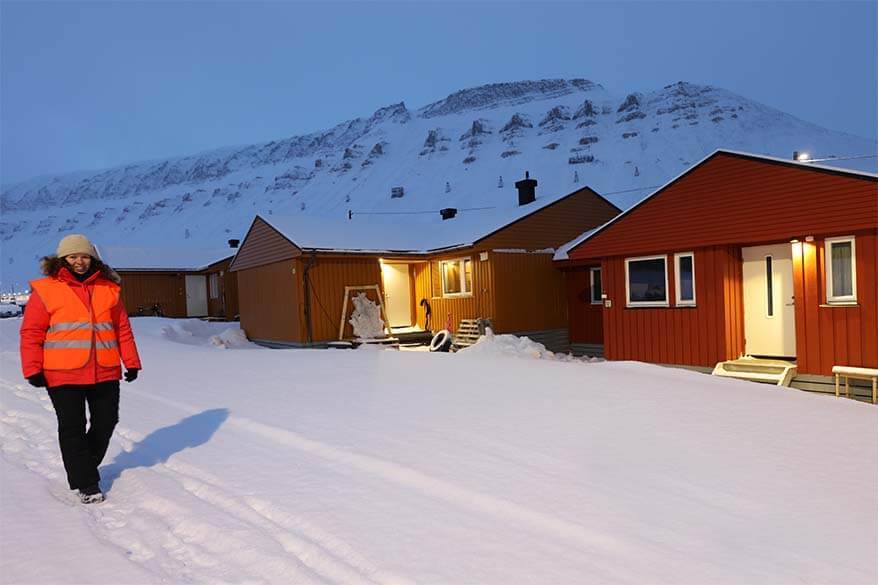
It’s customary to wear a reflective vest in Longyearbyen during the dark season. You’ll see many locals and tourists wearing them around town, and they really help you stay visible. Many streets don’t have sidewalks, so it’s worth taking this extra precaution.
Some hotels lend reflective vests to their guests, but I simply brought one from home. I took the largest size we had so that it would fit comfortably over my thick winter jacket.
Good to know: One of our readers told us that their accommodation didn’t provide reflective vests and they had to buy one for around €12–15. So it’s easiest to pack one from home.
Wool Sweater
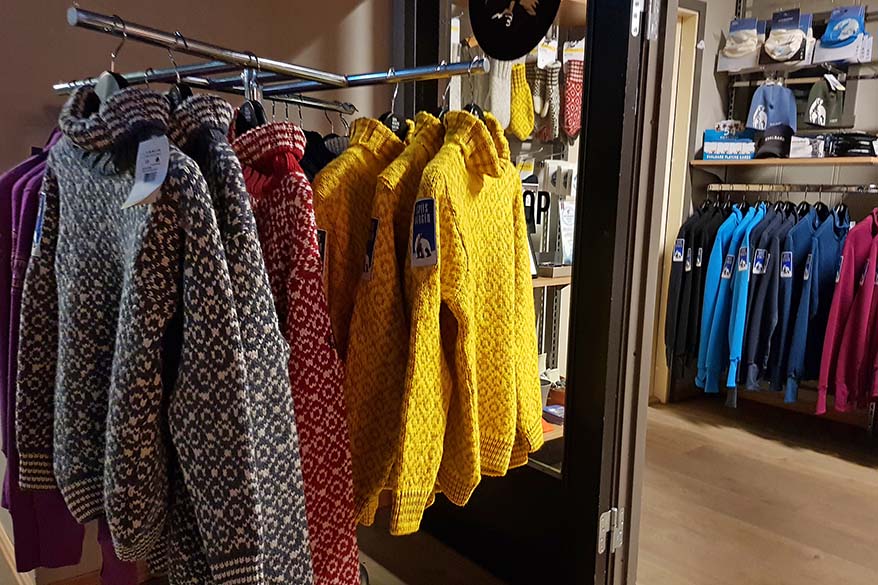
You don’t need lots of layers in Svalbard in winter, but each layer needs to count. A good-quality, thick wool sweater (ideally 100% wool) is one of the most important things to pack.
I took a couple of wool sweaters to Svalbard. Most of the time, I wore my Icelandic wool sweater over a merino wool base layer. On particularly cold days, I added a thinner wool sweater between the two. You can find some nice Icelandic sweaters for men and women on Amazon.
You’ll also see many locals wearing this type of traditional Norwegian wool sweater. You can buy similar sweaters in shops in Longyearbyen, but if you need one for your trip, I’d get it in advance rather than relying on finding the right size and style after you arrive.
Thermal Underwear
I recommend merino wool thermal underwear, both shirts and leggings. While one pair of leggings will probably be enough, I’d pack several thermal shirts. If you’re doing active outdoor tours, you’ll likely want a fresh one every day.
I packed three merino shirts and washed them once in my hotel room. The heating was so efficient that they were dry within a few hours.
For years, I’ve used Icebreaker 260 tech merino leggings and these merino base layers for my winter trips. I also have a few merino T-shirts that are great for layering.
Good-quality merino clothing isn’t cheap, but mine has lasted for years and I use it on virtually every cold-weather trip, so it has been a worthwhile investment. If you only need thermal underwear for this trip and don’t normally travel or ski in winter, however, there are plenty of more affordable options that should be perfectly adequate. For example, this MERIWOOL base layer and these base layer pants are more affordable 100% merino wool options and offer very good value for money.
Ski Pants
I have several pairs of winter and ski pants, but for Svalbard, I packed my warmest ski pants and wore them throughout the trip. If you don’t have a good pair yet, I recommend getting insulated ski pants (something like this). That extra layer of warmth makes a big difference in Arctic temperatures.
Winter Boots
Good winter boots are one of the most important things to pack for a winter trip to Svalbard. I saw many people wearing this type of Sorel winter boots. They are also very popular among locals. I took my UGG Adirondack winter boots, the same ones I use for all my winter trips, and they were excellent.
For more options in different price ranges and for the whole family, see our guide to the best winter boots for travel.
TIP: When buying winter boots, consider going at least one size bigger than you normally wear. Thick wool socks take up quite a bit of space, and your feet will also stay warmer if the boots aren’t too tight.
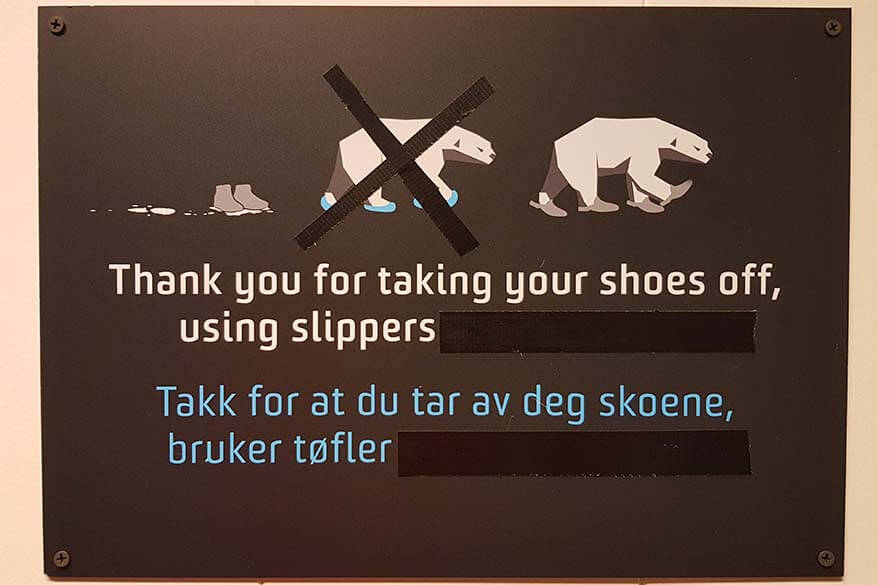
Good to know: In Svalbard, it’s customary to take off your outdoor shoes when going inside. Svalbard hotels, museums, and some restaurants have shoe racks or even separate changing areas near the entrance where you can leave your boots. Slippers are usually provided.
Shoe Spikes/ Ice Cleats
I highly recommend packing shoe spikes (ice cleats) for walking around Longyearbyen in winter. Streets and sidewalks can be extremely slippery, especially when walking uphill or downhill. I tried walking without them, and the difference was huge. Visit Svalbard also recommends bringing spikes since roads can be icy.
I packed these shoe spikes and they were great. They’re lightweight, easily fit in a pocket, and are very quick to put on and take off.
Wool Socks
Good winter boots are important, but you also need good-quality wool socks. Most of the time, I wore my Falke ski socks with an extra pair of wool socks over them.
It can be surprisingly difficult to find really warm wool socks in countries with milder winters. Many socks marketed as wool contain just 30–50% wool and aren’t nearly as warm as thick, high-wool-content socks.
I now always wear these Norwegian wool socks on cold-weather trips. I first bought them a few years ago and liked them so much that I now have dozens of pairs. While they’re not 100% wool, they’re really warm and have become my go-to winter socks.
You can also buy warm wool socks in Longyearbyen, and you’ll find them in many shops and even some hotels. So if you can’t find anything suitable before your trip, pack the warmest socks you have and buy a pair or two once you arrive.
Headwear
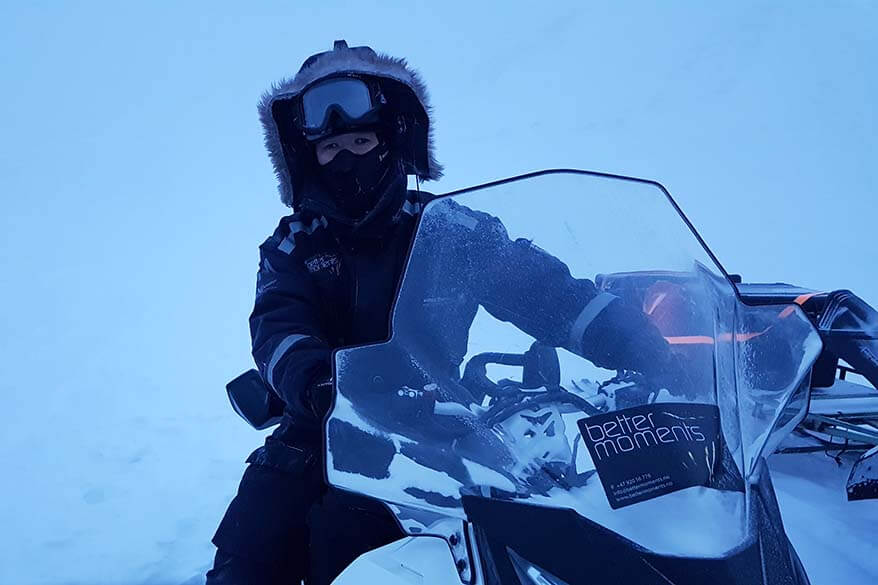
I took two winter hats with me: a warm winter beanie and a waterproof trapper hat, and I used both. Around town, I usually wore the beanie together with my jacket’s hood. For outdoor activities, I wore the trapper hat and a ski balaclava.
Even with all these layers, there were times when my face still felt really cold. Wind makes a big difference, especially when you’re moving at speed on a dog sled or snowmobile.
Feet Warmers & Hand Warmers
With good winter boots and warm wool socks, my feet were generally fine in Svalbard. The only time they got really cold was when I was standing still for a long time waiting for the Northern Lights. For situations like this, foot warmers can be really useful. I packed a few of these insole foot warmers and used them on several occasions.
I wouldn’t use them automatically from the beginning of a full-day tour, though. They only stay warm for a limited number of hours, so it’s better to keep them for situations when you really need the extra warmth. If you know you’ll be outdoors all day, you could also pack a spare pair.
I also took hand warmers like these to Svalbard but never actually used them. And it certainly wasn’t because my hands weren’t cold. It can be absolutely freezing in Svalbard, especially when you’re standing still or out in the wind for a long time.
The problem was that I was constantly taking my thick gloves off to take pictures, so I ended up wearing thinner gloves like these all the time. If you don’t need your hands free as much as I did, I highly recommend using hand warmers. You’ll really appreciate that extra warmth, especially on longer outdoor tours.
More recently, I packed rechargeable hand warmers for a winter trip to Finnish Lapland and found them much more practical. They’re easy to switch on whenever you need some extra warmth, so this is what I would pack nowadays.
Gloves
I packed two pairs of gloves – thin inner gloves like these and thick snow mittens like these. Most of the time, I wore just the thin ones. It was perfect for taking pictures but really too cold to stand still for a while, so those mittens were needed as well. During tours, I used my thin gloves to wear under the thick mittens provided by tour companies.
Many locals wear thick wool mittens in town, but since they aren’t waterproof, they also always have oversized Goretex mittens to put over those wool gloves when staying outdoors for a longer period of time.
TIP: These 2-in-1 ski mittens with thin inner gloves are a perfect example of what you should pack.
Neck Warmers
For a winter trip with lots of outdoor activities, I find neck warmers (buffs) much more practical than a thick scarf. They stay in place, fit easily under a jacket or thermal suit, and can also be pulled up to protect your face when needed.
For Svalbard, I packed two: a long Polar Buff and a thick fleece Buff like this. Most of the time, I wore both at the same time for extra warmth.
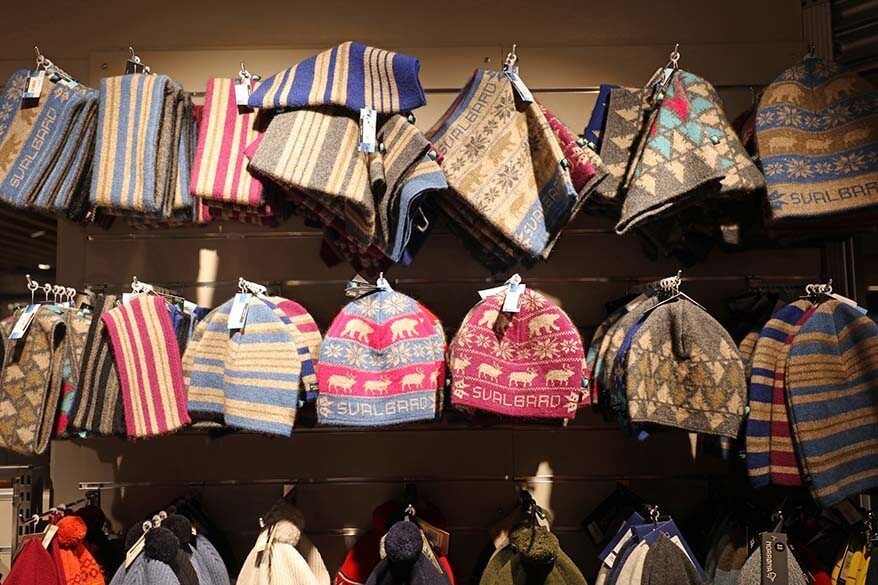
You’ll also find warm wool neck warmers in many shops in Longyearbyen, and they’re popular with locals. Wool is generally warmer, but if you find it itchy against your skin, fleece may be more comfortable.
Other Things to Pack for Svalbard in Winter
Here are a few other useful items to pack for a winter trip to Svalbard:
- Camera gear and extra batteries. Batteries drain much faster in extreme cold, so always carry spares and keep them somewhere warm when possible. Pack a tripod if you plan to photograph the Northern Lights or take pictures in low light. See our guide to Northern Lights photography for beginners for recommended settings and practical tips.
- Power bank/portable charger. If you use your smartphone a lot, a good power bank is really useful. Phone batteries drain incredibly quickly in Arctic temperatures. My phone “died” several times during longer day trips and sometimes simply refused to take pictures because it was too cold. When you’re not using it, keep your phone in an inside pocket as close to your body as possible.
- European travel adapter. Svalbard uses the same plugs as Norway and most of continental Europe (types C and F). If you’re traveling from the UK or US, you’ll need a European plug adapter.
- Day backpack with a rain cover. A small backpack is useful for carrying camera gear and other essentials on day trips. Ideally, choose one with a rain cover to protect everything from snow. If yours doesn’t have one, you can buy a separate backpack rain cover. They’re inexpensive and useful for all kinds of outdoor trips.
- Moisturizers and lip balm. The Arctic climate is very dry, and the combination of freezing temperatures outdoors and heating indoors can be tough on your skin. Pack a good moisturizing face and hand cream, lip balm, and perhaps some body lotion as well. Nowadays, I also always pack a big pot of Vaseline for winter trips to Nordic destinations. It’s especially useful for protecting dry lips and exposed skin from the cold and wind.
- Headlamp. A good headlamp can be useful if you’re visiting during the Polar Night. That said, tours that require headlamps, such as ice cave tours, normally provide them, so you don’t necessarily need to buy one specifically for the trip.
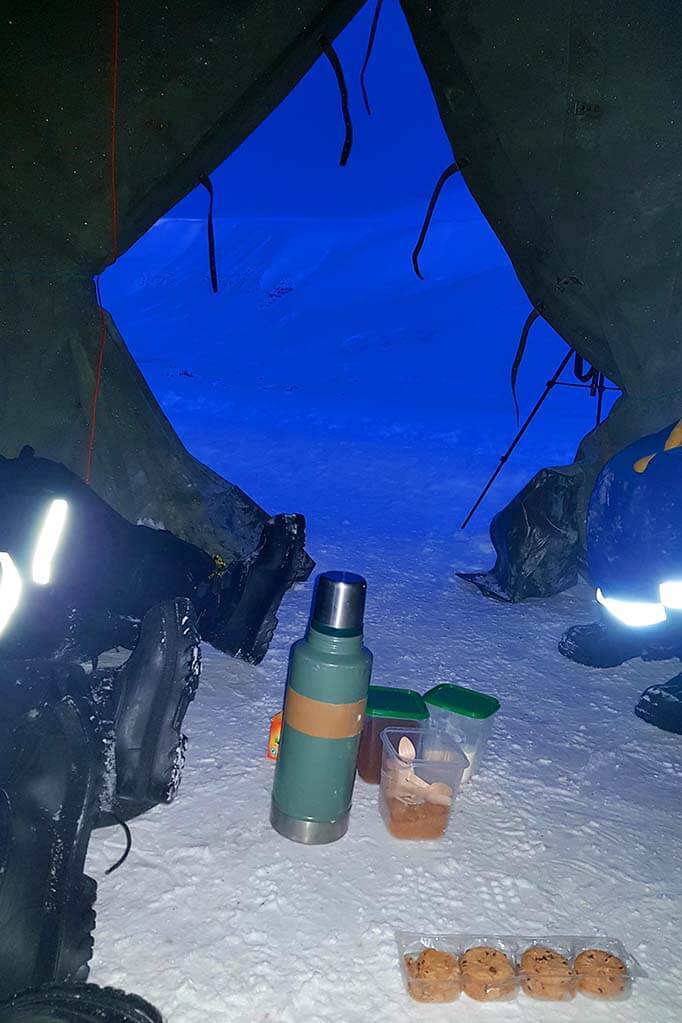
- Thermos. I usually pack a compact travel thermos for winter trips and took it to Svalbard as well, but I never used it. Activities outside Longyearbyen are generally done with organized tours, and our guides always brought thermoses and prepared hot drinks along the way. So unless you know you’ll use your own, I’d leave it at home.
- Clear snow/protective goggles. I packed my ski goggles, and there were moments, particularly during dog sledding, when I really wished I could use them. Unfortunately, mine were designed for sunny ski trips in the Alps and were far too dark for Svalbard during the Polar Night. If you’re visiting in the dark season, look for clear or very lightly tinted goggles with an anti-fog coating. Our dog sledding guide wore simple protective goggles like these. They’re not essential, and whether you’ll need them depends on the weather. For snowmobile tours, the operator provides a helmet and appropriate goggles.
- Sunglasses. You obviously won’t need sunglasses during the Polar Night. But if you’re visiting later in the winter when the sun is back, good sunglasses are essential. The combination of bright sunlight and snow can be very intense, so ideally choose a pair with good UV protection and an anti-fog coating.
If you are still not certain about Svalbard winter clothing, check out the video below, made by Svalbard Tourism Board. It shows exactly how to dress for Svalbard in winter. Take a look!
So, these are my tips for what to pack for Svalbard in winter. I hope this guide helps you prepare for your trip and, most importantly, stay warm! If you have any questions, feel free to leave a comment below.
And don’t worry if you forget something. You’ll find plenty of shops selling winter clothing and gear in Longyearbyen (see our Svalbard travel guide for more practical information). However, the choice may be limited and prices are generally higher than online, so it’s best to arrive well-prepared.
READ ALSO: Things to Do in Svalbard in Winter
TIP: Save this guide for later, share it with your friends, or pin it to Pinterest so you can easily come back to it when planning your trip.

Thanks you for all your articles it’s been very informative as we are of to Svalbard in February next year. Have put some of your recommendations in the Amazon basket,
Thank you, Heidi. I’m glad you’ve found the articles helpful. Svalbard in February is such a unique trip. Have a wonderful time!
Thank You Jurga!
Glad to help, Tom. Have a great time in Svalbard!
This page has been SO useful! We’re off on Saturday and I feel super prepared. Thank you 🙏🏼
Glad to hear that, Vicky. Have a great time in Svalbard. It’s truly a trip of a lifetime!