Planning a trip to Yellowstone National Park and are looking for experience-based tips and first-hand travel information?
This page gives you a practical overview of how to plan your visit, what to see, and how to get around one of the largest and most diverse national parks in the United States. You’ll find itinerary ideas, first-hand travel tips, and links to detailed guides for the main highlights, viewpoints, and hikes – so you can plan a realistic trip and make the most of your time in the park.
Start here:
- Yellowstone Itinerary – 1 to 5 days
- Best Things to Do in Yellowstone
- Tips for Visiting Yellowstone (important planning advice)
This page contains affiliate links, which means that we may receive a small commission, at no cost to you, if you make a purchase through a link. More info: Disclosure.
Why Visit Yellowstone & What to See
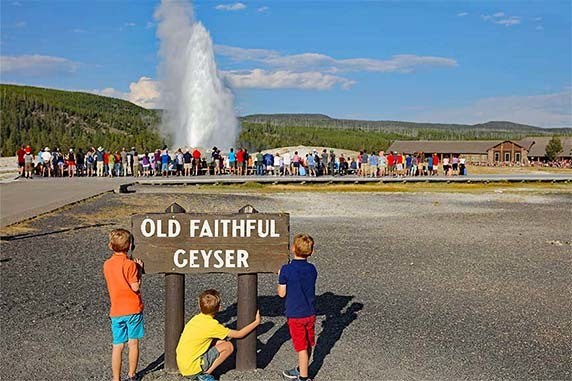
Yellowstone National Park is known for its geysers, hot springs, wildlife, and dramatic landscapes. It’s home to the world’s largest concentration of geysers (including Old Faithful), large geothermal areas, wide open valleys, and some of the best wildlife-viewing opportunities in the U.S. It’s a great destination if you want to combine iconic natural landmarks with easy road-based sightseeing and short walks.
Start with these practical overviews of the main sights and activities in the park:
- Best Things to Do in Yellowstone
- Best Things to Do in Yellowstone with Kids
- Yellowstone Lower Loop: Best Places to Visit
For more detailed information about individual landmarks and our favorite areas, see these guides:
- Old Faithful Geyser
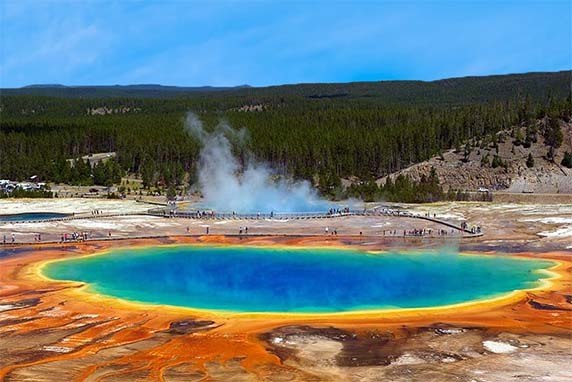
- Grand Prismatic Spring
- Upper Geyser Basin
- Grand Canyon of the Yellowstone
- Mammoth Hot Springs
- Boiling River
If you’re planning a longer trip and want to include some easy hikes, this guidebook with the best easy hikes in Yellowstone is a useful addition.
How to Get to Yellowstone: Airports & Car Rental
You can reach Yellowstone either by driving or by flying and continuing by car.
There are no major airports close to Yellowstone National Park. The nearest large airports are Salt Lake City (SLC), about a 6-hour drive away, and Billings (BIL), about a 3-hour drive.
The most convenient airports for visiting Yellowstone are smaller regional airports located about 1–2 hours from the park: Bozeman (BZN), Jackson (JAC), and Cody (COD).
If you fly, you will need a rental car. Yellowstone is very large and there is no public transportation inside the park. We recommend using Booking’s car rental comparison site to quickly check prices and availability across multiple providers in one place. We use it for all our trips because it’s fast, clear, and usually offers very competitive rates with flexible booking conditions. You can compare current car rental prices here: Car rental deals in the USA.
How to Plan a Trip to Yellowstone
When planning your Yellowstone trip, focus on a few key decisions first: when to visit, how many days you have, how to get there and get around, where to stay, and which areas of the park you want to prioritize.
Below, you’ll find practical information for each of these topics. If you’re mainly looking for ready-made routes and day-by-day plans, start with these detailed itinerary guides:
- Yellowstone Itinerary – suggestions for 1 to 5 days
- One Day in Yellowstone – Lower Loop itinerary with map
- Two Days in Yellowstone – detailed 2-day itinerary and map
- Grand Teton and Yellowstone Itinerary – ideas for combining both parks (2–5 days)
Before finalizing your plans, always check the official Yellowstone road conditions page for current closures and construction updates. This can have a big impact on driving times and route planning.
What to Know Before You Book a Trip
If you want to make the most of your time in Yellowstone, a bit of advance planning really helps. Distances inside the park are large, driving times are often longer than expected, and accommodation and tours can sell out months ahead.
To avoid common mistakes and plan a more realistic itinerary, see our practical guide with first-hand tips:
- Tips for Visiting Yellowstone – important planning advice and things to know before you go.
When to Visit Yellowstone
Yellowstone has very distinct seasons, and the best time to visit depends mainly on what you want to see and how flexible you are with crowds and road access.
For most first-time visitors, the best period to go is from late June to mid-September. During these months, all main park roads are normally open, most services and lodges operate, and it is easiest to follow classic sightseeing routes such as the Lower and Upper Loops. This is also the busiest and most expensive time to visit, so booking accommodation well in advance is essential.
Late May–early June and late September can be good alternatives if you want fewer crowds and lower prices, but you should expect some road closures, limited lodging availability inside the park, and cooler, more unpredictable weather. Wildlife viewing is often excellent in these shoulder months.
Winter (roughly November to March) is only suitable if you specifically want a winter experience. Most park roads are closed to regular vehicles, and access is mainly possible with guided snowmobile or snowcoach tours. On the positive side, the park is very quiet, scenery is completely different, and wildlife is often easier to spot. On the downside, sightseeing options are more limited and careful planning is essential.
For a detailed breakdown of what each season is really like in practice, see our guides below:
Where to Stay
Accommodation in Yellowstone is limited, expensive, and often sells out many months in advance. If you’re visiting in summer, it’s very common to have to book your hotel a year ahead, especially if you want to stay inside the park.
A very practical alternative is to stay in one of the small towns just outside Yellowstone. You’ll usually find better availability, more dining options, and a better price-to-quality ratio.
If accommodation inside the park is fully booked, over your budget, or you need reliable Wi-Fi during your stay, look for hotels in West Yellowstone or Gardiner. Both towns have a good range of hotels and vacation rentals and offer easy access to the park. West Yellowstone is right next to the popular West Entrance, which gives quick access to the Lower Loop and many of the main sights. Gardiner is located at the North Entrance and is the only entrance that is open year-round, making it a good base outside the peak summer season as well.als and offer easy access to the park.
For detailed area-by-area advice and specific hotel recommendations, see our guides:
TIP: The map below shows hotels and short-term rentals in West Yellowstone. It’s one of the most convenient bases outside the park. Enter your travel dates and group size to see current availability and prices.
Where to Eat
This is one of the most common questions when planning a trip to Yellowstone: are there restaurants inside the park, and do you need reservations?
Yes, you’ll find restaurants and food stores at all main visitor areas and lodges, including Canyon Village, Grant Village, Lake Village, Mammoth Hot Springs, Old Faithful, and Roosevelt Lodge.
In most cases, reservations are not required for casual dining. However, if you want to eat at the more upscale restaurants at the Old Faithful Inn or the Lake Hotel, it’s best to book in advance, especially in summer.
For a complete and up-to-date overview of all dining options inside the park, see the official list here.
Yellowstone Tours
If you prefer to visit Yellowstone with an organized tour, the most practical bases are Jackson Hole and Teton Village. Both locations have the widest choice of guided day trips and multi-day tours into Yellowstone and Grand Teton, and make logistics much easier if you don’t want to drive inside the park yourself.
Here is an overview of some of the best-rated Yellowstone tours:
- 1-day tour
- 2-day tour
- 4-day tour
- Winter tours
- Yellowstone & Grand Tetons 4-day tour from Salt Lake City
For a full comparison and our personal picks, see our detailed guide here:
- Yellowstone tours (our hand-picked selection)
TIP: We usually book our tours through GetYourGuide because it has clear descriptions, reliable customer support, and very flexible cancellation policies. Viator is also a good alternative and offers a similarly wide range of standard Yellowstone tours. In our experience, Viator can sometimes be especially useful for more niche experiences, such as private tours or specific activities like rafting. Both platforms are reliable and cover the main tour options in the area.
READ ALSO: Best Things to Do in Jackson Hole & Grand Teton 1-Day Itinerary
Yellowstone Entrance Fee
You need a valid park pass to enter Yellowstone National Park. Passes can be purchased at any park entrance, and they allow unlimited entry for a set number of consecutive days.
If you are planning to visit more than one U.S. national park within a year, the America the Beautiful annual pass is usually the best value and gives access to all U.S. national parks and many other federal recreation areas.
Because entrance fees and rules can change, we recommend always checking the official National Park Service website for the latest prices and pass options.
Weather
Yellowstone sits at a high elevation, so temperatures are generally cooler and more changeable than many visitors expect.
During the main travel season (June to September), daytime temperatures usually range between 60–75°F (15–24°C) across most of the park. On warmer days in July and August, temperatures can occasionally reach around 80°F (27°C), especially in lower areas. Mornings and evenings are much colder, with typical temperatures of 35–45°F (2–7°C). At higher elevations, temperatures can drop close to freezing even in mid-summer.
Quick weather changes are common. Short rain showers and afternoon thunderstorms are typical in summer, and sudden temperature drops and strong winds can occur anywhere in the park. Light snow is rare but still possible at higher elevations, even in June or September.
In the shoulder seasons (late May to early June and late September), expect much cooler conditions and a higher chance of snow at higher elevations. Daytime temperatures are often in the 40s–60s°F (5–15°C), and some roads and services may still be closed. In winter, temperatures are usually well below freezing, heavy snowfall is common, and most park roads are closed to regular vehicles. Weather conditions strongly affect access during these months.
TIP: No matter the season, always check the local forecast and current road status before your trip, and be prepared for very different conditions within the same day.
What to Pack
Yellowstone is a very outdoor-focused destination, so practical clothing is much more important than style.
Pack layers that you can easily add or remove during the day, a waterproof and windproof jacket, comfortable walking or hiking shoes, sun protection, and a small daypack for sightseeing. Even in summer, warm layers for early mornings and evenings are essential.
For a detailed and season-specific checklist, see our full guide:
Connectivity
Mobile coverage inside Yellowstone is very limited and often completely unavailable. Download maps, reservations, and any essential information in advance so you can access everything offline while in the park.
If you stay in a hotel or rental outside Yellowstone, you’ll usually have Wi-Fi in the mornings and evenings. This can be helpful for trip planning and navigation, so keep connectivity in mind when choosing where to stay.
Accessibility
Most of Yellowstone’s main sights are easy to visit with a wheelchair or stroller. Many of the most popular areas, including Old Faithful and the Upper Geyser Basin, have wide, flat boardwalks and paved paths.
You’ll also find accessible walkways at Grand Prismatic Spring and at most other major geothermal areas. For the most accurate and up-to-date accessibility information by location, check the official National Park Service accessibility guide.
Yellowstone FAQ
While some U.S. national parks require reservations, Yellowstone currently does not use a timed-entry or reservation system for general access. However, this can change, so always double-check the official park website before your trip.
Ideally, you need at least 3 or 4 days if you want to see all the best places in Yellowstone National Park. However, you can see the main highlights in 1 or 2 days as well. With just one day in Yellowstone, you can visit the main attractions along the Lower Loop. With two days, you can drive the entire Grand Loop and (shortly) see all the main landmarks. Staying for 3-4 days will allow you to see all the best areas of Yellowstone and take some time to explore a bit off the beaten path. If you want to hike, watch wildlife at a relaxed pace, or avoid rushing between areas, 4-5 days is much more comfortable.
Yellowstone National Park is very vast, distances are long, and there is no public transport, so you really need a car in order to explore Yellowstone. If you don’t want to drive, you can also visit Yellowstone with organized tours.
You don’t need a tour guide to visit Yellowstone, and it’s very easy to explore on your own. All the main attractions are located along the main road – Grand Loop – and are easy to access. Furthermore, there is lots of information available at the Visitor Centers that can be found in all main areas of the park and you’ll also find many informational panels at all the natural landmarks.
The best way to explore Yellowstone National Park is by driving its figure-eight road system where all the main natural attractions and landmarks are located. The main areas of Yellowstone have accessible paths and boardwalks allowing you to easily see all the best places. If you are fit and want to see more of Yellowstone, be sure to visit some lesser-known places and go hiking. This is also the best way to avoid the crowds. Starting early in the morning is also one of the best ways to avoid traffic and parking issues at the most popular stops.
The best airports for visiting Yellowstone are the regional airports in Bozeman (BZN), Jackson (JAC), and Cody (COD). They are located about 1-2 hours drive from the park. The closest big airports are in Salt Lake City, UT (SCL), about 6 hours drive, and Billings, MT (BIL), about 3 hours drive from Yellowstone.
While most roads in Yellowstone are closed in winter, the northern side of the park remains open the whole year. In addition, you can visit some other parts of Yellowstone during the so-called ‘winter recreation season’ between mid-December and the end of February. However, even in this season, most parts of Yellowstone can only be accessed with over-snow vehicles, so you need to book a tour with a snowmobile or a snowcoach. Services, visitor centers, and lodging options are very limited in winter compared to summer.
Yes. Yellowstone is one of the most visited national parks in the United States, and it can feel very busy in summer, especially between 9 am and 4 pm at popular locations such as Old Faithful and Grand Prismatic Spring. To avoid the worst crowds, start your day early, visit major sights in the morning or late afternoon, and be flexible with your route.
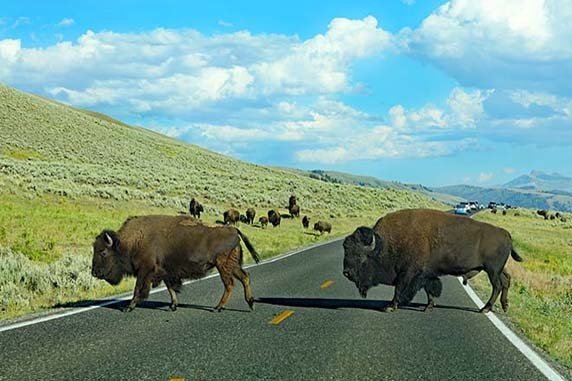
Yellowstone is one of the best national parks in the U.S. for wildlife viewing. Bison, elk, and deer are commonly seen, and wolves and bears are also present. The best chances to see animals are early in the morning and in the evening, especially in open areas such as Lamar Valley and Hayden Valley. Always follow park safety rules and keep a safe distance from wildlife.
TIP: Did you find this Yellowstone travel guide helpful? Bookmark this page for later, share it with your friends, and save it to Pinterest so you can easily find it again when planning your trip.