Olympic National Park Itinerary for 1–3 Days: Best Things to See (+Map & Tips)
This site contains affiliate links, which means that we may earn a small commission, at no cost to you, for qualifying purchases. It supports the work that goes into keeping this content free. Thanks for reading! More info: Privacy Policy.
Planning a trip to Olympic National Park and wondering what to see and how to organize your time?
In this guide, you’ll find a practical Olympic National Park itinerary for 1, 2, or 3 days, plus tips to help you make the most of your visit. We’ve also included maps showing the must-see places based on how much time you have.
Olympic National Park in Washington State is one of the most diverse and most-visited national parks in the U.S. Within a relatively short distance, you can see rugged Pacific coastline, glacier-capped mountains, and lush temperate rainforests.
Because the park is so large, planning your route in advance makes a big difference. Our suggested itineraries help you see the top sights without spending your entire trip driving from place to place.
Good to know: This article is written by Kassidy of The Hiking Helper. She has visited many U.S. national parks and shares her practical tips here to help you plan your visit to Olympic National Park.
Olympic National Park Itinerary Overview
Olympic National Park itinerary recommendations:
One Day in Olympic National Park
Because Olympic National Park is so large, it’s difficult to see everything in just one day without rushing. Even driving the full loop around the Olympic Peninsula takes over 6 hours without any stops.
So don’t try to see it all. Instead, focus on one area. For a one-day Olympic National Park itinerary, we recommend the northern part of the park near Port Angeles, about 80 miles northwest of Seattle. If you start early, you can visit several of the best places to see in Olympic National Park, do a few short hikes, and still have enough time at each stop.
TIP: If you only have one day in Olympic National Park and are coming from Seattle, consider booking an organized day tour. It removes the stress of driving and planning and lets you see the park’s top sights efficiently. This highly-rated small-group tour is one of the best options for a day trip from Seattle. You’ll also find other options, including private tours, on Viator.
Here’s how we recommend spending one day in Olympic National Park:
- Hurricane Ridge Visitor Center and Hurricane Hill.
- Lunch/ exploring in Port Angeles.
- Marymere Falls.
- Sol Duc Falls and Hot Springs OR sunset at Rialto Beach.
Good to know: To maximize the number of things you can see in Olympic National Park in a day, this itinerary only includes a few short hikes. If you have a bit more time and like to hike, consider adding on the longer hike to Mount Storm King. It’s particularly beautiful at sunset. Alternatively, you can also spend some time relaxing around Lake Crescent.
Here is a map showing all these places. Below, you’ll find more information about each of them.
How to use this map: Use your computer mouse (or fingers) to zoom in or out. Click on the icons to get more information about each place. Click the arrow on the top left corner for the index. Click the star next to the map’s title to add it to your Google Maps account. To view the saved map on your smartphone or PC, open Google Maps, click the menu and go to ‘Your Places’/’Maps’. If you want to print the map or see it in a bigger window, click on ‘View larger map’ in the top right corner.
Hurricane Ridge Visitor Center and Hurricane Hill
Before starting your day in Olympic NP, stop in at the Hurricane Ridge Visitor Center to learn about the park, grab a map, and use the restroom. The parking lot here fills up very quickly in the morning, so try to arrive early.
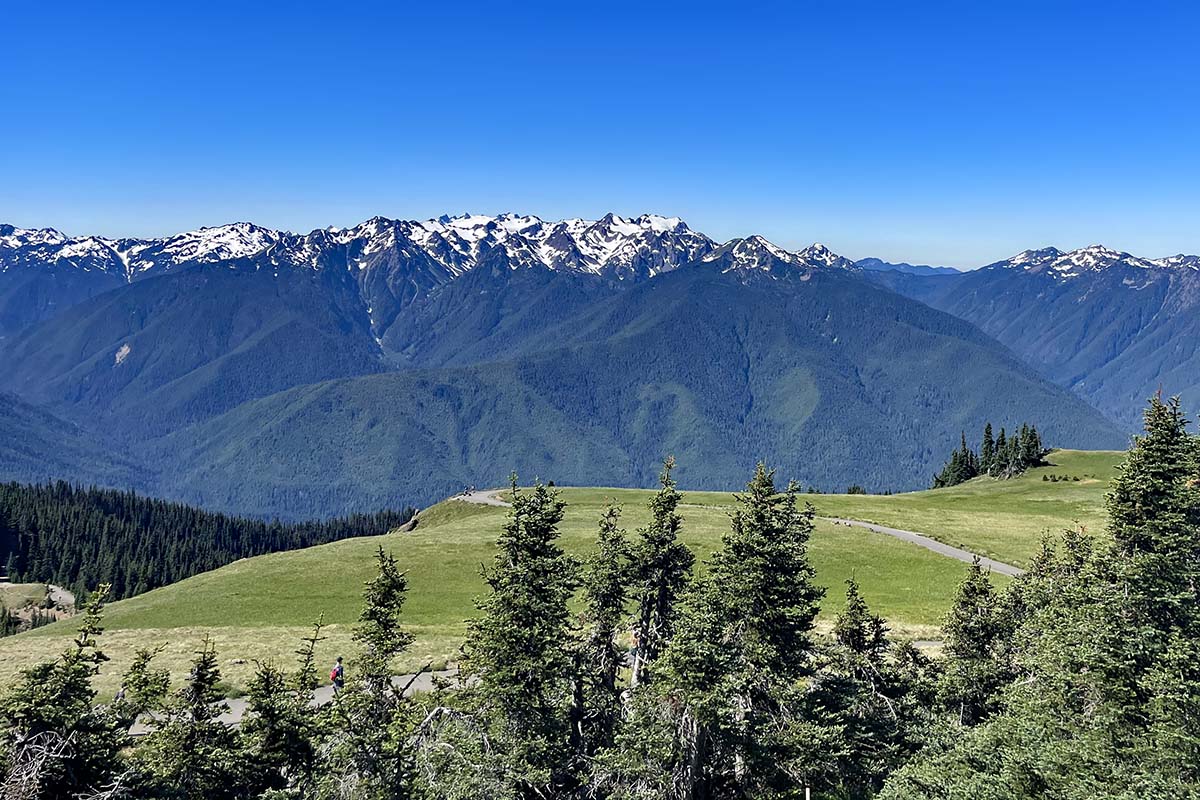
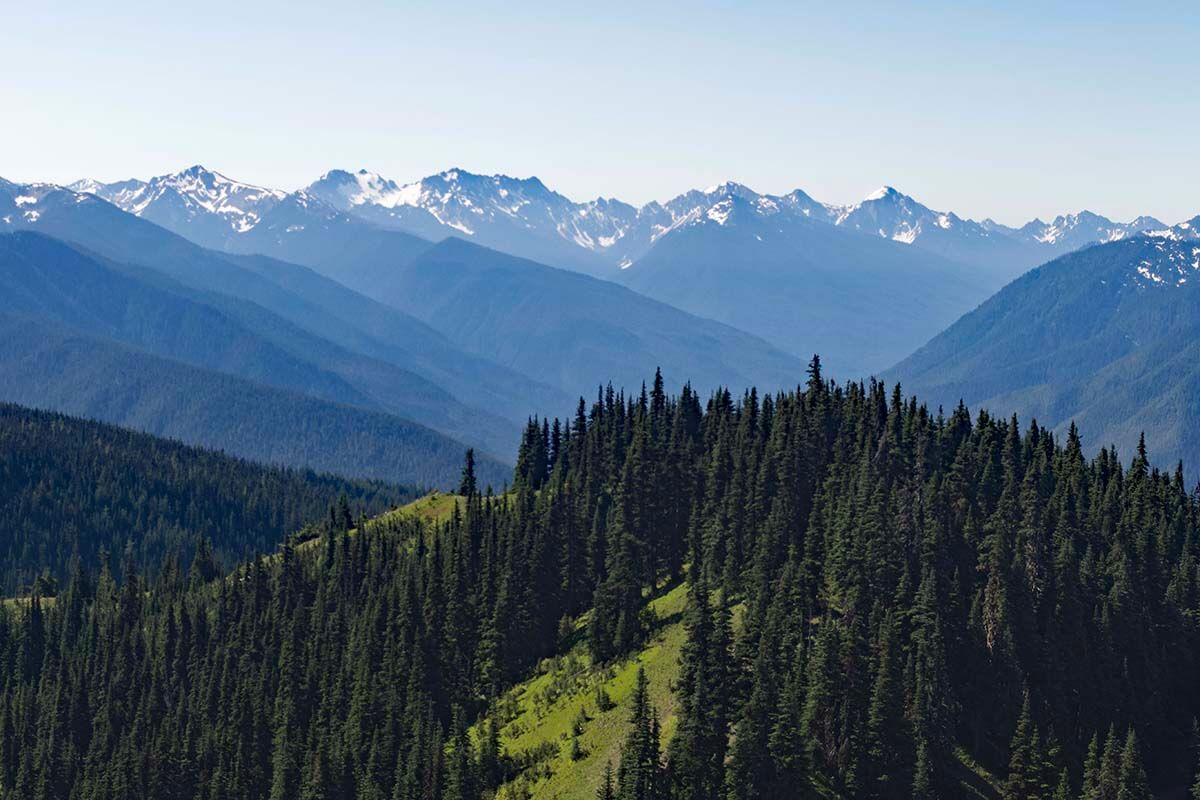
Just beyond the visitor center, you have epic views of the Olympic Mountains. If you are lucky, you may also spot wildlife such as deer and marmots, roaming the meadows.
Then continue just over a mile further up the road to reach the trailhead for the extremely popular Hurricane Hill Nature Trail. This is a paved 3.2-mile hike (1.6 miles each way) that is moderately challenging (+-700 ft elevation gain), but it’s something that most people can easily do.
Once you’ve reached the top, you’ll have amazing 360° views of the entire mountain range. In the summer, you can also see lots of wildflowers here. You can find more information about this area and the hike on the official park website.
Port Angeles
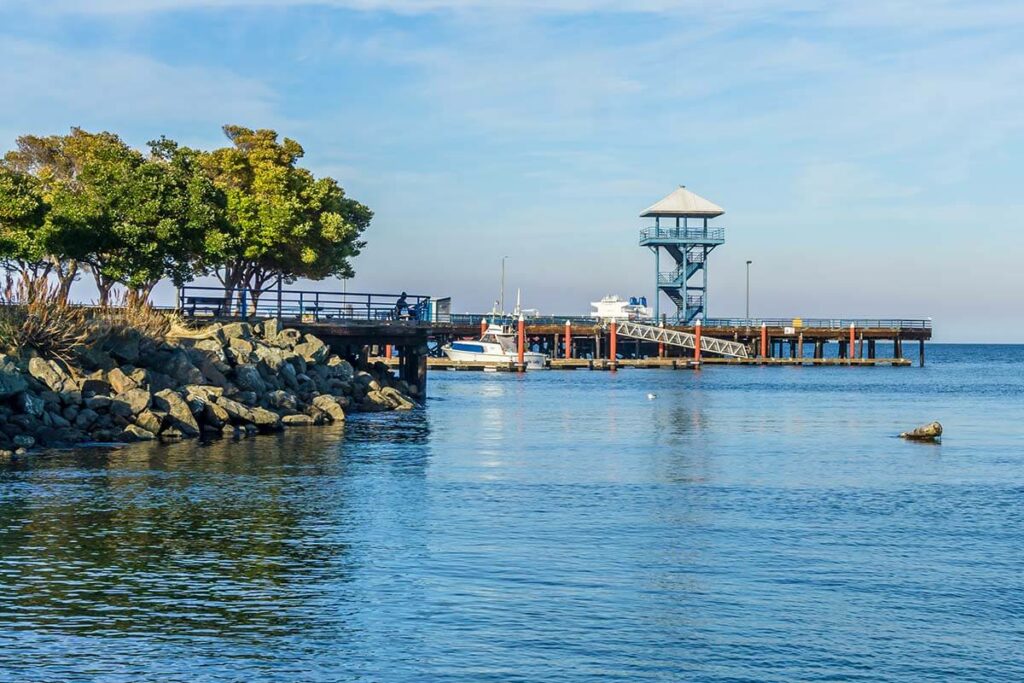
After visiting Hurricane Ridge, you’ll pass through Port Angeles on your way to the next few stops on this Olympic National Park itinerary. This small town is a good place to stop for some lunch along the way.
Enjoy lunch at the Next Door Gastropub or Barhop Brewing and Artisan Pizza before making your way back into the park for more exploring.
There are also some nice trails along the sea and in town, you’ll also find some small boutiques and gift shops where you can get some souvenirs. However, with just a day in Olympic National Park, don’t linger here too long.
Marymere Falls
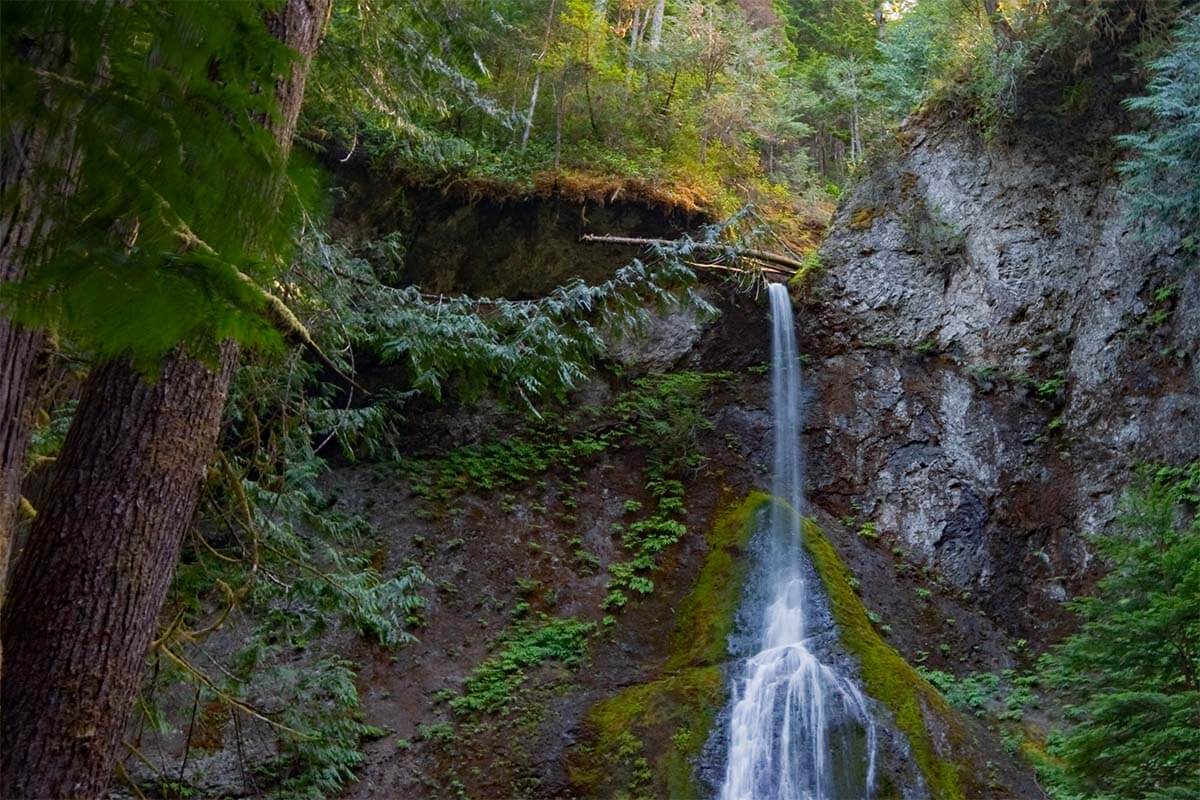
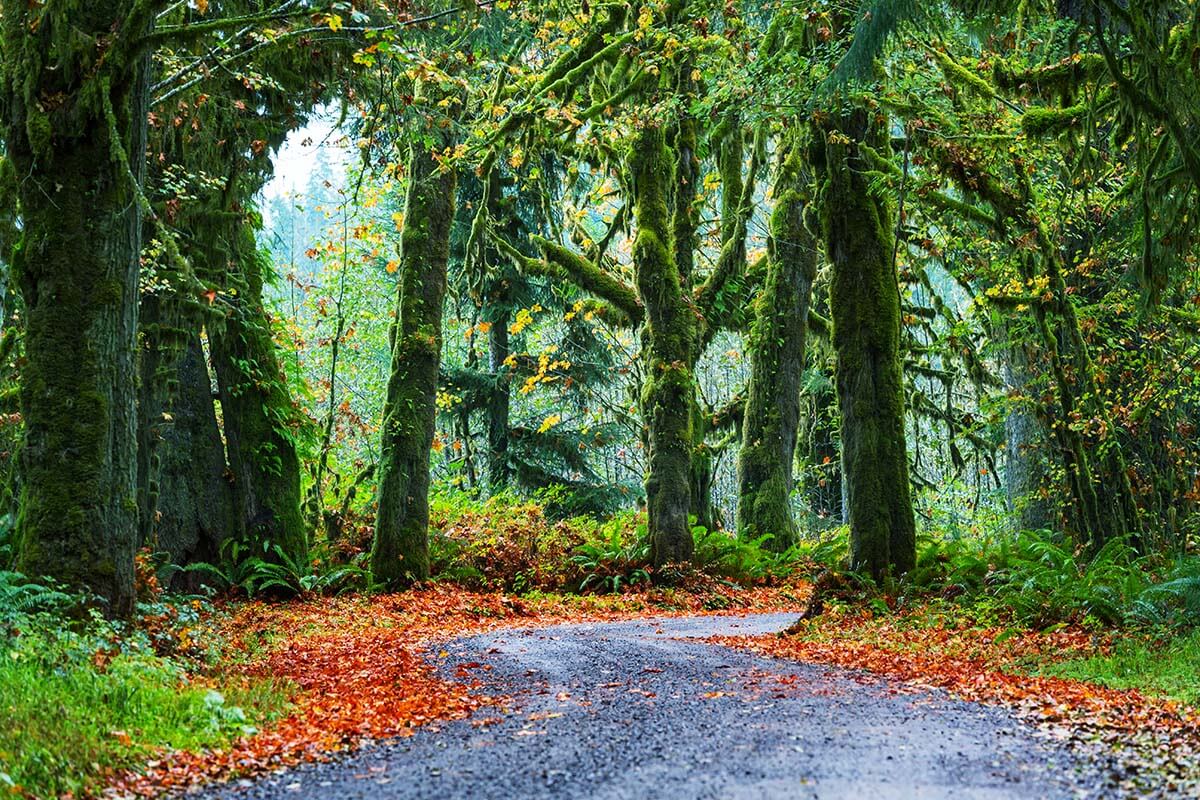
Next, we recommend stopping by at Marymere Falls. This is one of Olympic National Park’s best waterfalls. This 90-foot waterfall showcases the special ecosystem of the Olympic Peninsula with moss-laden trees and large ferns around it.
You can reach this waterfall via a short and easy 0.9-mile trail (less than 2 miles round-trip) through the temperate rainforest. You’ll know you’re close when you hear the falls and see a set of stairs leading to the upper viewpoint. You don’t even have to go all the way up for the nicest views.
Additional suggestions: If you have some extra time and the weather is really nice, you could consider an extra hike up to Mount Storm King here. This rather strenuous hike will take you about 3 hours in total, and there’s a section with some ropes and rocks towards the end, but it’s definitely doable. The views of Lake Crescent are absolutely worth it if you are up for it. You can find more info about this hike in the 2-day itinerary further below.
Alternatively, check out some of the beaches of Lake Crescent.
Sol Duc Falls and Hot Springs
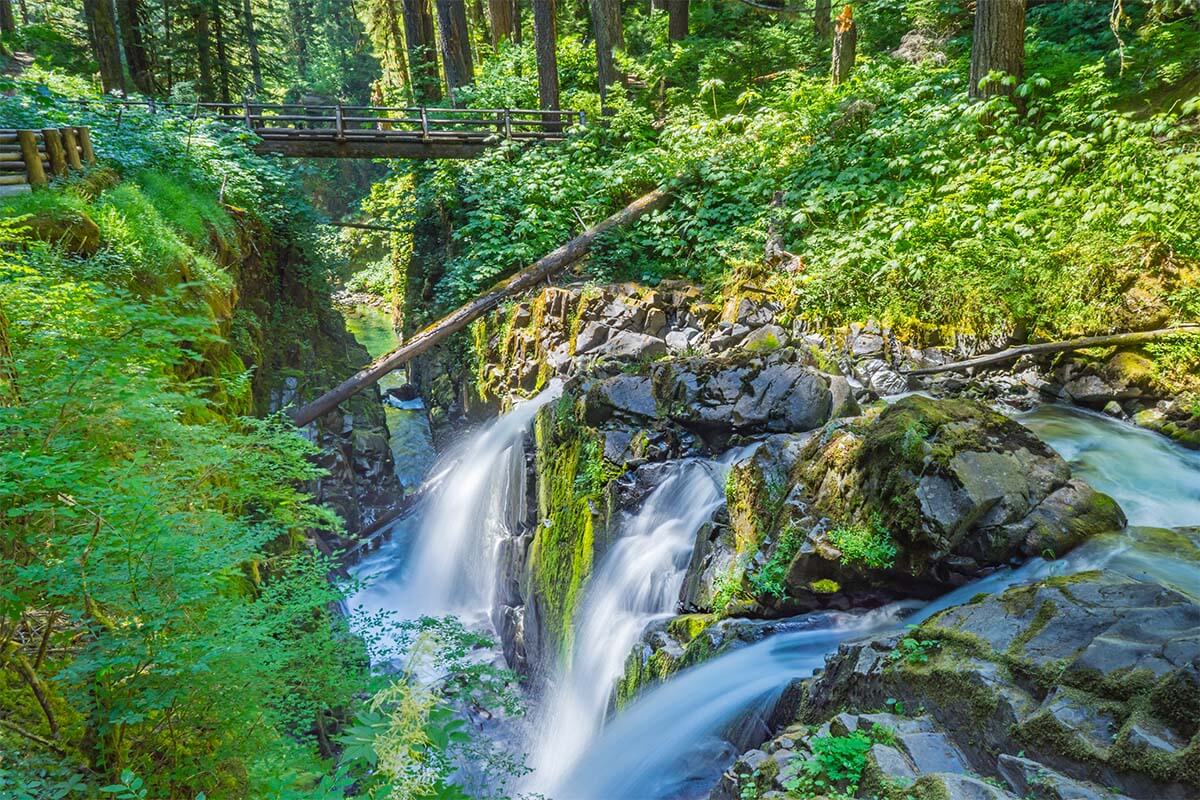
The final stop for your one day in Olympic National Park is at Sol Duc Falls, another of the most popular waterfalls on the peninsula. This waterfall tumbles into the river in three sections. From the wooden bridge that passes over Sol Duc Creek, you can enjoy nice views of the waterfall, and you can also walk around a bit more to see it from other angles.
To get here, you’ll have to hike a bit, but it’s a very flat and easy 0.8-mile trail (1.6 miles round-trip). It takes you through the old-growth forest and right to a roaring waterfall. This is one of the best short hikes in the park and one of the nicest easy trails in Washington state.
To end the day, head on over to the Sol Duc Hot Springs Resort and spend some time relaxing in the mineral hot springs soaking pools. Don’t forget your swimwear! Quick-drying travel towels and flip-flops will come in handy as well.
Alternatively, you could skip the Sol Duc area altogether and drive to Rialto Beach for sunset. You can find more information about this beach in the 2-day itinerary below. With just a day in this vast national park, you’ll have to make some tough choices.
Where to Stay
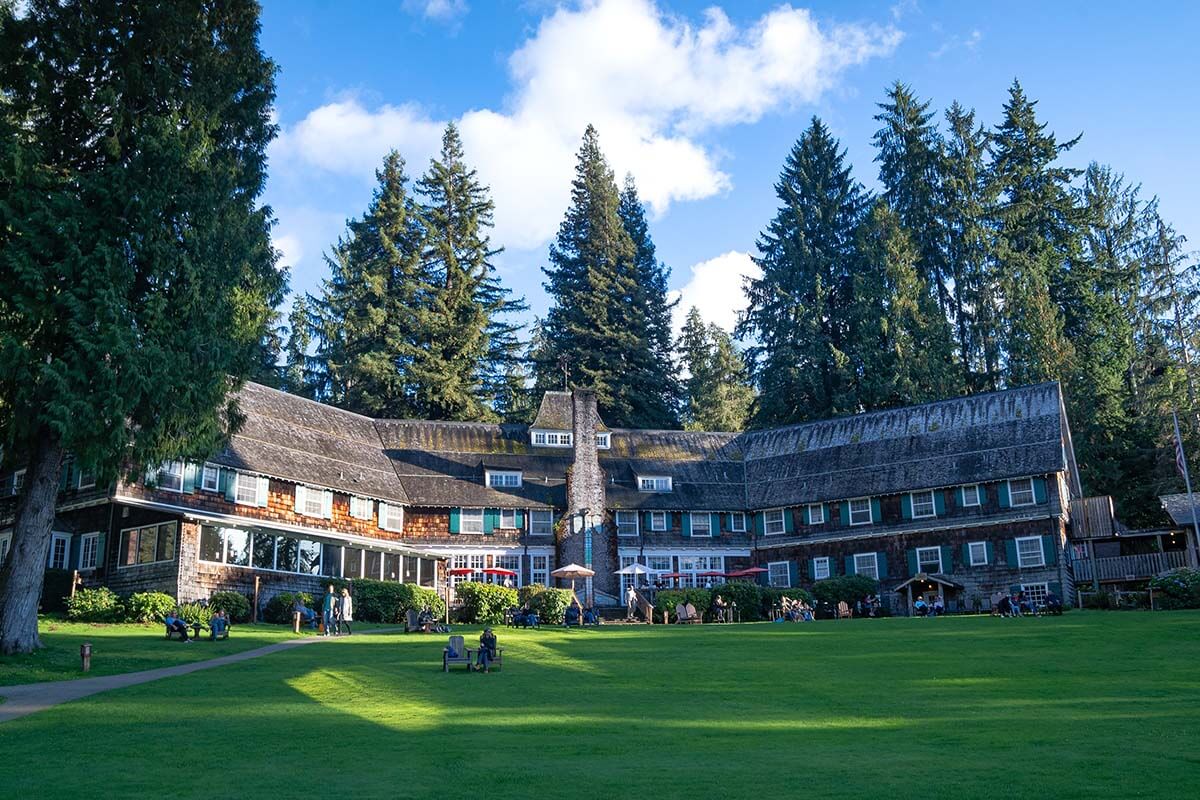
Sol Duc Hot Springs Resort is a great place to spend a night in Olympic National Park and includes access to the hot springs for all guests. However, the resort is only open from March to October and availability is limited. Lake Crescent Lodge is another nice option, located right on the shores of the lake.
Alternatively, you’ll find many more (and often more affordable) accommodation options in Port Angeles. One of the nicest places to stay here is Olympic Lodge by Ayres.
Two Days in Olympic National Park
As you can see, with just a day in Olympic National Park, you won’t be able to cover that much ground. So if you can add even one more day on the Olympic Peninsula, it’s well worth it.
On day two, head to the Pacific coast and visit some of Olympic National Park’s best beaches.
Here’s a map showing all the places included in our 2-day itinerary below.
How to use this map: Use your computer mouse (or fingers) to zoom in or out. Click on the icons to get more information about each place. Click the arrow on the top left corner for the index. Click the star next to the map’s title to add it to your Google Maps account. To view the saved map on your smartphone or PC, open Google Maps, click the menu and go to ‘Your Places’/’Maps’. If you want to print the map or see it in a bigger window, click on ‘View larger map’ in the top right corner.
Here’s a recommended itinerary for two days in Olympic National Park:
Day One
With a bit more time in the park, you can adjust the day-one itinerary a bit by adding the hike to Mount Storm King and/or some time to relax at Lake Crescent. You can then visit Sol Duc Falls and the Hot Springs on day two.
This is what your first day in the park could look like:
- Hurricane Ridge Visitor Center and Hurricane Hill.
- Lunch in Port Angeles.
- Marymere Falls.
- Mount Storm King Hike.
- Relax at Lake Crescent.
You can read about the first three places high above, and here’s a bit more info about the Mount Storm King hike and Lake Crescent.
Mount Storm King
After following the same itinerary for a one-day trip, head to the Mount Storm King trailhead, which is conveniently shared with the Marymere Falls trailhead. These two trails share the first 0.5 miles so you can easily pair them together. You can find more info and a map of this trail here.
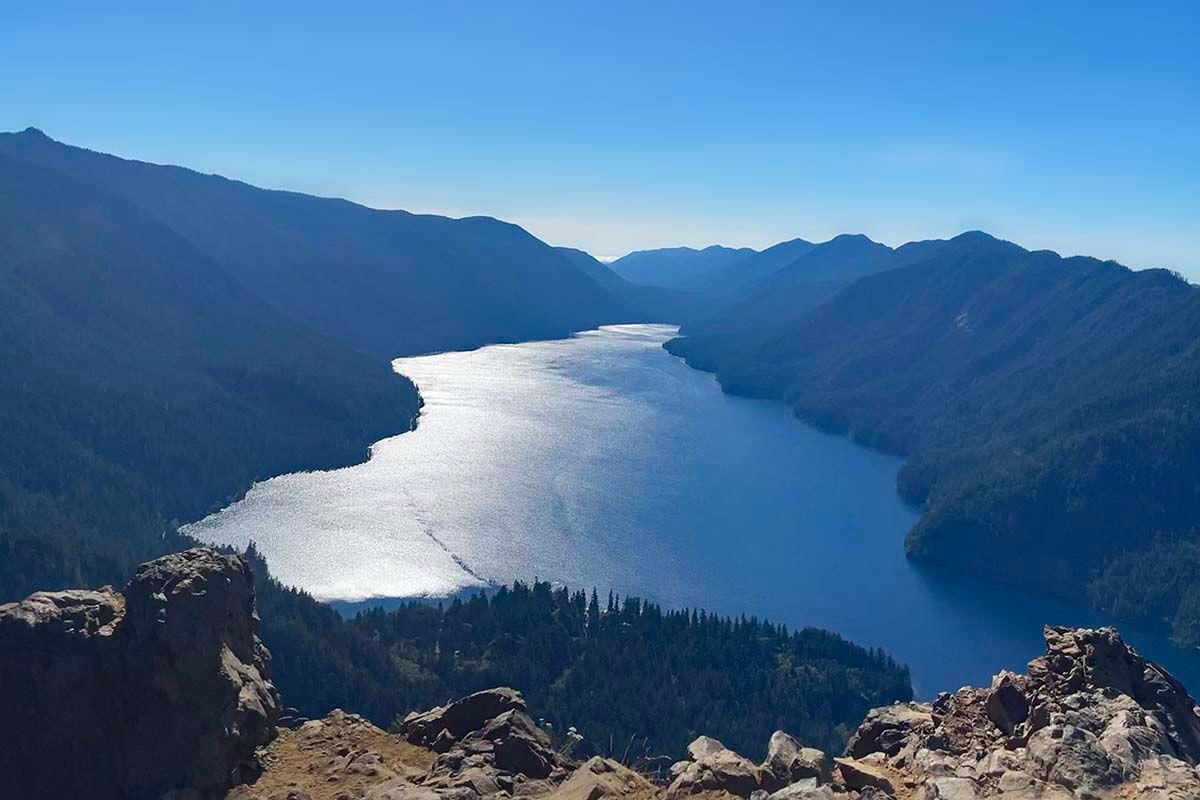
The hike up to the Mount Storm King lookout is strenuous and has a lot of elevation gain. But once you’ve reached the top, you’ll have an incredible view overlooking Lake Crescent. It almost feels like you’re in Norway, surrounded by fjords on all sides.
Good to know: There is one section on this hike that requires you to use ropes connected to trees to climb the steep and slippery slope, so bring a pair of work gloves along. Also, we only recommend this hike if the weather is nice and the views are open.
Lake Crescent
Next, spend some time relaxing at Lake Crescent, and letting your legs rest after that tough hike up to Mount Storm King.
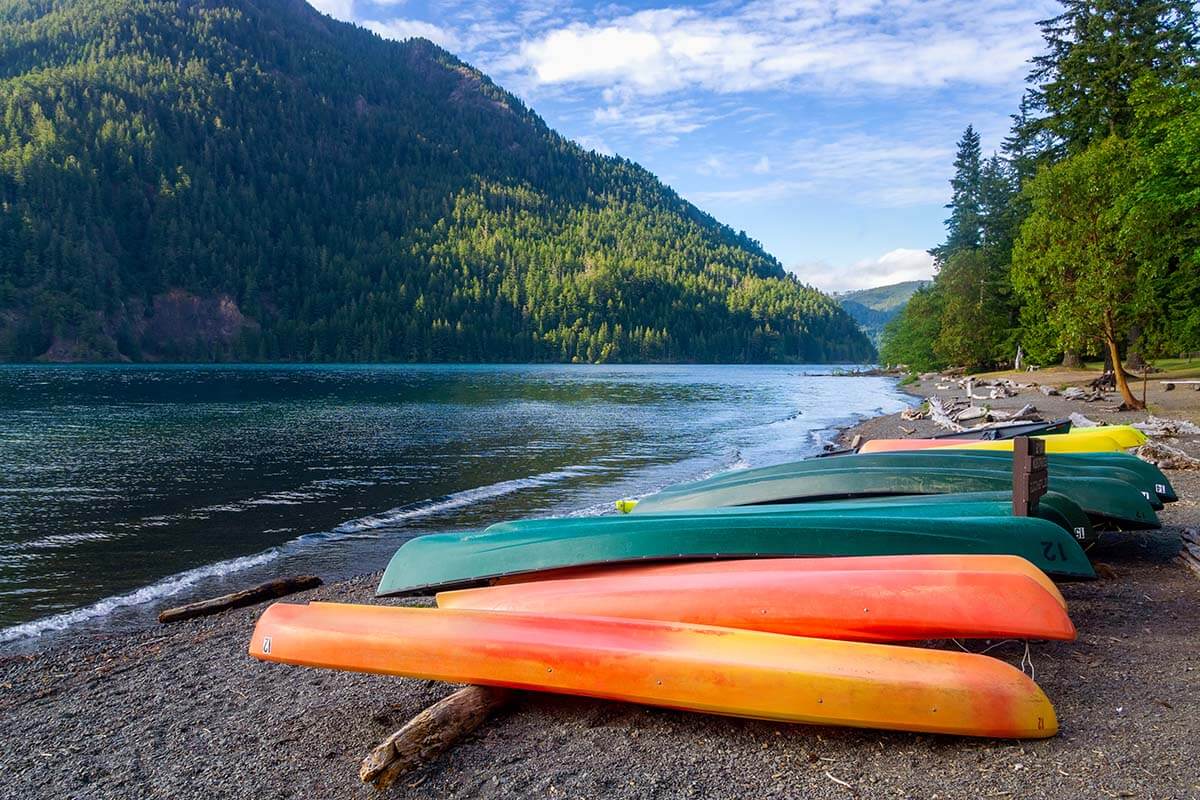
You can just find a nice beach or sit on the pier, looking out into the chilly waters surrounded by mountains. Or, you can rent a paddleboard, kayak, or canoe to take out into the water and explore the area in a different way.
Good to know: You’ll find kayaks, paddleboards, and canoes for rent at Lake Crescent Lodge. On the other side of the lake, Log Cabin Resort also offers kayak rentals.
Day Two
With an extra day in Olympic National Park, you can push Sol Duc Falls and Hot Springs back and visit these places on the second day. In the afternoon, you can spend a little bit of time driving through the forest and making your way over to the Pacific Coast for some of the nicest beaches.
Here’s what your second day could look like:
- Sol Duc Falls and Hot Springs.
- Forks, WA.
- Rialto Beach & Hole in the Wall.
- Kalaloch Beach and the Tree of Life.
Forks
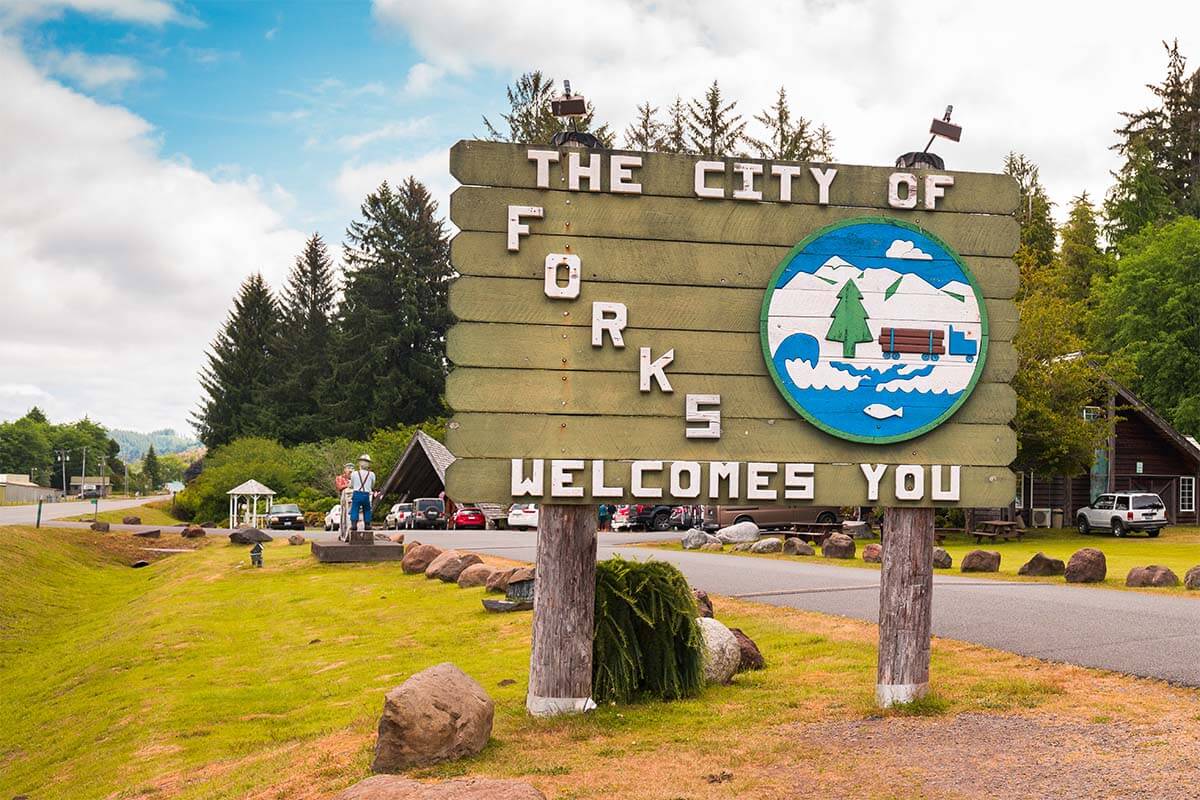
After relaxing in the hot springs and seeing the falls, make your way over to the small town of Forks, Washington.
You may recognize the name or the town, as it was the inspiration for many of the scenes in the popular book and movie series, Twilight. Although no filming was actually done here, the author used many places for ideas. If you are a fan, be sure to stop by the Forks Visitor Center where you can get maps and more info on all the Twilight sites you can visit in the area.
You could also spend some time wandering through the Forks Timber Museum, which highlights the history of logging in the area. Alternatively, check out John’s Beachcombing Museum, which showcases items that have washed ashore locally and from other places in the world.
Grab some lunch at Pacific Pizza or Sully’s Drive-In, before continuing further.
Rialto Beach & Hole in the Wall
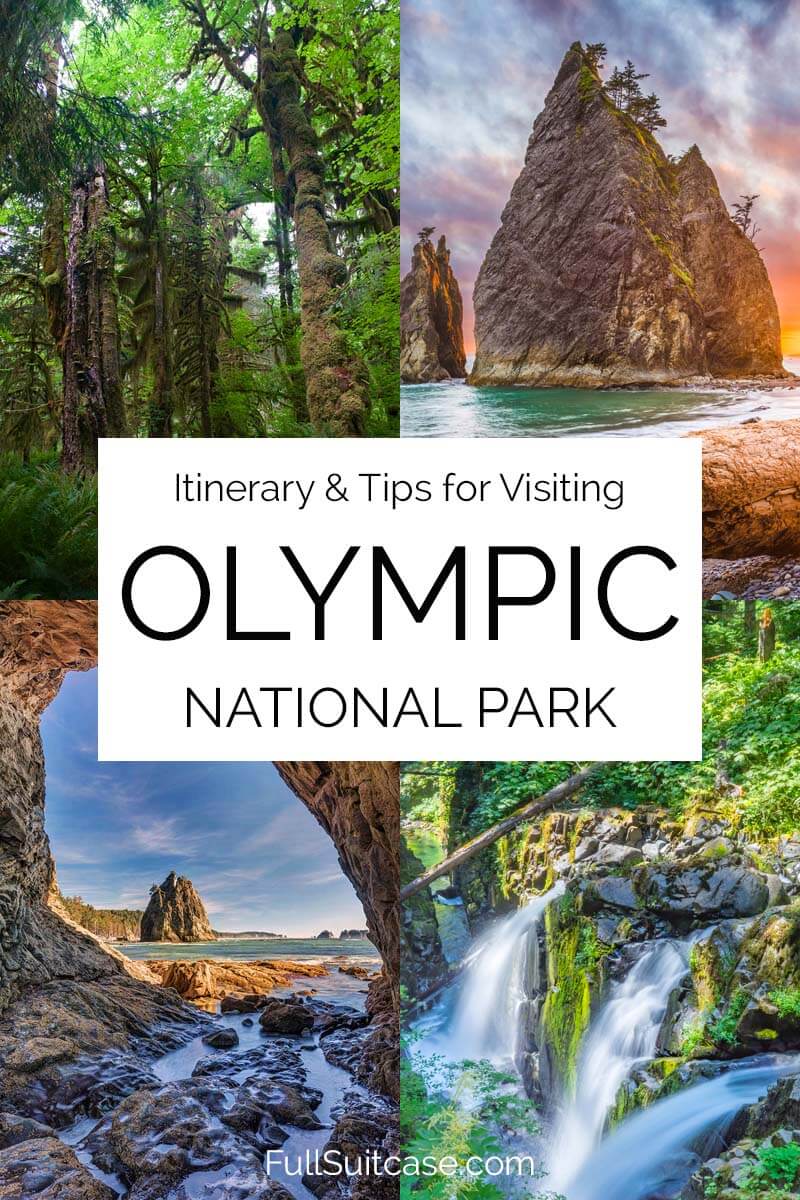
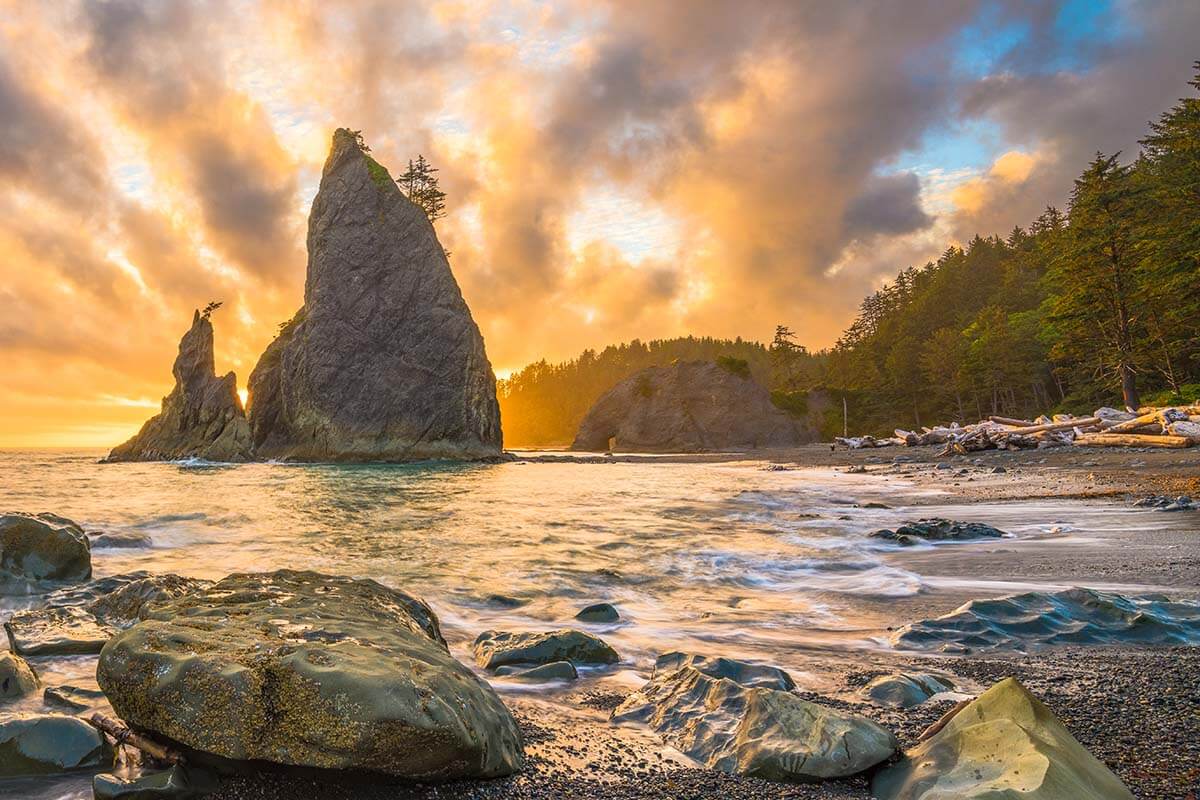
Next, it’s time to head to the Pacific Ocean. First stop – Rialto Beach, one of Olympic National Park’s most popular beaches. (See also the featured image at the top of this guide.)
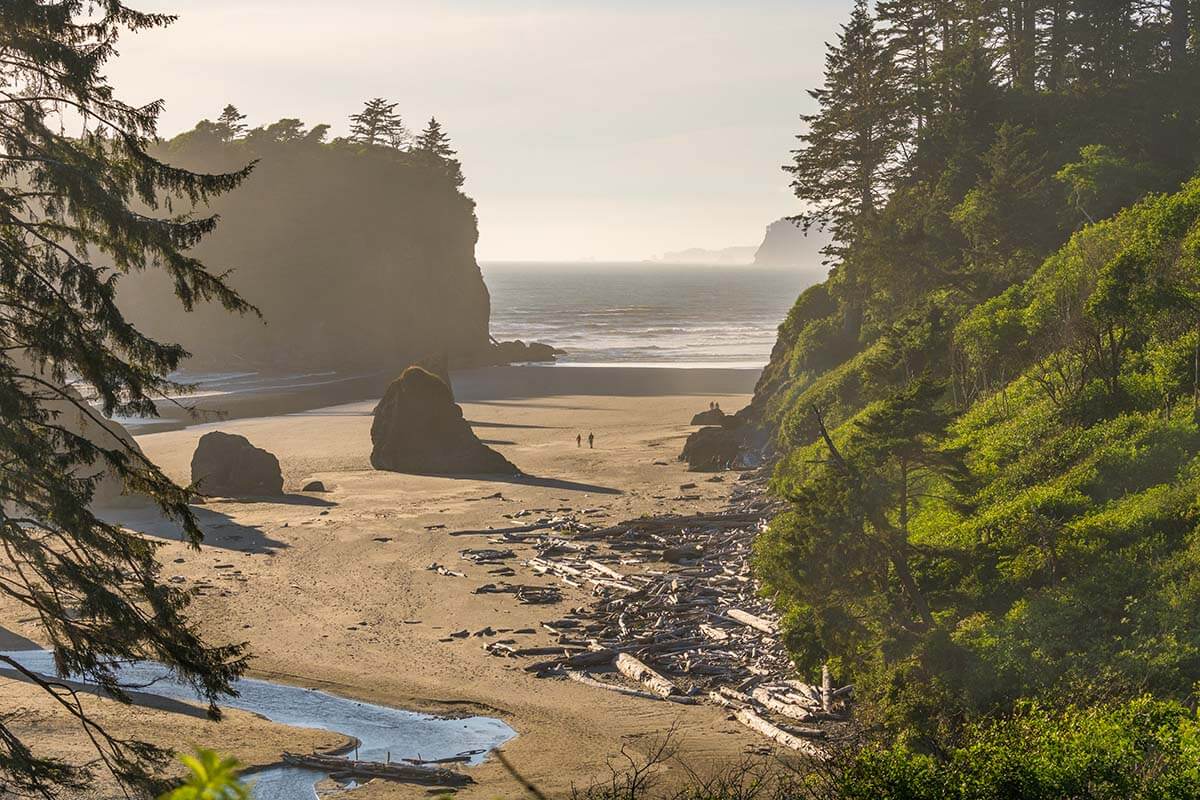
This beautiful area has large sea stacks just offshore which makes for some nice pictures. Plus, there is driftwood all over the beach, which makes for a great place to sit down and listen to the sounds of the water splashing on the shore. This area is also stunning at sunrise and at sunset!
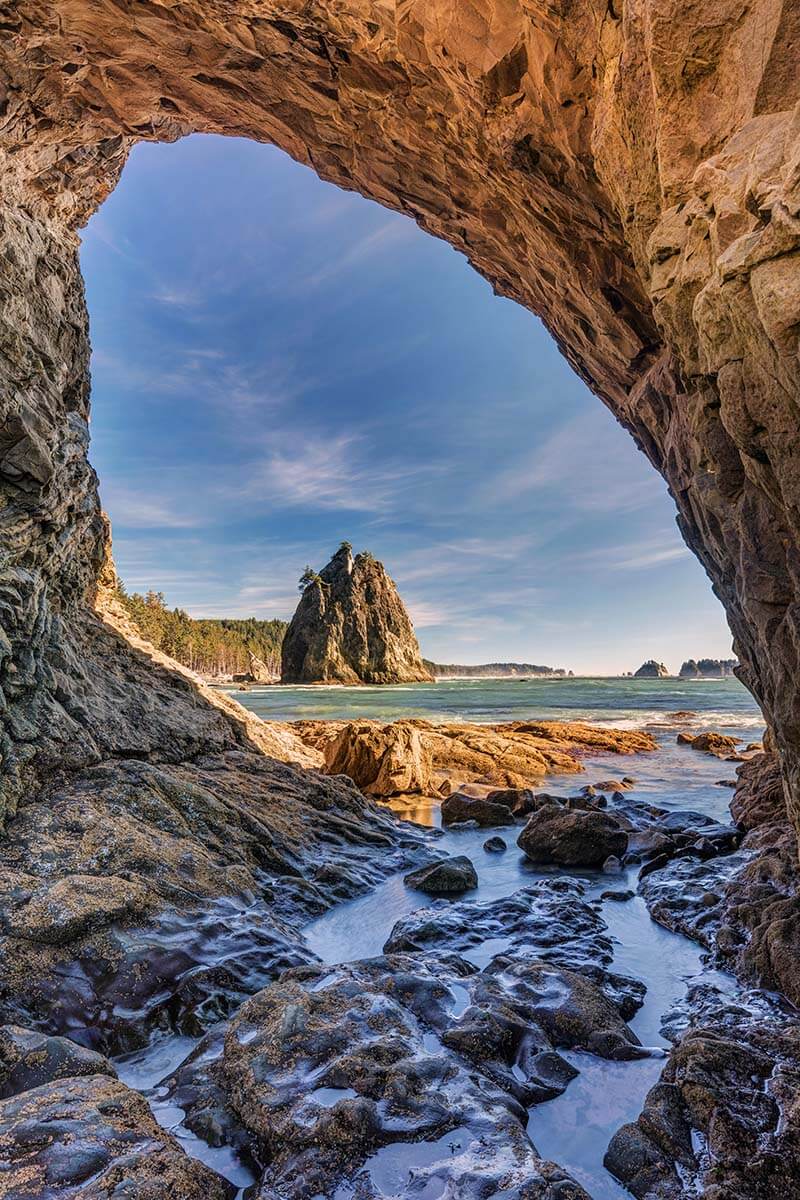
TIP: Head out for one of the most unique coastal hikes, which leads you along the ocean shoreline to Hole in the Wall. This is a natural arch that peers right out into the ocean.
The hike starts at Rialto Beach and is 3.3 miles roundtrip. It’s a really nice and not too strenuous coastal walk. On the way, you have to cross an ankle-deep stream at Ellen Creek and there might be some driftwood and slippery rocks on your path, so be sure to wear waterproof hiking shoes.
Good to know: The opening of the arch can only be reached at low tide, so be sure to check a tide chart if you want to be able to walk through it. It’s also easier to hike here around low tide. But even if you can’t get all the way up to the Hole in the Wall, it’s still worth it.
Kalaloch Beach and the Tree of Life
To end your day, head just a bit further south along the coast to Kalaloch Beach, which is home to the Tree of Life.
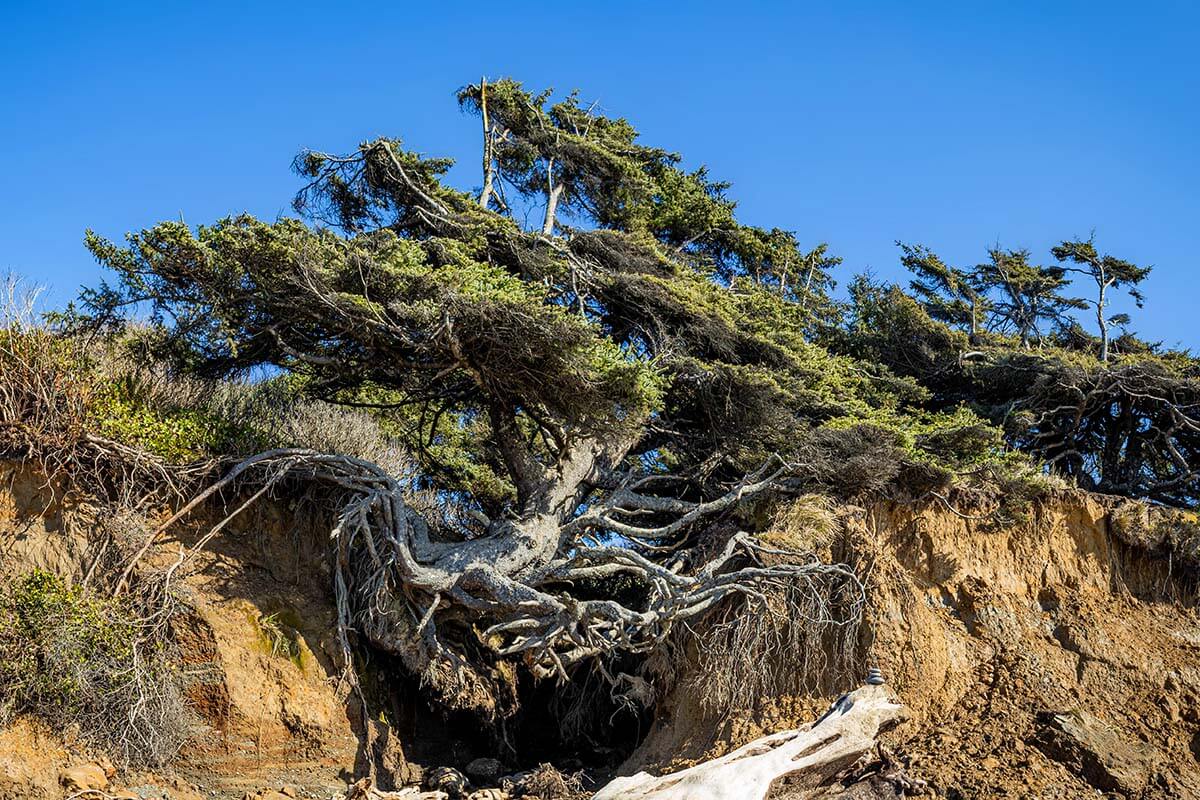
This tree is really unique and is a mystery for many people. It dangles off of a ledge near the ocean, with its roots exposed and seemingly having no soil to help it thrive. Somehow the Tree of Life has survived massive storms that the coast has seen, and has become a popular attraction for visitors.
Where to Stay
TIP: Because Olympic National Park is so large, it’s best to book a different hotel each night depending on your exact itinerary and overall travel plans.
On the first night of this 2-day Olympic NP itinerary, you could stay in the Lake Crescent/ Port Angeles area.
Kalaloch Lodge is the perfect place for night two, offering oceanfront lodging and a short walk to the beach and Tree of Life. Alternatively, Hoh Valley Cabins is also a well-located lodging in this area.
3-Day Olympic National Park Itinerary
If you are just starting to plan your trip to Olympic National Park and are flexible, we recommend planning at least three days for a visit. This will allow you to explore different areas of the park and get a much better appreciation for how diverse it really is.
The 3-day Olympic National Park itinerary gives you an opportunity to see all the magical features of the Olympic Peninsula including the ocean, rainforest, and mountain ranges without having to rush through everything.
To help you plan your trip, here’s a map indicating all the places mentioned in our 3-day itinerary below.
How to use this map: Use your computer mouse (or fingers) to zoom in or out. Click on the icons to get more information about each place. Click the arrow on the top left corner for the index. Click the star next to the map’s title to add it to your Google Maps account. To view the saved map on your smartphone or PC, open Google Maps, click the menu and go to ‘Your Places’/’Maps’. If you want to print the map or see it in a bigger window, click on ‘View larger map’ in the top right corner.
Here are our recommendations for a three-day itinerary in Olympic National Park:
Day One
- Hurricane Ridge Visitor Center and Hurricane Hill.
- Lunch in Port Angeles.
- Marymere Falls.
- Mount Storm King.
- Relax at Lake Crescent.
Day Two
- Sol Duc Falls and Hot Springs.
- Cape Flattery (pack a picnic lunch).
- Forks, WA.
- Rialto Beach and Hole in the Wall.
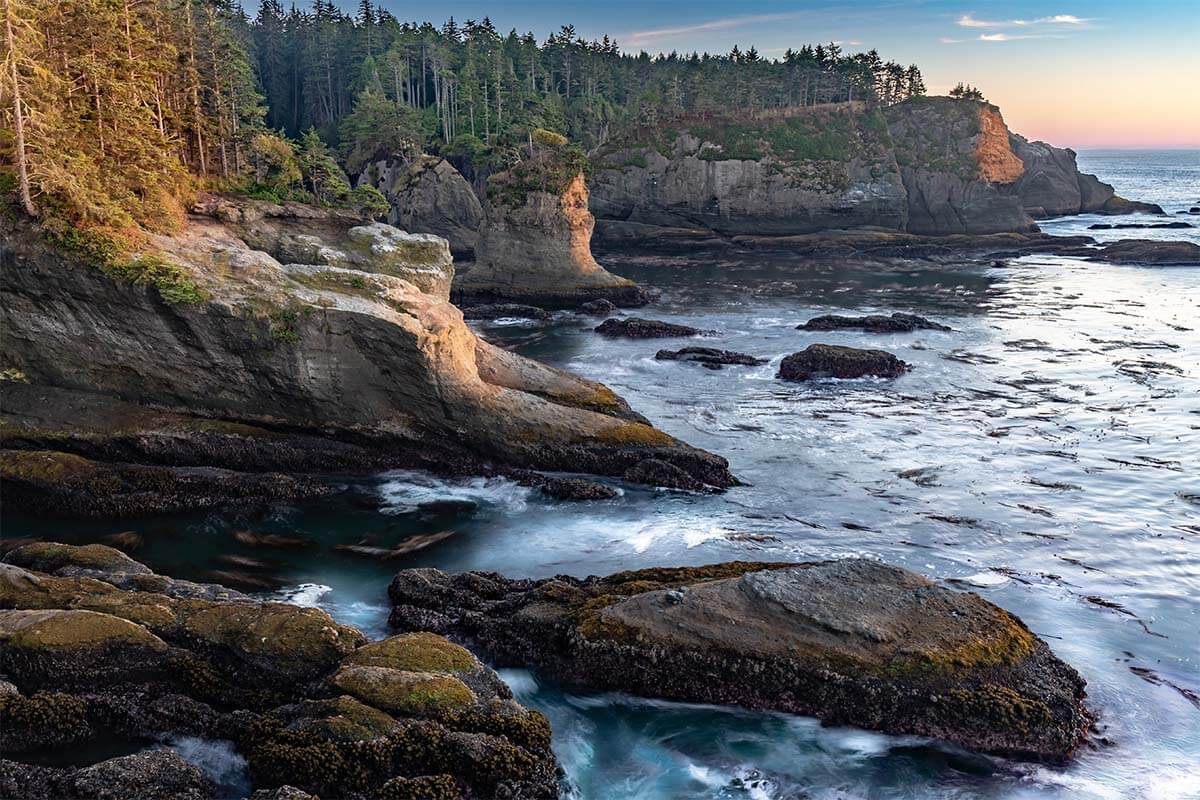
With three days in Olympic National Park, you can plan your time a bit differently and potentially add a visit to Cape Flattery to your itinerary as well. This is the northwesternmost point of the contiguous USA.
Cape Flattery is located in the northwestern corner of the Olympic Peninsula and is not part of the Olympic National Park. It’s also a bit out of the way from everything else, but this area is really nice. If you’d like to see it, the best time to go here would be on day 2 of this itinerary. In that case, leave Kalaloch Beach for day three, and visit Cape Flattery before driving to Forks. You could then visit Rialto Beach around sunset.
For more details on the first two days, see the itineraries above, and add Cape Flattery if interested. Below, you can find our suggestions for the third day in Olympic NP.
Day Three
With three days in Olympic National Park, you can explore a bit deeper and head into perhaps the most unique part of Washington, temperate rainforests. For many people, this area is the main reason to visit Olympic National Park.
However, it’s a bit further away from everything else and so it can be more tricky to get to without driving for hours each day. That’s why we only include this part of the park in the longer itineraries. But it all really depends on your own preferences and where you are traveling from/to. You could also come here if you have less time in the park – just be more selective about which places you absolutely want to see.
Here’s what your third day could look like:
- Hoh Rainforest and the Hall of Mosses
- Ruby Beach.
- Kalaloch Beach/ Tree of Life.
- Quinault Rainforest.
Hoh Rainforest and the Hall of Mosses
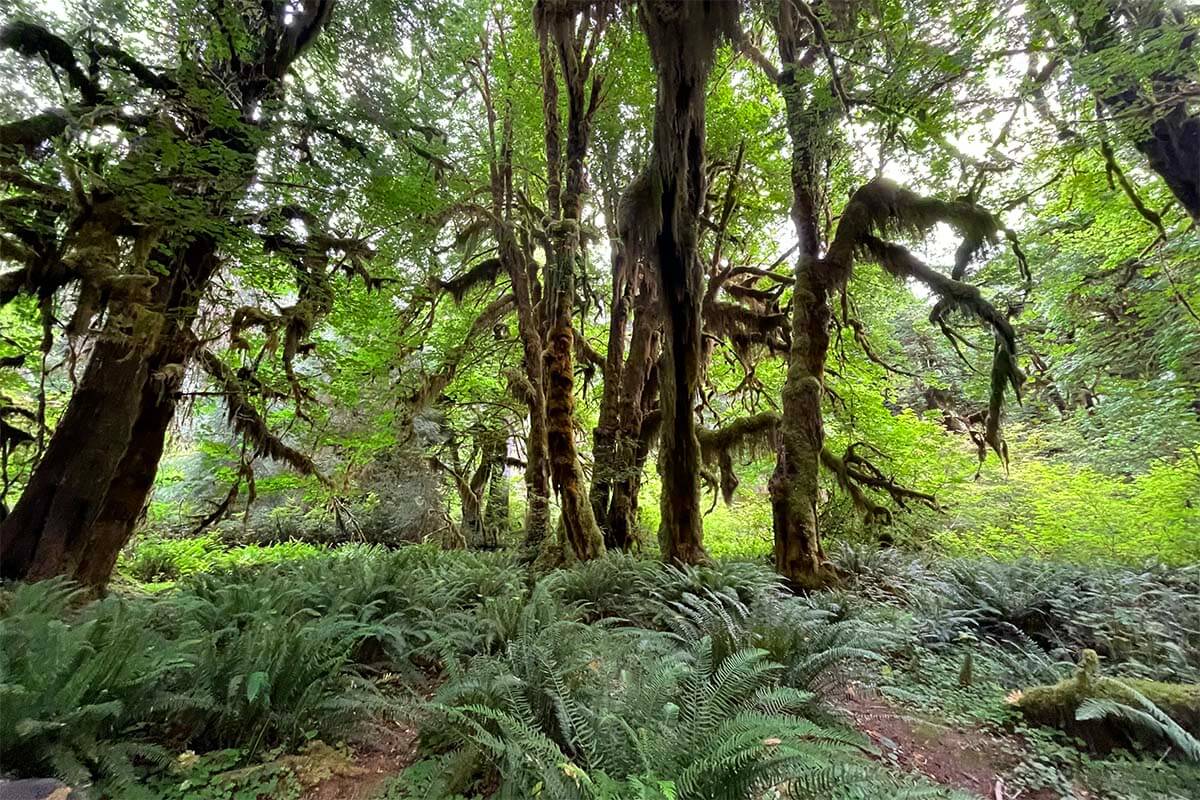
The temperate rainforests are among the most impressive parts of Olympic National Park. There’s just something so picturesque and mysterious about bright green moss draped over trees and huge ferns covering the forest floor.
Good to know: Hoh Rainforest is an extremely popular area of the park and gets quite busy, especially during the summer months. So try to arrive at the visitor center as early as possible.
At the Hoh Rainforest Visitor Center, you can learn about the forest and the wildlife that calls it home, such as the banana slugs. But the best way to appreciate it all is to head out for a short hike, of course.
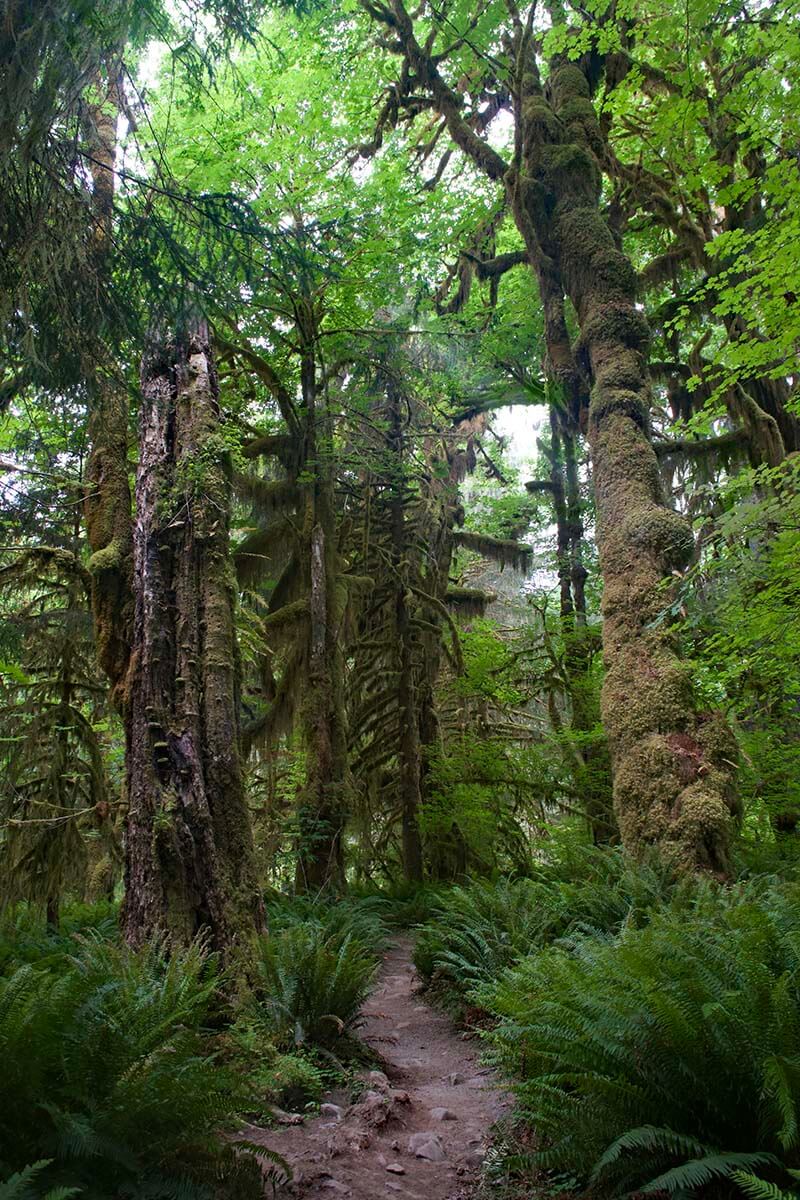
There are many short and longer hiking trails in this area. So depending on how much time you want to spend here, you’ll find plenty of options. The nicest short hike is the Hall of Mosses, a 0.8-mile loop trail that leads you through the forest. Along the way, you’ll also find some informational signs.
Ruby Beach
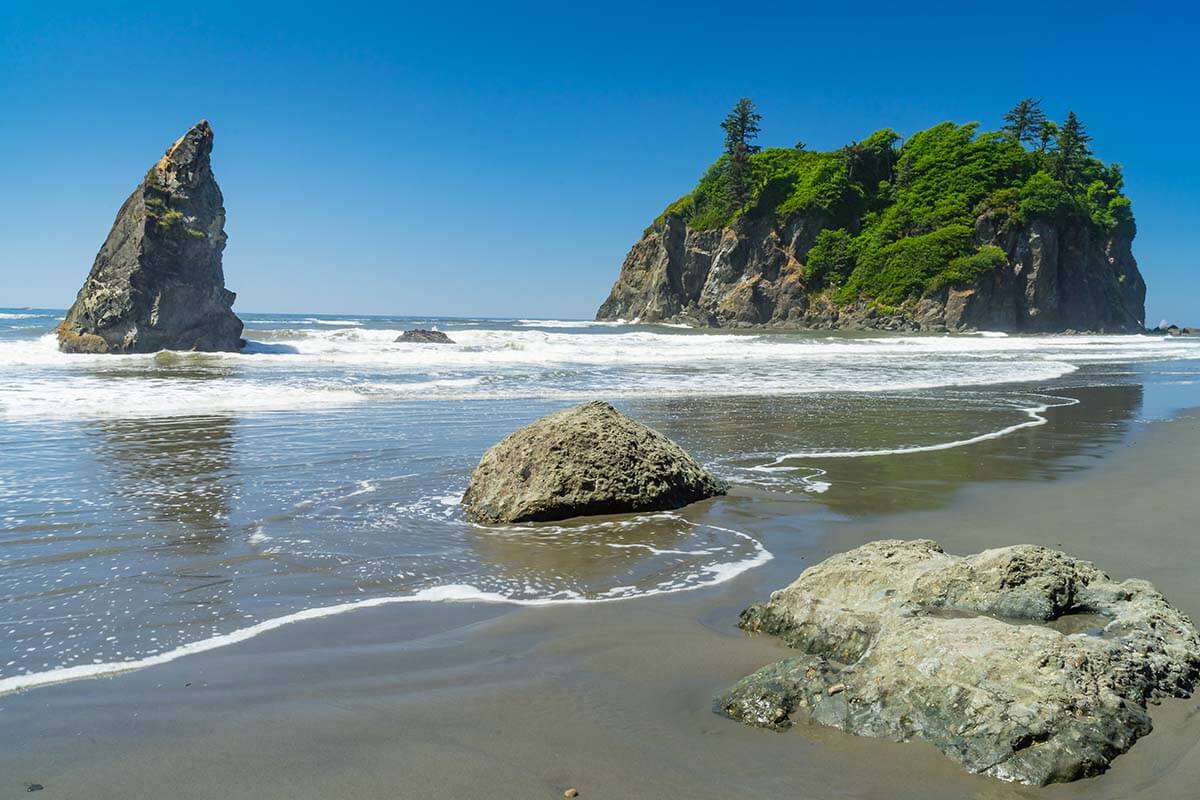
After exploring Hoh Rainforest, return to the coast and make a stop at Ruby Beach. This is another of the most beautiful and very popular beaches to see in Olympic National Park.
There isn’t a specific hike or landmark here. Ruby Beach is simply a nice place to just take a stroll and look out for wildlife. Depending on the time of year, you may get lucky to spot whales, sea lions, or sea otters out in the ocean.
Also here, there are some interesting rock stacks in the sea and tidal pools to explore. There is usually lots of driftwood on the beach too, so you can find plenty of interesting photo opportunities. It’s also a great spot to bring a picnic and enjoy a relaxing lunch.
Kalaloch Beach – Tree of Life
As you drive further down the coast, be sure to stop at Kalaloch Beach to see the Tree of Life (see also our two-day itinerary above). Afterward, continue southeast to visit another rainforest.
Quinault Rainforest
Many people who visit Olympic National Park are unaware that there is a second rainforest within the park beside the popular Hoh. It’s located further south and is called the Quinault Rainforest. Also here, you can see some very impressive huge trees, mosses, and other foliage.
A nice way to explore this area is by driving the Quinault Rainforest Loop Drive. Along the way, be sure to stop at World’s Largest Sitka Spruce and Merriman Falls.
Depending on how much time you have, you may also want to stop at Lake Quinault and spend some time relaxing around the lake.
This area is a nice place to make a stop before making your way back toward Seattle. And otherwise, see what makes the most sense for you depending on where you are heading next.
Where to Stay
The Hoh Valley Cabins nestled right in the Hoh Rainforest is a great place to stay on your second night. If you are staying in the park on the third night too, the historic Lake Quinault Lodge could be an excellent option as well. It really depends on your overall travel plans too.
If You Have Extra Time…
If you have more time to spend in Olympic National Park, that’s great because there is truly so much more to see and do!
Here are a few additional suggestions for activities to add to your Olympic itinerary to make even more out of your trip. You can find all of these indicated on the map of the 3-day itinerary, under “additional suggestions”.
- Obstruction Point Road. This beautiful dirt road winds through the mountains and gives you unique views of the Olympic range, all from the comfort of your car.
- La Push Beaches. There are so many great beaches in Olympic National Park, and the La Push area has many, including First Beach, Second Beach, and Third Beach, each of which has its own stretch of shoreline to wander.
- Mount Ellinor: This strenuous 6.2-mile trail leads you up the southernmost prominence on the eastern part of the Olympic Mountain range. It’s a tough but beautiful trail that boasts 360-degree views of the Olympic Mountains, Lake Cushman, and Puget Sound.
- Enchanted Valley. A popular way to backpack through Olympic National Park is to do the Enchanted Valley trail. This 27 miles roundtrip hike leads to a historic chalet in the middle of the mountains.
When to Visit Olympic National Park
Olympic National Park’s diverse landscapes make it a fantastic destination year-round. That said, each season has its benefits and disadvantages.
For the best balance of pleasant weather and fewer crowds, aim to visit in late spring or early fall. Late spring brings a lush, vibrant rainforest with bright greens and lower crowds, as temperatures start to warm up. Early fall offers cooler weather, fewer visitors, and a chance to see beautiful fall foliage.
Summer is ideal for warmer weather and top hiking conditions, but it comes with the downside of larger crowds. If you visit in summer, expect longer wait times to enter the park, early morning searches for parking at popular spots, and the need to book accommodations well in advance.
Winter offers snow-free hiking in lower-elevation areas, making the park one of Washington’s best winter hiking spots. However, higher-elevation trails will be inaccessible, and some facilities will be closed. Hurricane Ridge sometimes offers skiing and snowboarding in winter when conditions allow.
How Much Time You Need
Most visitors need at least 2–3 days in Olympic National Park to see the main highlights. One day is enough for a quick overview, but you’ll spend quite a bit of time driving. With three days, you can explore the mountains, coastline, and rainforest at a much more relaxed pace.
Olympic National Park is huge, covering nearly 1,500 square miles. Because the park’s main areas are spread far apart, it’s difficult to see all the nicest places in just a day or two. If you can, plan at least three days here, ideally one day for each area: the mountains, the coast, and the rainforest.
That said, you can still see many amazing places in just one or two days. If your time is limited, don’t try to see everything. Instead, focus on the places that interest you the most and make the most of your visit.
Also keep in mind that distances in the park are large. You’ll likely spend quite a bit of time driving between destinations and, in high season, also looking for parking at popular spots. It may be tempting to try to see it all, but often less is more. Your visit will likely be much more enjoyable if you focus on a few areas instead of rushing from one place to another.
If you only have one day in Olympic National Park, it may be worth considering a guided tour. That way, you can leave the planning, driving, and parking to someone else and simply focus on seeing the park’s highlights.
Where to Eat
We included some suggestions on where to eat in Olympic National Park in our detailed itineraries above and you can also see some suggestions below. However, everything really depends on your itinerary and especially where you’ll be around lunchtime.
So if sightseeing is more important to you than food and you want to make the most of your time in Olympic National Park, consider packing a picnic lunch. This will save you a lot of time during the day and you’ll have so much more flexibility.
- In Port Angeles, you can find some delicious pub food and drinks at Next Door Gastropub.
- At the Lake Crescent Lodge, you have beautiful views while you enjoy lunch or dinner of classic Pacific Northwest cuisine.
- In Forks, Sully’s Drive-In is a fun little stop, offering their famous “Bella Burger,” named after none other than Bella from Twilight. Or make a stop at the Westend Taproom Sip And Tip for craft beer and cider.
Where to Stay
Good to know: Book your accommodations far ahead of time to ensure that you get the ones that you want, as they are popular and will book fast! This is especially the case if you are visiting Olympic NP in the warmest months.
Because the park is so big, choosing just one place to stay in Olympic National Park is somewhat difficult. Depending on where you stay and what you want to see and do, you’ll have to do a lot of extra driving each day.
TIP: If you want to stay in just one central location for most of the best areas of Olympic National Park, then check out lodging around Forks. There are some very nice options here, but availability is very limited, so book asap. Staying here can give you a nice head-start for some of the most popular places, before day trippers arrive.
If you want to make the most of your short visit, it might be better to stay in different areas every night. Here are a few recommendations for places to stay throughout the park:
- The northern part of the park:
- Sol Duc Hot Springs Resort is a nice option here, also because it includes access to the hot springs (or you can just visit as a day guest).
- Lake Crescent Lodge is another option near Port Angeles, which offers beautiful views of the lake and surrounding mountains.
- Alternatively, you’ll find quite a lot of nice lodging options in/near Port Angeles. One of the nicest hotels here is Olympic Lodge by Ayres.
- Closer to the beaches:
- Kalaloch Lodge is just minutes from the Tree of Life and has beautiful views of the ocean from the lodge windows.
- Rainforest, but also not too far from the beaches:
- Hoh Valley Cabins are located quite centrally for the rainforest and the beaches, and could also work for the northern side of the park.
- The southern part of the park:
- Lake Quinault Lodge is a nice historic lodge in a beautiful location at the southern end of Olympic National Park.
If you prefer camping, there are multiple campgrounds spread throughout the park. The Hoh, Kalaloch, Mora, and Fairholme all accept reservations during the peak season, while many others are first-come, first-served. You can find all the information about camping and campsites on the official NPS website.
Practical Tips for Visiting Olympic National Park
Here are some practical tips to keep in mind when planning your trip to Olympic National Park:
- Entrance passes. You can buy your national park pass online or at the entrance gate. The America the Beautiful annual pass is also valid here.
- Park closures. Roads and areas occasionally close due to weather, construction, or other conditions, so always check the official site for the latest updates.
- Arrive early. Parking lots fill up quickly, especially in peak season. Plan to arrive early and allow extra time in case you have to wait for a spot.
- Download offline maps. Cell service is limited in many areas of the park, so download trail maps and any information you may need in advance.
- Pack for the weather. Rain is possible year-round in the Pacific Northwest, so bring a rain jacket and wear comfortable shoes. Waterproof hiking boots are especially useful.
- Fill up on gas. The park is large, and some roads have long stretches without gas stations.
- Pack a picnic and water. This gives you more flexibility and saves time during the day.
- Book accommodations early. Hotels and lodges fill up quickly, especially in summer and on weekends.
YOU MAY ALSO LIKE: North Cascades National Park Day Trip Itinerary (from Seattle)
TIP: If you are looking for some travel inspiration for more national parks in the USA, take a look at some of our favorites via the links below.
Itineraries for some of our favorite National Parks in the USA:
- Acadia National Park Itinerary
- Arches and Canyonlands National Parks One Day Itinerary
- Crater Lake National Park – Top Sights
- Death Valley – Top Places to See
- Glacier National Park Itinerary
- Grand Canyon – Antelope Canyon – Horseshoe Bend Itinerary
- Grand Canyon National Park One Day Itinerary
- Lassen Volcanic National Park – Top Sights
- Rocky Mountain National Park Itinerary
- Yellowstone and Grand Teton Itinerary
- Yellowstone National Park Itinerary
- Zion to Bryce Canyon Itinerary
- For more destinations and national parks, see our USA travel guide.
TIP: Save this guide for later, share it with your friends, or pin it to Pinterest so you can easily come back to it when planning your trip.