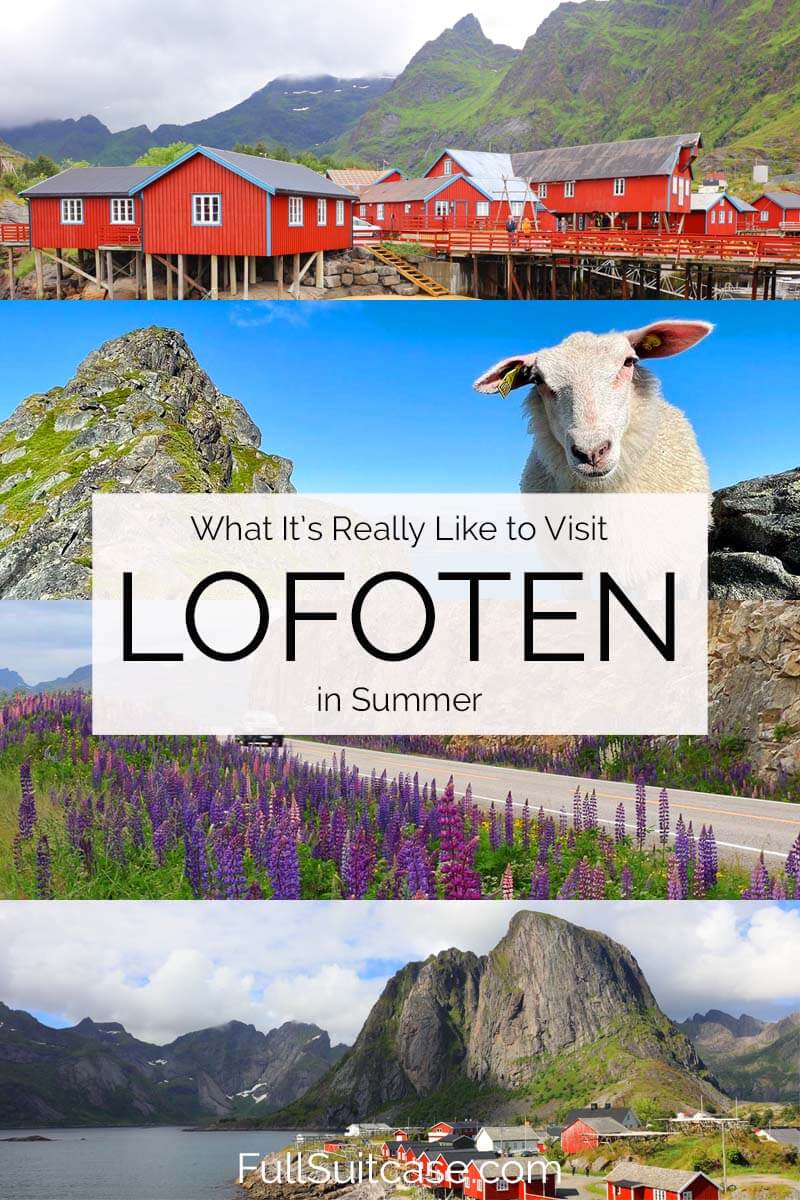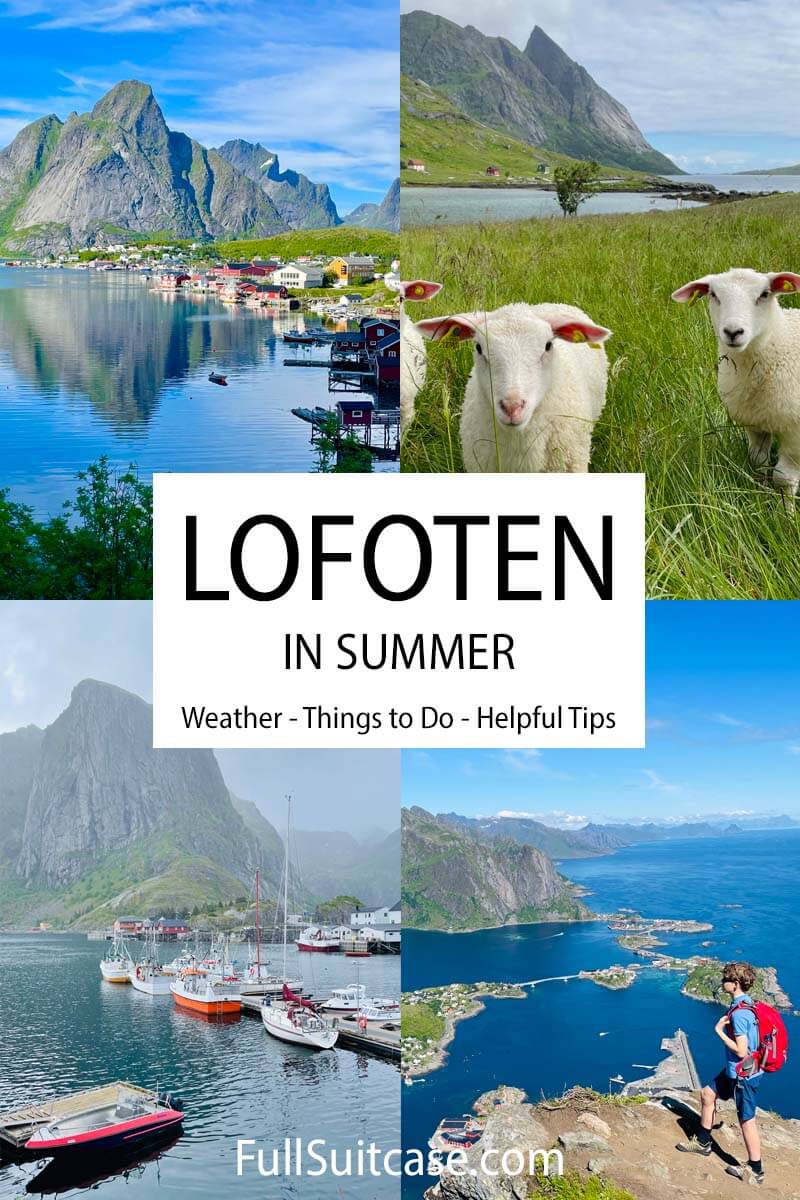
Lofoten in Summer: Weather, What to Expect & Travel Tips
This site contains affiliate links, which means that we may earn a small commission, at no cost to you, for qualifying purchases. It supports the work that goes into keeping this content free. Thanks for reading! More info: Privacy Policy.
Visiting the Lofoten Islands in Northern Norway in summer and wondering what to expect?
What is the weather like in June, July, or August? How busy is it? What are the best things to do in the summer months? What should you know before planning a summer trip?
In this guide, you’ll find answers to all these questions, as well as our experience-based tips for traveling to the Lofoten Islands in the summer months.
Lofoten Weather in Summer
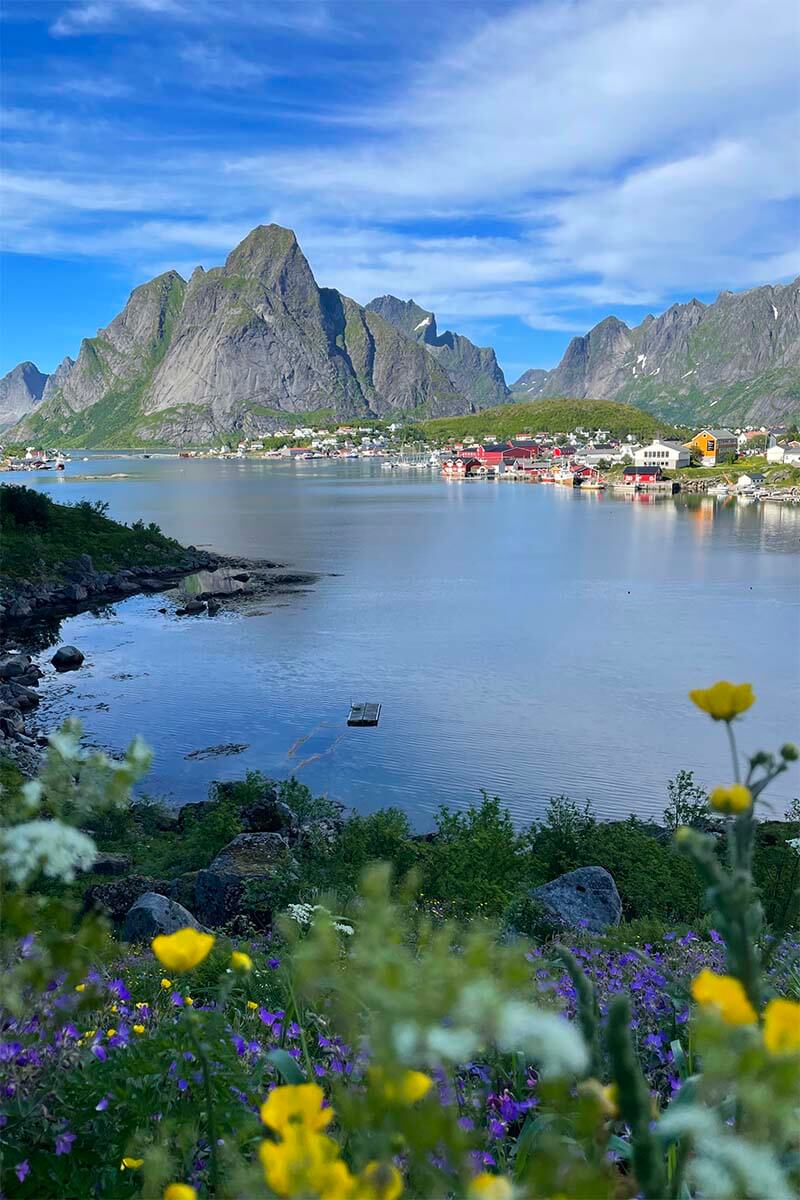
Taking into account their latitude, the Lofoten Islands in Northern Norway have surprisingly mild summers.
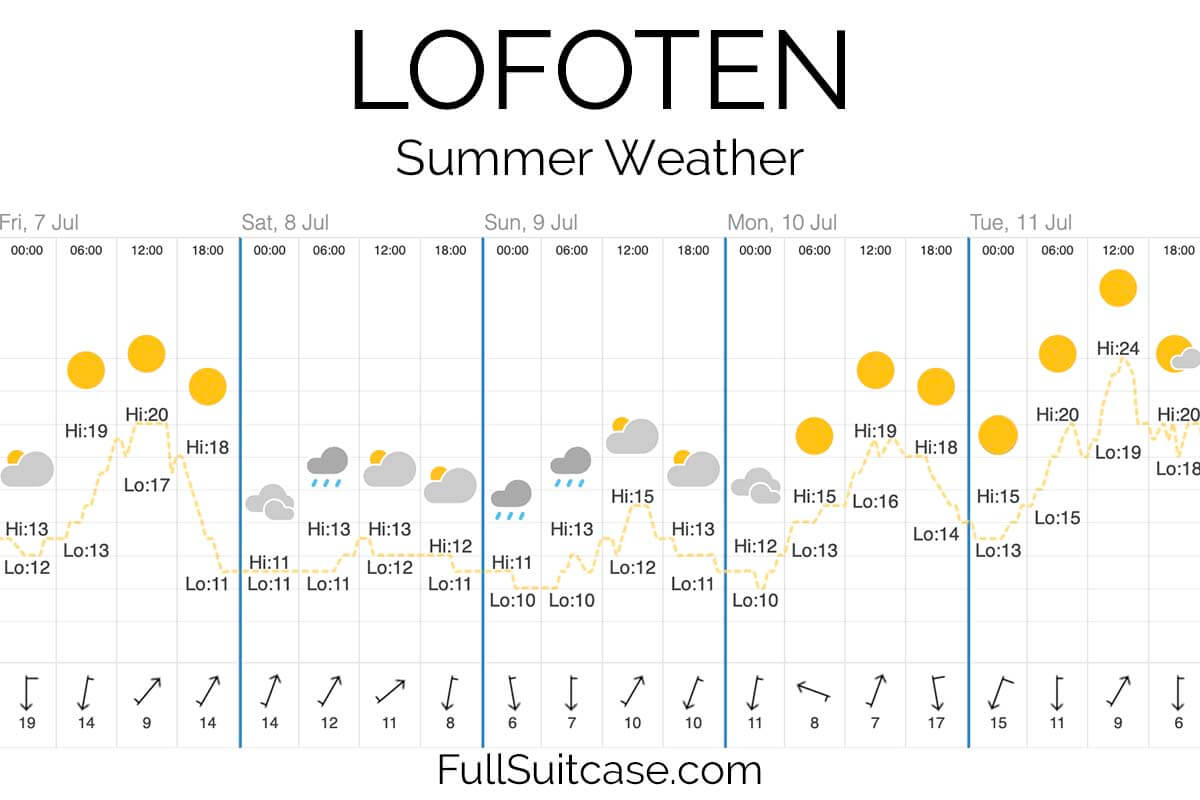
Average low temperatures in Lofoten in June, July, and August are around 10°C (50°F) and average highs are about 15°C (60°F). But it’s not uncommon for summer temperatures to reach 20-25°C (68-77 °F) or even higher. On average, it rains about 9 days per month in June and July, and 11 days in August.
As you can expect when traveling to a place above the Arctic Circle, the weather in Lofoten is hard to predict. Plus, it can be completely different, even just a few miles apart, and can change several times a day…
If you are lucky, you may have really nice and warm weather in Lofoten in summer, with plenty of sunshine and temperatures warm enough to wear shorts and T-shirts. However, it’s just as likely that it will be cold, rainy, and foggy, and you will need rain jackets and even gloves and hats.
Most likely, you will experience a bit of everything when visiting Lofoten in the summer months – from cold and rainy days to the most beautiful summer weather.
Just keep in mind that the weather forecast will likely change until the last minute, so you really never know what kind of weather you’ll get until the moment itself. But while you can never fully rely on the forecast, checking the weather a few days before your trip will give you a somewhat indication of what to expect.
Good to know: On all our trips to Norway (and beyond), we found that the yr.no website/app usually shows the most accurate weather forecast, especially if you check 24-48 hours in advance. Just be sure to check specific locations that you plan to visit and note that the weather might be very different, even just half an hour’s drive apart.
Below, you can find a quick overview of what the weather is typically like in Lofoten in June, July, and August.
READ ALSO: Helpful Tips for Your First Trip to Lofoten Islands
Lofoten Weather in June
June is one of the best months to visit Lofoten if you want long days, fewer crowds, and relatively mild weather. Daytime temperatures are typically around 10-15°C (50-60°F), but warmer days are certainly possible. The midnight sun can be seen from late May until mid-July, making June a fantastic month for hiking, sightseeing, and photography.
June is also one of the best months to visit the Lofoten Islands if you want to avoid the busiest part of the summer season.
Lofoten Weather in July
July is usually the warmest month of the year in Lofoten and also the busiest. Average temperatures are similar to June, but warm spells with temperatures above 20°C (68°F) are not unusual. At the same time, you should be prepared for rain, wind, and sudden weather changes. We visited Lofoten in July and experienced everything from shorts-and-T-shirt weather to cold, rainy days requiring warm layers, gloves, and hats.
Lofoten Weather in August
August often brings slightly cooler temperatures and a bit more rain than June and July, but it remains an excellent time to visit. One of the biggest advantages is that visitor numbers gradually decrease toward the end of the month. Daylight hours are still very long in early August, and by late August, you may even have a chance to see the Northern Lights if the skies are clear.
Our Experience & Tips
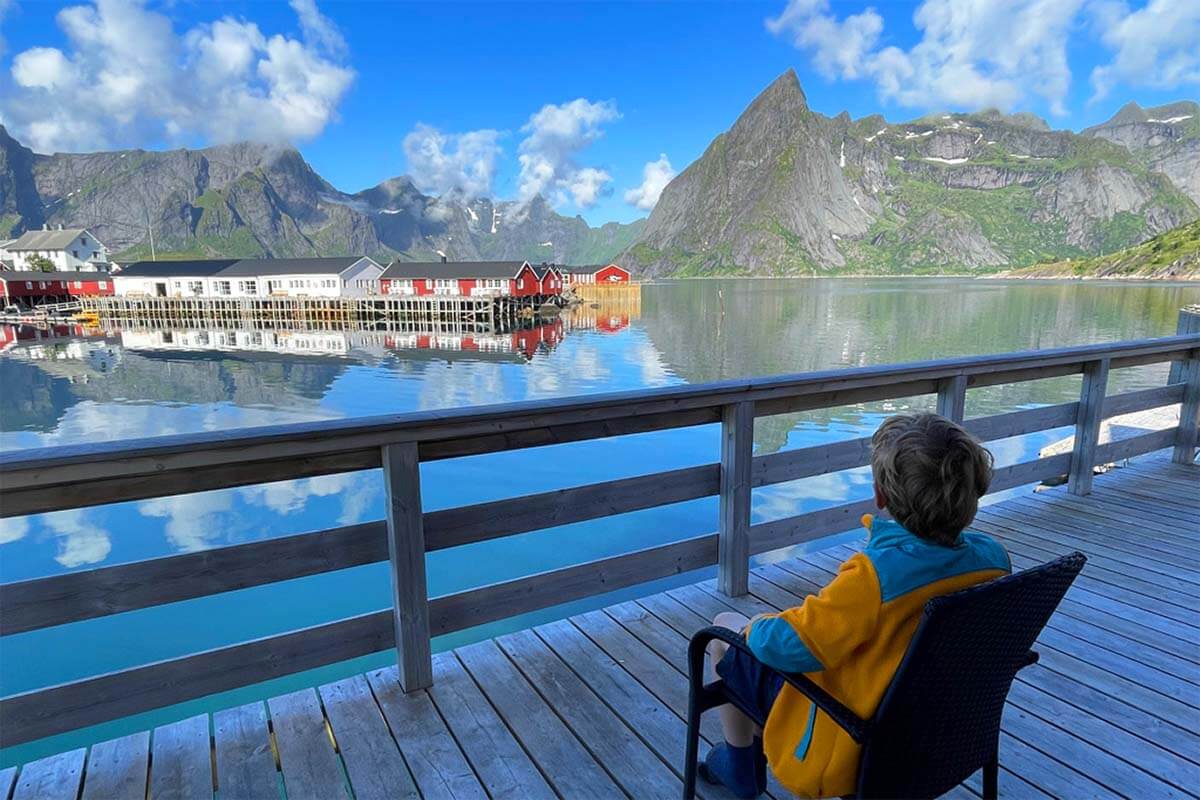
We visited Lofoten in July and had all kinds of weather. On some days, the skies were blue, it was hot, and we were hiking in shorts and T-shirts. But we also had a few days when it was windy, rainy, and freezing cold and we needed sweaters and jackets, and even wore gloves and warm hats.
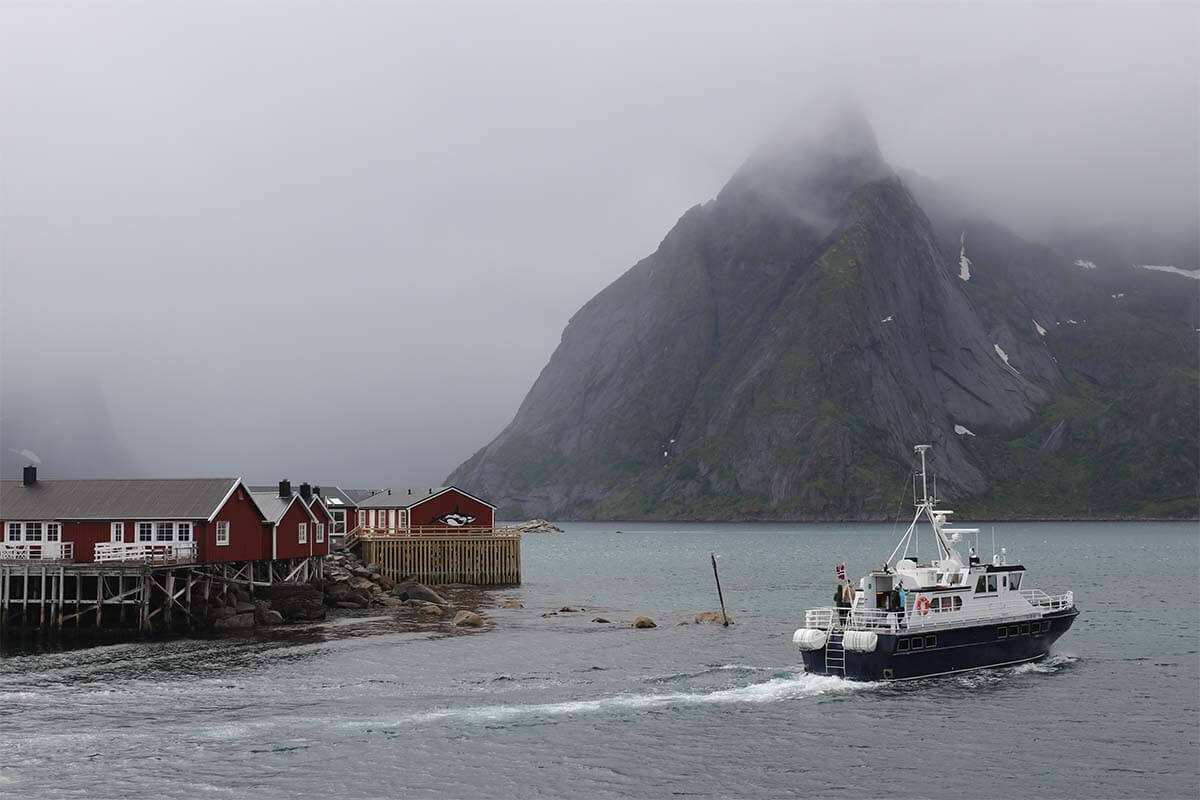
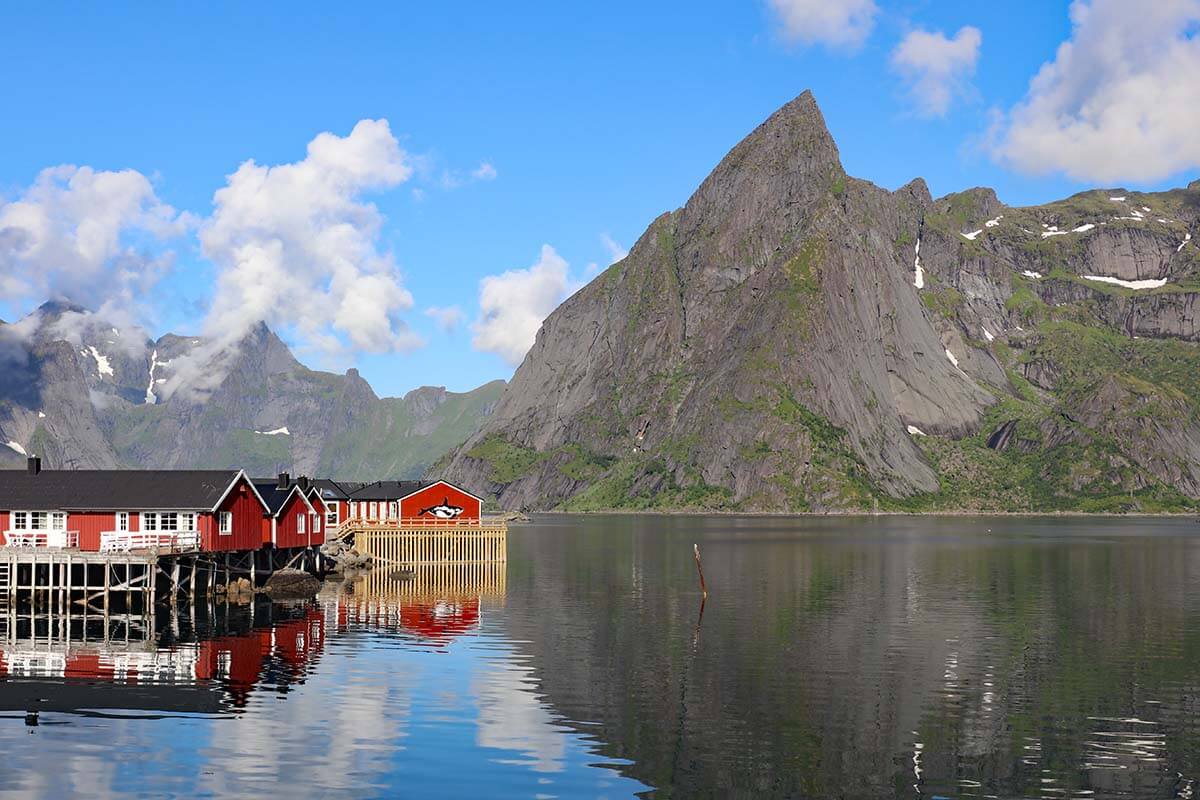
To give you an idea of the extremes you can get, take a look at the two pictures below. They were taken at exactly the same place, less than two days apart. Needless to say, your experience and what you can see and do in Lofoten will be influenced by the weather. But you can have a very enjoyable trip either way!
TIP: One of the best tips I can give you is not to stress about the weather in advance. It won’t change anything… Simply keep an eye on the weather forecast and adjust your plans if needed. Sun on the forecast? Go hiking! Is it going to rain? Check predictions for the other places nearby – it may be dry and sunny just a short drive away. And if it’s really cold and wet everywhere, you can still explore villages, visit museums, and find a nice restaurant for a relaxing meal.
TIP: Also, be sure that you have the right clothing so that you can enjoy everything the Lofoten Islands have to offer, no matter what kind of weather you get.
Below, you can find a quick overview of what to wear in Lofoten in summer, plus links to our detailed packing guide.
What to Wear in Lofoten in Summer
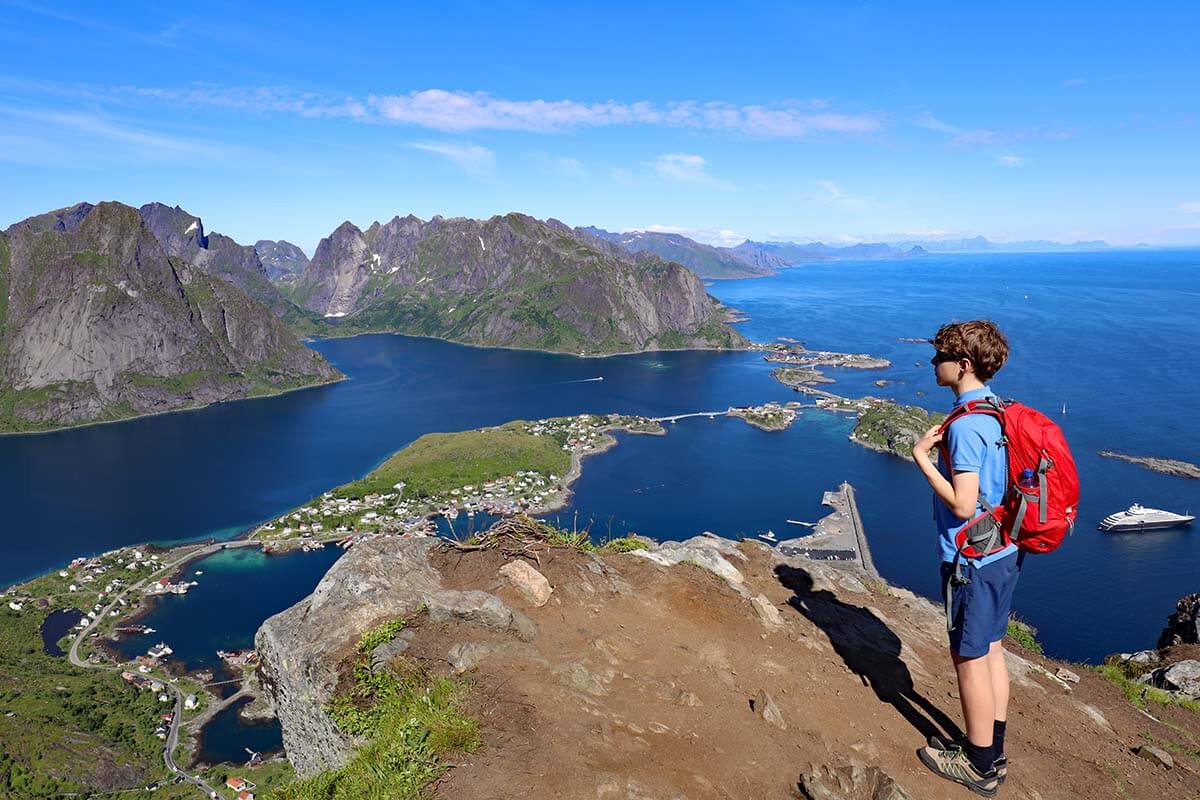
When deciding what to wear in Northern Norway in summer, remember one simple word – LAYERS. You may experience everything from warm sunny days in shorts and T-shirts to cold, windy, and rainy weather requiring sweaters, waterproof jackets, gloves, and hats.
Here are the essentials we recommend packing:
- T-shirts and long-sleeved shirts.
- Warm fleece or wool sweater.
- Shorts and hiking pants.
- Waterproof and windproof rain jacket.
- Waterproof hiking shoes or boots.
- Hiking socks.
- Buff, thin gloves, and possibly a warm hat.
- Sunglasses, sun hat, and swimwear.
Looking for a detailed packing list? See our complete guide to What to Pack for Lofoten in Summer, where we cover clothing, footwear, hiking gear, backpacks, sleep masks, and other useful items in more detail.
What Else to Pack
In addition to clothing, there are a few other items that can make a big difference when visiting Lofoten in summer:
- Sleep mask (essential because of the midnight sun).
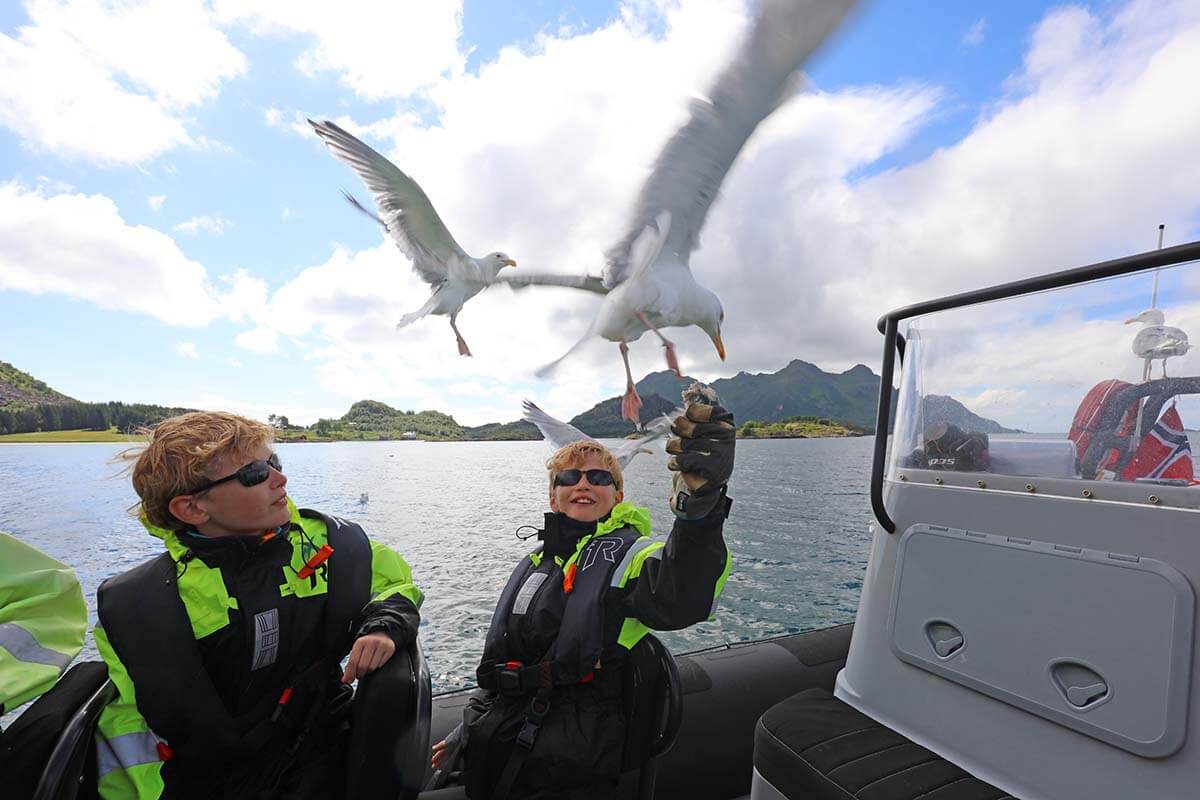
- Earplugs (the seagulls can be surprisingly loud).
- Hiking poles (many trails are steep and muddy).
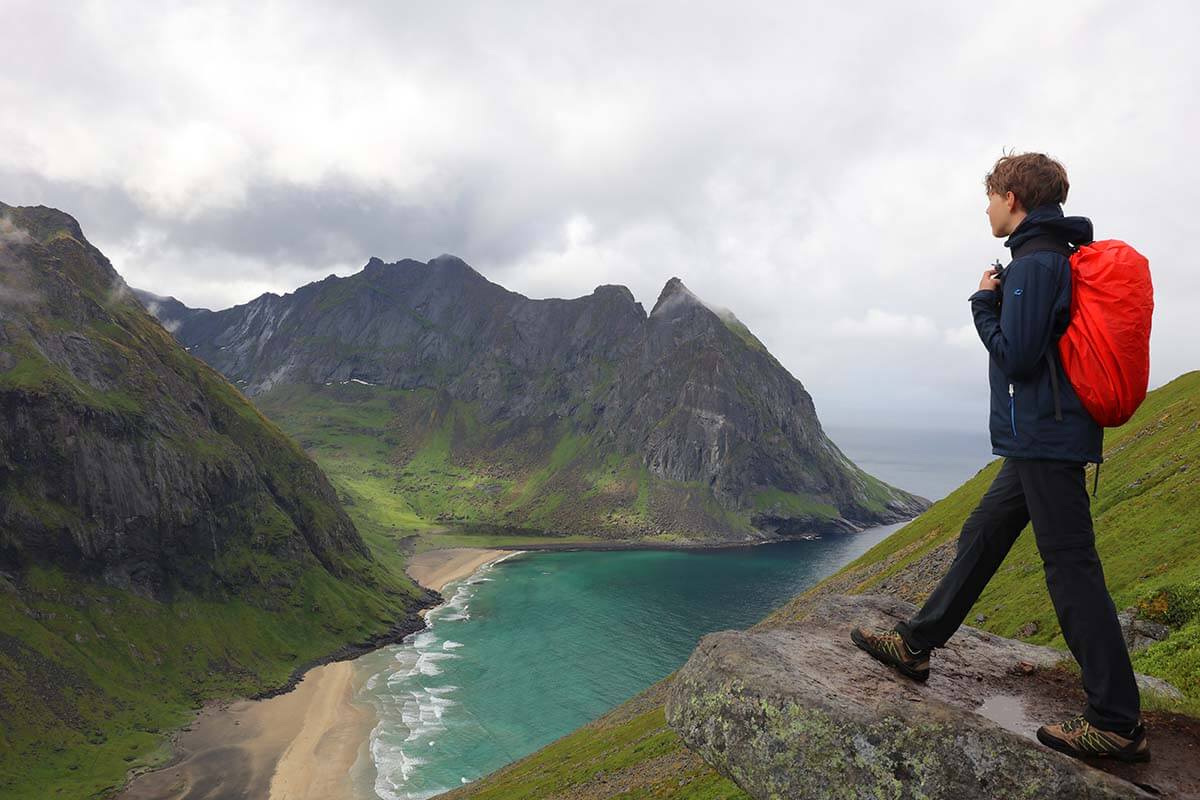
- Day backpack with rain cover.
For a complete packing list, including product recommendations and additional items we personally use, see our detailed Lofoten summer packing guide.
What to Do in Lofoten in Summer
Summer is by far the best season to visit Lofoten if you want to experience this beautiful archipelago to the fullest. So you can see and do practically everything that’s available, except the winter-specific activities (so no Northern Lights, for example).
Here is a small overview of some of the best things to do in Lofoten in summer (you can find all the details in our detailed guide via the link below):
- Visit the charming towns of Lofoten: Å i Lofoten, Nusfjord, Reine, Henningsvær, and Svolvær are all not to be missed.
- Enjoy the magnificent scenery and go hiking. Some of the must-sees include the area around Reine – Hamnøy and the hikes such as Reinebringen, Ryten, or Djevelporten – Fløya hike.
- Take a boat trip/kayak tour and admire the fjords. Our family’s favorite was the speedboat wildlife cruise from Svolvaer to Trollfjord and also a boat trip on Reinefjord. If time permits, we highly recommend a kayak tour as well! We couldn’t go kayaking in Lofoten due to kids ages, but if we ever return, that’s one thing that’s still very high on my list.
- Learn about the Viking heritage and local traditions by visiting various museums. Don’t miss the Lofotr Viking Museum.
- See the midnight sun. If you are visiting Lofoten at the beginning of the summer and the weather is nice, stay up late to see the midnight sun. It’s actually at its lowest point around 1 am and not at midnight.
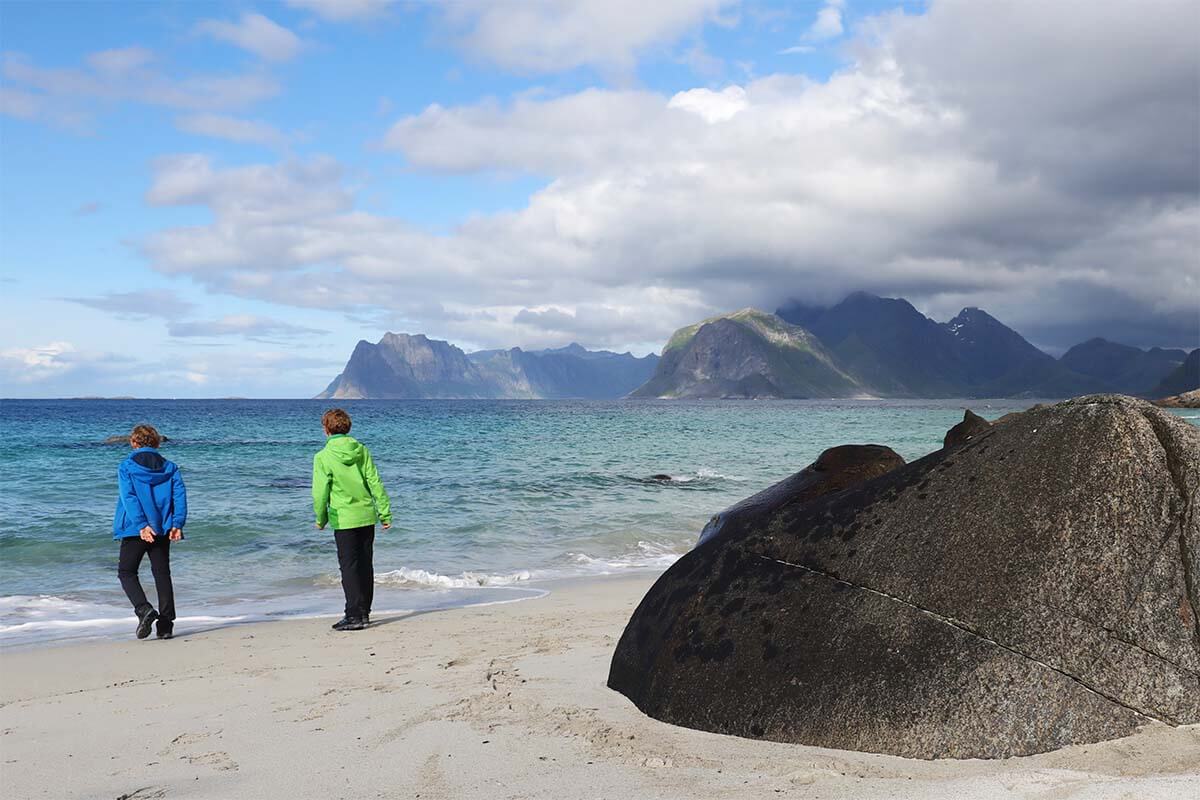
- Explore the beaches. Lofoten Islands have countless stunning beaches. If you visit just one of them, make it Uttakleiv Beach. Weather permitting, you may also be able to go for a swim in the sea, but remember that you are above the Arctic Circle, so the water is cold. It’s usually more bearable if you first spend some time in a sauna (some accommodations have them).
- Go fishing. If you are interested in fishing, you’ll be glad to know that Northern Norway is a paradise for fishermen. There are several guided fishing tours that you can book online. Some accommodations might be able to arrange fishing trips for you as well.
LEARN MORE: Best Things to Do in Lofoten
How Busy Is It? (& Is It Worth Visiting)
You may have heard that Lofoten Islands are very busy in the summer and wonder if it’s a good idea to travel to Lofoten in June, July, or August. The answer to both of these questions is yes.
Yes, it’s quite busy in Lofoten in the summer – it’s the best season to visit after all. So be sure to book your accommodation and rental car as soon as your travel dates are set. We used Booking.com for both. Their rental car search tool lets you compare multiple providers and was consistently much cheaper than booking directly with the rental companies we checked.
If you’re planning to take any guided tours or boat trips, it’s also a good idea to reserve those in advance, especially the most popular excursions such as the sea eagle safari to Trollfjord, fishing trips, and kayaking tours. We usually book activities through GetYourGuide because it’s easy to compare options and reserve spots online.
It’s also worth deciding where you’ll stay before you book. Some areas are much more convenient than others depending on your itinerary. For more information, see our guide to the best places to stay in Lofoten.
However, when it comes to sightseeing and hiking, it’s only very busy at the most popular places at the most popular times.
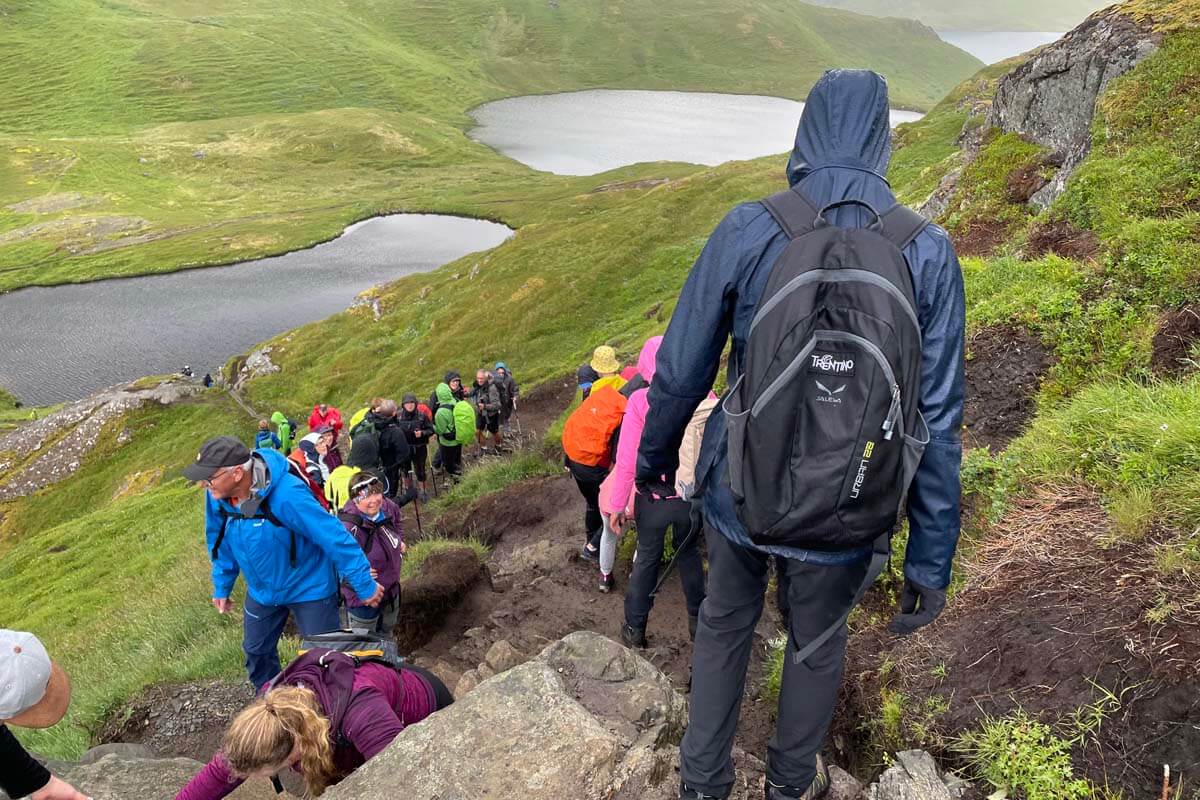
For example, if you want to hike to Reinebringen or Ryten between 9 am – 4 pm, expect big crowds. It can get very, very busy indeed, especially if there are cruise ships around. It doesn’t even seem to matter what kind of weather it is – the busiest we experienced in Lofoten was the hiking trail at Ryten on a very cold and rainy day – see the picture below.
But if you visit the same places very early in the morning or late in the evening (remember, it doesn’t get dark in the beginning of the summer!), it will be incomparably quieter. For example, when we hiked to Ryten in the morning there was hardly anyone around. But it got really busy on the way back down, also because many more people arrived by then and they were going in the other direction on the same narrow path.
So expect it to be busy, book your trip in advance, but don’t let this stop you from visiting Lofoten in the summer. It’s such a wonderful destination and summer is the best time to be here. You’ll love it.
Further below, you can find an overview of the main advantages and disadvantages of visiting the Lofoten islands in summertime.
Advantages of Visiting Lofoten in Summer
There are many reasons and advantages of visiting Lofoten in the summer vs other seasons. Here are some of the main ones:
- Long days with endless hours of daylight allow you to make the most of your time. Plus, you can see the midnight sun.
- The weather is as good and warm as it gets here, making summer the best time to visit Lofoten for hiking and outdoor activities such as kayaking, biking, surfing, etc.
- Everything is open since the tourist season is at its peak.
- If you want to visit Lofoten on a lower budget, summer is by far the best season for that too. The weather is usually mild enough to camp and travel around by bike. There are also many more affordable public/shared transport options in the summer.
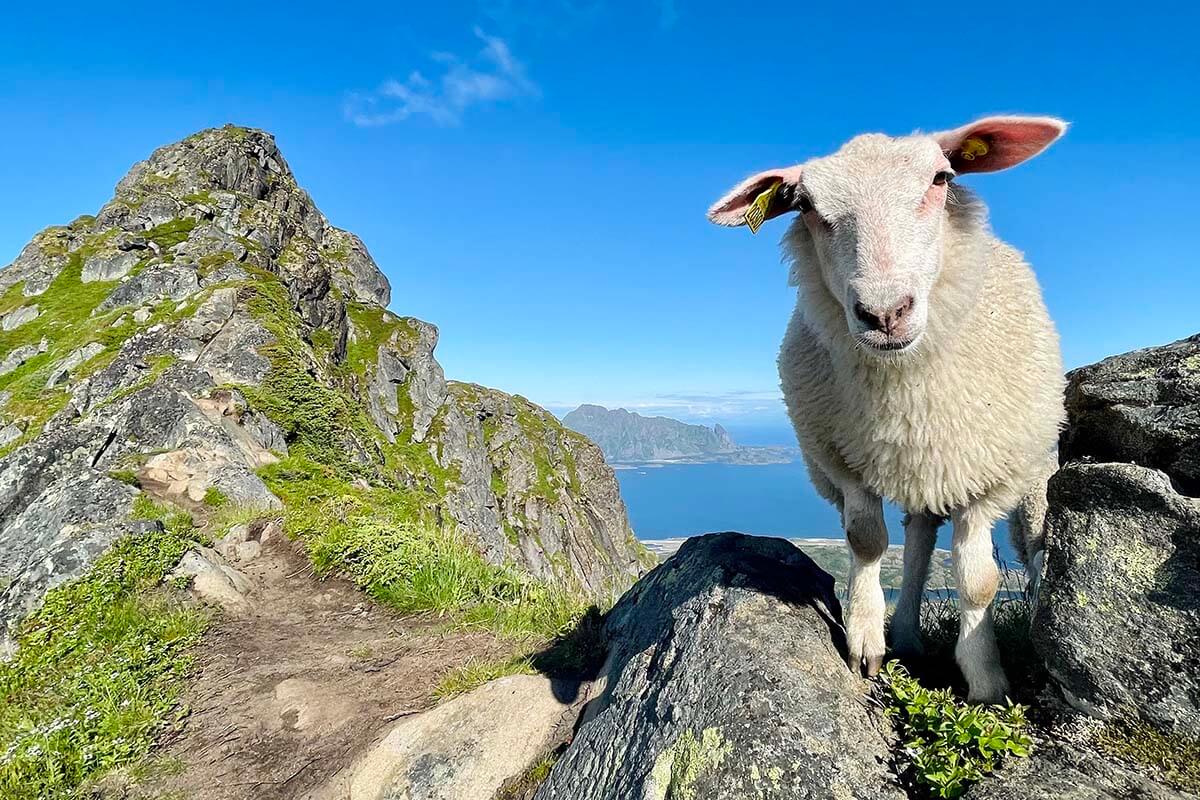
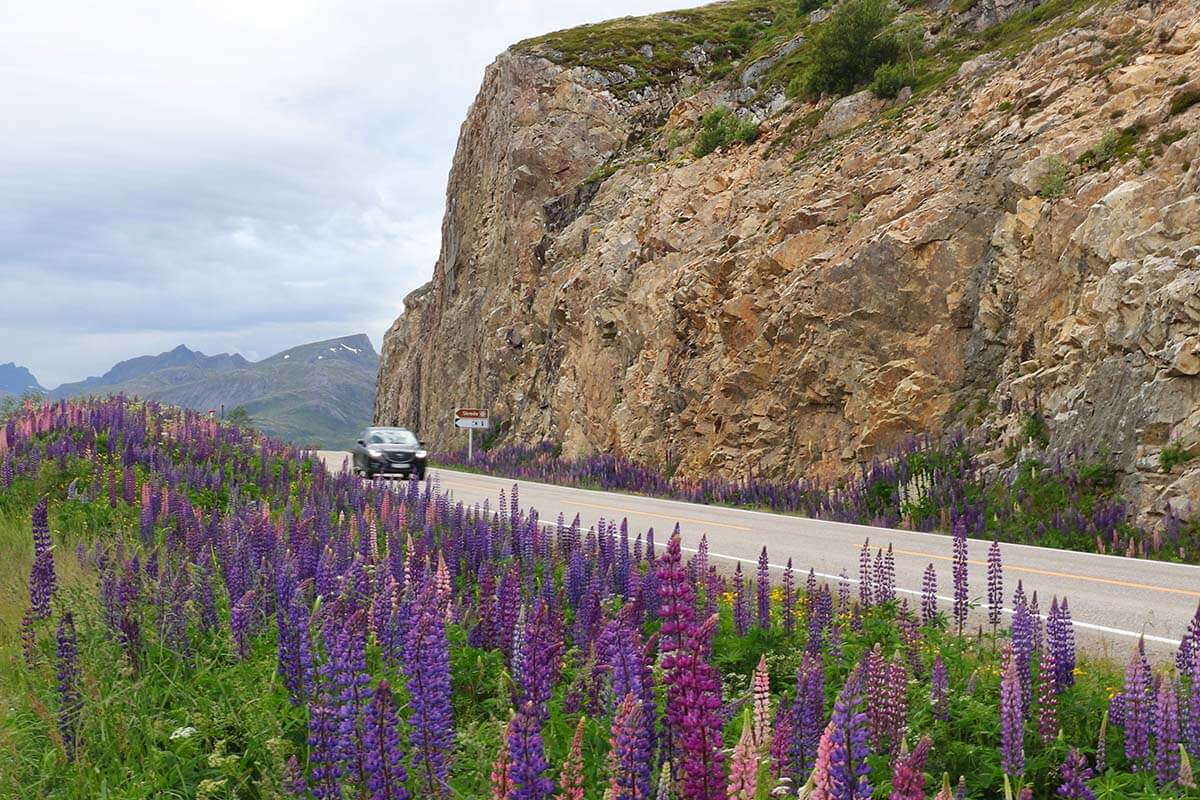
- Flowers, animals, and wildlife. If you visit Lofoten in summer, you can see some beautiful flowers like lupine. You may also get lucky to run into some cute sheep or even see wildlife, e.g. moose.
Disadvantages of Visiting Lofoten in Summer
And here are some of the main disadvantages of visiting Lofoten in the peak summer season:
- It’s expensive. Since most tourists travel to Lofoten in the summer months, accommodation and car rental prices are very high. If you are wondering, here you can find some examples of how much everything costs in Norway.
- There is limited availability. If you didn’t think about booking hotels (especially the famous Lofoten rorbuer cabins) and renting a car well in advance, you will notice that availability gets quite limited. This is especially the case in July – early August. The closer you get to the summer season, the fewer choices there are. This usually leaves you with either the most expensive or most basic options.
- It’s busy. This is especially notable at the most popular hikes where it’s difficult to find parking and you have to share the trails with hundreds of other people. But also the roads can get congested, restaurants are busier, etc. However, I can’t stress this enough – don’t let this put you off! With some planning, you can avoid the crowds altogether and have some of the most beautiful places all to yourself.
TIP: Visit Lofoten in June or in late August. That way, you can take advantage of summer travel, but avoid the busiest and most expensive peak season.
TIP: One of the best ways to avoid crowds and take advantage of nice weather is to plan a longer trip and spend more time on the Lofoten Islands. If you only have a day or two in Lofoten and it rains all the time, you may not be able to do everything you want to.
READ ALSO: Lofoten Travel Tips
So, this is an overview of what you can expect when visiting Lofoten in the summer. Of course, there are some differences between visiting in June or in August (the number of daylight hours, to mention just one), but this gives you a general idea of what you can expect.
I hope that this guide helps you plan a wonderful trip and enjoy the very best that Lofoten has to offer.
TIP: In addition to visiting Lofoten, make a road trip and visit Vesteralen, Senja, drive to Tromso, and maybe even all the way to the North Cape. Via the link below, you can find a recommended itinerary based on our recent trip. Check it out!
READ ALSO: Northern Norway Itinerary
For more inspiration and information about various places in Northern Norway and beyond, please check our Norway Travel Guide. It contains all our articles from various trips to different regions and useful tips for planning your trip. Take a look!
TIP: Save this guide for later, share it with your friends, or pin it to Pinterest so you can easily come back to it when planning your trip.